


741 Résultats
Classification:
livres
livres
Actions:
Exemplaires:
Description:
xiv, 599 pages, 16 unnumbered pages of plates : illustrations, maps ; 26 cm.
Description:
xiv, 599 pages, 16 unnumbered pages of plates : illustrations, maps ; 26 cm.
Auteur:
Sujet:
Publication:
London ; New York : Routledge, 1995.
London ; New York : Routledge, 1995.
Titre:
Early modern conceptions of property / edited by John Brewer and Susan Staves.
Actions:
Exemplaires:
Description:
xiv, 599 pages, 16 unnumbered pages of plates : illustrations, maps ; 26 cm.
Early modern conceptions of property / edited by John Brewer and Susan Staves.
Actions:
Exemplaires:
Description:
xiv, 599 pages, 16 unnumbered pages of plates : illustrations, maps ; 26 cm.
Classification:
livres
livres
Publication:
London ; New York : Routledge, 1995.
London ; New York : Routledge, 1995.
Auteur:
Sujet:
Classification:
livres
livres
Actions:
Exemplaires:
Description:
157 pages illustrations (chiefly color) 21 x 21 cm
Description:
157 pages illustrations (chiefly color) 21 x 21 cm
Auteur:
Sujet:
Publication:
Berlin : Jovis, [2020]
Berlin : Jovis, [2020]
Titre:
What is co-dividuality? : post-individual architecture, shared houses, and other stories of openness in Japan = Qu'est-ce que la co-dividualité? : architecture post-individuelle, shared houses et autres expériences d'espaces ouverts au Japon / Salvator-John A. Liotta and Fabienne Louyot.
Actions:
Exemplaires:
Description:
157 pages illustrations (chiefly color) 21 x 21 cm
What is co-dividuality? : post-individual architecture, shared houses, and other stories of openness in Japan = Qu'est-ce que la co-dividualité? : architecture post-individuelle, shared houses et autres expériences d'espaces ouverts au Japon / Salvator-John A. Liotta and Fabienne Louyot.
Actions:
Exemplaires:
Description:
157 pages illustrations (chiefly color) 21 x 21 cm
Classification:
livres
livres
Publication:
Berlin : Jovis, [2020]
Berlin : Jovis, [2020]
Auteur:
Sujet:
Classification:
livres
livres
Actions:
Exemplaires:
Description:
viii, 482 pages, 16 unnumbered pages of plates : illustrations, maps ; 25 cm
Description:
viii, 482 pages, 16 unnumbered pages of plates : illustrations, maps ; 25 cm
Auteur:
Sujet:
Publication:
New York : Bloomsbury, 2013.
New York : Bloomsbury, 2013.
Titre:
Owning the earth : the transforming history of land ownership / Andro Linklater.
Actions:
Exemplaires:
Description:
viii, 482 pages, 16 unnumbered pages of plates : illustrations, maps ; 25 cm
Owning the earth : the transforming history of land ownership / Andro Linklater.
Actions:
Exemplaires:
Description:
viii, 482 pages, 16 unnumbered pages of plates : illustrations, maps ; 25 cm
Classification:
livres
livres
Publication:
New York : Bloomsbury, 2013.
New York : Bloomsbury, 2013.
Auteur:
Sujet:
Classification:
livres
livres
Exemplaires:
Description:
122 pages : illustrations, plans ; 37 x 63 cm
Description:
122 pages : illustrations, plans ; 37 x 63 cm
Auteur:
Sujet:
Publication:
Cambridge, Mass. : The MIT Press, [1969], ©1969
Cambridge, Mass. : The MIT Press, [1969], ©1969
Titre:
Arcology : the city in the image of man / Paolo Soleri.
Actions:
Exemplaires:
Description:
122 pages : illustrations, plans ; 37 x 63 cm
Arcology : the city in the image of man / Paolo Soleri.
Actions:
Exemplaires:
Description:
122 pages : illustrations, plans ; 37 x 63 cm
Classification:
livres
livres
Publication:
Cambridge, Mass. : The MIT Press, [1969], ©1969
Cambridge, Mass. : The MIT Press, [1969], ©1969
Auteur:
Sujet:
Classification:
livres
livres

Actions:
Prix:
$13.99
(disponible en magasin)
Résumé:
"Three economies of transcendence" offers a sharp critique of how transcendence underpins the symbolic, economic, and environmental crises of the modern world. Andrea Righi identifies three distinct “economies of transcendence” that sustain neoliberal systems of power. Termed the economy of rank, the economy of infinite valorization, and the phallic economy of time, these(...)
$13.99
(disponible en magasin)
Résumé:
"Three economies of transcendence" offers a sharp critique of how transcendence underpins the symbolic, economic, and environmental crises of the modern world. Andrea Righi identifies three distinct “economies of transcendence” that sustain neoliberal systems of power. Termed the economy of rank, the economy of infinite valorization, and the phallic economy of time, these(...)
Titre:
Three economies of transcendence
Actions:
Prix:
$13.99
(disponible en magasin)
Résumé:
"Three economies of transcendence" offers a sharp critique of how transcendence underpins the symbolic, economic, and environmental crises of the modern world. Andrea Righi identifies three distinct “economies of transcendence” that sustain neoliberal systems of power. Termed the economy of rank, the economy of infinite valorization, and the phallic economy of time, these economies perpetuate hierarchies, sacrifices, and ecological destruction. Through this framework, Righi not only diagnoses the crisis but also proposes an immanent model of economy that fosters solidarity and is expressly pro-social and ecologically responsible.
Three economies of transcendence
Actions:
Prix:
$13.99
(disponible en magasin)
Résumé:
"Three economies of transcendence" offers a sharp critique of how transcendence underpins the symbolic, economic, and environmental crises of the modern world. Andrea Righi identifies three distinct “economies of transcendence” that sustain neoliberal systems of power. Termed the economy of rank, the economy of infinite valorization, and the phallic economy of time, these economies perpetuate hierarchies, sacrifices, and ecological destruction. Through this framework, Righi not only diagnoses the crisis but also proposes an immanent model of economy that fosters solidarity and is expressly pro-social and ecologically responsible.
Classification:
livres
livres
Publication:
août 2025
août 2025
Sujet:
Théorie/ philosophie
Théorie/ philosophie
Classification:
livres
livres
Actions:
Exemplaires:
Description:
xx, 324 pages : illustrations ; 24 cm.
Description:
xx, 324 pages : illustrations ; 24 cm.
Auteur:
Sujet:
Publication:
Baltimore : The Johns Hopkins University Press, ©2004.
Baltimore : The Johns Hopkins University Press, ©2004.
Titre:
Leonardo to the internet : technology & culture from the Renaissance to the present / Thomas J. Misa.
Actions:
Exemplaires:
Description:
xx, 324 pages : illustrations ; 24 cm.
Leonardo to the internet : technology & culture from the Renaissance to the present / Thomas J. Misa.
Actions:
Exemplaires:
Description:
xx, 324 pages : illustrations ; 24 cm.
Classification:
livres
livres
Publication:
Baltimore : The Johns Hopkins University Press, ©2004.
Baltimore : The Johns Hopkins University Press, ©2004.
Auteur:
Sujet:
Classification:
livres
livres
Actions:
Exemplaires:
Description:
287 pages : illustrations (some color), portraits ; 24 x 25 cm + 1 DVD
Description:
287 pages : illustrations (some color), portraits ; 24 x 25 cm + 1 DVD
Auteur:
Sujet:
Publication:
Staunton (Va.) : George F. Thompson Publishing, [2015]
Staunton (Va.) : George F. Thompson Publishing, [2015]
Titre:
Drawn to landscape : the pioneering work of J.B. Jackson / edited by Janet Mendelsohn and Chris Wilson ; drawings, watercolors, and photographs by J.B. Jackson ; with contributions from [8 others].
Actions:
Exemplaires:
Description:
287 pages : illustrations (some color), portraits ; 24 x 25 cm + 1 DVD
Drawn to landscape : the pioneering work of J.B. Jackson / edited by Janet Mendelsohn and Chris Wilson ; drawings, watercolors, and photographs by J.B. Jackson ; with contributions from [8 others].
Actions:
Exemplaires:
Description:
287 pages : illustrations (some color), portraits ; 24 x 25 cm + 1 DVD
Classification:
livres
livres
Publication:
Staunton (Va.) : George F. Thompson Publishing, [2015]
Staunton (Va.) : George F. Thompson Publishing, [2015]
Auteur:
Sujet:
Classification:
livres
livres
Actions:
Prix:
$74.95
(disponible sur commande)
Résumé:
This Reader comprises sections on urban social theory, racial and social difference in the city, culture in everyday life, culture and the urban economy, globalization and transnational social relations and the regulation of urban space. Drawing together seminal selections covering the nineteenth to the twenty-first centuries, this publication includes forty-three(...)
$74.95
(disponible sur commande)
Résumé:
This Reader comprises sections on urban social theory, racial and social difference in the city, culture in everyday life, culture and the urban economy, globalization and transnational social relations and the regulation of urban space. Drawing together seminal selections covering the nineteenth to the twenty-first centuries, this publication includes forty-three(...)
Titre:
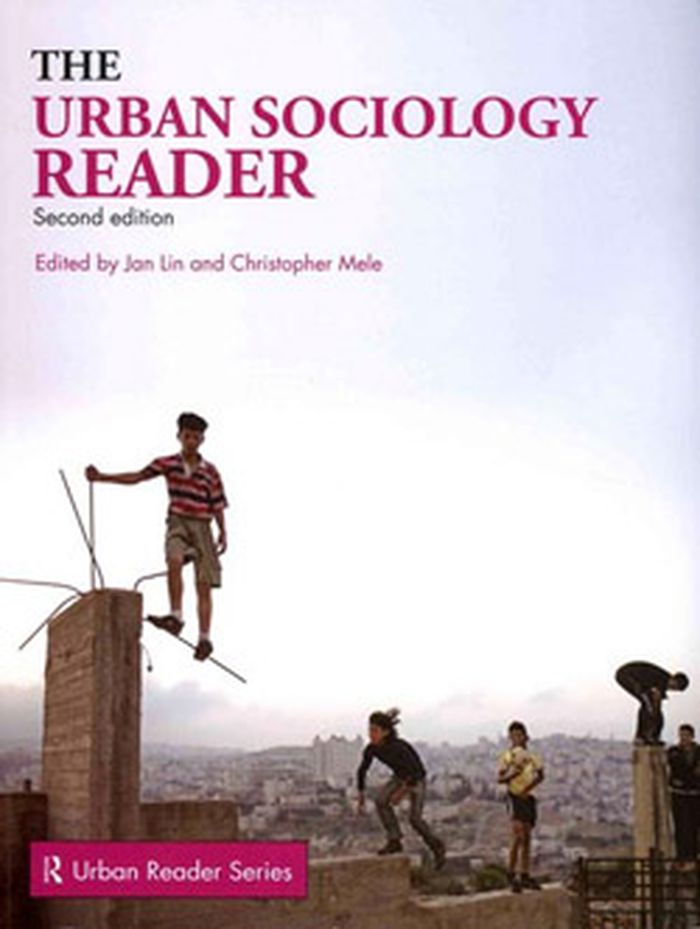
The urban sociology reader, second edition
Actions:
Prix:
$74.95
(disponible sur commande)
Résumé:
This Reader comprises sections on urban social theory, racial and social difference in the city, culture in everyday life, culture and the urban economy, globalization and transnational social relations and the regulation of urban space. Drawing together seminal selections covering the nineteenth to the twenty-first centuries, this publication includes forty-three writings from eminent names such as Simmel, Wirth, Park, Burgess, DuBois, Zukin, Sassen, and Harvey. The 2nd edition illuminates more recent urban issues such as sprawl, sustainability, immigration and urban protest. Selections are predominantly sociological, but some readings cross disciplinary boundaries.
The urban sociology reader, second edition
Actions:
Prix:
$74.95
(disponible sur commande)
Résumé:
This Reader comprises sections on urban social theory, racial and social difference in the city, culture in everyday life, culture and the urban economy, globalization and transnational social relations and the regulation of urban space. Drawing together seminal selections covering the nineteenth to the twenty-first centuries, this publication includes forty-three writings from eminent names such as Simmel, Wirth, Park, Burgess, DuBois, Zukin, Sassen, and Harvey. The 2nd edition illuminates more recent urban issues such as sprawl, sustainability, immigration and urban protest. Selections are predominantly sociological, but some readings cross disciplinary boundaries.
Classification:
livres
livres
Publication:
mars 2012
mars 2012
Sujet:
Théorie de l’urbanisme
Théorie de l’urbanisme
Classification:
livres
livres

Titre:
The Immaterial
The Immaterial
Actions:
Prix:
$23.95
(disponible sur commande)
Résumé:
In ''The Immaterial'', French social philosopher André Gorz (1923–2007) argues that the economic boom that accelerated in the 1990s and crashed so spectacularly in 2008 was based largely on an immaterial consumption of symbols and ideas, as capitalism tried to overcome the crisis of the formally industrial regime by throwing itself into a new, so-called knowledge economy.(...)
$23.95
(disponible sur commande)
Résumé:
In ''The Immaterial'', French social philosopher André Gorz (1923–2007) argues that the economic boom that accelerated in the 1990s and crashed so spectacularly in 2008 was based largely on an immaterial consumption of symbols and ideas, as capitalism tried to overcome the crisis of the formally industrial regime by throwing itself into a new, so-called knowledge economy.(...)
Titre:
The Immaterial
Actions:
Prix:
$23.95
(disponible sur commande)
Résumé:
In ''The Immaterial'', French social philosopher André Gorz (1923–2007) argues that the economic boom that accelerated in the 1990s and crashed so spectacularly in 2008 was based largely on an immaterial consumption of symbols and ideas, as capitalism tried to overcome the crisis of the formally industrial regime by throwing itself into a new, so-called knowledge economy. In this volume, Gorz argues instead for the creation of a true knowledge economy. This economy would be based on zero-cost exchange and pooled resources, and knowledge would be treated as humanity's common property. Currently, in order to exploit knowledge and turn it into capital, the capitalist enterprise privatizes specialized knowledge and claims ownership through private licenses and copyright. But as Gorz shows, the traditional foundations of such capitalist economics have begun to crumble because of the immaterial nature of this new form of product, which makes it almost impossible to measure in monetary terms.
The Immaterial
Actions:
Prix:
$23.95
(disponible sur commande)
Résumé:
In ''The Immaterial'', French social philosopher André Gorz (1923–2007) argues that the economic boom that accelerated in the 1990s and crashed so spectacularly in 2008 was based largely on an immaterial consumption of symbols and ideas, as capitalism tried to overcome the crisis of the formally industrial regime by throwing itself into a new, so-called knowledge economy. In this volume, Gorz argues instead for the creation of a true knowledge economy. This economy would be based on zero-cost exchange and pooled resources, and knowledge would be treated as humanity's common property. Currently, in order to exploit knowledge and turn it into capital, the capitalist enterprise privatizes specialized knowledge and claims ownership through private licenses and copyright. But as Gorz shows, the traditional foundations of such capitalist economics have begun to crumble because of the immaterial nature of this new form of product, which makes it almost impossible to measure in monetary terms.
Classification:
livres
livres
Publication:
décembre 2010
décembre 2010
Sujet:
Théorie de l’art
Théorie de l’art
Classification:
livres
livres

Titre:
Undoing property?
Undoing property?
Actions:
Prix:
$37.00
(disponible sur commande)
Résumé:
''Undoing property?'' examines complex relationships inside art, culture, political economy, immaterial production, and the public realm today. In its pages artists and theorists address aspects of computing, curating, economy, ecology, gentrification, music, publishing, piracy, and much more. Property shapes all social relations. Its invisible lines force separations(...)
$37.00
(disponible sur commande)
Résumé:
''Undoing property?'' examines complex relationships inside art, culture, political economy, immaterial production, and the public realm today. In its pages artists and theorists address aspects of computing, curating, economy, ecology, gentrification, music, publishing, piracy, and much more. Property shapes all social relations. Its invisible lines force separations(...)
Titre:
Undoing property?
Actions:
Prix:
$37.00
(disponible sur commande)
Résumé:
''Undoing property?'' examines complex relationships inside art, culture, political economy, immaterial production, and the public realm today. In its pages artists and theorists address aspects of computing, curating, economy, ecology, gentrification, music, publishing, piracy, and much more. Property shapes all social relations. Its invisible lines force separations and create power relations felt through the unequal distribution of what is otherwise collectively produced value. Over the last few years the precise question of what should be privately owned and publicly shared in society has animated intense political struggles and social movements around the world. In this shadow the publication's critical texts, interviews and artistic interventions offer models of practice and interrogate diverse sites, from the body, to the courtroom, to the server, to the museum. The book asks why propertization itself has changed so fundamentally over the last few decades and what might be done to challenge it. The "undoing" of ''Undoing property?'' begins with the recognition that something else is possible.
Undoing property?
Actions:
Prix:
$37.00
(disponible sur commande)
Résumé:
''Undoing property?'' examines complex relationships inside art, culture, political economy, immaterial production, and the public realm today. In its pages artists and theorists address aspects of computing, curating, economy, ecology, gentrification, music, publishing, piracy, and much more. Property shapes all social relations. Its invisible lines force separations and create power relations felt through the unequal distribution of what is otherwise collectively produced value. Over the last few years the precise question of what should be privately owned and publicly shared in society has animated intense political struggles and social movements around the world. In this shadow the publication's critical texts, interviews and artistic interventions offer models of practice and interrogate diverse sites, from the body, to the courtroom, to the server, to the museum. The book asks why propertization itself has changed so fundamentally over the last few decades and what might be done to challenge it. The "undoing" of ''Undoing property?'' begins with the recognition that something else is possible.
Classification:
livres
livres
Publication:
septembre 2013
septembre 2013
Sujet:
Théorie/ philosophie
Théorie/ philosophie


