


6624 Résultats
Classification:
livres
livres

Actions:
Prix:
$28.00
(disponible en magasin)
Résumé:
Over the past several decades, globalization has homogenized what we eat, and done so ruthlessly. The numbers are stark: Of the roughly six thousand different plants once consumed by human beings, only nine remain major staples today. Just three of these—rice, wheat, and corn—now provide fifty percent of all our calories.The source of much of the world’s food—seeds—is(...)
$28.00
(disponible en magasin)
Résumé:
Over the past several decades, globalization has homogenized what we eat, and done so ruthlessly. The numbers are stark: Of the roughly six thousand different plants once consumed by human beings, only nine remain major staples today. Just three of these—rice, wheat, and corn—now provide fifty percent of all our calories.The source of much of the world’s food—seeds—is(...)
Titre:
Eating to extinction: the world's rarest foods and why we need to save them
Actions:
Prix:
$28.00
(disponible en magasin)
Résumé:
Over the past several decades, globalization has homogenized what we eat, and done so ruthlessly. The numbers are stark: Of the roughly six thousand different plants once consumed by human beings, only nine remain major staples today. Just three of these—rice, wheat, and corn—now provide fifty percent of all our calories.The source of much of the world’s food—seeds—is mostly in the control of just four corporations. Ninety-five percent of milk consumed in the United States comes from a single breed of cow. Half of all the world’s cheese is made with bacteria or enzymes made by one company. And one in four beers drunk around the world is the product of one brewer. When we lose diversity and foods become endangered, we not only risk the loss of traditional foodways, but also of flavors, smells, and textures that may never be experienced again. And the consolidation of our food has other steep costs, including a lack of resilience in the face of climate change, pests, and parasites. Our food monoculture is a threat to our health—and to the planet. In ''Eating to Extinction'', the BBC food journalist Dan Saladino travels the world to experience and document our most at-risk foods before it’s too late. He tells the fascinating stories of the people who continue to cultivate, forage, hunt, cook, and consume what the rest of us have forgotten or didn’t even know existed. Take honey—not the familiar product sold in plastic bottles, but the wild honey gathered by the Hadza people of East Africa, whose diet consists of eight hundred different plants and animals and who communicate with birds in order to locate bees’ nests. Or consider murnong—once the staple food of Aboriginal Australians, this small root vegetable with the sweet taste of coconut is undergoing a revival after nearly being driven to extinction. And in Sierra Leone, there are just a few surviving stenophylla trees, a plant species now considered crucial to the future of coffee.
Eating to extinction: the world's rarest foods and why we need to save them
Actions:
Prix:
$28.00
(disponible en magasin)
Résumé:
Over the past several decades, globalization has homogenized what we eat, and done so ruthlessly. The numbers are stark: Of the roughly six thousand different plants once consumed by human beings, only nine remain major staples today. Just three of these—rice, wheat, and corn—now provide fifty percent of all our calories.The source of much of the world’s food—seeds—is mostly in the control of just four corporations. Ninety-five percent of milk consumed in the United States comes from a single breed of cow. Half of all the world’s cheese is made with bacteria or enzymes made by one company. And one in four beers drunk around the world is the product of one brewer. When we lose diversity and foods become endangered, we not only risk the loss of traditional foodways, but also of flavors, smells, and textures that may never be experienced again. And the consolidation of our food has other steep costs, including a lack of resilience in the face of climate change, pests, and parasites. Our food monoculture is a threat to our health—and to the planet. In ''Eating to Extinction'', the BBC food journalist Dan Saladino travels the world to experience and document our most at-risk foods before it’s too late. He tells the fascinating stories of the people who continue to cultivate, forage, hunt, cook, and consume what the rest of us have forgotten or didn’t even know existed. Take honey—not the familiar product sold in plastic bottles, but the wild honey gathered by the Hadza people of East Africa, whose diet consists of eight hundred different plants and animals and who communicate with birds in order to locate bees’ nests. Or consider murnong—once the staple food of Aboriginal Australians, this small root vegetable with the sweet taste of coconut is undergoing a revival after nearly being driven to extinction. And in Sierra Leone, there are just a few surviving stenophylla trees, a plant species now considered crucial to the future of coffee.
Classification:
livres
livres
Publication:
janvier 2023
janvier 2023
Sujet:
Bouffe
Bouffe
Classification:
livres
livres
Actions:
Prix:
$39.95
(disponible sur commande)
Résumé:
We're filling up the world with technology and devices, but we've lost sight of an important question: What is this stuff for? What value does it add to our lives? So asks author John Thackara in his new book, “In the Bubble: Designing for a Complex World”. These are tough questions for the pushers of technology to answer. Our economic system is centred on technology,(...)
$39.95
(disponible sur commande)
Résumé:
We're filling up the world with technology and devices, but we've lost sight of an important question: What is this stuff for? What value does it add to our lives? So asks author John Thackara in his new book, “In the Bubble: Designing for a Complex World”. These are tough questions for the pushers of technology to answer. Our economic system is centred on technology,(...)
Titre:
In the bubble : designing in a complex world
Actions:
Prix:
$39.95
(disponible sur commande)
Résumé:
We're filling up the world with technology and devices, but we've lost sight of an important question: What is this stuff for? What value does it add to our lives? So asks author John Thackara in his new book, “In the Bubble: Designing for a Complex World”. These are tough questions for the pushers of technology to answer. Our economic system is centred on technology, so it would be no small matter if "tech" ceased to be an end-in-itself in our daily lives. Technology is not going to go away, but the time to discuss the end it will serve is before we deploy it, not after. We need to ask what purpose will be served by the broadband communications, smart materials, wearable computing, and connected appliances that we're unleashing upon the world. We need to ask what impact all this stuff will have on our daily lives. Who will look after it, and how? ”In the Bubble” is about a world based less on stuff and more on people. Thackara describes a transformation that is taking place now -- not in a remote science fiction future; it's not about, as he puts it, "the schlock of the new" but about radical innovation already emerging in daily life. We are regaining respect for what people can do that technology can't. In the Bubble describes services designed to help people carry out daily activities in new ways. Many of these services involve technology -- ranging from body implants to wide-bodied jets. But objects and systems play a supporting role in a people-centred world. The design focus is on services, not things. And new principles -- above all, lightness -- inform the way these services are designed and used. At the heart of In the Bubble is a belief, informed by a wealth of real-world examples, that ethics and responsibility can inform design decisions without impeding social and technical innovation.
In the bubble : designing in a complex world
Actions:
Prix:
$39.95
(disponible sur commande)
Résumé:
We're filling up the world with technology and devices, but we've lost sight of an important question: What is this stuff for? What value does it add to our lives? So asks author John Thackara in his new book, “In the Bubble: Designing for a Complex World”. These are tough questions for the pushers of technology to answer. Our economic system is centred on technology, so it would be no small matter if "tech" ceased to be an end-in-itself in our daily lives. Technology is not going to go away, but the time to discuss the end it will serve is before we deploy it, not after. We need to ask what purpose will be served by the broadband communications, smart materials, wearable computing, and connected appliances that we're unleashing upon the world. We need to ask what impact all this stuff will have on our daily lives. Who will look after it, and how? ”In the Bubble” is about a world based less on stuff and more on people. Thackara describes a transformation that is taking place now -- not in a remote science fiction future; it's not about, as he puts it, "the schlock of the new" but about radical innovation already emerging in daily life. We are regaining respect for what people can do that technology can't. In the Bubble describes services designed to help people carry out daily activities in new ways. Many of these services involve technology -- ranging from body implants to wide-bodied jets. But objects and systems play a supporting role in a people-centred world. The design focus is on services, not things. And new principles -- above all, lightness -- inform the way these services are designed and used. At the heart of In the Bubble is a belief, informed by a wealth of real-world examples, that ethics and responsibility can inform design decisions without impeding social and technical innovation.
Classification:
livres
livres
Publication:
avril 2005, London
avril 2005, London
Sujet:
Théorie du design
Théorie du design
Classification:
livres
livres
Prix:
$74.00
(disponible sur commande)
Résumé:
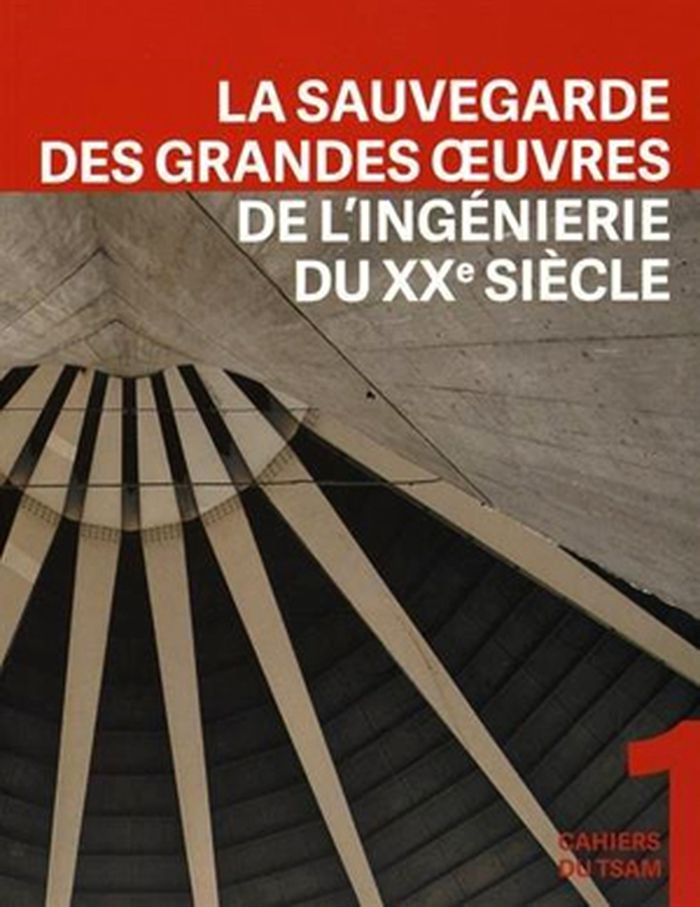
Consacré à la sauvegarde des grandes oeuvres de l’ingénierie du XXe siècle, ce premier numéro des Cahiers du TSAM explore le devenir de certaines des plus remarquables et emblématiques structures en béton du siècle passé. A travers les fi gures d’héroïques constructeurs, il interroge l’héritage construit des ingénieurs, convoquant les plus audacieux d’entre eux(...)
$74.00
(disponible sur commande)
Résumé:
Consacré à la sauvegarde des grandes oeuvres de l’ingénierie du XXe siècle, ce premier numéro des Cahiers du TSAM explore le devenir de certaines des plus remarquables et emblématiques structures en béton du siècle passé. A travers les fi gures d’héroïques constructeurs, il interroge l’héritage construit des ingénieurs, convoquant les plus audacieux d’entre eux(...)
Titre:
La sauvegarde des grandes oeuvres de l'ingénierie du XXe siècle
Actions:
Prix:
$74.00
(disponible sur commande)
Résumé:
Consacré à la sauvegarde des grandes oeuvres de l’ingénierie du XXe siècle, ce premier numéro des Cahiers du TSAM explore le devenir de certaines des plus remarquables et emblématiques structures en béton du siècle passé. A travers les fi gures d’héroïques constructeurs, il interroge l’héritage construit des ingénieurs, convoquant les plus audacieux d’entre eux (Freyssinet, Isler, Maillart, Nervi, Vierendeel, etc.). Alors que la sauvegarde de l’architecture du XXe siècle s’est récemment constituée en discipline à part entière, la préservation des ouvrages de l’ingénierie de cette période est encore balbutiante. Considérés trop souvent sous le seul point de vue de la sécurité ou de la maintenance, ces ouvrages s’avèrent parfois de véritables chefs-d’oeuvre, jalons d’un «art de l’ingénieur» à la frontière entre performance technique et beauté plastique. Ces cahiers sont donc l’occasion d’initier, à l’appui d’exemples et de projets de sauvegarde concrets, une sensibilisation aux enjeux patrimoniaux dans le domaine de l’ingénierie. This first issue of the Cahiers du TSAM, dedicated to the conservation of the 20th century’s great works of engineering, aims to explore the future of some of the most remarkable and emblematic concrete structures of the previous century. Through the personalities of the heroic builders, this publication aims to consider what the engineers – the most daring of whom (Freyssinet, Isler, Maillart, Nervi, Vierendeel, etc.) are represented here – bequeathed to the century. While the conserva-tion of 20th century architecture has in recent years been seen as a discipline in its own right, the conservation of 20th century engineering is still in its infancy. Considered too offen purely from the point of view of security or maintenance, these works are now often seen as true masterpieces, cutting edge achievements of the “engineer’s art”, as stunning for their plastic beauty as for their technical performance. This publication provides an opportunity to stimulate, with reference to concrete examples and projects, an awareness of the heritage challenges to be addressed in the fi eld of engineering.
La sauvegarde des grandes oeuvres de l'ingénierie du XXe siècle
Actions:
Prix:
$74.00
(disponible sur commande)
Résumé:
Consacré à la sauvegarde des grandes oeuvres de l’ingénierie du XXe siècle, ce premier numéro des Cahiers du TSAM explore le devenir de certaines des plus remarquables et emblématiques structures en béton du siècle passé. A travers les fi gures d’héroïques constructeurs, il interroge l’héritage construit des ingénieurs, convoquant les plus audacieux d’entre eux (Freyssinet, Isler, Maillart, Nervi, Vierendeel, etc.). Alors que la sauvegarde de l’architecture du XXe siècle s’est récemment constituée en discipline à part entière, la préservation des ouvrages de l’ingénierie de cette période est encore balbutiante. Considérés trop souvent sous le seul point de vue de la sécurité ou de la maintenance, ces ouvrages s’avèrent parfois de véritables chefs-d’oeuvre, jalons d’un «art de l’ingénieur» à la frontière entre performance technique et beauté plastique. Ces cahiers sont donc l’occasion d’initier, à l’appui d’exemples et de projets de sauvegarde concrets, une sensibilisation aux enjeux patrimoniaux dans le domaine de l’ingénierie. This first issue of the Cahiers du TSAM, dedicated to the conservation of the 20th century’s great works of engineering, aims to explore the future of some of the most remarkable and emblematic concrete structures of the previous century. Through the personalities of the heroic builders, this publication aims to consider what the engineers – the most daring of whom (Freyssinet, Isler, Maillart, Nervi, Vierendeel, etc.) are represented here – bequeathed to the century. While the conserva-tion of 20th century architecture has in recent years been seen as a discipline in its own right, the conservation of 20th century engineering is still in its infancy. Considered too offen purely from the point of view of security or maintenance, these works are now often seen as true masterpieces, cutting edge achievements of the “engineer’s art”, as stunning for their plastic beauty as for their technical performance. This publication provides an opportunity to stimulate, with reference to concrete examples and projects, an awareness of the heritage challenges to be addressed in the fi eld of engineering.
Classification:
livres
livres
Publication:
mars 2016
mars 2016
Sujet:
Structures d’ingénierie
Structures d’ingénierie
Classification:
livres
livres
Actions:
Exemplaires:
Description:
158 pages : illustrations (some color) ; 34 x 25 cm
Description:
158 pages : illustrations (some color) ; 34 x 25 cm
Auteur:
Sujet:
Publication:
Amsterdam : Stedelijk Museum Amsterdam, [2018], ©2018
Amsterdam : Stedelijk Museum Amsterdam, [2018], ©2018
Titre:
Psyop : an anthology / authors, Karen Archey [and many others] ; co-editors, Karen Archey, Metahaven.
Actions:
Exemplaires:
Description:
158 pages : illustrations (some color) ; 34 x 25 cm
Psyop : an anthology / authors, Karen Archey [and many others] ; co-editors, Karen Archey, Metahaven.
Actions:
Exemplaires:
Description:
158 pages : illustrations (some color) ; 34 x 25 cm
Classification:
livres
livres
Publication:
Amsterdam : Stedelijk Museum Amsterdam, [2018], ©2018
Amsterdam : Stedelijk Museum Amsterdam, [2018], ©2018
Auteur:
Sujet:
Classification:
livres
livres
Actions:
Exemplaires:
Description:
viii, 204 pages ; 19 cm
Description:
viii, 204 pages ; 19 cm
Auteur:
Sujet:
Publication:
Toronto, Ontario, Canada : Between the Lines, 2019., ©2019
Toronto, Ontario, Canada : Between the Lines, 2019., ©2019
Titre:
Feminist city : a field guide / Leslie Kern.
Actions:
Exemplaires:
Description:
viii, 204 pages ; 19 cm
Feminist city : a field guide / Leslie Kern.
Actions:
Exemplaires:
Description:
viii, 204 pages ; 19 cm
Classification:
livres
livres
Publication:
Toronto, Ontario, Canada : Between the Lines, 2019., ©2019
Toronto, Ontario, Canada : Between the Lines, 2019., ©2019
Auteur:
Sujet:
Classification:
livres
livres
Actions:
Exemplaires:
Description:
x, 368 pages : illustrations, maps ; 24 cm
Description:
x, 368 pages : illustrations, maps ; 24 cm
Auteur:
Sujet:
Publication:
Washington, D.C. : Woodrow Wilson Center Press ; Baltimore : Johns Hopkins University Press, ©2009., ©2009
Washington, D.C. : Woodrow Wilson Center Press ; Baltimore : Johns Hopkins University Press, ©2009., ©2009
Titre:
Cities after the fall of communism : reshaping cultural landscapes and European identity / edited by John Czaplicka, Nida Gelazis, and Blair A. Ruble.
Actions:
Exemplaires:
Description:
x, 368 pages : illustrations, maps ; 24 cm
Cities after the fall of communism : reshaping cultural landscapes and European identity / edited by John Czaplicka, Nida Gelazis, and Blair A. Ruble.
Actions:
Exemplaires:
Description:
x, 368 pages : illustrations, maps ; 24 cm
Classification:
livres
livres
Publication:
Washington, D.C. : Woodrow Wilson Center Press ; Baltimore : Johns Hopkins University Press, ©2009., ©2009
Washington, D.C. : Woodrow Wilson Center Press ; Baltimore : Johns Hopkins University Press, ©2009., ©2009
Auteur:
Sujet:
Classification:
audio
audio
Actions:
Description:
1 online resource.
Auteur:
Sujet:
Publication:
[Place of publication not identified] : The Funambulist, 2014.
[Place of publication not identified] : The Funambulist, 2014.
Classification:
audio
audio
Publication:
[Place of publication not identified] : The Funambulist, 2014.
[Place of publication not identified] : The Funambulist, 2014.
Auteur:
Sujet:
Classification:
livres
livres
Actions:
Exemplaires:
Description:
xiii, 336 pages ; 21 cm.
Description:
xiii, 336 pages ; 21 cm.
Auteur:
Sujet:
Publication:
Minneapolis : University of Minnesota Press, [2016]
Minneapolis : University of Minnesota Press, [2016]
Titre:
Manifestly Haraway / Donna J. Haraway.
Actions:
Exemplaires:
Description:
xiii, 336 pages ; 21 cm.
Manifestly Haraway / Donna J. Haraway.
Actions:
Exemplaires:
Description:
xiii, 336 pages ; 21 cm.
Classification:
livres
livres
Publication:
Minneapolis : University of Minnesota Press, [2016]
Minneapolis : University of Minnesota Press, [2016]
Auteur:
Sujet:
Classification:
livres
livres
Titre:
Cycles : the architects who never threw anything away / Pamela Prado, Pedro Ignacio Alonso (eds.).
Cycles : the architects who never threw anything away / Pamela Prado, Pedro Ignacio Alonso (eds.).
Actions:
Exemplaires:
Description:
142 pages : illustrations (chiefly color) ; 23 cm
Description:
142 pages : illustrations (chiefly color) ; 23 cm
Auteur:
Sujet:
Publication:
[Porto] : Circo de Ideias, [2022]
[Porto] : Circo de Ideias, [2022]
Titre:
Cycles : the architects who never threw anything away / Pamela Prado, Pedro Ignacio Alonso (eds.).
Actions:
Exemplaires:
Description:
142 pages : illustrations (chiefly color) ; 23 cm
Cycles : the architects who never threw anything away / Pamela Prado, Pedro Ignacio Alonso (eds.).
Actions:
Exemplaires:
Description:
142 pages : illustrations (chiefly color) ; 23 cm
Classification:
livres
livres
Publication:
[Porto] : Circo de Ideias, [2022]
[Porto] : Circo de Ideias, [2022]
Auteur:
Sujet:
Classification:
livres
livres

Prix:
$39.99
(disponible sur commande)
Résumé:
The National Mall in Washington, D.C., has held an important place in the American psyche since the early nineteenth century. Home to monuments and museums dedicated to the ideals upon which the United States rests, the Mall serves as a gathering place for public protest and celebration. But as the nation ages and the population diversifies, demands for additional(...)
$39.99
(disponible sur commande)
Résumé:
The National Mall in Washington, D.C., has held an important place in the American psyche since the early nineteenth century. Home to monuments and museums dedicated to the ideals upon which the United States rests, the Mall serves as a gathering place for public protest and celebration. But as the nation ages and the population diversifies, demands for additional(...)
Sujet:
Théorie de l’urbanisme
Théorie de l’urbanisme
Publication:
avril 2008, Baltimore
avril 2008, Baltimore
Titre:
The national mail: rethinking Washington's monumental core
Actions:
Prix:
$39.99
(disponible sur commande)
Résumé:
The National Mall in Washington, D.C., has held an important place in the American psyche since the early nineteenth century. Home to monuments and museums dedicated to the ideals upon which the United States rests, the Mall serves as a gathering place for public protest and celebration. But as the nation ages and the population diversifies, demands for additional structures and uses have sparked debates over the Mall's future and the necessity of preserving its legacy and the vision of its designers. The National Mall addresses these issues with a novel and compelling collection of essays, the work of leading design professionals, historians, and social scientists. Supplemented by eye-catching illustrations and photographs, this cross-disciplinary examination follows the discussion over the Mall's design and use, from its conceptual origins as part of Pierre Charles L'Enfant's vision for the capital to the 1902 McMillan Plan to the present day and beyond. It assesses how architectural, societal, and political changes have altered the park-like space between the Capitol and the Lincoln Memorial and explores the influence that disparate interest groups and creeping corporatism have already had on -- and are likely to exert upon -- America's public square. The National Mall presents an overarching account of how a democratic society plans, creates, and expands a national ceremonial space, opening the way for a broadly based inquiry into the Mall as it was, is, and will become. Urban planners, architectural and design historians, and engaged citizens will be challenged and well served by the thoughtful essays collected by Nathan Glazer and Cynthia R. Field. Nathan Glazer is an emeritus professor of sociology and education at Harvard University. He is the author or editor of many books on public policy and urban problems, among them The Public Face of Architecture and From a Cause to a Style: Modernist Architecture's Encounter with the American City. Cynthia R. Field is the architectural historian emerita at the Smithsonian Institution and a faculty member at the Corcoran College of Art. She is the coauthor of The Castle: An Illustrated History of the Smithsonian Building.
The national mail: rethinking Washington's monumental core
Actions:
Prix:
$39.99
(disponible sur commande)
Résumé:
The National Mall in Washington, D.C., has held an important place in the American psyche since the early nineteenth century. Home to monuments and museums dedicated to the ideals upon which the United States rests, the Mall serves as a gathering place for public protest and celebration. But as the nation ages and the population diversifies, demands for additional structures and uses have sparked debates over the Mall's future and the necessity of preserving its legacy and the vision of its designers. The National Mall addresses these issues with a novel and compelling collection of essays, the work of leading design professionals, historians, and social scientists. Supplemented by eye-catching illustrations and photographs, this cross-disciplinary examination follows the discussion over the Mall's design and use, from its conceptual origins as part of Pierre Charles L'Enfant's vision for the capital to the 1902 McMillan Plan to the present day and beyond. It assesses how architectural, societal, and political changes have altered the park-like space between the Capitol and the Lincoln Memorial and explores the influence that disparate interest groups and creeping corporatism have already had on -- and are likely to exert upon -- America's public square. The National Mall presents an overarching account of how a democratic society plans, creates, and expands a national ceremonial space, opening the way for a broadly based inquiry into the Mall as it was, is, and will become. Urban planners, architectural and design historians, and engaged citizens will be challenged and well served by the thoughtful essays collected by Nathan Glazer and Cynthia R. Field. Nathan Glazer is an emeritus professor of sociology and education at Harvard University. He is the author or editor of many books on public policy and urban problems, among them The Public Face of Architecture and From a Cause to a Style: Modernist Architecture's Encounter with the American City. Cynthia R. Field is the architectural historian emerita at the Smithsonian Institution and a faculty member at the Corcoran College of Art. She is the coauthor of The Castle: An Illustrated History of the Smithsonian Building.
Classification:
livres
livres
Publication:
avril 2008, Baltimore
avril 2008, Baltimore
Sujet:
Théorie de l’urbanisme
Théorie de l’urbanisme


