


687 Résultats
Classification:
livres
livres
Titre:
Enoura Observatory
Enoura Observatory
Actions:
Prix:
$93.00
(disponible en magasin)
Résumé:
Apart from photography, Japanese artist Hiroshi Sugimoto has been working in sculpture, performing arts and architecture for more than 20 years. Since the early 2010s, he has been constructing the Enoura Observatory, and with his singular vision he has brought together ancient and contemporary Japanese traditions in one art and architectural complex. This book provides an(...)
$93.00
(disponible en magasin)
Résumé:
Apart from photography, Japanese artist Hiroshi Sugimoto has been working in sculpture, performing arts and architecture for more than 20 years. Since the early 2010s, he has been constructing the Enoura Observatory, and with his singular vision he has brought together ancient and contemporary Japanese traditions in one art and architectural complex. This book provides an(...)
Titre:
Enoura Observatory
Actions:
Prix:
$93.00
(disponible en magasin)
Résumé:
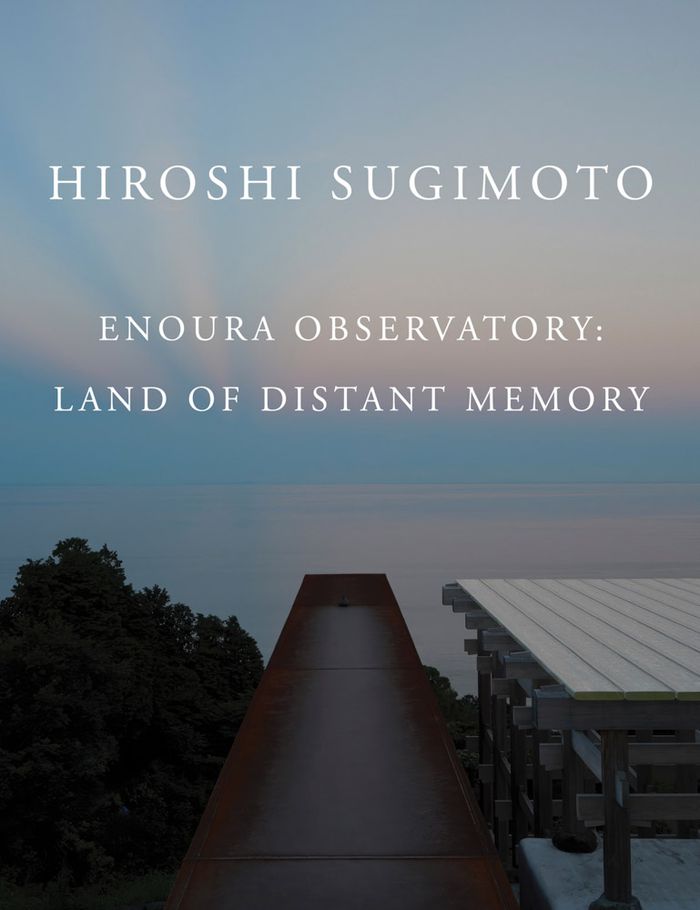
Apart from photography, Japanese artist Hiroshi Sugimoto has been working in sculpture, performing arts and architecture for more than 20 years. Since the early 2010s, he has been constructing the Enoura Observatory, and with his singular vision he has brought together ancient and contemporary Japanese traditions in one art and architectural complex. This book provides an account of this stunning multidisciplinary project. The Observatory, part of the artist's Odawara Art Foundation, is sited on a hilly area covered with citrus trees in Odawara, nestled against the outer rim of the Hakone Mountains and overlooking Sagami Bay. Odawara is home to groups of artisans with mastery of sophisticated techniques that have been handed down for centuries. Sugimoto has constructed the Enoura Observatory using these techniques, which are growing increasingly difficult to preserve. He envisions it as a forum for disseminating art and culture both within Japan and to the rest of the world. The stunning photographs in ''Enoura Observatory: Land of Distant Memories" reveal Sugimoto's poetic vision for this total work of art that is the culmination of his art practice.
Enoura Observatory
Actions:
Prix:
$93.00
(disponible en magasin)
Résumé:
Apart from photography, Japanese artist Hiroshi Sugimoto has been working in sculpture, performing arts and architecture for more than 20 years. Since the early 2010s, he has been constructing the Enoura Observatory, and with his singular vision he has brought together ancient and contemporary Japanese traditions in one art and architectural complex. This book provides an account of this stunning multidisciplinary project. The Observatory, part of the artist's Odawara Art Foundation, is sited on a hilly area covered with citrus trees in Odawara, nestled against the outer rim of the Hakone Mountains and overlooking Sagami Bay. Odawara is home to groups of artisans with mastery of sophisticated techniques that have been handed down for centuries. Sugimoto has constructed the Enoura Observatory using these techniques, which are growing increasingly difficult to preserve. He envisions it as a forum for disseminating art and culture both within Japan and to the rest of the world. The stunning photographs in ''Enoura Observatory: Land of Distant Memories" reveal Sugimoto's poetic vision for this total work of art that is the culmination of his art practice.
Classification:
livres
livres
Publication:
septembre 2025
septembre 2025
Classification:
livres
livres
Actions:
Prix:
$65.00
(disponible en magasin)
Résumé:
In the summer of 2018, Ursula Biemann was commissioned to undertake an extended field trip across the South of Colombia. Many surprising developments ensued from this initial journey in the Amazonian rainforest where the histories of colonial conquest and natural science intertwine. Forest Mind is the result of a series of territorial engagements through video-making,(...)
$65.00
(disponible en magasin)
Résumé:
In the summer of 2018, Ursula Biemann was commissioned to undertake an extended field trip across the South of Colombia. Many surprising developments ensued from this initial journey in the Amazonian rainforest where the histories of colonial conquest and natural science intertwine. Forest Mind is the result of a series of territorial engagements through video-making,(...)
Titre:
Forest mind: On the interconnection of all life
Actions:
Prix:
$65.00
(disponible en magasin)
Résumé:
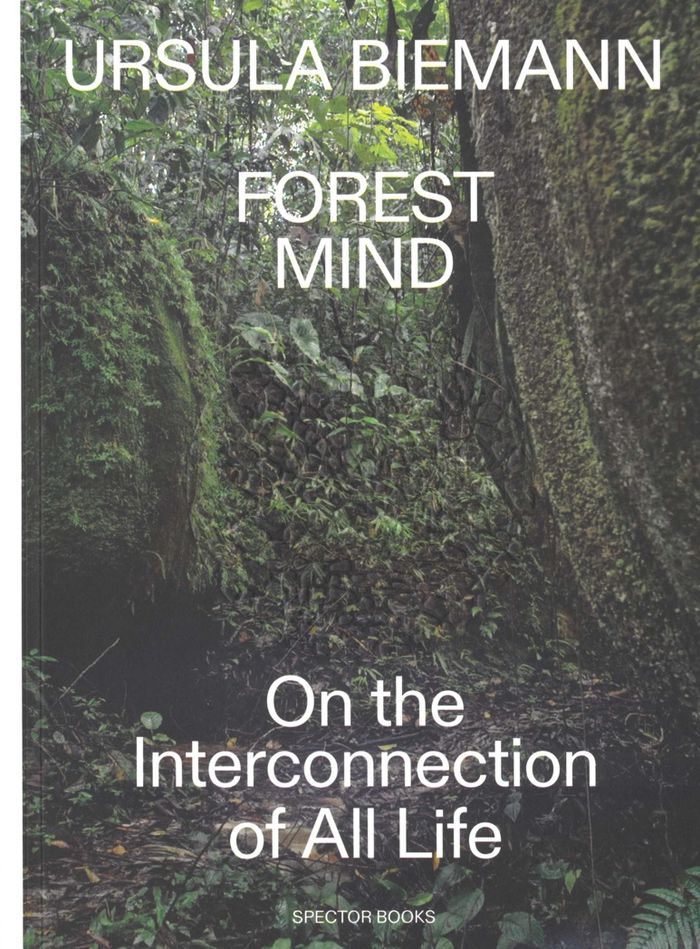
In the summer of 2018, Ursula Biemann was commissioned to undertake an extended field trip across the South of Colombia. Many surprising developments ensued from this initial journey in the Amazonian rainforest where the histories of colonial conquest and natural science intertwine. Forest Mind is the result of a series of territorial engagements through video-making, photography, academic research, personal narrative, and the co-creation of an Indigenous University with the Inga people of Colombia. The explorations focus on the intelligence in nature from both shamanic and scientific perspectives. In these tropical forests, human and nonhuman territorial projects become entangled, calling for new ways of generating knowledge that spur the imagination. The Indigenous science of Ayahuasca as it is practiced by the traditional medics in Amazonia, is largely based in visions evoked by the psychoactive plant. Here, knowing does not only occur from a distance by describing, naming, and exploiting, but as an encounter between minds and worlds. The artist’s research brings to light contemporary Western science that has already been practiced by ancestral medics for millennia, allowing them to interact at the molecular level of DNA. Experimenting with new genetic technologies in collaboration with the ETH lab in Zurich, the visual universe of this project partially derives from biological materials and video-images of the rainforest which were encoded in one and the same DNA strand. In this personal quest, Swiss artist and author Ursula Biemann pursues her long-term inquiry at the intersection of art, ecology and indigenous cosmologies. The artist book presents a biosemiotics project that takes a deep dive into the mechanics of the interconnectedness of all life, and reflects on the active, performative role images play in merging mind and forest.
Forest mind: On the interconnection of all life
Actions:
Prix:
$65.00
(disponible en magasin)
Résumé:
In the summer of 2018, Ursula Biemann was commissioned to undertake an extended field trip across the South of Colombia. Many surprising developments ensued from this initial journey in the Amazonian rainforest where the histories of colonial conquest and natural science intertwine. Forest Mind is the result of a series of territorial engagements through video-making, photography, academic research, personal narrative, and the co-creation of an Indigenous University with the Inga people of Colombia. The explorations focus on the intelligence in nature from both shamanic and scientific perspectives. In these tropical forests, human and nonhuman territorial projects become entangled, calling for new ways of generating knowledge that spur the imagination. The Indigenous science of Ayahuasca as it is practiced by the traditional medics in Amazonia, is largely based in visions evoked by the psychoactive plant. Here, knowing does not only occur from a distance by describing, naming, and exploiting, but as an encounter between minds and worlds. The artist’s research brings to light contemporary Western science that has already been practiced by ancestral medics for millennia, allowing them to interact at the molecular level of DNA. Experimenting with new genetic technologies in collaboration with the ETH lab in Zurich, the visual universe of this project partially derives from biological materials and video-images of the rainforest which were encoded in one and the same DNA strand. In this personal quest, Swiss artist and author Ursula Biemann pursues her long-term inquiry at the intersection of art, ecology and indigenous cosmologies. The artist book presents a biosemiotics project that takes a deep dive into the mechanics of the interconnectedness of all life, and reflects on the active, performative role images play in merging mind and forest.
Classification:
livres
livres
Publication:
octobre 2022
octobre 2022
Classification:
livres
livres
Actions:
Prix:
$67.00
(disponible sur commande)
Résumé:
Once the bastion of the haute bourgeoisie, the town house has now been embraced by families with young children, single urban professionals, and retired couples, all looking for more comfortable city or suburban living. Architect Alexander Gorlin explores an array of diverse town house designs (often referred to by different terms in different parts of the country) that(...)
$67.00
(disponible sur commande)
Résumé:
Once the bastion of the haute bourgeoisie, the town house has now been embraced by families with young children, single urban professionals, and retired couples, all looking for more comfortable city or suburban living. Architect Alexander Gorlin explores an array of diverse town house designs (often referred to by different terms in different parts of the country) that(...)
Titre:
Creating the new American town house
Actions:
Prix:
$67.00
(disponible sur commande)
Résumé:
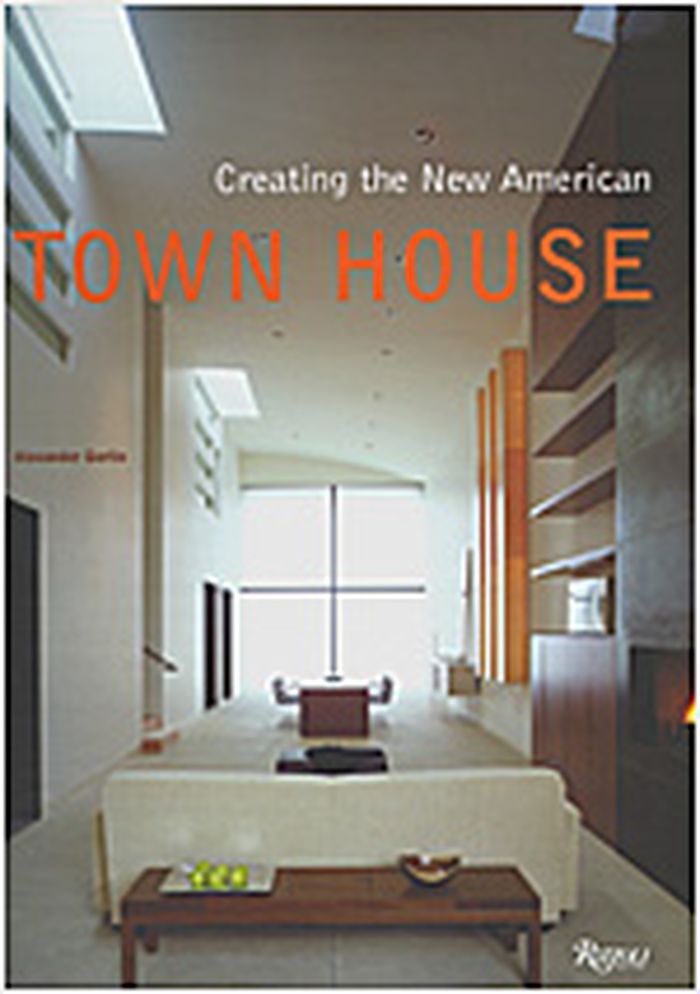
Once the bastion of the haute bourgeoisie, the town house has now been embraced by families with young children, single urban professionals, and retired couples, all looking for more comfortable city or suburban living. Architect Alexander Gorlin explores an array of diverse town house designs (often referred to by different terms in different parts of the country) that carry this familiar symbol of architectural innovation and refinement into the twenty-first century. "Creating the new American town house" features cutting-edge town houses that each draw from architectural tradition while achieving originality by both breaking from and adhering to the limitations of the town house form. Within the typical five-story frame and two parallel walls presented here are livable design solutions to the constraints of this classic housing type. Ranging from sites in New York, San Francisco, Seattle, Los Angeles, and Washington, DC, each of the buildings featured in "Creating the new American town house" is designed by such celebrated architects as Steven Ehrlich, Hugh Newell Jacobson, Stanley Saitowitz, and 1100 Architect. Each project is illustrated with full-color photography that showcases the interior design as well as plans and drawings. Alexander Gorlin’s text continues the discourse begun in his "The new American town house", surveying the adaptation of this beloved urban dwelling to the demands of a new century.
Creating the new American town house
Actions:
Prix:
$67.00
(disponible sur commande)
Résumé:
Once the bastion of the haute bourgeoisie, the town house has now been embraced by families with young children, single urban professionals, and retired couples, all looking for more comfortable city or suburban living. Architect Alexander Gorlin explores an array of diverse town house designs (often referred to by different terms in different parts of the country) that carry this familiar symbol of architectural innovation and refinement into the twenty-first century. "Creating the new American town house" features cutting-edge town houses that each draw from architectural tradition while achieving originality by both breaking from and adhering to the limitations of the town house form. Within the typical five-story frame and two parallel walls presented here are livable design solutions to the constraints of this classic housing type. Ranging from sites in New York, San Francisco, Seattle, Los Angeles, and Washington, DC, each of the buildings featured in "Creating the new American town house" is designed by such celebrated architects as Steven Ehrlich, Hugh Newell Jacobson, Stanley Saitowitz, and 1100 Architect. Each project is illustrated with full-color photography that showcases the interior design as well as plans and drawings. Alexander Gorlin’s text continues the discourse begun in his "The new American town house", surveying the adaptation of this beloved urban dwelling to the demands of a new century.
Classification:
livres
livres
Publication:
août 2005, New York
août 2005, New York
Sujet:
Architecture résidentielle
Architecture résidentielle
Classification:
livres
livres
Actions:
Prix:
$59.95
(disponible sur commande)
Résumé:
"Suspensions of Perception" is a major historical study of human attention and its volatile role in modern Western culture. It argues that the ways in which we intently look at or listen to anything result from crucial changes in the nature of perception that can be traced back to(...)
$59.95
(disponible sur commande)
Résumé:
"Suspensions of Perception" is a major historical study of human attention and its volatile role in modern Western culture. It argues that the ways in which we intently look at or listen to anything result from crucial changes in the nature of perception that can be traced back to(...)
Titre:
Suspensions of perception : attention, spectacle, and modern culture
Actions:
Prix:
$59.95
(disponible sur commande)
Résumé:
"Suspensions of Perception" is a major historical study of human attention and its volatile role in modern Western culture. It argues that the ways in which we intently look at or listen to anything result from crucial changes in the nature of perception that can be traced back to the second half of the nineteenth century. Focusing on the period from about 1880 to 1905, Jonathan Crary examines the connections between the modernization of subjectivity and the dramatic expansion and industrialization of visual/auditory culture. At the core of his project is the paradoxical nature of modern attention, which was both a fundamental condition of individual freedom, creativity, and experience and a central element in the efficient functioning of economic and disciplinary institutions as well as the emerging spaces of mass consumption and spectacle. Crary approaches these issues through multiple analyses of single works by three key modernist painters--Manet, Seurat, and Cézanne--who each engaged in a singular confrontation with the disruptions, vacancies, and rifts within a perceptual field. Each in his own way discovered that sustained attentiveness, rather than fixing or securing the world, led to perceptual disintegration and loss of presence, and each used this discovery as the basis for a reinvention of representational practices. Suspensions of Perception decisively relocates the problem of aesthetic contemplation within a broader collective encounter with the unstable nature of perception--in psychology, philosophy, neurology, early cinema, and photography. In doing so, it provides a historical framework for understanding the current social crisis of attention amid the accelerating metamorphoses of our contemporary technological culture.
Suspensions of perception : attention, spectacle, and modern culture
Actions:
Prix:
$59.95
(disponible sur commande)
Résumé:
"Suspensions of Perception" is a major historical study of human attention and its volatile role in modern Western culture. It argues that the ways in which we intently look at or listen to anything result from crucial changes in the nature of perception that can be traced back to the second half of the nineteenth century. Focusing on the period from about 1880 to 1905, Jonathan Crary examines the connections between the modernization of subjectivity and the dramatic expansion and industrialization of visual/auditory culture. At the core of his project is the paradoxical nature of modern attention, which was both a fundamental condition of individual freedom, creativity, and experience and a central element in the efficient functioning of economic and disciplinary institutions as well as the emerging spaces of mass consumption and spectacle. Crary approaches these issues through multiple analyses of single works by three key modernist painters--Manet, Seurat, and Cézanne--who each engaged in a singular confrontation with the disruptions, vacancies, and rifts within a perceptual field. Each in his own way discovered that sustained attentiveness, rather than fixing or securing the world, led to perceptual disintegration and loss of presence, and each used this discovery as the basis for a reinvention of representational practices. Suspensions of Perception decisively relocates the problem of aesthetic contemplation within a broader collective encounter with the unstable nature of perception--in psychology, philosophy, neurology, early cinema, and photography. In doing so, it provides a historical framework for understanding the current social crisis of attention amid the accelerating metamorphoses of our contemporary technological culture.
Classification:
livres
livres
Publication:
octobre 1999, Cambridge
octobre 1999, Cambridge
Sujet:
Théorie de l’architecture
Théorie de l’architecture
Classification:
livres
livres
Actions:
Prix:
$49.95
(disponible sur commande)
Résumé:
"Suspensions of Perception" is a major historical study of human attention and its volatile role in modern Western culture. It argues that the ways in which we intently look at or listen to anything result from crucial changes in the nature of perception that can be traced back to(...)
$49.95
(disponible sur commande)
Résumé:
"Suspensions of Perception" is a major historical study of human attention and its volatile role in modern Western culture. It argues that the ways in which we intently look at or listen to anything result from crucial changes in the nature of perception that can be traced back to(...)
Titre:
Suspensions of perception: attention, spectacle, and modern culture
Actions:
Prix:
$49.95
(disponible sur commande)
Résumé:
"Suspensions of Perception" is a major historical study of human attention and its volatile role in modern Western culture. It argues that the ways in which we intently look at or listen to anything result from crucial changes in the nature of perception that can be traced back to the second half of the nineteenth century. Focusing on the period from about 1880 to 1905, Jonathan Crary examines the connections between the modernization of subjectivity and the dramatic expansion and industrialization of visual/auditory culture. At the core of his project is the paradoxical nature of modern attention, which was both a fundamental condition of individual freedom, creativity, and experience and a central element in the efficient functioning of economic and disciplinary institutions as well as the emerging spaces of mass consumption and spectacle. Crary approaches these issues through multiple analyses of single works by three key modernist painters--Manet, Seurat, and Cézanne--who each engaged in a singular confrontation with the disruptions, vacancies, and rifts within a perceptual field. Each in his own way discovered that sustained attentiveness, rather than fixing or securing the world, led to perceptual disintegration and loss of presence, and each used this discovery as the basis for a reinvention of representational practices. Suspensions of Perception decisively relocates the problem of aesthetic contemplation within a broader collective encounter with the unstable nature of perception--in psychology, philosophy, neurology, early cinema, and photography. In doing so, it provides a historical framework for understanding the current social crisis of attention amid the accelerating metamorphoses of our contemporary technological culture.
Suspensions of perception: attention, spectacle, and modern culture
Actions:
Prix:
$49.95
(disponible sur commande)
Résumé:
"Suspensions of Perception" is a major historical study of human attention and its volatile role in modern Western culture. It argues that the ways in which we intently look at or listen to anything result from crucial changes in the nature of perception that can be traced back to the second half of the nineteenth century. Focusing on the period from about 1880 to 1905, Jonathan Crary examines the connections between the modernization of subjectivity and the dramatic expansion and industrialization of visual/auditory culture. At the core of his project is the paradoxical nature of modern attention, which was both a fundamental condition of individual freedom, creativity, and experience and a central element in the efficient functioning of economic and disciplinary institutions as well as the emerging spaces of mass consumption and spectacle. Crary approaches these issues through multiple analyses of single works by three key modernist painters--Manet, Seurat, and Cézanne--who each engaged in a singular confrontation with the disruptions, vacancies, and rifts within a perceptual field. Each in his own way discovered that sustained attentiveness, rather than fixing or securing the world, led to perceptual disintegration and loss of presence, and each used this discovery as the basis for a reinvention of representational practices. Suspensions of Perception decisively relocates the problem of aesthetic contemplation within a broader collective encounter with the unstable nature of perception--in psychology, philosophy, neurology, early cinema, and photography. In doing so, it provides a historical framework for understanding the current social crisis of attention amid the accelerating metamorphoses of our contemporary technological culture.
Classification:
livres
livres
Publication:
août 2001, Cambridge
août 2001, Cambridge
Sujet:
Théorie de l’architecture
Théorie de l’architecture
Classification:
livres
livres
Actions:
Prix:
$49.95
(disponible en magasin)
Résumé:
Point Saint-Charles, a historically white working-class neighbourhood with a strong Irish and French presence, and Little Burgundy, a multiracial neighbourhood that is home to the city’s English-speaking Black community, face each other across Montreal’s Lachine Canal, once an artery around which work and industry in Montreal were clustered and by which these two(...)
$49.95
(disponible en magasin)
Résumé:
Point Saint-Charles, a historically white working-class neighbourhood with a strong Irish and French presence, and Little Burgundy, a multiracial neighbourhood that is home to the city’s English-speaking Black community, face each other across Montreal’s Lachine Canal, once an artery around which work and industry in Montreal were clustered and by which these two(...)
Titre:
Deindustrializing Montreal: entangled histories of race, residence, and class
Actions:
Prix:
$49.95
(disponible en magasin)
Résumé:
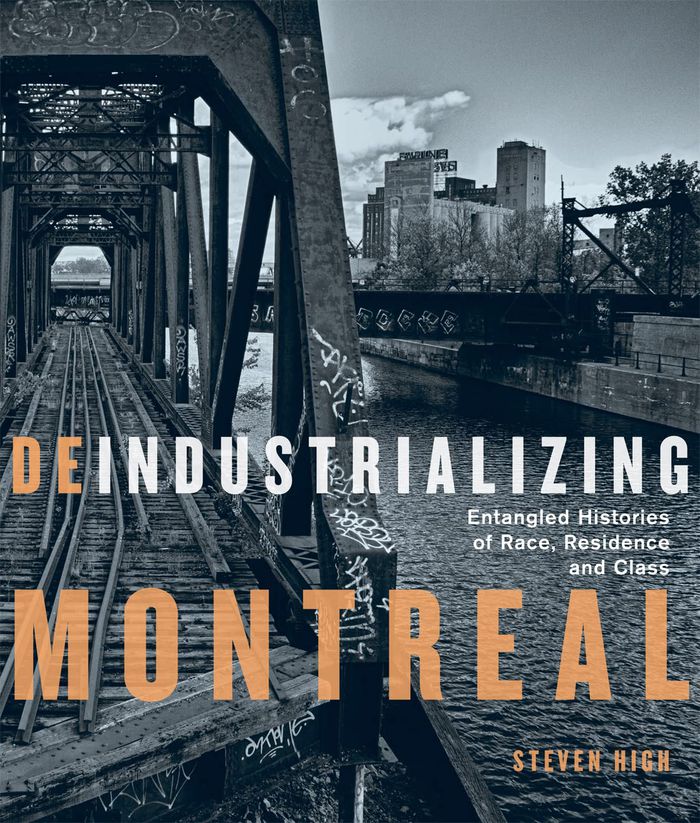
Point Saint-Charles, a historically white working-class neighbourhood with a strong Irish and French presence, and Little Burgundy, a multiracial neighbourhood that is home to the city’s English-speaking Black community, face each other across Montreal’s Lachine Canal, once an artery around which work and industry in Montreal were clustered and by which these two communities were formed and divided. ''Deindustrializing Montreal'' challenges the deepening divergence of class and race analysis by recognizing the intimate relationship between capitalism, class struggles, and racial inequality. Fundamentally, deindustrialization is a process of physical and social ruination as well as part of a wider political project that leaves working-class communities impoverished and demoralized. The structural violence of capitalism occurs gradually and out of sight, but it doesn’t play out the same for everyone. Point Saint-Charles was left to rot until it was revalorized by gentrification, whereas Little Burgundy was torn apart by urban renewal and highway construction. This historical divergence had profound consequences in how urban change has been experienced, understood, and remembered. Drawing extensive interviews, a massive and varied archive of imagery, and original photography by David Lewis into a complex chorus, Steven High brings these communities to life, tracing their history from their earliest years to their decline and their current reality. He extends the analysis of deindustrialization, often focused on single-industry towns, to cities that have seemingly made the post-industrial transition.
Deindustrializing Montreal: entangled histories of race, residence, and class
Actions:
Prix:
$49.95
(disponible en magasin)
Résumé:
Point Saint-Charles, a historically white working-class neighbourhood with a strong Irish and French presence, and Little Burgundy, a multiracial neighbourhood that is home to the city’s English-speaking Black community, face each other across Montreal’s Lachine Canal, once an artery around which work and industry in Montreal were clustered and by which these two communities were formed and divided. ''Deindustrializing Montreal'' challenges the deepening divergence of class and race analysis by recognizing the intimate relationship between capitalism, class struggles, and racial inequality. Fundamentally, deindustrialization is a process of physical and social ruination as well as part of a wider political project that leaves working-class communities impoverished and demoralized. The structural violence of capitalism occurs gradually and out of sight, but it doesn’t play out the same for everyone. Point Saint-Charles was left to rot until it was revalorized by gentrification, whereas Little Burgundy was torn apart by urban renewal and highway construction. This historical divergence had profound consequences in how urban change has been experienced, understood, and remembered. Drawing extensive interviews, a massive and varied archive of imagery, and original photography by David Lewis into a complex chorus, Steven High brings these communities to life, tracing their history from their earliest years to their decline and their current reality. He extends the analysis of deindustrialization, often focused on single-industry towns, to cities that have seemingly made the post-industrial transition.
Classification:
livres
livres
Publication:
mai 2022
mai 2022
Sujet:
Architecture de Montréal
Architecture de Montréal
Classification:
livres
livres
Titre:
Spoon
Spoon
Actions:
Prix:
$59.95
(disponible sur commande)
Résumé:
SPOON is a comprehensive view of new product design, presenting the work of 100 international designers who have emerged on an international platform in the last five years, selected by 10 critics, designers and entrepreneurs who are highly respected for their informed opinion on the international contemporary design scene. It provides a unique opportunity to see a(...)
$59.95
(disponible sur commande)
Résumé:
SPOON is a comprehensive view of new product design, presenting the work of 100 international designers who have emerged on an international platform in the last five years, selected by 10 critics, designers and entrepreneurs who are highly respected for their informed opinion on the international contemporary design scene. It provides a unique opportunity to see a(...)
Sujet:
Design d’intérieur
Design d’intérieur
Publication:
septembre 2004, London, New York
septembre 2004, London, New York
Titre:
Spoon
Actions:
Prix:
$59.95
(disponible sur commande)
Résumé:
SPOON is a comprehensive view of new product design, presenting the work of 100 international designers who have emerged on an international platform in the last five years, selected by 10 critics, designers and entrepreneurs who are highly respected for their informed opinion on the international contemporary design scene. It provides a unique opportunity to see a diverse collection of recent design projects that includes a whole range of objects: furniture, lighting, tools, utensils, high-tech products, machinery and so on. The designers are listed in alphabetical order featuring two double-page spreads for each, with recent, exemplary products accompanied with sketches, drawings, computer renderings, model and prototypes that help to explain, together with the extensive captions, the process behind each project. A short explanatory text by the curator explains the designers’ work and the characteristics that make his/her projects forward-looking and ground breaking. SPOON also features, at the end of the book, 10 ‘classic’, industrially manufactured product designs, chosen by the curators as best examples of the concept of ‘good design’. These ‘classics’ are accompanied by text written by the curators that explains their choice of designers and generally what they see to be the concept of ‘good design’. SPOON takes its place in a series of surveys identifying 100 of the most interesting, cutting-edge practitioners of key art forms. Earlier surveys include cream and Fresh Cream, for contemporary art, 10x10 for architecture and BLINK for photography.
Spoon
Actions:
Prix:
$59.95
(disponible sur commande)
Résumé:
SPOON is a comprehensive view of new product design, presenting the work of 100 international designers who have emerged on an international platform in the last five years, selected by 10 critics, designers and entrepreneurs who are highly respected for their informed opinion on the international contemporary design scene. It provides a unique opportunity to see a diverse collection of recent design projects that includes a whole range of objects: furniture, lighting, tools, utensils, high-tech products, machinery and so on. The designers are listed in alphabetical order featuring two double-page spreads for each, with recent, exemplary products accompanied with sketches, drawings, computer renderings, model and prototypes that help to explain, together with the extensive captions, the process behind each project. A short explanatory text by the curator explains the designers’ work and the characteristics that make his/her projects forward-looking and ground breaking. SPOON also features, at the end of the book, 10 ‘classic’, industrially manufactured product designs, chosen by the curators as best examples of the concept of ‘good design’. These ‘classics’ are accompanied by text written by the curators that explains their choice of designers and generally what they see to be the concept of ‘good design’. SPOON takes its place in a series of surveys identifying 100 of the most interesting, cutting-edge practitioners of key art forms. Earlier surveys include cream and Fresh Cream, for contemporary art, 10x10 for architecture and BLINK for photography.
Classification:
livres
livres
Publication:
septembre 2004, London, New York
septembre 2004, London, New York
Sujet:
Design d’intérieur
Design d’intérieur


