


714 Résultats
Classification:
livres
livres
Actions:
Prix:
$110.00
(disponible sur commande)
Résumé:
Todd Hido’s large color photographs of suburbia are lonely, forlorn, mysterious… and strangely comforting. Hido photographs the interior rooms of repossessed tract homes, and the outsides of similar houses at night whose habitation is suggested by the glow of a television set or unseen overhead bulb. Seldom does the similar evoke such melancholy. Yet rather than passing(...)
$110.00
(disponible sur commande)
Résumé:
Todd Hido’s large color photographs of suburbia are lonely, forlorn, mysterious… and strangely comforting. Hido photographs the interior rooms of repossessed tract homes, and the outsides of similar houses at night whose habitation is suggested by the glow of a television set or unseen overhead bulb. Seldom does the similar evoke such melancholy. Yet rather than passing(...)
Titre:
Todd Hido: House hunting. 20th anniversary edition
Actions:
Prix:
$110.00
(disponible sur commande)
Résumé:
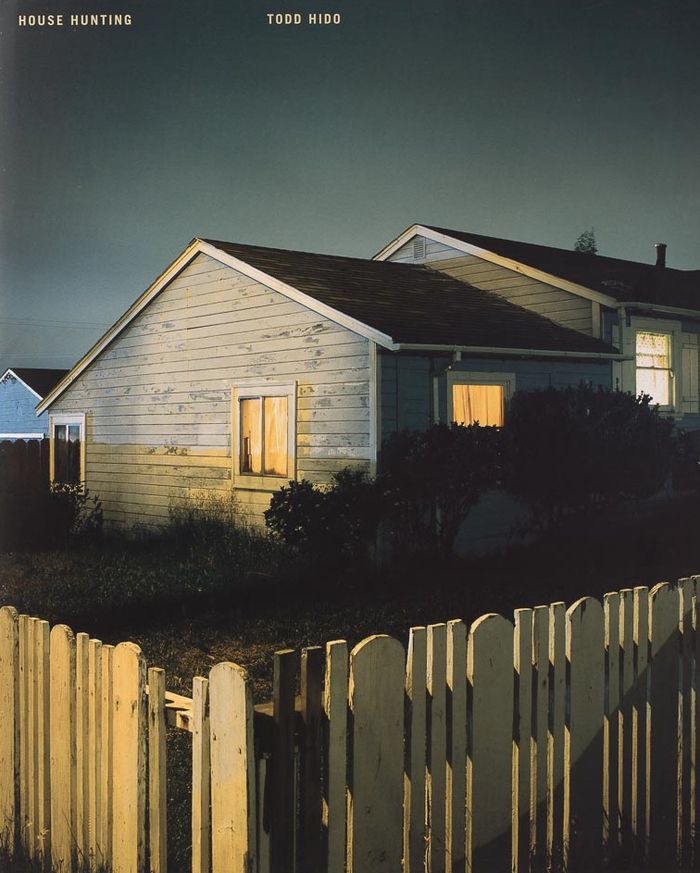
Todd Hido’s large color photographs of suburbia are lonely, forlorn, mysterious… and strangely comforting. Hido photographs the interior rooms of repossessed tract homes, and the outsides of similar houses at night whose habitation is suggested by the glow of a television set or unseen overhead bulb. Seldom does the similar evoke such melancholy. Yet rather than passing judgment on his anonymous subjects, Hido manages to turn the banal into something beautiful, imbuing his prints of interiors with soft pastels, and allowing the exteriors to glow in the cool evening air. On the occasion of the 20th anniversary of this influential book, Nazraeli Press collaborated closely with the artist to achieve a new impression of the highest possible fidelity. Printed on heavy weight matte art paper, using cutting-edge technologies in both the pre-press and production phases, this new edition of House Hunting stays true to the original design and format while delivering even more accurate color rendition and nuances in tone and saturation.
Todd Hido: House hunting. 20th anniversary edition
Actions:
Prix:
$110.00
(disponible sur commande)
Résumé:
Todd Hido’s large color photographs of suburbia are lonely, forlorn, mysterious… and strangely comforting. Hido photographs the interior rooms of repossessed tract homes, and the outsides of similar houses at night whose habitation is suggested by the glow of a television set or unseen overhead bulb. Seldom does the similar evoke such melancholy. Yet rather than passing judgment on his anonymous subjects, Hido manages to turn the banal into something beautiful, imbuing his prints of interiors with soft pastels, and allowing the exteriors to glow in the cool evening air. On the occasion of the 20th anniversary of this influential book, Nazraeli Press collaborated closely with the artist to achieve a new impression of the highest possible fidelity. Printed on heavy weight matte art paper, using cutting-edge technologies in both the pre-press and production phases, this new edition of House Hunting stays true to the original design and format while delivering even more accurate color rendition and nuances in tone and saturation.
Classification:
livres
livres
Publication:
octobre 2019
octobre 2019
Sujet:
Monographies photo
Monographies photo
Classification:
livres
livres
Titre:
Office (Object Lessons)
Office (Object Lessons)
Actions:
Prix:
$21.95
(disponible sur commande)
Résumé:
From its origins in the late 19th century to its decline in the 21st, Sheila Liming's ''Office'' narrates a cultural history of a place that has arguably been the primary site of labor in the postmodern economy. During the post-war decades of the 20th century, the office rose to prominence in culture, achieving an iconic status that is reflected in television, film,(...)
$21.95
(disponible sur commande)
Résumé:
From its origins in the late 19th century to its decline in the 21st, Sheila Liming's ''Office'' narrates a cultural history of a place that has arguably been the primary site of labor in the postmodern economy. During the post-war decades of the 20th century, the office rose to prominence in culture, achieving an iconic status that is reflected in television, film,(...)
Titre:
Office (Object Lessons)
Actions:
Prix:
$21.95
(disponible sur commande)
Résumé:
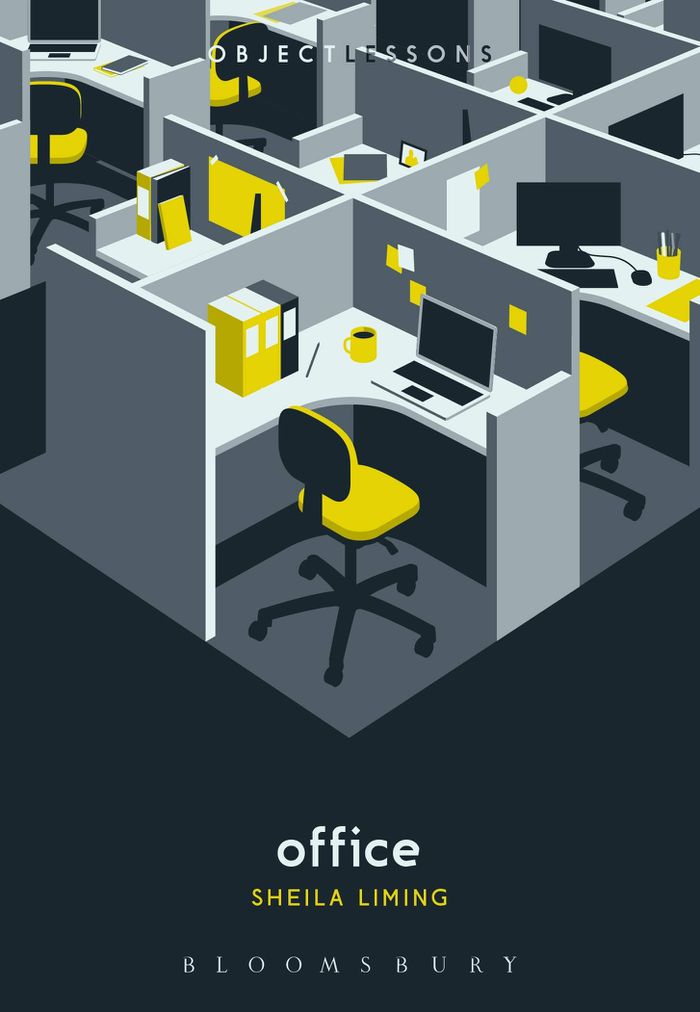
From its origins in the late 19th century to its decline in the 21st, Sheila Liming's ''Office'' narrates a cultural history of a place that has arguably been the primary site of labor in the postmodern economy. During the post-war decades of the 20th century, the office rose to prominence in culture, achieving an iconic status that is reflected in television, film, literature, and throughout the history of advertising. Most people are well versed in the clichés of office culture, despite evidence that an increasing number of us no longer work in offices. With the development of computing technology in the 1980s and 90s, the office underwent many changes. Microsoft debuted its suite of multitasking applications known as Microsoft Office in 1989, firing the first shot in the war for the office's survival. This book therefore poses the question: how did culture become organized around the idea of the office, and how will it change if the office becomes extinct?
Office (Object Lessons)
Actions:
Prix:
$21.95
(disponible sur commande)
Résumé:
From its origins in the late 19th century to its decline in the 21st, Sheila Liming's ''Office'' narrates a cultural history of a place that has arguably been the primary site of labor in the postmodern economy. During the post-war decades of the 20th century, the office rose to prominence in culture, achieving an iconic status that is reflected in television, film, literature, and throughout the history of advertising. Most people are well versed in the clichés of office culture, despite evidence that an increasing number of us no longer work in offices. With the development of computing technology in the 1980s and 90s, the office underwent many changes. Microsoft debuted its suite of multitasking applications known as Microsoft Office in 1989, firing the first shot in the war for the office's survival. This book therefore poses the question: how did culture become organized around the idea of the office, and how will it change if the office becomes extinct?
Classification:
livres
livres
Publication:
novembre 2020
novembre 2020
Classification:
livres
livres
Titre:
Sandfuture
Sandfuture
Actions:
Prix:
$33.95
(disponible sur commande)
Résumé:
'Sandfuture' is a book about the life of the architect Minoru Yamasaki (1912–1986), who remains on the margins of history despite the enormous influence of his work on American architecture and society. That Yamasaki’s most famous projects — the Pruitt-Igoe apartments in St. Louis and the original World Trade Center in New York — were both destroyed on national(...)
$33.95
(disponible sur commande)
Résumé:
'Sandfuture' is a book about the life of the architect Minoru Yamasaki (1912–1986), who remains on the margins of history despite the enormous influence of his work on American architecture and society. That Yamasaki’s most famous projects — the Pruitt-Igoe apartments in St. Louis and the original World Trade Center in New York — were both destroyed on national(...)
Titre:
Sandfuture
Actions:
Prix:
$33.95
(disponible sur commande)
Résumé:
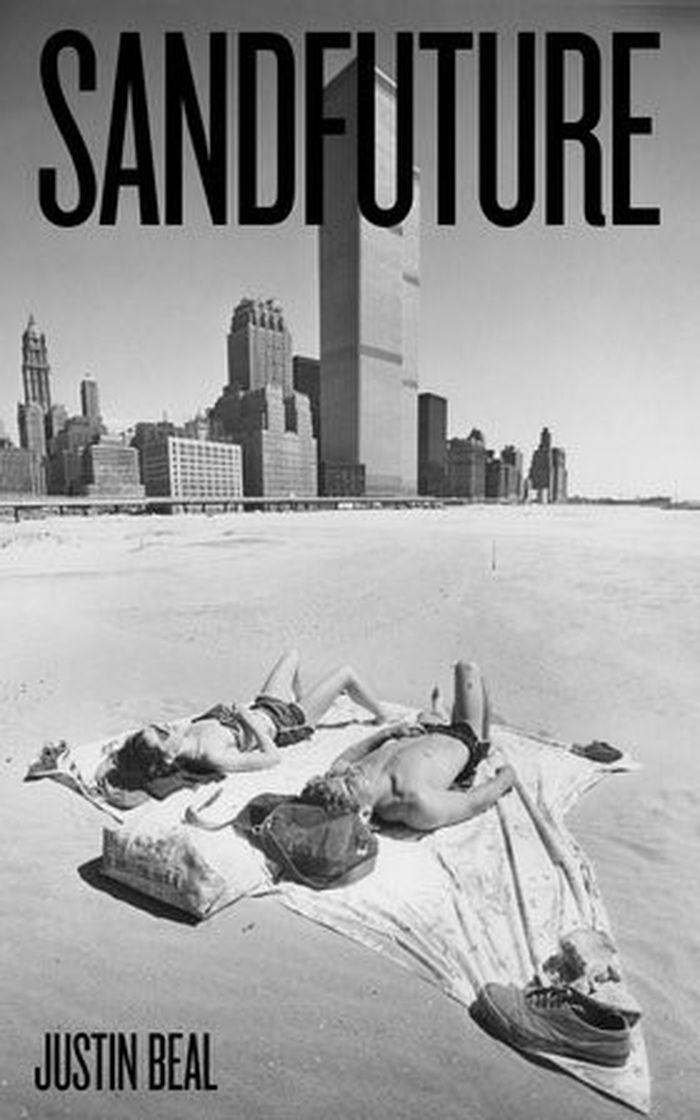
'Sandfuture' is a book about the life of the architect Minoru Yamasaki (1912–1986), who remains on the margins of history despite the enormous influence of his work on American architecture and society. That Yamasaki’s most famous projects — the Pruitt-Igoe apartments in St. Louis and the original World Trade Center in New York — were both destroyed on national television, thirty years apart, makes his relative obscurity all the more remarkable. 'Sandfuture' is also a book about an artist interrogating art and architecture’s role in culture as New York changes drastically after a decade bracketed by terrorism and natural disaster. From the central thread of Yamasaki’s life, 'Sandfuture' spirals outward to include reflections on a wide range of subjects, from the figure of the architect in literature and film and transformations in the contemporary art market to the perils of sick buildings and the broader social and political implications of how, and for whom, cities are built.
Sandfuture
Actions:
Prix:
$33.95
(disponible sur commande)
Résumé:
'Sandfuture' is a book about the life of the architect Minoru Yamasaki (1912–1986), who remains on the margins of history despite the enormous influence of his work on American architecture and society. That Yamasaki’s most famous projects — the Pruitt-Igoe apartments in St. Louis and the original World Trade Center in New York — were both destroyed on national television, thirty years apart, makes his relative obscurity all the more remarkable. 'Sandfuture' is also a book about an artist interrogating art and architecture’s role in culture as New York changes drastically after a decade bracketed by terrorism and natural disaster. From the central thread of Yamasaki’s life, 'Sandfuture' spirals outward to include reflections on a wide range of subjects, from the figure of the architect in literature and film and transformations in the contemporary art market to the perils of sick buildings and the broader social and political implications of how, and for whom, cities are built.
Classification:
livres
livres
Publication:
septembre 2021
septembre 2021
Sujet:
Théorie de l’architecture
Théorie de l’architecture
Classification:
livres
livres
Titre:
Luc Tuymans
Luc Tuymans
Actions:
Prix:
$72.00
(disponible sur commande)
Résumé:
Luc Tuymans is one of today's most widely admired painters, a continuation of the great tradition of Northern European painting and an enduring influence on younger and emerging artists. As a European child of the 1950s, his relationship to painting is inevitably structured by television, cinema and by the lingering effects of World War II; more recent historical(...)
$72.00
(disponible sur commande)
Résumé:
Luc Tuymans is one of today's most widely admired painters, a continuation of the great tradition of Northern European painting and an enduring influence on younger and emerging artists. As a European child of the 1950s, his relationship to painting is inevitably structured by television, cinema and by the lingering effects of World War II; more recent historical(...)
Publication:
octobre 2009
octobre 2009
Titre:
Luc Tuymans
Actions:
Prix:
$72.00
(disponible sur commande)
Résumé:
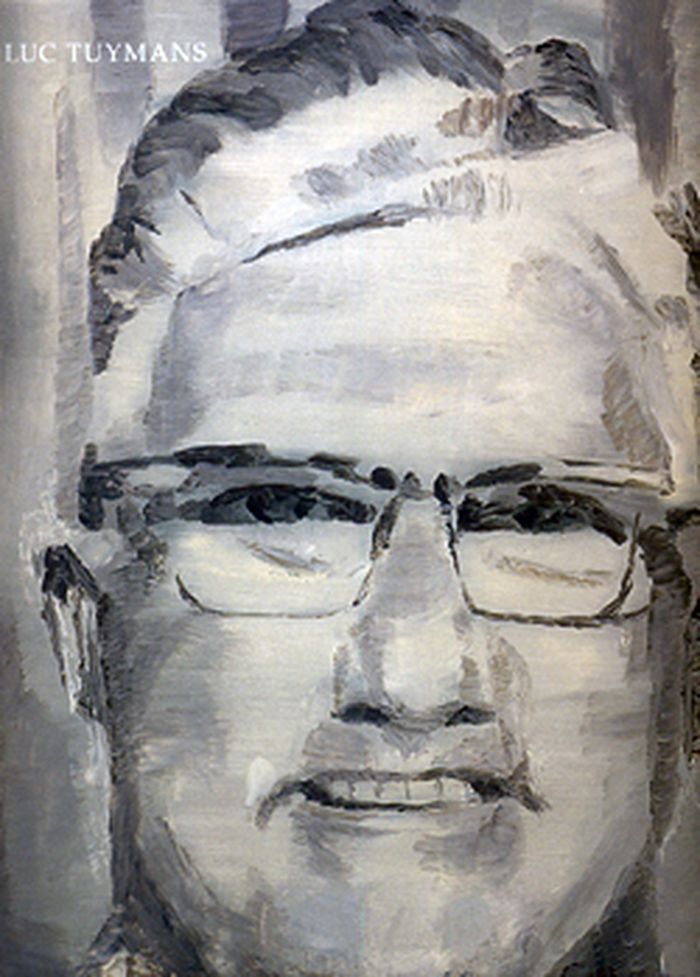
Luc Tuymans is one of today's most widely admired painters, a continuation of the great tradition of Northern European painting and an enduring influence on younger and emerging artists. As a European child of the 1950s, his relationship to painting is inevitably structured by television, cinema and by the lingering effects of World War II; more recent historical preoccupations have included the dramatic turn of world events post-9/11. Tuymans combines a muted palette with deteriorated surface effect and a singular use of cropping, close-up and sequencing--perfect devices with which to undertake his investigation of the pathological, the banal and the conspiratorial. Published in conjunction with the artist's first full-scale American survey, this is without question the authoritative publication on Tuymans. It features approximately 75 key works from 1978 to the present, and is accompanied by essays analyzing the painter's main concerns, with particular attention paid to his working process and his adaptation of source materials.
Luc Tuymans
Actions:
Prix:
$72.00
(disponible sur commande)
Résumé:
Luc Tuymans is one of today's most widely admired painters, a continuation of the great tradition of Northern European painting and an enduring influence on younger and emerging artists. As a European child of the 1950s, his relationship to painting is inevitably structured by television, cinema and by the lingering effects of World War II; more recent historical preoccupations have included the dramatic turn of world events post-9/11. Tuymans combines a muted palette with deteriorated surface effect and a singular use of cropping, close-up and sequencing--perfect devices with which to undertake his investigation of the pathological, the banal and the conspiratorial. Published in conjunction with the artist's first full-scale American survey, this is without question the authoritative publication on Tuymans. It features approximately 75 key works from 1978 to the present, and is accompanied by essays analyzing the painter's main concerns, with particular attention paid to his working process and his adaptation of source materials.
Classification:
livres
livres
Publication:
octobre 2009
octobre 2009
Classification:
livres
livres
Titre:
Harry Gruyaert
Harry Gruyaert
Actions:
Prix:
$74.00
(disponible sur commande)
Résumé:
Born in Antwerp in 1941 and a member of Magnum Photos since 1982, Harry Gruyaert revolutionized creative and experimental uses of color in the 1970s and 1980s. Influenced by cinema and American photographers, his work defined new territory for color photography: an emotive, non-narrative, and boldly graphic way of perceiving the world. In 1972, while living in London,(...)
$74.00
(disponible sur commande)
Résumé:
Born in Antwerp in 1941 and a member of Magnum Photos since 1982, Harry Gruyaert revolutionized creative and experimental uses of color in the 1970s and 1980s. Influenced by cinema and American photographers, his work defined new territory for color photography: an emotive, non-narrative, and boldly graphic way of perceiving the world. In 1972, while living in London,(...)
Titre:
Harry Gruyaert
Actions:
Prix:
$74.00
(disponible sur commande)
Résumé:
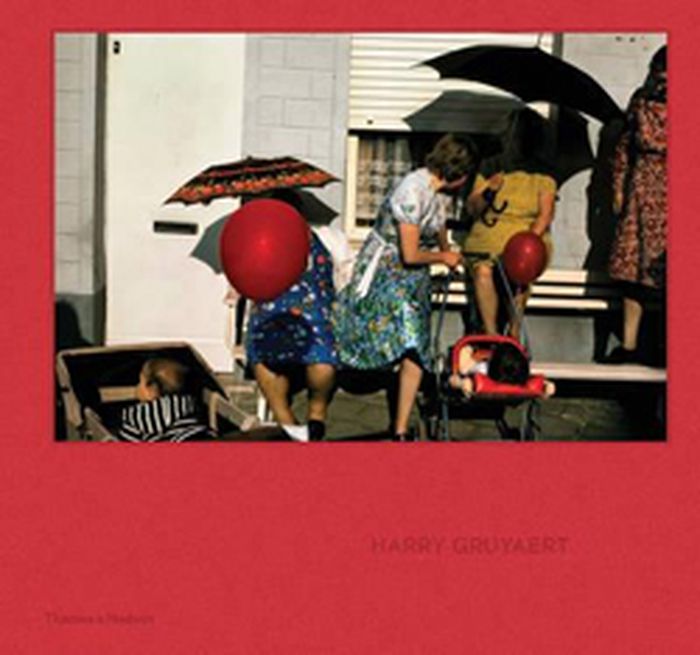
Born in Antwerp in 1941 and a member of Magnum Photos since 1982, Harry Gruyaert revolutionized creative and experimental uses of color in the 1970s and 1980s. Influenced by cinema and American photographers, his work defined new territory for color photography: an emotive, non-narrative, and boldly graphic way of perceiving the world. In 1972, while living in London, Gruyaert created the striking series by turning the dial on a television set at random and photographing the distorted images he saw there. A later series, , portrays his ambivalent relationship with his homeland in a palette of saturated tones. In his most recent work, he embraces the possibilities of digital photography, taking further creative risks to capture light in new ways. Gruyaert’s images are autonomous, often independent of any context or thematic logic. This volume, the first retrospective of his work, is a superb overview of his personal quest for freedom of expression and the liberation of the senses.
Harry Gruyaert
Actions:
Prix:
$74.00
(disponible sur commande)
Résumé:
Born in Antwerp in 1941 and a member of Magnum Photos since 1982, Harry Gruyaert revolutionized creative and experimental uses of color in the 1970s and 1980s. Influenced by cinema and American photographers, his work defined new territory for color photography: an emotive, non-narrative, and boldly graphic way of perceiving the world. In 1972, while living in London, Gruyaert created the striking series by turning the dial on a television set at random and photographing the distorted images he saw there. A later series, , portrays his ambivalent relationship with his homeland in a palette of saturated tones. In his most recent work, he embraces the possibilities of digital photography, taking further creative risks to capture light in new ways. Gruyaert’s images are autonomous, often independent of any context or thematic logic. This volume, the first retrospective of his work, is a superb overview of his personal quest for freedom of expression and the liberation of the senses.
Classification:
livres
livres
Publication:
septembre 2015
septembre 2015
Sujet:
Monographies photo
Monographies photo
Classification:
livres
livres
Prix:
$40.00
(disponible sur commande)
Résumé:
For most North Americans and Europeans, the Bosnian War was played out in the brief, flickering images of television news. But another set of images, more permanent and more profound, played an active role in this war, molding public sentiment and calling attention to the plight of the Bosnian people. For three hellish years, Bosnians plastered the walls of their towns(...)
$40.00
(disponible sur commande)
Résumé:
For most North Americans and Europeans, the Bosnian War was played out in the brief, flickering images of television news. But another set of images, more permanent and more profound, played an active role in this war, molding public sentiment and calling attention to the plight of the Bosnian people. For three hellish years, Bosnians plastered the walls of their towns(...)
Publication:
mai 2001, New York
mai 2001, New York
Titre:
Evil doesn't live here : posters from the Bosnian war
Actions:
Prix:
$40.00
(disponible sur commande)
Résumé:
For most North Americans and Europeans, the Bosnian War was played out in the brief, flickering images of television news. But another set of images, more permanent and more profound, played an active role in this war, molding public sentiment and calling attention to the plight of the Bosnian people. For three hellish years, Bosnians plastered the walls of their towns with messages of anger, frustration, desperation, resistance, and hope. These extraordinary images, the focus of this book, are juxtaposed with the hateful, divisive works of propaganda that served the most vicious practitioners of 'ethnic cleansing'. "Evil Doesn't Live Here" presents this visual battle to the rest of the world for the first time. Former Bosnian aid workers Daoud Sarhandi and Alina Boboc have gathered over 180 of the most dramatic wartime posters, largely created by Bosnian artists and graphic designers at the height of the war. Fascinating on both political and artistic levels, they provide a harrowing account of the war and put a human face on this seemingly incomprehensible conflict.
Evil doesn't live here : posters from the Bosnian war
Actions:
Prix:
$40.00
(disponible sur commande)
Résumé:
For most North Americans and Europeans, the Bosnian War was played out in the brief, flickering images of television news. But another set of images, more permanent and more profound, played an active role in this war, molding public sentiment and calling attention to the plight of the Bosnian people. For three hellish years, Bosnians plastered the walls of their towns with messages of anger, frustration, desperation, resistance, and hope. These extraordinary images, the focus of this book, are juxtaposed with the hateful, divisive works of propaganda that served the most vicious practitioners of 'ethnic cleansing'. "Evil Doesn't Live Here" presents this visual battle to the rest of the world for the first time. Former Bosnian aid workers Daoud Sarhandi and Alina Boboc have gathered over 180 of the most dramatic wartime posters, largely created by Bosnian artists and graphic designers at the height of the war. Fascinating on both political and artistic levels, they provide a harrowing account of the war and put a human face on this seemingly incomprehensible conflict.
Classification:
livres
livres
Publication:
mai 2001, New York
mai 2001, New York
Classification:
livres
livres
Actions:
Prix:
$90.00
(disponible en magasin)
Résumé:
For the past three years, the Spain Yearbook has been complemented by a special edition of AV Monographs that is an invitation to travel the world through twelve foreign works presented by Luis Fernández-Galiano, who reflects on the uncertain contemporary landscape. The year has been marked by political,turmoil in the US, but there have been other relevant issues on the(...)
$90.00
(disponible en magasin)
Résumé:
For the past three years, the Spain Yearbook has been complemented by a special edition of AV Monographs that is an invitation to travel the world through twelve foreign works presented by Luis Fernández-Galiano, who reflects on the uncertain contemporary landscape. The year has been marked by political,turmoil in the US, but there have been other relevant issues on the(...)
Titre:
AV Monographs 280: World Tour 2026
Actions:
Prix:
$90.00
(disponible en magasin)
Résumé:
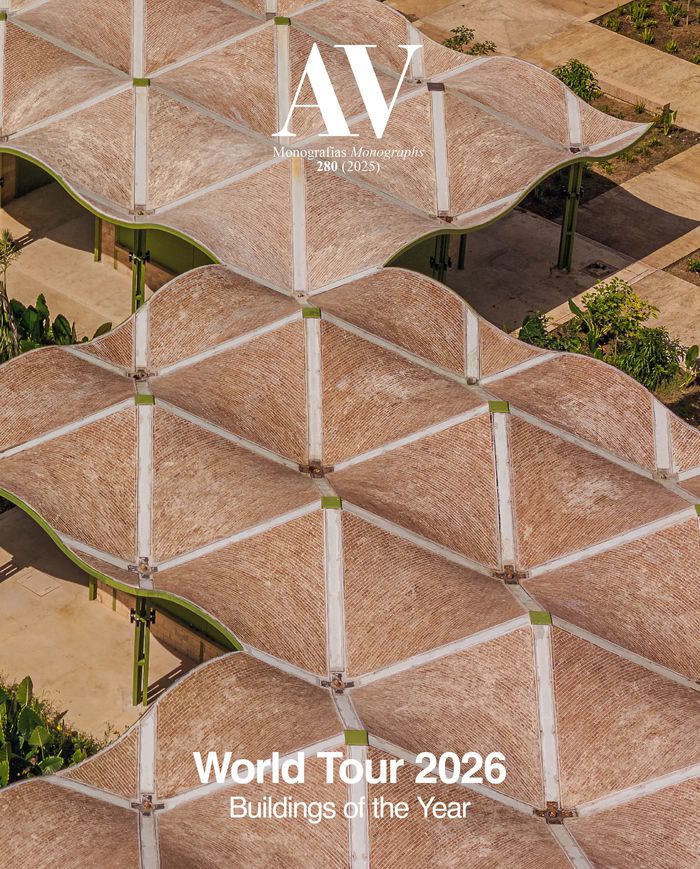
For the past three years, the Spain Yearbook has been complemented by a special edition of AV Monographs that is an invitation to travel the world through twelve foreign works presented by Luis Fernández-Galiano, who reflects on the uncertain contemporary landscape. The year has been marked by political,turmoil in the US, but there have been other relevant issues on the international level, such as the unstoppable rise of China and the conflicts in Gaza and Ukraine. The buildings of the year include long-awaited landmarks such as Heneghan Peng's Grand Egyptian Museum, Norman Foster's JPMorgan Headquarters in New York, and Sou Fujimoto's ring for the Osaka Expo; typological revisions by Herzog & de Meuron at Calder Gardens, OFFICE for the Swiss television, and Diller Scofidio+Renfro at the Victoria & Albert Storehouses; cultural refurbishments such as those by Nouvel in Paris, Pihlmann in Copenhagen, and MAD in Rotterdam; and the tectonic displays of Grafton Architects in Fayetteville, Vector Architects in Jingdezhen, and Aidia Studio in Nicolás Bravo.
AV Monographs 280: World Tour 2026
Actions:
Prix:
$90.00
(disponible en magasin)
Résumé:
For the past three years, the Spain Yearbook has been complemented by a special edition of AV Monographs that is an invitation to travel the world through twelve foreign works presented by Luis Fernández-Galiano, who reflects on the uncertain contemporary landscape. The year has been marked by political,turmoil in the US, but there have been other relevant issues on the international level, such as the unstoppable rise of China and the conflicts in Gaza and Ukraine. The buildings of the year include long-awaited landmarks such as Heneghan Peng's Grand Egyptian Museum, Norman Foster's JPMorgan Headquarters in New York, and Sou Fujimoto's ring for the Osaka Expo; typological revisions by Herzog & de Meuron at Calder Gardens, OFFICE for the Swiss television, and Diller Scofidio+Renfro at the Victoria & Albert Storehouses; cultural refurbishments such as those by Nouvel in Paris, Pihlmann in Copenhagen, and MAD in Rotterdam; and the tectonic displays of Grafton Architects in Fayetteville, Vector Architects in Jingdezhen, and Aidia Studio in Nicolás Bravo.
Classification:
livres
livres
Publication:
décembre 2025
décembre 2025
Sujet:
Revues
Revues
Classification:
livres
livres
Actions:
Prix:
$23.95
(disponible sur commande)
Résumé:
First published in 1967, Guy Debord's stinging revolutionary critique of contemporary society, The Society of the Spectacle has since acquired a cult status. Credited by many as being the inspiration for the ideas generated by the events of May 1968 in France, Debord's pitiless attack on commodity fetishism and its incrustation in the practices of everyday life continues(...)
$23.95
(disponible sur commande)
Résumé:
First published in 1967, Guy Debord's stinging revolutionary critique of contemporary society, The Society of the Spectacle has since acquired a cult status. Credited by many as being the inspiration for the ideas generated by the events of May 1968 in France, Debord's pitiless attack on commodity fetishism and its incrustation in the practices of everyday life continues(...)
Titre:
Comments on the society of the spectacle
Actions:
Prix:
$23.95
(disponible sur commande)
Résumé:
First published in 1967, Guy Debord's stinging revolutionary critique of contemporary society, The Society of the Spectacle has since acquired a cult status. Credited by many as being the inspiration for the ideas generated by the events of May 1968 in France, Debord's pitiless attack on commodity fetishism and its incrustation in the practices of everyday life continues to burn brightly in today's age of satellite television and the soundbite. In Comments on the Society of the Spectacle, published twenty years later, Debord returned to the themes of his previous analysis and demonstrated how they were all the more relevant in a period when the integrated spectacle was dominant. Resolutely refusing to be reconciled to the system, Debord trenchantly slices through the doxa and mystification offered tip by journalists and pundits to show how aspects of reality as diverse as terrorism and the environment, the Mafia and the media, were caught up in the logic of the spectacular society. Pointing the finger clearly at those who benefit from the logic of domination, Debord's comments convey the revolutionary impulse at the heart of situationism.
Comments on the society of the spectacle
Actions:
Prix:
$23.95
(disponible sur commande)
Résumé:
First published in 1967, Guy Debord's stinging revolutionary critique of contemporary society, The Society of the Spectacle has since acquired a cult status. Credited by many as being the inspiration for the ideas generated by the events of May 1968 in France, Debord's pitiless attack on commodity fetishism and its incrustation in the practices of everyday life continues to burn brightly in today's age of satellite television and the soundbite. In Comments on the Society of the Spectacle, published twenty years later, Debord returned to the themes of his previous analysis and demonstrated how they were all the more relevant in a period when the integrated spectacle was dominant. Resolutely refusing to be reconciled to the system, Debord trenchantly slices through the doxa and mystification offered tip by journalists and pundits to show how aspects of reality as diverse as terrorism and the environment, the Mafia and the media, were caught up in the logic of the spectacular society. Pointing the finger clearly at those who benefit from the logic of domination, Debord's comments convey the revolutionary impulse at the heart of situationism.
Classification:
livres
livres
Publication:
janvier 2011
janvier 2011
Sujet:
Théorie/ philosophie
Théorie/ philosophie
Classification:
livres
livres
Titre:
The design culture reader
The design culture reader
Actions:
Prix:
$50.95
(disponible en magasin)
Résumé:
Design is part of ordinary, everyday life, to be found in every room in every building in the world. While we may tend to think of design in terms of highly desirable objects, this book encourages us to think about design as ubiquitous (from plumbing to television) and as an agent of social change (from telephones to weapon systems). The Design Culture Reader brings(...)
$50.95
(disponible en magasin)
Résumé:
Design is part of ordinary, everyday life, to be found in every room in every building in the world. While we may tend to think of design in terms of highly desirable objects, this book encourages us to think about design as ubiquitous (from plumbing to television) and as an agent of social change (from telephones to weapon systems). The Design Culture Reader brings(...)
Titre:
The design culture reader
Actions:
Prix:
$50.95
(disponible en magasin)
Résumé:
Design is part of ordinary, everyday life, to be found in every room in every building in the world. While we may tend to think of design in terms of highly desirable objects, this book encourages us to think about design as ubiquitous (from plumbing to television) and as an agent of social change (from telephones to weapon systems). The Design Culture Reader brings together an international array of writers whose work is of central importance for thinking about design culture in the past, present and future. Essays from philosophers, media and cultural theorists, historians of design, anthropologists, cultural historians, artists and literary critics all demonstrate the enormous potential of design studies for understanding the modern world. Organised in thematic sections, The Design Culture Reader explores the social role of design by looking at the impact it has in a number of areas - especially globalisation, ecology, and the changing experiences of modern life. Particular essays focus on topics such as design and the senses, design and war and design and technology, while the editor's introduction to the collection provides a compelling argument for situating design studies at the very forefront of contemporary thought.
The design culture reader
Actions:
Prix:
$50.95
(disponible en magasin)
Résumé:
Design is part of ordinary, everyday life, to be found in every room in every building in the world. While we may tend to think of design in terms of highly desirable objects, this book encourages us to think about design as ubiquitous (from plumbing to television) and as an agent of social change (from telephones to weapon systems). The Design Culture Reader brings together an international array of writers whose work is of central importance for thinking about design culture in the past, present and future. Essays from philosophers, media and cultural theorists, historians of design, anthropologists, cultural historians, artists and literary critics all demonstrate the enormous potential of design studies for understanding the modern world. Organised in thematic sections, The Design Culture Reader explores the social role of design by looking at the impact it has in a number of areas - especially globalisation, ecology, and the changing experiences of modern life. Particular essays focus on topics such as design and the senses, design and war and design and technology, while the editor's introduction to the collection provides a compelling argument for situating design studies at the very forefront of contemporary thought.
Classification:
livres
livres
Publication:
août 2008, London, New York
août 2008, London, New York
Sujet:
Théorie du design
Théorie du design
Classification:
livres
livres
Actions:
Prix:
$42.00
(disponible en magasin)
Résumé:
Conceived as part of the one-year investigation Catching Up with Life, A Section of Now aims to re-establish a dialogue between architecture and society that would allow for architecture to begin to contend with and address our changed and changing social norms. The publication serves as a meditation on new behaviours, rituals, and values and their spatial implications(...)
$42.00
(disponible en magasin)
Résumé:
Conceived as part of the one-year investigation Catching Up with Life, A Section of Now aims to re-establish a dialogue between architecture and society that would allow for architecture to begin to contend with and address our changed and changing social norms. The publication serves as a meditation on new behaviours, rituals, and values and their spatial implications(...)
Titre:
A section of Now: Norms and Rituals as Sites for Architectural Intervention
Actions:
Prix:
$42.00
(disponible en magasin)
Résumé:
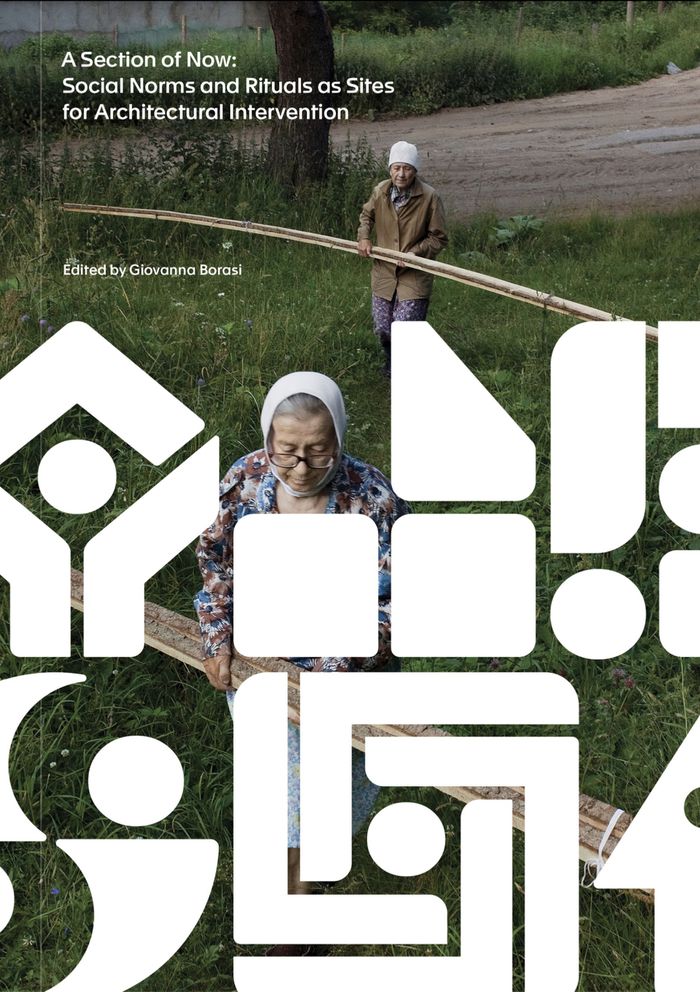
Conceived as part of the one-year investigation Catching Up with Life, A Section of Now aims to re-establish a dialogue between architecture and society that would allow for architecture to begin to contend with and address our changed and changing social norms. The publication serves as a meditation on new behaviours, rituals, and values and their spatial implications and seeks to catalyze urban and architectural interventions that accommodate, influence, and, in some cases, pre-empt our new lived realities. Authors address topics ranging from the safety of digital spaces to how normative life trajectories affect the elderly and the many selves each of us puts forward, while architects present frameworks for spaces for blended families, thirty-year-old retirees, and contested monuments, among many others. Bringing together analytical essays about the contemporary moment and the direction in which society is moving, projective texts that outline new architectural types to address societal needs, alongside television series, photography, and architecture and design projects, A Section of Now outlines a new relationship between the spaces in which we live and the ways we live within them.
A section of Now: Norms and Rituals as Sites for Architectural Intervention
Actions:
Prix:
$42.00
(disponible en magasin)
Résumé:
Conceived as part of the one-year investigation Catching Up with Life, A Section of Now aims to re-establish a dialogue between architecture and society that would allow for architecture to begin to contend with and address our changed and changing social norms. The publication serves as a meditation on new behaviours, rituals, and values and their spatial implications and seeks to catalyze urban and architectural interventions that accommodate, influence, and, in some cases, pre-empt our new lived realities. Authors address topics ranging from the safety of digital spaces to how normative life trajectories affect the elderly and the many selves each of us puts forward, while architects present frameworks for spaces for blended families, thirty-year-old retirees, and contested monuments, among many others. Bringing together analytical essays about the contemporary moment and the direction in which society is moving, projective texts that outline new architectural types to address societal needs, alongside television series, photography, and architecture and design projects, A Section of Now outlines a new relationship between the spaces in which we live and the ways we live within them.
Classification:
livres
livres
Publication:
août 2021
août 2021
Sujet:
Publications du CCA
Publications du CCA


