


11183 Résultats
Classification:
photographies
photographies
Titre:
Vues et Monuments de France
Vues et Monuments de France
Actions:
Numéro de référence:
PH1986:0054:001-044
Description:
Album consists of 44 photographs of views of monuments of France, namely, churches, castles, ramparts, antique theatres and amphitheaters, hôtel de ville (city hall), palais de justice (law court), from such cities as Blois, Brioude, Arles, Nîmes, Avignon, Orange, Périgueux, Caen, Rouen and Lyons. As well, natural views are depicted from the regions of the Alps, the Dauphiné, the Savoy and the massif central. Baldus photographed the natural landscapes of glaciers, rocky chasms, alpine peaks and valleys of France. Several photographs of this album are also part of the album PLM (Chemins de Fer de Paris à la Méditerranée: PH1981:0816:001-069) and of the album Chemins de Fer du Nord: PH1981:1025:001-050).
PH1986:0054:001-044
Description:
Album consists of 44 photographs of views of monuments of France, namely, churches, castles, ramparts, antique theatres and amphitheaters, hôtel de ville (city hall), palais de justice (law court), from such cities as Blois, Brioude, Arles, Nîmes, Avignon, Orange, Périgueux, Caen, Rouen and Lyons. As well, natural views are depicted from the regions of the Alps, the Dauphiné, the Savoy and the massif central. Baldus photographed the natural landscapes of glaciers, rocky chasms, alpine peaks and valleys of France. Several photographs of this album are also part of the album PLM (Chemins de Fer de Paris à la Méditerranée: PH1981:0816:001-069) and of the album Chemins de Fer du Nord: PH1981:1025:001-050).
Personnes et institutions:
Sujet:
architecture
architecture
Date:
ca. 1861
ca. 1861
Titre:
Vues et Monuments de France
Actions:
PH1986:0054:001-044
Description:
Album consists of 44 photographs of views of monuments of France, namely, churches, castles, ramparts, antique theatres and amphitheaters, hôtel de ville (city hall), palais de justice (law court), from such cities as Blois, Brioude, Arles, Nîmes, Avignon, Orange, Périgueux, Caen, Rouen and Lyons. As well, natural views are depicted from the regions of the Alps, the Dauphiné, the Savoy and the massif central. Baldus photographed the natural landscapes of glaciers, rocky chasms, alpine peaks and valleys of France. Several photographs of this album are also part of the album PLM (Chemins de Fer de Paris à la Méditerranée: PH1981:0816:001-069) and of the album Chemins de Fer du Nord: PH1981:1025:001-050).
Vues et Monuments de France
Actions:
PH1986:0054:001-044
Description:
Album consists of 44 photographs of views of monuments of France, namely, churches, castles, ramparts, antique theatres and amphitheaters, hôtel de ville (city hall), palais de justice (law court), from such cities as Blois, Brioude, Arles, Nîmes, Avignon, Orange, Périgueux, Caen, Rouen and Lyons. As well, natural views are depicted from the regions of the Alps, the Dauphiné, the Savoy and the massif central. Baldus photographed the natural landscapes of glaciers, rocky chasms, alpine peaks and valleys of France. Several photographs of this album are also part of the album PLM (Chemins de Fer de Paris à la Méditerranée: PH1981:0816:001-069) and of the album Chemins de Fer du Nord: PH1981:1025:001-050).
Classification:
photographies
photographies
Date:
ca. 1861
ca. 1861
Personnes et institutions:
Sujet:
architecture
architecture
Classification:
documents textuels
documents textuels
Numéro de référence:
ARCH166518
Description:
14 feuillets: Copies de la lettre de Jacques Rousseau à Pierre Desjardins de la Société d'Habitation et de Développement de Montréal 4 janvier 1991 4 feuillets: Lettre à Pierre-Luc Dumas du projet Faubourg Québec 11 janvier 1991 14 feuillets: Notes manuscrites et croquis à la mine de plomb: " Quelques notes de recherche" 10 feuillets: Rapport sous forme de maquette de travail 8 feuillets: notes manuscrites et croquis 12 dessins: Plans de la ville photocopies laser 28 feuillets: Copie originale du rapport d'étude 4 pages: 1 dépliant "Le Faubourg Québec" publié par la Société d'Habitation et de Développement de Montréal 28 x43 cm 4 factures 1 plan de planche de présentation 2 disquettes 3.5"
ARCH166518
Description:
14 feuillets: Copies de la lettre de Jacques Rousseau à Pierre Desjardins de la Société d'Habitation et de Développement de Montréal 4 janvier 1991 4 feuillets: Lettre à Pierre-Luc Dumas du projet Faubourg Québec 11 janvier 1991 14 feuillets: Notes manuscrites et croquis à la mine de plomb: " Quelques notes de recherche" 10 feuillets: Rapport sous forme de maquette de travail 8 feuillets: notes manuscrites et croquis 12 dessins: Plans de la ville photocopies laser 28 feuillets: Copie originale du rapport d'étude 4 pages: 1 dépliant "Le Faubourg Québec" publié par la Société d'Habitation et de Développement de Montréal 28 x43 cm 4 factures 1 plan de planche de présentation 2 disquettes 3.5"
Personnes et institutions:
Date:
janvier-février 1991
janvier-février 1991
Titre:
Lettre de Jacques Rousseau à Pierre Desjardins de la Société d'Habitation et de Développement de Montréal
Actions:
ARCH166518
Description:
14 feuillets: Copies de la lettre de Jacques Rousseau à Pierre Desjardins de la Société d'Habitation et de Développement de Montréal 4 janvier 1991 4 feuillets: Lettre à Pierre-Luc Dumas du projet Faubourg Québec 11 janvier 1991 14 feuillets: Notes manuscrites et croquis à la mine de plomb: " Quelques notes de recherche" 10 feuillets: Rapport sous forme de maquette de travail 8 feuillets: notes manuscrites et croquis 12 dessins: Plans de la ville photocopies laser 28 feuillets: Copie originale du rapport d'étude 4 pages: 1 dépliant "Le Faubourg Québec" publié par la Société d'Habitation et de Développement de Montréal 28 x43 cm 4 factures 1 plan de planche de présentation 2 disquettes 3.5"
Lettre de Jacques Rousseau à Pierre Desjardins de la Société d'Habitation et de Développement de Montréal
Actions:
ARCH166518
Description:
14 feuillets: Copies de la lettre de Jacques Rousseau à Pierre Desjardins de la Société d'Habitation et de Développement de Montréal 4 janvier 1991 4 feuillets: Lettre à Pierre-Luc Dumas du projet Faubourg Québec 11 janvier 1991 14 feuillets: Notes manuscrites et croquis à la mine de plomb: " Quelques notes de recherche" 10 feuillets: Rapport sous forme de maquette de travail 8 feuillets: notes manuscrites et croquis 12 dessins: Plans de la ville photocopies laser 28 feuillets: Copie originale du rapport d'étude 4 pages: 1 dépliant "Le Faubourg Québec" publié par la Société d'Habitation et de Développement de Montréal 28 x43 cm 4 factures 1 plan de planche de présentation 2 disquettes 3.5"
Classification:
documents textuels
documents textuels
Date:
janvier-février 1991
janvier-février 1991
Personnes et institutions:
Classification:
archives
Niveau de description archivistique:
Fonds
archives
Niveau de description archivistique:
Fonds
Titre:
Fonds Marcel Parizeau
Fonds Marcel Parizeau
Numéro de référence:
AP104
Résumé:
Le Fonds Marcel Parizeau contient des documents relatifs à la formation et à la vie de professionnel de Marcel Parizeau. Il contient aussi des œuvres d'art réalisées par ce dernier. Le fonds est composé de dessins d'architecture et de meubles, de carnets de croquis, de tableaux, de manuscrits, de correspondances, ainsi que quelques autres documents.
AP104
Résumé:
Le Fonds Marcel Parizeau contient des documents relatifs à la formation et à la vie de professionnel de Marcel Parizeau. Il contient aussi des œuvres d'art réalisées par ce dernier. Le fonds est composé de dessins d'architecture et de meubles, de carnets de croquis, de tableaux, de manuscrits, de correspondances, ainsi que quelques autres documents.
Personnes et institutions:
Date:
1917-1955
1917-1955
Titre:
Fonds Marcel Parizeau
Actions:
AP104
Résumé:
Le Fonds Marcel Parizeau contient des documents relatifs à la formation et à la vie de professionnel de Marcel Parizeau. Il contient aussi des œuvres d'art réalisées par ce dernier. Le fonds est composé de dessins d'architecture et de meubles, de carnets de croquis, de tableaux, de manuscrits, de correspondances, ainsi que quelques autres documents.
Fonds Marcel Parizeau
Actions:
AP104
Résumé:
Le Fonds Marcel Parizeau contient des documents relatifs à la formation et à la vie de professionnel de Marcel Parizeau. Il contient aussi des œuvres d'art réalisées par ce dernier. Le fonds est composé de dessins d'architecture et de meubles, de carnets de croquis, de tableaux, de manuscrits, de correspondances, ainsi que quelques autres documents.
Classification:
archives
Niveau de description archivistique:
Fonds
archives
Niveau de description archivistique:
Fonds
Date:
1917-1955
1917-1955
Personnes et institutions:
Classification:
expositions
expositions
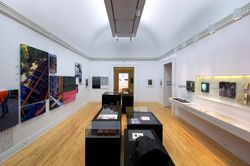
Titre:
Sensations urbaines
Sensations urbaines
Actions:
Description:
Sensations urbaines explore les perceptions et phénomènes urbains traditionnellement négligés, réprimés ou même dépréciés. Récusant la domination de l’impression visuelle dans l’environnement urbain, l’exposition, qui propose une réinterprétation des qualités latentes de la ville, offre une analyse complexe des commodités, des systèmes de communication et des dimensions(...)
Sensations urbaines explore les perceptions et phénomènes urbains traditionnellement négligés, réprimés ou même dépréciés. Récusant la domination de l’impression visuelle dans l’environnement urbain, l’exposition, qui propose une réinterprétation des qualités latentes de la ville, offre une analyse complexe des commodités, des systèmes de communication et des dimensions(...)
Localisation:
Salles principales
Salles principales
Date:
26 octobre 2005 au 10 septembre 2006
26 octobre 2005 au 10 septembre 2006
Titre:
Sensations urbaines
Actions:
Description:
Sensations urbaines explore les perceptions et phénomènes urbains traditionnellement négligés, réprimés ou même dépréciés. Récusant la domination de l’impression visuelle dans l’environnement urbain, l’exposition, qui propose une réinterprétation des qualités latentes de la ville, offre une analyse complexe des commodités, des systèmes de communication et des dimensions(...)
Sensations urbaines
Actions:
Description:
Sensations urbaines explore les perceptions et phénomènes urbains traditionnellement négligés, réprimés ou même dépréciés. Récusant la domination de l’impression visuelle dans l’environnement urbain, l’exposition, qui propose une réinterprétation des qualités latentes de la ville, offre une analyse complexe des commodités, des systèmes de communication et des dimensions(...)
Classification:
expositions
expositions
Date:
26 octobre 2005 au
10 septembre 2006
26 octobre 2005 au
10 septembre 2006
Localisation:
Salles principales
Salles principales
Classification:
événements
événements
Actions:
Mot(s)-clé(s):
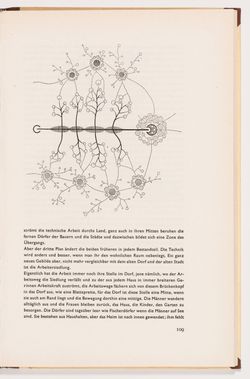
Panos Mantziaras, Paysage de la ville, H. Thünen's Isolierte Staat, R. Schwarz, Von der Bebauung der Erde, Chercheur en Résidence
Panos Mantziaras, Paysage de la ville, H. Thünen's Isolierte Staat, R. Schwarz, Von der Bebauung der Erde, Chercheur en Résidence
Date:
19 octobre 2001
19 octobre 2001
Classification:
événements
événements
Date:
19 octobre 2001
19 octobre 2001
Niveau de description archivistique:
Série(s)
Série(s)
Numéro de référence:
AP193.S2
Description:
Series 2, I’ve heard about and Hypnosis chamber, 2004-2006, relates to the conception of the urban structure “I’ve heard about”. The records contain algorithmically-generated images, renderings, pictures of models and exhibitions. There are also photographs of the contour crafting process, 3D models and animated renderings illustrating the construction process of the structure. The project is a conceptual, unbuilt project that is meant to be a habitable organism, an adaptive landscape in a constant state of evolution. By means of transitory scenarios in which the operational mode is entropy and uncertainty, it develops open algorithms based on growth scripts permeable not only to human expressions, but also to the most discrete data such as the chemical emissions (for example due to stress or anxiety) of those who inhabit it. The chemical information is harvested through nanoreceptors feeding the VIAB machine with information. This biostructure becomes the visible part of human contingencies and their negotiation in real time. The structure is conceptualized to be in constant construction through the VIAB machine which is also a constituent of the structure itself. It secretes fiber cement, shaping the landscape where it is located and through which it moves. It generates the reticular structure using a process modelled on contour crafting. The VIAB machine was developed with Robotics Research Lab of the University of Southern California and takes its name from the terms viability and variability. R&Sie(n) considers that due to its mode of emergence “I’ve heard about” fabrication is not subjugated to any political power. Hypnosis chamber is a component of “I’ve heard about”. It consists of an indoor chamber, which was realized as a full-scale sample constructed through automated machinery. The chamber is situated as a part of the whole urban structure presented by “I’ve heard about,” and its goal is to immerse the audience into the project, into a fictional environment only reachable by hypnosis. In this context, hypnosis is a way to help citizens escape from their social condition and experience the new condition of citizenship imagined in “I’ve heard about”, where democracy is re-evaluated as a process of self-determination. Both parts of the projects were shown in contemporary art museums. First at Musée d’art de la ville de Paris in Paris (2005), the Hypnotic chamber is permanently on view at Towada Art Center in Towanda, Japan. AP193.S4 contains a video orienting the project into François Roche theoretical stance, research as speculation, that can be summarize as the use of technological tools to take a critical and political position through esthetic in order to open new lines of thoughts. AP193.S4 contains an updated version of the VIAB machine
AP193.S2
Description:
Series 2, I’ve heard about and Hypnosis chamber, 2004-2006, relates to the conception of the urban structure “I’ve heard about”. The records contain algorithmically-generated images, renderings, pictures of models and exhibitions. There are also photographs of the contour crafting process, 3D models and animated renderings illustrating the construction process of the structure. The project is a conceptual, unbuilt project that is meant to be a habitable organism, an adaptive landscape in a constant state of evolution. By means of transitory scenarios in which the operational mode is entropy and uncertainty, it develops open algorithms based on growth scripts permeable not only to human expressions, but also to the most discrete data such as the chemical emissions (for example due to stress or anxiety) of those who inhabit it. The chemical information is harvested through nanoreceptors feeding the VIAB machine with information. This biostructure becomes the visible part of human contingencies and their negotiation in real time. The structure is conceptualized to be in constant construction through the VIAB machine which is also a constituent of the structure itself. It secretes fiber cement, shaping the landscape where it is located and through which it moves. It generates the reticular structure using a process modelled on contour crafting. The VIAB machine was developed with Robotics Research Lab of the University of Southern California and takes its name from the terms viability and variability. R&Sie(n) considers that due to its mode of emergence “I’ve heard about” fabrication is not subjugated to any political power. Hypnosis chamber is a component of “I’ve heard about”. It consists of an indoor chamber, which was realized as a full-scale sample constructed through automated machinery. The chamber is situated as a part of the whole urban structure presented by “I’ve heard about,” and its goal is to immerse the audience into the project, into a fictional environment only reachable by hypnosis. In this context, hypnosis is a way to help citizens escape from their social condition and experience the new condition of citizenship imagined in “I’ve heard about”, where democracy is re-evaluated as a process of self-determination. Both parts of the projects were shown in contemporary art museums. First at Musée d’art de la ville de Paris in Paris (2005), the Hypnotic chamber is permanently on view at Towada Art Center in Towanda, Japan. AP193.S4 contains a video orienting the project into François Roche theoretical stance, research as speculation, that can be summarize as the use of technological tools to take a critical and political position through esthetic in order to open new lines of thoughts. AP193.S4 contains an updated version of the VIAB machine
Personnes et institutions:
Date:
2004-2006
2004-2006
Titre:
I’ve heard about and Hypnosis chamber
Actions:
AP193.S2
Description:
Series 2, I’ve heard about and Hypnosis chamber, 2004-2006, relates to the conception of the urban structure “I’ve heard about”. The records contain algorithmically-generated images, renderings, pictures of models and exhibitions. There are also photographs of the contour crafting process, 3D models and animated renderings illustrating the construction process of the structure. The project is a conceptual, unbuilt project that is meant to be a habitable organism, an adaptive landscape in a constant state of evolution. By means of transitory scenarios in which the operational mode is entropy and uncertainty, it develops open algorithms based on growth scripts permeable not only to human expressions, but also to the most discrete data such as the chemical emissions (for example due to stress or anxiety) of those who inhabit it. The chemical information is harvested through nanoreceptors feeding the VIAB machine with information. This biostructure becomes the visible part of human contingencies and their negotiation in real time. The structure is conceptualized to be in constant construction through the VIAB machine which is also a constituent of the structure itself. It secretes fiber cement, shaping the landscape where it is located and through which it moves. It generates the reticular structure using a process modelled on contour crafting. The VIAB machine was developed with Robotics Research Lab of the University of Southern California and takes its name from the terms viability and variability. R&Sie(n) considers that due to its mode of emergence “I’ve heard about” fabrication is not subjugated to any political power. Hypnosis chamber is a component of “I’ve heard about”. It consists of an indoor chamber, which was realized as a full-scale sample constructed through automated machinery. The chamber is situated as a part of the whole urban structure presented by “I’ve heard about,” and its goal is to immerse the audience into the project, into a fictional environment only reachable by hypnosis. In this context, hypnosis is a way to help citizens escape from their social condition and experience the new condition of citizenship imagined in “I’ve heard about”, where democracy is re-evaluated as a process of self-determination. Both parts of the projects were shown in contemporary art museums. First at Musée d’art de la ville de Paris in Paris (2005), the Hypnotic chamber is permanently on view at Towada Art Center in Towanda, Japan. AP193.S4 contains a video orienting the project into François Roche theoretical stance, research as speculation, that can be summarize as the use of technological tools to take a critical and political position through esthetic in order to open new lines of thoughts. AP193.S4 contains an updated version of the VIAB machine
I’ve heard about and Hypnosis chamber
Actions:
AP193.S2
Description:
Series 2, I’ve heard about and Hypnosis chamber, 2004-2006, relates to the conception of the urban structure “I’ve heard about”. The records contain algorithmically-generated images, renderings, pictures of models and exhibitions. There are also photographs of the contour crafting process, 3D models and animated renderings illustrating the construction process of the structure. The project is a conceptual, unbuilt project that is meant to be a habitable organism, an adaptive landscape in a constant state of evolution. By means of transitory scenarios in which the operational mode is entropy and uncertainty, it develops open algorithms based on growth scripts permeable not only to human expressions, but also to the most discrete data such as the chemical emissions (for example due to stress or anxiety) of those who inhabit it. The chemical information is harvested through nanoreceptors feeding the VIAB machine with information. This biostructure becomes the visible part of human contingencies and their negotiation in real time. The structure is conceptualized to be in constant construction through the VIAB machine which is also a constituent of the structure itself. It secretes fiber cement, shaping the landscape where it is located and through which it moves. It generates the reticular structure using a process modelled on contour crafting. The VIAB machine was developed with Robotics Research Lab of the University of Southern California and takes its name from the terms viability and variability. R&Sie(n) considers that due to its mode of emergence “I’ve heard about” fabrication is not subjugated to any political power. Hypnosis chamber is a component of “I’ve heard about”. It consists of an indoor chamber, which was realized as a full-scale sample constructed through automated machinery. The chamber is situated as a part of the whole urban structure presented by “I’ve heard about,” and its goal is to immerse the audience into the project, into a fictional environment only reachable by hypnosis. In this context, hypnosis is a way to help citizens escape from their social condition and experience the new condition of citizenship imagined in “I’ve heard about”, where democracy is re-evaluated as a process of self-determination. Both parts of the projects were shown in contemporary art museums. First at Musée d’art de la ville de Paris in Paris (2005), the Hypnotic chamber is permanently on view at Towada Art Center in Towanda, Japan. AP193.S4 contains a video orienting the project into François Roche theoretical stance, research as speculation, that can be summarize as the use of technological tools to take a critical and political position through esthetic in order to open new lines of thoughts. AP193.S4 contains an updated version of the VIAB machine
Niveau de description archivistique:
Series
Series
Date:
2004-2006
2004-2006
Personnes et institutions:
Classification:
articles
articles
Actions:
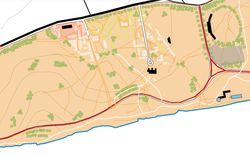
Łukasz Stanek compare les plans directeurs coloniaux et postcoloniaux
Titre:
Le tracé de Marine Drive, Accra
Łukasz Stanek compare les plans directeurs coloniaux et postcoloniaux
Actions:
Le tracé de Marine Drive, Accra
Łukasz Stanek compare les plans directeurs coloniaux et postcoloniaux
Actions:
Classification:
articles
articles
Dossier:
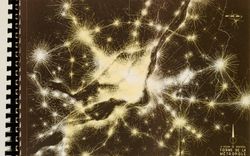
C’était le futur
C’était le futur
Classification:
photographies
photographies
Numéro de référence:
DR2012:0015:024:006
Description:
File containing photographic materials related to the following events, locations, and/or projects: - CCA garden (1 colour printout on coated paper); - 4545 rue Notre-Dame O., Caisses Populaire St. Zotique, (1 gelatin silver print); - 1 Place Ville-Marie (2 gelatin silver prints); - model of the Université de Québec à Montréal campus (1 gelatin silver print); - possibly an image from Un dictionnaire (1 black-and-white printout on coated paper); - unidentified projects (2 black-and-white printouts on coated paper); - model of Place Bonaventure (2 gelatin silver print); - unidentified street scenes (23 gelatin silver prints); - unidentified garden (1 gelatin silver print); - unidentified aerial (1 gelatin silver print); - crowd scene (1 gelatin silver print); - Marriott Château Champlain (1 gelatin silver print); - Judith Jasmin Pavilion, UQAM, (1 gelatin silver print).
DR2012:0015:024:006
Description:
File containing photographic materials related to the following events, locations, and/or projects: - CCA garden (1 colour printout on coated paper); - 4545 rue Notre-Dame O., Caisses Populaire St. Zotique, (1 gelatin silver print); - 1 Place Ville-Marie (2 gelatin silver prints); - model of the Université de Québec à Montréal campus (1 gelatin silver print); - possibly an image from Un dictionnaire (1 black-and-white printout on coated paper); - unidentified projects (2 black-and-white printouts on coated paper); - model of Place Bonaventure (2 gelatin silver print); - unidentified street scenes (23 gelatin silver prints); - unidentified garden (1 gelatin silver print); - unidentified aerial (1 gelatin silver print); - crowd scene (1 gelatin silver print); - Marriott Château Champlain (1 gelatin silver print); - Judith Jasmin Pavilion, UQAM, (1 gelatin silver print).
Personnes et institutions:
Date:
1966, 1973-1980
1966, 1973-1980
Titre:
Photographs of various projects by Melvin Charney
Actions:
DR2012:0015:024:006
Description:
File containing photographic materials related to the following events, locations, and/or projects: - CCA garden (1 colour printout on coated paper); - 4545 rue Notre-Dame O., Caisses Populaire St. Zotique, (1 gelatin silver print); - 1 Place Ville-Marie (2 gelatin silver prints); - model of the Université de Québec à Montréal campus (1 gelatin silver print); - possibly an image from Un dictionnaire (1 black-and-white printout on coated paper); - unidentified projects (2 black-and-white printouts on coated paper); - model of Place Bonaventure (2 gelatin silver print); - unidentified street scenes (23 gelatin silver prints); - unidentified garden (1 gelatin silver print); - unidentified aerial (1 gelatin silver print); - crowd scene (1 gelatin silver print); - Marriott Château Champlain (1 gelatin silver print); - Judith Jasmin Pavilion, UQAM, (1 gelatin silver print).
Photographs of various projects by Melvin Charney
Actions:
DR2012:0015:024:006
Description:
File containing photographic materials related to the following events, locations, and/or projects: - CCA garden (1 colour printout on coated paper); - 4545 rue Notre-Dame O., Caisses Populaire St. Zotique, (1 gelatin silver print); - 1 Place Ville-Marie (2 gelatin silver prints); - model of the Université de Québec à Montréal campus (1 gelatin silver print); - possibly an image from Un dictionnaire (1 black-and-white printout on coated paper); - unidentified projects (2 black-and-white printouts on coated paper); - model of Place Bonaventure (2 gelatin silver print); - unidentified street scenes (23 gelatin silver prints); - unidentified garden (1 gelatin silver print); - unidentified aerial (1 gelatin silver print); - crowd scene (1 gelatin silver print); - Marriott Château Champlain (1 gelatin silver print); - Judith Jasmin Pavilion, UQAM, (1 gelatin silver print).
Classification:
photographies
photographies
Date:
1966, 1973-1980
1966, 1973-1980
Personnes et institutions:
Classification:
photographies
photographies
Numéro de référence:
DR2023:0020
Description:
Plates from the series "UN DICTIONNAIRE...Illuminations, 1970-2000" comprises of a portion of individual plates grouped according to 38 series that Charney arranged by themes and numbered by series and plate in a discontinuous fashion. Contains series 19 "Figures" and series 20 "Édifices et villes".
DR2023:0020
Description:
Plates from the series "UN DICTIONNAIRE...Illuminations, 1970-2000" comprises of a portion of individual plates grouped according to 38 series that Charney arranged by themes and numbered by series and plate in a discontinuous fashion. Contains series 19 "Figures" and series 20 "Édifices et villes".
Personnes et institutions:
Date:
circa 1970-2000
circa 1970-2000
Titre:
Plates from the series 19 and 20, Un dictionnaire
Actions:
DR2023:0020
Description:
Plates from the series "UN DICTIONNAIRE...Illuminations, 1970-2000" comprises of a portion of individual plates grouped according to 38 series that Charney arranged by themes and numbered by series and plate in a discontinuous fashion. Contains series 19 "Figures" and series 20 "Édifices et villes".
Plates from the series 19 and 20, Un dictionnaire
Actions:
DR2023:0020
Description:
Plates from the series "UN DICTIONNAIRE...Illuminations, 1970-2000" comprises of a portion of individual plates grouped according to 38 series that Charney arranged by themes and numbered by series and plate in a discontinuous fashion. Contains series 19 "Figures" and series 20 "Édifices et villes".
Classification:
photographies
photographies
Date:
circa 1970-2000
circa 1970-2000
Personnes et institutions:


