


5084 Résultats
Classification:
photographies
photographies
Actions:
Numéro de référence:
PH1997:0059
Description:
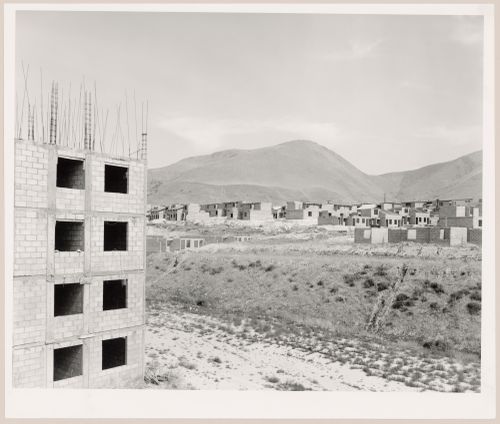
- The series "Running Fence 1997" focuses "on the first 14 miles of the border fence that separates the United States and Mexico, beginning at the Pacific Ocean and ending in the Otay Mountains.... [It] analyzes the "idea" of the border and explores its iconography, the border being a subject that is of extreme importance to the public as the world proceeds towards greater globalization. [Geoffrey] James has written of the project: "[The border fence] was built by the US Army Corps of Engineers in 1994, out of recycled metal landing strip - the most visible symbol of what is known as Operation Gatekeeper. Because the steel sheets are placed in the ground so that their ridges run horizontally, a man can hop over the fence with ease; and no Mexican child ever seems to be impeded from retrieving a soccer ball from US territory. The real barrier to illegal immigration from Mexico into the USA is less visible: hundreds of buried sensors linked to a central computer, nightscopes, helicopters and Border Patrol Agents in white Broncos."" (Evans).
Personnes et institutions:
Sujet:
architecture, ingénierie, topographique
architecture, ingénierie, topographique
Date:
1997
1997
Titre:
View of an industrial park under construction with a partially completed building in the foreground and partially completed houses and mountains in the background, Mesa de Otay, Tijuana, Baja California, Mexico
Actions:
PH1997:0059
Description:
- The series "Running Fence 1997" focuses "on the first 14 miles of the border fence that separates the United States and Mexico, beginning at the Pacific Ocean and ending in the Otay Mountains.... [It] analyzes the "idea" of the border and explores its iconography, the border being a subject that is of extreme importance to the public as the world proceeds towards greater globalization. [Geoffrey] James has written of the project: "[The border fence] was built by the US Army Corps of Engineers in 1994, out of recycled metal landing strip - the most visible symbol of what is known as Operation Gatekeeper. Because the steel sheets are placed in the ground so that their ridges run horizontally, a man can hop over the fence with ease; and no Mexican child ever seems to be impeded from retrieving a soccer ball from US territory. The real barrier to illegal immigration from Mexico into the USA is less visible: hundreds of buried sensors linked to a central computer, nightscopes, helicopters and Border Patrol Agents in white Broncos."" (Evans).
Classification:
photographies
photographies
Date:
1997
1997
Personnes et institutions:
Sujet:
architecture, ingénierie, topographique
architecture, ingénierie, topographique
Classification:
photographies
photographies
Actions:
Numéro de référence:
PH1997:0060
Description:
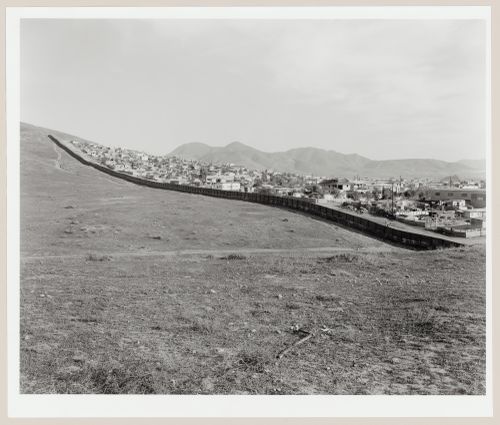
The series "Running Fence 1997" focuses "on the first 14 miles of the border fence that separates the United States and Mexico, beginning at the Pacific Ocean and ending in the Otay Mountains.... [It] analyzes the "idea" of the border and explores its iconography, the border being a subject that is of extreme importance to the public as the world proceeds towards greater globalization. [Geoffrey] James has written of the project: "[The border fence] was built by the US Army Corps of Engineers in 1994, out of recycled metal landing strip - the most visible symbol of what is known as Operation Gatekeeper. Because the steel sheets are placed in the ground so that their ridges run horizontally, a man can hop over the fence with ease; and no Mexican child ever seems to be impeded from retrieving a soccer ball from US territory. The real barrier to illegal immigration from Mexico into the USA is less visible: hundreds of buried sensors linked to a central computer, nightscopes, helicopters and Border Patrol Agents in white Broncos."" (Evans).
Personnes et institutions:
Sujet:
architecture, ingénierie, topographique
architecture, ingénierie, topographique
Date:
1997
1997
Titre:
View of Otay Mesa, Mexico from San Diego County, California showing the United States-Mexico border fence, from the series "Running Fence"
Actions:
PH1997:0060
Description:
The series "Running Fence 1997" focuses "on the first 14 miles of the border fence that separates the United States and Mexico, beginning at the Pacific Ocean and ending in the Otay Mountains.... [It] analyzes the "idea" of the border and explores its iconography, the border being a subject that is of extreme importance to the public as the world proceeds towards greater globalization. [Geoffrey] James has written of the project: "[The border fence] was built by the US Army Corps of Engineers in 1994, out of recycled metal landing strip - the most visible symbol of what is known as Operation Gatekeeper. Because the steel sheets are placed in the ground so that their ridges run horizontally, a man can hop over the fence with ease; and no Mexican child ever seems to be impeded from retrieving a soccer ball from US territory. The real barrier to illegal immigration from Mexico into the USA is less visible: hundreds of buried sensors linked to a central computer, nightscopes, helicopters and Border Patrol Agents in white Broncos."" (Evans).
Classification:
photographies
photographies
Date:
1997
1997
Personnes et institutions:
Sujet:
architecture, ingénierie, topographique
architecture, ingénierie, topographique
Classification:
photographies
photographies
Actions:
Numéro de référence:
PH1997:0061
Description:
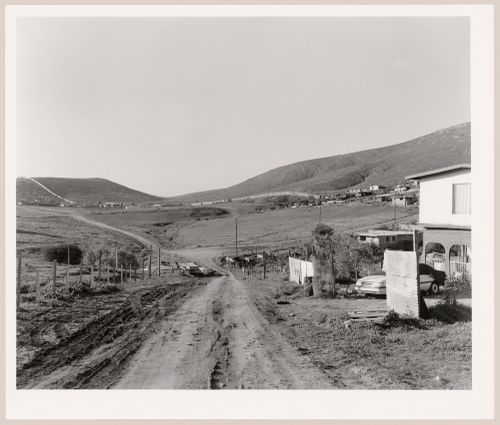
- The series "Running Fence 1997" focuses "on the first 14 miles of the border fence that separates the United States and Mexico, beginning at the Pacific Ocean and ending in the Otay Mountains.... [It] analyzes the "idea" of the border and explores its iconography, the border being a subject that is of extreme importance to the public as the world proceeds towards greater globalization. [Geoffrey] James has written of the project: "[The border fence] was built by the US Army Corps of Engineers in 1994, out of recycled metal landing strip - the most visible symbol of what is known as Operation Gatekeeper. Because the steel sheets are placed in the ground so that their ridges run horizontally, a man can hop over the fence with ease; and no Mexican child ever seems to be impeded from retrieving a soccer ball from US territory. The real barrier to illegal immigration from Mexico into the USA is less visible: hundreds of buried sensors linked to a central computer, nightscopes, helicopters and Border Patrol Agents in white Broncos."" (Evans).
Personnes et institutions:
Sujet:
architecture, ingénierie, topographique
architecture, ingénierie, topographique
Date:
1997
1997
Titre:
View of roads and houses with a partial view of the United States-Mexico border fence, Otay Mesa, San Diego County, California, United States, and Tijuana, Baja California, Mexico
Actions:
PH1997:0061
Description:
- The series "Running Fence 1997" focuses "on the first 14 miles of the border fence that separates the United States and Mexico, beginning at the Pacific Ocean and ending in the Otay Mountains.... [It] analyzes the "idea" of the border and explores its iconography, the border being a subject that is of extreme importance to the public as the world proceeds towards greater globalization. [Geoffrey] James has written of the project: "[The border fence] was built by the US Army Corps of Engineers in 1994, out of recycled metal landing strip - the most visible symbol of what is known as Operation Gatekeeper. Because the steel sheets are placed in the ground so that their ridges run horizontally, a man can hop over the fence with ease; and no Mexican child ever seems to be impeded from retrieving a soccer ball from US territory. The real barrier to illegal immigration from Mexico into the USA is less visible: hundreds of buried sensors linked to a central computer, nightscopes, helicopters and Border Patrol Agents in white Broncos."" (Evans).
Classification:
photographies
photographies
Date:
1997
1997
Personnes et institutions:
Sujet:
architecture, ingénierie, topographique
architecture, ingénierie, topographique
Classification:
photographies
photographies
Actions:
Numéro de référence:
PH1997:0062
Description:
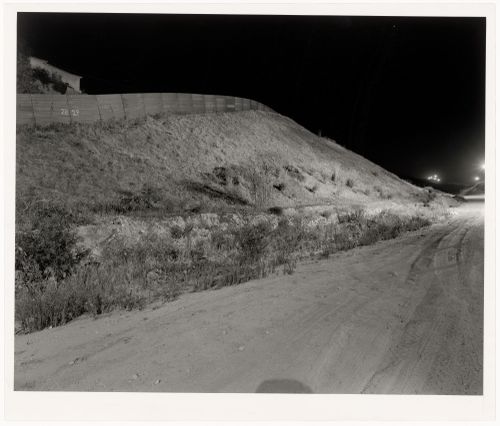
- The series "Running Fence 1997" focuses "on the first 14 miles of the border fence that separates the United States and Mexico, beginning at the Pacific Ocean and ending in the Otay Mountains.... [It] analyzes the "idea" of the border and explores its iconography, the border being a subject that is of extreme importance to the public as the world proceeds towards greater globalization. [Geoffrey] James has written of the project: "[The border fence] was built by the US Army Corps of Engineers in 1994, out of recycled metal landing strip - the most visible symbol of what is known as Operation Gatekeeper. Because the steel sheets are placed in the ground so that their ridges run horizontally, a man can hop over the fence with ease; and no Mexican child ever seems to be impeded from retrieving a soccer ball from US territory. The real barrier to illegal immigration from Mexico into the USA is less visible: hundreds of buried sensors linked to a central computer, nightscopes, helicopters and Border Patrol Agents in white Broncos."" (Evans).
Personnes et institutions:
Sujet:
architecture, ingénierie
architecture, ingénierie
Date:
1997
1997
Titre:
Partial night view of the United States-Mexico border fence from the United States side, San Diego County, California, United States, and Tijuana, Baja California, Mexico
Actions:
PH1997:0062
Description:
- The series "Running Fence 1997" focuses "on the first 14 miles of the border fence that separates the United States and Mexico, beginning at the Pacific Ocean and ending in the Otay Mountains.... [It] analyzes the "idea" of the border and explores its iconography, the border being a subject that is of extreme importance to the public as the world proceeds towards greater globalization. [Geoffrey] James has written of the project: "[The border fence] was built by the US Army Corps of Engineers in 1994, out of recycled metal landing strip - the most visible symbol of what is known as Operation Gatekeeper. Because the steel sheets are placed in the ground so that their ridges run horizontally, a man can hop over the fence with ease; and no Mexican child ever seems to be impeded from retrieving a soccer ball from US territory. The real barrier to illegal immigration from Mexico into the USA is less visible: hundreds of buried sensors linked to a central computer, nightscopes, helicopters and Border Patrol Agents in white Broncos."" (Evans).
Classification:
photographies
photographies
Date:
1997
1997
Personnes et institutions:
Sujet:
architecture, ingénierie
architecture, ingénierie
Classification:
photographies
photographies
Actions:
Numéro de référence:
PH1997:0063
Description:
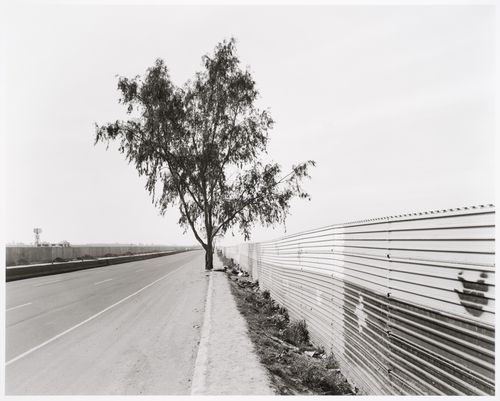
- The series "Running Fence 1997" focuses "on the first 14 miles of the border fence that separates the United States and Mexico, beginning at the Pacific Ocean and ending in the Otay Mountains.... [It] analyzes the "idea" of the border and explores its iconography, the border being a subject that is of extreme importance to the public as the world proceeds towards greater globalization. [Geoffrey] James has written of the project: "[The border fence] was built by the US Army Corps of Engineers in 1994, out of recycled metal landing strip - the most visible symbol of what is known as Operation Gatekeeper. Because the steel sheets are placed in the ground so that their ridges run horizontally, a man can hop over the fence with ease; and no Mexican child ever seems to be impeded from retrieving a soccer ball from US territory. The real barrier to illegal immigration from Mexico into the USA is less visible: hundreds of buried sensors linked to a central computer, nightscopes, helicopters and Border Patrol Agents in white Broncos."" (Evans).
Personnes et institutions:
Sujet:
architecture, ingénierie
architecture, ingénierie
Date:
1997
1997
Titre:
View along a highway leading to the airport in Tijuana, Baja California, Mexico, showing a partial view of the United States-Mexico border fence
Actions:
PH1997:0063
Description:
- The series "Running Fence 1997" focuses "on the first 14 miles of the border fence that separates the United States and Mexico, beginning at the Pacific Ocean and ending in the Otay Mountains.... [It] analyzes the "idea" of the border and explores its iconography, the border being a subject that is of extreme importance to the public as the world proceeds towards greater globalization. [Geoffrey] James has written of the project: "[The border fence] was built by the US Army Corps of Engineers in 1994, out of recycled metal landing strip - the most visible symbol of what is known as Operation Gatekeeper. Because the steel sheets are placed in the ground so that their ridges run horizontally, a man can hop over the fence with ease; and no Mexican child ever seems to be impeded from retrieving a soccer ball from US territory. The real barrier to illegal immigration from Mexico into the USA is less visible: hundreds of buried sensors linked to a central computer, nightscopes, helicopters and Border Patrol Agents in white Broncos."" (Evans).
Classification:
photographies
photographies
Date:
1997
1997
Personnes et institutions:
Sujet:
architecture, ingénierie
architecture, ingénierie
Classification:
événements
événements
Actions:
Description:
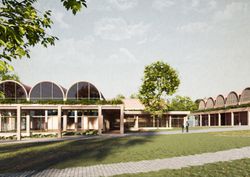
Comment l’architecture peut-elle établir un lien significatif entre les traditions et les réalités contemporaines ? Rejoignez-nous pour une conférence avec l’architecte Olayinka Dosekun-Adjei, cofondatrice et directrice artistique de Studio Contra.
Comment l’architecture peut-elle établir un lien significatif entre les traditions et les réalités contemporaines ? Rejoignez-nous pour une conférence avec l’architecte Olayinka Dosekun-Adjei, cofondatrice et directrice artistique de Studio Contra.
Date:
11 juin 2026, 18h à 19h30
11 juin 2026, 18h à 19h30
Titre:
Réinventer les matériaux, l’artisanat et les formes en Afrique de l’Ouest contemporaine avec Olayinka Dosekun-Adjei
Actions:
Description:
Comment l’architecture peut-elle établir un lien significatif entre les traditions et les réalités contemporaines ? Rejoignez-nous pour une conférence avec l’architecte Olayinka Dosekun-Adjei, cofondatrice et directrice artistique de Studio Contra.
Classification:
événements
événements
Date:
11 juin 2026
18h à 19h30
11 juin 2026
18h à 19h30
Classification:
événements
événements
Actions:
Description:
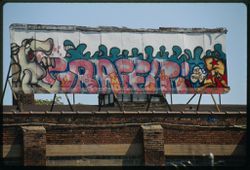
Rejoignez-nous pour un atelier de 90 minutes durant lequel nous écouterons de la musique rap, écrirons des paroles et tracerons en graffiti l’évolution du hip-hop et ses liens avec l’environnement urbain.
Rejoignez-nous pour un atelier de 90 minutes durant lequel nous écouterons de la musique rap, écrirons des paroles et tracerons en graffiti l’évolution du hip-hop et ses liens avec l’environnement urbain.
Date:
21 février 2026, 12h à 13h
21 février 2026, 12h à 13h
Titre:
Issu du béton : le hip hop et la ville
Actions:
Description:
Rejoignez-nous pour un atelier de 90 minutes durant lequel nous écouterons de la musique rap, écrirons des paroles et tracerons en graffiti l’évolution du hip-hop et ses liens avec l’environnement urbain.
Issu du béton : le hip hop et la ville
Actions:
Description:
Rejoignez-nous pour un atelier de 90 minutes durant lequel nous écouterons de la musique rap, écrirons des paroles et tracerons en graffiti l’évolution du hip-hop et ses liens avec l’environnement urbain.
Classification:
événements
événements
Date:
21 février 2026
12h à 13h
21 février 2026
12h à 13h
Classification:
événements
événements

Actions:
Description:
Rejoignez-nous pour une conversation autour de la publication States of emergency: A Spatial History of the French Colonial Continuum, un ouvrage de Léopold Lambert publié par Columbia Books on Architecture and the City, en présence de l’auteur.
Rejoignez-nous pour une conversation autour de la publication States of emergency: A Spatial History of the French Colonial Continuum, un ouvrage de Léopold Lambert publié par Columbia Books on Architecture and the City, en présence de l’auteur.
Date:
12 novembre 2026, 18h à 19h30
12 novembre 2026, 18h à 19h30
Titre:
États d’urgence avec Léopold Lambert
Actions:
Description:
Rejoignez-nous pour une conversation autour de la publication States of emergency: A Spatial History of the French Colonial Continuum, un ouvrage de Léopold Lambert publié par Columbia Books on Architecture and the City, en présence de l’auteur.
Classification:
événements
événements
Date:
12 novembre 2026
18h à 19h30
12 novembre 2026
18h à 19h30
Classification:
événements
événements
Actions:
Description:
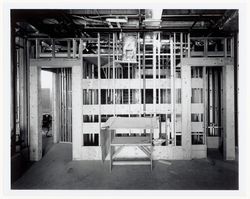
Le 26 septembre 2024 nous invitons les étudiant·e·s à explorer nos expositions, notre salle d’étude et nos espaces publics, ainsi qu’à nous interroger sur tout ce que vous aimeriez savoir à propos du CCA.
Le 26 septembre 2024 nous invitons les étudiant·e·s à explorer nos expositions, notre salle d’étude et nos espaces publics, ainsi qu’à nous interroger sur tout ce que vous aimeriez savoir à propos du CCA.
Localisation:
Maison Shaughnessy, salle d’étude et salles d’exposition Mot(s)-clé(s):
portes ouvertes, étudiants
Maison Shaughnessy, salle d’étude et salles d’exposition Mot(s)-clé(s):
portes ouvertes, étudiants
Date:
26 septembre 2024, de 18h à 20h30
26 septembre 2024, de 18h à 20h30
Titre:
Portes ouvertes pour les étudiant·e·s
Actions:
Description:
Le 26 septembre 2024 nous invitons les étudiant·e·s à explorer nos expositions, notre salle d’étude et nos espaces publics, ainsi qu’à nous interroger sur tout ce que vous aimeriez savoir à propos du CCA.
Portes ouvertes pour les étudiant·e·s
Actions:
Description:
Le 26 septembre 2024 nous invitons les étudiant·e·s à explorer nos expositions, notre salle d’étude et nos espaces publics, ainsi qu’à nous interroger sur tout ce que vous aimeriez savoir à propos du CCA.
Classification:
événements
événements
Date:
26 septembre 2024
de 18h à 20h30
26 septembre 2024
de 18h à 20h30
Localisation:
Maison Shaughnessy, salle d’étude et salles d’exposition Mot(s)-clé(s):
portes ouvertes, étudiants
Maison Shaughnessy, salle d’étude et salles d’exposition Mot(s)-clé(s):
portes ouvertes, étudiants
Classification:
événements
événements
Actions:
Description:
Le 14 septembre 2023 nous invitons les étudiant.e.s à explorer nos expositions, notre salle d’étude et nos espaces publics, ainsi qu’à nous interrogez sur tout ce que vous voulez savoir à propos du CCA.
Le 14 septembre 2023 nous invitons les étudiant.e.s à explorer nos expositions, notre salle d’étude et nos espaces publics, ainsi qu’à nous interrogez sur tout ce que vous voulez savoir à propos du CCA.
Localisation:
Maison Shaughnessy House
Maison Shaughnessy House
Date:
14 septembre 2023, de 18h à 21h
14 septembre 2023, de 18h à 21h
Titre:
Portes ouvertes pour les étudiant.e.s
Actions:
Description:
Le 14 septembre 2023 nous invitons les étudiant.e.s à explorer nos expositions, notre salle d’étude et nos espaces publics, ainsi qu’à nous interrogez sur tout ce que vous voulez savoir à propos du CCA.
Portes ouvertes pour les étudiant.e.s
Actions:
Description:
Le 14 septembre 2023 nous invitons les étudiant.e.s à explorer nos expositions, notre salle d’étude et nos espaces publics, ainsi qu’à nous interrogez sur tout ce que vous voulez savoir à propos du CCA.
Classification:
événements
événements
Date:
14 septembre 2023
de 18h à 21h
14 septembre 2023
de 18h à 21h
Localisation:
Maison Shaughnessy House
Maison Shaughnessy House


