


741 Résultats
Classification:
livres
livres
Titre:
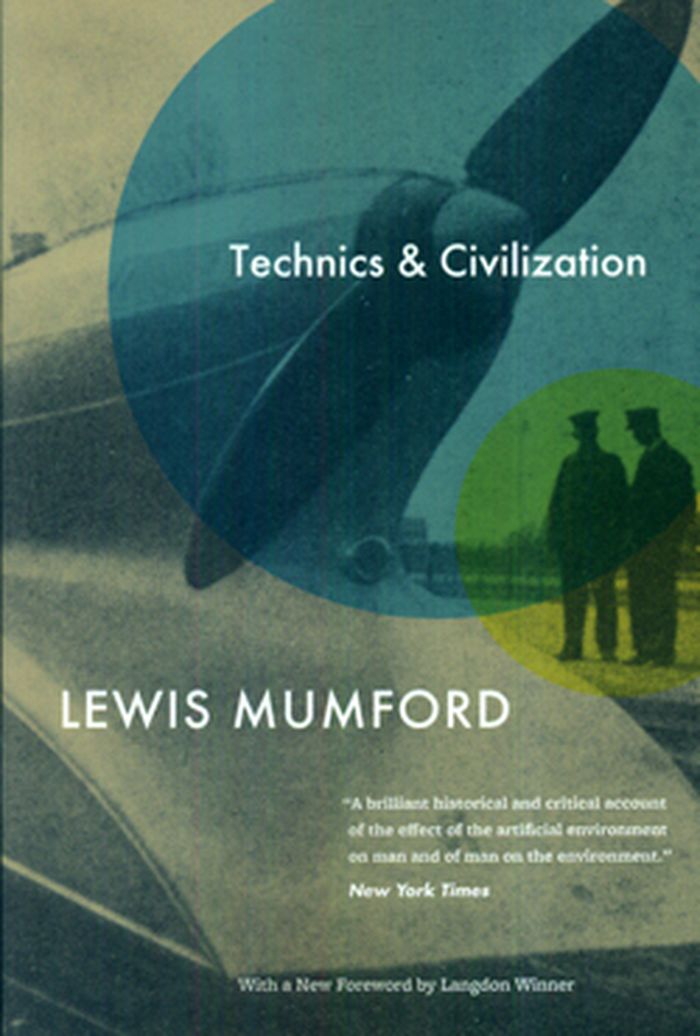
Technics & civilization
Technics & civilization
Actions:
Prix:
$45.95
(disponible sur commande)
Résumé:
Technics and Civilization first presented its compelling history of the machine and critical study of its effects on civilization in 1934 —before television, the personal computer, and the Internet even appeared on our periphery. Drawing upon art, science, philosophy, and the history of culture, Lewis Mumford explained the origin of the machine age and traced its(...)
$45.95
(disponible sur commande)
Résumé:
Technics and Civilization first presented its compelling history of the machine and critical study of its effects on civilization in 1934 —before television, the personal computer, and the Internet even appeared on our periphery. Drawing upon art, science, philosophy, and the history of culture, Lewis Mumford explained the origin of the machine age and traced its(...)
Titre:
Technics & civilization
Actions:
Prix:
$45.95
(disponible sur commande)
Résumé:
Technics and Civilization first presented its compelling history of the machine and critical study of its effects on civilization in 1934 —before television, the personal computer, and the Internet even appeared on our periphery. Drawing upon art, science, philosophy, and the history of culture, Lewis Mumford explained the origin of the machine age and traced its social results, asserting that the development of modern technology had its roots in the Middle Ages rather than the Industrial Revolution. Mumford sagely argued that it was the moral, economic, and political choices we made, not the machines that we used, that determined our then industrially driven economy. Equal parts powerful history and polemic criticism, this book was the first comprehensive attempt in English to portray the development of the machine age over the last thousand years — and to predict the pull the technological still holds over us today.
Technics & civilization
Actions:
Prix:
$45.95
(disponible sur commande)
Résumé:
Technics and Civilization first presented its compelling history of the machine and critical study of its effects on civilization in 1934 —before television, the personal computer, and the Internet even appeared on our periphery. Drawing upon art, science, philosophy, and the history of culture, Lewis Mumford explained the origin of the machine age and traced its social results, asserting that the development of modern technology had its roots in the Middle Ages rather than the Industrial Revolution. Mumford sagely argued that it was the moral, economic, and political choices we made, not the machines that we used, that determined our then industrially driven economy. Equal parts powerful history and polemic criticism, this book was the first comprehensive attempt in English to portray the development of the machine age over the last thousand years — and to predict the pull the technological still holds over us today.
Classification:
livres
livres
Publication:
octobre 2010
octobre 2010
Sujet:
Théorie de l’architecture
Théorie de l’architecture
Classification:
périodiques
périodiques
Titre:
OASE 120: Quality settings
OASE 120: Quality settings
Actions:
Prix:
$43.00
(disponible en magasin)
Résumé:
'‘Quality'’ is an all-pervasive concept in contemporary architectural practice, yet it is also a somewhat vague notion that can be used for many very different valuations. Talking or thinking about a high-quality built environment opens up new opportunities for critical interpretation and for new social or ecological endeavours. By the same token, the concept of quality(...)
$43.00
(disponible en magasin)
Résumé:
'‘Quality'’ is an all-pervasive concept in contemporary architectural practice, yet it is also a somewhat vague notion that can be used for many very different valuations. Talking or thinking about a high-quality built environment opens up new opportunities for critical interpretation and for new social or ecological endeavours. By the same token, the concept of quality(...)
Titre:
OASE 120: Quality settings
Actions:
Prix:
$43.00
(disponible en magasin)
Résumé:
'‘Quality'’ is an all-pervasive concept in contemporary architectural practice, yet it is also a somewhat vague notion that can be used for many very different valuations. Talking or thinking about a high-quality built environment opens up new opportunities for critical interpretation and for new social or ecological endeavours. By the same token, the concept of quality may limit the arena for the evaluation and legitimization of architecture to expert opinions. This issue of OASE considers contemporary processes and environments in which the quality of (public) architecture is negotiated. How do state or city architects, urban quality commissions or design competitions ensure the quality of regional planning? What is the importance of the exchanges and negotiations between designers, experts, mediators and other stakeholders? And how do these ‘settings’ fit into the evolving frameworks of architectural culture, urban or infrastructural policy and the political economy?
OASE 120: Quality settings
Actions:
Prix:
$43.00
(disponible en magasin)
Résumé:
'‘Quality'’ is an all-pervasive concept in contemporary architectural practice, yet it is also a somewhat vague notion that can be used for many very different valuations. Talking or thinking about a high-quality built environment opens up new opportunities for critical interpretation and for new social or ecological endeavours. By the same token, the concept of quality may limit the arena for the evaluation and legitimization of architecture to expert opinions. This issue of OASE considers contemporary processes and environments in which the quality of (public) architecture is negotiated. How do state or city architects, urban quality commissions or design competitions ensure the quality of regional planning? What is the importance of the exchanges and negotiations between designers, experts, mediators and other stakeholders? And how do these ‘settings’ fit into the evolving frameworks of architectural culture, urban or infrastructural policy and the political economy?
Classification:
périodiques
périodiques
Publication:
décembre 2025
décembre 2025
Sujet:
Revues
Revues
Classification:
livres
livres
Prix:
$36.00
(disponible sur commande)
Résumé:
Housing speaks directly to the challenges that define our times: social inequality, ecological crisis, displacement, asylum, migration and privatization. Framing the neo-liberal context as a defining condition of contemporary housing, International Case Studies consists of two parts: a series of essays by authors from architecture, anthropology, economy and literature,(...)
$36.00
(disponible sur commande)
Résumé:
Housing speaks directly to the challenges that define our times: social inequality, ecological crisis, displacement, asylum, migration and privatization. Framing the neo-liberal context as a defining condition of contemporary housing, International Case Studies consists of two parts: a series of essays by authors from architecture, anthropology, economy and literature,(...)
Sujet:
Logements collectifs
Logements collectifs
Publication:
juillet 2016
juillet 2016
Titre:
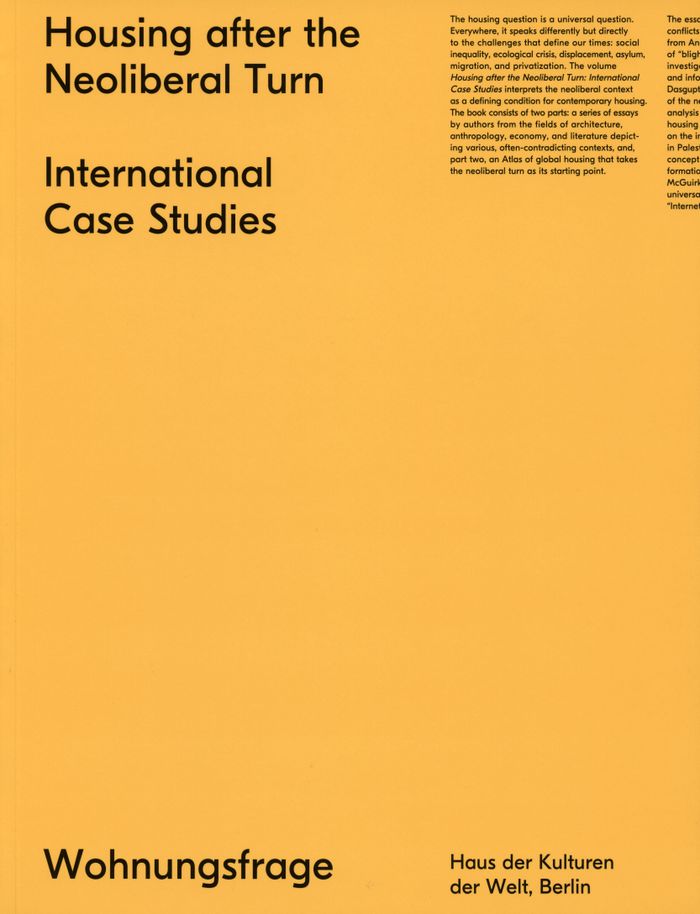
Housing after the neoliberal turn: international case studies
Actions:
Prix:
$36.00
(disponible sur commande)
Résumé:
Housing speaks directly to the challenges that define our times: social inequality, ecological crisis, displacement, asylum, migration and privatization. Framing the neo-liberal context as a defining condition of contemporary housing, International Case Studies consists of two parts: a series of essays by authors from architecture, anthropology, economy and literature, and an “atlas” of global housing that takes neo-liberalism as its starting point. The essays shed light on the challenges and conflicts of contemporary housing production from Andrew Herscher’s research on the politics of “blight” in Detroit to Justin McGuirk’s text on domesticity as data and universal housing questions eclipse by the “Internet of Things.” Conceptualized and compiled by architectural critic-historian Anne Kockelkorn and Columbia professor Reinhold Martin, the illustrated “atlas” presents 33 housing examples rarely seen together and invites readers to think of housing as an unstable constellation evolving within the power relations of territorial processes.
Housing after the neoliberal turn: international case studies
Actions:
Prix:
$36.00
(disponible sur commande)
Résumé:
Housing speaks directly to the challenges that define our times: social inequality, ecological crisis, displacement, asylum, migration and privatization. Framing the neo-liberal context as a defining condition of contemporary housing, International Case Studies consists of two parts: a series of essays by authors from architecture, anthropology, economy and literature, and an “atlas” of global housing that takes neo-liberalism as its starting point. The essays shed light on the challenges and conflicts of contemporary housing production from Andrew Herscher’s research on the politics of “blight” in Detroit to Justin McGuirk’s text on domesticity as data and universal housing questions eclipse by the “Internet of Things.” Conceptualized and compiled by architectural critic-historian Anne Kockelkorn and Columbia professor Reinhold Martin, the illustrated “atlas” presents 33 housing examples rarely seen together and invites readers to think of housing as an unstable constellation evolving within the power relations of territorial processes.
Classification:
livres
livres
Publication:
juillet 2016
juillet 2016
Sujet:
Logements collectifs
Logements collectifs
Classification:
livres
livres
Actions:
Prix:
$39.99
(disponible sur commande)
Résumé:
Why Don't American Cities Burn? traces the collision of urban transformation with the rightward-moving social politics of late twentieth- and early twenty-first-century America. He shows how the bifurcation of black social structures produced a new African American inequality and traces the shift from images of a pathological black "underclass" to praise of the(...)
$39.99
(disponible sur commande)
Résumé:
Why Don't American Cities Burn? traces the collision of urban transformation with the rightward-moving social politics of late twentieth- and early twenty-first-century America. He shows how the bifurcation of black social structures produced a new African American inequality and traces the shift from images of a pathological black "underclass" to praise of the(...)
Titre:
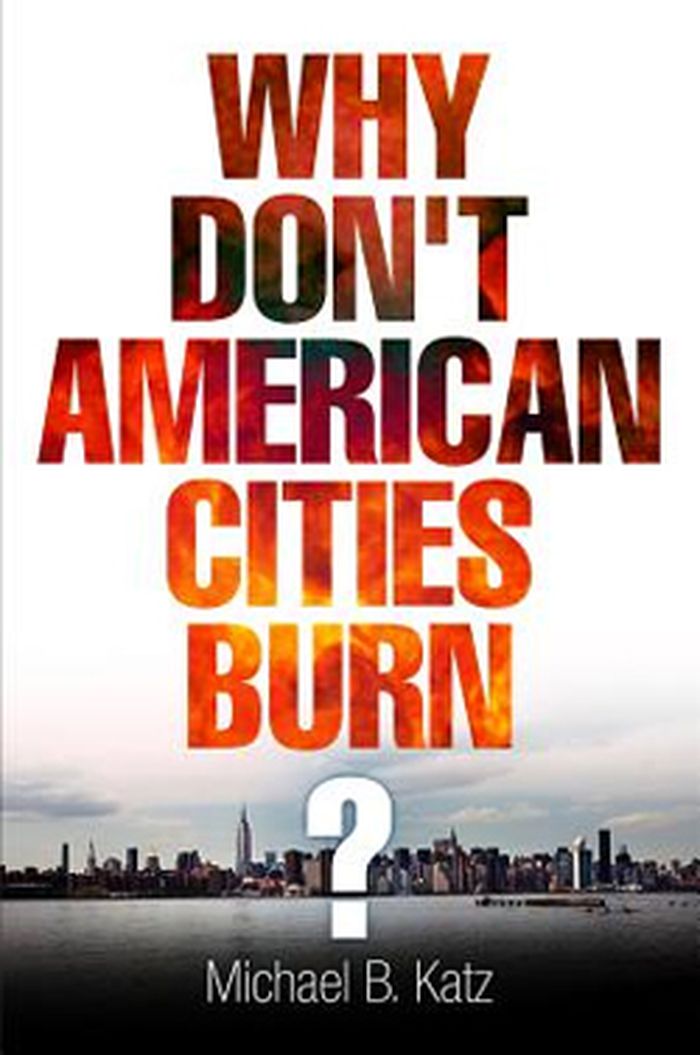
Why don't American cities burn?
Actions:
Prix:
$39.99
(disponible sur commande)
Résumé:
Why Don't American Cities Burn? traces the collision of urban transformation with the rightward-moving social politics of late twentieth- and early twenty-first-century America. He shows how the bifurcation of black social structures produced a new African American inequality and traces the shift from images of a pathological black "underclass" to praise of the entrepreneurial poor who take advantage of new technologies of poverty work to find the beginning of the path to the middle class. He explores the reasons American cities since the early 1970s have remained relatively free of collective violence while black men in bleak inner-city neighborhoods have turned their rage inward on one another rather than on the agents and symbols of a culture and political economy that exclude them. The book ends with a meditation on how the political left and right have come to believe that urban transformation is inevitably one of failure and decline abetted by the response of government to deindustrialization, poverty, and race. How, Katz asks, can we construct a new narrative that acknowledges the dark side of urban history even as it demonstrates the capacity of government to address the problems of cities and their residents? How can we create a politics of modest hope?
Why don't American cities burn?
Actions:
Prix:
$39.99
(disponible sur commande)
Résumé:
Why Don't American Cities Burn? traces the collision of urban transformation with the rightward-moving social politics of late twentieth- and early twenty-first-century America. He shows how the bifurcation of black social structures produced a new African American inequality and traces the shift from images of a pathological black "underclass" to praise of the entrepreneurial poor who take advantage of new technologies of poverty work to find the beginning of the path to the middle class. He explores the reasons American cities since the early 1970s have remained relatively free of collective violence while black men in bleak inner-city neighborhoods have turned their rage inward on one another rather than on the agents and symbols of a culture and political economy that exclude them. The book ends with a meditation on how the political left and right have come to believe that urban transformation is inevitably one of failure and decline abetted by the response of government to deindustrialization, poverty, and race. How, Katz asks, can we construct a new narrative that acknowledges the dark side of urban history even as it demonstrates the capacity of government to address the problems of cities and their residents? How can we create a politics of modest hope?
Classification:
livres
livres
Publication:
octobre 2011
octobre 2011
Sujet:
Théorie de l’urbanisme
Théorie de l’urbanisme
Classification:
livres
livres

Titre:
The network society
The network society
Actions:
Prix:
$28.99
(disponible sur commande)
Résumé:
In The Network Society, Darin Barney provides a compelling examination of the social, political and economic implications of network technologies and their application across a wide range of practices and institutions. Are we in the midst of a digital revolution? Have new information and communication technologies given birth to a new form of society, or do they(...)
$28.99
(disponible sur commande)
Résumé:
In The Network Society, Darin Barney provides a compelling examination of the social, political and economic implications of network technologies and their application across a wide range of practices and institutions. Are we in the midst of a digital revolution? Have new information and communication technologies given birth to a new form of society, or do they(...)
Titre:
The network society
Actions:
Prix:
$28.99
(disponible sur commande)
Résumé:
In The Network Society, Darin Barney provides a compelling examination of the social, political and economic implications of network technologies and their application across a wide range of practices and institutions. Are we in the midst of a digital revolution? Have new information and communication technologies given birth to a new form of society, or do they reinforce and extend existing patterns and relationships? This book provides a clear and engaging discussion of these and other questions. Using a sophisticated model of the relationship between technology and society, Barney investigates both what has changed, and what has remained the same, in the age of the Internet. Among the issues discussed are debates concerning the emergence of a 'knowledge economy'; digital restructuring of employment and work; globalization and the status of the nation-state; the prospects of digital democracy; the digital divide; new social movements; and culture, community and identity in the age of new media. This book provides an accessible resource for a thoughtful engagement with life in the network society. It will be essential reading for students in sociology and media and communication studies. This will be a valuable textbook for undergraduate students of sociology and media and communication studies.
The network society
Actions:
Prix:
$28.99
(disponible sur commande)
Résumé:
In The Network Society, Darin Barney provides a compelling examination of the social, political and economic implications of network technologies and their application across a wide range of practices and institutions. Are we in the midst of a digital revolution? Have new information and communication technologies given birth to a new form of society, or do they reinforce and extend existing patterns and relationships? This book provides a clear and engaging discussion of these and other questions. Using a sophisticated model of the relationship between technology and society, Barney investigates both what has changed, and what has remained the same, in the age of the Internet. Among the issues discussed are debates concerning the emergence of a 'knowledge economy'; digital restructuring of employment and work; globalization and the status of the nation-state; the prospects of digital democracy; the digital divide; new social movements; and culture, community and identity in the age of new media. This book provides an accessible resource for a thoughtful engagement with life in the network society. It will be essential reading for students in sociology and media and communication studies. This will be a valuable textbook for undergraduate students of sociology and media and communication studies.
Classification:
livres
livres
Publication:
septembre 2004, Cambridge
septembre 2004, Cambridge
Sujet:
Épistémologie et réseau
Épistémologie et réseau
Classification:
livres
livres
Prix:
$47.00
(disponible sur commande)
Résumé:
Roads to Power tells the story of how Britain built the first nation connected by infrastructure, how a libertarian revolution destroyed a national economy, and how technology caused strangers to stop speaking. In early eighteenth-century Britain, nothing but dirt track ran between most towns. By 1848 the primitive roads were transformed into a network of highways(...)
$47.00
(disponible sur commande)
Résumé:
Roads to Power tells the story of how Britain built the first nation connected by infrastructure, how a libertarian revolution destroyed a national economy, and how technology caused strangers to stop speaking. In early eighteenth-century Britain, nothing but dirt track ran between most towns. By 1848 the primitive roads were transformed into a network of highways(...)
Titre:
Roads to power: Britain invents the infrastructure state
Actions:
Prix:
$47.00
(disponible sur commande)
Résumé:
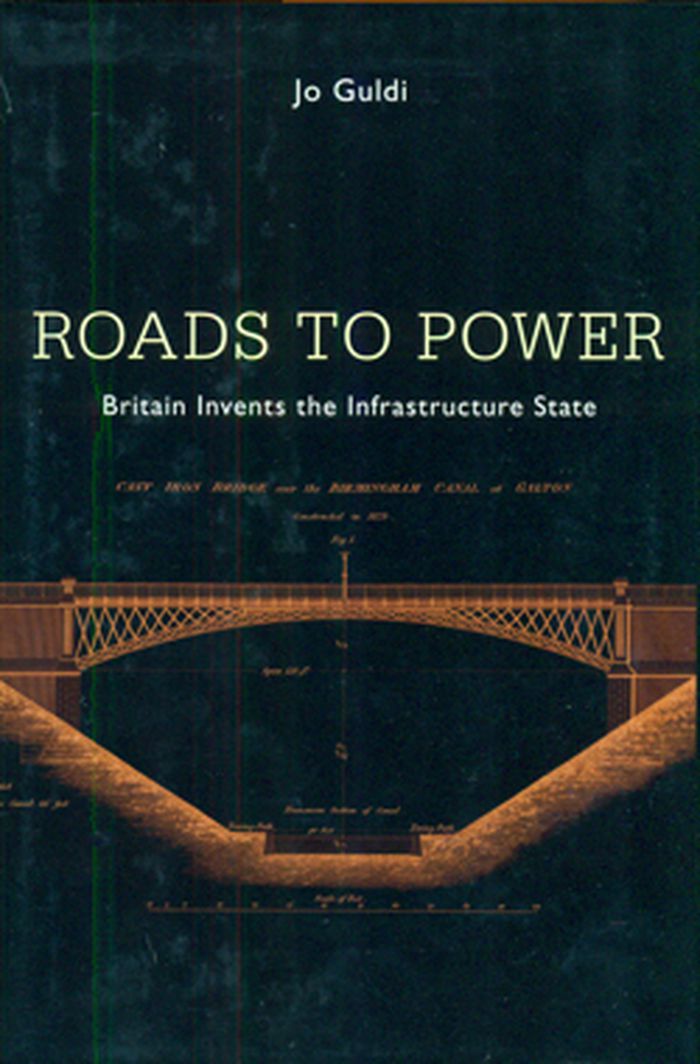
Roads to Power tells the story of how Britain built the first nation connected by infrastructure, how a libertarian revolution destroyed a national economy, and how technology caused strangers to stop speaking. In early eighteenth-century Britain, nothing but dirt track ran between most towns. By 1848 the primitive roads were transformed into a network of highways connecting every village and island in the nation—and also dividing them in unforeseen ways. The highway network led to contests for control over everything from road management to market access. Peripheries like the Highlands demanded that centralized government pay for roads they could not afford, while English counties wanted to be spared the cost of underwriting roads to Scotland. The new network also transformed social relationships. Although travelers moved along the same routes, they occupied increasingly isolated spheres. The roads were the product of a new form of government, the infrastructure state, marked by the unprecedented control bureaucrats wielded over decisions relating to everyday life.
Roads to power: Britain invents the infrastructure state
Actions:
Prix:
$47.00
(disponible sur commande)
Résumé:
Roads to Power tells the story of how Britain built the first nation connected by infrastructure, how a libertarian revolution destroyed a national economy, and how technology caused strangers to stop speaking. In early eighteenth-century Britain, nothing but dirt track ran between most towns. By 1848 the primitive roads were transformed into a network of highways connecting every village and island in the nation—and also dividing them in unforeseen ways. The highway network led to contests for control over everything from road management to market access. Peripheries like the Highlands demanded that centralized government pay for roads they could not afford, while English counties wanted to be spared the cost of underwriting roads to Scotland. The new network also transformed social relationships. Although travelers moved along the same routes, they occupied increasingly isolated spheres. The roads were the product of a new form of government, the infrastructure state, marked by the unprecedented control bureaucrats wielded over decisions relating to everyday life.
Classification:
livres
livres
Publication:
janvier 2012
janvier 2012
Sujet:
Théorie de l’architecture
Théorie de l’architecture
Classification:
livres
livres
Actions:
Prix:
$28.95
(disponible sur commande)
Résumé:
No metropolis has been more loved or more hated. To its official boosters, “Los Angeles brings it all together.” To detractors, LA is a sunlit mortuary where “you can rot without feeling it.” To Mike Davis, the author of this fiercely elegant and wide- ranging work of social history, Los Angeles is both utopia and dystopia, a place where the last Joshua trees are being(...)
$28.95
(disponible sur commande)
Résumé:
No metropolis has been more loved or more hated. To its official boosters, “Los Angeles brings it all together.” To detractors, LA is a sunlit mortuary where “you can rot without feeling it.” To Mike Davis, the author of this fiercely elegant and wide- ranging work of social history, Los Angeles is both utopia and dystopia, a place where the last Joshua trees are being(...)
Titre:
City of quartz: excavating the future in Los Angeles
Actions:
Prix:
$28.95
(disponible sur commande)
Résumé:
No metropolis has been more loved or more hated. To its official boosters, “Los Angeles brings it all together.” To detractors, LA is a sunlit mortuary where “you can rot without feeling it.” To Mike Davis, the author of this fiercely elegant and wide- ranging work of social history, Los Angeles is both utopia and dystopia, a place where the last Joshua trees are being plowed under to make room for model communities in the desert, where the rich have hired their own police to fend off street gangs, as well as armed Beirut militias. In "City of Quartz", Davis reconstructs LA’s shadow history and dissects its ethereal economy. He tells us who has the power and how they hold on to it. He gives us a city of Dickensian extremes, Pynchonesque conspiracies, and a desperation straight out of Nathaniel Westa city in which we may glimpse our own future mirrored with terrifying clarity.
City of quartz: excavating the future in Los Angeles
Actions:
Prix:
$28.95
(disponible sur commande)
Résumé:
No metropolis has been more loved or more hated. To its official boosters, “Los Angeles brings it all together.” To detractors, LA is a sunlit mortuary where “you can rot without feeling it.” To Mike Davis, the author of this fiercely elegant and wide- ranging work of social history, Los Angeles is both utopia and dystopia, a place where the last Joshua trees are being plowed under to make room for model communities in the desert, where the rich have hired their own police to fend off street gangs, as well as armed Beirut militias. In "City of Quartz", Davis reconstructs LA’s shadow history and dissects its ethereal economy. He tells us who has the power and how they hold on to it. He gives us a city of Dickensian extremes, Pynchonesque conspiracies, and a desperation straight out of Nathaniel Westa city in which we may glimpse our own future mirrored with terrifying clarity.
Classification:
livres
livres
Publication:
juillet 2018
juillet 2018
Sujet:
Théorie de l’urbanisme
Théorie de l’urbanisme
Classification:
livres
livres
Actions:
Prix:
$39.95
(disponible sur commande)
Résumé:
Architectural Papers series is edited by the Josep Lluís Mateo Chair at the ETH Zurich since 2005. Covering the wide range of topics related to teaching and architectural culture in general, it is aimed at expanding the narrow boundaries of the discipline. Its fifth issue concentrates around the new conditions for architectural practice and around the new epistemologies(...)
$39.95
(disponible sur commande)
Résumé:
Architectural Papers series is edited by the Josep Lluís Mateo Chair at the ETH Zurich since 2005. Covering the wide range of topics related to teaching and architectural culture in general, it is aimed at expanding the narrow boundaries of the discipline. Its fifth issue concentrates around the new conditions for architectural practice and around the new epistemologies(...)
Titre:
After crisis : contemporary architectural conditions, Architectural papers V, ETH Zürich
Actions:
Prix:
$39.95
(disponible sur commande)
Résumé:
Architectural Papers series is edited by the Josep Lluís Mateo Chair at the ETH Zurich since 2005. Covering the wide range of topics related to teaching and architectural culture in general, it is aimed at expanding the narrow boundaries of the discipline. Its fifth issue concentrates around the new conditions for architectural practice and around the new epistemologies that may inform it in the next future. That is, in the period after the financial bubble has collapsed and living and working conditions have significantly changed. Essays, studies and interviews, along with a selection of indicative projects, tackle the actual issues of growth and shrinking, economy and ideology, craftsmanship and social space in the city, materiality and sustainability in architecture. In a logical sequence, they depict the current reality of architecture. With contributions by Iñaki Ábalos, Solano Benitez, Alexander Brodsky, Isabel Concheiro, Frederick Cooper Llosa, Hans Ibelings, Krunoslav Ivanisin, Julio Martinez Calzon, Josep Lluís Mateo, Richard Sennett, Wang Shu and Ramias Steinemann.
After crisis : contemporary architectural conditions, Architectural papers V, ETH Zürich
Actions:
Prix:
$39.95
(disponible sur commande)
Résumé:
Architectural Papers series is edited by the Josep Lluís Mateo Chair at the ETH Zurich since 2005. Covering the wide range of topics related to teaching and architectural culture in general, it is aimed at expanding the narrow boundaries of the discipline. Its fifth issue concentrates around the new conditions for architectural practice and around the new epistemologies that may inform it in the next future. That is, in the period after the financial bubble has collapsed and living and working conditions have significantly changed. Essays, studies and interviews, along with a selection of indicative projects, tackle the actual issues of growth and shrinking, economy and ideology, craftsmanship and social space in the city, materiality and sustainability in architecture. In a logical sequence, they depict the current reality of architecture. With contributions by Iñaki Ábalos, Solano Benitez, Alexander Brodsky, Isabel Concheiro, Frederick Cooper Llosa, Hans Ibelings, Krunoslav Ivanisin, Julio Martinez Calzon, Josep Lluís Mateo, Richard Sennett, Wang Shu and Ramias Steinemann.
Classification:
livres
livres
Publication:
octobre 2010
octobre 2010
Sujet:
Architecture contemporaine
Architecture contemporaine
Classification:
livres
livres
Prix:
$49.95
(disponible sur commande)
Résumé:
Sprawling beneath the Acropolis, modern Athens is commonly viewed in negative terms: congested, ugly and monotonous. A Mediterranean version of "informal" urbanism prevalent throughout the so-called developing world, ''Builders, Housewives and the Construction of Modern Athens'' reassesses the explosive growth of post-war Athens through its most distinctive building type,(...)
$49.95
(disponible sur commande)
Résumé:
Sprawling beneath the Acropolis, modern Athens is commonly viewed in negative terms: congested, ugly and monotonous. A Mediterranean version of "informal" urbanism prevalent throughout the so-called developing world, ''Builders, Housewives and the Construction of Modern Athens'' reassesses the explosive growth of post-war Athens through its most distinctive building type,(...)
Titre:
Builders, housewives, and the construction of modern Athens
Actions:
Prix:
$49.95
(disponible sur commande)
Résumé:
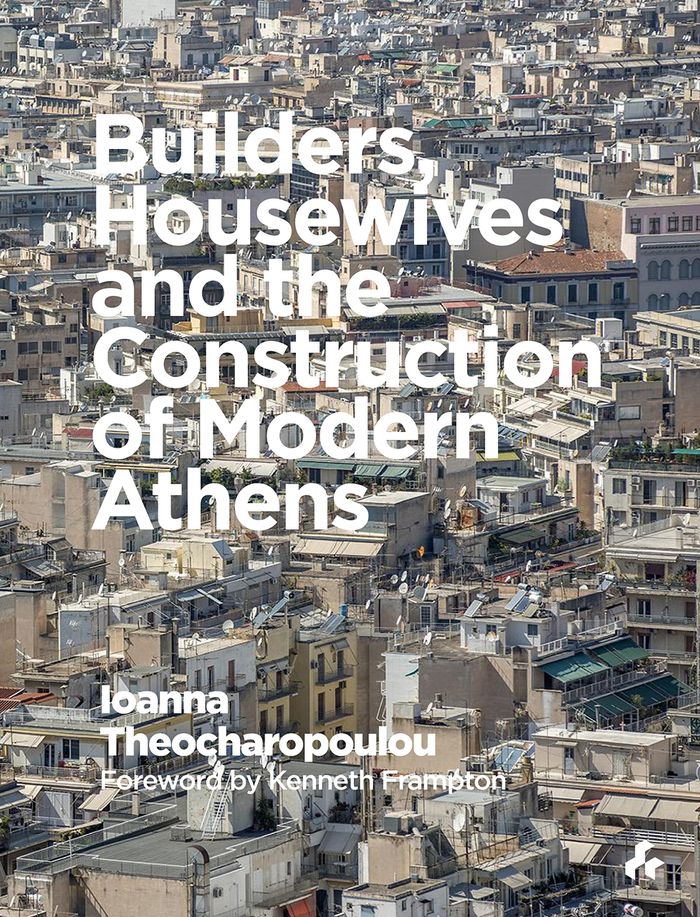
Sprawling beneath the Acropolis, modern Athens is commonly viewed in negative terms: congested, ugly and monotonous. A Mediterranean version of "informal" urbanism prevalent throughout the so-called developing world, ''Builders, Housewives and the Construction of Modern Athens'' reassesses the explosive growth of post-war Athens through its most distinctive building type, the polykatoikia, a small-scale multi-storey apartment block (from poly meaning "multiple" and oikos meaning "house"). Theocharopoulou re-evaluates the polykatoikia as a low-tech, easily constructible innovation that stimulated the post-war urban economy, triggering the city's social mid-twentieth century transformation, enabling the migrants who poured into Athens to become urban citizens, aspiring to a modern life. The interiors of the polykatoikia apartments reflect a desire for modernity as marketed to housewives through film and magazines. Regular builders became unlikely allies in designing these polykatoikia interiors, enabling inhabitants to exert agency over their daily lives ?and the shape of the post-war city.
Builders, housewives, and the construction of modern Athens
Actions:
Prix:
$49.95
(disponible sur commande)
Résumé:
Sprawling beneath the Acropolis, modern Athens is commonly viewed in negative terms: congested, ugly and monotonous. A Mediterranean version of "informal" urbanism prevalent throughout the so-called developing world, ''Builders, Housewives and the Construction of Modern Athens'' reassesses the explosive growth of post-war Athens through its most distinctive building type, the polykatoikia, a small-scale multi-storey apartment block (from poly meaning "multiple" and oikos meaning "house"). Theocharopoulou re-evaluates the polykatoikia as a low-tech, easily constructible innovation that stimulated the post-war urban economy, triggering the city's social mid-twentieth century transformation, enabling the migrants who poured into Athens to become urban citizens, aspiring to a modern life. The interiors of the polykatoikia apartments reflect a desire for modernity as marketed to housewives through film and magazines. Regular builders became unlikely allies in designing these polykatoikia interiors, enabling inhabitants to exert agency over their daily lives ?and the shape of the post-war city.
Classification:
livres
livres
Publication:
janvier 2017
janvier 2017
Sujet:
Logements collectifs
Logements collectifs
Classification:
livres
livres
Titre:
The new Chinese city
The new Chinese city
Actions:
Prix:
$47.95
(disponible sur commande)
Résumé:
Urbanisation and urban development are the focus of this comprehensive account which introduces readers to the far-reaching changes now taking place in Chinese cities. New and established scholars from the fields of geography, sociology and urban planning, including Chinese social scientists, contribute chapters on the development of Chinese cities up to the turn of the(...)
$47.95
(disponible sur commande)
Résumé:
Urbanisation and urban development are the focus of this comprehensive account which introduces readers to the far-reaching changes now taking place in Chinese cities. New and established scholars from the fields of geography, sociology and urban planning, including Chinese social scientists, contribute chapters on the development of Chinese cities up to the turn of the(...)
Titre:
The new Chinese city
Actions:
Prix:
$47.95
(disponible sur commande)
Résumé:
Urbanisation and urban development are the focus of this comprehensive account which introduces readers to the far-reaching changes now taking place in Chinese cities. New and established scholars from the fields of geography, sociology and urban planning, including Chinese social scientists, contribute chapters on the development of Chinese cities up to the turn of the twenty-first century. All their work reflects the most recent scholarship. The book's original approach links the visible changes in urban life to changes in the larger political economy of China. Conversely, broad concepts that are central to understanding the country's re-emergence on the world stage, such as the transition from socialism, market reform, and globalization, are made tangible in their effects on people's daily lives in Chinese cities and in detailed examination of how these cities have developed. Case materials are drawn from all China's major cities, but particular attention is paid to Shanghai and Hong Kong.
The new Chinese city
Actions:
Prix:
$47.95
(disponible sur commande)
Résumé:
Urbanisation and urban development are the focus of this comprehensive account which introduces readers to the far-reaching changes now taking place in Chinese cities. New and established scholars from the fields of geography, sociology and urban planning, including Chinese social scientists, contribute chapters on the development of Chinese cities up to the turn of the twenty-first century. All their work reflects the most recent scholarship. The book's original approach links the visible changes in urban life to changes in the larger political economy of China. Conversely, broad concepts that are central to understanding the country's re-emergence on the world stage, such as the transition from socialism, market reform, and globalization, are made tangible in their effects on people's daily lives in Chinese cities and in detailed examination of how these cities have developed. Case materials are drawn from all China's major cities, but particular attention is paid to Shanghai and Hong Kong.
Classification:
livres
livres
Publication:
février 2002, Oxford
février 2002, Oxford
Sujet:
Théorie de l’urbanisme
Théorie de l’urbanisme


