


7451 Résultats
Classification:
livres
livres
Prix:
$100.00
(disponible sur commande)
Résumé:
Beginning in the 1990s, a series of major artists imagined the expansion of photography, intensifying its ideas and effects while abandoning many of its former medium constraints. Simultaneous with this development in contemporary art, however, photography was moving toward total digitalization. ''Lateness and longing'' presents the first account of a generation of(...)
$100.00
(disponible sur commande)
Résumé:
Beginning in the 1990s, a series of major artists imagined the expansion of photography, intensifying its ideas and effects while abandoning many of its former medium constraints. Simultaneous with this development in contemporary art, however, photography was moving toward total digitalization. ''Lateness and longing'' presents the first account of a generation of(...)
Titre:
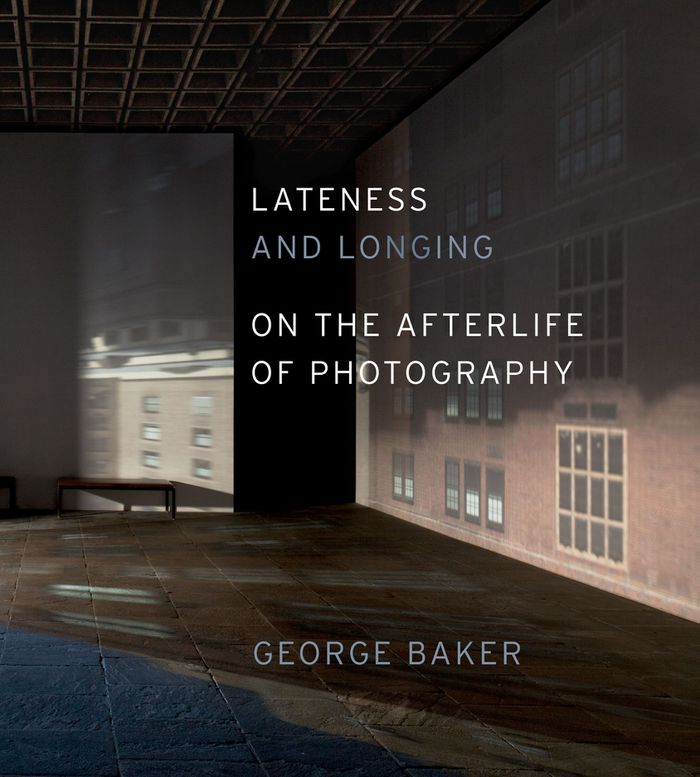
Lateness and longing: On the afterlife of photography
Actions:
Prix:
$100.00
(disponible sur commande)
Résumé:
Beginning in the 1990s, a series of major artists imagined the expansion of photography, intensifying its ideas and effects while abandoning many of its former medium constraints. Simultaneous with this development in contemporary art, however, photography was moving toward total digitalization. ''Lateness and longing'' presents the first account of a generation of artists—focused on the work of Zoe Leonard, Tacita Dean, Sharon Lockhart, and Moyra Davey—who have collectively transformed the practice of photography, using analogue technologies in a dissident way and radicalizing signifiers of older models of feminist art. All these artists have resisted the transition to the digital in their work. Instead—in what amounts to a series of feminist polemics—they return to earlier, incomplete, or unrealized moments in photography’s history, gravitating toward the analogue basis of photographic mediums. Their work announces that photography has become—not obsolete—but 'late,' opened up by the potentially critical forces of anachronism.
Lateness and longing: On the afterlife of photography
Actions:
Prix:
$100.00
(disponible sur commande)
Résumé:
Beginning in the 1990s, a series of major artists imagined the expansion of photography, intensifying its ideas and effects while abandoning many of its former medium constraints. Simultaneous with this development in contemporary art, however, photography was moving toward total digitalization. ''Lateness and longing'' presents the first account of a generation of artists—focused on the work of Zoe Leonard, Tacita Dean, Sharon Lockhart, and Moyra Davey—who have collectively transformed the practice of photography, using analogue technologies in a dissident way and radicalizing signifiers of older models of feminist art. All these artists have resisted the transition to the digital in their work. Instead—in what amounts to a series of feminist polemics—they return to earlier, incomplete, or unrealized moments in photography’s history, gravitating toward the analogue basis of photographic mediums. Their work announces that photography has become—not obsolete—but 'late,' opened up by the potentially critical forces of anachronism.
Classification:
livres
livres
Publication:
mai 2023
mai 2023
Sujet:
Photographie- collections
Photographie- collections
Classification:
livres
livres
Actions:
Prix:
$26.95
(disponible sur commande)
Résumé:
This publication documents an unusual project by a multidisciplinary group of architects based at the Bartlett School of Architecture, University College London and collectively known as sixteen*(makers). Composed of some of the most innovative architects in Europe, the group focuses on interactive 'intelligent' systems employing digital fabrication, robotics, and(...)
$26.95
(disponible sur commande)
Résumé:
This publication documents an unusual project by a multidisciplinary group of architects based at the Bartlett School of Architecture, University College London and collectively known as sixteen*(makers). Composed of some of the most innovative architects in Europe, the group focuses on interactive 'intelligent' systems employing digital fabrication, robotics, and(...)
Sujet:
Architecture contemporaine
Architecture contemporaine
Publication:
septembre 2011
septembre 2011
Titre:
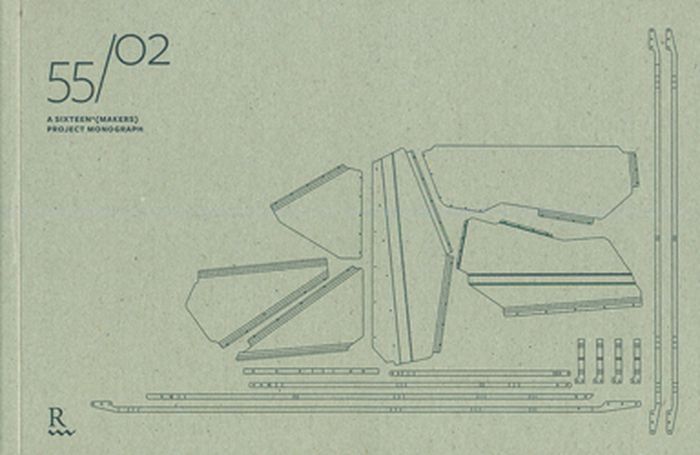
55/02: a sixteen*(makers) project monograph
Actions:
Prix:
$26.95
(disponible sur commande)
Résumé:
This publication documents an unusual project by a multidisciplinary group of architects based at the Bartlett School of Architecture, University College London and collectively known as sixteen*(makers). Composed of some of the most innovative architects in Europe, the group focuses on interactive 'intelligent' systems employing digital fabrication, robotics, and distributed networks of sensors and microprocessors. The project 55/02 is a form of forest shelter that engages with the landscape and is designed to address the visitor towards the particular qualities of its unique placement. It is at once a shelter, a sculpture, a vantage point, and a geographical marker. Essays by the project's authors describe the creation/building process and speculate on the work and its significance. The project's name comes from its coordinates, (55° 11.30 N, 02° 29.23 W, '55/02'), in Northumbria, England. In 2011 the building was awarded a prize by the Royal Institute of British Architects.
55/02: a sixteen*(makers) project monograph
Actions:
Prix:
$26.95
(disponible sur commande)
Résumé:
This publication documents an unusual project by a multidisciplinary group of architects based at the Bartlett School of Architecture, University College London and collectively known as sixteen*(makers). Composed of some of the most innovative architects in Europe, the group focuses on interactive 'intelligent' systems employing digital fabrication, robotics, and distributed networks of sensors and microprocessors. The project 55/02 is a form of forest shelter that engages with the landscape and is designed to address the visitor towards the particular qualities of its unique placement. It is at once a shelter, a sculpture, a vantage point, and a geographical marker. Essays by the project's authors describe the creation/building process and speculate on the work and its significance. The project's name comes from its coordinates, (55° 11.30 N, 02° 29.23 W, '55/02'), in Northumbria, England. In 2011 the building was awarded a prize by the Royal Institute of British Architects.
Classification:
livres
livres
Publication:
septembre 2011
septembre 2011
Sujet:
Architecture contemporaine
Architecture contemporaine
Classification:
livres
livres
Actions:
Prix:
$48.00
(disponible en magasin)
Résumé:
Throughout the ages architects have attempted to capture the essence of living systems as design inspiration. However, practitioners of the built environment have had to deal with a fundamental split between the artificial urban landscape and nature owing to a technological 'gap' that means architects have been unable to make effective use of biological systems in urban(...)
$48.00
(disponible en magasin)
Résumé:
Throughout the ages architects have attempted to capture the essence of living systems as design inspiration. However, practitioners of the built environment have had to deal with a fundamental split between the artificial urban landscape and nature owing to a technological 'gap' that means architects have been unable to make effective use of biological systems in urban(...)
Titre:
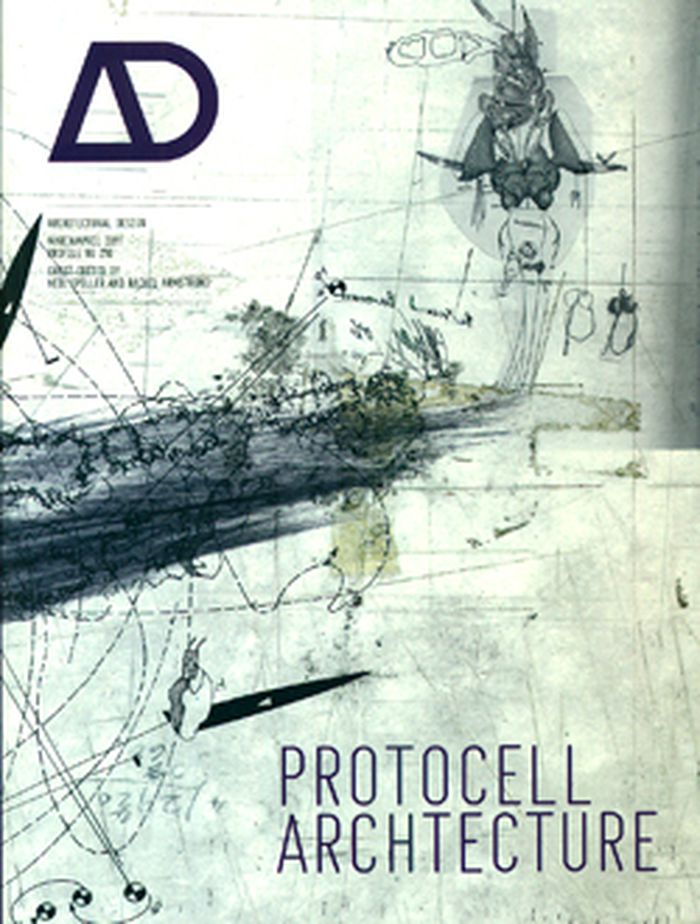
AD 81:02 Protocell architecture
Actions:
Prix:
$48.00
(disponible en magasin)
Résumé:
Throughout the ages architects have attempted to capture the essence of living systems as design inspiration. However, practitioners of the built environment have had to deal with a fundamental split between the artificial urban landscape and nature owing to a technological 'gap' that means architects have been unable to make effective use of biological systems in urban environments. This edition of AD that shows for the first time that contemporary architects can create and construct architectures that are bottom up, synthetically biological, green and have no recourse to shallow bio-mimicry. In the next few decades, synthetic biology is set to have as much, if not more, impact on architecture as cyberspace and the digital. The key to these amazing architectural innovations is the Protocell. Contributors include: Rachel Armstrong; Martin Hanczyc; Lee Cronin; Mark Morris Architects include: Neil Spiller; Nic Clear; IwamotoScott; Paul Preissner; Omar Khan;Dan Slavinsky; Philip Beesley; Neri Oxman
AD 81:02 Protocell architecture
Actions:
Prix:
$48.00
(disponible en magasin)
Résumé:
Throughout the ages architects have attempted to capture the essence of living systems as design inspiration. However, practitioners of the built environment have had to deal with a fundamental split between the artificial urban landscape and nature owing to a technological 'gap' that means architects have been unable to make effective use of biological systems in urban environments. This edition of AD that shows for the first time that contemporary architects can create and construct architectures that are bottom up, synthetically biological, green and have no recourse to shallow bio-mimicry. In the next few decades, synthetic biology is set to have as much, if not more, impact on architecture as cyberspace and the digital. The key to these amazing architectural innovations is the Protocell. Contributors include: Rachel Armstrong; Martin Hanczyc; Lee Cronin; Mark Morris Architects include: Neil Spiller; Nic Clear; IwamotoScott; Paul Preissner; Omar Khan;Dan Slavinsky; Philip Beesley; Neri Oxman
Classification:
livres
livres
Publication:
avril 2011
avril 2011
Sujet:
Revues
Revues
Classification:
livres
livres
Titre:
Why architects still draw
Why architects still draw
Actions:
Prix:
$26.95
(disponible sur commande)
Résumé:
Why would an architect reach for a pencil when drawing software and AutoCAD are a click away? Use a ruler when 3D-scanners and GPS devices are close at hand? In Why Architects Still Draw, Paolo Belardi offers an elegant and ardent defense of drawing by hand as a way of thinking. Belardi is no Luddite; he doesn't urge architects to give up digital devices for watercolors(...)
$26.95
(disponible sur commande)
Résumé:
Why would an architect reach for a pencil when drawing software and AutoCAD are a click away? Use a ruler when 3D-scanners and GPS devices are close at hand? In Why Architects Still Draw, Paolo Belardi offers an elegant and ardent defense of drawing by hand as a way of thinking. Belardi is no Luddite; he doesn't urge architects to give up digital devices for watercolors(...)
Titre:
Why architects still draw
Actions:
Prix:
$26.95
(disponible sur commande)
Résumé:
Why would an architect reach for a pencil when drawing software and AutoCAD are a click away? Use a ruler when 3D-scanners and GPS devices are close at hand? In Why Architects Still Draw, Paolo Belardi offers an elegant and ardent defense of drawing by hand as a way of thinking. Belardi is no Luddite; he doesn't urge architects to give up digital devices for watercolors and a measuring tape. Rather, he makes a case for drawing as the interface between the idea and the work itself. A drawing, Belardi argues, holds within it the entire final design. It is the paradox of the acorn: a project emerges from a drawing-even from a sketch, rough and inchoate-just as an oak tree emerges from an acorn. Citing examples not just from architecture but also from literature, chemistry, music, archaeology, and art, Belardi shows how drawing is not a passive recording but a moment of invention pregnant with creative possibilities.
Why architects still draw
Actions:
Prix:
$26.95
(disponible sur commande)
Résumé:
Why would an architect reach for a pencil when drawing software and AutoCAD are a click away? Use a ruler when 3D-scanners and GPS devices are close at hand? In Why Architects Still Draw, Paolo Belardi offers an elegant and ardent defense of drawing by hand as a way of thinking. Belardi is no Luddite; he doesn't urge architects to give up digital devices for watercolors and a measuring tape. Rather, he makes a case for drawing as the interface between the idea and the work itself. A drawing, Belardi argues, holds within it the entire final design. It is the paradox of the acorn: a project emerges from a drawing-even from a sketch, rough and inchoate-just as an oak tree emerges from an acorn. Citing examples not just from architecture but also from literature, chemistry, music, archaeology, and art, Belardi shows how drawing is not a passive recording but a moment of invention pregnant with creative possibilities.
Classification:
livres
livres
Publication:
mars 2014
mars 2014
Sujet:
Théorie de l’architecture
Théorie de l’architecture
Classification:
livres
livres

Titre:
MOS: selected works
MOS: selected works
Actions:
Prix:
$58.00
(disponible sur commande)
Résumé:
Their work has been described as experimental and innovative, qualities front-and-center in their previous collection Everything All at Once. In just ten years, Michael Meredith and Hilary Sample have established MOS as one of the leading young architecture practices in the country. Selected Works, the first monograph on the built work of the New York–based firm, follows(...)
$58.00
(disponible sur commande)
Résumé:
Their work has been described as experimental and innovative, qualities front-and-center in their previous collection Everything All at Once. In just ten years, Michael Meredith and Hilary Sample have established MOS as one of the leading young architecture practices in the country. Selected Works, the first monograph on the built work of the New York–based firm, follows(...)
Titre:
MOS: selected works
Actions:
Prix:
$58.00
(disponible sur commande)
Résumé:
Their work has been described as experimental and innovative, qualities front-and-center in their previous collection Everything All at Once. In just ten years, Michael Meredith and Hilary Sample have established MOS as one of the leading young architecture practices in the country. Selected Works, the first monograph on the built work of the New York–based firm, follows the design studio's evolution from their earliest works to their most celebrated houses and institutional buildings. The thirty-two projects featured range from the sophisticated to the absurd—from the serene Floating House in Ontario, Canada, and the sustainable Kathmandu Orphanage in Nepal to the playful puppet theater at Harvard's Carpenter Center and the appropriately named Rainbow Vomit installation in New York, a digital, interactive, computational heap of building blocks in a constant state of near collapse. The collection also includes a selection of the couple's unorthodox writings, including their satirical "Office Policy" employee manual.
MOS: selected works
Actions:
Prix:
$58.00
(disponible sur commande)
Résumé:
Their work has been described as experimental and innovative, qualities front-and-center in their previous collection Everything All at Once. In just ten years, Michael Meredith and Hilary Sample have established MOS as one of the leading young architecture practices in the country. Selected Works, the first monograph on the built work of the New York–based firm, follows the design studio's evolution from their earliest works to their most celebrated houses and institutional buildings. The thirty-two projects featured range from the sophisticated to the absurd—from the serene Floating House in Ontario, Canada, and the sustainable Kathmandu Orphanage in Nepal to the playful puppet theater at Harvard's Carpenter Center and the appropriately named Rainbow Vomit installation in New York, a digital, interactive, computational heap of building blocks in a constant state of near collapse. The collection also includes a selection of the couple's unorthodox writings, including their satirical "Office Policy" employee manual.
Classification:
livres
livres
Publication:
janvier 2015
janvier 2015
Sujet:
Architecture, monographies
Architecture, monographies
Classification:
livres
livres
Titre:
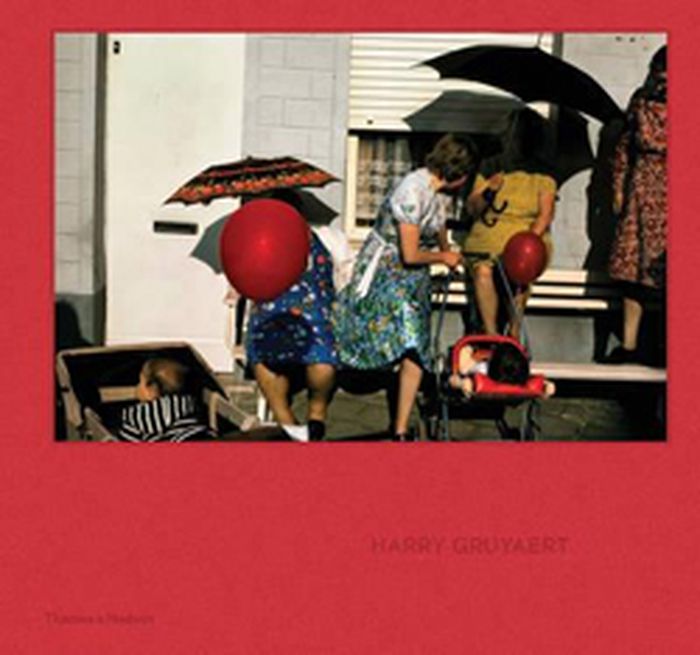
Harry Gruyaert
Harry Gruyaert
Actions:
Prix:
$74.00
(disponible sur commande)
Résumé:
Born in Antwerp in 1941 and a member of Magnum Photos since 1982, Harry Gruyaert revolutionized creative and experimental uses of color in the 1970s and 1980s. Influenced by cinema and American photographers, his work defined new territory for color photography: an emotive, non-narrative, and boldly graphic way of perceiving the world. In 1972, while living in London,(...)
$74.00
(disponible sur commande)
Résumé:
Born in Antwerp in 1941 and a member of Magnum Photos since 1982, Harry Gruyaert revolutionized creative and experimental uses of color in the 1970s and 1980s. Influenced by cinema and American photographers, his work defined new territory for color photography: an emotive, non-narrative, and boldly graphic way of perceiving the world. In 1972, while living in London,(...)
Titre:
Harry Gruyaert
Actions:
Prix:
$74.00
(disponible sur commande)
Résumé:
Born in Antwerp in 1941 and a member of Magnum Photos since 1982, Harry Gruyaert revolutionized creative and experimental uses of color in the 1970s and 1980s. Influenced by cinema and American photographers, his work defined new territory for color photography: an emotive, non-narrative, and boldly graphic way of perceiving the world. In 1972, while living in London, Gruyaert created the striking series by turning the dial on a television set at random and photographing the distorted images he saw there. A later series, , portrays his ambivalent relationship with his homeland in a palette of saturated tones. In his most recent work, he embraces the possibilities of digital photography, taking further creative risks to capture light in new ways. Gruyaert’s images are autonomous, often independent of any context or thematic logic. This volume, the first retrospective of his work, is a superb overview of his personal quest for freedom of expression and the liberation of the senses.
Harry Gruyaert
Actions:
Prix:
$74.00
(disponible sur commande)
Résumé:
Born in Antwerp in 1941 and a member of Magnum Photos since 1982, Harry Gruyaert revolutionized creative and experimental uses of color in the 1970s and 1980s. Influenced by cinema and American photographers, his work defined new territory for color photography: an emotive, non-narrative, and boldly graphic way of perceiving the world. In 1972, while living in London, Gruyaert created the striking series by turning the dial on a television set at random and photographing the distorted images he saw there. A later series, , portrays his ambivalent relationship with his homeland in a palette of saturated tones. In his most recent work, he embraces the possibilities of digital photography, taking further creative risks to capture light in new ways. Gruyaert’s images are autonomous, often independent of any context or thematic logic. This volume, the first retrospective of his work, is a superb overview of his personal quest for freedom of expression and the liberation of the senses.
Classification:
livres
livres
Publication:
septembre 2015
septembre 2015
Sujet:
Monographies photo
Monographies photo
Classification:
livres
livres
Actions:
Exemplaires:
Description:
446 pages : illustrations (chiefly color), facsimile, maps, plans, portraits ; 21 cm
Description:
446 pages : illustrations (chiefly color), facsimile, maps, plans, portraits ; 21 cm
Auteur:
Sujet:
Publication:
Berlin : Sternberg Press, [2019], ©2019
Berlin : Sternberg Press, [2019], ©2019
Titre:
Productive universals - specific situations : critical engagements in art, architecture, and urbanism / Anne Kockelkorn, Nina Zschocke (eds.) ; with contributions by Ursula Biemann [and fifteen others].
Actions:
Exemplaires:
Description:
446 pages : illustrations (chiefly color), facsimile, maps, plans, portraits ; 21 cm
Productive universals - specific situations : critical engagements in art, architecture, and urbanism / Anne Kockelkorn, Nina Zschocke (eds.) ; with contributions by Ursula Biemann [and fifteen others].
Actions:
Exemplaires:
Description:
446 pages : illustrations (chiefly color), facsimile, maps, plans, portraits ; 21 cm
Classification:
livres
livres
Publication:
Berlin : Sternberg Press, [2019], ©2019
Berlin : Sternberg Press, [2019], ©2019
Auteur:
Sujet:
Classification:
livres
livres
Prix:
$36.95
(disponible sur commande)
Résumé:
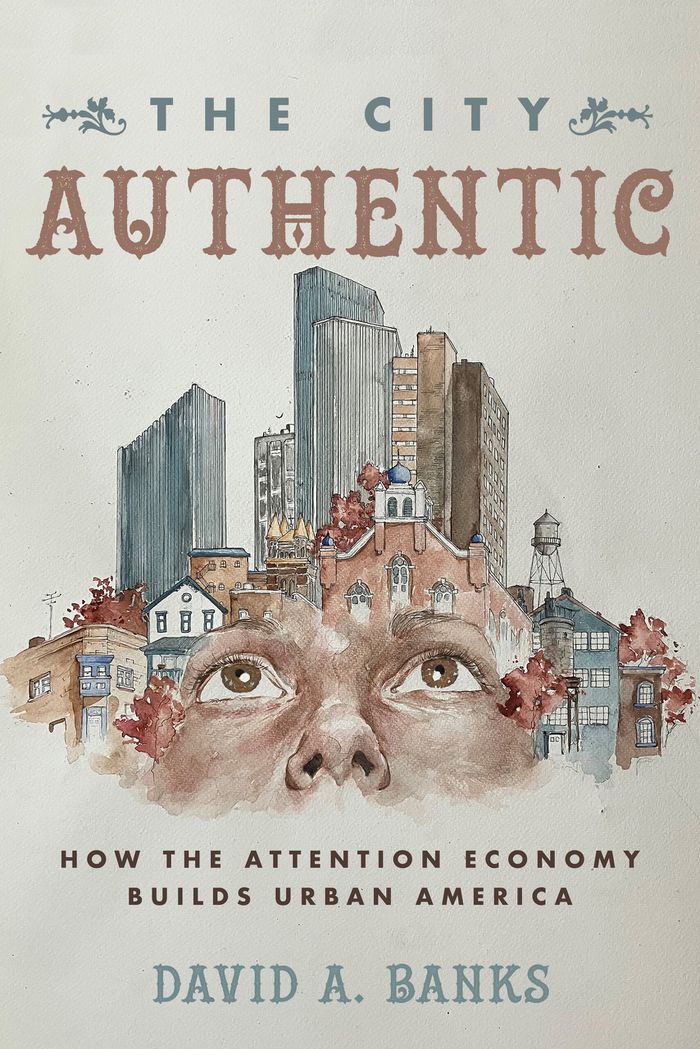
Cities, like the people that live in them, are subject to the attention economy. In ''The city authentic,'' author David A. Banks shows how cities are transforming themselves to appeal to modern desires for authentic urban living through the attention-grabbing tactics of social media influencers and reality-TV stars. Blending insightful analysis with pop culture, this(...)
$36.95
(disponible sur commande)
Résumé:
Cities, like the people that live in them, are subject to the attention economy. In ''The city authentic,'' author David A. Banks shows how cities are transforming themselves to appeal to modern desires for authentic urban living through the attention-grabbing tactics of social media influencers and reality-TV stars. Blending insightful analysis with pop culture, this(...)
Titre:
The city authentic: how the attention economy builds urban America
Actions:
Prix:
$36.95
(disponible sur commande)
Résumé:
Cities, like the people that live in them, are subject to the attention economy. In ''The city authentic,'' author David A. Banks shows how cities are transforming themselves to appeal to modern desires for authentic urban living through the attention-grabbing tactics of social media influencers and reality-TV stars. Blending insightful analysis with pop culture, this engaging study of New York State’s Capital Region is an accessible glimpse into the social phenomena that influence contemporary cities. The rising economic fortunes of cities in the Rust Belt, Banks argues, are due in part to the markers of its previous decay—which translate into signs of urban authenticity on the internet. ''The city authentic'' unpacks the odd connection between digital media and derelict buildings, the consequences of how we think about industry and place, and the political processes that have enabled a new paradigm in urban planning. Mixing urban sociology with media and cultural studies, Banks offers a lively account of how urban life and development are changing in the twenty-first century.
The city authentic: how the attention economy builds urban America
Actions:
Prix:
$36.95
(disponible sur commande)
Résumé:
Cities, like the people that live in them, are subject to the attention economy. In ''The city authentic,'' author David A. Banks shows how cities are transforming themselves to appeal to modern desires for authentic urban living through the attention-grabbing tactics of social media influencers and reality-TV stars. Blending insightful analysis with pop culture, this engaging study of New York State’s Capital Region is an accessible glimpse into the social phenomena that influence contemporary cities. The rising economic fortunes of cities in the Rust Belt, Banks argues, are due in part to the markers of its previous decay—which translate into signs of urban authenticity on the internet. ''The city authentic'' unpacks the odd connection between digital media and derelict buildings, the consequences of how we think about industry and place, and the political processes that have enabled a new paradigm in urban planning. Mixing urban sociology with media and cultural studies, Banks offers a lively account of how urban life and development are changing in the twenty-first century.
Classification:
livres
livres
Publication:
avril 2023
avril 2023
Sujet:
Théorie de l’urbanisme
Théorie de l’urbanisme
Classification:
livres
livres
Actions:
Prix:
$30.00
(disponible sur commande)
Résumé:
Compiled here for the first time, the selected writings of Aria Dean (b. 1993, Los Angeles) mount a trenchant critique of representational systems. A visual artist and filmmaker, Dean has also emerged as one of the leading critical voices of her generation through a body of writing that maps the forces of aesthetic theory, image regimes, and visibility onto questions of(...)
$30.00
(disponible sur commande)
Résumé:
Compiled here for the first time, the selected writings of Aria Dean (b. 1993, Los Angeles) mount a trenchant critique of representational systems. A visual artist and filmmaker, Dean has also emerged as one of the leading critical voices of her generation through a body of writing that maps the forces of aesthetic theory, image regimes, and visibility onto questions of(...)
Titre:
Bad infinity: Selected writings
Actions:
Prix:
$30.00
(disponible sur commande)
Résumé:
Compiled here for the first time, the selected writings of Aria Dean (b. 1993, Los Angeles) mount a trenchant critique of representational systems. A visual artist and filmmaker, Dean has also emerged as one of the leading critical voices of her generation through a body of writing that maps the forces of aesthetic theory, image regimes, and visibility onto questions of race and power. Dean’s work across media has long been defined by what she calls a “fixation on the subject and its borders,” and the texts collected here filter that inquiry through digital networks, art history, and Black radical thought. Equally at home discussing artists who embrace difficulty—from Robert Morris to David Hammons, Lorna Simpson, and Ulysses Jenkins—and conceptual frameworks such as Afropessimism, Dean often contends with how theoretical positions brush against the grain of lived reality: how the Structuralism handed down from the academy, for instance, can be commingled with critiques of structural racism, or how Georges Bataille’s notion of base matter transforms through an encounter with Blackness.
Bad infinity: Selected writings
Actions:
Prix:
$30.00
(disponible sur commande)
Résumé:
Compiled here for the first time, the selected writings of Aria Dean (b. 1993, Los Angeles) mount a trenchant critique of representational systems. A visual artist and filmmaker, Dean has also emerged as one of the leading critical voices of her generation through a body of writing that maps the forces of aesthetic theory, image regimes, and visibility onto questions of race and power. Dean’s work across media has long been defined by what she calls a “fixation on the subject and its borders,” and the texts collected here filter that inquiry through digital networks, art history, and Black radical thought. Equally at home discussing artists who embrace difficulty—from Robert Morris to David Hammons, Lorna Simpson, and Ulysses Jenkins—and conceptual frameworks such as Afropessimism, Dean often contends with how theoretical positions brush against the grain of lived reality: how the Structuralism handed down from the academy, for instance, can be commingled with critiques of structural racism, or how Georges Bataille’s notion of base matter transforms through an encounter with Blackness.
Classification:
livres
livres
Publication:
mai 2023
mai 2023
Sujet:
Théorie de l’art
Théorie de l’art
Classification:
livres
livres
Actions:
Prix:
$54.00
(disponible sur commande)
Résumé:
he link between architecture and art and the sublimity it can create has a history that stretches back millennia. From cave paintings to the stained glass and saintly icons in churches and cathedrals, to the geometric and calligraphic treatments of mosques and contemporary artists channelling architecture and vice versa, and so much else. This AD is about the contemporary(...)
$54.00
(disponible sur commande)
Résumé:
he link between architecture and art and the sublimity it can create has a history that stretches back millennia. From cave paintings to the stained glass and saintly icons in churches and cathedrals, to the geometric and calligraphic treatments of mosques and contemporary artists channelling architecture and vice versa, and so much else. This AD is about the contemporary(...)
Titre:
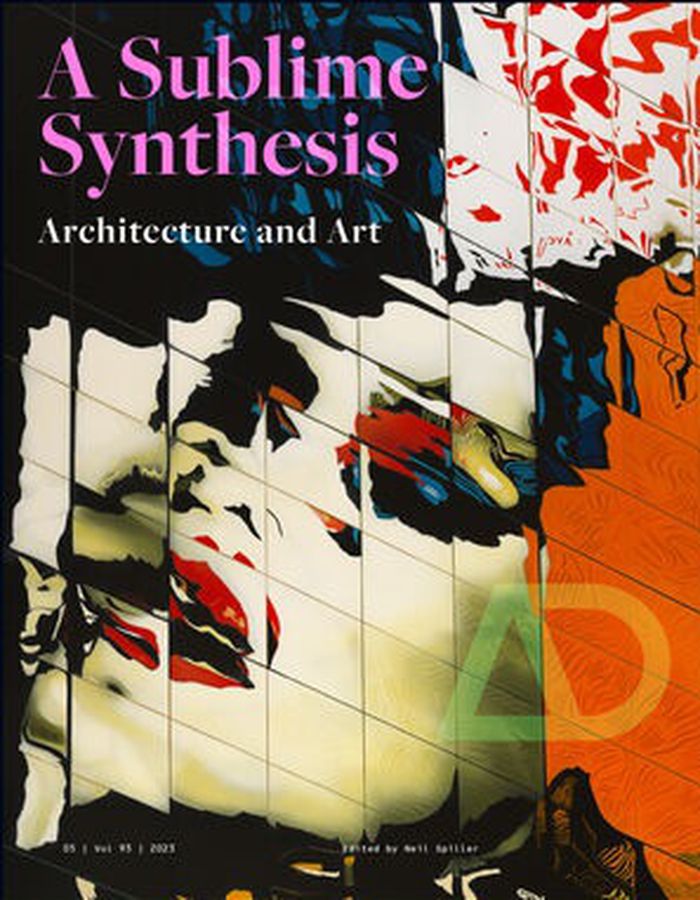
AD 93:5 Art and architecture: A sublime synthesis
Actions:
Prix:
$54.00
(disponible sur commande)
Résumé:
he link between architecture and art and the sublimity it can create has a history that stretches back millennia. From cave paintings to the stained glass and saintly icons in churches and cathedrals, to the geometric and calligraphic treatments of mosques and contemporary artists channelling architecture and vice versa, and so much else. This AD is about the contemporary interactions between living artists and architects, and the artistic practices, such as poetry and abstractions, that architects adopt to develop ideas for their projects. The issue features artists, architects, curators, musicians, poets and designer craftspeople, illustrating the current rich mix of architectonic constructions, interventions and set pieces that range from musical performance to exhibition designs, glass works and digital 3D scanning. It lays out the wide spectrum and beauty of these sublime correspondences, with contributions from architects about their own artistic practices, and creative works viewed through the eyes of architectural commentators. An explosion of colour, form and creative tactics for making multifaceted work that above all is architectural, it offers a cornucopia of possibilities.
AD 93:5 Art and architecture: A sublime synthesis
Actions:
Prix:
$54.00
(disponible sur commande)
Résumé:
he link between architecture and art and the sublimity it can create has a history that stretches back millennia. From cave paintings to the stained glass and saintly icons in churches and cathedrals, to the geometric and calligraphic treatments of mosques and contemporary artists channelling architecture and vice versa, and so much else. This AD is about the contemporary interactions between living artists and architects, and the artistic practices, such as poetry and abstractions, that architects adopt to develop ideas for their projects. The issue features artists, architects, curators, musicians, poets and designer craftspeople, illustrating the current rich mix of architectonic constructions, interventions and set pieces that range from musical performance to exhibition designs, glass works and digital 3D scanning. It lays out the wide spectrum and beauty of these sublime correspondences, with contributions from architects about their own artistic practices, and creative works viewed through the eyes of architectural commentators. An explosion of colour, form and creative tactics for making multifaceted work that above all is architectural, it offers a cornucopia of possibilities.
Classification:
livres
livres
Publication:
août 2023
août 2023
Sujet:
Théorie de l’architecture
Théorie de l’architecture


