


759 Résultats
Classification:
livres
livres
Titre:
Urban China in transition
Urban China in transition
Actions:
Prix:
$43.99
(disponible en magasin)
Résumé:
Using an innovative approach, this book interprets the unprecedented transformation of contemporary China's major cities. It highlights a diversity of trends in the areas of migration, criminal victimization, gated communities, and the status of women, suburbanization, and neighbourhood associations. Each chapter includes input from both an expert on urban life in China(...)
$43.99
(disponible en magasin)
Résumé:
Using an innovative approach, this book interprets the unprecedented transformation of contemporary China's major cities. It highlights a diversity of trends in the areas of migration, criminal victimization, gated communities, and the status of women, suburbanization, and neighbourhood associations. Each chapter includes input from both an expert on urban life in China(...)
Publication:
août 2008, Malden, Oxford, Victoria
août 2008, Malden, Oxford, Victoria
Titre:
Urban China in transition
Actions:
Prix:
$43.99
(disponible en magasin)
Résumé:
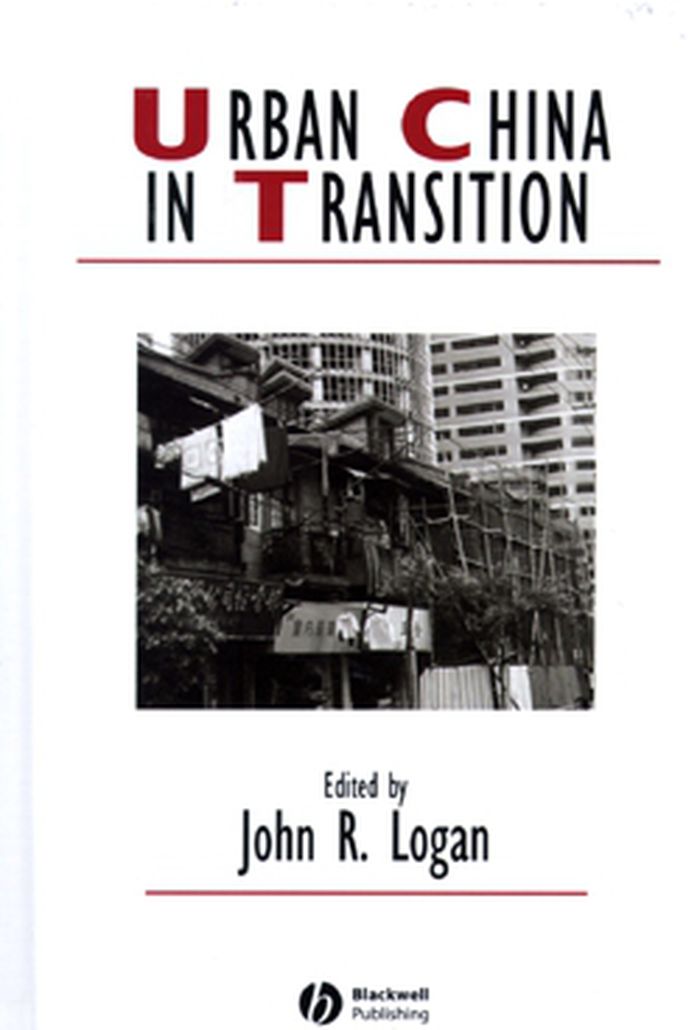
Using an innovative approach, this book interprets the unprecedented transformation of contemporary China's major cities. It highlights a diversity of trends in the areas of migration, criminal victimization, gated communities, and the status of women, suburbanization, and neighbourhood associations. Each chapter includes input from both an expert on urban life in China and an 'outside' expert from the fields of sociology, geography, economics, planning, political science, history, demography, architecture, or anthropology. John R. Logan is the founder of the Urban China Research Network, supported by the Andrew W. Mellon Foundation and a member of the editorial boards of Journal of Urban Affairs and City and Community. He was chosen Distinguished Professor of Sociology at the University at Albany, SUNY, as well as Director of the Lewis Mumford Center for Comparative Urban and Regional Research. In April 2003 he was selected by American Demographics magazine as one of five social demographers whose work has most influenced his field in the last 25 years.
Urban China in transition
Actions:
Prix:
$43.99
(disponible en magasin)
Résumé:
Using an innovative approach, this book interprets the unprecedented transformation of contemporary China's major cities. It highlights a diversity of trends in the areas of migration, criminal victimization, gated communities, and the status of women, suburbanization, and neighbourhood associations. Each chapter includes input from both an expert on urban life in China and an 'outside' expert from the fields of sociology, geography, economics, planning, political science, history, demography, architecture, or anthropology. John R. Logan is the founder of the Urban China Research Network, supported by the Andrew W. Mellon Foundation and a member of the editorial boards of Journal of Urban Affairs and City and Community. He was chosen Distinguished Professor of Sociology at the University at Albany, SUNY, as well as Director of the Lewis Mumford Center for Comparative Urban and Regional Research. In April 2003 he was selected by American Demographics magazine as one of five social demographers whose work has most influenced his field in the last 25 years.
Classification:
livres
livres
Publication:
août 2008, Malden, Oxford, Victoria
août 2008, Malden, Oxford, Victoria
Classification:
livres
livres
Actions:
Prix:
$69.95
(disponible en magasin)
Résumé:
Un projet tricontinental d'exposition et de publication qui prend la forme d'une monographie multi-auteurs pour présenter un artiste, figure majeure de l'art contemporain au Maroc, dont le travail crée un espace de connexion avec soi (être ici et maintenant). Publiée en français, en anglais et en arabe, co-éditée par le Smith College Museum of Art et Zamân Books &(...)
$69.95
(disponible en magasin)
Résumé:
Un projet tricontinental d'exposition et de publication qui prend la forme d'une monographie multi-auteurs pour présenter un artiste, figure majeure de l'art contemporain au Maroc, dont le travail crée un espace de connexion avec soi (être ici et maintenant). Publiée en français, en anglais et en arabe, co-éditée par le Smith College Museum of Art et Zamân Books &(...)
Publication:
juin 2024
juin 2024
Titre:
Younès Rahmoun : Ici et maintenant
Actions:
Prix:
$69.95
(disponible en magasin)
Résumé:
Un projet tricontinental d'exposition et de publication qui prend la forme d'une monographie multi-auteurs pour présenter un artiste, figure majeure de l'art contemporain au Maroc, dont le travail crée un espace de connexion avec soi (être ici et maintenant). Publiée en français, en anglais et en arabe, co-éditée par le Smith College Museum of Art et Zamân Books & Curating, cette monographie comprend des contributions de chercheurs, directeurs de musées et scientifiques constituant ainsi un apport significatif à l'histoire de l'art contemporain avec notamment des essais d'Emma Chubb et de l'écrivain et poète Omar Berrada. L'ouvrage est organisé en trois mouvements entre les polarités actives dans le travail de Younès Rahmoun : Migration/Enracinement, Unique/Multiple et Ici/Ailleurs, mettant ainsi en avant les thèmes majeurs de son travail qui vise l'universel.
Younès Rahmoun : Ici et maintenant
Actions:
Prix:
$69.95
(disponible en magasin)
Résumé:
Un projet tricontinental d'exposition et de publication qui prend la forme d'une monographie multi-auteurs pour présenter un artiste, figure majeure de l'art contemporain au Maroc, dont le travail crée un espace de connexion avec soi (être ici et maintenant). Publiée en français, en anglais et en arabe, co-éditée par le Smith College Museum of Art et Zamân Books & Curating, cette monographie comprend des contributions de chercheurs, directeurs de musées et scientifiques constituant ainsi un apport significatif à l'histoire de l'art contemporain avec notamment des essais d'Emma Chubb et de l'écrivain et poète Omar Berrada. L'ouvrage est organisé en trois mouvements entre les polarités actives dans le travail de Younès Rahmoun : Migration/Enracinement, Unique/Multiple et Ici/Ailleurs, mettant ainsi en avant les thèmes majeurs de son travail qui vise l'universel.
Classification:
livres
livres
Publication:
juin 2024
juin 2024
Classification:
livres
livres
Prix:
$25.95
(disponible sur commande)
Résumé:
David Rusk argues that America must end the isolation of the central city from its suburbs in order to attack its urban problems. Rusk's analysis, extending back to 1950, covers 522 central cities in 320 metro areas of the United States. He finds that cities trapped within old boundaries have suffered severe racial segregation and the emergence of an urban(...)
$25.95
(disponible sur commande)
Résumé:
David Rusk argues that America must end the isolation of the central city from its suburbs in order to attack its urban problems. Rusk's analysis, extending back to 1950, covers 522 central cities in 320 metro areas of the United States. He finds that cities trapped within old boundaries have suffered severe racial segregation and the emergence of an urban(...)
Titre:
Cities without suburbs : a census 2000 update, 3rd edition
Actions:
Prix:
$25.95
(disponible sur commande)
Résumé:
David Rusk argues that America must end the isolation of the central city from its suburbs in order to attack its urban problems. Rusk's analysis, extending back to 1950, covers 522 central cities in 320 metro areas of the United States. He finds that cities trapped within old boundaries have suffered severe racial segregation and the emergence of an urban underclass. But cities with annexation powers-- termed 'elastic' by Rusk-- have shared in areawide development. Rusk assesses the major trends of the 1990s, including the preceived rebound of central cities, the impact of Hispanic and Asian migration, and the emerging influence of faith-based movements. New recommendations take account of growing restrictions on cities' annexation powers, even in the south-western United States, and of new opportunities for federal shaping of home mortgage programs and urban planning processes. Rusk's conclusion stresses cities' growing experience with building political coalitions in pursuit of development and growth.
Cities without suburbs : a census 2000 update, 3rd edition
Actions:
Prix:
$25.95
(disponible sur commande)
Résumé:
David Rusk argues that America must end the isolation of the central city from its suburbs in order to attack its urban problems. Rusk's analysis, extending back to 1950, covers 522 central cities in 320 metro areas of the United States. He finds that cities trapped within old boundaries have suffered severe racial segregation and the emergence of an urban underclass. But cities with annexation powers-- termed 'elastic' by Rusk-- have shared in areawide development. Rusk assesses the major trends of the 1990s, including the preceived rebound of central cities, the impact of Hispanic and Asian migration, and the emerging influence of faith-based movements. New recommendations take account of growing restrictions on cities' annexation powers, even in the south-western United States, and of new opportunities for federal shaping of home mortgage programs and urban planning processes. Rusk's conclusion stresses cities' growing experience with building political coalitions in pursuit of development and growth.
Classification:
livres
livres
Publication:
janvier 2003, Washington, D.C.
janvier 2003, Washington, D.C.
Sujet:
Banlieues
Banlieues
Classification:
livres
livres
Titre:
Dwellings
Dwellings
Actions:
Prix:
$35.00
(disponible sur commande)
Résumé:
More than 90 per cent of the world's buildings, including some 800 million homes, constitute architecture of ordinary people. "Dwellings" is about the vast range of types of vernacular houses around the world. It documents the form of traditional buildings that are self-built by their owner-occupiers or built by members of a community, recording the means of construction(...)
$35.00
(disponible sur commande)
Résumé:
More than 90 per cent of the world's buildings, including some 800 million homes, constitute architecture of ordinary people. "Dwellings" is about the vast range of types of vernacular houses around the world. It documents the form of traditional buildings that are self-built by their owner-occupiers or built by members of a community, recording the means of construction(...)
Titre:
Dwellings
Actions:
Prix:
$35.00
(disponible sur commande)
Résumé:
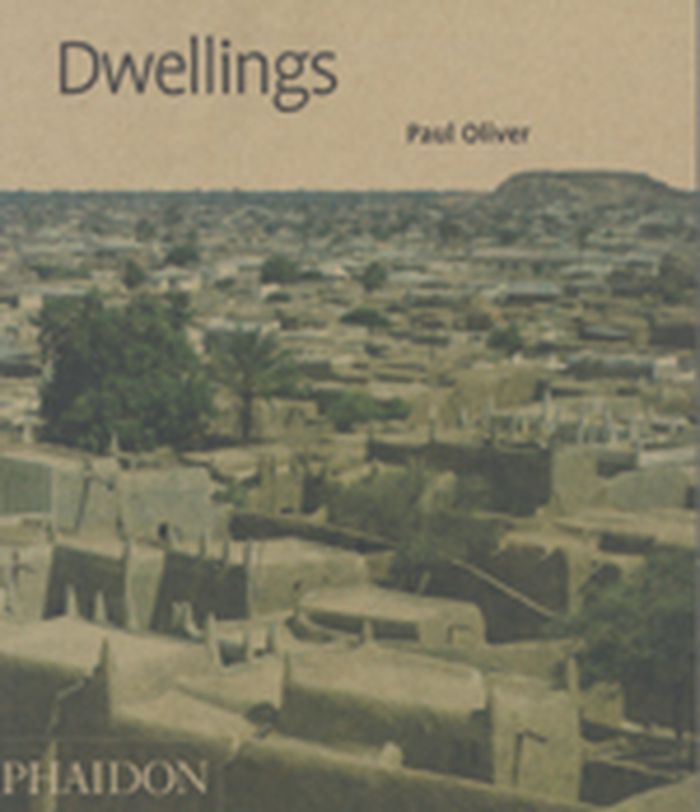
More than 90 per cent of the world's buildings, including some 800 million homes, constitute architecture of ordinary people. "Dwellings" is about the vast range of types of vernacular houses around the world. It documents the form of traditional buildings that are self-built by their owner-occupiers or built by members of a community, recording the means of construction and decoration of the house across a spectrum of different cultures. First published by Phaidon in 1987, Dwellings - in its new updated, revised and expanded format - assimilates new scholarship in the field, including the author's own research, and traces theoretical developments in the spheres of cultural geography, gender studies, sociology and anthropology. It is not only a reference work on domestic buildings, but also a useful survey for understanding how diverse communities cope with issues of climate, migration, mass development and, in turn, how this brings to life symbolic and cultural meaning in architecture.
Dwellings
Actions:
Prix:
$35.00
(disponible sur commande)
Résumé:
More than 90 per cent of the world's buildings, including some 800 million homes, constitute architecture of ordinary people. "Dwellings" is about the vast range of types of vernacular houses around the world. It documents the form of traditional buildings that are self-built by their owner-occupiers or built by members of a community, recording the means of construction and decoration of the house across a spectrum of different cultures. First published by Phaidon in 1987, Dwellings - in its new updated, revised and expanded format - assimilates new scholarship in the field, including the author's own research, and traces theoretical developments in the spheres of cultural geography, gender studies, sociology and anthropology. It is not only a reference work on domestic buildings, but also a useful survey for understanding how diverse communities cope with issues of climate, migration, mass development and, in turn, how this brings to life symbolic and cultural meaning in architecture.
Classification:
livres
livres
Publication:
mai 2007, London
mai 2007, London
Sujet:
Architecture écologique
Architecture écologique
Classification:
livres
livres
Actions:
Prix:
$85.00
(disponible sur commande)
Résumé:
Anyone viewing what we call a “landscape” from a distance will recognize that it is an artifact, a habitat created by humans as part of our built environment. Mutation and Morphosis looks at all the many aspects involved in the collective process of designing and shaping landscapes, from planning to implementation. The model as a tool and the collection as a driving force(...)
$85.00
(disponible sur commande)
Résumé:
Anyone viewing what we call a “landscape” from a distance will recognize that it is an artifact, a habitat created by humans as part of our built environment. Mutation and Morphosis looks at all the many aspects involved in the collective process of designing and shaping landscapes, from planning to implementation. The model as a tool and the collection as a driving force(...)
Publication:
mai 2020
mai 2020
Titre:
Mutation and morphosis: landscape as aggregate
Actions:
Prix:
$85.00
(disponible sur commande)
Résumé:
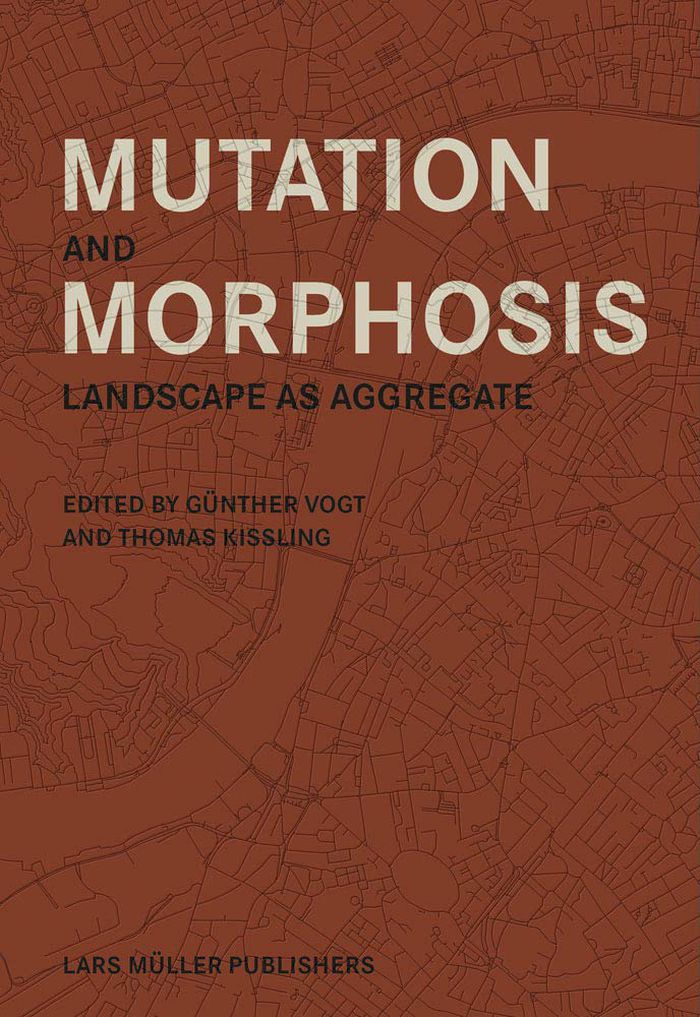
Anyone viewing what we call a “landscape” from a distance will recognize that it is an artifact, a habitat created by humans as part of our built environment. Mutation and Morphosis looks at all the many aspects involved in the collective process of designing and shaping landscapes, from planning to implementation. The model as a tool and the collection as a driving force are illustrated on the basis of an astonishing variety of topics. In theoretical discussions and the examination of detailed dossiers of facts on the ground, a trajectory is traced: from the emergence of new landscapes as a result of climate change to the migration of the wolf to Central Europe, from the impact of invasive plants to the study of geological formation processes. The panorama that unfolds gives us insights into the broad context that landscape architects must consider in their work, exemplified by the outstanding projects realized by VOGT.
Mutation and morphosis: landscape as aggregate
Actions:
Prix:
$85.00
(disponible sur commande)
Résumé:
Anyone viewing what we call a “landscape” from a distance will recognize that it is an artifact, a habitat created by humans as part of our built environment. Mutation and Morphosis looks at all the many aspects involved in the collective process of designing and shaping landscapes, from planning to implementation. The model as a tool and the collection as a driving force are illustrated on the basis of an astonishing variety of topics. In theoretical discussions and the examination of detailed dossiers of facts on the ground, a trajectory is traced: from the emergence of new landscapes as a result of climate change to the migration of the wolf to Central Europe, from the impact of invasive plants to the study of geological formation processes. The panorama that unfolds gives us insights into the broad context that landscape architects must consider in their work, exemplified by the outstanding projects realized by VOGT.
Classification:
livres
livres
Publication:
mai 2020
mai 2020
Classification:
livres
livres
Actions:
Prix:
$41.00
(disponible en magasin)
Résumé:
Globally, Black people are among the most affected by the climate crisis, despite contributing very little to it. For a long time, the crisis was portrayed as yet another injustice for Black people to care about, on top of the day-to-day oppression they face. In ''Black Climates'', Selina Nwulu reframes the crisis to encompass our disconnection from each other and the(...)
$41.00
(disponible en magasin)
Résumé:
Globally, Black people are among the most affected by the climate crisis, despite contributing very little to it. For a long time, the crisis was portrayed as yet another injustice for Black people to care about, on top of the day-to-day oppression they face. In ''Black Climates'', Selina Nwulu reframes the crisis to encompass our disconnection from each other and the(...)
Titre:
Black climates: Notes on race, our environment, and visions for equitable futures
Actions:
Prix:
$41.00
(disponible en magasin)
Résumé:
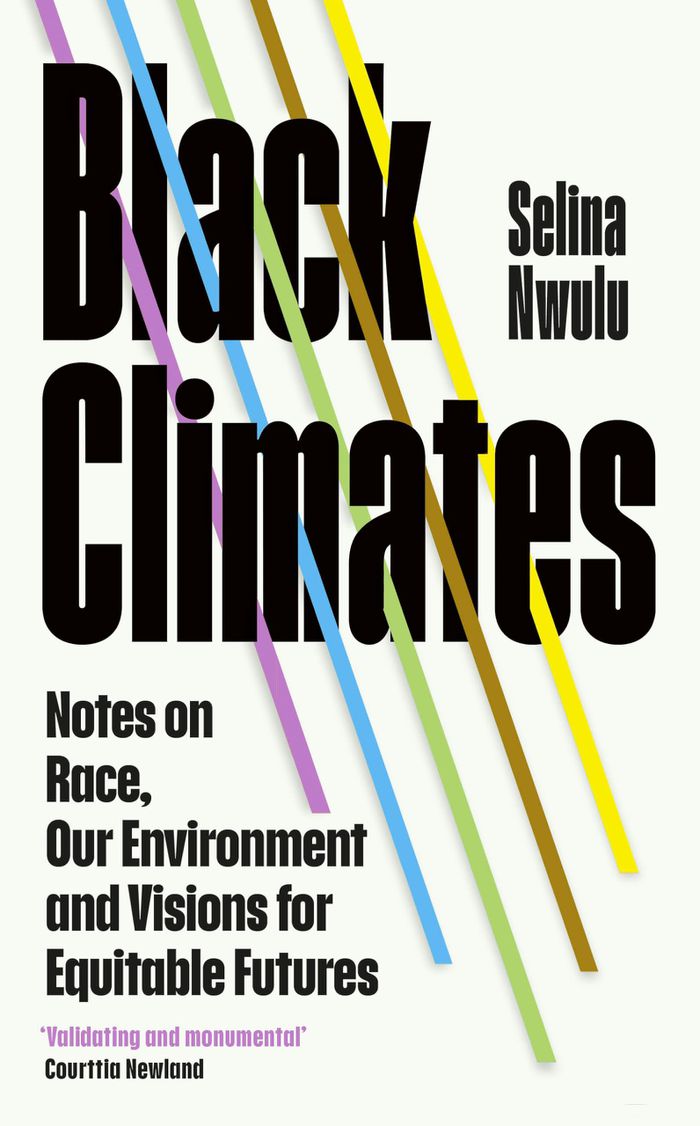
Globally, Black people are among the most affected by the climate crisis, despite contributing very little to it. For a long time, the crisis was portrayed as yet another injustice for Black people to care about, on top of the day-to-day oppression they face. In ''Black Climates'', Selina Nwulu reframes the crisis to encompass our disconnection from each other and the world around us. She argues that the root of climate change lies in historical colonial violence and ongoing exploitation, making it inherently racist. Nwulu, former Young People's Laureate for London, uses her poetic and skilful voice to directly address Black British readers who have been previously ignored in mainstream environmental conversations. She includes interviews with a wide range of creatives and campaigners to explore a variety of subjects, including air pollution, prison ecology, disability justice, migration, food, nature, community care, and radical imagination.
Black climates: Notes on race, our environment, and visions for equitable futures
Actions:
Prix:
$41.00
(disponible en magasin)
Résumé:
Globally, Black people are among the most affected by the climate crisis, despite contributing very little to it. For a long time, the crisis was portrayed as yet another injustice for Black people to care about, on top of the day-to-day oppression they face. In ''Black Climates'', Selina Nwulu reframes the crisis to encompass our disconnection from each other and the world around us. She argues that the root of climate change lies in historical colonial violence and ongoing exploitation, making it inherently racist. Nwulu, former Young People's Laureate for London, uses her poetic and skilful voice to directly address Black British readers who have been previously ignored in mainstream environmental conversations. She includes interviews with a wide range of creatives and campaigners to explore a variety of subjects, including air pollution, prison ecology, disability justice, migration, food, nature, community care, and radical imagination.
Classification:
livres
livres
Publication:
janvier 2026
janvier 2026
Classification:
livres
livres

Titre:
British mosques
British mosques
Actions:
Prix:
$45.00
(disponible en magasin)
Résumé:
This book, a collaboration between the Victoria and Albert Museum and the University of Westminster, captures the British mosque at a pivotal moment in its history. There are 1,800 mosques in the UK today – mostly converted from terraced houses, libraries, cinemas and supermarkets. Now, these improvised spaces are beginning to disappear, as Muslim communities replace them(...)
$45.00
(disponible en magasin)
Résumé:
This book, a collaboration between the Victoria and Albert Museum and the University of Westminster, captures the British mosque at a pivotal moment in its history. There are 1,800 mosques in the UK today – mostly converted from terraced houses, libraries, cinemas and supermarkets. Now, these improvised spaces are beginning to disappear, as Muslim communities replace them(...)
Publication:
mai 2021
mai 2021
Titre:
British mosques
Actions:
Prix:
$45.00
(disponible en magasin)
Résumé:
This book, a collaboration between the Victoria and Albert Museum and the University of Westminster, captures the British mosque at a pivotal moment in its history. There are 1,800 mosques in the UK today – mostly converted from terraced houses, libraries, cinemas and supermarkets. Now, these improvised spaces are beginning to disappear, as Muslim communities replace them with purpose-built structures. This timely exploration of the British mosque reveals how ad-hoc adaptations have evolved into a uniquely British-Islamic architecture, tracing its development through waves of twentieth-century migration, and further back to the Orientalist visions of Victorian collectors. Born out of two projects at the Venice Architecture Biennale and the V, ''British mosques'' brings together perspectives from curators, architects and artists. Using approaches ranging from archival study to site-specific installations and 3D scanning, together they tell the story of a hybrid architecture that has quietly found its place in Britain’s urban landscape.
British mosques
Actions:
Prix:
$45.00
(disponible en magasin)
Résumé:
This book, a collaboration between the Victoria and Albert Museum and the University of Westminster, captures the British mosque at a pivotal moment in its history. There are 1,800 mosques in the UK today – mostly converted from terraced houses, libraries, cinemas and supermarkets. Now, these improvised spaces are beginning to disappear, as Muslim communities replace them with purpose-built structures. This timely exploration of the British mosque reveals how ad-hoc adaptations have evolved into a uniquely British-Islamic architecture, tracing its development through waves of twentieth-century migration, and further back to the Orientalist visions of Victorian collectors. Born out of two projects at the Venice Architecture Biennale and the V, ''British mosques'' brings together perspectives from curators, architects and artists. Using approaches ranging from archival study to site-specific installations and 3D scanning, together they tell the story of a hybrid architecture that has quietly found its place in Britain’s urban landscape.
Classification:
livres
livres
Publication:
mai 2021
mai 2021
Classification:
livres
livres
Titre:
The nomadic listener
The nomadic listener
Actions:
Prix:
$25.00
(disponible sur commande)
Résumé:
Based on the author’s artistic research on migration, contemporary urban experience, and sonic alienation, ''The nomadic listener'' is composed of a series of texts stemming from psychogeographic explorations of contemporary cities, including Copenhagen, Berlin, Kolkata, Vienna, Delhi, Hong Kong, Mumbai and New York, among others. Each text is an act of listening, where(...)
$25.00
(disponible sur commande)
Résumé:
Based on the author’s artistic research on migration, contemporary urban experience, and sonic alienation, ''The nomadic listener'' is composed of a series of texts stemming from psychogeographic explorations of contemporary cities, including Copenhagen, Berlin, Kolkata, Vienna, Delhi, Hong Kong, Mumbai and New York, among others. Each text is an act of listening, where(...)
Titre:
The nomadic listener
Actions:
Prix:
$25.00
(disponible sur commande)
Résumé:
Based on the author’s artistic research on migration, contemporary urban experience, and sonic alienation, ''The nomadic listener'' is composed of a series of texts stemming from psychogeographic explorations of contemporary cities, including Copenhagen, Berlin, Kolkata, Vienna, Delhi, Hong Kong, Mumbai and New York, among others. Each text is an act of listening, where the author records his surrounding environment and attunes to the sonic fluctuations of movement and the passing of events. What surfaces is a collection of meditations on the occurrences of life movingly interwoven with memories, associations, desires and reflections. As readers we are brought into a tender map of contemporary urban experience, and the often lonely, surprising and random interactions found in traveling.''The nomadic listener'' includes parallel drawings based on the original audio recordings, and appear as ghostly renderings of the corresponding experiences. The recordings are published by the German label Gruenrekorder and accessed through a QR code included in the book.
The nomadic listener
Actions:
Prix:
$25.00
(disponible sur commande)
Résumé:
Based on the author’s artistic research on migration, contemporary urban experience, and sonic alienation, ''The nomadic listener'' is composed of a series of texts stemming from psychogeographic explorations of contemporary cities, including Copenhagen, Berlin, Kolkata, Vienna, Delhi, Hong Kong, Mumbai and New York, among others. Each text is an act of listening, where the author records his surrounding environment and attunes to the sonic fluctuations of movement and the passing of events. What surfaces is a collection of meditations on the occurrences of life movingly interwoven with memories, associations, desires and reflections. As readers we are brought into a tender map of contemporary urban experience, and the often lonely, surprising and random interactions found in traveling.''The nomadic listener'' includes parallel drawings based on the original audio recordings, and appear as ghostly renderings of the corresponding experiences. The recordings are published by the German label Gruenrekorder and accessed through a QR code included in the book.
Classification:
livres
livres
Publication:
septembre 2020
septembre 2020
Sujet:
Acoustique
Acoustique
Classification:
livres
livres
Actions:
Prix:
$54.95
(disponible sur commande)
Résumé:
High-population centers of enormous size are springing up in China with dizzying speed. With them comes an increased demand for migrant workers in the construction sector, factories, and mines. In growth centers like the Pearl River Delta in Southern China, 40 million people have already set out from the underdeveloped provinces to earn their living there. The(...)
$54.95
(disponible sur commande)
Résumé:
High-population centers of enormous size are springing up in China with dizzying speed. With them comes an increased demand for migrant workers in the construction sector, factories, and mines. In growth centers like the Pearl River Delta in Southern China, 40 million people have already set out from the underdeveloped provinces to earn their living there. The(...)
Publication:
septembre 2008, Baden
septembre 2008, Baden
Titre:
From somewhere to nowhere: China's internal migrants
Actions:
Prix:
$54.95
(disponible sur commande)
Résumé:
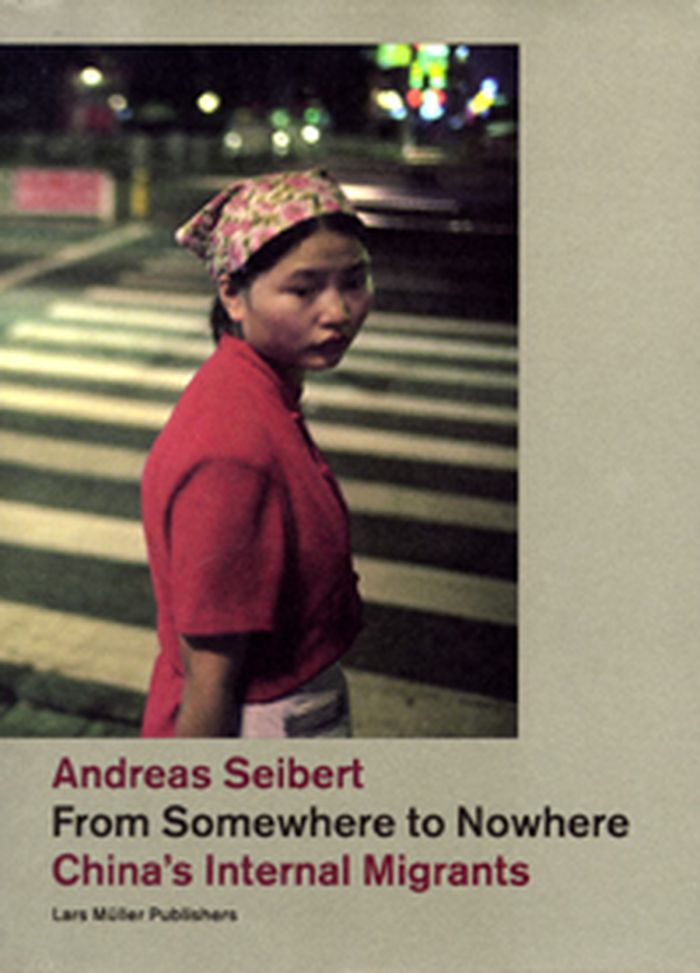
High-population centers of enormous size are springing up in China with dizzying speed. With them comes an increased demand for migrant workers in the construction sector, factories, and mines. In growth centers like the Pearl River Delta in Southern China, 40 million people have already set out from the underdeveloped provinces to earn their living there. The photographer Andreas Seibert accompanied the workers repeatedly in order to document their everyday lives and their journey to the high-population centers. Their stories are told in a collection of striking photographs that provide a close-up portrait to complement the current discussion of economic growth in China. Accompanying the photographs are texts by two Chinese authors, who researched the social and economic background of the phenomenon and provide a direct look. With its combination of text and images, this volume conveys a unique impression of the scale of this modern migration of peoples.
From somewhere to nowhere: China's internal migrants
Actions:
Prix:
$54.95
(disponible sur commande)
Résumé:
High-population centers of enormous size are springing up in China with dizzying speed. With them comes an increased demand for migrant workers in the construction sector, factories, and mines. In growth centers like the Pearl River Delta in Southern China, 40 million people have already set out from the underdeveloped provinces to earn their living there. The photographer Andreas Seibert accompanied the workers repeatedly in order to document their everyday lives and their journey to the high-population centers. Their stories are told in a collection of striking photographs that provide a close-up portrait to complement the current discussion of economic growth in China. Accompanying the photographs are texts by two Chinese authors, who researched the social and economic background of the phenomenon and provide a direct look. With its combination of text and images, this volume conveys a unique impression of the scale of this modern migration of peoples.
Classification:
livres
livres
Publication:
septembre 2008, Baden
septembre 2008, Baden
Classification:
livres
livres
Prix:
$62.00
(disponible sur commande)
Résumé:
This book presents an essential selection from the portfolio of Emilio Duhart H. (1917-2006), a pivotal figure in Chilean architecture. Interweaving episodes from his life and work with the expansion of the modern movement as a global phenomenon, this chronicle places Duhart at the center of an ongoing dialogue between the universal precepts of modernism and the(...)
$62.00
(disponible sur commande)
Résumé:
This book presents an essential selection from the portfolio of Emilio Duhart H. (1917-2006), a pivotal figure in Chilean architecture. Interweaving episodes from his life and work with the expansion of the modern movement as a global phenomenon, this chronicle places Duhart at the center of an ongoing dialogue between the universal precepts of modernism and the(...)
Titre:
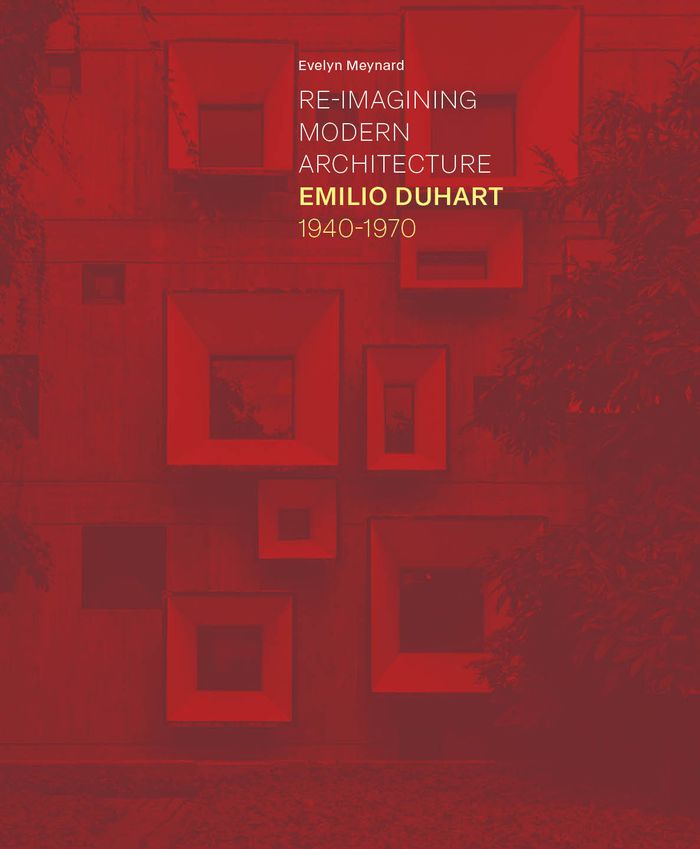
Re-imagining modern architecture: Emilio Duhart, 1940-1970
Actions:
Prix:
$62.00
(disponible sur commande)
Résumé:
This book presents an essential selection from the portfolio of Emilio Duhart H. (1917-2006), a pivotal figure in Chilean architecture. Interweaving episodes from his life and work with the expansion of the modern movement as a global phenomenon, this chronicle places Duhart at the center of an ongoing dialogue between the universal precepts of modernism and the specificities of the Chilean cultural landscape. From his early contact with Walter Gropius in the 1940s to his collaboration with Le Corbusier in the 1950s, Duhart crafted an architectural narrative that not only adopted the ideas of modernism but transformed them, translating them into a language deeply tied to the local circumstances. Duhart’s personal and professional trajectory offers a fascinating perspective for understanding the global expansion of modern architecture, exploring themes central to its dissemination, such as migration, education, social class, housing, and urban challenges. In this light, his life and work are presented as a matrix rich in connections, capable of dialogue with other emblematic cases worldwide.
Re-imagining modern architecture: Emilio Duhart, 1940-1970
Actions:
Prix:
$62.00
(disponible sur commande)
Résumé:
This book presents an essential selection from the portfolio of Emilio Duhart H. (1917-2006), a pivotal figure in Chilean architecture. Interweaving episodes from his life and work with the expansion of the modern movement as a global phenomenon, this chronicle places Duhart at the center of an ongoing dialogue between the universal precepts of modernism and the specificities of the Chilean cultural landscape. From his early contact with Walter Gropius in the 1940s to his collaboration with Le Corbusier in the 1950s, Duhart crafted an architectural narrative that not only adopted the ideas of modernism but transformed them, translating them into a language deeply tied to the local circumstances. Duhart’s personal and professional trajectory offers a fascinating perspective for understanding the global expansion of modern architecture, exploring themes central to its dissemination, such as migration, education, social class, housing, and urban challenges. In this light, his life and work are presented as a matrix rich in connections, capable of dialogue with other emblematic cases worldwide.
Classification:
livres
livres
Publication:
septembre 2025
septembre 2025
Sujet:
Architecture, monographies
Architecture, monographies


