


7457 Résultats
Classification:
livres
livres
Actions:
Prix:
$48.99
(disponible en magasin)
Résumé:
From 1970 until 1987, Gilles Deleuze held a weekly seminar at the Experimental University of Vincennes and, starting in 1980, at Saint-Denis. In the spring of 1981, he began a series of eight seminars on painting and its intersections with philosophy. The recorded sessions, newly transcribed and translated into English, are now available in their entirety for the first(...)
$48.99
(disponible en magasin)
Résumé:
From 1970 until 1987, Gilles Deleuze held a weekly seminar at the Experimental University of Vincennes and, starting in 1980, at Saint-Denis. In the spring of 1981, he began a series of eight seminars on painting and its intersections with philosophy. The recorded sessions, newly transcribed and translated into English, are now available in their entirety for the first(...)
Titre:
On painting: Courses March - June 1981
Actions:
Prix:
$48.99
(disponible en magasin)
Résumé:
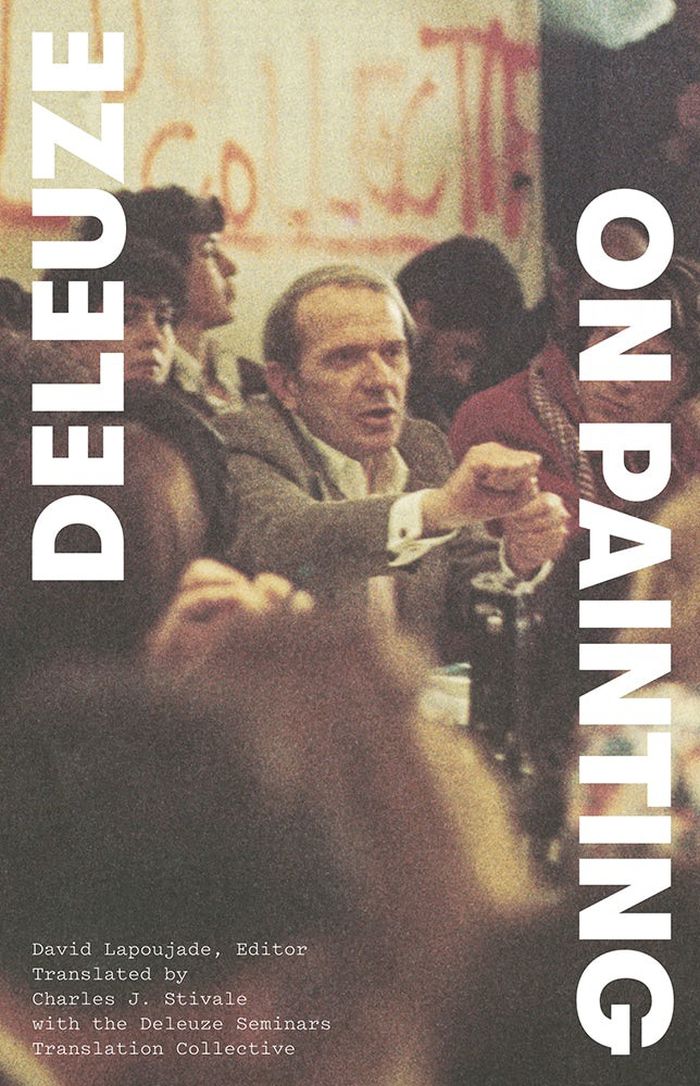
From 1970 until 1987, Gilles Deleuze held a weekly seminar at the Experimental University of Vincennes and, starting in 1980, at Saint-Denis. In the spring of 1981, he began a series of eight seminars on painting and its intersections with philosophy. The recorded sessions, newly transcribed and translated into English, are now available in their entirety for the first time. Extensively annotated by philosopher David Lapoujade, On Painting illuminates Deleuze’s thinking on artistic creation, significantly extending the lines of thought in his book Francis Bacon. Through paintings and writing by Rembrandt, Delacroix, Turner, Cézanne, Van Gogh, Klee, Pollock, and Bacon, Deleuze explores the creative process, from chaos to the pictorial fact. The introduction and use of color feature prominently as Deleuze elaborates on artistic and philosophical concepts such as the diagram, modulation, code, and the digital and the analogical. Through this scrutiny, he raises a series of profound and stimulating questions for his students: How does a painter ward off grayness and attain color? What is a line without contour? Why paint at all?
On painting: Courses March - June 1981
Actions:
Prix:
$48.99
(disponible en magasin)
Résumé:
From 1970 until 1987, Gilles Deleuze held a weekly seminar at the Experimental University of Vincennes and, starting in 1980, at Saint-Denis. In the spring of 1981, he began a series of eight seminars on painting and its intersections with philosophy. The recorded sessions, newly transcribed and translated into English, are now available in their entirety for the first time. Extensively annotated by philosopher David Lapoujade, On Painting illuminates Deleuze’s thinking on artistic creation, significantly extending the lines of thought in his book Francis Bacon. Through paintings and writing by Rembrandt, Delacroix, Turner, Cézanne, Van Gogh, Klee, Pollock, and Bacon, Deleuze explores the creative process, from chaos to the pictorial fact. The introduction and use of color feature prominently as Deleuze elaborates on artistic and philosophical concepts such as the diagram, modulation, code, and the digital and the analogical. Through this scrutiny, he raises a series of profound and stimulating questions for his students: How does a painter ward off grayness and attain color? What is a line without contour? Why paint at all?
Classification:
livres
livres
Publication:
août 2025
août 2025
Sujet:
Théorie de l’art
Théorie de l’art
Classification:
livres
livres
Titre:
Hariri & Hariri houses
Hariri & Hariri houses
Actions:
Prix:
$70.00
(disponible sur commande)
Résumé:
Since starting their practice in 1986, Iranian-born, American-educated sisters Gisue and Mojgan Hariri have earned widespread praise for their ambitious body of work. Their up-to-the-minute recasting of classical modernist principles has made them a source of continuing inspiration to design students and professionals alike. Over the course of recent years, the Hariris'(...)
$70.00
(disponible sur commande)
Résumé:
Since starting their practice in 1986, Iranian-born, American-educated sisters Gisue and Mojgan Hariri have earned widespread praise for their ambitious body of work. Their up-to-the-minute recasting of classical modernist principles has made them a source of continuing inspiration to design students and professionals alike. Over the course of recent years, the Hariris'(...)
Sujet:
Architecture, monographies
Architecture, monographies
Publication:
février 2006, New York
février 2006, New York
Titre:
Hariri & Hariri houses
Actions:
Prix:
$70.00
(disponible sur commande)
Résumé:
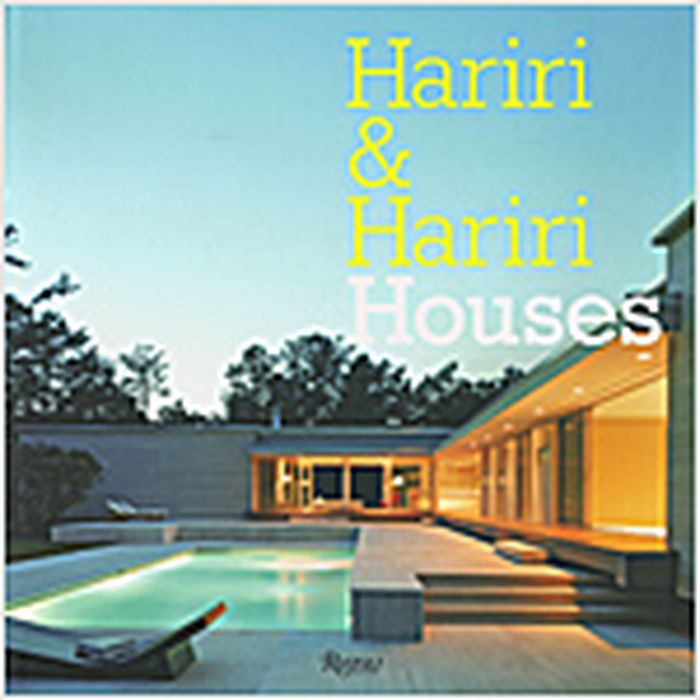
Since starting their practice in 1986, Iranian-born, American-educated sisters Gisue and Mojgan Hariri have earned widespread praise for their ambitious body of work. Their up-to-the-minute recasting of classical modernist principles has made them a source of continuing inspiration to design students and professionals alike. Over the course of recent years, the Hariris' portfolio has expanded from small-scale commissions to widely celebrated projects, including the much lauded "Digital House" and the first house to be completed at The Houses at Sagaponac, the ambitious Hamptons development. Among the projects featured in Hariri & Hariri: Houses—illustrated in plans, drawings, and splendid full-color photography—are a new house for the AQUA development in Miami Beach; spectacular urban renovations in New York City; and magnificent new houses across the country, as well as international projects, all of which demonstrate the ability of the Hariris to combine modernist rigor with what New Yorker architecture critic Paul Goldberger identified as an "understanding of the patterns of everyday life."
Hariri & Hariri houses
Actions:
Prix:
$70.00
(disponible sur commande)
Résumé:
Since starting their practice in 1986, Iranian-born, American-educated sisters Gisue and Mojgan Hariri have earned widespread praise for their ambitious body of work. Their up-to-the-minute recasting of classical modernist principles has made them a source of continuing inspiration to design students and professionals alike. Over the course of recent years, the Hariris' portfolio has expanded from small-scale commissions to widely celebrated projects, including the much lauded "Digital House" and the first house to be completed at The Houses at Sagaponac, the ambitious Hamptons development. Among the projects featured in Hariri & Hariri: Houses—illustrated in plans, drawings, and splendid full-color photography—are a new house for the AQUA development in Miami Beach; spectacular urban renovations in New York City; and magnificent new houses across the country, as well as international projects, all of which demonstrate the ability of the Hariris to combine modernist rigor with what New Yorker architecture critic Paul Goldberger identified as an "understanding of the patterns of everyday life."
Classification:
livres
livres
Publication:
février 2006, New York
février 2006, New York
Sujet:
Architecture, monographies
Architecture, monographies
Classification:
livres
livres
Actions:
Prix:
$39.95
(disponible sur commande)
Résumé:
"Light Matters" gathers for the first time a selection of Vicki Goldberg's essays and criticism, culled from her writings published over the past twenty-five years. Goldberg’s take on photography is both insightful and encompassing: her subjects range from pop imagery to war journalism, from photo-booth portraits to manipulated digital imagery, from the “boredom” of(...)
$39.95
(disponible sur commande)
Résumé:
"Light Matters" gathers for the first time a selection of Vicki Goldberg's essays and criticism, culled from her writings published over the past twenty-five years. Goldberg’s take on photography is both insightful and encompassing: her subjects range from pop imagery to war journalism, from photo-booth portraits to manipulated digital imagery, from the “boredom” of(...)
Titre:
Light matters : writings on photography
Actions:
Prix:
$39.95
(disponible sur commande)
Résumé:
"Light Matters" gathers for the first time a selection of Vicki Goldberg's essays and criticism, culled from her writings published over the past twenty-five years. Goldberg’s take on photography is both insightful and encompassing: her subjects range from pop imagery to war journalism, from photo-booth portraits to manipulated digital imagery, from the “boredom” of voyeurism to the great preponderance of tragic photographs in the news. She brings new light to the work of the medium’s “old masters,” among them Walker Evans, Lotte Jacobi, and Lartigue, writing with equal acuity about contemporary trailblazers such as Bill Viola, Daido Moriyama, and Bastienne Schmidt. Goldberg also tackles provocative larger issues facing the medium, such as the potentially “transgressive” nature of photographs, and the camera’s powerful role in a culture of commodification. Dismissing clichés and deftly negotiating the many diverging paths photography now follows, Goldberg demonstrates how to consider not just photographic images themselves, but their impact, and the meaning of that impact. "Light Matters" showcases a writer of great intelligence, wit, and insight, whose understanding of this multifarious and evolving medium is unsurpassed.
Light matters : writings on photography
Actions:
Prix:
$39.95
(disponible sur commande)
Résumé:
"Light Matters" gathers for the first time a selection of Vicki Goldberg's essays and criticism, culled from her writings published over the past twenty-five years. Goldberg’s take on photography is both insightful and encompassing: her subjects range from pop imagery to war journalism, from photo-booth portraits to manipulated digital imagery, from the “boredom” of voyeurism to the great preponderance of tragic photographs in the news. She brings new light to the work of the medium’s “old masters,” among them Walker Evans, Lotte Jacobi, and Lartigue, writing with equal acuity about contemporary trailblazers such as Bill Viola, Daido Moriyama, and Bastienne Schmidt. Goldberg also tackles provocative larger issues facing the medium, such as the potentially “transgressive” nature of photographs, and the camera’s powerful role in a culture of commodification. Dismissing clichés and deftly negotiating the many diverging paths photography now follows, Goldberg demonstrates how to consider not just photographic images themselves, but their impact, and the meaning of that impact. "Light Matters" showcases a writer of great intelligence, wit, and insight, whose understanding of this multifarious and evolving medium is unsurpassed.
Classification:
livres
livres
Publication:
mars 2005, New York
mars 2005, New York
Sujet:
Théorie de la photographie
Théorie de la photographie
Classification:
livres
livres
Prix:
$45.50
(disponible sur commande)
Résumé:
It is not without irony that in an age characterised by the dissolution of certainty – a consequence of digital dematerialisation and the catastrophic destabilisation of our social institutions and natural world – architecture, for so long the repository for our myths and the vessel for our intangible narratives and rituals, has been stripped bare. Increasingly(...)
$45.50
(disponible sur commande)
Résumé:
It is not without irony that in an age characterised by the dissolution of certainty – a consequence of digital dematerialisation and the catastrophic destabilisation of our social institutions and natural world – architecture, for so long the repository for our myths and the vessel for our intangible narratives and rituals, has been stripped bare. Increasingly(...)
Titre:
AD 94:04 Ghost Stories: Architecture and the Intangible
Actions:
Prix:
$45.50
(disponible sur commande)
Résumé:
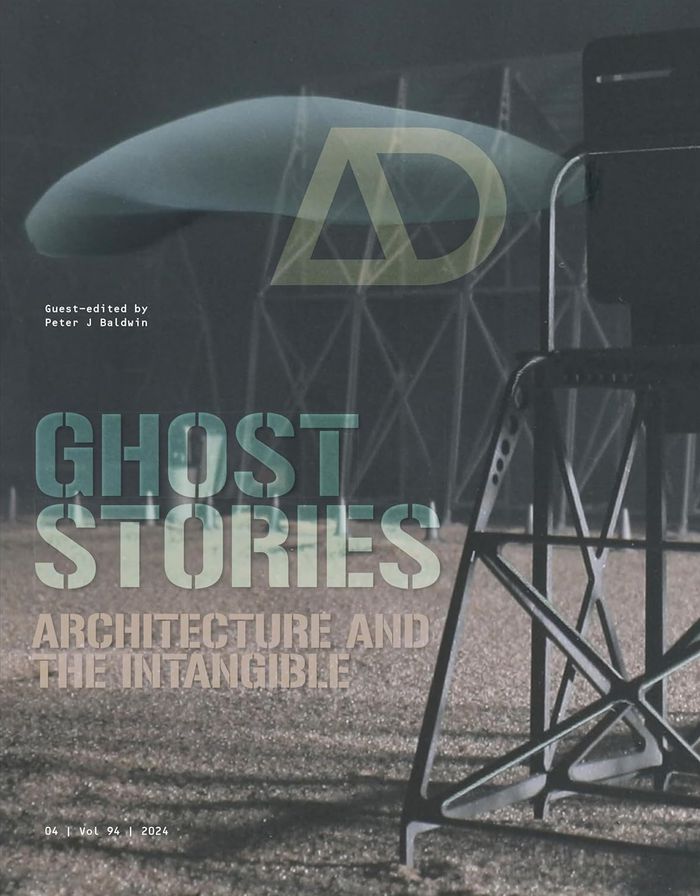
It is not without irony that in an age characterised by the dissolution of certainty – a consequence of digital dematerialisation and the catastrophic destabilisation of our social institutions and natural world – architecture, for so long the repository for our myths and the vessel for our intangible narratives and rituals, has been stripped bare. Increasingly preoccupied with the physical, material and measurable, architecture has forfeited its original purpose as a mediating link between the tacit and the tangible. Drawing on the current resurgence and our enduring cultural fascination with the ethereal and uncanny, this AD frames the spectral as a deconstructive gesture that undermines the fixedness and certainties of binary logics, a means to develop new practices and positions from which to address our contemporary uncertainties. Gathering a body of work that explores and speculates on architecture’s long romance with the incorporeal, the issue is intended as a catalyst through which latency, contingency and indeterminacy, inherent characteristics of the architectural condition, can once more be valued, cultivated and nurtured.
AD 94:04 Ghost Stories: Architecture and the Intangible
Actions:
Prix:
$45.50
(disponible sur commande)
Résumé:
It is not without irony that in an age characterised by the dissolution of certainty – a consequence of digital dematerialisation and the catastrophic destabilisation of our social institutions and natural world – architecture, for so long the repository for our myths and the vessel for our intangible narratives and rituals, has been stripped bare. Increasingly preoccupied with the physical, material and measurable, architecture has forfeited its original purpose as a mediating link between the tacit and the tangible. Drawing on the current resurgence and our enduring cultural fascination with the ethereal and uncanny, this AD frames the spectral as a deconstructive gesture that undermines the fixedness and certainties of binary logics, a means to develop new practices and positions from which to address our contemporary uncertainties. Gathering a body of work that explores and speculates on architecture’s long romance with the incorporeal, the issue is intended as a catalyst through which latency, contingency and indeterminacy, inherent characteristics of the architectural condition, can once more be valued, cultivated and nurtured.
Classification:
livres
livres
Publication:
juillet 2024
juillet 2024
Sujet:
Revues
Revues
Classification:
livres
livres
Actions:
Prix:
$52.50
(disponible sur commande)
Résumé:
"Twentieth-Century Type" surveys the significant issues that have shaped the history and evolution of typography and graphic design, showing how current typographic trends are part of a continuously changing movement that can be plotted through the decades. Generously illustrated with over three hundred examples–more than two hundred of which are in color–the book charts(...)
$52.50
(disponible sur commande)
Résumé:
"Twentieth-Century Type" surveys the significant issues that have shaped the history and evolution of typography and graphic design, showing how current typographic trends are part of a continuously changing movement that can be plotted through the decades. Generously illustrated with over three hundred examples–more than two hundred of which are in color–the book charts(...)
Publication:
juin 2004, New Haven / London
juin 2004, New Haven / London
Titre:
Twentieth-century type, new & revised edition
Actions:
Prix:
$52.50
(disponible sur commande)
Résumé:
"Twentieth-Century Type" surveys the significant issues that have shaped the history and evolution of typography and graphic design, showing how current typographic trends are part of a continuously changing movement that can be plotted through the decades. Generously illustrated with over three hundred examples–more than two hundred of which are in color–the book charts significant topics including the arrival of mass-production; the birth of the art director; the appearance of the grid (and its subsequent rejection); the coming of non-print media; and the launch of the Macintosh computer and its ushering in of a new generation of designers enfranchised by digital technology. This revised edition of a fundamental work brings the story up to date with new text and images covering type on screen and, in particular, type for the internet. Combining an assessment of the culture of experimentation in contemporary typographic design alongside a clear presentation of the field’s historical context, the book is an informed and accessible source for all students of design and for designers needing an expert overview of typography.
Twentieth-century type, new & revised edition
Actions:
Prix:
$52.50
(disponible sur commande)
Résumé:
"Twentieth-Century Type" surveys the significant issues that have shaped the history and evolution of typography and graphic design, showing how current typographic trends are part of a continuously changing movement that can be plotted through the decades. Generously illustrated with over three hundred examples–more than two hundred of which are in color–the book charts significant topics including the arrival of mass-production; the birth of the art director; the appearance of the grid (and its subsequent rejection); the coming of non-print media; and the launch of the Macintosh computer and its ushering in of a new generation of designers enfranchised by digital technology. This revised edition of a fundamental work brings the story up to date with new text and images covering type on screen and, in particular, type for the internet. Combining an assessment of the culture of experimentation in contemporary typographic design alongside a clear presentation of the field’s historical context, the book is an informed and accessible source for all students of design and for designers needing an expert overview of typography.
Classification:
livres
livres
Publication:
juin 2004, New Haven / London
juin 2004, New Haven / London
Classification:
livres
livres
Titre:
Bernard Tschumi
Bernard Tschumi
Actions:
Prix:
$42.00
(disponible sur commande)
Résumé:
Acclaimed as one of the world's foremost modern architects, Bernard Tschumi achieved early fame by winning the competition to design the Parc de la Villette on the northeast edge of Paris, featuring bright red "deconstructivist" pavillons. Tschumi is widely credited with leading the Graduate School of Architecture, Planning and Preservation at New York's Columbia(...)
$42.00
(disponible sur commande)
Résumé:
Acclaimed as one of the world's foremost modern architects, Bernard Tschumi achieved early fame by winning the competition to design the Parc de la Villette on the northeast edge of Paris, featuring bright red "deconstructivist" pavillons. Tschumi is widely credited with leading the Graduate School of Architecture, Planning and Preservation at New York's Columbia(...)
Sujet:
Architecture, monographies
Architecture, monographies
Publication:
août 2003, New York
août 2003, New York
Titre:
Bernard Tschumi
Actions:
Prix:
$42.00
(disponible sur commande)
Résumé:
Acclaimed as one of the world's foremost modern architects, Bernard Tschumi achieved early fame by winning the competition to design the Parc de la Villette on the northeast edge of Paris, featuring bright red "deconstructivist" pavillons. Tschumi is widely credited with leading the Graduate School of Architecture, Planning and Preservation at New York's Columbia University into the digital age and positioning the school at the forefront of the architectural vanguard. During his fifteen-year tenure, Tschumi has continued to build and the results are empty illustrated in the first monogragraph to document Tschumi's full career. Projects included: Le Fresnoy National Studio for Contemporary Arts in Tourcoing, France (1998); Columbia University's Lerner Hall Student Center (1999); Marne La Vallée School of Architecture, Paris (1999); the Interface Flon, a bus, train, and subway station and pedestrian bridge in Lausanne, Switzerland (2000); a Concert Hall and Exhibition Complex in Rouen (2001); the new Florida International School of Architecture in Miami; the Museum for African Art in New York; and the New Acropolis Museum in Athens.
Bernard Tschumi
Actions:
Prix:
$42.00
(disponible sur commande)
Résumé:
Acclaimed as one of the world's foremost modern architects, Bernard Tschumi achieved early fame by winning the competition to design the Parc de la Villette on the northeast edge of Paris, featuring bright red "deconstructivist" pavillons. Tschumi is widely credited with leading the Graduate School of Architecture, Planning and Preservation at New York's Columbia University into the digital age and positioning the school at the forefront of the architectural vanguard. During his fifteen-year tenure, Tschumi has continued to build and the results are empty illustrated in the first monogragraph to document Tschumi's full career. Projects included: Le Fresnoy National Studio for Contemporary Arts in Tourcoing, France (1998); Columbia University's Lerner Hall Student Center (1999); Marne La Vallée School of Architecture, Paris (1999); the Interface Flon, a bus, train, and subway station and pedestrian bridge in Lausanne, Switzerland (2000); a Concert Hall and Exhibition Complex in Rouen (2001); the new Florida International School of Architecture in Miami; the Museum for African Art in New York; and the New Acropolis Museum in Athens.
Classification:
livres
livres
Publication:
août 2003, New York
août 2003, New York
Sujet:
Architecture, monographies
Architecture, monographies
Classification:
livres
livres
Actions:
Prix:
$58.00
(disponible sur commande)
Résumé:
280 mostly full page color illustrations. Text by Ann Temkin, Briony Fer. Melissa Ho, Nora Lawrence. Published to accompany a major exhibition at The Museum of Modern Art, New York, this volume begins with Marcel Duchamp’s Tu m’, the artist’s final painting, made in 1918, with its long array of color samples looming across the canvas. This early recognition of color’s(...)
$58.00
(disponible sur commande)
Résumé:
280 mostly full page color illustrations. Text by Ann Temkin, Briony Fer. Melissa Ho, Nora Lawrence. Published to accompany a major exhibition at The Museum of Modern Art, New York, this volume begins with Marcel Duchamp’s Tu m’, the artist’s final painting, made in 1918, with its long array of color samples looming across the canvas. This early recognition of color’s(...)
Titre:
Color Chart: Reinventing Color, 1950 to Today
Actions:
Prix:
$58.00
(disponible sur commande)
Résumé:
280 mostly full page color illustrations. Text by Ann Temkin, Briony Fer. Melissa Ho, Nora Lawrence. Published to accompany a major exhibition at The Museum of Modern Art, New York, this volume begins with Marcel Duchamp’s Tu m’, the artist’s final painting, made in 1918, with its long array of color samples looming across the canvas. This early recognition of color’s commercial nature was fully explored more than three decades later by artists such as Robert Rauschenberg, Andy Warhol, Gerhard Richter and Alighiero Boetti, who in the 1950s to the 1970s, with a host of others, redefined the parameters of color from a matter of personal expression to one of arbitrary systems and random processes. The repercussions of this transformation continue to be felt into the twenty-first century, in work by artists including Sherrie Levine, Mike Kelley and Damien Hirst, as well as others who explore color in digital technology This volume traces the lineage of the questions provoked by color’s new status, and the variety of answers that have resulted.
Color Chart: Reinventing Color, 1950 to Today
Actions:
Prix:
$58.00
(disponible sur commande)
Résumé:
280 mostly full page color illustrations. Text by Ann Temkin, Briony Fer. Melissa Ho, Nora Lawrence. Published to accompany a major exhibition at The Museum of Modern Art, New York, this volume begins with Marcel Duchamp’s Tu m’, the artist’s final painting, made in 1918, with its long array of color samples looming across the canvas. This early recognition of color’s commercial nature was fully explored more than three decades later by artists such as Robert Rauschenberg, Andy Warhol, Gerhard Richter and Alighiero Boetti, who in the 1950s to the 1970s, with a host of others, redefined the parameters of color from a matter of personal expression to one of arbitrary systems and random processes. The repercussions of this transformation continue to be felt into the twenty-first century, in work by artists including Sherrie Levine, Mike Kelley and Damien Hirst, as well as others who explore color in digital technology This volume traces the lineage of the questions provoked by color’s new status, and the variety of answers that have resulted.
Classification:
livres
livres
Publication:
mars 2008, New York
mars 2008, New York
Classification:
périodiques
périodiques

Titre:
Etc media 110
Etc media 110
Actions:
Prix:
$11.50
(disponible en magasin)
Résumé:
Le 110e numéro de la revue "ETC MEDIA" est dédié à Grégory Chatonsky. L’artiste qui vit depuis 10 ans à Montréal a construit la forme et le contenu de cette édition spéciale. Pionnier du netart avec la fondation d’Incident.net en 1994, explorateur infatigable des relations entre les technologies et les existences anonymes, l’artiste tente ici avec certains de ses amis,(...)
$11.50
(disponible en magasin)
Résumé:
Le 110e numéro de la revue "ETC MEDIA" est dédié à Grégory Chatonsky. L’artiste qui vit depuis 10 ans à Montréal a construit la forme et le contenu de cette édition spéciale. Pionnier du netart avec la fondation d’Incident.net en 1994, explorateur infatigable des relations entre les technologies et les existences anonymes, l’artiste tente ici avec certains de ses amis,(...)
Titre:
Etc media 110
Actions:
Prix:
$11.50
(disponible en magasin)
Résumé:
Le 110e numéro de la revue "ETC MEDIA" est dédié à Grégory Chatonsky. L’artiste qui vit depuis 10 ans à Montréal a construit la forme et le contenu de cette édition spéciale. Pionnier du netart avec la fondation d’Incident.net en 1994, explorateur infatigable des relations entre les technologies et les existences anonymes, l’artiste tente ici avec certains de ses amis, philosophes, historiens et critiques d’art, artistes également, de revenir sur deux décennies d’expérimentations qui a vu notre monde bouleversé par la généralisation d’Internet jusqu’à ce que cette omniprésence du numérique en signe la quasi-disparition. Divisé en 3 parties : «infinitude», «hyperproduction», «sans nous», "ETC MEDIA" devient une plate-forme pour naviguer dans notre époque et pour mieux comprendre un futur dont les signes avant-coureurs restent profondément ambivalents, promesse et menace tout à la fois. Post-digital, accélérationnisme ou matérialisme spéculatif sont moins des concepts à la mode souvent mal interprétés par le milieu de l’art contemporain, qu’ils ne forment la constellation d’un monde en train de périr et de naître.
Etc media 110
Actions:
Prix:
$11.50
(disponible en magasin)
Résumé:
Le 110e numéro de la revue "ETC MEDIA" est dédié à Grégory Chatonsky. L’artiste qui vit depuis 10 ans à Montréal a construit la forme et le contenu de cette édition spéciale. Pionnier du netart avec la fondation d’Incident.net en 1994, explorateur infatigable des relations entre les technologies et les existences anonymes, l’artiste tente ici avec certains de ses amis, philosophes, historiens et critiques d’art, artistes également, de revenir sur deux décennies d’expérimentations qui a vu notre monde bouleversé par la généralisation d’Internet jusqu’à ce que cette omniprésence du numérique en signe la quasi-disparition. Divisé en 3 parties : «infinitude», «hyperproduction», «sans nous», "ETC MEDIA" devient une plate-forme pour naviguer dans notre époque et pour mieux comprendre un futur dont les signes avant-coureurs restent profondément ambivalents, promesse et menace tout à la fois. Post-digital, accélérationnisme ou matérialisme spéculatif sont moins des concepts à la mode souvent mal interprétés par le milieu de l’art contemporain, qu’ils ne forment la constellation d’un monde en train de périr et de naître.
Classification:
périodiques
périodiques
Publication:
février 2017
février 2017
Sujet:
Revues
Revues
Classification:
livres
livres
Titre:
Scale
Scale
Actions:
Prix:
$34.95
(disponible sur commande)
Résumé:
Scale is perhaps the most spectacularly overlooked aspect of artistic production. As photographic and digital reproductions have essentially dematerialized art, critical and historical research dealing with scale—both within the American critical tradition and abroad—has become scattered and insufficiently theorized. However, by posing a specific challenge, such research(...)
$34.95
(disponible sur commande)
Résumé:
Scale is perhaps the most spectacularly overlooked aspect of artistic production. As photographic and digital reproductions have essentially dematerialized art, critical and historical research dealing with scale—both within the American critical tradition and abroad—has become scattered and insufficiently theorized. However, by posing a specific challenge, such research(...)
Titre:
Scale
Actions:
Prix:
$34.95
(disponible sur commande)
Résumé:
Scale is perhaps the most spectacularly overlooked aspect of artistic production. As photographic and digital reproductions have essentially dematerialized art, critical and historical research dealing with scale—both within the American critical tradition and abroad—has become scattered and insufficiently theorized. However, by posing a specific challenge, such research forces a heightened recognition of both the properties of materials and the deep technical knowledge of makers. A reconsideration of scalar relationships in American art and visual culture therefore reveals original insights. "Scale" is the second volume in the Terra Foundation Essays series. With eighty color illustrations and a wealth of new research from Glenn Adamson, Wendy Bellion, Wouter Davidts, Darcy Grimaldo Grigsby, Christopher P. Heuer, Joshua G. Stein, and Jason Weems, it explores viewers’ physical relationship to Barnett Newman’s abstract canvases, the arduous engineering behind the creation of Mount Rushmore, and the charged significance of liberty poles in the landscape of eighteenth-century New York, among other topics that range from studies of specific works of art to significant conceptual and theoretical concerns.
Scale
Actions:
Prix:
$34.95
(disponible sur commande)
Résumé:
Scale is perhaps the most spectacularly overlooked aspect of artistic production. As photographic and digital reproductions have essentially dematerialized art, critical and historical research dealing with scale—both within the American critical tradition and abroad—has become scattered and insufficiently theorized. However, by posing a specific challenge, such research forces a heightened recognition of both the properties of materials and the deep technical knowledge of makers. A reconsideration of scalar relationships in American art and visual culture therefore reveals original insights. "Scale" is the second volume in the Terra Foundation Essays series. With eighty color illustrations and a wealth of new research from Glenn Adamson, Wendy Bellion, Wouter Davidts, Darcy Grimaldo Grigsby, Christopher P. Heuer, Joshua G. Stein, and Jason Weems, it explores viewers’ physical relationship to Barnett Newman’s abstract canvases, the arduous engineering behind the creation of Mount Rushmore, and the charged significance of liberty poles in the landscape of eighteenth-century New York, among other topics that range from studies of specific works of art to significant conceptual and theoretical concerns.
Classification:
livres
livres
Publication:
novembre 2016
novembre 2016
Sujet:
Théorie de l’art
Théorie de l’art
Classification:
livres
livres
Actions:
Prix:
$64.95
(disponible sur commande)
Résumé:
Risography, named after the Japanese firm Riso, is a stencil printing process based on screen printing techniques that was developed in the transition phase from mechanical to digital printing. Although the printer looks like a copying machine, the colors are transferred onto the paper without the use of heat or chemicals, saving energy and making the process ecologically(...)
$64.95
(disponible sur commande)
Résumé:
Risography, named after the Japanese firm Riso, is a stencil printing process based on screen printing techniques that was developed in the transition phase from mechanical to digital printing. Although the printer looks like a copying machine, the colors are transferred onto the paper without the use of heat or chemicals, saving energy and making the process ecologically(...)
Titre:
Risomania: the new spirit of printing
Actions:
Prix:
$64.95
(disponible sur commande)
Résumé:
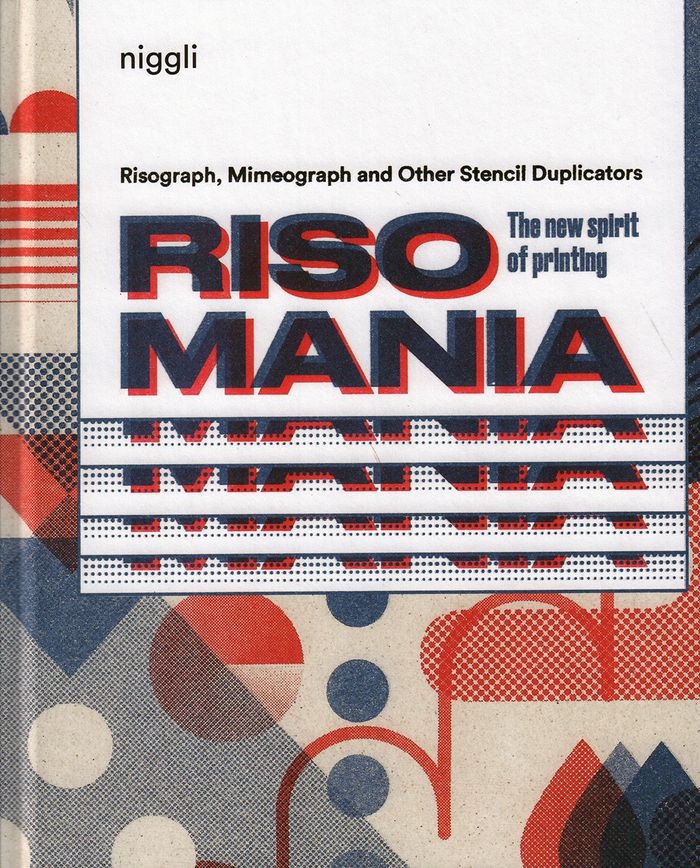
Risography, named after the Japanese firm Riso, is a stencil printing process based on screen printing techniques that was developed in the transition phase from mechanical to digital printing. Although the printer looks like a copying machine, the colors are transferred onto the paper without the use of heat or chemicals, saving energy and making the process ecologically friendly. Graphic artists and designers from around the world have now rediscovered the risograph for themselves – along with other machines for similar, almost forgotten techniques such as mimeography – and sparked an unexpected renaissance of analog printing. A comprehensive introduction that addresses past, present and future is followed by an essay about the key pioneers in the contemporary risography scene. In the chapter "Risoworld" notable risography-oriented publishers, printers and design studios from around the world are presented. At the heart of the book are fabulous, hugely diverse examples such as postcards, magazines, posters, flyers and experimental printed products, all inspired by the force of their color, their unique textures and, above all, the pefectly imperfect authenticity of risography.
Risomania: the new spirit of printing
Actions:
Prix:
$64.95
(disponible sur commande)
Résumé:
Risography, named after the Japanese firm Riso, is a stencil printing process based on screen printing techniques that was developed in the transition phase from mechanical to digital printing. Although the printer looks like a copying machine, the colors are transferred onto the paper without the use of heat or chemicals, saving energy and making the process ecologically friendly. Graphic artists and designers from around the world have now rediscovered the risograph for themselves – along with other machines for similar, almost forgotten techniques such as mimeography – and sparked an unexpected renaissance of analog printing. A comprehensive introduction that addresses past, present and future is followed by an essay about the key pioneers in the contemporary risography scene. In the chapter "Risoworld" notable risography-oriented publishers, printers and design studios from around the world are presented. At the heart of the book are fabulous, hugely diverse examples such as postcards, magazines, posters, flyers and experimental printed products, all inspired by the force of their color, their unique textures and, above all, the pefectly imperfect authenticity of risography.
Classification:
livres
livres
Publication:
mars 2017
mars 2017


