


7457 Résultats
Classification:
livres
livres

Actions:
Prix:
$37.95
(disponible sur commande)
Résumé:
Profoundly intimate yet immediately giving onto distant spaces, both an ‘organ of fear’ and an echo chamber of anticipated pleasures, an uncontrollable flow subject to unconscious selection and augmentation, the subtlety, complexity, and variety of modes of hearing has meant that sound has rarely received the same philosophical attention as the visual. In "The order of(...)
$37.95
(disponible sur commande)
Résumé:
Profoundly intimate yet immediately giving onto distant spaces, both an ‘organ of fear’ and an echo chamber of anticipated pleasures, an uncontrollable flow subject to unconscious selection and augmentation, the subtlety, complexity, and variety of modes of hearing has meant that sound has rarely received the same philosophical attention as the visual. In "The order of(...)
Titre:
The order of sounds: a sonorous archipelago
Actions:
Prix:
$37.95
(disponible sur commande)
Résumé:
Profoundly intimate yet immediately giving onto distant spaces, both an ‘organ of fear’ and an echo chamber of anticipated pleasures, an uncontrollable flow subject to unconscious selection and augmentation, the subtlety, complexity, and variety of modes of hearing has meant that sound has rarely received the same philosophical attention as the visual. In "The order of sounds", François J. Bonnet makes a compelling case for the irreducible heterogeneity of ‘sound’, navigating between the physical models constructed by psychophysics and refined through recording technologies, and the synthetic production of what is heard. From primitive vigilance and sonic mythologies to digital sampling and sound installations, he examines the ways in which we make sound speak to us, in an analysis of listening as a plurivocal phenomenon drawing on Foucault, Deleuze and Guattari, Barthes, Nancy, Adorno, and de Certeau, and experimental pioneers such as Tesla, Bell, and Raudive. Stringent critiques of the ‘soundscape’ and ‘reduced listening’ demonstrate that univocal ontologies of sound are always partial and politicized; for listening is always a selective fetishism, a hallucination of sound filtered by desire and convention, territorialized by discourse and its authorities. Bonnet proposes neither a disciplined listening that targets sound ‘itself’, nor an ‘ocean of sound’ in which we might lose ourselves, but instead maps out a sonorous archipelago—a heterogeneous set of shifting sonic territories shaped and aggregated by the vicissitudes of desire and discourse.
The order of sounds: a sonorous archipelago
Actions:
Prix:
$37.95
(disponible sur commande)
Résumé:
Profoundly intimate yet immediately giving onto distant spaces, both an ‘organ of fear’ and an echo chamber of anticipated pleasures, an uncontrollable flow subject to unconscious selection and augmentation, the subtlety, complexity, and variety of modes of hearing has meant that sound has rarely received the same philosophical attention as the visual. In "The order of sounds", François J. Bonnet makes a compelling case for the irreducible heterogeneity of ‘sound’, navigating between the physical models constructed by psychophysics and refined through recording technologies, and the synthetic production of what is heard. From primitive vigilance and sonic mythologies to digital sampling and sound installations, he examines the ways in which we make sound speak to us, in an analysis of listening as a plurivocal phenomenon drawing on Foucault, Deleuze and Guattari, Barthes, Nancy, Adorno, and de Certeau, and experimental pioneers such as Tesla, Bell, and Raudive. Stringent critiques of the ‘soundscape’ and ‘reduced listening’ demonstrate that univocal ontologies of sound are always partial and politicized; for listening is always a selective fetishism, a hallucination of sound filtered by desire and convention, territorialized by discourse and its authorities. Bonnet proposes neither a disciplined listening that targets sound ‘itself’, nor an ‘ocean of sound’ in which we might lose ourselves, but instead maps out a sonorous archipelago—a heterogeneous set of shifting sonic territories shaped and aggregated by the vicissitudes of desire and discourse.
Classification:
livres
livres
Publication:
mai 2016
mai 2016
Sujet:
Acoustique
Acoustique
Classification:
livres
livres

Titre:
Mute magazine graphic design
Mute magazine graphic design
Actions:
Prix:
$37.00
(disponible sur commande)
Résumé:
In the early 1990s, long before the internet became an integral part of life, a handful of pioneering magazines took it upon themselves to imagine the web into existence. Using fiction, interviews, speculative theory and experimental graphic design, these titles helped create a lexicon and iconography every bit as powerful as the architecture of the World Wide Web.(...)
$37.00
(disponible sur commande)
Résumé:
In the early 1990s, long before the internet became an integral part of life, a handful of pioneering magazines took it upon themselves to imagine the web into existence. Using fiction, interviews, speculative theory and experimental graphic design, these titles helped create a lexicon and iconography every bit as powerful as the architecture of the World Wide Web.(...)
Publication:
août 2008, London
août 2008, London
Titre:
Mute magazine graphic design
Actions:
Prix:
$37.00
(disponible sur commande)
Résumé:
In the early 1990s, long before the internet became an integral part of life, a handful of pioneering magazines took it upon themselves to imagine the web into existence. Using fiction, interviews, speculative theory and experimental graphic design, these titles helped create a lexicon and iconography every bit as powerful as the architecture of the World Wide Web. London-based Mute occupied a central position here, wielding an influence vastly disproportionate to its size. The product of a period of intense creative ferment, Mute engaged boldly with allcomers. The magazine offered a platform to authors Bruce Sterling, Arthur Kroker, Mark Dery, Geert Lovink, Hari Kunzru, James Flint and Lev Manovich, just as it did to artists Keith Tyson, VNS Matrix and the Bureau of Inverse Technology. As new technologies forced a collapse of disciplinary boundaries and the intermingling of communities, Mute became part of a dynamic London scene, featuring many of the artists, writers and photographers who came to epitomise London’s status as a creative hotbed. The resulting collection of magazines defines an era, telling the fascinating tale of one publisher's relationship with the ‘digital revolution’ – the nineties’ very own Big Bang. This book presents a full overview of the magazine over a decade, showing its entire output – logos, covers and spreads. Using generous illustrations and in-depth captions, it details recurrent graphic themes and places Mute's evolution in perspective
Mute magazine graphic design
Actions:
Prix:
$37.00
(disponible sur commande)
Résumé:
In the early 1990s, long before the internet became an integral part of life, a handful of pioneering magazines took it upon themselves to imagine the web into existence. Using fiction, interviews, speculative theory and experimental graphic design, these titles helped create a lexicon and iconography every bit as powerful as the architecture of the World Wide Web. London-based Mute occupied a central position here, wielding an influence vastly disproportionate to its size. The product of a period of intense creative ferment, Mute engaged boldly with allcomers. The magazine offered a platform to authors Bruce Sterling, Arthur Kroker, Mark Dery, Geert Lovink, Hari Kunzru, James Flint and Lev Manovich, just as it did to artists Keith Tyson, VNS Matrix and the Bureau of Inverse Technology. As new technologies forced a collapse of disciplinary boundaries and the intermingling of communities, Mute became part of a dynamic London scene, featuring many of the artists, writers and photographers who came to epitomise London’s status as a creative hotbed. The resulting collection of magazines defines an era, telling the fascinating tale of one publisher's relationship with the ‘digital revolution’ – the nineties’ very own Big Bang. This book presents a full overview of the magazine over a decade, showing its entire output – logos, covers and spreads. Using generous illustrations and in-depth captions, it details recurrent graphic themes and places Mute's evolution in perspective
Classification:
livres
livres
Publication:
août 2008, London
août 2008, London
Classification:
livres
livres
Actions:
Prix:
$44.00
(disponible sur commande)
Résumé:
"A mathematician, like a painter or poet, is a maker of patterns," wrote the British mathematician G. H. Hardy. In "Do not erase," photographer Jessica Wynne presents remarkable examples of this idea through images of mathematicians’ chalkboards. While other fields have replaced chalkboards with whiteboards and digital presentations, mathematicians remain loyal to chalk(...)
$44.00
(disponible sur commande)
Résumé:
"A mathematician, like a painter or poet, is a maker of patterns," wrote the British mathematician G. H. Hardy. In "Do not erase," photographer Jessica Wynne presents remarkable examples of this idea through images of mathematicians’ chalkboards. While other fields have replaced chalkboards with whiteboards and digital presentations, mathematicians remain loyal to chalk(...)
Titre:
Do not erase: mathematicians and their chalkboards
Actions:
Prix:
$44.00
(disponible sur commande)
Résumé:
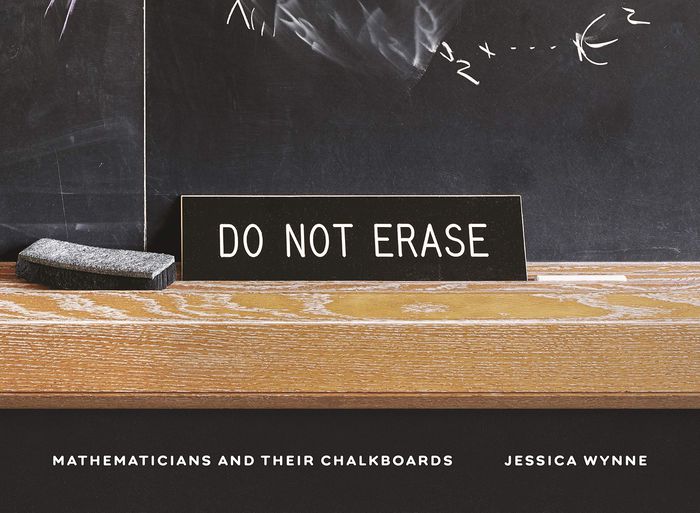
"A mathematician, like a painter or poet, is a maker of patterns," wrote the British mathematician G. H. Hardy. In "Do not erase," photographer Jessica Wynne presents remarkable examples of this idea through images of mathematicians’ chalkboards. While other fields have replaced chalkboards with whiteboards and digital presentations, mathematicians remain loyal to chalk for puzzling out their ideas and communicating their research. Wynne offers more than one hundred photographs of these chalkboards, gathered from a diverse group of mathematicians around the world. The photographs are accompanied by essays from each mathematician, reflecting on their work and processes. Together, pictures and words provide an illuminating meditation on the unique relationships among mathematics, art, and creativity. The mathematicians featured in this collection comprise exciting new voices alongside established figures, including Sun-Yung Alice Chang, Alain Connes, Misha Gromov, Andre Neves, Kasso Okoudjou, Peter Shor, Christina Sormani, Terence Tao, Claire Voisin, and many others. The companion essays give insights into how the chalkboard serves as a special medium for mathematical expression. The volume also includes an introduction by the author, an afterword by New Yorker writer Alec Wilkinson, and biographical information for each contributor. "Do not erase" is a testament to the myriad ways that mathematicians use their chalkboards to reveal the conceptual and visual beauty of their discipline- shapes, figures, formulas, and conjectures created through imagination, argument, and speculation.
Do not erase: mathematicians and their chalkboards
Actions:
Prix:
$44.00
(disponible sur commande)
Résumé:
"A mathematician, like a painter or poet, is a maker of patterns," wrote the British mathematician G. H. Hardy. In "Do not erase," photographer Jessica Wynne presents remarkable examples of this idea through images of mathematicians’ chalkboards. While other fields have replaced chalkboards with whiteboards and digital presentations, mathematicians remain loyal to chalk for puzzling out their ideas and communicating their research. Wynne offers more than one hundred photographs of these chalkboards, gathered from a diverse group of mathematicians around the world. The photographs are accompanied by essays from each mathematician, reflecting on their work and processes. Together, pictures and words provide an illuminating meditation on the unique relationships among mathematics, art, and creativity. The mathematicians featured in this collection comprise exciting new voices alongside established figures, including Sun-Yung Alice Chang, Alain Connes, Misha Gromov, Andre Neves, Kasso Okoudjou, Peter Shor, Christina Sormani, Terence Tao, Claire Voisin, and many others. The companion essays give insights into how the chalkboard serves as a special medium for mathematical expression. The volume also includes an introduction by the author, an afterword by New Yorker writer Alec Wilkinson, and biographical information for each contributor. "Do not erase" is a testament to the myriad ways that mathematicians use their chalkboards to reveal the conceptual and visual beauty of their discipline- shapes, figures, formulas, and conjectures created through imagination, argument, and speculation.
Classification:
livres
livres
Publication:
juin 2021
juin 2021
Sujet:
Monographies photo
Monographies photo
Classification:
livres
livres
Actions:
Exemplaires:
Description:
107 pages : illustrations (chiefly color) ; 34 cm
Description:
107 pages : illustrations (chiefly color) ; 34 cm
Auteur:
Sujet:
Publication:
Lima : UAP, Universidad Alas Peruanas, 2013.
Lima : UAP, Universidad Alas Peruanas, 2013.
Titre:
Machu Picchu : Schatz der Inka-Architektur / Federico Kauffmann Doig.
Actions:
Exemplaires:
Description:
107 pages : illustrations (chiefly color) ; 34 cm
Machu Picchu : Schatz der Inka-Architektur / Federico Kauffmann Doig.
Actions:
Exemplaires:
Description:
107 pages : illustrations (chiefly color) ; 34 cm
Classification:
livres
livres
Publication:
Lima : UAP, Universidad Alas Peruanas, 2013.
Lima : UAP, Universidad Alas Peruanas, 2013.
Auteur:
Sujet:
Classification:
livres
livres
Prix:
$44.95
(disponible sur commande)
Résumé:
This book attempts to chart the history of art and its interaction with written language. It examines the use of words (or language) in many genres of art – most often painting, but including prints, the book as art, sculpture, installation, and performance. This book asks what does it mean when a painting is 'invaded' by language? How do the two forms converse and(...)
$44.95
(disponible sur commande)
Résumé:
This book attempts to chart the history of art and its interaction with written language. It examines the use of words (or language) in many genres of art – most often painting, but including prints, the book as art, sculpture, installation, and performance. This book asks what does it mean when a painting is 'invaded' by language? How do the two forms converse and(...)
Sujet:
Théorie de l’art
Théorie de l’art
Publication:
septembre 2011
septembre 2011
Titre:
Art, word and image : 2,000 years of visual/textual interaction
Actions:
Prix:
$44.95
(disponible sur commande)
Résumé:
This book attempts to chart the history of art and its interaction with written language. It examines the use of words (or language) in many genres of art – most often painting, but including prints, the book as art, sculpture, installation, and performance. This book asks what does it mean when a painting is 'invaded' by language? How do the two forms converse and combine, and what messages are intended for the viewer? In addition, other important themes that are also addressed include the naming or titling of paintings, the uses of narrative in art, and the literary connections and aspirations of artists. The book is constructed around three wide-ranging essays by John Dixon Hunt, David Lomas and Michael Corris. These essays discuss the use and significance of words in art – from Classical Greece and Assyria, through to the Middle Ages and the Renaissance, to modern times and today’s digital media, where the words and image question has become a central issue. The essays cover a variety of movements (Pre-Raphaelites, Cubists, Surrealists, and Lettrists, for example) and many artists, among them Duchamp, Picasso, Ernst, Twombly, Michaux, Warhol and Kruger. The book also includes ‘spotlight’ essays on artists whose work engages substantially with questions of word and image: Blake, Klee, Schwitters, Haack, Pettibon, McCahon and Walla. With contributions by Jeremy Adler, Stephen Barber, Rex Butler and Laurence Simmons, Michael Corris, John Dixon Hunt, Michael R. Leaman, David Lomas, Joseph Viscomi, Hamza Walker, Barbara Weyandt and Michael White.
Art, word and image : 2,000 years of visual/textual interaction
Actions:
Prix:
$44.95
(disponible sur commande)
Résumé:
This book attempts to chart the history of art and its interaction with written language. It examines the use of words (or language) in many genres of art – most often painting, but including prints, the book as art, sculpture, installation, and performance. This book asks what does it mean when a painting is 'invaded' by language? How do the two forms converse and combine, and what messages are intended for the viewer? In addition, other important themes that are also addressed include the naming or titling of paintings, the uses of narrative in art, and the literary connections and aspirations of artists. The book is constructed around three wide-ranging essays by John Dixon Hunt, David Lomas and Michael Corris. These essays discuss the use and significance of words in art – from Classical Greece and Assyria, through to the Middle Ages and the Renaissance, to modern times and today’s digital media, where the words and image question has become a central issue. The essays cover a variety of movements (Pre-Raphaelites, Cubists, Surrealists, and Lettrists, for example) and many artists, among them Duchamp, Picasso, Ernst, Twombly, Michaux, Warhol and Kruger. The book also includes ‘spotlight’ essays on artists whose work engages substantially with questions of word and image: Blake, Klee, Schwitters, Haack, Pettibon, McCahon and Walla. With contributions by Jeremy Adler, Stephen Barber, Rex Butler and Laurence Simmons, Michael Corris, John Dixon Hunt, Michael R. Leaman, David Lomas, Joseph Viscomi, Hamza Walker, Barbara Weyandt and Michael White.
Classification:
livres
livres
Publication:
septembre 2011
septembre 2011
Sujet:
Théorie de l’art
Théorie de l’art
Classification:
livres
livres
Prix:
$58.00
(disponible en magasin)
Résumé:
From the 1960s onward, Allan Chasanoff (1936–2020) maintained a daily photographic practice, producing tens of thousands of images that pushed the limits of the medium and questioned its reliability as a document of reality. Preferring to experiment away from the art world, Chasanoff rarely exhibited his photographs, his art remaining unknown to all but a select circle of(...)
$58.00
(disponible en magasin)
Résumé:
From the 1960s onward, Allan Chasanoff (1936–2020) maintained a daily photographic practice, producing tens of thousands of images that pushed the limits of the medium and questioned its reliability as a document of reality. Preferring to experiment away from the art world, Chasanoff rarely exhibited his photographs, his art remaining unknown to all but a select circle of(...)
Titre:
Seeing and not believing: The photography of Allan Chasanoff
Actions:
Prix:
$58.00
(disponible en magasin)
Résumé:
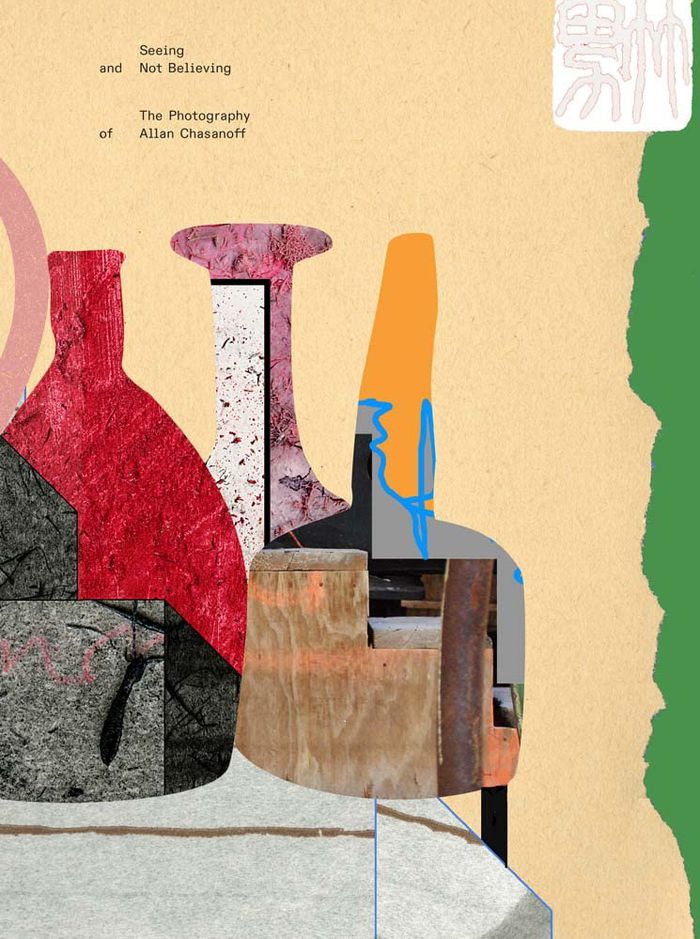
From the 1960s onward, Allan Chasanoff (1936–2020) maintained a daily photographic practice, producing tens of thousands of images that pushed the limits of the medium and questioned its reliability as a document of reality. Preferring to experiment away from the art world, Chasanoff rarely exhibited his photographs, his art remaining unknown to all but a select circle of friends and collaborators. This catalogue is the first to survey his beguiling work. Artist Mónika Sziládi, who worked as an archivist for Chasanoff, contributes an outline of Chasanoff’s life and practice, tracing the development of his art from his early experiments with light, shadow, and color in his lens-shot photographs to his late-career foray into 3D printing, which he viewed as the latest frontier of photography. Influenced by the ideas of Marshall McLuhan and Jacques Derrida, Chasanoff understood photographic images to be full of multivalent symbolism, and his art highlights the fluid nature of the medium. Using analog optical effects, such as blurring and other distortions, and on-screen tools to cut and layer digital images, Chasanoff created a wide range of pictures, some of which reference or appropriate the work of artists like Henri Matisse, Mark Rothko, or Giorgio Morandi. With nearly 200 plates organized into 7 thematic sections, ''Seeing and not believing'' brings Chasanoff’s contribution to postmodern photography to a wider audience and underlines how the artist’s work challenges our assumptions about believing what we see.
Seeing and not believing: The photography of Allan Chasanoff
Actions:
Prix:
$58.00
(disponible en magasin)
Résumé:
From the 1960s onward, Allan Chasanoff (1936–2020) maintained a daily photographic practice, producing tens of thousands of images that pushed the limits of the medium and questioned its reliability as a document of reality. Preferring to experiment away from the art world, Chasanoff rarely exhibited his photographs, his art remaining unknown to all but a select circle of friends and collaborators. This catalogue is the first to survey his beguiling work. Artist Mónika Sziládi, who worked as an archivist for Chasanoff, contributes an outline of Chasanoff’s life and practice, tracing the development of his art from his early experiments with light, shadow, and color in his lens-shot photographs to his late-career foray into 3D printing, which he viewed as the latest frontier of photography. Influenced by the ideas of Marshall McLuhan and Jacques Derrida, Chasanoff understood photographic images to be full of multivalent symbolism, and his art highlights the fluid nature of the medium. Using analog optical effects, such as blurring and other distortions, and on-screen tools to cut and layer digital images, Chasanoff created a wide range of pictures, some of which reference or appropriate the work of artists like Henri Matisse, Mark Rothko, or Giorgio Morandi. With nearly 200 plates organized into 7 thematic sections, ''Seeing and not believing'' brings Chasanoff’s contribution to postmodern photography to a wider audience and underlines how the artist’s work challenges our assumptions about believing what we see.
Classification:
livres
livres
Publication:
septembre 2023
septembre 2023
Sujet:
Monographies photo
Monographies photo
Classification:
livres
livres

Actions:
Prix:
$39.95
(disponible sur commande)
Résumé:
In this contribution to contemporary media studies, acclaimed theorist Francesco Casetti advances a provocative hypothesis: instead of being prostheses that expand or extend our perceptions, modern screen-based media are in fact apparatuses that shelter and protect us from exposure to the world. Rather than bringing us closer to external reality, dominant forms of visual(...)
$39.95
(disponible sur commande)
Résumé:
In this contribution to contemporary media studies, acclaimed theorist Francesco Casetti advances a provocative hypothesis: instead of being prostheses that expand or extend our perceptions, modern screen-based media are in fact apparatuses that shelter and protect us from exposure to the world. Rather than bringing us closer to external reality, dominant forms of visual(...)
Titre:
Screening fears: On protective media
Actions:
Prix:
$39.95
(disponible sur commande)
Résumé:
In this contribution to contemporary media studies, acclaimed theorist Francesco Casetti advances a provocative hypothesis: instead of being prostheses that expand or extend our perceptions, modern screen-based media are in fact apparatuses that shelter and protect us from exposure to the world. Rather than bringing us closer to external reality, dominant forms of visual media function as barriers or enclosures that defend against the apparent threats and dangers that seem increasingly to surround us. Working with an original historical overview that begins with the Phantasmagoria of the late eighteenth century, then the shared interior spaces of the movie theater in the early to mid-twentieth century, and finally the solitary digital milieus of the present, Casetti traces the outlines of the protective 'bubbles' that disconnect us from our immediate surroundings. To be provided with a shield of immunity to the hazards and uncertainties of the world while experiencing them at a safe remove might seem a positive development. But, he asks, what if these media, instead of providing invulnerability, ensnare individuals in a suffocating enclosure? What if, in their effort to keep reality under control, they exercise a violence equal to that of the dangers they resist? In a dialectical exercise, and through a vivid range of cultural artifacts, ''Screening fears'' traces the emergence of modern protective media and the way they changed our forms of mediation with the world in which we live.
Screening fears: On protective media
Actions:
Prix:
$39.95
(disponible sur commande)
Résumé:
In this contribution to contemporary media studies, acclaimed theorist Francesco Casetti advances a provocative hypothesis: instead of being prostheses that expand or extend our perceptions, modern screen-based media are in fact apparatuses that shelter and protect us from exposure to the world. Rather than bringing us closer to external reality, dominant forms of visual media function as barriers or enclosures that defend against the apparent threats and dangers that seem increasingly to surround us. Working with an original historical overview that begins with the Phantasmagoria of the late eighteenth century, then the shared interior spaces of the movie theater in the early to mid-twentieth century, and finally the solitary digital milieus of the present, Casetti traces the outlines of the protective 'bubbles' that disconnect us from our immediate surroundings. To be provided with a shield of immunity to the hazards and uncertainties of the world while experiencing them at a safe remove might seem a positive development. But, he asks, what if these media, instead of providing invulnerability, ensnare individuals in a suffocating enclosure? What if, in their effort to keep reality under control, they exercise a violence equal to that of the dangers they resist? In a dialectical exercise, and through a vivid range of cultural artifacts, ''Screening fears'' traces the emergence of modern protective media and the way they changed our forms of mediation with the world in which we live.
Classification:
livres
livres
Publication:
août 2023
août 2023
Sujet:
Théorie/ philosophie
Théorie/ philosophie
Classification:
livres
livres

Titre:
Manifestos
Manifestos
Actions:
Prix:
$39.95
(disponible sur commande)
Résumé:
"Manifestos" brings together for the first time in English the manifestos written by Édouard Glissant and Patrick Chamoiseau between 2000 and 2009. Composed in part in the aftermath of Barack Obama’s election in 2008, the texts resonate with the current context of divided identities and criticisms of multiculturalism. The individual texts grapple with concrete historical(...)
$39.95
(disponible sur commande)
Résumé:
"Manifestos" brings together for the first time in English the manifestos written by Édouard Glissant and Patrick Chamoiseau between 2000 and 2009. Composed in part in the aftermath of Barack Obama’s election in 2008, the texts resonate with the current context of divided identities and criticisms of multiculturalism. The individual texts grapple with concrete historical(...)
Publication:
septembre 2022
septembre 2022
Titre:
Manifestos
Actions:
Prix:
$39.95
(disponible sur commande)
Résumé:
"Manifestos" brings together for the first time in English the manifestos written by Édouard Glissant and Patrick Chamoiseau between 2000 and 2009. Composed in part in the aftermath of Barack Obama’s election in 2008, the texts resonate with the current context of divided identities and criticisms of multiculturalism. The individual texts grapple with concrete historical and political moments in France, the Caribbean, and North America. Across the manifestos, as well as two collectively signed op-eds, the authors engage with socio-political aspects of climate catastrophe, resource extraction, toxicity, and neocolonialism. Throughout the collection, Glissant and Chamoiseau engage with key themes articulated through their poetic vocabulary, including Relation, globalization, globality (mondialité), anti-universalism, métissage, the tout-monde ("whole-world") and the tout-vivant ("all-living," including the relationship of humans to each other and "nature"), créolité and the creolization of the world, and the liberation from community assignations in response to individualism and neoliberal societies. Translated as the first volume in the Planetarities series with Goldsmiths Press, the themes of "Manifestos" resonate with the planetary as they work in response to contemporary forms of (economic) globalization, western capitalism, identity politics, and urban, digital and cosmic ecosystems, as well as the role of the poet-writer. A distinguishing feature of this publication is its interventional aspect, which prioritizes engaged scholarship and practice while demonstrating the relevance of the poetic in response to the urgencies of planetary crisis.
Manifestos
Actions:
Prix:
$39.95
(disponible sur commande)
Résumé:
"Manifestos" brings together for the first time in English the manifestos written by Édouard Glissant and Patrick Chamoiseau between 2000 and 2009. Composed in part in the aftermath of Barack Obama’s election in 2008, the texts resonate with the current context of divided identities and criticisms of multiculturalism. The individual texts grapple with concrete historical and political moments in France, the Caribbean, and North America. Across the manifestos, as well as two collectively signed op-eds, the authors engage with socio-political aspects of climate catastrophe, resource extraction, toxicity, and neocolonialism. Throughout the collection, Glissant and Chamoiseau engage with key themes articulated through their poetic vocabulary, including Relation, globalization, globality (mondialité), anti-universalism, métissage, the tout-monde ("whole-world") and the tout-vivant ("all-living," including the relationship of humans to each other and "nature"), créolité and the creolization of the world, and the liberation from community assignations in response to individualism and neoliberal societies. Translated as the first volume in the Planetarities series with Goldsmiths Press, the themes of "Manifestos" resonate with the planetary as they work in response to contemporary forms of (economic) globalization, western capitalism, identity politics, and urban, digital and cosmic ecosystems, as well as the role of the poet-writer. A distinguishing feature of this publication is its interventional aspect, which prioritizes engaged scholarship and practice while demonstrating the relevance of the poetic in response to the urgencies of planetary crisis.
Classification:
livres
livres
Publication:
septembre 2022
septembre 2022
Classification:
livres
livres
Prix:
$77.00
(disponible sur commande)
Résumé:
The occupation of space is a trend that can currently be recognized in many creative fields. While furniture and product design were once largely driven by classical industrial and interior design, these disciplines are now also being shaped by the visual culture of graphic design and high-tech production processes. These new influences are contributing to the creation of(...)
$77.00
(disponible sur commande)
Résumé:
The occupation of space is a trend that can currently be recognized in many creative fields. While furniture and product design were once largely driven by classical industrial and interior design, these disciplines are now also being shaped by the visual culture of graphic design and high-tech production processes. These new influences are contributing to the creation of(...)
Titre:
Furnish: Furniture and interior design for the 21st century
Actions:
Prix:
$77.00
(disponible sur commande)
Résumé:
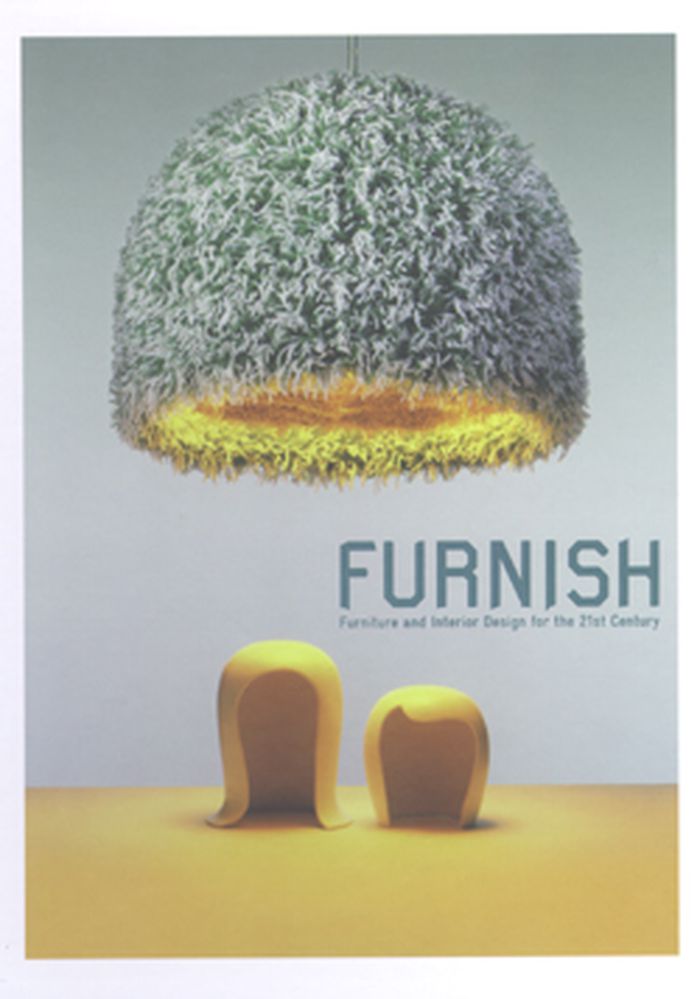
The occupation of space is a trend that can currently be recognized in many creative fields. While furniture and product design were once largely driven by classical industrial and interior design, these disciplines are now also being shaped by the visual culture of graphic design and high-tech production processes. These new influences are contributing to the creation of furniture and interiors that go beyond anything previously designed or imagined. Furnish presents domestic territories that expand upon our current understanding of interior design. The book documents recent work by designers, artists and architects that shows how they are using furniture in pioneering ways: as environment, as art object, as digital-organic growth, as mutation or as insertion. These cutting-edge examples are a sure indicator of the trends that will be influencing interiors as well as hotel, restaurant and club design for the next several years. Furnish also explores the new hybrid nature of occupied spaces, where the domestic enters the realm of fine art and where objects from pimped heirlooms to rapid prototypes find their homes. The book also presents surprising interdisciplinary work, for example, the results of architects engineering tables, graphic designers creating soft furniture and industrial designers making concept art. The experimental spaces that are shown in Furnish are not only interesting for interior designers, but also contain innovative examples of interdisciplinary design work that are relevant and inspiring for anyone working creatively.
Furnish: Furniture and interior design for the 21st century
Actions:
Prix:
$77.00
(disponible sur commande)
Résumé:
The occupation of space is a trend that can currently be recognized in many creative fields. While furniture and product design were once largely driven by classical industrial and interior design, these disciplines are now also being shaped by the visual culture of graphic design and high-tech production processes. These new influences are contributing to the creation of furniture and interiors that go beyond anything previously designed or imagined. Furnish presents domestic territories that expand upon our current understanding of interior design. The book documents recent work by designers, artists and architects that shows how they are using furniture in pioneering ways: as environment, as art object, as digital-organic growth, as mutation or as insertion. These cutting-edge examples are a sure indicator of the trends that will be influencing interiors as well as hotel, restaurant and club design for the next several years. Furnish also explores the new hybrid nature of occupied spaces, where the domestic enters the realm of fine art and where objects from pimped heirlooms to rapid prototypes find their homes. The book also presents surprising interdisciplinary work, for example, the results of architects engineering tables, graphic designers creating soft furniture and industrial designers making concept art. The experimental spaces that are shown in Furnish are not only interesting for interior designers, but also contain innovative examples of interdisciplinary design work that are relevant and inspiring for anyone working creatively.
Classification:
livres
livres
Publication:
octobre 2007, Berlin
octobre 2007, Berlin
Sujet:
Design industriel
Design industriel
Classification:
livres
livres
Titre:
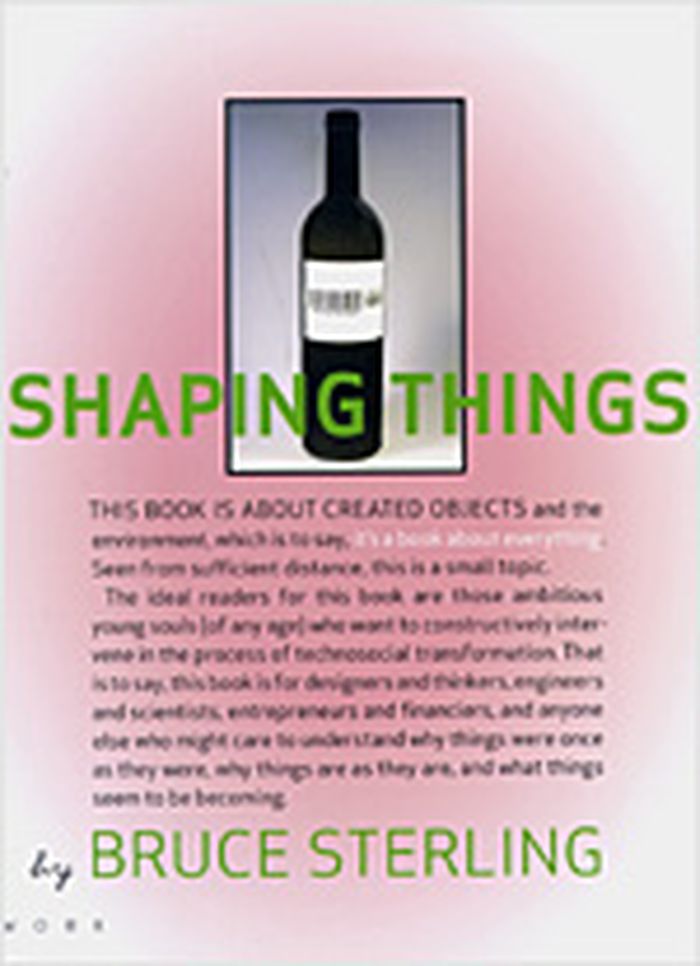
Shaping things
Shaping things
Actions:
Prix:
$27.50
(disponible sur commande)
Résumé:
Sterling offers a brilliant, often hilarious history of shaped things. We have moved from an age of artefacts, made by hand, through complex machines, to the current era of "gizmos." New forms of design and manufacture are appearing that lack historical precedent, he writes; but the production methods, using archaic forms of energy and materials that are finite and toxic,(...)
$27.50
(disponible sur commande)
Résumé:
Sterling offers a brilliant, often hilarious history of shaped things. We have moved from an age of artefacts, made by hand, through complex machines, to the current era of "gizmos." New forms of design and manufacture are appearing that lack historical precedent, he writes; but the production methods, using archaic forms of energy and materials that are finite and toxic,(...)
Sujet:
Théorie du design
Théorie du design
Publication:
septembre 2005, Cambridge, Massachusetts
septembre 2005, Cambridge, Massachusetts
Titre:
Shaping things
Actions:
Prix:
$27.50
(disponible sur commande)
Résumé:
Sterling offers a brilliant, often hilarious history of shaped things. We have moved from an age of artefacts, made by hand, through complex machines, to the current era of "gizmos." New forms of design and manufacture are appearing that lack historical precedent, he writes; but the production methods, using archaic forms of energy and materials that are finite and toxic, are not sustainable. The future will see a new kind of object - we have the primitive forms of them now in our pockets and briefcases: user-alterable, baroquely multi-featured, and programmable - that will be sustainable, enhanceable, and uniquely identifiable. Sterling coins the term "spime" for them, these future manufactured objects with informational support so extensive and rich that they are regarded as material instantiations of an immaterial system. Spimes are designed on screens, fabricated by digital means, and precisely tracked through space and time. They are made of substances that can be folded back into the production stream of future spimes, challenging all of us to become involved in their production. Spimes are coming, says Sterling. We will need these objects in order to live; we won't be able to surrender their advantages without awful consequences. The vision of ‘Shaping Things’ is given material form by the intricate design of Lorraine Wild. ‘Shaping Things’ is for designers and thinkers, engineers and scientists, entrepreneurs and financiers - and anyone who wants to understand and be part of the process of techno-social transformation.
Shaping things
Actions:
Prix:
$27.50
(disponible sur commande)
Résumé:
Sterling offers a brilliant, often hilarious history of shaped things. We have moved from an age of artefacts, made by hand, through complex machines, to the current era of "gizmos." New forms of design and manufacture are appearing that lack historical precedent, he writes; but the production methods, using archaic forms of energy and materials that are finite and toxic, are not sustainable. The future will see a new kind of object - we have the primitive forms of them now in our pockets and briefcases: user-alterable, baroquely multi-featured, and programmable - that will be sustainable, enhanceable, and uniquely identifiable. Sterling coins the term "spime" for them, these future manufactured objects with informational support so extensive and rich that they are regarded as material instantiations of an immaterial system. Spimes are designed on screens, fabricated by digital means, and precisely tracked through space and time. They are made of substances that can be folded back into the production stream of future spimes, challenging all of us to become involved in their production. Spimes are coming, says Sterling. We will need these objects in order to live; we won't be able to surrender their advantages without awful consequences. The vision of ‘Shaping Things’ is given material form by the intricate design of Lorraine Wild. ‘Shaping Things’ is for designers and thinkers, engineers and scientists, entrepreneurs and financiers - and anyone who wants to understand and be part of the process of techno-social transformation.
Classification:
livres
livres
Publication:
septembre 2005, Cambridge, Massachusetts
septembre 2005, Cambridge, Massachusetts
Sujet:
Théorie du design
Théorie du design


