


746 Résultats
Classification:
livres
livres
Actions:
Prix:
$76.95
(disponible sur commande)
Résumé:
This book relates circular economy principles to housing design and construction and highlights how those principles can result in both monetary savings, positive environmental impact, and socio-ecological change. Chapters focus on three key circular economy principles and apply them to architectural construction and design, namely rethinking of the end-of-use phase of a(...)
$76.95
(disponible sur commande)
Résumé:
This book relates circular economy principles to housing design and construction and highlights how those principles can result in both monetary savings, positive environmental impact, and socio-ecological change. Chapters focus on three key circular economy principles and apply them to architectural construction and design, namely rethinking of the end-of-use phase of a(...)
Titre:
Sustainable housing in a circular economy
Actions:
Prix:
$76.95
(disponible sur commande)
Résumé:
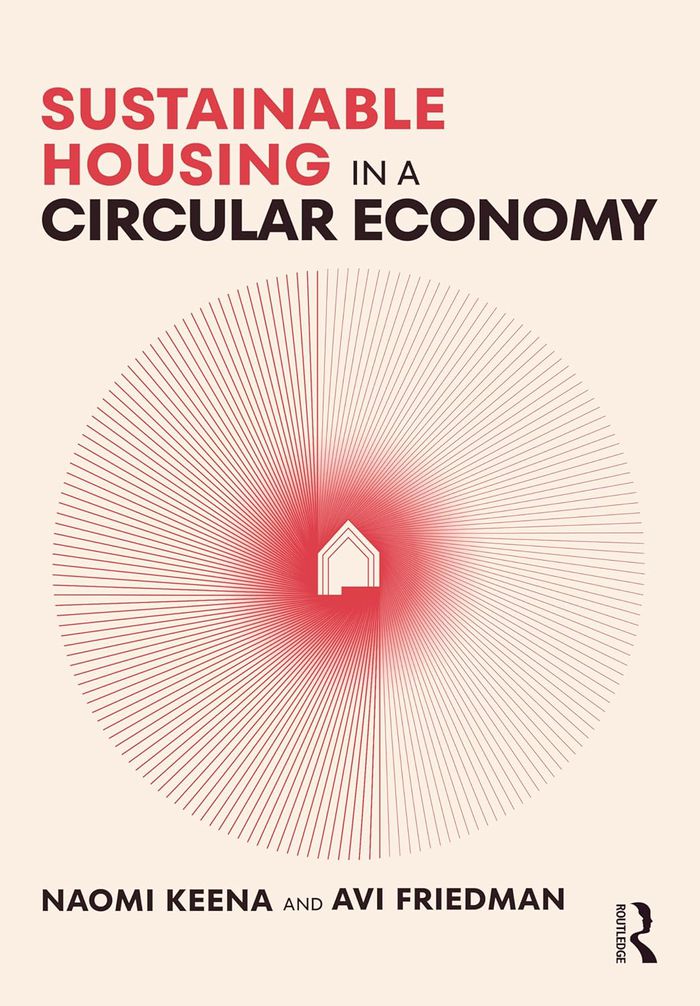
This book relates circular economy principles to housing design and construction and highlights how those principles can result in both monetary savings, positive environmental impact, and socio-ecological change. Chapters focus on three key circular economy principles and apply them to architectural construction and design, namely rethinking of the end-of-use phase of a building and the potential of design-for-disassembly; the role of digitization and data standardization in fostering evidence-based circular economy design decision-making; and presenting space as a resource to conserve, via exploration of the sharing economy and flexibility principles. Beyond waste management and material cycles, this book provides a holistic understanding of the opportunities across the building life cycle that can allow for sustainable and affordable circular housing. With case studies from 13 different countries, including but not limited to the Hammarby Sjöstad district in Sweden, the Circle House in Denmark, Benny Farm in Canada, VMD Prefabricated House in Mexico, and the Deep Performance Dwelling in China, authors pair theoretical frameworks with real-world examples. This will be a useful resource for upper-level students and academics of architecture, construction, and planning, especially those studying and researching housing design, building technology, green project management, and environmental design.
Sustainable housing in a circular economy
Actions:
Prix:
$76.95
(disponible sur commande)
Résumé:
This book relates circular economy principles to housing design and construction and highlights how those principles can result in both monetary savings, positive environmental impact, and socio-ecological change. Chapters focus on three key circular economy principles and apply them to architectural construction and design, namely rethinking of the end-of-use phase of a building and the potential of design-for-disassembly; the role of digitization and data standardization in fostering evidence-based circular economy design decision-making; and presenting space as a resource to conserve, via exploration of the sharing economy and flexibility principles. Beyond waste management and material cycles, this book provides a holistic understanding of the opportunities across the building life cycle that can allow for sustainable and affordable circular housing. With case studies from 13 different countries, including but not limited to the Hammarby Sjöstad district in Sweden, the Circle House in Denmark, Benny Farm in Canada, VMD Prefabricated House in Mexico, and the Deep Performance Dwelling in China, authors pair theoretical frameworks with real-world examples. This will be a useful resource for upper-level students and academics of architecture, construction, and planning, especially those studying and researching housing design, building technology, green project management, and environmental design.
Classification:
livres
livres
Publication:
avril 2024
avril 2024
Sujet:
L'humain et la ville
L'humain et la ville
Classification:
livres
livres
Actions:
Prix:
$98.00
(disponible sur commande)
Résumé:
Gilmore D. Clarke and Michael Rapuano were the foremost spatial designers of the American century. Their vast portfolio of public landscapes propelled the legacy of Frederick Law Olmsted and Calvert Vaux into the motor age, touching the lives of millions and changing the face of the nation. This book recovers the forgotten legacy of Clarke and Rapuano, whose parks and(...)
$98.00
(disponible sur commande)
Résumé:
Gilmore D. Clarke and Michael Rapuano were the foremost spatial designers of the American century. Their vast portfolio of public landscapes propelled the legacy of Frederick Law Olmsted and Calvert Vaux into the motor age, touching the lives of millions and changing the face of the nation. This book recovers the forgotten legacy of Clarke and Rapuano, whose parks and(...)
Titre:
Designing the American century: The public landscapes of Clarke and Rapuano, 1915-1965
Actions:
Prix:
$98.00
(disponible sur commande)
Résumé:
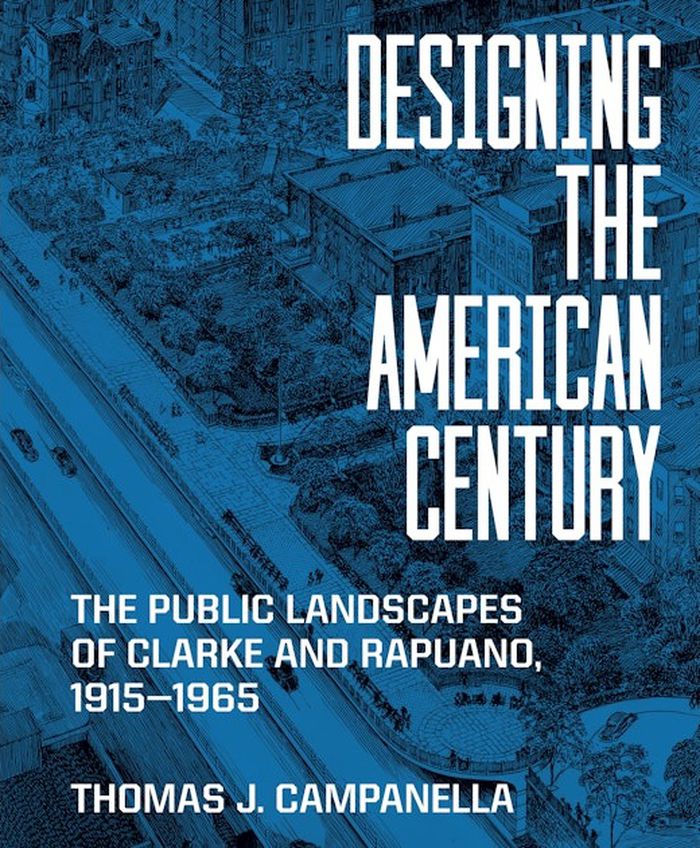
Gilmore D. Clarke and Michael Rapuano were the foremost spatial designers of the American century. Their vast portfolio of public landscapes propelled the legacy of Frederick Law Olmsted and Calvert Vaux into the motor age, touching the lives of millions and changing the face of the nation. This book recovers the forgotten legacy of Clarke and Rapuano, whose parks and parkways, highways and housing estates helped modernize—for better or worse—the American metropolis. With the patronage of public-works titan Robert Moses, Clarke and Rapuano transformed New York over a span of fifty years, revitalizing the city’s immense park system but also planning expressways, public housing, and urban renewal projects that laid waste to entire sections of the city. In this work, Thomas J. Campanella describes how Clarke and Rapuano helped create some of the metropolitan region’s most iconic landscapes, from the Central Park Zoo and Conservatory Garden to the Henry Hudson Parkway and Riverside Park, Jones Beach, the Palisades and Taconic State Parkways, and the Brooklyn Heights Promenade. He shows how they left their mark far beyond Gotham as well, with projects as diverse as Yellowstone’s Mammoth Hot Springs, the Mount Vernon Memorial Highway, site plans for the Pentagon and CIA headquarters, and Montreal’s Olympic Park.
Designing the American century: The public landscapes of Clarke and Rapuano, 1915-1965
Actions:
Prix:
$98.00
(disponible sur commande)
Résumé:
Gilmore D. Clarke and Michael Rapuano were the foremost spatial designers of the American century. Their vast portfolio of public landscapes propelled the legacy of Frederick Law Olmsted and Calvert Vaux into the motor age, touching the lives of millions and changing the face of the nation. This book recovers the forgotten legacy of Clarke and Rapuano, whose parks and parkways, highways and housing estates helped modernize—for better or worse—the American metropolis. With the patronage of public-works titan Robert Moses, Clarke and Rapuano transformed New York over a span of fifty years, revitalizing the city’s immense park system but also planning expressways, public housing, and urban renewal projects that laid waste to entire sections of the city. In this work, Thomas J. Campanella describes how Clarke and Rapuano helped create some of the metropolitan region’s most iconic landscapes, from the Central Park Zoo and Conservatory Garden to the Henry Hudson Parkway and Riverside Park, Jones Beach, the Palisades and Taconic State Parkways, and the Brooklyn Heights Promenade. He shows how they left their mark far beyond Gotham as well, with projects as diverse as Yellowstone’s Mammoth Hot Springs, the Mount Vernon Memorial Highway, site plans for the Pentagon and CIA headquarters, and Montreal’s Olympic Park.
Classification:
livres
livres
Publication:
juillet 2025
juillet 2025
Classification:
livres
livres
Prix:
$85.00
(disponible sur commande)
Résumé:
The city in the twenty-first century faces major challenges, including social and economic stratification, wasteful consumption of resources, transportation congestion, and environmental degradation. More than half of the world’s population lives in cities and major metropolitan areas, and in the next two decades the number of city dwellers is estimated to reach five(...)
$85.00
(disponible sur commande)
Résumé:
The city in the twenty-first century faces major challenges, including social and economic stratification, wasteful consumption of resources, transportation congestion, and environmental degradation. More than half of the world’s population lives in cities and major metropolitan areas, and in the next two decades the number of city dwellers is estimated to reach five(...)
Titre:
Sustainable urbanism and beyond: rethinking cities for the future
Actions:
Prix:
$85.00
(disponible sur commande)
Résumé:
The city in the twenty-first century faces major challenges, including social and economic stratification, wasteful consumption of resources, transportation congestion, and environmental degradation. More than half of the world’s population lives in cities and major metropolitan areas, and in the next two decades the number of city dwellers is estimated to reach five billion. This puts enormous pressures on transportation systems, housing stock, and infrastructure such as energy, waste, and water, which directly influences the emissions of greenhouse gases. As the long emergency awaits us, urgent questions remain: How will our cities survive? How can we combat and reconcile urban growth with sustainable use of resources for future generations to thrive? Where and how urbanism comes into the picture and what “sustainable” urban forms can do in light of these events are some of the issues Sustainable Urbanism and Beyond explores. With more than sixty essays, including contributions by Andrés Duany, Saskia Sassen, Peter Newman, Douglas Farr, Henry Cisneros, Peter Hall, Sharon Zukin, Peter Eisenman, and others, this book is a unique perspective on architecture, urban planning, environmental and urban design, exploring ways for raising quality of life and the standard of living in a new modern era by creating better and more viable places to live.
Sustainable urbanism and beyond: rethinking cities for the future
Actions:
Prix:
$85.00
(disponible sur commande)
Résumé:
The city in the twenty-first century faces major challenges, including social and economic stratification, wasteful consumption of resources, transportation congestion, and environmental degradation. More than half of the world’s population lives in cities and major metropolitan areas, and in the next two decades the number of city dwellers is estimated to reach five billion. This puts enormous pressures on transportation systems, housing stock, and infrastructure such as energy, waste, and water, which directly influences the emissions of greenhouse gases. As the long emergency awaits us, urgent questions remain: How will our cities survive? How can we combat and reconcile urban growth with sustainable use of resources for future generations to thrive? Where and how urbanism comes into the picture and what “sustainable” urban forms can do in light of these events are some of the issues Sustainable Urbanism and Beyond explores. With more than sixty essays, including contributions by Andrés Duany, Saskia Sassen, Peter Newman, Douglas Farr, Henry Cisneros, Peter Hall, Sharon Zukin, Peter Eisenman, and others, this book is a unique perspective on architecture, urban planning, environmental and urban design, exploring ways for raising quality of life and the standard of living in a new modern era by creating better and more viable places to live.
Classification:
livres
livres
Publication:
avril 2012
avril 2012
Sujet:
Théorie de l’urbanisme
Théorie de l’urbanisme
Classification:
livres
livres
Titre:
Buildings must die
Buildings must die
Actions:
Prix:
$38.95
(disponible sur commande)
Résumé:
Buildings, although inanimate, are often assumed to have “life.” And the architect, through the act of design, is assumed to be their conceiver and creator. But what of the “death” of buildings? What of the decay, deterioration, and destruction to which they are inevitably subject? And what might such endings mean for architecture’s sense of itself? In Buildings Must Die,(...)
$38.95
(disponible sur commande)
Résumé:
Buildings, although inanimate, are often assumed to have “life.” And the architect, through the act of design, is assumed to be their conceiver and creator. But what of the “death” of buildings? What of the decay, deterioration, and destruction to which they are inevitably subject? And what might such endings mean for architecture’s sense of itself? In Buildings Must Die,(...)
Titre:
Buildings must die
Actions:
Prix:
$38.95
(disponible sur commande)
Résumé:
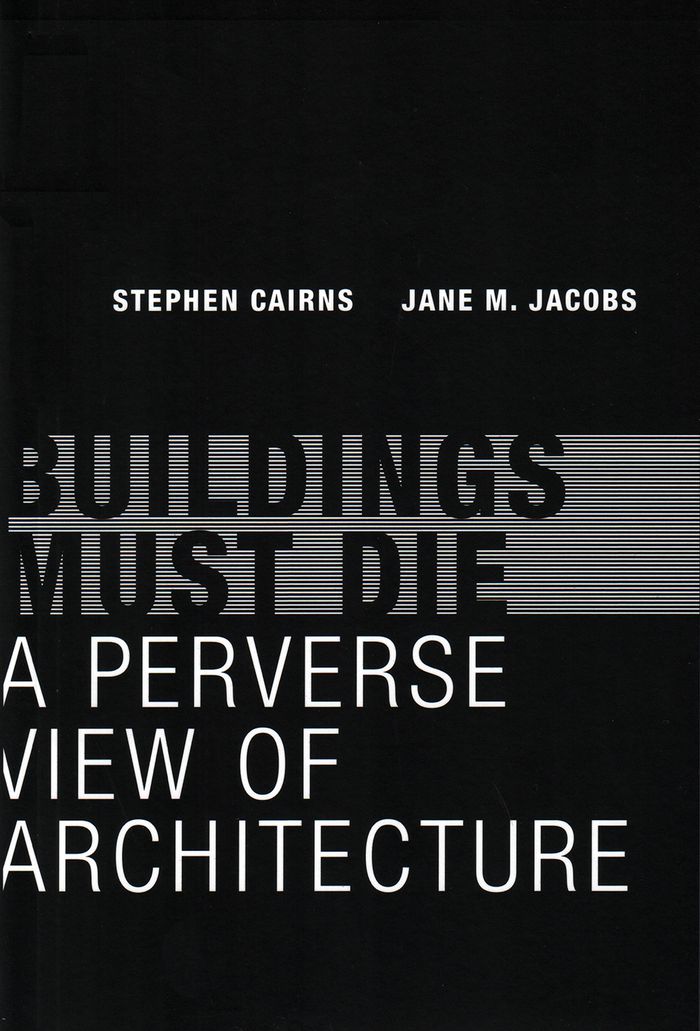
Buildings, although inanimate, are often assumed to have “life.” And the architect, through the act of design, is assumed to be their conceiver and creator. But what of the “death” of buildings? What of the decay, deterioration, and destruction to which they are inevitably subject? And what might such endings mean for architecture’s sense of itself? In Buildings Must Die, Stephen Cairns and Jane Jacobs look awry at core architectural concerns. They examine spalling concrete and creeping rust, contemplate ruins old and new, and pick through the rubble of earthquake-shattered churches, imploded housing projects, and demolished Brutalist office buildings. Their investigation of the death of buildings reorders architectural notions of creativity, reshapes architecture’s preoccupation with good form, loosens its vanities of durability, and expands its sense of value. It does so not to kill off architecture as we know it, but to rethink its agency and its capacity to make worlds differently. Cairns and Jacobs offer an original contemplation of architecture that draws on theories of waste and value. Their richly illustrated case studies of building “deaths” include the planned and the unintended, the lamented and the celebrated. They take us from Moline to Christchurch, from London to Bangkok, from Tokyo to Paris. And they feature the work of such architects as Eero Saarinen, Carlo Scarpa, Cedric Price, Arata Isozaki, Rem Koolhaas and François Roche.
Buildings must die
Actions:
Prix:
$38.95
(disponible sur commande)
Résumé:
Buildings, although inanimate, are often assumed to have “life.” And the architect, through the act of design, is assumed to be their conceiver and creator. But what of the “death” of buildings? What of the decay, deterioration, and destruction to which they are inevitably subject? And what might such endings mean for architecture’s sense of itself? In Buildings Must Die, Stephen Cairns and Jane Jacobs look awry at core architectural concerns. They examine spalling concrete and creeping rust, contemplate ruins old and new, and pick through the rubble of earthquake-shattered churches, imploded housing projects, and demolished Brutalist office buildings. Their investigation of the death of buildings reorders architectural notions of creativity, reshapes architecture’s preoccupation with good form, loosens its vanities of durability, and expands its sense of value. It does so not to kill off architecture as we know it, but to rethink its agency and its capacity to make worlds differently. Cairns and Jacobs offer an original contemplation of architecture that draws on theories of waste and value. Their richly illustrated case studies of building “deaths” include the planned and the unintended, the lamented and the celebrated. They take us from Moline to Christchurch, from London to Bangkok, from Tokyo to Paris. And they feature the work of such architects as Eero Saarinen, Carlo Scarpa, Cedric Price, Arata Isozaki, Rem Koolhaas and François Roche.
Classification:
livres
livres
Publication:
août 2017
août 2017
Sujet:
Théorie de l’architecture
Théorie de l’architecture
Classification:
livres
livres
Titre:
Generation X
Generation X
Actions:
Prix:
$21.99
(disponible sur commande)
Résumé:
"Generation X" is Douglas Coupland's acclaimed salute to the generation born in the late 1950s and 1960s - a generation known vaguely up to then as "twentysomething." Andy, Claire, and Dag, each in their twenties, have quit "pointless jobs done grudgingly to little applause" in their respective hometowns and cut themselves adrift on the California desert. In search of the(...)
$21.99
(disponible sur commande)
Résumé:
"Generation X" is Douglas Coupland's acclaimed salute to the generation born in the late 1950s and 1960s - a generation known vaguely up to then as "twentysomething." Andy, Claire, and Dag, each in their twenties, have quit "pointless jobs done grudgingly to little applause" in their respective hometowns and cut themselves adrift on the California desert. In search of the(...)
Titre:
Generation X
Actions:
Prix:
$21.99
(disponible sur commande)
Résumé:
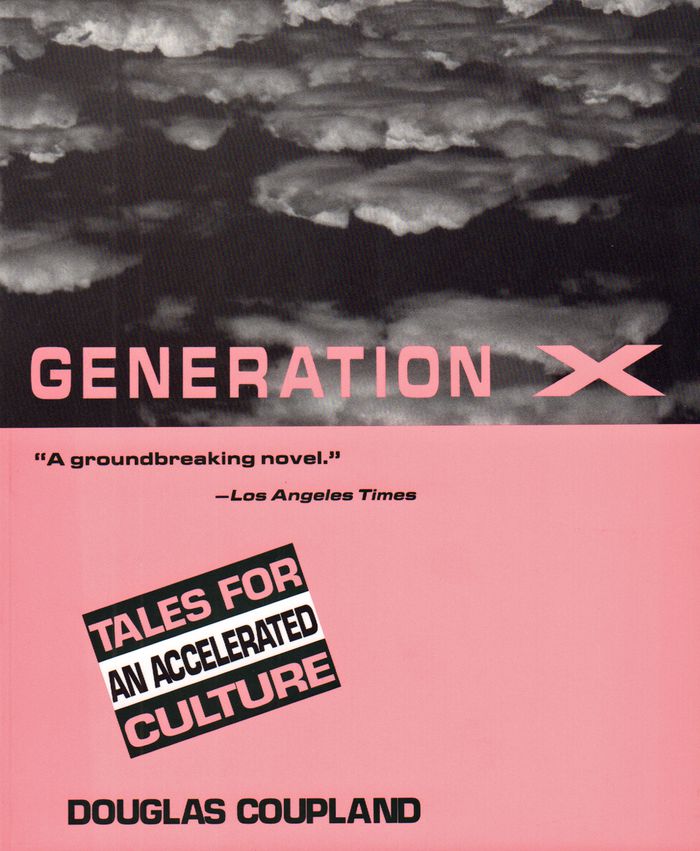
"Generation X" is Douglas Coupland's acclaimed salute to the generation born in the late 1950s and 1960s - a generation known vaguely up to then as "twentysomething." Andy, Claire, and Dag, each in their twenties, have quit "pointless jobs done grudgingly to little applause" in their respective hometowns and cut themselves adrift on the California desert. In search of the drastic changes that will lend meaning to their lives, they've mired themselves in the detritus of American cultural memory. Refugees from history, the three develop an ascetic regime of story-telling, boozing, and working McJobs - "low-pay, low-prestige, low-benefit, no-future jobs in the service industry." They create modern fables of love and death among the cosmetic surgery parlors and cocktail bars of Palm Springs, disturbingly funny tales of nuclear waste, historical overdosing, and mall culture. A dark snapshot of the trio's highly fortressed inner world quickly emerges - landscapes peopled with dead TV shows, "Elvis moments," and semi-disposable Swedish furniture. And from these landscapes, deeper portraits emerge, those of fanatically independent individuals, pathologically ambivalent about the future and brimming with unsatisfied longings for permanence, for love, and for their own home. Andy, Dag, and Claire are underemployed, overeducated, intensely private, and unpredictable. Like the group they mirror, they have nowhere to assuage their fears, and no culture to replace their anomie.
Generation X
Actions:
Prix:
$21.99
(disponible sur commande)
Résumé:
"Generation X" is Douglas Coupland's acclaimed salute to the generation born in the late 1950s and 1960s - a generation known vaguely up to then as "twentysomething." Andy, Claire, and Dag, each in their twenties, have quit "pointless jobs done grudgingly to little applause" in their respective hometowns and cut themselves adrift on the California desert. In search of the drastic changes that will lend meaning to their lives, they've mired themselves in the detritus of American cultural memory. Refugees from history, the three develop an ascetic regime of story-telling, boozing, and working McJobs - "low-pay, low-prestige, low-benefit, no-future jobs in the service industry." They create modern fables of love and death among the cosmetic surgery parlors and cocktail bars of Palm Springs, disturbingly funny tales of nuclear waste, historical overdosing, and mall culture. A dark snapshot of the trio's highly fortressed inner world quickly emerges - landscapes peopled with dead TV shows, "Elvis moments," and semi-disposable Swedish furniture. And from these landscapes, deeper portraits emerge, those of fanatically independent individuals, pathologically ambivalent about the future and brimming with unsatisfied longings for permanence, for love, and for their own home. Andy, Dag, and Claire are underemployed, overeducated, intensely private, and unpredictable. Like the group they mirror, they have nowhere to assuage their fears, and no culture to replace their anomie.
Classification:
livres
livres
Publication:
mars 1991
mars 1991
Sujet:
Littérature et poésie
Littérature et poésie
Classification:
livres
livres

Actions:
Prix:
$27.95
(disponible sur commande)
Résumé:
"Filth" is concerned with what waste reveals about the culture that creates it. From floating barges of urban refuse to dung-encrusted works of art, from toxic landfills to dirty movies, filth has become a major presence and a point of volatile contention in modern life. This book explores the question of what filth has to do with culture: what critical role the lost,(...)
$27.95
(disponible sur commande)
Résumé:
"Filth" is concerned with what waste reveals about the culture that creates it. From floating barges of urban refuse to dung-encrusted works of art, from toxic landfills to dirty movies, filth has become a major presence and a point of volatile contention in modern life. This book explores the question of what filth has to do with culture: what critical role the lost,(...)
Sujet:
Théorie de l’architecture
Théorie de l’architecture
Publication:
janvier 2005, Minneapolis
janvier 2005, Minneapolis
Titre:
Filth : dirt, disgust, and modern life
Actions:
Prix:
$27.95
(disponible sur commande)
Résumé:
"Filth" is concerned with what waste reveals about the culture that creates it. From floating barges of urban refuse to dung-encrusted works of art, from toxic landfills to dirty movies, filth has become a major presence and a point of volatile contention in modern life. This book explores the question of what filth has to do with culture: what critical role the lost, the rejected, the abject, and the dirty play in social management and identity formation. It suggests the ongoing power of culturally mandated categories of exclusion and repression. Focusing on filth in literary and cultural materials from London, Paris, and their colonial outposts in the nineteenth and early twentieth centuries, the essays in "Filth" - all but one previously unpublished - range over topics as diverse as the building of sewers in nineteenth-century European metropolises, the link between interior design and bourgeois sanitary phobias, the fictional representation of labouring women and foreigners as polluting, and relations among disease, disorder, and sexual-racial disharmony. "Filth" provides the first sustained consideration, both theoretical and historical, of a subject whose power to horrify, fascinate, and repel is as old as civilization itself. Contributors: David S. Barnes, Neil Blackadder, Joseph Bristow, Joseph W. Childers, Eileen Cleere, Natalka Freeland, Pamela K. Gilbert, Christopher Hamlin, William Kupinse, Benjamin Lazier, David L. Pike, David Trotter.
Filth : dirt, disgust, and modern life
Actions:
Prix:
$27.95
(disponible sur commande)
Résumé:
"Filth" is concerned with what waste reveals about the culture that creates it. From floating barges of urban refuse to dung-encrusted works of art, from toxic landfills to dirty movies, filth has become a major presence and a point of volatile contention in modern life. This book explores the question of what filth has to do with culture: what critical role the lost, the rejected, the abject, and the dirty play in social management and identity formation. It suggests the ongoing power of culturally mandated categories of exclusion and repression. Focusing on filth in literary and cultural materials from London, Paris, and their colonial outposts in the nineteenth and early twentieth centuries, the essays in "Filth" - all but one previously unpublished - range over topics as diverse as the building of sewers in nineteenth-century European metropolises, the link between interior design and bourgeois sanitary phobias, the fictional representation of labouring women and foreigners as polluting, and relations among disease, disorder, and sexual-racial disharmony. "Filth" provides the first sustained consideration, both theoretical and historical, of a subject whose power to horrify, fascinate, and repel is as old as civilization itself. Contributors: David S. Barnes, Neil Blackadder, Joseph Bristow, Joseph W. Childers, Eileen Cleere, Natalka Freeland, Pamela K. Gilbert, Christopher Hamlin, William Kupinse, Benjamin Lazier, David L. Pike, David Trotter.
Classification:
livres
livres
Publication:
janvier 2005, Minneapolis
janvier 2005, Minneapolis
Sujet:
Théorie de l’architecture
Théorie de l’architecture
Classification:
livres
livres
Actions:
Prix:
$25.95
(disponible sur commande)
Résumé:
We are living in the Anthropocene—an era of dramatic and violent climate change featuring warming oceans, melting icecaps, extreme weather events, habitat loss, species extinction, and more. What will life be like in a climate-changed world? In ''Tomorrow’s parties,'' science fiction authors speculate how we might be able to live and even thrive through the advancing(...)
$25.95
(disponible sur commande)
Résumé:
We are living in the Anthropocene—an era of dramatic and violent climate change featuring warming oceans, melting icecaps, extreme weather events, habitat loss, species extinction, and more. What will life be like in a climate-changed world? In ''Tomorrow’s parties,'' science fiction authors speculate how we might be able to live and even thrive through the advancing(...)
Titre:
Tomorrow's parties: Life in the Anthropocene
Actions:
Prix:
$25.95
(disponible sur commande)
Résumé:
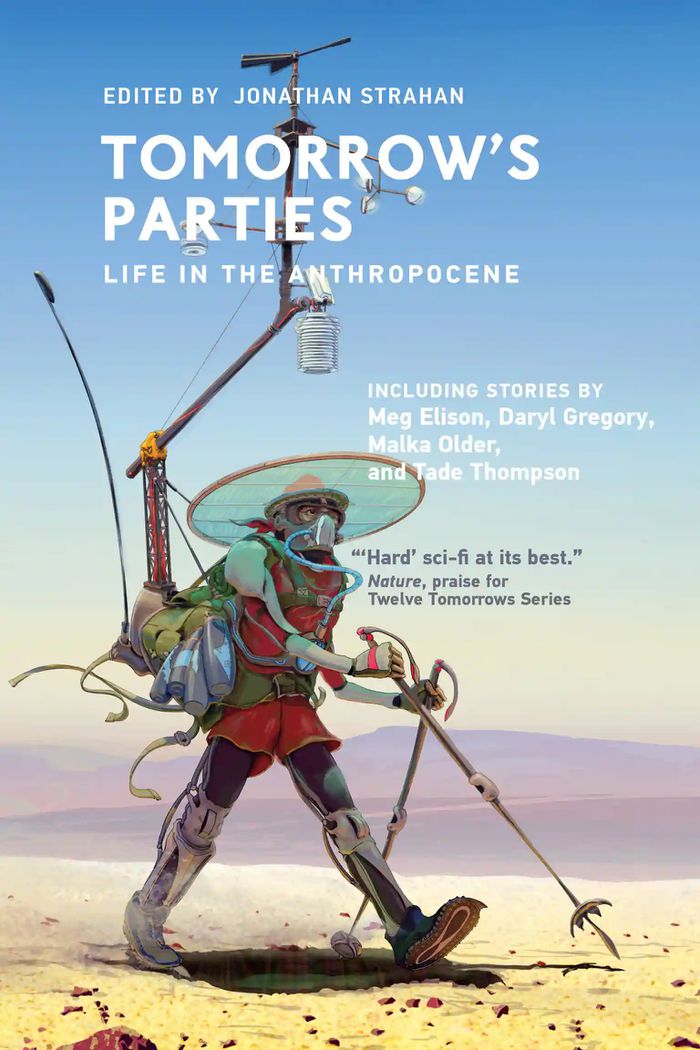
We are living in the Anthropocene—an era of dramatic and violent climate change featuring warming oceans, melting icecaps, extreme weather events, habitat loss, species extinction, and more. What will life be like in a climate-changed world? In ''Tomorrow’s parties,'' science fiction authors speculate how we might be able to live and even thrive through the advancing Anthropocene. In ten original stories by writers from around the world, an interview with celebrated writer Kim Stanley Robinson, and a series of intricate and elegant artworks by Sean Bodley, ''Tomorrow’s parties'' takes rational optimism as a moral imperative, or at least a pragmatic alternative to despair. In these stories—by writers from the United Kingdom, the United States, Nigeria, China, Bangladesh, and Australia—a young man steals from delivery drones; a political community lives on an island made of ocean-borne plastic waste; and a climate change denier tries to unmask ''crisis actors.'' Climate-changed life also has its pleasures and epiphanies, as when a father in Africa works to make his son’s dreams of ''Viking adventure'' a reality, and an IT professional dispatched to a distant village encounters a marvelous predigital fungal network. Contributors include Pascall Prize for Criticism winner James Bradley, Hugo Award winners Greg Egan and Sarah Gailey, Philip K Dick Award winner Meg Elison, and New York Times bestselling author Daryl Gregory.
Tomorrow's parties: Life in the Anthropocene
Actions:
Prix:
$25.95
(disponible sur commande)
Résumé:
We are living in the Anthropocene—an era of dramatic and violent climate change featuring warming oceans, melting icecaps, extreme weather events, habitat loss, species extinction, and more. What will life be like in a climate-changed world? In ''Tomorrow’s parties,'' science fiction authors speculate how we might be able to live and even thrive through the advancing Anthropocene. In ten original stories by writers from around the world, an interview with celebrated writer Kim Stanley Robinson, and a series of intricate and elegant artworks by Sean Bodley, ''Tomorrow’s parties'' takes rational optimism as a moral imperative, or at least a pragmatic alternative to despair. In these stories—by writers from the United Kingdom, the United States, Nigeria, China, Bangladesh, and Australia—a young man steals from delivery drones; a political community lives on an island made of ocean-borne plastic waste; and a climate change denier tries to unmask ''crisis actors.'' Climate-changed life also has its pleasures and epiphanies, as when a father in Africa works to make his son’s dreams of ''Viking adventure'' a reality, and an IT professional dispatched to a distant village encounters a marvelous predigital fungal network. Contributors include Pascall Prize for Criticism winner James Bradley, Hugo Award winners Greg Egan and Sarah Gailey, Philip K Dick Award winner Meg Elison, and New York Times bestselling author Daryl Gregory.
Classification:
livres
livres
Publication:
août 2022
août 2022
Sujet:
Littérature et poésie
Littérature et poésie
Classification:
livres
livres
Actions:
Prix:
$90.00
(disponible sur commande)
Résumé:
In 2003, Frank Gohlke and Joel Sternfeld were commissioned to photograph one of the densest concentrations of ethnic diversity in the world, the borough of Queens in New York City. After more than a year of photographing everything from corner bodegas to the borough’s boundaries, Gohlke and Sternfeld had not only captured the complicated dynamic that sustains Queens and(...)
$90.00
(disponible sur commande)
Résumé:
In 2003, Frank Gohlke and Joel Sternfeld were commissioned to photograph one of the densest concentrations of ethnic diversity in the world, the borough of Queens in New York City. After more than a year of photographing everything from corner bodegas to the borough’s boundaries, Gohlke and Sternfeld had not only captured the complicated dynamic that sustains Queens and(...)
Titre:
Frank Gohlke & Joel Sternfeld: landscape of longing
Actions:
Prix:
$90.00
(disponible sur commande)
Résumé:
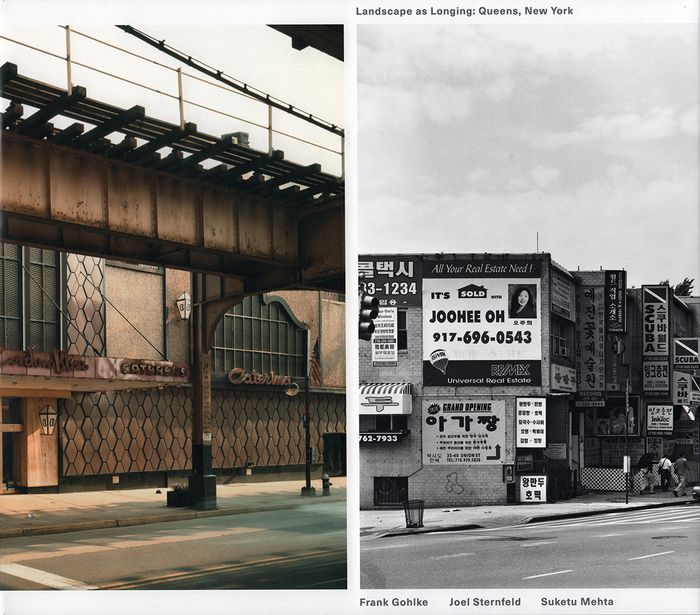
In 2003, Frank Gohlke and Joel Sternfeld were commissioned to photograph one of the densest concentrations of ethnic diversity in the world, the borough of Queens in New York City. After more than a year of photographing everything from corner bodegas to the borough’s boundaries, Gohlke and Sternfeld had not only captured the complicated dynamic that sustains Queens and its myriad communities; they had also evolved a unique theory of landscape photography in which landscape is a visible manifestation of the invisible emotions of its inhabitants. The collection inherits the strength of each photographer’s eye. Gohlke’s Queens consists of streets, houses, fences, gardens, parklands, shorelines, and waste spaces, the territory where human arrangement contends endlessly with the forces that undo it: unruly vegetation, weather, rot, decay, and the “creative destruction” of a voracious commercial culture. Sternfeld focuses on the indigenous shops, restaurants, mosques and temples that make a walk in Queens feel like a walk in Thailand, India or Peru—or all of them at once. Often tucked into homes or converted factories, these places signify a home country, or perhaps a home country that exists more in the mind than in actuality. In conjunction with an essay by the acclaimed writer Suketu Mehta, this book is a powerful instrument for understanding a landscape that seems to defy interpretation. Gohlke and Sternfeld successfully make the dizzying patchwork of Queens accessible and visible.
Frank Gohlke & Joel Sternfeld: landscape of longing
Actions:
Prix:
$90.00
(disponible sur commande)
Résumé:
In 2003, Frank Gohlke and Joel Sternfeld were commissioned to photograph one of the densest concentrations of ethnic diversity in the world, the borough of Queens in New York City. After more than a year of photographing everything from corner bodegas to the borough’s boundaries, Gohlke and Sternfeld had not only captured the complicated dynamic that sustains Queens and its myriad communities; they had also evolved a unique theory of landscape photography in which landscape is a visible manifestation of the invisible emotions of its inhabitants. The collection inherits the strength of each photographer’s eye. Gohlke’s Queens consists of streets, houses, fences, gardens, parklands, shorelines, and waste spaces, the territory where human arrangement contends endlessly with the forces that undo it: unruly vegetation, weather, rot, decay, and the “creative destruction” of a voracious commercial culture. Sternfeld focuses on the indigenous shops, restaurants, mosques and temples that make a walk in Queens feel like a walk in Thailand, India or Peru—or all of them at once. Often tucked into homes or converted factories, these places signify a home country, or perhaps a home country that exists more in the mind than in actuality. In conjunction with an essay by the acclaimed writer Suketu Mehta, this book is a powerful instrument for understanding a landscape that seems to defy interpretation. Gohlke and Sternfeld successfully make the dizzying patchwork of Queens accessible and visible.
Classification:
livres
livres
Publication:
décembre 2016
décembre 2016
Sujet:
Monographies photo
Monographies photo
Classification:
livres
livres
Actions:
Prix:
$24.50
(disponible sur commande)
Résumé:
The successful conversion and expansion of abandoned buildings and relics from the industrial past have been the mission of Atelier Deshaus from Shanghai since 2001. The question of how formerly closed industrial complexes can be transformed into new, attractive places for the public is the core theme of this exhibition. It focuses on the transformation along the Huangpu(...)
$24.50
(disponible sur commande)
Résumé:
The successful conversion and expansion of abandoned buildings and relics from the industrial past have been the mission of Atelier Deshaus from Shanghai since 2001. The question of how formerly closed industrial complexes can be transformed into new, attractive places for the public is the core theme of this exhibition. It focuses on the transformation along the Huangpu(...)
Titre:
Atelier Deshaus, Shanghai: Common Landscape, Re-Cultivating Industrial Sites
Actions:
Prix:
$24.50
(disponible sur commande)
Résumé:
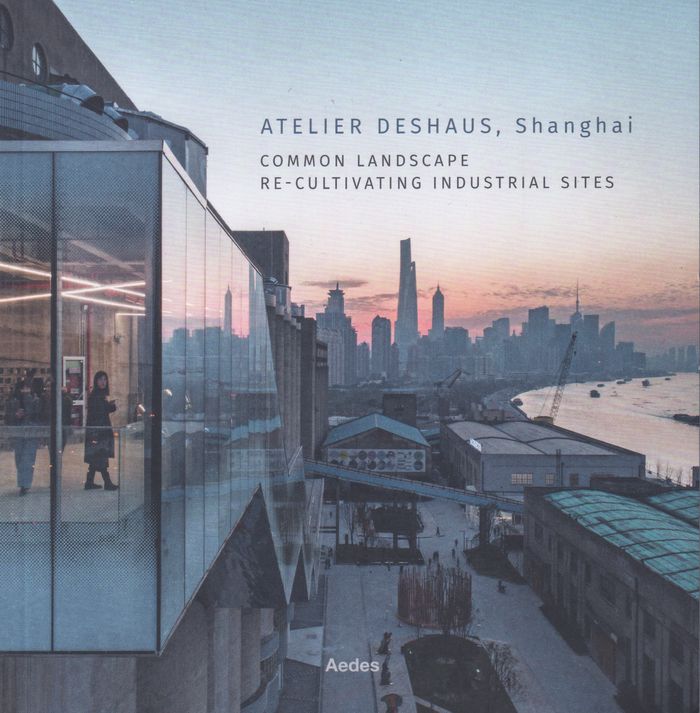
The successful conversion and expansion of abandoned buildings and relics from the industrial past have been the mission of Atelier Deshaus from Shanghai since 2001. The question of how formerly closed industrial complexes can be transformed into new, attractive places for the public is the core theme of this exhibition. It focuses on the transformation along the Huangpu River in Shanghai, whose seamless accessibility as a public space was heralded by Expo 2010 Better City - Better Life. Aedes is showing seven projects that have used the potential of former industrial sites to bring new functions to the riverbank and to which the residents attach both emotional and cultural significance. Abandoned production sites and relics of inner-city heavy industry, warehouses, and port facilities can be a huge burden on the sustainable development of a city, especially if they are seen as waste to be disposed of. With its projects, Atelier Deshaus shows how the grey energy used in them can be preserved, at least in parts, through conversion and reconstruction, and how new functions can be assigned. In the face of climate change and the generally far too energy-hungry construction industry, it is also an obvious necessity in China to take an unbiased look at existing buildings. Nevertheless, demolition is still often the priority. Atelier Deshaus counters this with a strategy of minimal intervention that sensitively heralds the transformation of the existing buildings without destroying the historical reminders.
Atelier Deshaus, Shanghai: Common Landscape, Re-Cultivating Industrial Sites
Actions:
Prix:
$24.50
(disponible sur commande)
Résumé:
The successful conversion and expansion of abandoned buildings and relics from the industrial past have been the mission of Atelier Deshaus from Shanghai since 2001. The question of how formerly closed industrial complexes can be transformed into new, attractive places for the public is the core theme of this exhibition. It focuses on the transformation along the Huangpu River in Shanghai, whose seamless accessibility as a public space was heralded by Expo 2010 Better City - Better Life. Aedes is showing seven projects that have used the potential of former industrial sites to bring new functions to the riverbank and to which the residents attach both emotional and cultural significance. Abandoned production sites and relics of inner-city heavy industry, warehouses, and port facilities can be a huge burden on the sustainable development of a city, especially if they are seen as waste to be disposed of. With its projects, Atelier Deshaus shows how the grey energy used in them can be preserved, at least in parts, through conversion and reconstruction, and how new functions can be assigned. In the face of climate change and the generally far too energy-hungry construction industry, it is also an obvious necessity in China to take an unbiased look at existing buildings. Nevertheless, demolition is still often the priority. Atelier Deshaus counters this with a strategy of minimal intervention that sensitively heralds the transformation of the existing buildings without destroying the historical reminders.
Classification:
livres
livres
Publication:
avril 2023
avril 2023
Sujet:
Architecture, monographies
Architecture, monographies
Classification:
livres
livres
Actions:
Prix:
$34.95
(disponible sur commande)
Résumé:
For as long as humans have gathered in cities, those cities have had their shining—or shadowy—counterparts. Imaginary cities, potential cities, future cities, perfect cities. It is as if the city itself, its inescapable gritty reality and elbow-to-elbow nature, demands we call into being some alternative, yearned-for better place. This book is about those cities. It’s(...)
$34.95
(disponible sur commande)
Résumé:
For as long as humans have gathered in cities, those cities have had their shining—or shadowy—counterparts. Imaginary cities, potential cities, future cities, perfect cities. It is as if the city itself, its inescapable gritty reality and elbow-to-elbow nature, demands we call into being some alternative, yearned-for better place. This book is about those cities. It’s(...)
Titre:
Imaginary cities: a tour of dream cities, nightmare cities and everywhere in between
Actions:
Prix:
$34.95
(disponible sur commande)
Résumé:
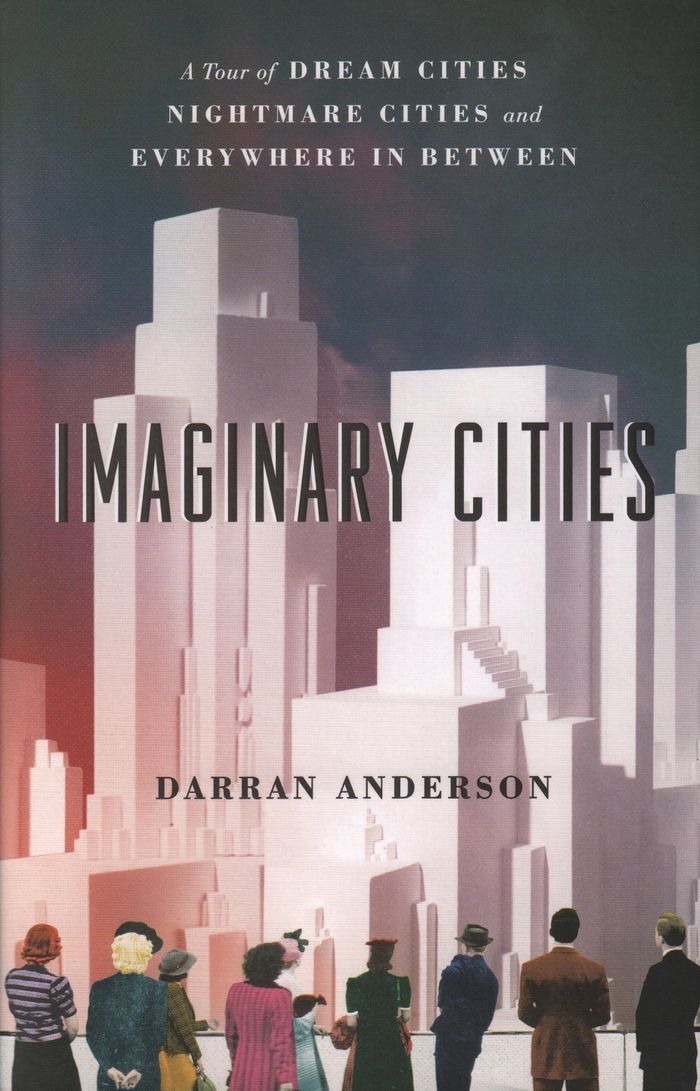
For as long as humans have gathered in cities, those cities have had their shining—or shadowy—counterparts. Imaginary cities, potential cities, future cities, perfect cities. It is as if the city itself, its inescapable gritty reality and elbow-to-elbow nature, demands we call into being some alternative, yearned-for better place. This book is about those cities. It’s neither a history of grand plans nor a literary exploration of the utopian impulse, but rather something different, hybrid, idiosyncratic. It’s a magpie’s book, full of characters and incidents and ideas drawn from cities real and imagined around the globe and throughout history. Thomas More’s allegorical island shares space with Soviet mega-planning; Marco Polo links up with James Joyce’s meticulously imagined Dublin; the medieval land of Cockaigne meets the hopeful future of Star Trek. With Darran Anderson as our guide, we find common themes and recurring dreams, tied to the seemingly ineluctable problems of our actual cities, of poverty and exclusion and waste and destruction. And that’s where Imaginary Cities becomes more than a mere—if ecstatically entertaining—intellectual exercise: for, as Anderson says, “If a city can be imagined into being, it can be re-imagined.” Every architect, philosopher, artist, writer, planner, or citizen who dreams up an imaginary city offers lessons for our real ones; harnessing those flights of hopeful fancy can help us improve the streets where we live.
Imaginary cities: a tour of dream cities, nightmare cities and everywhere in between
Actions:
Prix:
$34.95
(disponible sur commande)
Résumé:
For as long as humans have gathered in cities, those cities have had their shining—or shadowy—counterparts. Imaginary cities, potential cities, future cities, perfect cities. It is as if the city itself, its inescapable gritty reality and elbow-to-elbow nature, demands we call into being some alternative, yearned-for better place. This book is about those cities. It’s neither a history of grand plans nor a literary exploration of the utopian impulse, but rather something different, hybrid, idiosyncratic. It’s a magpie’s book, full of characters and incidents and ideas drawn from cities real and imagined around the globe and throughout history. Thomas More’s allegorical island shares space with Soviet mega-planning; Marco Polo links up with James Joyce’s meticulously imagined Dublin; the medieval land of Cockaigne meets the hopeful future of Star Trek. With Darran Anderson as our guide, we find common themes and recurring dreams, tied to the seemingly ineluctable problems of our actual cities, of poverty and exclusion and waste and destruction. And that’s where Imaginary Cities becomes more than a mere—if ecstatically entertaining—intellectual exercise: for, as Anderson says, “If a city can be imagined into being, it can be re-imagined.” Every architect, philosopher, artist, writer, planner, or citizen who dreams up an imaginary city offers lessons for our real ones; harnessing those flights of hopeful fancy can help us improve the streets where we live.
Classification:
livres
livres
Publication:
avril 2017
avril 2017
Sujet:
Théorie de l’urbanisme
Théorie de l’urbanisme


