


757 Résultats
Classification:
livres
livres
Prix:
$38.95
(disponible sur commande)
Résumé:
Grant Jones, founding principal of the noted landscape architecture firm Jones – Jones, has practiced ecological design for more than 30 years and has been a pioneer in river planning, scenic highway design, zoo design, and landscape aesthetics. The latest addition to our successful Source Books in Landscape Architecture series, Grant Jones/Jones – Jones ILARIS, focuses(...)
$38.95
(disponible sur commande)
Résumé:
Grant Jones, founding principal of the noted landscape architecture firm Jones – Jones, has practiced ecological design for more than 30 years and has been a pioneer in river planning, scenic highway design, zoo design, and landscape aesthetics. The latest addition to our successful Source Books in Landscape Architecture series, Grant Jones/Jones – Jones ILARIS, focuses(...)
Titre:
Grant Jones / Jones & Jones Ilaris : the puget sound plan
Actions:
Prix:
$38.95
(disponible sur commande)
Résumé:
Grant Jones, founding principal of the noted landscape architecture firm Jones – Jones, has practiced ecological design for more than 30 years and has been a pioneer in river planning, scenic highway design, zoo design, and landscape aesthetics. The latest addition to our successful Source Books in Landscape Architecture series, Grant Jones/Jones – Jones ILARIS, focuses on Jones's "green print" plan for Puget Sound in Washington State. Working in collaboration with the Trust for Public Lands and using new GIS technology, Jones – Jones developed the software tool ILARIS. This CAD-like tool helps to evaluate the aesthetic resources of landscape regions and is used as a basis for future planning. The Puget Sound model can be applied to other landscapes at risk. Including an interview with Grant Jones, critical essays discussing his work, as well as numerous diagrams, plans, and photographs, Grant Jones/Jones – Jones ILARIS is a thorough study of an important project.
Grant Jones / Jones & Jones Ilaris : the puget sound plan
Actions:
Prix:
$38.95
(disponible sur commande)
Résumé:
Grant Jones, founding principal of the noted landscape architecture firm Jones – Jones, has practiced ecological design for more than 30 years and has been a pioneer in river planning, scenic highway design, zoo design, and landscape aesthetics. The latest addition to our successful Source Books in Landscape Architecture series, Grant Jones/Jones – Jones ILARIS, focuses on Jones's "green print" plan for Puget Sound in Washington State. Working in collaboration with the Trust for Public Lands and using new GIS technology, Jones – Jones developed the software tool ILARIS. This CAD-like tool helps to evaluate the aesthetic resources of landscape regions and is used as a basis for future planning. The Puget Sound model can be applied to other landscapes at risk. Including an interview with Grant Jones, critical essays discussing his work, as well as numerous diagrams, plans, and photographs, Grant Jones/Jones – Jones ILARIS is a thorough study of an important project.
Classification:
livres
livres
Publication:
juillet 2007, New York
juillet 2007, New York
Sujet:
Théorie du paysage
Théorie du paysage
Classification:
livres
livres
Prix:
$47.00
(disponible sur commande)
Résumé:
Roads to Power tells the story of how Britain built the first nation connected by infrastructure, how a libertarian revolution destroyed a national economy, and how technology caused strangers to stop speaking. In early eighteenth-century Britain, nothing but dirt track ran between most towns. By 1848 the primitive roads were transformed into a network of highways(...)
$47.00
(disponible sur commande)
Résumé:
Roads to Power tells the story of how Britain built the first nation connected by infrastructure, how a libertarian revolution destroyed a national economy, and how technology caused strangers to stop speaking. In early eighteenth-century Britain, nothing but dirt track ran between most towns. By 1848 the primitive roads were transformed into a network of highways(...)
Titre:
Roads to power: Britain invents the infrastructure state
Actions:
Prix:
$47.00
(disponible sur commande)
Résumé:
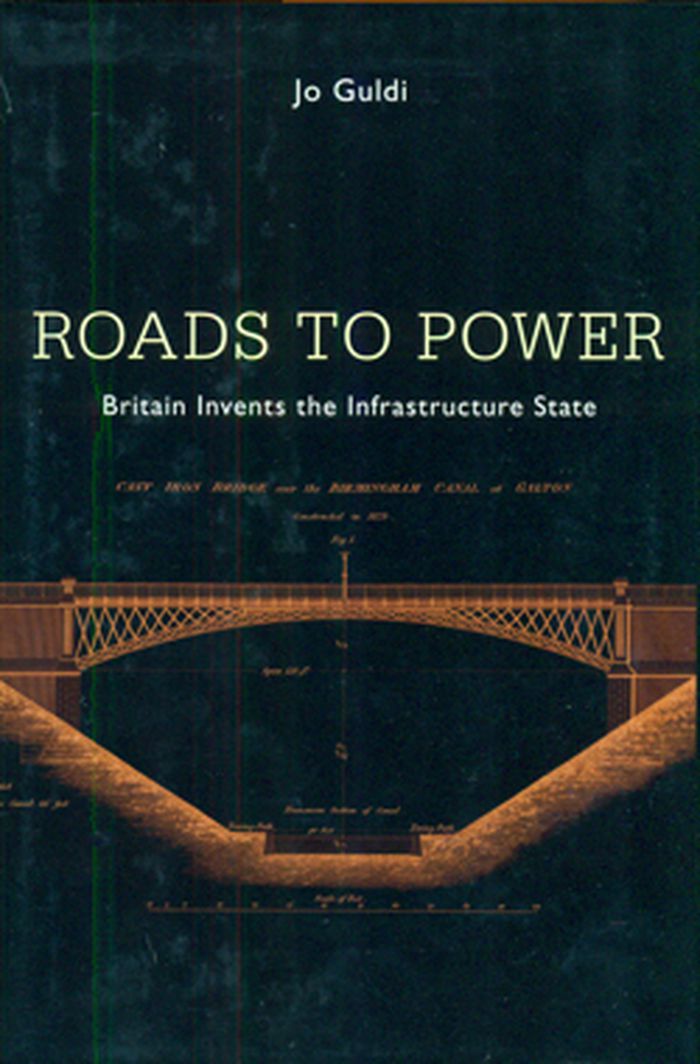
Roads to Power tells the story of how Britain built the first nation connected by infrastructure, how a libertarian revolution destroyed a national economy, and how technology caused strangers to stop speaking. In early eighteenth-century Britain, nothing but dirt track ran between most towns. By 1848 the primitive roads were transformed into a network of highways connecting every village and island in the nation—and also dividing them in unforeseen ways. The highway network led to contests for control over everything from road management to market access. Peripheries like the Highlands demanded that centralized government pay for roads they could not afford, while English counties wanted to be spared the cost of underwriting roads to Scotland. The new network also transformed social relationships. Although travelers moved along the same routes, they occupied increasingly isolated spheres. The roads were the product of a new form of government, the infrastructure state, marked by the unprecedented control bureaucrats wielded over decisions relating to everyday life.
Roads to power: Britain invents the infrastructure state
Actions:
Prix:
$47.00
(disponible sur commande)
Résumé:
Roads to Power tells the story of how Britain built the first nation connected by infrastructure, how a libertarian revolution destroyed a national economy, and how technology caused strangers to stop speaking. In early eighteenth-century Britain, nothing but dirt track ran between most towns. By 1848 the primitive roads were transformed into a network of highways connecting every village and island in the nation—and also dividing them in unforeseen ways. The highway network led to contests for control over everything from road management to market access. Peripheries like the Highlands demanded that centralized government pay for roads they could not afford, while English counties wanted to be spared the cost of underwriting roads to Scotland. The new network also transformed social relationships. Although travelers moved along the same routes, they occupied increasingly isolated spheres. The roads were the product of a new form of government, the infrastructure state, marked by the unprecedented control bureaucrats wielded over decisions relating to everyday life.
Classification:
livres
livres
Publication:
janvier 2012
janvier 2012
Sujet:
Théorie de l’architecture
Théorie de l’architecture
Classification:
livres
livres
Titre:
Freitag: out of the bag
Freitag: out of the bag
Actions:
Prix:
$35.00
(disponible sur commande)
Résumé:
Back in 1993, graphic designer brothers Markus and Daniel Freitag were on the lookout for a messenger bag. Inspired by the cheerfully colored trucks rumbling along the highway that crossed the city of Zurich just in front of their apartment, they cut a messenger bag out of an old truck tarpaulin. The shoulder strap was fashioned from used car seatbelts, while an old(...)
$35.00
(disponible sur commande)
Résumé:
Back in 1993, graphic designer brothers Markus and Daniel Freitag were on the lookout for a messenger bag. Inspired by the cheerfully colored trucks rumbling along the highway that crossed the city of Zurich just in front of their apartment, they cut a messenger bag out of an old truck tarpaulin. The shoulder strap was fashioned from used car seatbelts, while an old(...)
Titre:
Freitag: out of the bag
Actions:
Prix:
$35.00
(disponible sur commande)
Résumé:
Back in 1993, graphic designer brothers Markus and Daniel Freitag were on the lookout for a messenger bag. Inspired by the cheerfully colored trucks rumbling along the highway that crossed the city of Zurich just in front of their apartment, they cut a messenger bag out of an old truck tarpaulin. The shoulder strap was fashioned from used car seatbelts, while an old bicycle inner tube provided the edging. Freitag bags soon became fashionable and the Freitag company now employs more than 120 people. The publication uses the example of Freitag to show that design does not end with the product. The history, products, manufacture, organization, distribution, marketing, and reception are explained, commented upon, and presented in often surprising ways. On the occasion of an exhibition dedicated to the Freitag story at Museum of Design Zurich, Lars Muller Publishers will publish a generously illustrated paperback book that includes interviews, documentation, and essays on the Freitag concept and its history.
Freitag: out of the bag
Actions:
Prix:
$35.00
(disponible sur commande)
Résumé:
Back in 1993, graphic designer brothers Markus and Daniel Freitag were on the lookout for a messenger bag. Inspired by the cheerfully colored trucks rumbling along the highway that crossed the city of Zurich just in front of their apartment, they cut a messenger bag out of an old truck tarpaulin. The shoulder strap was fashioned from used car seatbelts, while an old bicycle inner tube provided the edging. Freitag bags soon became fashionable and the Freitag company now employs more than 120 people. The publication uses the example of Freitag to show that design does not end with the product. The history, products, manufacture, organization, distribution, marketing, and reception are explained, commented upon, and presented in often surprising ways. On the occasion of an exhibition dedicated to the Freitag story at Museum of Design Zurich, Lars Muller Publishers will publish a generously illustrated paperback book that includes interviews, documentation, and essays on the Freitag concept and its history.
Classification:
livres
livres
Publication:
mars 2012
mars 2012
Sujet:
Design industriel
Design industriel
Classification:
livres
livres

Titre:
Cabinet 37: Bubbles
Cabinet 37: Bubbles
Actions:
Prix:
$14.00
(disponible en magasin)
Résumé:
A child's plaything and an object of study for scientists; a space of protection but also of isolation: the “bubble” has a cultural significance far more substantial than its fleeting form suggests. Bubbles percolate through the hydrology studies of Leonardo da Vinci, the optical experiments of Newton and the architectural theories of Buckminster Fuller. Cabinet issue 37,(...)
$14.00
(disponible en magasin)
Résumé:
A child's plaything and an object of study for scientists; a space of protection but also of isolation: the “bubble” has a cultural significance far more substantial than its fleeting form suggests. Bubbles percolate through the hydrology studies of Leonardo da Vinci, the optical experiments of Newton and the architectural theories of Buckminster Fuller. Cabinet issue 37,(...)
Titre:
Cabinet 37: Bubbles
Actions:
Prix:
$14.00
(disponible en magasin)
Résumé:
A child's plaything and an object of study for scientists; a space of protection but also of isolation: the “bubble” has a cultural significance far more substantial than its fleeting form suggests. Bubbles percolate through the hydrology studies of Leonardo da Vinci, the optical experiments of Newton and the architectural theories of Buckminster Fuller. Cabinet issue 37, with its special section on “Bubbles,” features an interview with Richard Julin, the world's foremost authority on champagne; Susan Schuppli on Michael Jackson's orphaned chimpanzee Bubbles; Eben Klemm on the culinary applications of fizz; and Simon Schaffer on rationality and the physics of bubbles. Elsewhere in the issue: Paul Maliszewski on the color green; an interview with “nasalnaut” George Aldrich, the NASA employee whose nose has to approve every item sent into space; Adam Jasper on the cat paintings of schizophrenic artist Louis Wain; Jocko Weyland on the history of U.S. highway dividers; and an interview with Catalin Avramescu on the intellectual history of cannibalism.
Cabinet 37: Bubbles
Actions:
Prix:
$14.00
(disponible en magasin)
Résumé:
A child's plaything and an object of study for scientists; a space of protection but also of isolation: the “bubble” has a cultural significance far more substantial than its fleeting form suggests. Bubbles percolate through the hydrology studies of Leonardo da Vinci, the optical experiments of Newton and the architectural theories of Buckminster Fuller. Cabinet issue 37, with its special section on “Bubbles,” features an interview with Richard Julin, the world's foremost authority on champagne; Susan Schuppli on Michael Jackson's orphaned chimpanzee Bubbles; Eben Klemm on the culinary applications of fizz; and Simon Schaffer on rationality and the physics of bubbles. Elsewhere in the issue: Paul Maliszewski on the color green; an interview with “nasalnaut” George Aldrich, the NASA employee whose nose has to approve every item sent into space; Adam Jasper on the cat paintings of schizophrenic artist Louis Wain; Jocko Weyland on the history of U.S. highway dividers; and an interview with Catalin Avramescu on the intellectual history of cannibalism.
Classification:
livres
livres
Publication:
mai 2010
mai 2010
Sujet:
Revues
Revues
Classification:
livres
livres
Prix:
$69.95
(disponible sur commande)
Résumé:
In 1955 two photographers were awarded grants from the John Simon Guggenheim Foundation to embark on trips across the United States. Robert Frank (1924–2019) drove coast to coast, photographing the highways, bars, and people that formed the basis for his widely admired publication ''The Americans'' (1958). Todd Webb (1905–2000) walked across the country, searching for(...)
$69.95
(disponible sur commande)
Résumé:
In 1955 two photographers were awarded grants from the John Simon Guggenheim Foundation to embark on trips across the United States. Robert Frank (1924–2019) drove coast to coast, photographing the highways, bars, and people that formed the basis for his widely admired publication ''The Americans'' (1958). Todd Webb (1905–2000) walked across the country, searching for(...)
Titre:
America and other myths: Robert Frank and Todd Webb, 1955
Actions:
Prix:
$69.95
(disponible sur commande)
Résumé:
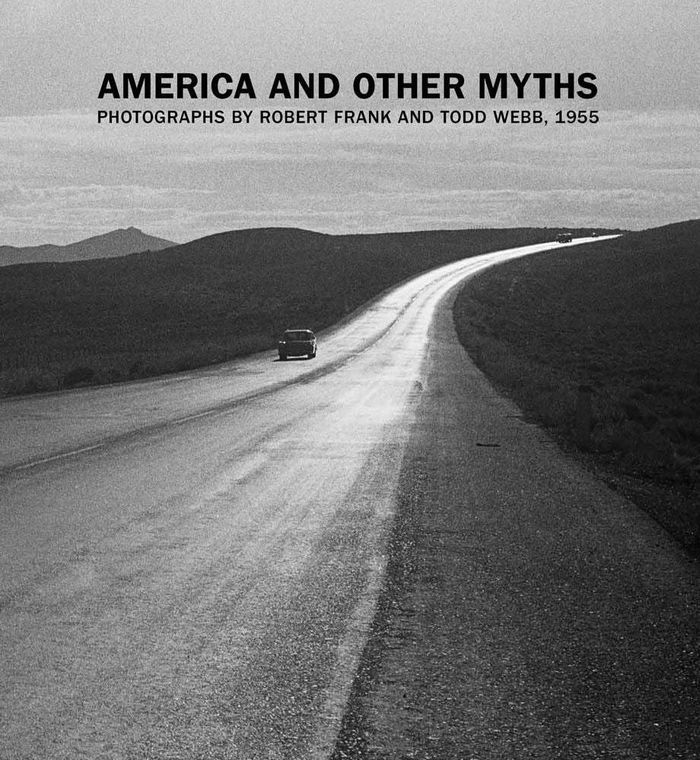
In 1955 two photographers were awarded grants from the John Simon Guggenheim Foundation to embark on trips across the United States. Robert Frank (1924–2019) drove coast to coast, photographing the highways, bars, and people that formed the basis for his widely admired publication ''The Americans'' (1958). Todd Webb (1905–2000) walked across the country, searching for ''vanishing Americana and what is taking its place.'' Unaware of each other’s work, the photographers produced strikingly similar images of the highway, parades, and dim, smoky barrooms. Yet while Frank’s grainy, off-kilter style revealed many inequities of American life, Webb’s carefully composed images embraced clear detail and celebrated the individual oddities of Americans and their locales. This revelatory book is the first to publish Webb’s 1955 photographs and connects these parallel projects for the first time. More than one hundred images accompany text illuminating Frank’s and Webb’s different perspectives and approaches to similar subjects and places; the difference in reception of Frank’s iconic work and Webb’s relatively unknown series; and the place of the road trip in shaping American identity at midcentury.
America and other myths: Robert Frank and Todd Webb, 1955
Actions:
Prix:
$69.95
(disponible sur commande)
Résumé:
In 1955 two photographers were awarded grants from the John Simon Guggenheim Foundation to embark on trips across the United States. Robert Frank (1924–2019) drove coast to coast, photographing the highways, bars, and people that formed the basis for his widely admired publication ''The Americans'' (1958). Todd Webb (1905–2000) walked across the country, searching for ''vanishing Americana and what is taking its place.'' Unaware of each other’s work, the photographers produced strikingly similar images of the highway, parades, and dim, smoky barrooms. Yet while Frank’s grainy, off-kilter style revealed many inequities of American life, Webb’s carefully composed images embraced clear detail and celebrated the individual oddities of Americans and their locales. This revelatory book is the first to publish Webb’s 1955 photographs and connects these parallel projects for the first time. More than one hundred images accompany text illuminating Frank’s and Webb’s different perspectives and approaches to similar subjects and places; the difference in reception of Frank’s iconic work and Webb’s relatively unknown series; and the place of the road trip in shaping American identity at midcentury.
Classification:
livres
livres
Publication:
octobre 2023
octobre 2023
Sujet:
Monographies photo
Monographies photo
Classification:
livres
livres
Actions:
Prix:
$29.95
(disponible sur commande)
Résumé:
In the 1850s, Grand Trunk Railway, later Canadian National, was one of New England�s and Canada�s most important and heavily travelled railway lines. It linked Canada�s metropolis, Montreal � through Vermont and New Hampshire � with the nearest ice-free port at Portland, Maine. Despite constant upgrading, accidents did occur, some of them catastrophic. With(...)
$29.95
(disponible sur commande)
Résumé:
In the 1850s, Grand Trunk Railway, later Canadian National, was one of New England�s and Canada�s most important and heavily travelled railway lines. It linked Canada�s metropolis, Montreal � through Vermont and New Hampshire � with the nearest ice-free port at Portland, Maine. Despite constant upgrading, accidents did occur, some of them catastrophic. With(...)
Titre:
Trouble on the tracks : Grand Trunk Railway of New England tragedies, accidents that occured on Canadian National Railways' Montreal to Portland line
Actions:
Prix:
$29.95
(disponible sur commande)
Résumé:
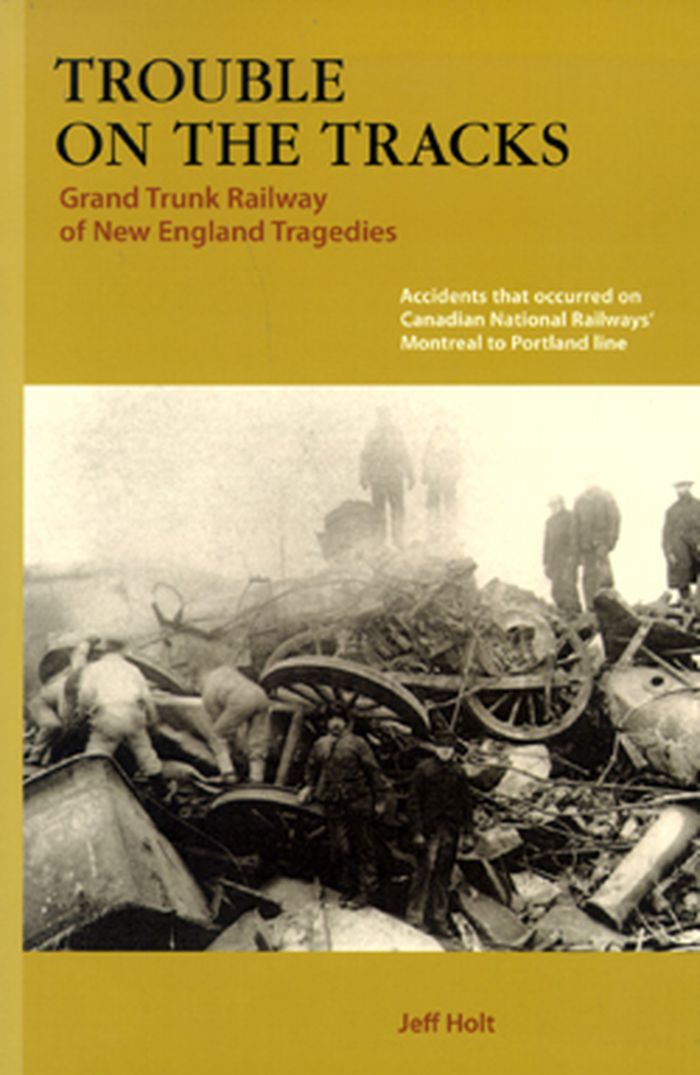
In the 1850s, Grand Trunk Railway, later Canadian National, was one of New England�s and Canada�s most important and heavily travelled railway lines. It linked Canada�s metropolis, Montreal � through Vermont and New Hampshire � with the nearest ice-free port at Portland, Maine. Despite constant upgrading, accidents did occur, some of them catastrophic. With details about four dozen such tragedies, you�ll learn what happened when people, vehicles, or nature decided to duel with a fully-loaded train. Discover the circumstances when a cattle train hit a mudslide� a passenger train toppled over the bank... two locomotives met in heavy fog that made it impossible to see� two trains, one fully-loaded with immigrants, came towards each other on ONE track!� the West Paris Bridge collapsed� two double-headed freight trains collided head-on � a train hit fuel tanker truck, with ensuing explosion and fire� a derailment toppled a chlorine tank car off a bridge onto the highway below. 196 pages, over 200 photographs, (5 colour), 16 maps and diagrams to show where the accidents occurred.
Trouble on the tracks : Grand Trunk Railway of New England tragedies, accidents that occured on Canadian National Railways' Montreal to Portland line
Actions:
Prix:
$29.95
(disponible sur commande)
Résumé:
In the 1850s, Grand Trunk Railway, later Canadian National, was one of New England�s and Canada�s most important and heavily travelled railway lines. It linked Canada�s metropolis, Montreal � through Vermont and New Hampshire � with the nearest ice-free port at Portland, Maine. Despite constant upgrading, accidents did occur, some of them catastrophic. With details about four dozen such tragedies, you�ll learn what happened when people, vehicles, or nature decided to duel with a fully-loaded train. Discover the circumstances when a cattle train hit a mudslide� a passenger train toppled over the bank... two locomotives met in heavy fog that made it impossible to see� two trains, one fully-loaded with immigrants, came towards each other on ONE track!� the West Paris Bridge collapsed� two double-headed freight trains collided head-on � a train hit fuel tanker truck, with ensuing explosion and fire� a derailment toppled a chlorine tank car off a bridge onto the highway below. 196 pages, over 200 photographs, (5 colour), 16 maps and diagrams to show where the accidents occurred.
Classification:
livres
livres
Publication:
décembre 2007, Montreal, Pickering
décembre 2007, Montreal, Pickering
Sujet:
Architecture du Canada
Architecture du Canada
Classification:
livres
livres
Actions:
Prix:
$42.95
(disponible sur commande)
Résumé:
The technological innovation and unprecedented physical growth of the cold war era permeated American life in every aspect and at every scale. From the creation of the military-industrial complex and the beginnings of suburban sprawl to the production of the ballpoint pen and the TV dinner, the artifacts of the period are as numerous and diverse as they are familiar. Over(...)
$42.95
(disponible sur commande)
Résumé:
The technological innovation and unprecedented physical growth of the cold war era permeated American life in every aspect and at every scale. From the creation of the military-industrial complex and the beginnings of suburban sprawl to the production of the ballpoint pen and the TV dinner, the artifacts of the period are as numerous and diverse as they are familiar. Over(...)
Sujet:
Théorie de l’architecture
Théorie de l’architecture
Publication:
avril 2004, New York
avril 2004, New York
Titre:
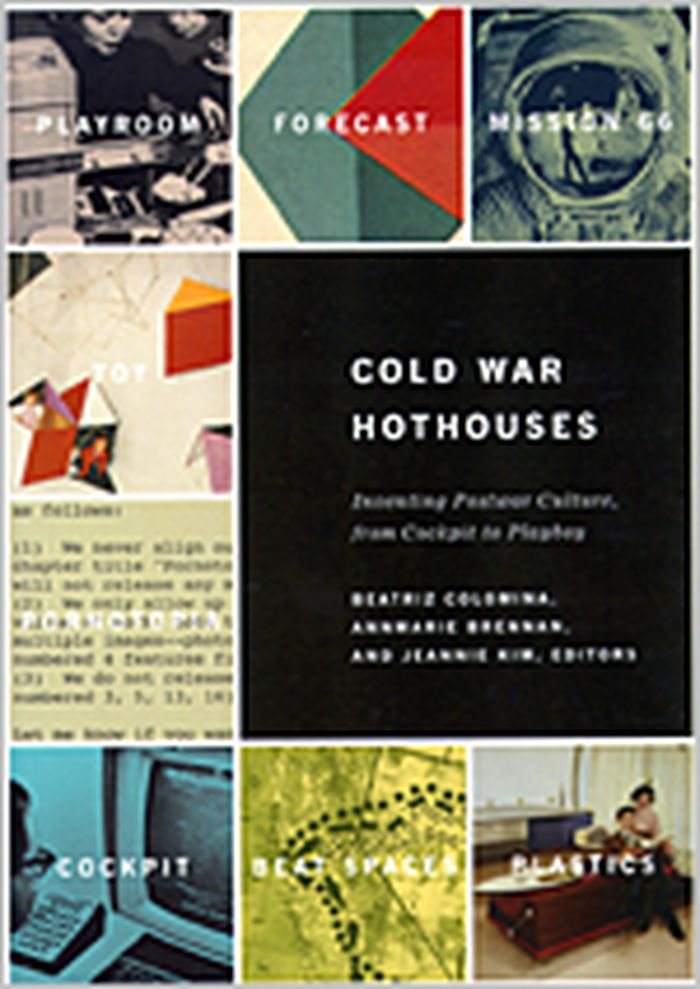
Cold war hothouses : inventing postwar culture, from cockpit to Playboy
Actions:
Prix:
$42.95
(disponible sur commande)
Résumé:
The technological innovation and unprecedented physical growth of the cold war era permeated American life in every aspect and at every scale. From the creation of the military-industrial complex and the beginnings of suburban sprawl to the production of the ballpoint pen and the TV dinner, the artifacts of the period are as numerous and diverse as they are familiar. Over the past half-century, our awe at the advances of postwar society has softened to nostalgia, and our affection for its material culture has clouded our memories of the enormous spatial reorganizations and infrastructural transformations that changed American life forever. "Cold War Hot Houses" casts a clear, even playful, eye on this pivotal time in history, examining topics as diverse as the creation of the interstate highway system and the shopping centre, and the domestication of the national parks as well as the production of such seemingly mundane products as the drive-in theater, aluminum foil, and the king-size bed. The result is a vivid snapshot of American culture that still resonates today.
Cold war hothouses : inventing postwar culture, from cockpit to Playboy
Actions:
Prix:
$42.95
(disponible sur commande)
Résumé:
The technological innovation and unprecedented physical growth of the cold war era permeated American life in every aspect and at every scale. From the creation of the military-industrial complex and the beginnings of suburban sprawl to the production of the ballpoint pen and the TV dinner, the artifacts of the period are as numerous and diverse as they are familiar. Over the past half-century, our awe at the advances of postwar society has softened to nostalgia, and our affection for its material culture has clouded our memories of the enormous spatial reorganizations and infrastructural transformations that changed American life forever. "Cold War Hot Houses" casts a clear, even playful, eye on this pivotal time in history, examining topics as diverse as the creation of the interstate highway system and the shopping centre, and the domestication of the national parks as well as the production of such seemingly mundane products as the drive-in theater, aluminum foil, and the king-size bed. The result is a vivid snapshot of American culture that still resonates today.
Classification:
livres
livres
Publication:
avril 2004, New York
avril 2004, New York
Sujet:
Théorie de l’architecture
Théorie de l’architecture
Classification:
livres
livres
Actions:
Prix:
$75.00
(disponible en magasin)
Résumé:
Tom de Peyret observes the inner workings of power. Behind the shine of glossy facades, into the meanders of silent infrastructures. A barely recognizable New York City is sometimes outlined in the shape of a bridge, a faraway skyscraper, or the logo of the New York Times — whose presses he surveys, along the alleyways of their Queens printing plant. This book avoids(...)
$75.00
(disponible en magasin)
Résumé:
Tom de Peyret observes the inner workings of power. Behind the shine of glossy facades, into the meanders of silent infrastructures. A barely recognizable New York City is sometimes outlined in the shape of a bridge, a faraway skyscraper, or the logo of the New York Times — whose presses he surveys, along the alleyways of their Queens printing plant. This book avoids(...)
Titre:
1 New York Times Plaza, NY 11356
Actions:
Prix:
$75.00
(disponible en magasin)
Résumé:
Tom de Peyret observes the inner workings of power. Behind the shine of glossy facades, into the meanders of silent infrastructures. A barely recognizable New York City is sometimes outlined in the shape of a bridge, a faraway skyscraper, or the logo of the New York Times — whose presses he surveys, along the alleyways of their Queens printing plant. This book avoids postcard mise-en-scènes to scrutinize the city’s own anonymous pedestal; the structure which grants the capital its daily role, as the Empire’s unofficial epicenter. Much like writer Philippe Vasset, Tom de Peyret sneaks into off-record zones, areas solely charted as non-lieus. Through oblique excursions across New York City, he explores inaccessible, forbidden or disused places From military grounds in construction to prisons and airports, his odyssey also unveils, as a reflection, the insides of the New York Times’s printing presses. There, an almost archaic form of the newspaper is being printed, to be read a few hours later in fancy hotel lobbies, airport terminals or international public libraries — distributed by the same trucks driving down the highway interchanges of the Five Boroughs.
1 New York Times Plaza, NY 11356
Actions:
Prix:
$75.00
(disponible en magasin)
Résumé:
Tom de Peyret observes the inner workings of power. Behind the shine of glossy facades, into the meanders of silent infrastructures. A barely recognizable New York City is sometimes outlined in the shape of a bridge, a faraway skyscraper, or the logo of the New York Times — whose presses he surveys, along the alleyways of their Queens printing plant. This book avoids postcard mise-en-scènes to scrutinize the city’s own anonymous pedestal; the structure which grants the capital its daily role, as the Empire’s unofficial epicenter. Much like writer Philippe Vasset, Tom de Peyret sneaks into off-record zones, areas solely charted as non-lieus. Through oblique excursions across New York City, he explores inaccessible, forbidden or disused places From military grounds in construction to prisons and airports, his odyssey also unveils, as a reflection, the insides of the New York Times’s printing presses. There, an almost archaic form of the newspaper is being printed, to be read a few hours later in fancy hotel lobbies, airport terminals or international public libraries — distributed by the same trucks driving down the highway interchanges of the Five Boroughs.
Classification:
livres
livres
Publication:
novembre 2023
novembre 2023
Sujet:
Monographies photo
Monographies photo
Classification:
livres
livres
Actions:
Prix:
$98.00
(disponible sur commande)
Résumé:
Gilmore D. Clarke and Michael Rapuano were the foremost spatial designers of the American century. Their vast portfolio of public landscapes propelled the legacy of Frederick Law Olmsted and Calvert Vaux into the motor age, touching the lives of millions and changing the face of the nation. This book recovers the forgotten legacy of Clarke and Rapuano, whose parks and(...)
$98.00
(disponible sur commande)
Résumé:
Gilmore D. Clarke and Michael Rapuano were the foremost spatial designers of the American century. Their vast portfolio of public landscapes propelled the legacy of Frederick Law Olmsted and Calvert Vaux into the motor age, touching the lives of millions and changing the face of the nation. This book recovers the forgotten legacy of Clarke and Rapuano, whose parks and(...)
Titre:
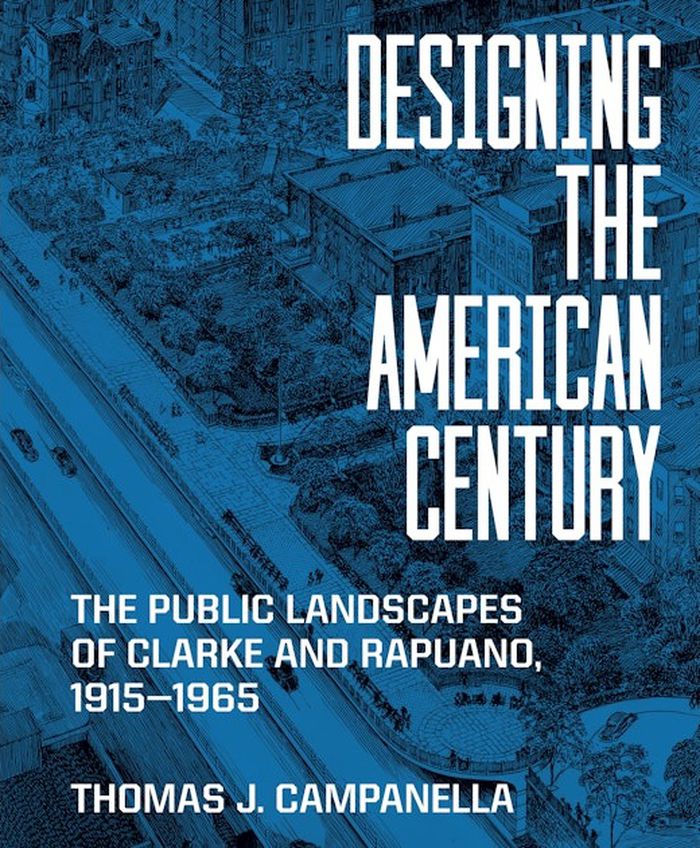
Designing the American century: The public landscapes of Clarke and Rapuano, 1915-1965
Actions:
Prix:
$98.00
(disponible sur commande)
Résumé:
Gilmore D. Clarke and Michael Rapuano were the foremost spatial designers of the American century. Their vast portfolio of public landscapes propelled the legacy of Frederick Law Olmsted and Calvert Vaux into the motor age, touching the lives of millions and changing the face of the nation. This book recovers the forgotten legacy of Clarke and Rapuano, whose parks and parkways, highways and housing estates helped modernize—for better or worse—the American metropolis. With the patronage of public-works titan Robert Moses, Clarke and Rapuano transformed New York over a span of fifty years, revitalizing the city’s immense park system but also planning expressways, public housing, and urban renewal projects that laid waste to entire sections of the city. In this work, Thomas J. Campanella describes how Clarke and Rapuano helped create some of the metropolitan region’s most iconic landscapes, from the Central Park Zoo and Conservatory Garden to the Henry Hudson Parkway and Riverside Park, Jones Beach, the Palisades and Taconic State Parkways, and the Brooklyn Heights Promenade. He shows how they left their mark far beyond Gotham as well, with projects as diverse as Yellowstone’s Mammoth Hot Springs, the Mount Vernon Memorial Highway, site plans for the Pentagon and CIA headquarters, and Montreal’s Olympic Park.
Designing the American century: The public landscapes of Clarke and Rapuano, 1915-1965
Actions:
Prix:
$98.00
(disponible sur commande)
Résumé:
Gilmore D. Clarke and Michael Rapuano were the foremost spatial designers of the American century. Their vast portfolio of public landscapes propelled the legacy of Frederick Law Olmsted and Calvert Vaux into the motor age, touching the lives of millions and changing the face of the nation. This book recovers the forgotten legacy of Clarke and Rapuano, whose parks and parkways, highways and housing estates helped modernize—for better or worse—the American metropolis. With the patronage of public-works titan Robert Moses, Clarke and Rapuano transformed New York over a span of fifty years, revitalizing the city’s immense park system but also planning expressways, public housing, and urban renewal projects that laid waste to entire sections of the city. In this work, Thomas J. Campanella describes how Clarke and Rapuano helped create some of the metropolitan region’s most iconic landscapes, from the Central Park Zoo and Conservatory Garden to the Henry Hudson Parkway and Riverside Park, Jones Beach, the Palisades and Taconic State Parkways, and the Brooklyn Heights Promenade. He shows how they left their mark far beyond Gotham as well, with projects as diverse as Yellowstone’s Mammoth Hot Springs, the Mount Vernon Memorial Highway, site plans for the Pentagon and CIA headquarters, and Montreal’s Olympic Park.
Classification:
livres
livres
Publication:
juillet 2025
juillet 2025
Classification:
livres
livres
Titre:
America's national park roads and parkways : drawings from the Historic American Engineering Record
America's national park roads and parkways : drawings from the Historic American Engineering Record
Actions:
Prix:
$75.00
(disponible sur commande)
Résumé:
The roads within America's national park system reveal a wide range of technological, aesthetic, and philosophical concerns. Their design and construction epitomize the central challenge of national park management: how to balance environmental protection with public access. The Historic American Engineering Record (HAER), a division of the National Park Service, has(...)
$75.00
(disponible sur commande)
Résumé:
The roads within America's national park system reveal a wide range of technological, aesthetic, and philosophical concerns. Their design and construction epitomize the central challenge of national park management: how to balance environmental protection with public access. The Historic American Engineering Record (HAER), a division of the National Park Service, has(...)
Sujet:
Histoire jusqu’à 1900
Histoire jusqu’à 1900
Publication:
janvier 1900, Baltimore, London
janvier 1900, Baltimore, London
Titre:
America's national park roads and parkways : drawings from the Historic American Engineering Record
Actions:
Prix:
$75.00
(disponible sur commande)
Résumé:
The roads within America's national park system reveal a wide range of technological, aesthetic, and philosophical concerns. Their design and construction epitomize the central challenge of national park management: how to balance environmental protection with public access. The Historic American Engineering Record (HAER), a division of the National Park Service, has spent more than a dozen years documenting the history of this vital aspect of the national park experience. America's National Park Roads and Parkways brings together 331 measured and interpretive drawings commissioned by HAER to illustrate the physical characteristics, design strategies, construction practices, and visitor experiences of roads in national parks from Acadia to Zion and parkways from the Blue Ridge to the Natchez Trace. Also included are non–Park Service projects that utilized similar design strategies, including the Bronx River Parkway and the Columbia River Highway. The book documents thirty-one projects, explaining how roads shape visitor perceptions, highlighting key characteristics of individual park road systems, and connecting their design and construction to the broader history of American engineering and landscape architecture. More than a documentary record of historic design and construction practices, this book has practical applications for engineers, landscape architects, and cultural resource specialists in guiding design decisions, interpreting historic sites, and informing contemporary debates on preservation and environmental protection.
America's national park roads and parkways : drawings from the Historic American Engineering Record
Actions:
Prix:
$75.00
(disponible sur commande)
Résumé:
The roads within America's national park system reveal a wide range of technological, aesthetic, and philosophical concerns. Their design and construction epitomize the central challenge of national park management: how to balance environmental protection with public access. The Historic American Engineering Record (HAER), a division of the National Park Service, has spent more than a dozen years documenting the history of this vital aspect of the national park experience. America's National Park Roads and Parkways brings together 331 measured and interpretive drawings commissioned by HAER to illustrate the physical characteristics, design strategies, construction practices, and visitor experiences of roads in national parks from Acadia to Zion and parkways from the Blue Ridge to the Natchez Trace. Also included are non–Park Service projects that utilized similar design strategies, including the Bronx River Parkway and the Columbia River Highway. The book documents thirty-one projects, explaining how roads shape visitor perceptions, highlighting key characteristics of individual park road systems, and connecting their design and construction to the broader history of American engineering and landscape architecture. More than a documentary record of historic design and construction practices, this book has practical applications for engineers, landscape architects, and cultural resource specialists in guiding design decisions, interpreting historic sites, and informing contemporary debates on preservation and environmental protection.
Classification:
livres
livres
Publication:
janvier 1900, Baltimore, London
janvier 1900, Baltimore, London
Sujet:
Histoire jusqu’à 1900
Histoire jusqu’à 1900


