


36154 Résultats
Classification:
livres
livres
Actions:
Prix:
$29.00
(disponible sur commande)
Résumé:
Le livre recueille les actes du colloque tenu à Cerisy-la-Salle, du 1 er au 8 septembre 2006. Le point de départ est la phrase de F. Hölderlin que M. Heidegger a rendu fameuse : « L’humain habite en poète ». Cette idée, peu à peu diffusée, a fini par subvertir les dogmes fonctionnalistes du mouvement moderne en architecture. Une maison est davantage qu’une « machine à(...)
$29.00
(disponible sur commande)
Résumé:
Le livre recueille les actes du colloque tenu à Cerisy-la-Salle, du 1 er au 8 septembre 2006. Le point de départ est la phrase de F. Hölderlin que M. Heidegger a rendu fameuse : « L’humain habite en poète ». Cette idée, peu à peu diffusée, a fini par subvertir les dogmes fonctionnalistes du mouvement moderne en architecture. Une maison est davantage qu’une « machine à(...)
Sujet:
Théorie de l’architecture
Théorie de l’architecture
Publication:
juin 2012
juin 2012
Titre:
L’habiter dans sa poétique première
Actions:
Prix:
$29.00
(disponible sur commande)
Résumé:
Le livre recueille les actes du colloque tenu à Cerisy-la-Salle, du 1 er au 8 septembre 2006. Le point de départ est la phrase de F. Hölderlin que M. Heidegger a rendu fameuse : « L’humain habite en poète ». Cette idée, peu à peu diffusée, a fini par subvertir les dogmes fonctionnalistes du mouvement moderne en architecture. Une maison est davantage qu’une « machine à habiter » ! Ce « davantage » de l’habiter humain – sa poétique – il s’est agi d’en saisir la dynamique première dans certains de ses motifs privilégiés, la spatialité, la temporalité, la corporéité, la musique, la poésie…, à partir de ce qui la fonde : la Terre, comme à la fois planète et sol phénoménologique. Cette poétique, c’est effectivement ce qui a peu à peu entraîné les participants et leurs spécialités diverses – architecture, anthropologie, chorégraphie, géographie, musique, informatique, peinture, littérature, cinema – dans la synergie que favorisait le lieu.
L’habiter dans sa poétique première
Actions:
Prix:
$29.00
(disponible sur commande)
Résumé:
Le livre recueille les actes du colloque tenu à Cerisy-la-Salle, du 1 er au 8 septembre 2006. Le point de départ est la phrase de F. Hölderlin que M. Heidegger a rendu fameuse : « L’humain habite en poète ». Cette idée, peu à peu diffusée, a fini par subvertir les dogmes fonctionnalistes du mouvement moderne en architecture. Une maison est davantage qu’une « machine à habiter » ! Ce « davantage » de l’habiter humain – sa poétique – il s’est agi d’en saisir la dynamique première dans certains de ses motifs privilégiés, la spatialité, la temporalité, la corporéité, la musique, la poésie…, à partir de ce qui la fonde : la Terre, comme à la fois planète et sol phénoménologique. Cette poétique, c’est effectivement ce qui a peu à peu entraîné les participants et leurs spécialités diverses – architecture, anthropologie, chorégraphie, géographie, musique, informatique, peinture, littérature, cinema – dans la synergie que favorisait le lieu.
Classification:
livres
livres
Publication:
juin 2012
juin 2012
Sujet:
Théorie de l’architecture
Théorie de l’architecture
Classification:
livres
livres
Actions:
Prix:
$19.95
(disponible sur commande)
Résumé:
A partir d’une enquête ethnographique, Sophie Houdart et Chihiro Minato proposent dans ce livre une approche inédite de l’architecte japonais Kuma Kengo et de son architecture. Inédite, décalée même, cette monographie l’est au moins en deux sens. D’abord en ce qu’elle est la première en langue française. Ensuite parce qu’y est fait l’hypothèse, dans le texte et dans(...)
$19.95
(disponible sur commande)
Résumé:
A partir d’une enquête ethnographique, Sophie Houdart et Chihiro Minato proposent dans ce livre une approche inédite de l’architecte japonais Kuma Kengo et de son architecture. Inédite, décalée même, cette monographie l’est au moins en deux sens. D’abord en ce qu’elle est la première en langue française. Ensuite parce qu’y est fait l’hypothèse, dans le texte et dans(...)
Titre:
Kuma Kengo: Une monographie décalée
Actions:
Prix:
$19.95
(disponible sur commande)
Résumé:
A partir d’une enquête ethnographique, Sophie Houdart et Chihiro Minato proposent dans ce livre une approche inédite de l’architecte japonais Kuma Kengo et de son architecture. Inédite, décalée même, cette monographie l’est au moins en deux sens. D’abord en ce qu’elle est la première en langue française. Ensuite parce qu’y est fait l’hypothèse, dans le texte et dans l’image, que s’il y a quelque chose de reconnaissable dans « l’architecture de Kuma », ceci doit pouvoir la retrouver dans l’agence, dans la routine et dans la masse des détails saisis quotidiennement. Quel lien existe-t-il entre la matérialité promue par Kuma, dans sa philosophie de l’architecture, et celle à l’oeuvre dans l’agence : le travail du bois ou du polystyrène, la peinture, la colle, le pixel ?
Kuma Kengo: Une monographie décalée
Actions:
Prix:
$19.95
(disponible sur commande)
Résumé:
A partir d’une enquête ethnographique, Sophie Houdart et Chihiro Minato proposent dans ce livre une approche inédite de l’architecte japonais Kuma Kengo et de son architecture. Inédite, décalée même, cette monographie l’est au moins en deux sens. D’abord en ce qu’elle est la première en langue française. Ensuite parce qu’y est fait l’hypothèse, dans le texte et dans l’image, que s’il y a quelque chose de reconnaissable dans « l’architecture de Kuma », ceci doit pouvoir la retrouver dans l’agence, dans la routine et dans la masse des détails saisis quotidiennement. Quel lien existe-t-il entre la matérialité promue par Kuma, dans sa philosophie de l’architecture, et celle à l’oeuvre dans l’agence : le travail du bois ou du polystyrène, la peinture, la colle, le pixel ?
Classification:
livres
livres
Publication:
juin 2012
juin 2012
Sujet:
Architecture, monographies
Architecture, monographies
Classification:
livres
livres
Actions:
Prix:
$79.95
(disponible sur commande)
Résumé:
On 13 January 1958, the grotesquely disfigured body of a man was discovered near Lake Sembako in Japan. Two investigators from Tokyo came to help the local police in resolving what at first appeared to be a banal case, but which soon proved to be something more complicated. For the first time, a photographer was authorized to accompany the police to document the(...)
$79.95
(disponible sur commande)
Résumé:
On 13 January 1958, the grotesquely disfigured body of a man was discovered near Lake Sembako in Japan. Two investigators from Tokyo came to help the local police in resolving what at first appeared to be a banal case, but which soon proved to be something more complicated. For the first time, a photographer was authorized to accompany the police to document the(...)
Titre:
Watabe Yukichi: a criminal investigation
Actions:
Prix:
$79.95
(disponible sur commande)
Résumé:
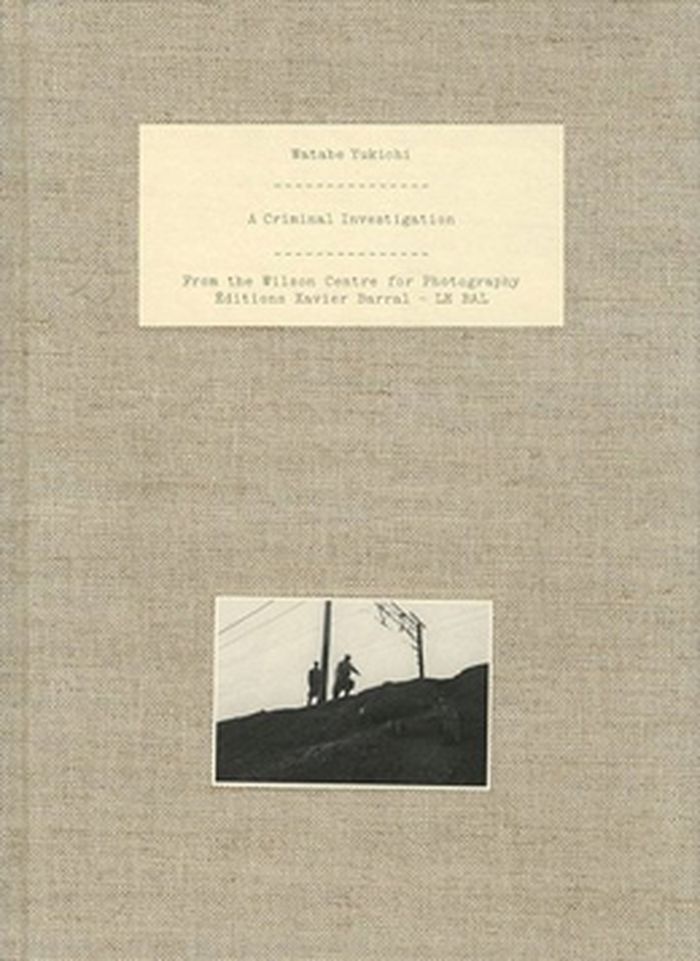
On 13 January 1958, the grotesquely disfigured body of a man was discovered near Lake Sembako in Japan. Two investigators from Tokyo came to help the local police in resolving what at first appeared to be a banal case, but which soon proved to be something more complicated. For the first time, a photographer was authorized to accompany the police to document the investigation. Press photographer Watabe Yukichi (1924-1993) followed the inspectors as they questioned witnesses (workers in a tannery factory, local police officers) and pounded the streets of the most insalubrious neighborhoods in Tokyo - its bars, bridges, alleyways and hospitals - in search of the killer. Like the haunted film stills of a newly discovered noir classic, Watabe's images record much more than simply a police investigation, and reveal a Tokyo of the 1950s in a way that has rarely been depicted.
Watabe Yukichi: a criminal investigation
Actions:
Prix:
$79.95
(disponible sur commande)
Résumé:
On 13 January 1958, the grotesquely disfigured body of a man was discovered near Lake Sembako in Japan. Two investigators from Tokyo came to help the local police in resolving what at first appeared to be a banal case, but which soon proved to be something more complicated. For the first time, a photographer was authorized to accompany the police to document the investigation. Press photographer Watabe Yukichi (1924-1993) followed the inspectors as they questioned witnesses (workers in a tannery factory, local police officers) and pounded the streets of the most insalubrious neighborhoods in Tokyo - its bars, bridges, alleyways and hospitals - in search of the killer. Like the haunted film stills of a newly discovered noir classic, Watabe's images record much more than simply a police investigation, and reveal a Tokyo of the 1950s in a way that has rarely been depicted.
Classification:
livres
livres
Publication:
juin 2012
juin 2012
Sujet:
Monographies photo
Monographies photo
Classification:
livres
livres
Actions:
Prix:
$25.95
(disponible sur commande)
Résumé:
Vivre dans une roulotte ou sur un bateau, se construire un refuge dans les arbres, passer un week-end hors du temps dans une yourte, habiter au coeur même de la nature. Un dialogue entre mobilité et habitat se construit pour nous inciter à penser de nouveaux espaces où vivre et de nouvelles façons d'habiter nos maisons.
$25.95
(disponible sur commande)
Résumé:
Vivre dans une roulotte ou sur un bateau, se construire un refuge dans les arbres, passer un week-end hors du temps dans une yourte, habiter au coeur même de la nature. Un dialogue entre mobilité et habitat se construit pour nous inciter à penser de nouveaux espaces où vivre et de nouvelles façons d'habiter nos maisons.
Titre:
Petits habitats: insolites et nomades
Actions:
Prix:
$25.95
(disponible sur commande)
Résumé:
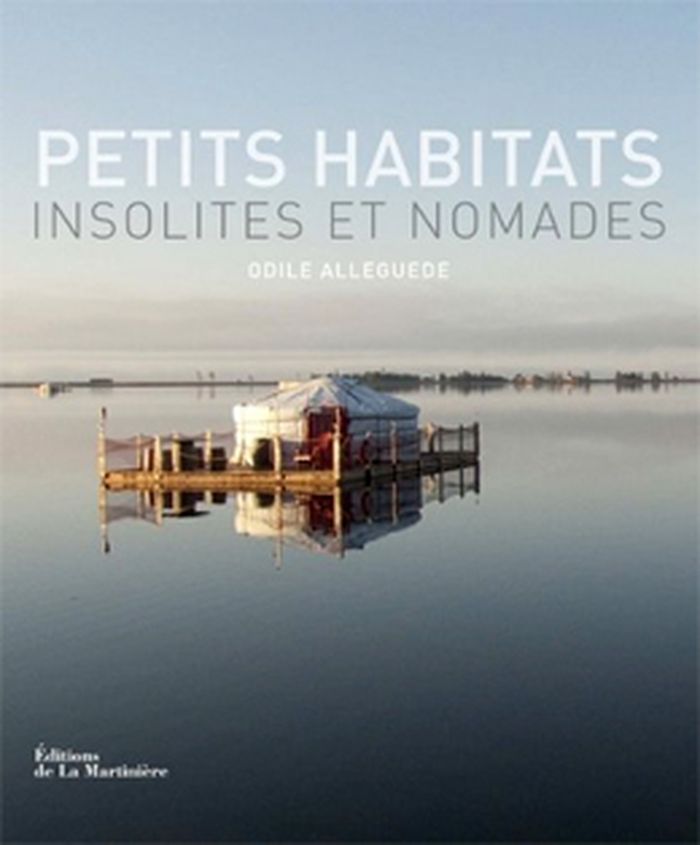
Vivre dans une roulotte ou sur un bateau, se construire un refuge dans les arbres, passer un week-end hors du temps dans une yourte, habiter au coeur même de la nature. Un dialogue entre mobilité et habitat se construit pour nous inciter à penser de nouveaux espaces où vivre et de nouvelles façons d'habiter nos maisons.
Petits habitats: insolites et nomades
Actions:
Prix:
$25.95
(disponible sur commande)
Résumé:
Vivre dans une roulotte ou sur un bateau, se construire un refuge dans les arbres, passer un week-end hors du temps dans une yourte, habiter au coeur même de la nature. Un dialogue entre mobilité et habitat se construit pour nous inciter à penser de nouveaux espaces où vivre et de nouvelles façons d'habiter nos maisons.
Classification:
livres
livres
Publication:
juin 2012
juin 2012
Sujet:
Maisons mobiles
Maisons mobiles
Classification:
livres
livres
Titre:
ABcédaire
ABcédaire
Actions:
Prix:
$38.95
(disponible sur commande)
Résumé:
Ceci est un abécédaire, de A comme ananas à Z comme zèbre, en passant par le D de domino et le S de la sardine. C’est aussi un imagier graphique et poétique avec des volets à soulever pour découvrir l’intérieur de l’orange ou qui se cache sous le chapeau du magicien. Ceci est enfin un livre accordéon à mettre en scène pour jouer à reconnaître les 26 lettres de l’alphabet.(...)
$38.95
(disponible sur commande)
Résumé:
Ceci est un abécédaire, de A comme ananas à Z comme zèbre, en passant par le D de domino et le S de la sardine. C’est aussi un imagier graphique et poétique avec des volets à soulever pour découvrir l’intérieur de l’orange ou qui se cache sous le chapeau du magicien. Ceci est enfin un livre accordéon à mettre en scène pour jouer à reconnaître les 26 lettres de l’alphabet.(...)
Titre:
ABcédaire
Actions:
Prix:
$38.95
(disponible sur commande)
Résumé:
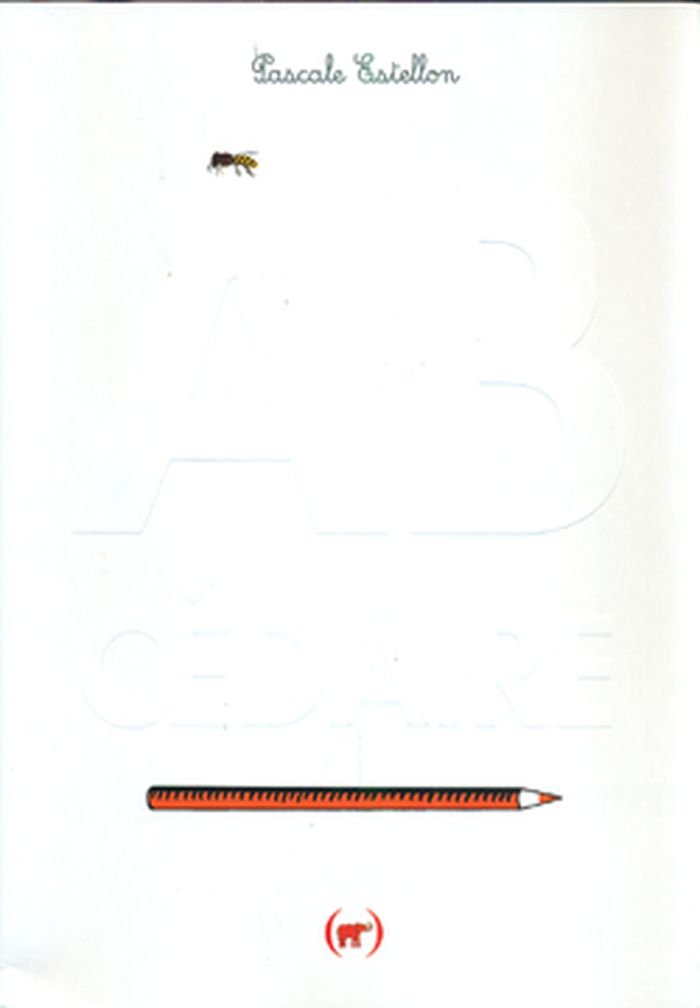
Ceci est un abécédaire, de A comme ananas à Z comme zèbre, en passant par le D de domino et le S de la sardine. C’est aussi un imagier graphique et poétique avec des volets à soulever pour découvrir l’intérieur de l’orange ou qui se cache sous le chapeau du magicien. Ceci est enfin un livre accordéon à mettre en scène pour jouer à reconnaître les 26 lettres de l’alphabet. Un livre-jeu, un livre sculpture qui se déploie sur plus de 5 mètres, et que l’enfant s’approprie en le dépliant, en jouant et en découvrant des images cachées sous les volets.
ABcédaire
Actions:
Prix:
$38.95
(disponible sur commande)
Résumé:
Ceci est un abécédaire, de A comme ananas à Z comme zèbre, en passant par le D de domino et le S de la sardine. C’est aussi un imagier graphique et poétique avec des volets à soulever pour découvrir l’intérieur de l’orange ou qui se cache sous le chapeau du magicien. Ceci est enfin un livre accordéon à mettre en scène pour jouer à reconnaître les 26 lettres de l’alphabet. Un livre-jeu, un livre sculpture qui se déploie sur plus de 5 mètres, et que l’enfant s’approprie en le dépliant, en jouant et en découvrant des images cachées sous les volets.
Classification:
livres
livres
Publication:
juin 2012
juin 2012
Sujet:
Littérature jeunesse
Littérature jeunesse
Classification:
livres
livres

Actions:
Prix:
$24.95
(disponible sur commande)
Résumé:
Richard Sennett has spent an intellectual lifetime exploring how humans live in cities. In this pair of essays he visits two of the world's greatest cities at crucial moments in their history to meditate on the condition of exile in both geographical and psychic space: the Jewish Ghetto of Renaissance Venice, where state-imposed outsiderdom was translated into a rich(...)
$24.95
(disponible sur commande)
Résumé:
Richard Sennett has spent an intellectual lifetime exploring how humans live in cities. In this pair of essays he visits two of the world's greatest cities at crucial moments in their history to meditate on the condition of exile in both geographical and psychic space: the Jewish Ghetto of Renaissance Venice, where state-imposed outsiderdom was translated into a rich(...)
Titre:
Richard Sennett : The foreigner, two essays on exile
Actions:
Prix:
$24.95
(disponible sur commande)
Résumé:
Richard Sennett has spent an intellectual lifetime exploring how humans live in cities. In this pair of essays he visits two of the world's greatest cities at crucial moments in their history to meditate on the condition of exile in both geographical and psychic space: the Jewish Ghetto of Renaissance Venice, where state-imposed outsiderdom was translated into a rich community identity; and nineteenth-century Paris, a magnet for political exiles, where the experience of displacement seeped into the city's culture at large.
Richard Sennett : The foreigner, two essays on exile
Actions:
Prix:
$24.95
(disponible sur commande)
Résumé:
Richard Sennett has spent an intellectual lifetime exploring how humans live in cities. In this pair of essays he visits two of the world's greatest cities at crucial moments in their history to meditate on the condition of exile in both geographical and psychic space: the Jewish Ghetto of Renaissance Venice, where state-imposed outsiderdom was translated into a rich community identity; and nineteenth-century Paris, a magnet for political exiles, where the experience of displacement seeped into the city's culture at large.
Classification:
livres
livres
Publication:
juin 2012
juin 2012
Sujet:
Théorie/ philosophie
Théorie/ philosophie
Classification:
livres
livres
Prix:
$39.95
(disponible sur commande)
Résumé:
Published on the occasion of its sixtieth anniversary, this is the first anthology of Aperture magazine. It provides a selection of the best critical writing from the first 25 years of the magazine--the period spanning the tenure of cofounder and editor Minor White. Aperture was established in 1952 by a group of photographers, including Ansel Adams, Dorothea Lange,(...)
$39.95
(disponible sur commande)
Résumé:
Published on the occasion of its sixtieth anniversary, this is the first anthology of Aperture magazine. It provides a selection of the best critical writing from the first 25 years of the magazine--the period spanning the tenure of cofounder and editor Minor White. Aperture was established in 1952 by a group of photographers, including Ansel Adams, Dorothea Lange,(...)
Titre:
Aperture magazine anthology: the minor white years, 1952–1976
Actions:
Prix:
$39.95
(disponible sur commande)
Résumé:
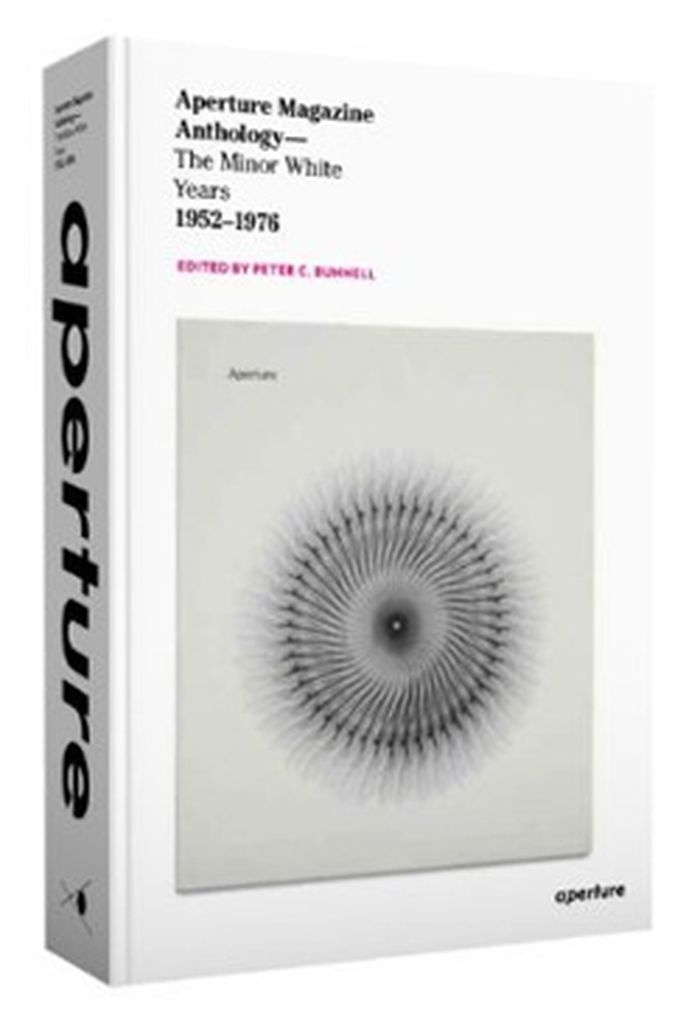
Published on the occasion of its sixtieth anniversary, this is the first anthology of Aperture magazine. It provides a selection of the best critical writing from the first 25 years of the magazine--the period spanning the tenure of cofounder and editor Minor White. Aperture was established in 1952 by a group of photographers, including Ansel Adams, Dorothea Lange, Barbara Morgan and historian-curators Beaumont and Nancy Newhall. Their intention was to provide a forum “in which photographers can talk straight to each other, discuss the problems that face photography as profession an art, share their experiences, comment on what goes on, descry the new potentials.” With its far-ranging interests in diverse photographic styles, myriad themes and subjects (including a strong streak of spirituality in diverse forms) and an adventurous commitment to a broad international range, Aperture has had a profound impact on the course of fine-art photography. Several articles are reproduced in facsimile, and the publication is enlivened throughout by other features, including a portfolio of covers, as well as a selection of the colophons (short statements or quotes) that appeared at the front of each magazine.
Aperture magazine anthology: the minor white years, 1952–1976
Actions:
Prix:
$39.95
(disponible sur commande)
Résumé:
Published on the occasion of its sixtieth anniversary, this is the first anthology of Aperture magazine. It provides a selection of the best critical writing from the first 25 years of the magazine--the period spanning the tenure of cofounder and editor Minor White. Aperture was established in 1952 by a group of photographers, including Ansel Adams, Dorothea Lange, Barbara Morgan and historian-curators Beaumont and Nancy Newhall. Their intention was to provide a forum “in which photographers can talk straight to each other, discuss the problems that face photography as profession an art, share their experiences, comment on what goes on, descry the new potentials.” With its far-ranging interests in diverse photographic styles, myriad themes and subjects (including a strong streak of spirituality in diverse forms) and an adventurous commitment to a broad international range, Aperture has had a profound impact on the course of fine-art photography. Several articles are reproduced in facsimile, and the publication is enlivened throughout by other features, including a portfolio of covers, as well as a selection of the colophons (short statements or quotes) that appeared at the front of each magazine.
Classification:
livres
livres
Publication:
juin 2012
juin 2012
Classification:
livres
livres
Actions:
Prix:
$60.00
(disponible sur commande)
Résumé:
Doug Rickard’s A New American Picture offers a startling and fresh perspective on American street photography. While at first glance the work looks reassuringly familiar and well within the traditional bounds of the genre, Rickard’s methodology is anything but conventional. All of the images are appropriated from Google Street View; over a period of two years, Rickard(...)
$60.00
(disponible sur commande)
Résumé:
Doug Rickard’s A New American Picture offers a startling and fresh perspective on American street photography. While at first glance the work looks reassuringly familiar and well within the traditional bounds of the genre, Rickard’s methodology is anything but conventional. All of the images are appropriated from Google Street View; over a period of two years, Rickard(...)
Titre:
Doug Rickard : a new American picture
Actions:
Prix:
$60.00
(disponible sur commande)
Résumé:
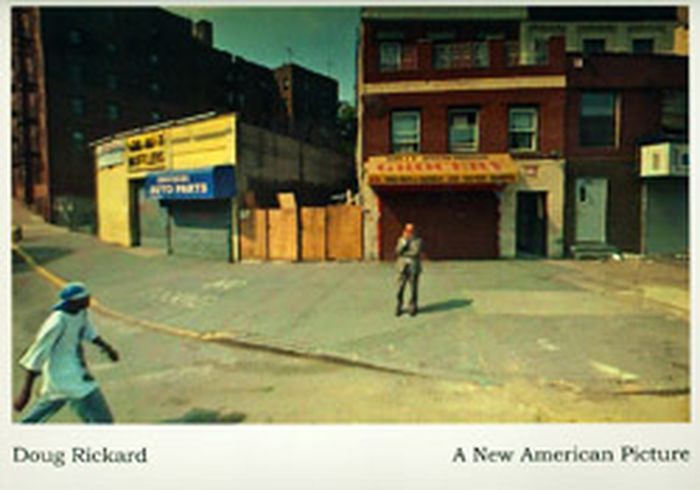
Doug Rickard’s A New American Picture offers a startling and fresh perspective on American street photography. While at first glance the work looks reassuringly familiar and well within the traditional bounds of the genre, Rickard’s methodology is anything but conventional. All of the images are appropriated from Google Street View; over a period of two years, Rickard took advantage of the technology platform’s comprehensive image archive to virtually drive the unseen and overlooked roads of America - bleak places that are forgotten, economically devastated and abandoned. With an informed and careful eye, Rickard finds and decodes these previously photographed scenes of urban and rural decay. He rephotographs the machine-made images as they appear on his computer screen, framing and freeing them from their technological origins.
Doug Rickard : a new American picture
Actions:
Prix:
$60.00
(disponible sur commande)
Résumé:
Doug Rickard’s A New American Picture offers a startling and fresh perspective on American street photography. While at first glance the work looks reassuringly familiar and well within the traditional bounds of the genre, Rickard’s methodology is anything but conventional. All of the images are appropriated from Google Street View; over a period of two years, Rickard took advantage of the technology platform’s comprehensive image archive to virtually drive the unseen and overlooked roads of America - bleak places that are forgotten, economically devastated and abandoned. With an informed and careful eye, Rickard finds and decodes these previously photographed scenes of urban and rural decay. He rephotographs the machine-made images as they appear on his computer screen, framing and freeing them from their technological origins.
Classification:
livres
livres
Publication:
juin 2012
juin 2012
Sujet:
Monographies photo
Monographies photo
Classification:
livres
livres
Prix:
$29.95
(disponible sur commande)
Résumé:
Once considered a mere caretaker for collections, the curator is now widely viewed as a globally connected auteur. Over the last twenty-five years, as international group exhibitions and biennials have become the dominant mode of presenting contemporary art to the public, curatorship has begun to be perceived as a constellation of creative activities not unlike artistic(...)
$29.95
(disponible sur commande)
Résumé:
Once considered a mere caretaker for collections, the curator is now widely viewed as a globally connected auteur. Over the last twenty-five years, as international group exhibitions and biennials have become the dominant mode of presenting contemporary art to the public, curatorship has begun to be perceived as a constellation of creative activities not unlike artistic(...)
Titre:
The culture of curating and the curating of culture(s)
Actions:
Prix:
$29.95
(disponible sur commande)
Résumé:
Once considered a mere caretaker for collections, the curator is now widely viewed as a globally connected auteur. Over the last twenty-five years, as international group exhibitions and biennials have become the dominant mode of presenting contemporary art to the public, curatorship has begun to be perceived as a constellation of creative activities not unlike artistic praxis. The curator has gone from being a behind-the-scenes organizer and selector to a visible, centrally important cultural producer. In The Culture of Curating and the Curating of Culture(s), Paul O’Neill examines the emergence of independent curatorship and the discourse that helped to establish it. O’Neill describes how, by the 1980s, curated group exhibitions - large-scale, temporary projects with artworks cast as illustrative fragments - came to be understood as the creative work of curator-auteurs. The proliferation of new biennials and other large international exhibitions in the 1990s created a cohort of high-profile, globally mobile curators, moving from Venice to Paris to Kassel. In the 1990s, curatorial and artistic practice converged, blurring the distinction between artist and curator. O’Neill argues that this change in the understanding of curatorship was shaped by a curator-centered discourse that effectively advocated - and authorized - the new independent curatorial practice. Drawing on the extensive curatorial literature and his own interviews with leading curators, critics, art historians, and artists, O’Neill traces the development of the curator-as-artist model and the ways it has been contested. The Culture of Curating and the Curating of Culture(s) documents the many ways in which our perception of art has been transformed by curating and the discourses surrounding it.
The culture of curating and the curating of culture(s)
Actions:
Prix:
$29.95
(disponible sur commande)
Résumé:
Once considered a mere caretaker for collections, the curator is now widely viewed as a globally connected auteur. Over the last twenty-five years, as international group exhibitions and biennials have become the dominant mode of presenting contemporary art to the public, curatorship has begun to be perceived as a constellation of creative activities not unlike artistic praxis. The curator has gone from being a behind-the-scenes organizer and selector to a visible, centrally important cultural producer. In The Culture of Curating and the Curating of Culture(s), Paul O’Neill examines the emergence of independent curatorship and the discourse that helped to establish it. O’Neill describes how, by the 1980s, curated group exhibitions - large-scale, temporary projects with artworks cast as illustrative fragments - came to be understood as the creative work of curator-auteurs. The proliferation of new biennials and other large international exhibitions in the 1990s created a cohort of high-profile, globally mobile curators, moving from Venice to Paris to Kassel. In the 1990s, curatorial and artistic practice converged, blurring the distinction between artist and curator. O’Neill argues that this change in the understanding of curatorship was shaped by a curator-centered discourse that effectively advocated - and authorized - the new independent curatorial practice. Drawing on the extensive curatorial literature and his own interviews with leading curators, critics, art historians, and artists, O’Neill traces the development of the curator-as-artist model and the ways it has been contested. The Culture of Curating and the Curating of Culture(s) documents the many ways in which our perception of art has been transformed by curating and the discourses surrounding it.
Classification:
livres
livres
Publication:
septembre 2012
septembre 2012
Sujet:
Muséologie
Muséologie
Classification:
livres
livres

Actions:
Prix:
$33.95
(disponible sur commande)
Résumé:
Dans l'optique du classement au patrimoine mondial de l'Unesco des principaux passages européens, les contributions examinent la valeur patrimoniale et culturelle des passages, leurs modes de gestion et leurs aspects juridiques ainsi que leur rôle dans l'urbanisme contemporain.
$33.95
(disponible sur commande)
Résumé:
Dans l'optique du classement au patrimoine mondial de l'Unesco des principaux passages européens, les contributions examinent la valeur patrimoniale et culturelle des passages, leurs modes de gestion et leurs aspects juridiques ainsi que leur rôle dans l'urbanisme contemporain.
Titre:
L'avenir des passages et galeries en Europe et au XXIe siècle: actes du colloque organisé par l'Association Passages et Galeries à la Monnaie de Paris
Actions:
Prix:
$33.95
(disponible sur commande)
Résumé:
Dans l'optique du classement au patrimoine mondial de l'Unesco des principaux passages européens, les contributions examinent la valeur patrimoniale et culturelle des passages, leurs modes de gestion et leurs aspects juridiques ainsi que leur rôle dans l'urbanisme contemporain.
L'avenir des passages et galeries en Europe et au XXIe siècle: actes du colloque organisé par l'Association Passages et Galeries à la Monnaie de Paris
Actions:
Prix:
$33.95
(disponible sur commande)
Résumé:
Dans l'optique du classement au patrimoine mondial de l'Unesco des principaux passages européens, les contributions examinent la valeur patrimoniale et culturelle des passages, leurs modes de gestion et leurs aspects juridiques ainsi que leur rôle dans l'urbanisme contemporain.
Classification:
livres
livres
Publication:
juin 2012
juin 2012


