


780 Résultats
Classification:
livres
livres
Actions:
Prix:
$29.50
(disponible sur commande)
Résumé:
This exhibition catalogue explores 'the cult of the ruin', a phenomenon of 18th and early 19th century Europe. Mock ruins were built as 'follies' in landscape gardens, while artists imagined how London would appear as a ruined city after the collapse of the British Empire. In Rome, interiors were painted as trompe l'oeil(...)
Sujet:
Architecture, monographies
Architecture, monographies
Publication:
janvier 1999, London
janvier 1999, London
Titre:
Visions of ruin : architectural fantasies & designs for garden follies
Actions:
Prix:
$29.50
(disponible sur commande)
Résumé:
This exhibition catalogue explores 'the cult of the ruin', a phenomenon of 18th and early 19th century Europe. Mock ruins were built as 'follies' in landscape gardens, while artists imagined how London would appear as a ruined city after the collapse of the British Empire. In Rome, interiors were painted as trompe l'oeil ruins, and in Paris the great chef Antoine Carême served blancmanges in the shape of Roman ruins. John Soane represents the climax of this fascination. In the garden of his Museum at No.13 Lincoln's Inn Fields is the 'Monk's Yard', a mock-ruin assembled from medieval fragments of the Palace of Westminster. At his country house, Pitzhanger Manor in Ealing, he pretended that a mock-classical ruin was a Roman temple he had discovered at the bottom of the garden. He commemorated the completion of his masterpiece, the Bank of England, by exhibiting a series of astonishing views of the structure as if a ruin. He even wrote a narrative, "Crude Hints Towards the History of My House", in which he imagined an archaeologist of future centuries inspecting the fragments of his home. The transcribed text is reprinted in this publication. Architects and artists include Robert Adam, William Chambers, Hubert Robert, Piranesi, Clerrisseau, Richard Wilson, J. M. W. Turner, Gustave Doré and John Martin.
Classification:
livres
livres
Publication:
janvier 1999, London
janvier 1999, London
Sujet:
Architecture, monographies
Architecture, monographies
Classification:
livres
livres
Actions:
Prix:
$75.00
(disponible sur commande)
Résumé:
Ever since the discovery of the cave, humans have made use of nature’s geological formations. Only recently, however, have developments in structural engineering made it possible to engage the earth’s surface as a building element in its own right. With an increasing awareness of our planet’s limited natural resources, the most acclaimed architectural practices from(...)
Titre:
Landscrapers : building with the land
Actions:
Prix:
$75.00
(disponible sur commande)
Résumé:
Ever since the discovery of the cave, humans have made use of nature’s geological formations. Only recently, however, have developments in structural engineering made it possible to engage the earth’s surface as a building element in its own right. With an increasing awareness of our planet’s limited natural resources, the most acclaimed architectural practices from around the world are building into the earth and merging man-made forms with the contours of the land. The results are at once preternatural and breathtaking. From Zaha Hadid’s Tram Terminal in France to Snøhetta’s Bibliotheca Alexandrina in Egypt, from Future System’s hill-burrowing house in Wales to Antoine Predock’s Spencer Theater in the United States, over fifty projects displayed here expose the breadth and depth of this new direction in architecture. Aaron Betsky first considers our historical preoccupation with communing with the land through building, then four central chapters – ‘Engineered Utopias’, ‘Caves and Caverns’, ‘Unfolding the Land’ and ‘A New Nature’ – explore the ways in which ‘geotecture’ responds to, becomes a part of and yet remains distinctive within our natural landscape.
Classification:
livres
livres
Publication:
octobre 2002, New York
octobre 2002, New York
Classification:
livres
livres
Actions:
Prix:
$49.00
(disponible sur commande)
Résumé:
Ever since the discovery of the cave, humans have made use of nature’s geological formations. Only recently, however, have developments in structural engineering made it possible to engage the earth’s surface as a building element in its own right. With an increasing awareness of our planet’s limited natural resources, the most acclaimed architectural practices from(...)
Titre:
Landscrapers : building with the land
Actions:
Prix:
$49.00
(disponible sur commande)
Résumé:
Ever since the discovery of the cave, humans have made use of nature’s geological formations. Only recently, however, have developments in structural engineering made it possible to engage the earth’s surface as a building element in its own right. With an increasing awareness of our planet’s limited natural resources, the most acclaimed architectural practices from around the world are building into the earth and merging man-made forms with the contours of the land. The results are at once preternatural and breathtaking. From Zaha Hadid’s Tram Terminal in France to Snøhetta’s Bibliotheca Alexandrina in Egypt, from Future System’s hill-burrowing house in Wales to Antoine Predock’s Spencer Theater in the United States, over fifty projects displayed here expose the breadth and depth of this new direction in architecture. Aaron Betsky first considers our historical preoccupation with communing with the land through building, then four central chapters – ‘Engineered Utopias’, ‘Caves and Caverns’, ‘Unfolding the Land’ and ‘A New Nature’ – explore the ways in which ‘geotecture’ responds to, becomes a part of and yet remains distinctive within our natural landscape.
Classification:
livres
livres
Publication:
mars 2006, New York
mars 2006, New York
Sujet:
Architecture écologique
Architecture écologique
Classification:
livres
livres
Prix:
$82.50
(disponible sur commande)
Résumé:
Since 2008, for the first time in human history, more people reside in cities than in the countryside. As a result, suburban housing development is one of the most important construction tasks of our times. Architects and urban planners face the challenge of creating residential space and the associated infrastructure in the periphery or vicinity of modern cities. Whether(...)
Titre:
The sub/urban idea: from terraced houses to residential estates
Actions:
Prix:
$82.50
(disponible sur commande)
Résumé:
Since 2008, for the first time in human history, more people reside in cities than in the countryside. As a result, suburban housing development is one of the most important construction tasks of our times. Architects and urban planners face the challenge of creating residential space and the associated infrastructure in the periphery or vicinity of modern cities. Whether large or small, such projects offer the opportunity of combining the advantages of urban and rural life. While many such housing developments were designed in isolation in the past, there are increasingly successful projects today that can serve as templates for future construction projects. The contents of this volume focus on the architectural aspects of row houses, residential parks, gated communities, and large housing developments.
Classification:
livres
livres
Publication:
septembre 2016
septembre 2016
Sujet:
Architecture résidentielle
Architecture résidentielle
Classification:
livres
livres
Actions:
Prix:
$53.95
(disponible sur commande)
Résumé:
How have art museums changed in the past century? Where are they headed in the future? Charles Saumarez Smith is uniquely qualified to answer these questions, having been at the helm of three major institutions over the course of his distinguished career. For "The art museum in modern times," Saumarez Smith has undertaken an odyssey, visiting art museums across the globe(...)
Titre:
The art museum in modern times
Actions:
Prix:
$53.95
(disponible sur commande)
Résumé:
How have art museums changed in the past century? Where are they headed in the future? Charles Saumarez Smith is uniquely qualified to answer these questions, having been at the helm of three major institutions over the course of his distinguished career. For "The art museum in modern times," Saumarez Smith has undertaken an odyssey, visiting art museums across the globe and examining how the experience of art is shaped by the buildings that house it. His story starts with the Museum of Modern Art in New York, one of the first museums to focus squarely on the art of the present rather than the past. When it opened in 1939, MoMA’s boldly modernist building represented a stark riposte to the neoclassicism of most earlier art museums. From there, Saumarez Smith investigates dozens of other museums, including the Tate Modern in London, the Getty Center in Los Angeles, the West Bund Museum in Shanghai, and the Centre Pompidou in Paris. He explores our shifting reasons for visiting museums, changes to the way exhibits are organized and displayed, and the spectacular new architectural landmarks that have become destinations in their own right.
Classification:
livres
livres
Publication:
avril 2021
avril 2021
Classification:
livres
livres
Prix:
$31.50
(disponible sur commande)
Résumé:
For hundreds of years, Ireland has been a testing ground for colonizing techniques. Postcolonial Dublin shows how perpetrators of colonialism have made use of urban planning and architecture to underscore and legitimate ideologies. From suburban development to building facades, the conflict between nationalists and colonialists has inscribed itself on Dublin’s landscape.(...)
Titre:
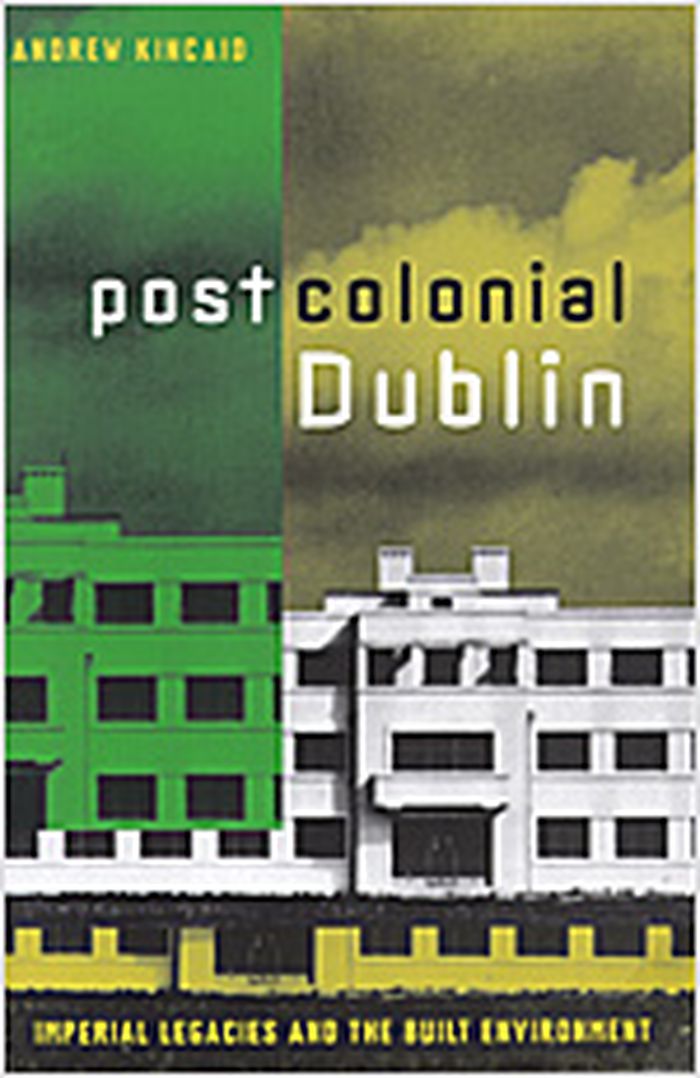
Postcolonial Dublin : imperial legacies and the built environment
Actions:
Prix:
$31.50
(disponible sur commande)
Résumé:
For hundreds of years, Ireland has been a testing ground for colonizing techniques. Postcolonial Dublin shows how perpetrators of colonialism have made use of urban planning and architecture to underscore and legitimate ideologies. From suburban development to building facades, the conflict between nationalists and colonialists has inscribed itself on Dublin’s landscape. Andrew Kincaid illustrates how the architecture and urban planning of Dublin have been integral to debates about nationalism, modernism, and Ireland’s relationship to the rest of the world. Looking at objects such as Londonderry’s Market House, Patrick Abercrombie’s Dublin of the Future, and the urban renewal project of today’s Temple Bar, Kincaid highlights Ireland’s colonial history and the significance of architecture in the evolution of national identity. In doing so, he demonstrates how ideology “spatializes” itself. Postcolonial Dublin engages the prevailing historical representations of Irish nationalism, arguing that the evolving city reflected a debate over who would hold the reins of power. Bringing the tools of literary criticism and postcolonial theory to bear on the field of urban studies, Kincaid places Dublin at the forefront of debates over modernism, modernity, and globalization.
Classification:
livres
livres
Publication:
mai 2006, Minneapolis
mai 2006, Minneapolis
Classification:
livres
livres
Titre:
The Maze : Donovan Wylie
The Maze : Donovan Wylie
Actions:
Prix:
$58.95
(disponible sur commande)
Résumé:
For nearly thirty years, the Maze prison, ten miles outside Belfast, played a unique role in the Northern Ireland troubles. Built in 1976 to house political prisoners, segregation was so fierce it lead to scenes of violent protests, hunger strikes, mass escapes, and deaths of both prisoners and prison staff. At its peak capacity in the 1980s the Maze housed more than(...)
Titre:
The Maze : Donovan Wylie
Actions:
Prix:
$58.95
(disponible sur commande)
Résumé:
For nearly thirty years, the Maze prison, ten miles outside Belfast, played a unique role in the Northern Ireland troubles. Built in 1976 to house political prisoners, segregation was so fierce it lead to scenes of violent protests, hunger strikes, mass escapes, and deaths of both prisoners and prison staff. At its peak capacity in the 1980s the Maze housed more than 1,700 prisoners, but in September 2000, under the terms of the Good Friday agreement, the prison was closed and the last four prisoners were transferred to other prisons in Northern Ireland. Now, a handful of prison officers staff the empty complex while the future of the site is debated. The prison’s current state of limbo and the unanswered questions regarding its fate seem to reflect Northern Ireland’s unsteady progress in grappling with its recent history. Earlier this year, the Northern Ireland Prison Service gave Donovan Wylie exclusive and unprecedented permission to photograph throughout the entire prison complex without supervision. The result is a book which documents the physical structure and at the same time, through the quantity and style of the photographs, to give the viewer some experience of the psychological impact of being inside the Maze prison. With a text by Louise Purbrick, Senior Lecturer in History and Design at Brighton University, and a timeline history of the prison and its prisoners as they relate to the history of the Troubles, this book records and preserves a unique physical structure that has played an important role in our recent history.
Classification:
livres
livres
Publication:
août 2004, London
août 2004, London
Sujet:
Monographies photo
Monographies photo
Classification:
livres
livres
Actions:
Prix:
$94.00
(disponible sur commande)
Résumé:
On the occasion of the exhibition "Archilab 2006" dedicated to the Japenese architecture and entitled "Nested in the city", Hyx publish the catalog of the exhibition in french and english version. They present all the projects of thirty invited architects and a set of critical texts which put in perspective the stakes and the subjects of the exhibition. More than any(...)
Publication:
octobre 2006, Orléans
octobre 2006, Orléans
Titre:
Archilab Japan, Orléans 2006 : nested in the city
Actions:
Prix:
$94.00
(disponible sur commande)
Résumé:
On the occasion of the exhibition "Archilab 2006" dedicated to the Japenese architecture and entitled "Nested in the city", Hyx publish the catalog of the exhibition in french and english version. They present all the projects of thirty invited architects and a set of critical texts which put in perspective the stakes and the subjects of the exhibition. More than any other country, Japan was interested at home, the space domesticates being perceived as a space privileging the thought. Hundred of projects presented in the catalog are built for the greater part. Selected by both curators (Akira Suzuki and Mariko Terada), they offer us a panorama of this architects' new generation which began in the 1990s. The most famous in France are doubtless Shigeru Ban presented to Archilab in 1999 and which was the first one to make approve tubes cardboard as support of his houses and also Kasujo Sejima who saw confiding with Ryue Nishizawa the construction of the Museum of the Louvre to Lens. Symbolic Bow Wow workshop is the Leader of this new generation. After the economic crisis of the end of the 90s, the construction of public establishments of average dimension and the competitions of architecture rarefied. The house thus becomes the space of creation privileged for these architects. That's why, in Tokyo, Jun Aoki, Kazuyo Sejima, Ryue Nishizawa, Takaharu and Yui Tezuka, Mitsuhiko Sato, Taira Nishizawa, Masao Koizumi, Yasuhiro Yamashita, Mikio Tai, Yuki Ishiguro, conceive small houses which embody the way of life of their inhabitants and maybe our future today.
Classification:
livres
livres
Publication:
octobre 2006, Orléans
octobre 2006, Orléans
Classification:
périodiques
périodiques
Titre:
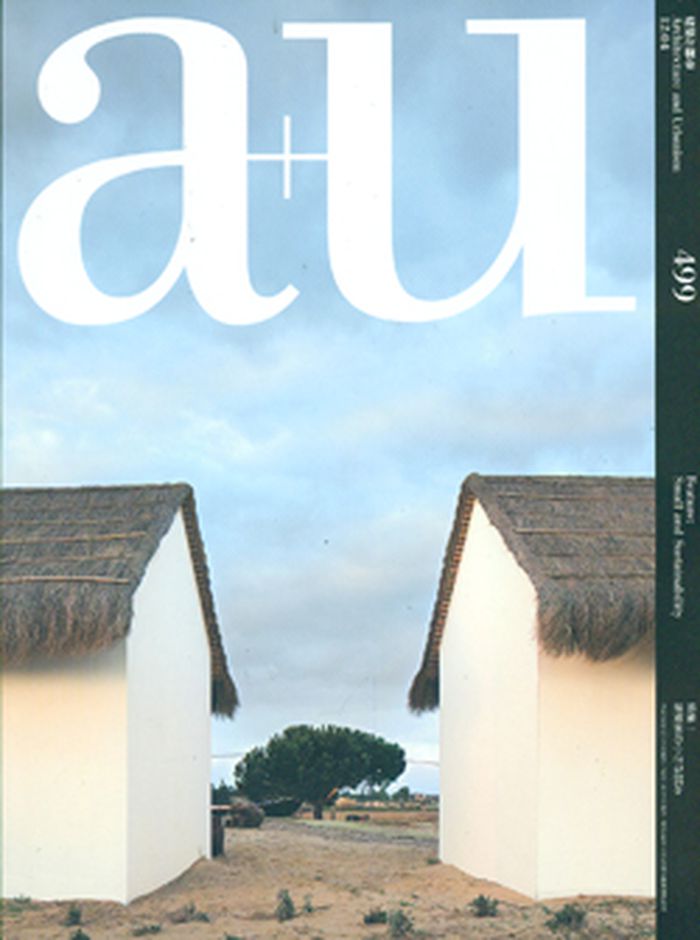
A+U 499
A+U 499
Actions:
Prix:
$54.95
(disponible sur commande)
Résumé:
This issue of a+u features projects of a small and sustainable nature. From the passive house in Bessancourt, France, by Karawitz Architecture and a solar house in the Aosta Valley, Italy, by Studio ALBORI, to TYIN tegnestue Architects’ Safe Haven Library and Bathhouse in Thailand and Virginia Tech Center’s ‘Lumenhaus’ in Blacksburg, Virginia, USA, the global range of(...)
Titre:
A+U 499
Actions:
Prix:
$54.95
(disponible sur commande)
Résumé:
This issue of a+u features projects of a small and sustainable nature. From the passive house in Bessancourt, France, by Karawitz Architecture and a solar house in the Aosta Valley, Italy, by Studio ALBORI, to TYIN tegnestue Architects’ Safe Haven Library and Bathhouse in Thailand and Virginia Tech Center’s ‘Lumenhaus’ in Blacksburg, Virginia, USA, the global range of projects herein are all examples of how architecture can contribute to realizing a sustainable society in the future. Also included is an essay on the C2C (‘cradle to cradle’) concept, as investigated by the Belgian research collective Rotor.
Classification:
périodiques
périodiques
Publication:
juillet 2012
juillet 2012
Sujet:
Revues
Revues
Classification:
livres
livres
Titre:
Moving archives
Moving archives
Actions:
Prix:
$85.00
(disponible sur commande)
Résumé:
The image of the dusty, undisturbed archive has been swept away in response to growing interest across disciplines in the materials they house and the desire to find and make meaning through an engagement with those materials. Archival studies scholars and archivists are developing related theoretical frameworks and practices that recognize that the archives are anything(...)
Titre:
Moving archives
Actions:
Prix:
$85.00
(disponible sur commande)
Résumé:
The image of the dusty, undisturbed archive has been swept away in response to growing interest across disciplines in the materials they house and the desire to find and make meaning through an engagement with those materials. Archival studies scholars and archivists are developing related theoretical frameworks and practices that recognize that the archives are anything but static. Archival deposits are proliferating, and the architects, practitioners, and scholars engaged with them are scarcely able to keep abreast of them. Archives, archival theory, and archival practice are on the move. But what of the archives that were once safely housed and have since been lost, or are under threat? What of the urgency that underscores the appeals made on behalf of these archives? As scholars in this volume argue, archives—their materialization, their preservation, and the research produced about them—are moving in a different way: they are involved in an emotionally engaged and charged process, one that acts equally upon archival subjects and those engaged with them. So too do archives at once represent members of various communities and the fields of study drawn to them. "Moving Archives" grounds itself in the critical trajectory related to what Sara Ahmed calls “affective economies” to offer fresh insights about the process of archiving and approaching literary materials. These economies are not necessarily determined by ethical impulses, although many scholars have called out for such impulses to underwrite current archival practices; rather, they form the crucial affective contexts for the legitimization of archival caches in the present moment and for future use.
Classification:
livres
livres
Publication:
janvier 2020
janvier 2020


