


972 Résultats
Classification:
livres
livres

Actions:
Prix:
$20.00
(disponible sur commande)
Résumé:
De 1970 à 1973, la présidence de Salvador Allende (1908-1973) entendit gérer la transition de l'économie chilienne du capitalisme vers le socialisme. Sous la direction du Britannique Stafford Beer (1926-2002), « père de la gestion cybernétique » adoubé par Norbert Wiener, une équipe interdisciplinaire conçut les modèles cybernétiques d'usines du secteur nationalisé de(...)
Titre:
Le projet cybersyn: la cybernétique socialiste dans le Chili de Salvador Allende
Actions:
Prix:
$20.00
(disponible sur commande)
Résumé:
De 1970 à 1973, la présidence de Salvador Allende (1908-1973) entendit gérer la transition de l'économie chilienne du capitalisme vers le socialisme. Sous la direction du Britannique Stafford Beer (1926-2002), « père de la gestion cybernétique » adoubé par Norbert Wiener, une équipe interdisciplinaire conçut les modèles cybernétiques d'usines du secteur nationalisé de l'économie, et créa un réseau informatique de collecte et transmission rapides des données économiques entre le gouvernement et les ateliers de production. Bien que jamais activée, sa salle de contrôle dessinée au sein du Palais présidentiel par Gui Bonsiepe (1934- ), étudiant de l'école de design d'Ulm (où il enseigna de 1960 à 1968), constituait la partie visible de ce dispositif...
Classification:
livres
livres
Publication:
octobre 2017
octobre 2017
Sujet:
Architecture numérique
Architecture numérique
Classification:
livres
livres

Titre:
Un space paraflows 07
Un space paraflows 07
Actions:
Prix:
$10.95
(disponible sur commande)
Résumé:
This catalogue was published on the occasion of the exhibition 'Un Space, Paraflows 07' 13 -23.09.2007. The exhibition was focussing on inaccessible, invisible, theoritical, and immaterial space: virtual space.
$10.95
(disponible sur commande)
Résumé:
This catalogue was published on the occasion of the exhibition 'Un Space, Paraflows 07' 13 -23.09.2007. The exhibition was focussing on inaccessible, invisible, theoritical, and immaterial space: virtual space.
Sujet:
Architecture numérique
Architecture numérique
Publication:
octobre 2007, Wien
octobre 2007, Wien
Titre:
Un space paraflows 07
Actions:
Prix:
$10.95
(disponible sur commande)
Résumé:
This catalogue was published on the occasion of the exhibition 'Un Space, Paraflows 07' 13 -23.09.2007. The exhibition was focussing on inaccessible, invisible, theoritical, and immaterial space: virtual space.
Un space paraflows 07
Actions:
Prix:
$10.95
(disponible sur commande)
Résumé:
This catalogue was published on the occasion of the exhibition 'Un Space, Paraflows 07' 13 -23.09.2007. The exhibition was focussing on inaccessible, invisible, theoritical, and immaterial space: virtual space.
Classification:
livres
livres
Publication:
octobre 2007, Wien
octobre 2007, Wien
Sujet:
Architecture numérique
Architecture numérique
Classification:
livres
livres
Actions:
Prix:
$25.00
(disponible sur commande)
Résumé:
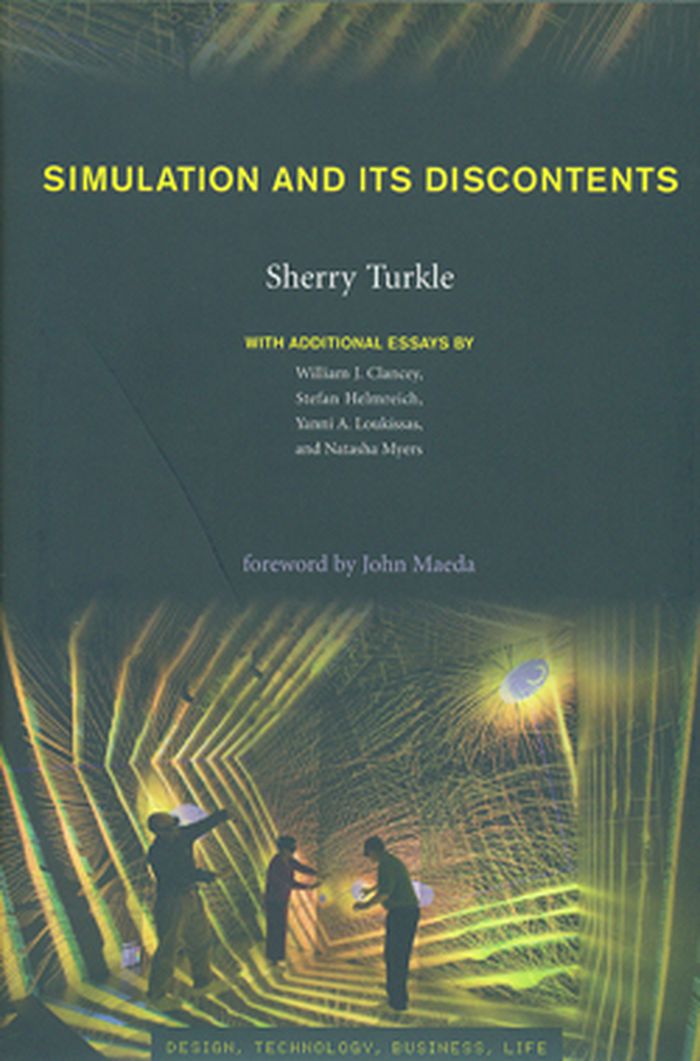
Echoing architect Louis Kahn's famous question, "What does a brick want?", Turkle asks, "What does simulation want?" Simulations want, even demand, immersion, and the benefits are clear. Architects create buildings unimaginable before virtual design; scientists determine the structure of molecules by manipulating them in virtual space; physicians practice anatomy on(...)
Titre:
Simulation and its discontents
Actions:
Prix:
$25.00
(disponible sur commande)
Résumé:
Echoing architect Louis Kahn's famous question, "What does a brick want?", Turkle asks, "What does simulation want?" Simulations want, even demand, immersion, and the benefits are clear. Architects create buildings unimaginable before virtual design; scientists determine the structure of molecules by manipulating them in virtual space; physicians practice anatomy on digitized humans. But immersed in simulation, we are vulnerable. There are losses as well as gains. Older scientists describe a younger generation as "drunk with code." Young scientists, engineers, and designers, full citizens of the virtual, scramble to capture their mentors' tacit knowledge of buildings and bodies. From both sides of a generational divide, there is anxiety that in simulation, something important is slipping away.
Classification:
livres
livres
Publication:
avril 2009
avril 2009
Sujet:
Architecture numérique
Architecture numérique
Classification:
livres
livres
Prix:
$42.00
(disponible sur commande)
Résumé:
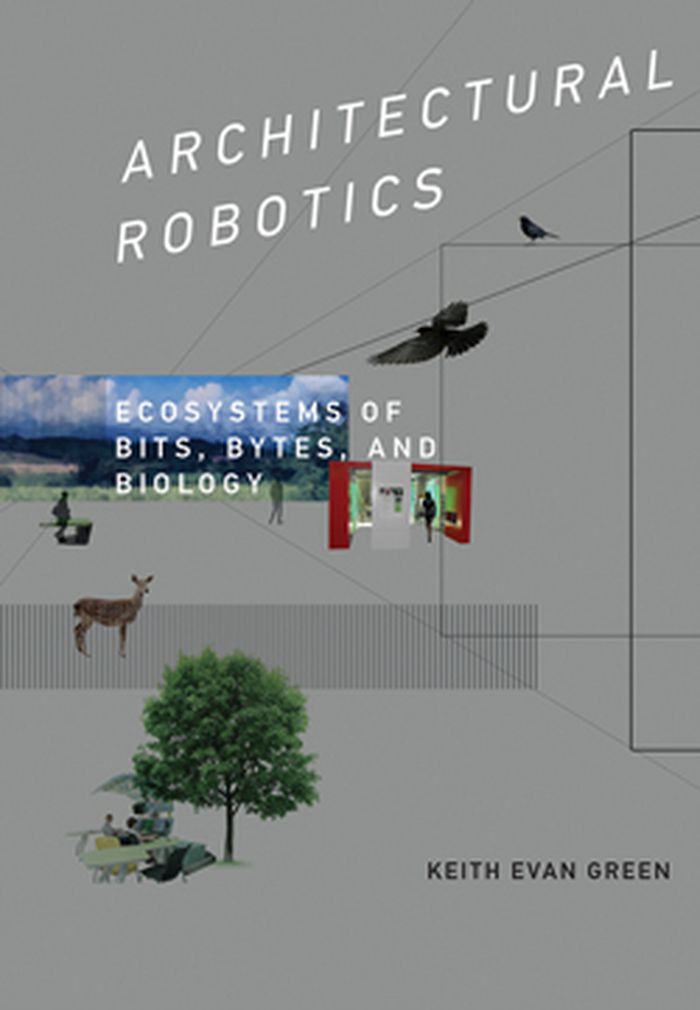
In this book, Keith Evan Green looks toward the next frontier in computing: interactive, partly intelligent, meticulously designed physical environments. Green examines how these "architectural robotic" systems will support and augment us at work, school, and home, as we roam, interconnect, and age.
Titre:
Architectural Robotics: Ecosystems of Bits, Bytes, and Biology
Actions:
Prix:
$42.00
(disponible sur commande)
Résumé:
In this book, Keith Evan Green looks toward the next frontier in computing: interactive, partly intelligent, meticulously designed physical environments. Green examines how these "architectural robotic" systems will support and augment us at work, school, and home, as we roam, interconnect, and age.
Classification:
livres
livres
Publication:
février 2016
février 2016
Sujet:
Architecture numérique
Architecture numérique
Classification:
livres
livres
Actions:
Prix:
$57.50
(disponible en magasin)
Résumé:
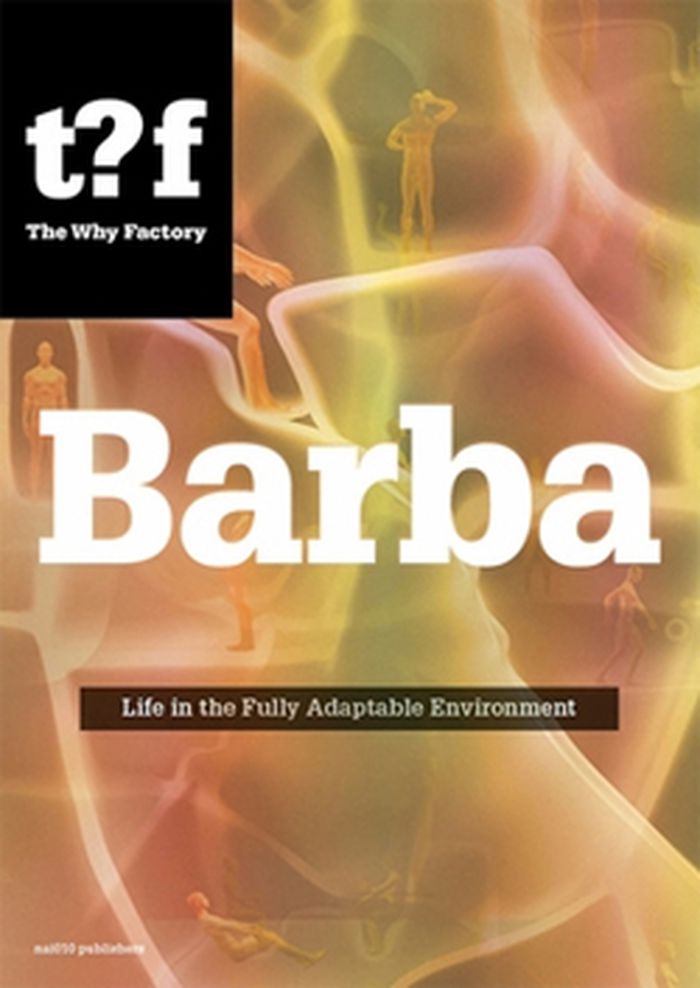
How might nanotechnology—the manipulation of matter at the level of atoms and molecules—change buildings and cities in the future? The authors of Barba have imagined one possible future, shaped by a miraculous nanomaterial of the same name, which can be steered and altered in real time, changing its shape and size at will. With Barba, the authors speculate, the built(...)
Titre:
Barba: Life in the Fully Adaptable Environment
Actions:
Prix:
$57.50
(disponible en magasin)
Résumé:
How might nanotechnology—the manipulation of matter at the level of atoms and molecules—change buildings and cities in the future? The authors of Barba have imagined one possible future, shaped by a miraculous nanomaterial of the same name, which can be steered and altered in real time, changing its shape and size at will. With Barba, the authors speculate, the built environment can be adapted almost immediately to every desire and every need. This volume, the latest in The Why Factory’s Future Cities series, envisions the dramatic potential of nanomaterial to change cities and architecture in the not-so-distant future, further explored in a series of interactive experiments and installations. Part speculative architecture, part science fiction, Barba follows an inhabitant of this flexible future world for a day, daring the reader to imagine life in a fully adaptable environment.
Classification:
livres
livres
Publication:
février 2016
février 2016
Sujet:
Architecture numérique
Architecture numérique
Classification:
périodiques
périodiques
Actions:
Prix:
$44.00
(disponible sur commande)
Résumé:
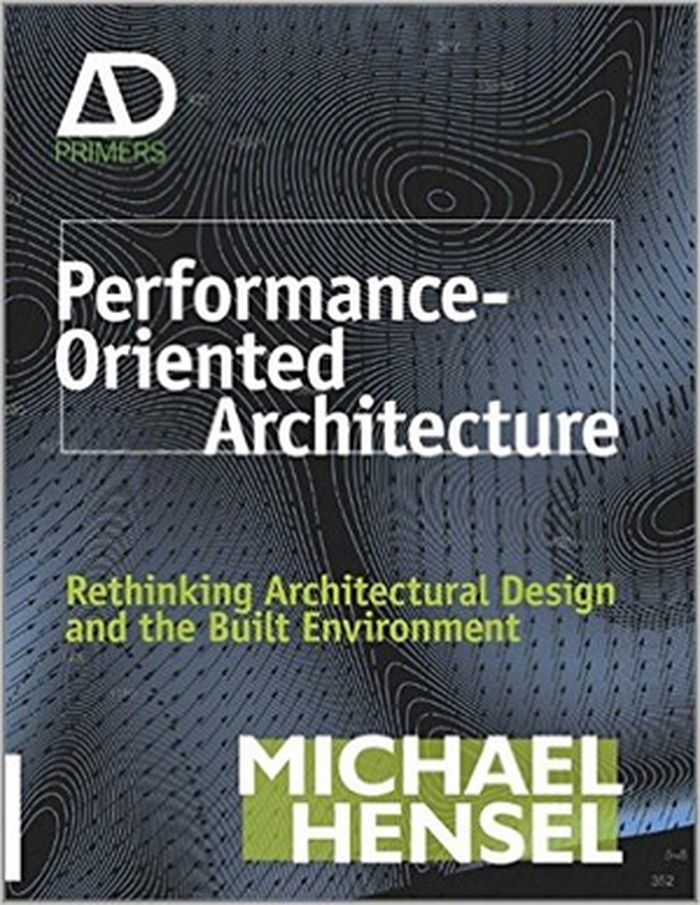
This book offers an innovative and highly practical approach to architectural design. Focusing on the concept of performance that brought about a paradigm shift in the humanities in earlier decades, the book discusses how to use this concept to address ongoing problems in architecture. It explores the meaning of performance in the context of the built environment, design(...)
Titre:
AD Primers: Performance-oriented architecture: rethinking architectural design and the built environment
Actions:
Prix:
$44.00
(disponible sur commande)
Résumé:
This book offers an innovative and highly practical approach to architectural design. Focusing on the concept of performance that brought about a paradigm shift in the humanities in earlier decades, the book discusses how to use this concept to address ongoing problems in architecture. It explores the meaning of performance in the context of the built environment, design processes, sustainable architecture, spatial organization, and other aspects of design. Featuring numerous color illustrations plus historical and contemporary examples, this is an eye-opening resource for architects and urban designers.
Classification:
périodiques
périodiques
Publication:
octobre 2013
octobre 2013
Sujet:
Architecture numérique
Architecture numérique
Classification:
livres
livres
Prix:
$54.50
(disponible sur commande)
Résumé:
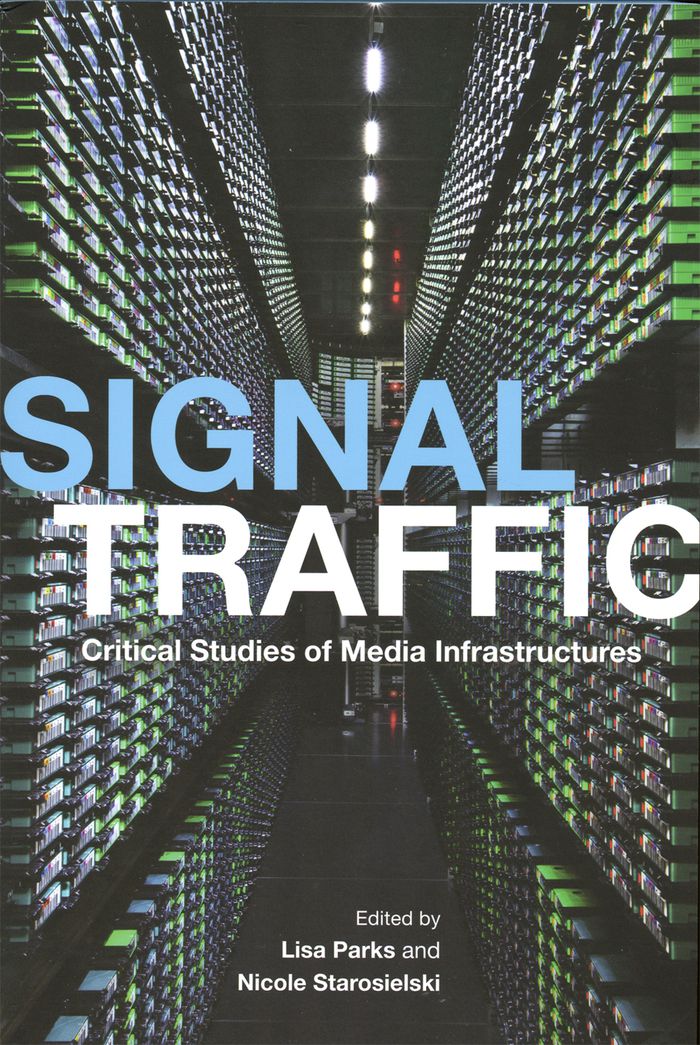
In this book, editors Lisa Parks and Nicole Starosielski use the term "media infrastructure" to signal a shift in critical focus and approach that questions the international telecommunication network as a given. Contributors instead confront vital questions concerning the multiple and hybrid forms networks take, the different ways they are imagined and engaged with by(...)
Titre:
Signal traffic: critical studies of media infrastructures
Actions:
Prix:
$54.50
(disponible sur commande)
Résumé:
In this book, editors Lisa Parks and Nicole Starosielski use the term "media infrastructure" to signal a shift in critical focus and approach that questions the international telecommunication network as a given. Contributors instead confront vital questions concerning the multiple and hybrid forms networks take, the different ways they are imagined and engaged with by publics around the world, their local effects, and what human beings experience when a network fails.
Classification:
livres
livres
Publication:
juin 2015
juin 2015
Sujet:
Architecture numérique
Architecture numérique
Classification:
livres
livres

Actions:
Prix:
$35.95
(disponible sur commande)
Résumé:
Un essai sur la neuroesthétique, espace interdisciplinaire entre esthétique, neurosciences et sciences cognitives. L'auteur s'interroge notamment sur la place de l'inné et de l'acquis dans l'expression de notre sensibilité au beau, sur les dispositions neuronales ou les processus physiologiques qui favorisent la reconnaissance et l'appréciation de la beauté.
Titre:
Art et technosciences : bioart et neuroesthétique
Actions:
Prix:
$35.95
(disponible sur commande)
Résumé:
Un essai sur la neuroesthétique, espace interdisciplinaire entre esthétique, neurosciences et sciences cognitives. L'auteur s'interroge notamment sur la place de l'inné et de l'acquis dans l'expression de notre sensibilité au beau, sur les dispositions neuronales ou les processus physiologiques qui favorisent la reconnaissance et l'appréciation de la beauté.
Classification:
livres
livres
Publication:
juin 2016
juin 2016
Sujet:
Architecture numérique
Architecture numérique
Classification:
livres
livres

Prix:
$44.90
(disponible sur commande)
Résumé:
Robots build! At their Program in Architecture and Digital Production at the Eidgenössische Technische Hochschule (ETH) Zürich (Swiss Federal Institute of Technology in Zurich), the architects Gramazio and Kohler have installed a research facility that is unique in the world. It is based on a computer-controlled industrial robot that produces construction elements(...)
Sujet:
Architecture numérique
Architecture numérique
Publication:
septembre 2008, Baden
septembre 2008, Baden
Titre:
Digital materiality in architecture: Gramazio & Kohler
Actions:
Prix:
$44.90
(disponible sur commande)
Résumé:
Robots build! At their Program in Architecture and Digital Production at the Eidgenössische Technische Hochschule (ETH) Zürich (Swiss Federal Institute of Technology in Zurich), the architects Gramazio and Kohler have installed a research facility that is unique in the world. It is based on a computer-controlled industrial robot that produces construction elements directly from design data. The robot works flexibly with a tremendous range of tools and materials.
Classification:
livres
livres
Publication:
septembre 2008, Baden
septembre 2008, Baden
Sujet:
Architecture numérique
Architecture numérique
Classification:
livres
livres
Titre:
CITA works
CITA works
Actions:
Prix:
$49.95
(disponible sur commande)
Résumé:
The Centre for Information Technology and Architecture (CITA) is an innovative research environment exploring the emergent intersections between architecture and digital technologies. This thoroughly illustrated book documents over 40 projects, events and research collaborations conducted between 2005 and 2014 by CITA.
Titre:
CITA works
Actions:
Prix:
$49.95
(disponible sur commande)
Résumé:
The Centre for Information Technology and Architecture (CITA) is an innovative research environment exploring the emergent intersections between architecture and digital technologies. This thoroughly illustrated book documents over 40 projects, events and research collaborations conducted between 2005 and 2014 by CITA.
Classification:
livres
livres
Publication:
novembre 2015
novembre 2015
Sujet:
Architecture numérique
Architecture numérique


