


805 Résultats
Classification:
livres
livres

Actions:
Prix:
$39.95
(disponible sur commande)
Résumé:
Where has our planet come from, and what lies beneath its surface? How have we come to understand its past and present environments, and what does its future look like? Thanks to scientists who study its rocks, fossils, and landscapes, we know that Earth history spans over four and a half billion years. But there is still much more to discover. This ''Little History''(...)
$39.95
(disponible sur commande)
Résumé:
Where has our planet come from, and what lies beneath its surface? How have we come to understand its past and present environments, and what does its future look like? Thanks to scientists who study its rocks, fossils, and landscapes, we know that Earth history spans over four and a half billion years. But there is still much more to discover. This ''Little History''(...)
Titre:
A little history of the earth
Actions:
Prix:
$39.95
(disponible sur commande)
Résumé:
Where has our planet come from, and what lies beneath its surface? How have we come to understand its past and present environments, and what does its future look like? Thanks to scientists who study its rocks, fossils, and landscapes, we know that Earth history spans over four and a half billion years. But there is still much more to discover. This ''Little History'' recounts our planet’s fascinating past and the science which has shaped how we think about it. Taking us from the formation of the Solar System, the evolution of our atmosphere and oceans, and the first signs of life, through to dinosaurs, mammals, and the eventual arrival of humans, Woodward shows us the full span of Earth history, from deep time to the Anthropocene. Along the way, we learn about the major breakthroughs of the pioneering scientists who have unearthed our planet’s secrets. From fossils of ancient creatures to the very air we breathe, this is the essential guide to our world.
A little history of the earth
Actions:
Prix:
$39.95
(disponible sur commande)
Résumé:
Where has our planet come from, and what lies beneath its surface? How have we come to understand its past and present environments, and what does its future look like? Thanks to scientists who study its rocks, fossils, and landscapes, we know that Earth history spans over four and a half billion years. But there is still much more to discover. This ''Little History'' recounts our planet’s fascinating past and the science which has shaped how we think about it. Taking us from the formation of the Solar System, the evolution of our atmosphere and oceans, and the first signs of life, through to dinosaurs, mammals, and the eventual arrival of humans, Woodward shows us the full span of Earth history, from deep time to the Anthropocene. Along the way, we learn about the major breakthroughs of the pioneering scientists who have unearthed our planet’s secrets. From fossils of ancient creatures to the very air we breathe, this is the essential guide to our world.
Classification:
livres
livres
Publication:
novembre 2025
novembre 2025
Sujet:
Théorie du paysage
Théorie du paysage
Classification:
livres
livres
Titre:
Patterns of the Earth
Patterns of the Earth
Actions:
Prix:
$6.50
(disponible sur commande)
Résumé:
This book celebrates the patterns and abstract forms found in nature. Bernhard Edmaier’s aerial photographs show the beautiful shapes formed on the earth’s surface by rocks, ice, sand, water, trees and plants. The hundreds of images in this book make us look at the world in a new way, by showing us surprising similarities and unexpected links between the most disparate(...)
$6.50
(disponible sur commande)
Résumé:
This book celebrates the patterns and abstract forms found in nature. Bernhard Edmaier’s aerial photographs show the beautiful shapes formed on the earth’s surface by rocks, ice, sand, water, trees and plants. The hundreds of images in this book make us look at the world in a new way, by showing us surprising similarities and unexpected links between the most disparate(...)
Titre:
Patterns of the Earth
Actions:
Prix:
$6.50
(disponible sur commande)
Résumé:
This book celebrates the patterns and abstract forms found in nature. Bernhard Edmaier’s aerial photographs show the beautiful shapes formed on the earth’s surface by rocks, ice, sand, water, trees and plants. The hundreds of images in this book make us look at the world in a new way, by showing us surprising similarities and unexpected links between the most disparate regions of the planet. Instead of seeing a forest or a desert or a field, we see circles and lines, zigzags and spirals, abstract shapes and precise repetition occurring in the most unexpected places. In this book, Edmaier`s photographs are organized by shape and form into clearly defined sections, with tabbed pages for easy access. Each section features short texts explaining where the types of patterns depicted in that chapter are found and how they are formed. In additon, every picture has a caption describing the location of the depicted pattern, and how it was created.
Patterns of the Earth
Actions:
Prix:
$6.50
(disponible sur commande)
Résumé:
This book celebrates the patterns and abstract forms found in nature. Bernhard Edmaier’s aerial photographs show the beautiful shapes formed on the earth’s surface by rocks, ice, sand, water, trees and plants. The hundreds of images in this book make us look at the world in a new way, by showing us surprising similarities and unexpected links between the most disparate regions of the planet. Instead of seeing a forest or a desert or a field, we see circles and lines, zigzags and spirals, abstract shapes and precise repetition occurring in the most unexpected places. In this book, Edmaier`s photographs are organized by shape and form into clearly defined sections, with tabbed pages for easy access. Each section features short texts explaining where the types of patterns depicted in that chapter are found and how they are formed. In additon, every picture has a caption describing the location of the depicted pattern, and how it was created.
Classification:
livres
livres
Publication:
novembre 2006, London, New York
novembre 2006, London, New York
Classification:
livres
livres
Actions:
Prix:
$45.00
(disponible sur commande)
Résumé:
This book presents a terrestrial description of the Seagram Building. It aims to describe how humans and nature interact with the thin crust of the planet. Architecture reorganizes nature and society in particular ways that today demand overt attention and new methods of description. ''The immense material, energy and labor involved in building require a fresh(...)
$45.00
(disponible sur commande)
Résumé:
This book presents a terrestrial description of the Seagram Building. It aims to describe how humans and nature interact with the thin crust of the planet. Architecture reorganizes nature and society in particular ways that today demand overt attention and new methods of description. ''The immense material, energy and labor involved in building require a fresh(...)
Titre:
Unless: the Seagram building construction ecology
Actions:
Prix:
$45.00
(disponible sur commande)
Résumé:
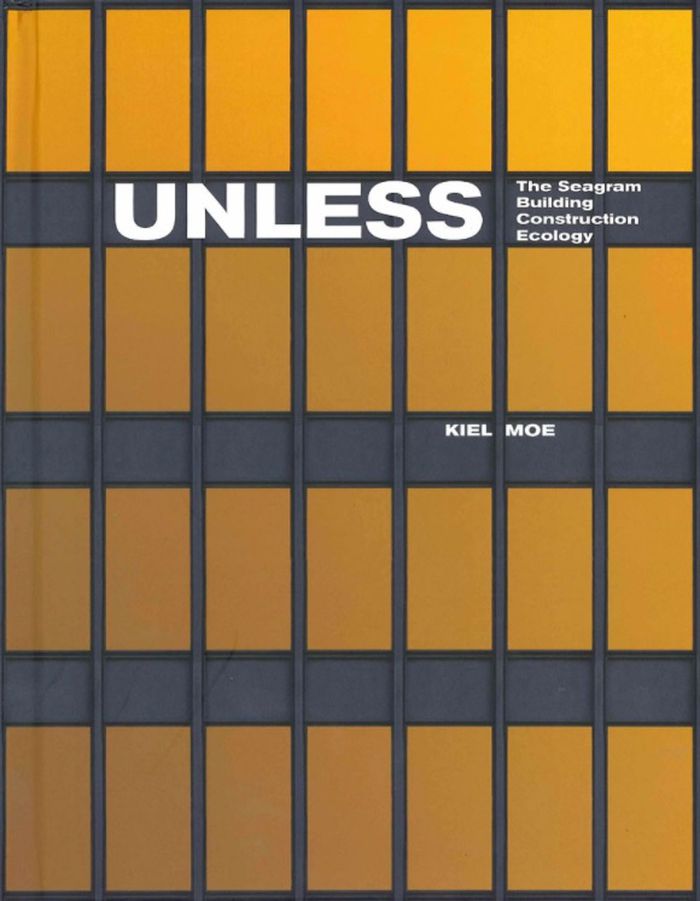
This book presents a terrestrial description of the Seagram Building. It aims to describe how humans and nature interact with the thin crust of the planet. Architecture reorganizes nature and society in particular ways that today demand overt attention and new methods of description. ''The immense material, energy and labor involved in building require a fresh interpretation that better situates the ecological and social potential of design. Architecture and society would benefit from alternative descriptions of building and architecture as terrestrial activities that help imagine how to maximize the impact of architecture on its environment. I argue that the enhancement of a particular building should be inextricable from the enhancement of its world-system and construction ecology. A 'beautiful' building engendered through the vulgarity of uneven exchanges and processes of underdevelopment is no longer a tenable conceit in such a framework. Design can and should evince the inherent solidarity and reciprocity of people, places and politics involved in building architecture.''
Unless: the Seagram building construction ecology
Actions:
Prix:
$45.00
(disponible sur commande)
Résumé:
This book presents a terrestrial description of the Seagram Building. It aims to describe how humans and nature interact with the thin crust of the planet. Architecture reorganizes nature and society in particular ways that today demand overt attention and new methods of description. ''The immense material, energy and labor involved in building require a fresh interpretation that better situates the ecological and social potential of design. Architecture and society would benefit from alternative descriptions of building and architecture as terrestrial activities that help imagine how to maximize the impact of architecture on its environment. I argue that the enhancement of a particular building should be inextricable from the enhancement of its world-system and construction ecology. A 'beautiful' building engendered through the vulgarity of uneven exchanges and processes of underdevelopment is no longer a tenable conceit in such a framework. Design can and should evince the inherent solidarity and reciprocity of people, places and politics involved in building architecture.''
Classification:
livres
livres
Publication:
janvier 2021
janvier 2021
Sujet:
Structures d’ingénierie
Structures d’ingénierie
Classification:
livres
livres
Actions:
Prix:
$33.95
(disponible en magasin)
Résumé:
There is widespread consensus that we are living at the end—of democracy, of liberalism, of capitalism, of a healthy planet, of the Holocene, of civilization as we know it. In this book, drawing on radical futurisms and visions of justice-to-come emerging from the traditions of the oppressed—Indigenous, African-American, multispecies, anti-capitalist—as materialized in(...)
$33.95
(disponible en magasin)
Résumé:
There is widespread consensus that we are living at the end—of democracy, of liberalism, of capitalism, of a healthy planet, of the Holocene, of civilization as we know it. In this book, drawing on radical futurisms and visions of justice-to-come emerging from the traditions of the oppressed—Indigenous, African-American, multispecies, anti-capitalist—as materialized in(...)
Titre:
Radical futurisms: Ecologies of collapse/chronopolitics/justice to come
Actions:
Prix:
$33.95
(disponible en magasin)
Résumé:
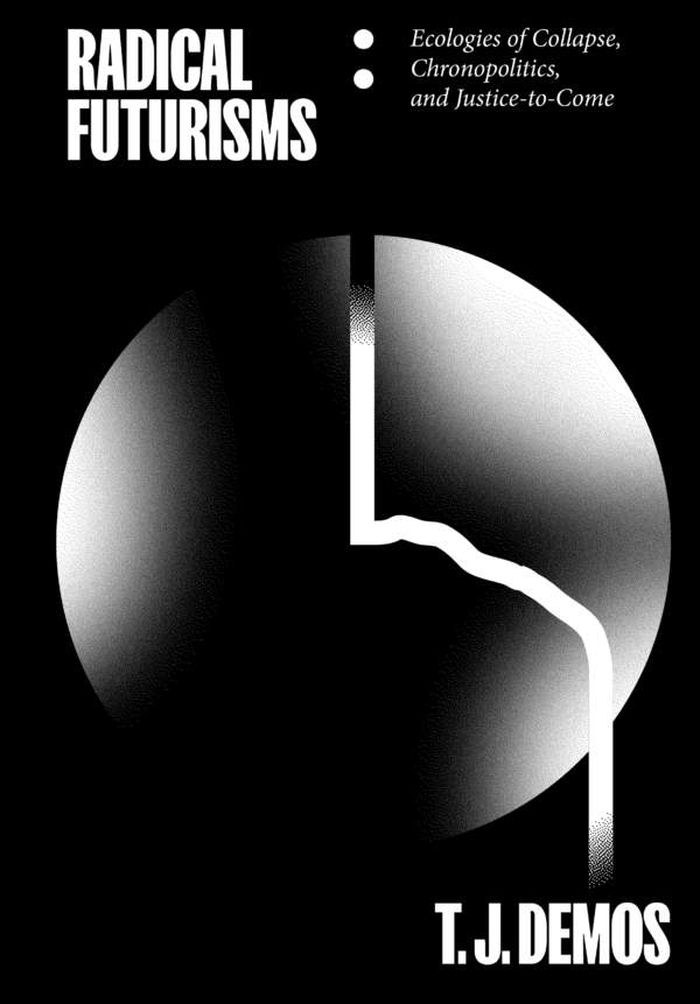
There is widespread consensus that we are living at the end—of democracy, of liberalism, of capitalism, of a healthy planet, of the Holocene, of civilization as we know it. In this book, drawing on radical futurisms and visions of justice-to-come emerging from the traditions of the oppressed—Indigenous, African-American, multispecies, anti-capitalist—as materialized in experimental visual cultural, new media, aesthetic practices, and social movements, T. J. Demos poses speculative questions about what comes after end-of-world narratives. He argues that it's as vital to defeat fatalistic nihilism as it is to defeat the false solutions of green capitalism and algorithmic governance. How might we decolonize the future, and cultivate an emancipated chronopolitics in relation to an undetermined not-yet? If we are to avoid climate emergency's cooptation by technofixes, and the defuturing of multitudes by xenophobic eco-fascism, Demos argues, we must cultivate visions of just futurity and multispecies flourishing.
Radical futurisms: Ecologies of collapse/chronopolitics/justice to come
Actions:
Prix:
$33.95
(disponible en magasin)
Résumé:
There is widespread consensus that we are living at the end—of democracy, of liberalism, of capitalism, of a healthy planet, of the Holocene, of civilization as we know it. In this book, drawing on radical futurisms and visions of justice-to-come emerging from the traditions of the oppressed—Indigenous, African-American, multispecies, anti-capitalist—as materialized in experimental visual cultural, new media, aesthetic practices, and social movements, T. J. Demos poses speculative questions about what comes after end-of-world narratives. He argues that it's as vital to defeat fatalistic nihilism as it is to defeat the false solutions of green capitalism and algorithmic governance. How might we decolonize the future, and cultivate an emancipated chronopolitics in relation to an undetermined not-yet? If we are to avoid climate emergency's cooptation by technofixes, and the defuturing of multitudes by xenophobic eco-fascism, Demos argues, we must cultivate visions of just futurity and multispecies flourishing.
Classification:
livres
livres
Publication:
mai 2023
mai 2023
Sujet:
L'écologie de l'architecure
L'écologie de l'architecure
Classification:
livres
livres
Actions:
Prix:
$22.00
(disponible sur commande)
Résumé:
"Treepedia" is an entertaining and fact-filled illustrated compendium of tree lore. Featuring nearly 100 entries- on topics ranging from tree ecology and conservation to the role of trees in religion, literature, art, and movies- this collection is a celebration of all things arboreal. In this book, Joan Maloof explains the difference between a cedar and a cypress, and(...)
$22.00
(disponible sur commande)
Résumé:
"Treepedia" is an entertaining and fact-filled illustrated compendium of tree lore. Featuring nearly 100 entries- on topics ranging from tree ecology and conservation to the role of trees in religion, literature, art, and movies- this collection is a celebration of all things arboreal. In this book, Joan Maloof explains the difference between a cedar and a cypress, and(...)
Titre:
Treepedia: a brief compendium of arboreal lore
Actions:
Prix:
$22.00
(disponible sur commande)
Résumé:
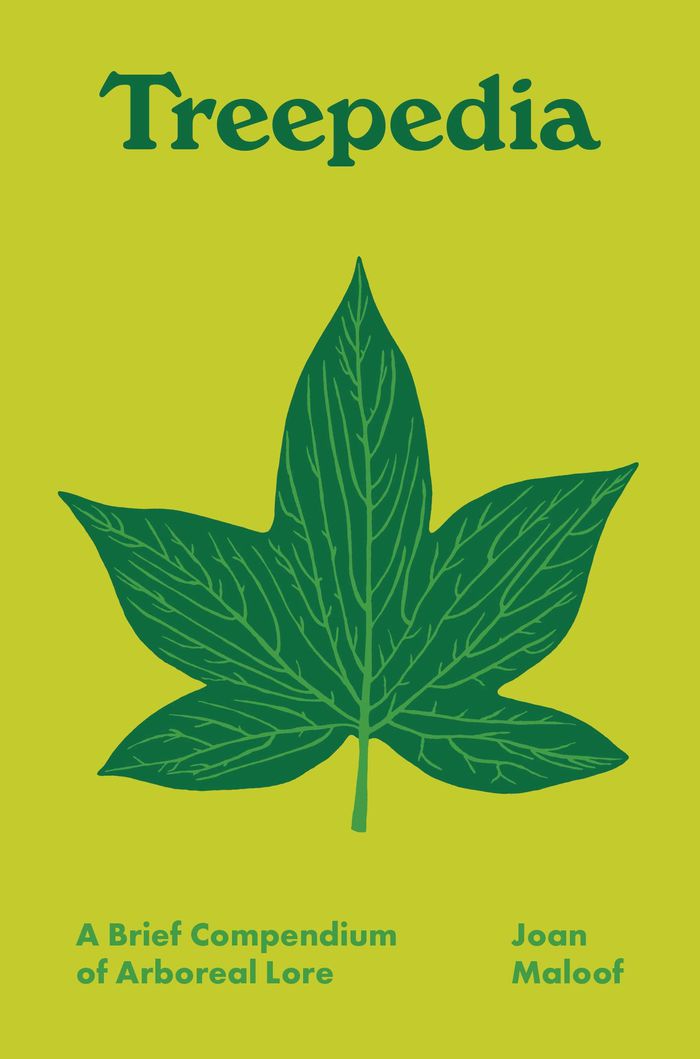
"Treepedia" is an entertaining and fact-filled illustrated compendium of tree lore. Featuring nearly 100 entries- on topics ranging from tree ecology and conservation to the role of trees in religion, literature, art, and movies- this collection is a celebration of all things arboreal. In this book, Joan Maloof explains the difference between a cedar and a cypress, and reveals where to find the most remarkable trees on the planet. She tells the story behind the venerable Bodhi Tree, and describes peculiar species like baobabs and Fitzroya. Maloof profiles legendary conservationists such as Julia "Butterfly" Hill, John Muir, Wangari Maathai, and Ken Wu. She discusses reforestation, proforestation, emerald ash borers, the ents from "The Lord of the Rings," culturally modified trees, the ill-fated and controversial Redwood Summer, and much more. The book's portable size makes it the perfect travel companion no matter where your love of the forest may lead you.
Treepedia: a brief compendium of arboreal lore
Actions:
Prix:
$22.00
(disponible sur commande)
Résumé:
"Treepedia" is an entertaining and fact-filled illustrated compendium of tree lore. Featuring nearly 100 entries- on topics ranging from tree ecology and conservation to the role of trees in religion, literature, art, and movies- this collection is a celebration of all things arboreal. In this book, Joan Maloof explains the difference between a cedar and a cypress, and reveals where to find the most remarkable trees on the planet. She tells the story behind the venerable Bodhi Tree, and describes peculiar species like baobabs and Fitzroya. Maloof profiles legendary conservationists such as Julia "Butterfly" Hill, John Muir, Wangari Maathai, and Ken Wu. She discusses reforestation, proforestation, emerald ash borers, the ents from "The Lord of the Rings," culturally modified trees, the ill-fated and controversial Redwood Summer, and much more. The book's portable size makes it the perfect travel companion no matter where your love of the forest may lead you.
Classification:
livres
livres
Publication:
septembre 2021
septembre 2021
Sujet:
Faune et flore
Faune et flore
Classification:
livres
livres
Actions:
Prix:
$24.95
(disponible sur commande)
Résumé:
Robots designed to care for people and neglected landscapes of digital trash. The promise of synthetic biology and the panic of living on a dying planet. Wonderful feats of intelligence and systemic acts of violence. Exhilaration and exhaustion. Rosi Braidotti argues that we must think about these apparent contradictions all together in order to make differences that(...)
$24.95
(disponible sur commande)
Résumé:
Robots designed to care for people and neglected landscapes of digital trash. The promise of synthetic biology and the panic of living on a dying planet. Wonderful feats of intelligence and systemic acts of violence. Exhilaration and exhaustion. Rosi Braidotti argues that we must think about these apparent contradictions all together in order to make differences that(...)
Titre:
Posthuman knowledge and the critical posthumanities
Actions:
Prix:
$24.95
(disponible sur commande)
Résumé:
Robots designed to care for people and neglected landscapes of digital trash. The promise of synthetic biology and the panic of living on a dying planet. Wonderful feats of intelligence and systemic acts of violence. Exhilaration and exhaustion. Rosi Braidotti argues that we must think about these apparent contradictions all together in order to make differences that actually matter. "Posthuman knowledge and the critical posthumanities" oscillates between evocations and transections of contemporary conditions, for which Braidotti offers what she calls the "posthuman convergence" as a new paradigm for situating and navigating their problems and possibilities. Reflecting on the knotted situation of the academic humanities, cognitive capitalism, and advanced climate change, she delivers an intersectional critique of humanism and anthropocentrism, and targets their exclusions and aporias to address subjectivity, knowledge production, and academic structures within that posthuman convergence. Braidotti's convergence demands imagination, endurance, connectivity, and perspectives multiplied, embodied, and grounded in the only world we have.
Posthuman knowledge and the critical posthumanities
Actions:
Prix:
$24.95
(disponible sur commande)
Résumé:
Robots designed to care for people and neglected landscapes of digital trash. The promise of synthetic biology and the panic of living on a dying planet. Wonderful feats of intelligence and systemic acts of violence. Exhilaration and exhaustion. Rosi Braidotti argues that we must think about these apparent contradictions all together in order to make differences that actually matter. "Posthuman knowledge and the critical posthumanities" oscillates between evocations and transections of contemporary conditions, for which Braidotti offers what she calls the "posthuman convergence" as a new paradigm for situating and navigating their problems and possibilities. Reflecting on the knotted situation of the academic humanities, cognitive capitalism, and advanced climate change, she delivers an intersectional critique of humanism and anthropocentrism, and targets their exclusions and aporias to address subjectivity, knowledge production, and academic structures within that posthuman convergence. Braidotti's convergence demands imagination, endurance, connectivity, and perspectives multiplied, embodied, and grounded in the only world we have.
Classification:
livres
livres
Publication:
novembre 2022
novembre 2022
Sujet:
Théorie/ philosophie
Théorie/ philosophie
Classification:
livres
livres
Actions:
Prix:
$34.95
(disponible sur commande)
Résumé:
Soon, more than two thirds of all human beings on the planet will live in cities, and the number of increasingly mobile people who shuttle effortlessly between major cities is constantly growing. Every year, various city rankings choose the “top ten” cities in the world. But what makes a city really livable? The answer to this question, as offered by the rankings, is(...)
$34.95
(disponible sur commande)
Résumé:
Soon, more than two thirds of all human beings on the planet will live in cities, and the number of increasingly mobile people who shuttle effortlessly between major cities is constantly growing. Every year, various city rankings choose the “top ten” cities in the world. But what makes a city really livable? The answer to this question, as offered by the rankings, is(...)
Titre:
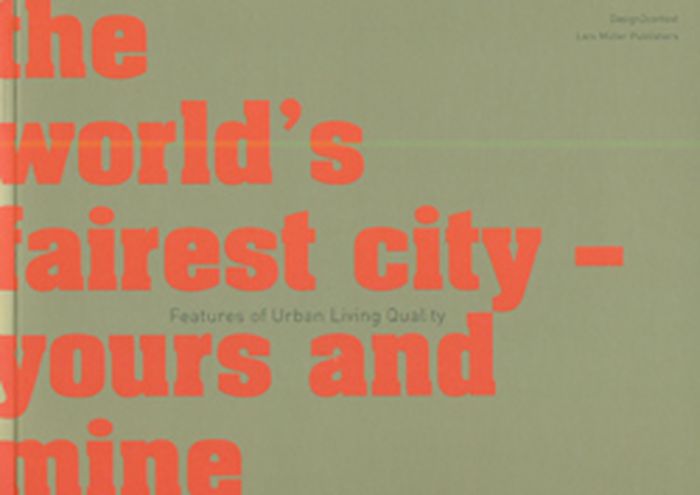
The world's fairest city, yours and mine: features of urban living quality
Actions:
Prix:
$34.95
(disponible sur commande)
Résumé:
Soon, more than two thirds of all human beings on the planet will live in cities, and the number of increasingly mobile people who shuttle effortlessly between major cities is constantly growing. Every year, various city rankings choose the “top ten” cities in the world. But what makes a city really livable? The answer to this question, as offered by the rankings, is anything but satisfactory. Their economically oriented, quantitative criteria are often taken out of context. But personal eperience is much more complex than this. Design2context began by studying established city rankings, then analyzed scenes from everyday urban life, and developed criteria that make it possible to rationally examine urban quality of life from “softer” and emotional perspectives. The result is fifty criteria and a questionnaire that invites the reader to actively reflect on his or her own personal criteria for urban quality of life. Essays by the researchers illuminate the scientific background of the study.
The world's fairest city, yours and mine: features of urban living quality
Actions:
Prix:
$34.95
(disponible sur commande)
Résumé:
Soon, more than two thirds of all human beings on the planet will live in cities, and the number of increasingly mobile people who shuttle effortlessly between major cities is constantly growing. Every year, various city rankings choose the “top ten” cities in the world. But what makes a city really livable? The answer to this question, as offered by the rankings, is anything but satisfactory. Their economically oriented, quantitative criteria are often taken out of context. But personal eperience is much more complex than this. Design2context began by studying established city rankings, then analyzed scenes from everyday urban life, and developed criteria that make it possible to rationally examine urban quality of life from “softer” and emotional perspectives. The result is fifty criteria and a questionnaire that invites the reader to actively reflect on his or her own personal criteria for urban quality of life. Essays by the researchers illuminate the scientific background of the study.
Classification:
livres
livres
Publication:
décembre 2009
décembre 2009
Sujet:
Théorie de l’urbanisme
Théorie de l’urbanisme
Classification:
livres
livres
Actions:
Prix:
$42.00
(disponible sur commande)
Résumé:
For the first time in the history of our planet, more than half the population-3.3 billion people-is now living in cities. City is the ultimate guidebook to our urban centers-the signature unit of human civilization. With erudite prose and carefully chosen illustrations, this work of metatourism explores what cities are and how they work. It covers history, customs and(...)
$42.00
(disponible sur commande)
Résumé:
For the first time in the history of our planet, more than half the population-3.3 billion people-is now living in cities. City is the ultimate guidebook to our urban centers-the signature unit of human civilization. With erudite prose and carefully chosen illustrations, this work of metatourism explores what cities are and how they work. It covers history, customs and(...)
Titre:
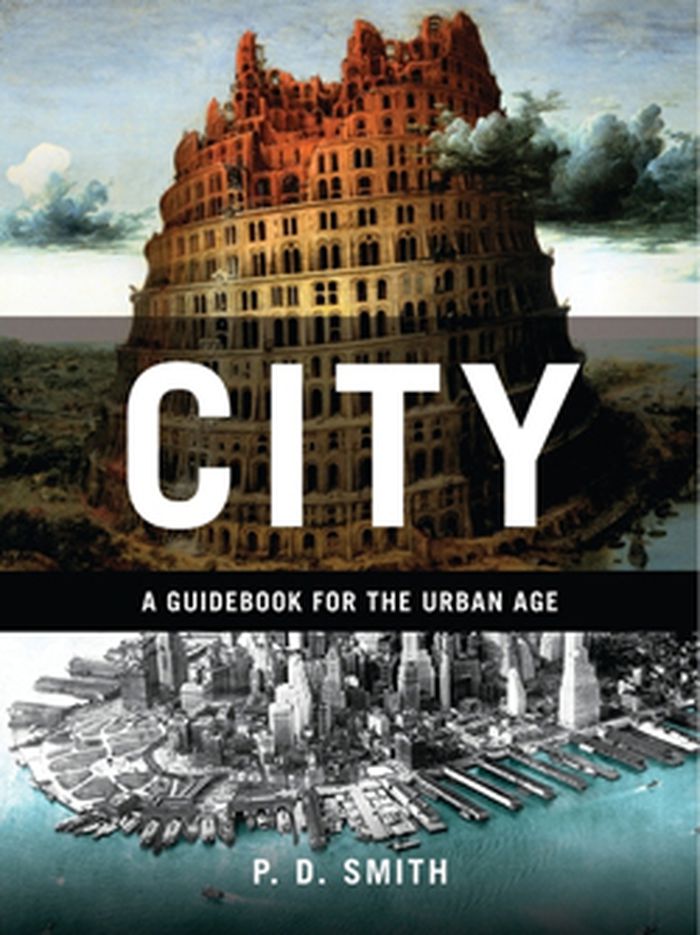
City : a guidebook for the urban age
Actions:
Prix:
$42.00
(disponible sur commande)
Résumé:
For the first time in the history of our planet, more than half the population-3.3 billion people-is now living in cities. City is the ultimate guidebook to our urban centers-the signature unit of human civilization. With erudite prose and carefully chosen illustrations, this work of metatourism explores what cities are and how they work. It covers history, customs and language, districts, transport, money, work, shops and markets, and tourist sites, creating a detailed portrait of the city through history and into the future. The urban explorer will revel in essays on downtowns, suburbs, shantytowns and favelas, graffiti, skylines, crime, the theater, street food, sport, eco-cities, and sacred sites, as well as mini essays on the Tower of Babel, flash mobs, ghettos, skateboarding, and SimCity, among many others. Drawing on a vast range of examples from across the world and throughout history, City is extensively illustrated with full-color photographs, maps, and other images.
City : a guidebook for the urban age
Actions:
Prix:
$42.00
(disponible sur commande)
Résumé:
For the first time in the history of our planet, more than half the population-3.3 billion people-is now living in cities. City is the ultimate guidebook to our urban centers-the signature unit of human civilization. With erudite prose and carefully chosen illustrations, this work of metatourism explores what cities are and how they work. It covers history, customs and language, districts, transport, money, work, shops and markets, and tourist sites, creating a detailed portrait of the city through history and into the future. The urban explorer will revel in essays on downtowns, suburbs, shantytowns and favelas, graffiti, skylines, crime, the theater, street food, sport, eco-cities, and sacred sites, as well as mini essays on the Tower of Babel, flash mobs, ghettos, skateboarding, and SimCity, among many others. Drawing on a vast range of examples from across the world and throughout history, City is extensively illustrated with full-color photographs, maps, and other images.
Classification:
livres
livres
Publication:
novembre 2011
novembre 2011
Sujet:
Théorie de l’urbanisme
Théorie de l’urbanisme
Classification:
livres
livres

Actions:
Prix:
$60.00
(disponible sur commande)
Résumé:
Does going green change the face of design or only its content? The Shape of Green argues that beauty is inherent to sustainability, for how things look and feel is as important as how they’re made. In addition to examining what makes something attractive or emotionally pleasing, Hosey connects these questions with practical design challenges. Can the shape of a car(...)
$60.00
(disponible sur commande)
Résumé:
Does going green change the face of design or only its content? The Shape of Green argues that beauty is inherent to sustainability, for how things look and feel is as important as how they’re made. In addition to examining what makes something attractive or emotionally pleasing, Hosey connects these questions with practical design challenges. Can the shape of a car(...)
Titre:
The shape of green : aesthetics, ecology, and design
Actions:
Prix:
$60.00
(disponible sur commande)
Résumé:
Does going green change the face of design or only its content? The Shape of Green argues that beauty is inherent to sustainability, for how things look and feel is as important as how they’re made. In addition to examining what makes something attractive or emotionally pleasing, Hosey connects these questions with practical design challenges. Can the shape of a car make it more aerodynamic and more attractive at the same time? Could buildings be constructed of porous materials that simultaneously clean the air and soothe the skin? Can cities become verdant, productive landscapes instead of wastelands of concrete? Drawing from a wealth of scientific research, Hosey demonstrates that form and image can enhance conservation, comfort, and community at every scale of design, from products to buildings to cities. Fully embracing the principles of ecology could revolutionize every aspect of design, in substance and in style. Aesthetic attraction isn’t a superficial concern — it’s an environmental imperative. Beauty could save the planet.
The shape of green : aesthetics, ecology, and design
Actions:
Prix:
$60.00
(disponible sur commande)
Résumé:
Does going green change the face of design or only its content? The Shape of Green argues that beauty is inherent to sustainability, for how things look and feel is as important as how they’re made. In addition to examining what makes something attractive or emotionally pleasing, Hosey connects these questions with practical design challenges. Can the shape of a car make it more aerodynamic and more attractive at the same time? Could buildings be constructed of porous materials that simultaneously clean the air and soothe the skin? Can cities become verdant, productive landscapes instead of wastelands of concrete? Drawing from a wealth of scientific research, Hosey demonstrates that form and image can enhance conservation, comfort, and community at every scale of design, from products to buildings to cities. Fully embracing the principles of ecology could revolutionize every aspect of design, in substance and in style. Aesthetic attraction isn’t a superficial concern — it’s an environmental imperative. Beauty could save the planet.
Classification:
livres
livres
Publication:
juillet 2012
juillet 2012
Sujet:
Architecture écologique
Architecture écologique
Classification:
livres
livres
Titre:
After suburbia : urbanization in the twenty-first century / edited by Roger Keil and Fulong Wu.
After suburbia : urbanization in the twenty-first century / edited by Roger Keil and Fulong Wu.
Actions:
Exemplaires:
Description:
x, 457 pages : illustrations, maps ; 23 cm.
Description:
x, 457 pages : illustrations, maps ; 23 cm.
Auteur:
Sujet:
Publication:
Toronto ; Buffalo ; London : University of Toronto Press, [2022], ©2022
Toronto ; Buffalo ; London : University of Toronto Press, [2022], ©2022
Titre:
After suburbia : urbanization in the twenty-first century / edited by Roger Keil and Fulong Wu.
Actions:
Exemplaires:
Description:
x, 457 pages : illustrations, maps ; 23 cm.
After suburbia : urbanization in the twenty-first century / edited by Roger Keil and Fulong Wu.
Actions:
Exemplaires:
Description:
x, 457 pages : illustrations, maps ; 23 cm.
Classification:
livres
livres
Publication:
Toronto ; Buffalo ; London : University of Toronto Press, [2022], ©2022
Toronto ; Buffalo ; London : University of Toronto Press, [2022], ©2022
Auteur:
Sujet:


