


761 Résultats
Classification:
livres
livres
Actions:
Prix:
$19.00
(disponible sur commande)
Résumé:
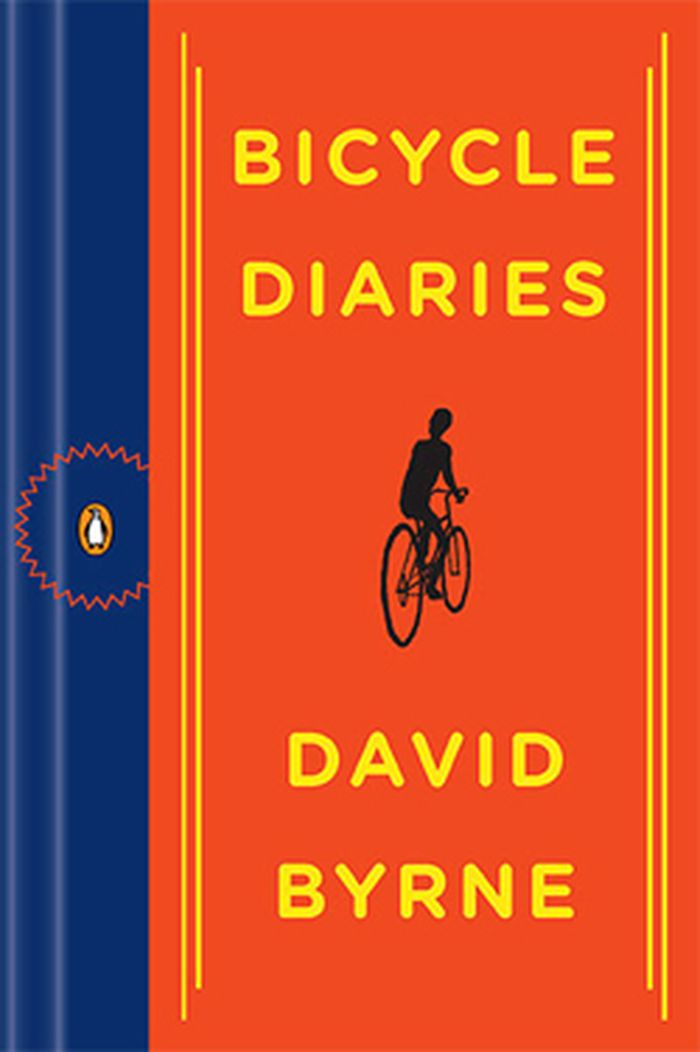
From a renowned musician and visual artist comes "Bicycle Diaries" - part travelogue, part journal, part photo album - a behind-the-handlebars celebration of seeing the world from the seat of a bike. Byrne is fascinated by cities, especially as visited on a trusty fold-up bicycle, and in these random musings over many years while cycling through such places as Sydney,(...)
Titre:
David Byrne : bicycle diaries
Actions:
Prix:
$19.00
(disponible sur commande)
Résumé:
From a renowned musician and visual artist comes "Bicycle Diaries" - part travelogue, part journal, part photo album - a behind-the-handlebars celebration of seeing the world from the seat of a bike. Byrne is fascinated by cities, especially as visited on a trusty fold-up bicycle, and in these random musings over many years while cycling through such places as Sydney, Australia; Manila, Philippines; San Francisco; or his home of New York, the former Talking Head, artist and author (True Stories) offers his frank views on urban planning, art and postmodern civilization in general. For each city, he focuses on its germane issues, such as the still troublingly clear-cut class system in London, notions of justice and human migration that spring to mind while visiting the Stasi Museum in Berlin, religious iconography in Istanbul, gentrification in Buenos Aires and Imelda Marcos's legacy in Manila. He notes that the condition of the roads reveals much about a city, like the impossibly civilized, pleasant pathways designed just for bikes in Berlin versus the fractured car-mad system of highways in some American cities, giving way to an eerie post apocalyptic landscape (e.g., Detroit). Candid and self-deprecating, Byrne offers a work that is as engaging as it is cerebral and informative
Classification:
livres
livres
Publication:
janvier 2011
janvier 2011
Sujet:
Théorie de l’urbanisme
Théorie de l’urbanisme
Classification:
livres
livres

Titre:
Designing the X
Designing the X
Actions:
Prix:
$53.95
(disponible sur commande)
Résumé:
As the pace of global change accelerates—ecologically, socially, and technologically—our traditional ways of understanding and responding to change fall short. We now live in an era of supercomplexity, where challenges like climate instability, migration, technological disruption, resource depletion, and systemic inequality converge and defy conventional(...)
Titre:
Designing the X
Actions:
Prix:
$53.95
(disponible sur commande)
Résumé:
As the pace of global change accelerates—ecologically, socially, and technologically—our traditional ways of understanding and responding to change fall short. We now live in an era of supercomplexity, where challenges like climate instability, migration, technological disruption, resource depletion, and systemic inequality converge and defy conventional solutions. ''Designing the X'' meets this moment with a bold and timely proposition: when data, science, and analysis alone are insufficient to move us forward, we must turn to design as a powerful mode of reasoning through synthesis, where intuition meets insight and imagination drives action. Design enables us to move with complexity, not against it, and to shape futures beyond the limits of the present. Grounded in praxis and research—including 67 interviews with designers, technologists and scientists, innovators and entrepreneurs, urbanists, and educators— ''Designing the X'' makes a compelling case for design as an essential partner to science and technology: integrative, inventive, and profoundly human. The “X” stands for what’s missing in today’s analytic methods: the leap from parts to greater wholes, from current conditions to future potential. This book is for anyone seeking agency in an age of accelerating change. It’s a compass for those ready to imagine—and design—the future we cannot yet see.
Classification:
livres
livres
Publication:
octobre 2025
octobre 2025
Sujet:
Théorie du design
Théorie du design
Classification:
livres
livres

Prix:
$140.00
(disponible en magasin)
Résumé:
The past seventy-five years have been a time of extreme social and cultural transformations worldwide. Political and social upheaval, often contentious, disorienting and polarizing, is now a daily reality. Whether migration crises, territorial disputes, gender inequity, class divisions, racism, war, gun violence or environmental concerns, we live in a world rife with(...)
Titre:
Flashpoint! Protest photography in print, 1950-present
Actions:
Prix:
$140.00
(disponible en magasin)
Résumé:
The past seventy-five years have been a time of extreme social and cultural transformations worldwide. Political and social upheaval, often contentious, disorienting and polarizing, is now a daily reality. Whether migration crises, territorial disputes, gender inequity, class divisions, racism, war, gun violence or environmental concerns, we live in a world rife with ideological and tribal conflicts. Since its inception, photography has captured defining historical moments, serving as either a tool or a document of protest—or both. In placing photobooks next to posters, DIY zines and independent journals, ''Flashpoint!'' explores the diverse roles and varying aesthetics that photography in print undertakes in its support of protest and resistance. Is it a “tool” conceived through an “aesthetic of urgency” to be used during events as they unfold, as in an anonymously designed poster or ink-stained fliers plastered on street walls? Or an elegantly designed photobook, published a year or more later, often with the help of well-known photographers, writers and designers, to document a past uprising? Whether outright rage or a more subtle artist-driven commentary, protest photography in print covers all of these formats and sometimes transcends rigid media definitions, as it blurs the lines between what constitutes a book, zine, journal, poster or newspaper.
Classification:
livres
livres
Publication:
avril 2025
avril 2025
Sujet:
Photographie- collections
Photographie- collections
Classification:
livres
livres
Titre:
Toronto sprawls
Toronto sprawls
Actions:
Prix:
$24.95
(disponible sur commande)
Résumé:
With a landmass spanning approximately 7000 square kilometres and a population of roughly five million, the Greater Toronto Area is Canada’s largest metropolitan centre. How did a small nineteenth-century colonial capital become this sprawling urban giant, and how did government policies shape the contours of its landscape? In Toronto Sprawls, Lawrence Solomon examines(...)
Titre:
Toronto sprawls
Actions:
Prix:
$24.95
(disponible sur commande)
Résumé:
With a landmass spanning approximately 7000 square kilometres and a population of roughly five million, the Greater Toronto Area is Canada’s largest metropolitan centre. How did a small nineteenth-century colonial capital become this sprawling urban giant, and how did government policies shape the contours of its landscape? In Toronto Sprawls, Lawrence Solomon examines the great migration from farm to the city that occurred in the last half of the nineteenth century. During this period, a disproportionate number of single women came to Toronto, while at the same time, immigration from abroad was swelling the city’s urban boundaries. Labour unions were also increasingly successful in recruiting urban workers in these years. Governments responded to these perceived threats with a series of policies designed to foster order. To promote single family dwellings conducive to the traditional family, buildings in high-density areas were razed and apartment buildings banned. To discourage returning First World War veterans from settling in cities, the government offered grants to spur rural settlement. These policies and others dispersed the city’s population and promoted sprawl. An illuminating read, Toronto Sprawls makes a convincing case that urban sprawl in Toronto was not caused by market forces, but rather policies and programs designed to disperse Toronto’s urban population.
Classification:
livres
livres
Publication:
avril 2007, Toronto
avril 2007, Toronto
Sujet:
Architecture du Canada
Architecture du Canada
Classification:
livres
livres

Actions:
Prix:
$35.00
(disponible en magasin)
Résumé:
The rural, remote, and wild territories we call "countryside", or the 98% of the earth's surface not occupied by cities, make up the front line where today's most powerful forces-climate and ecological devastation, migration, tech, demographic lurches-are playing out. Increasingly under a 'Cartesian' regime-gridded, mechanized, and optimized for maximal production-these(...)
Titre:
Koolhaas. Countryside, A Report (US edition)
Actions:
Prix:
$35.00
(disponible en magasin)
Résumé:
The rural, remote, and wild territories we call "countryside", or the 98% of the earth's surface not occupied by cities, make up the front line where today's most powerful forces-climate and ecological devastation, migration, tech, demographic lurches-are playing out. Increasingly under a 'Cartesian' regime-gridded, mechanized, and optimized for maximal production-these sites are changing beyond recognition. In his latest publication, Rem Koolhaas explores the rapid and often hidden transformations underway across the Earth's vast non-urban areas. This book gathers travelogue essays exploring territories marked by global forces and experimentation at the edge of our consciousness: a test site near Fukushima, where the robots that will maintain Japan's infrastructure and agriculture are tested; a greenhouse city in the Netherlands that may be the origin for the cosmology of today's countryside; the rapidly thawing permafrost of Central Siberia, a region wrestling with the possibility of relocation; refugees populating dying villages in the German countryside and intersecting with climate change activists; habituated mountain gorillas confronting humans on 'their' territory in Uganda; the American Midwest, where industrial-scale farming operations are coming to grips with regenerative agriculture; and Chinese villages transformed into all-in-one factory, e-commerce stores, and fulfillment centers.
Classification:
livres
livres
Publication:
avril 2020
avril 2020
Sujet:
Architecture, monographies
Architecture, monographies
Classification:
livres
livres
Actions:
Prix:
$22.00
(disponible sur commande)
Résumé:
"Visual cultures as time travel" makes a case for cultural, aesthetic, and historical research that is oriented toward the future, not the past, actively constructing new categories of assembly that don't yet exist. Ayesha Hameed considers the relationship between climate change and plantation economies, proposing a watery plantationocene that revolves around two islands:(...)
Titre:
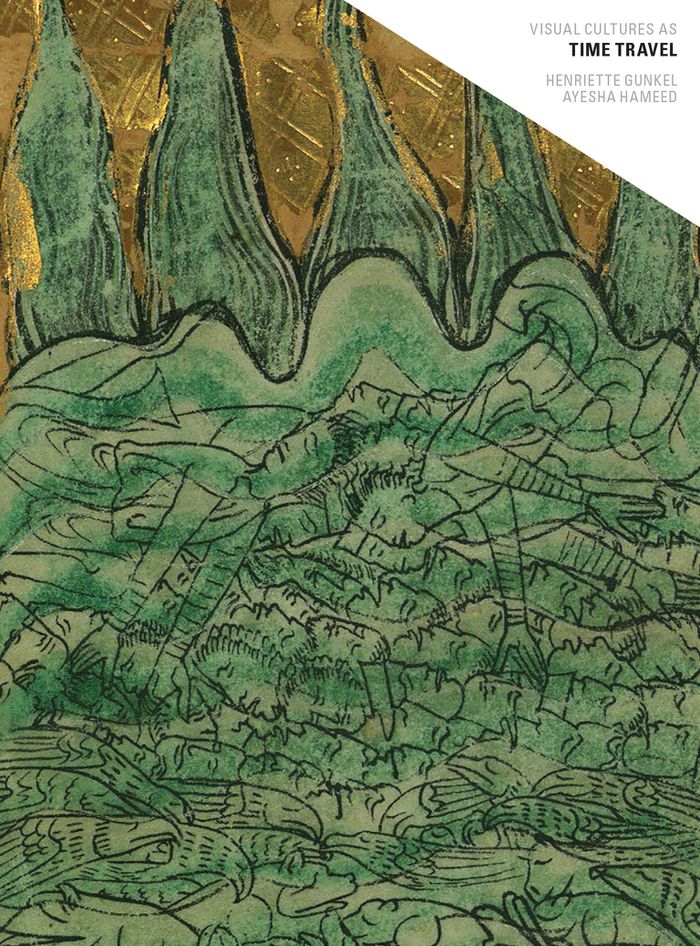
Visual cultures as time travel
Actions:
Prix:
$22.00
(disponible sur commande)
Résumé:
"Visual cultures as time travel" makes a case for cultural, aesthetic, and historical research that is oriented toward the future, not the past, actively constructing new categories of assembly that don't yet exist. Ayesha Hameed considers the relationship between climate change and plantation economies, proposing a watery plantationocene that revolves around two islands: a former plantation in St. George's Parish in Barbados, and the port city of Port of Spain in Trinidad. It visits a marine research institute on a third island, Seili in Finland, to consider how notions of temporality and adaptation are produced in the climate emergency we face. Henriette Gunkel introduces the idea of time travel through notions of dizziness, freefall, and of being in vertigo as set out in Octavia Butler's novel Kindred and Kitso Lynn Lelliott's multimedia installation South Atlantic Hauntings, exploring what counts as technology, how it operates in relation to time, including deep space time, and how it interacts with the different types of bodies—human, machine, planetary, spectral, ancestral—that inhabit the terrestrial and extraterrestrial worlds. In conversation, Hameed and Gunkel propose a notion of time travel marked by possibility and loss—in the aftermath of transatlantic slavery and in the moment of mass illegalized migration, of blackness and time, of wildfires and floods, of lost and co-opted futures, of deep geological time, and of falling.
Classification:
livres
livres
Publication:
septembre 2021
septembre 2021
Sujet:
Théorie/ philosophie
Théorie/ philosophie
Classification:
livres
livres
Titre:
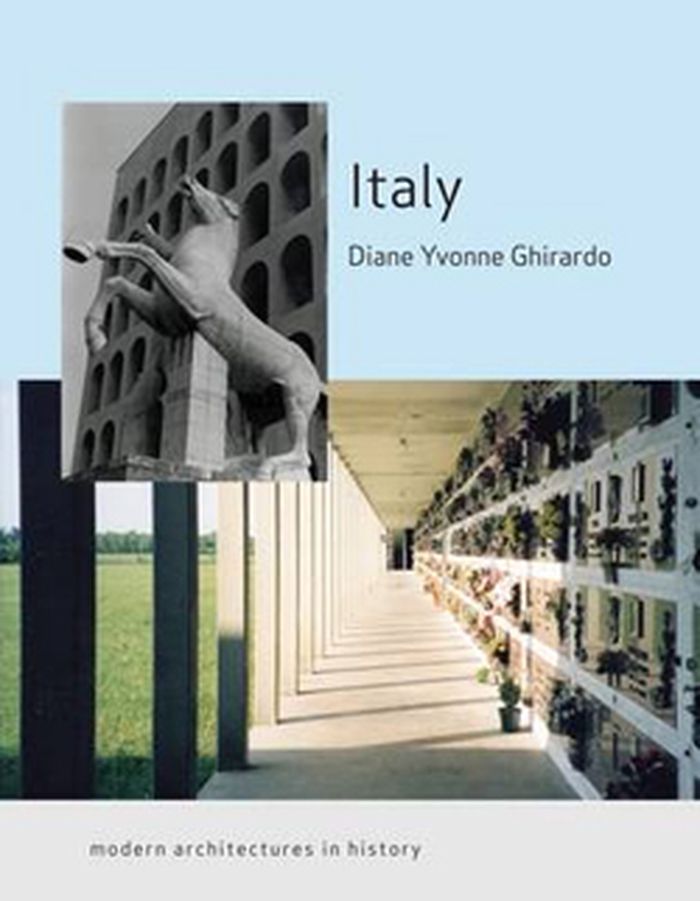
Italy
Italy
Actions:
Prix:
$38.95
(disponible sur commande)
Résumé:
Throughout the twentieth century, architects in Italy have attempted to define the role of architecture under diverse political systems, from the monarchy of the first seventy years since Italian unification, to the 21 years of Fascist control, to the post-Second World War parliamentary republic. At the same time, Italy holds some of the most prized architecture and art(...)
Titre:
Italy
Actions:
Prix:
$38.95
(disponible sur commande)
Résumé:
Throughout the twentieth century, architects in Italy have attempted to define the role of architecture under diverse political systems, from the monarchy of the first seventy years since Italian unification, to the 21 years of Fascist control, to the post-Second World War parliamentary republic. At the same time, Italy holds some of the most prized architecture and art in the world, from antiquity to the baroque, packed into its dense historic city centres, which planners and politicians have negotiated as they struggled to cope with massive migration from the countryside to the city. Diane Ghirardo addresses these and other issues by considering modern architectural production in Italy from the late nineteenth century to the present day within a clear presentation of the larger historical, social and political contexts. From the post-unification efforts to identify a distinctly Italian architectural language to the transformation of the urban environment in Italian cities undergoing industrialization in the late nineteenth and early twentieth centuries, Diane Ghirardo challenges received interpretations of modern architecture, as well as focusing on the subject of illegal building and responses to current ecological challenges. With up-to-date examples, both from the work of widely published architects in the largest cities and from throughout the peninsula, including small towns and rural areas, Italy provides a comprehensive view of the country’s modern built environment.
Classification:
livres
livres
Publication:
novembre 2011
novembre 2011
Classification:
livres
livres
Prix:
$25.95
(disponible sur commande)
Résumé:
This publication sheds light on the reflections that led to the creation of EXIT, the 360° video installation created for the exhibition spaces of the Fondation Cartier pour l'art contemporain in Paris. Based on an idea by French philosopher and urbanist, Paul Virilio, the 360° video installation EXIT was created in 2008 by the New York-based studio of artists and(...)
Titre:
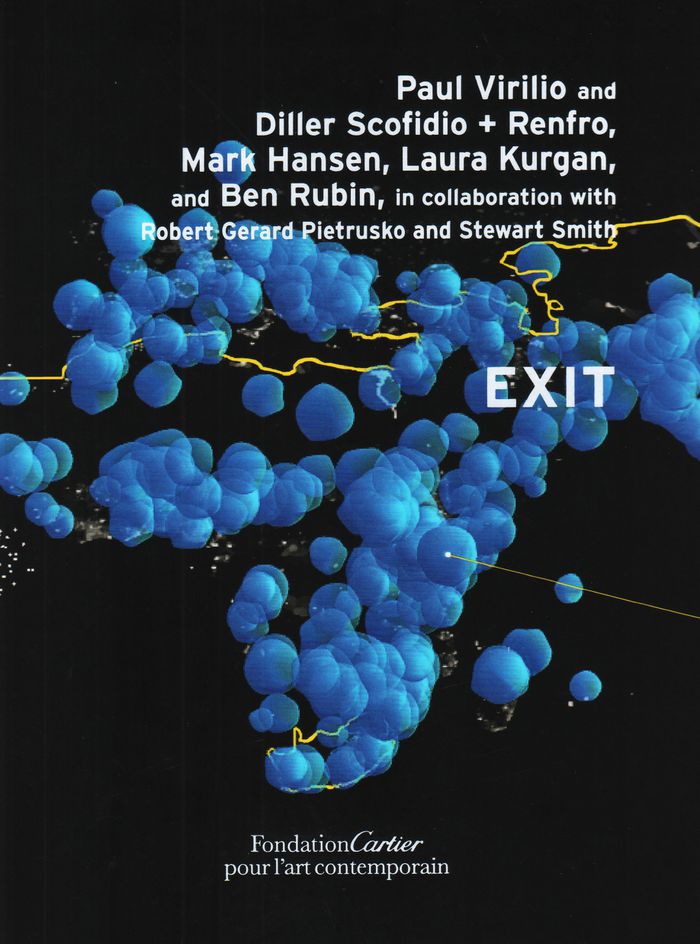
Diller Scofidio + Renfro: Exit: Based on an idea by Paul Virilio
Actions:
Prix:
$25.95
(disponible sur commande)
Résumé:
This publication sheds light on the reflections that led to the creation of EXIT, the 360° video installation created for the exhibition spaces of the Fondation Cartier pour l'art contemporain in Paris. Based on an idea by French philosopher and urbanist, Paul Virilio, the 360° video installation EXIT was created in 2008 by the New York-based studio of artists and architects Diller Scofidio + Renfro for the exhibition spaces of the Fondation Cartier pour l'art contemporain in Paris. Composed of a series of animated maps generated by data, this immersive installation investigates human migrations today and their leading causes, including the impact of climate change. Through six scenarios - Population Shifts: Cities; Remittances: Sending Money Home; Political Refugees and Forced Migration; Rising Seas, Sinking Cities; Natural Disasters; and Speechless and Deforestation - it provides the rare opportunity to understand visually the complex relationships between the various economic, political and environmental factors underpinning contemporary human migrations. The work was updated entirely in 2015, reflecting the alarming evolution of the data since it was first presented in 2008. Through various texts, descriptions of the animated maps, and numerous illustrations, this book sheds light on the reflections that led to the creation of EXIT, and proposes to delve deeper into the very notions and questions that it raises and that are more relevant today than ever.
Classification:
livres
livres
Publication:
novembre 2019
novembre 2019
Sujet:
Architecture, monographies
Architecture, monographies
Classification:
livres
livres
Actions:
Prix:
$49.95
(disponible sur commande)
Résumé:
Over the past decade, a seismic shift in economic and political forces has transformed life in the second-largest city on the West Coast, situated at the most heavily trafficked international border crossing in the world. Tijuana’s newfound wealth and haphazard expansion have changed patterns of migration for the city’s many artists, who once routinely moved north to Los(...)
Titre:
Strange new world : art and design from Tijuana
Actions:
Prix:
$49.95
(disponible sur commande)
Résumé:
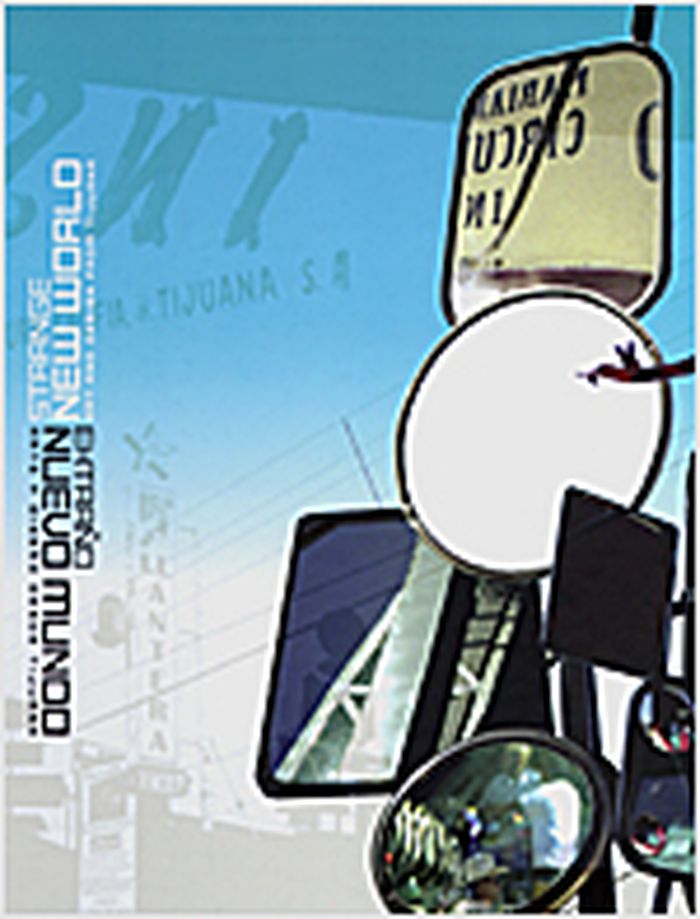
Over the past decade, a seismic shift in economic and political forces has transformed life in the second-largest city on the West Coast, situated at the most heavily trafficked international border crossing in the world. Tijuana’s newfound wealth and haphazard expansion have changed patterns of migration for the city’s many artists, who once routinely moved north to Los Angeles but are now staying or returning, and being joined by friends from Mexico City and beyond. This flourishing, strengthening artistic community has responded to the city’s accelerated evolution with a broad range of work, from painting to conceptually driven installations; from street-level digital video to ambitious photo-documentation, filmmaking and political work; from architectural proposals to product design associated with the "Nortec" musical movement. The work gathered in "Strange new world" embraces Tijuana as a paradigm of a new postmodern form of urbanization shaped by the pressures of economic globalization and cultural transnationalism since 1994. It struggles to make sense of new realities changing the ways in which people live in cities around the globe. Like Aldous Huxley's Brave New World, it is part science fiction, part political commentary and part artistic revolution and cultural critique. Arranged around the concepts of the urban theorist Michael Smith, it features work by ERRE, Einar and Jamex de la Torre and Yvonne Venegas, among others.
Classification:
livres
livres
Publication:
août 2006, La Jolla
août 2006, La Jolla
Classification:
livres
livres
Titre:
The case for open borders
The case for open borders
Actions:
Prix:
$30.95
(disponible sur commande)
Résumé:
Because of restrictive borders, human beings suffer and die. Closed borders force migrants seeking safety and dignity to journey across seas, trudge through deserts, and clamber over barbed wire. In the last five years alone, at least 60,000 people have died or gone missing while attempting to cross a border. As we deny, cast out, and crack down, we have stripped borders(...)
Titre:
The case for open borders
Actions:
Prix:
$30.95
(disponible sur commande)
Résumé:
Because of restrictive borders, human beings suffer and die. Closed borders force migrants seeking safety and dignity to journey across seas, trudge through deserts, and clamber over barbed wire. In the last five years alone, at least 60,000 people have died or gone missing while attempting to cross a border. As we deny, cast out, and crack down, we have stripped borders of their creative potential — as lines of contact, catalyst, and blend — turning our thresholds into barricades. Brilliant and provocative, ''The Case for Open Borders'' deflates the mythology of national security through border lockdowns by revisiting their historical origins; it counters the conspiracies of immigration’s economic consequences; it urgently considers the challenges of climate change beyond the boundaries of narrow national identities. This book grounds its argument in the experiences and thinking of those on the frontlines of the crisis, spanning the world to do so. In each chapter, through detailed reporting, journalist and translator John Washington profiles a character impacted by borders. He adds to those portraits provocative analyses of the economics and ethics of bordering, concluding that if we are to seek justice or sustainability we must fight for open borders. In recent years, important thinkers have begun to urge a profoundly different approach to migration, but no book has made the argument as accessible or as compelling. Washington’s case shines with the multitudinous voices of people on the move, a portrait in miniature of what a world with open borders will give to our common future.
Classification:
livres
livres
Publication:
février 2024
février 2024
Sujet:
Social
Social


