


5369 Résultats
Classification:
graphique
graphique
Numéro de référence:
ARCH252105
Description:
invitations/posters for various IAUS exhibitions and events: Aldo Rossi in America: Città Analoga drawings, September 19 to October 20, 1979 Marc Treib: Some Posters on a Theme of Architecture, February 27 to March 22, 1980 Oppositions 3 Forum: Physical Context/Cultural Context, 13 December (?) Clorindo Testa: Architecture and Personal Mythology, November 9-25, 1981 John Hejduk:Seven Houses, January 22 to February 16, 1980 IAUS relocation announcement of a move to 19 Union Sq. W., New York
ARCH252105
Description:
invitations/posters for various IAUS exhibitions and events: Aldo Rossi in America: Città Analoga drawings, September 19 to October 20, 1979 Marc Treib: Some Posters on a Theme of Architecture, February 27 to March 22, 1980 Oppositions 3 Forum: Physical Context/Cultural Context, 13 December (?) Clorindo Testa: Architecture and Personal Mythology, November 9-25, 1981 John Hejduk:Seven Houses, January 22 to February 16, 1980 IAUS relocation announcement of a move to 19 Union Sq. W., New York
Personnes et institutions:
Date:
1979-1981
1979-1981
Titre:
Invitations/posters for various IAUS exhibitions and events
Actions:
ARCH252105
Description:
invitations/posters for various IAUS exhibitions and events: Aldo Rossi in America: Città Analoga drawings, September 19 to October 20, 1979 Marc Treib: Some Posters on a Theme of Architecture, February 27 to March 22, 1980 Oppositions 3 Forum: Physical Context/Cultural Context, 13 December (?) Clorindo Testa: Architecture and Personal Mythology, November 9-25, 1981 John Hejduk:Seven Houses, January 22 to February 16, 1980 IAUS relocation announcement of a move to 19 Union Sq. W., New York
Invitations/posters for various IAUS exhibitions and events
Actions:
ARCH252105
Description:
invitations/posters for various IAUS exhibitions and events: Aldo Rossi in America: Città Analoga drawings, September 19 to October 20, 1979 Marc Treib: Some Posters on a Theme of Architecture, February 27 to March 22, 1980 Oppositions 3 Forum: Physical Context/Cultural Context, 13 December (?) Clorindo Testa: Architecture and Personal Mythology, November 9-25, 1981 John Hejduk:Seven Houses, January 22 to February 16, 1980 IAUS relocation announcement of a move to 19 Union Sq. W., New York
Classification:
graphique
graphique
Date:
1979-1981
1979-1981
Personnes et institutions:
Classification:
événements
événements
Description:
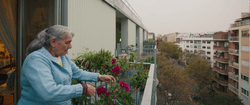
Où – et comment – nous voulons habiter en vieillissant? Nos quartiers, nos immeubles, nos villes sauront-ils s’adapter à nos besoins? La soirée Où vieillir? débute par la projection du documentaire Where We Grow Older (CCA, 2023, 30 min), qui explore comment l’architecture et l’urbanisme peuvent répondre aux défis du vieillissement démographique. La projection sera(...)
Où – et comment – nous voulons habiter en vieillissant? Nos quartiers, nos immeubles, nos villes sauront-ils s’adapter à nos besoins? La soirée Où vieillir? débute par la projection du documentaire Where We Grow Older (CCA, 2023, 30 min), qui explore comment l’architecture et l’urbanisme peuvent répondre aux défis du vieillissement démographique. La projection sera(...)
Localisation:
Théâtre Paul-Desmarais
Théâtre Paul-Desmarais
Date:
5 février 2026, 18h
5 février 2026, 18h
Titre:
Film et discussion : Où vieillir?
Actions:
Description:
Où – et comment – nous voulons habiter en vieillissant? Nos quartiers, nos immeubles, nos villes sauront-ils s’adapter à nos besoins? La soirée Où vieillir? débute par la projection du documentaire Where We Grow Older (CCA, 2023, 30 min), qui explore comment l’architecture et l’urbanisme peuvent répondre aux défis du vieillissement démographique. La projection sera(...)
Film et discussion : Où vieillir?
Actions:
Description:
Où – et comment – nous voulons habiter en vieillissant? Nos quartiers, nos immeubles, nos villes sauront-ils s’adapter à nos besoins? La soirée Où vieillir? débute par la projection du documentaire Where We Grow Older (CCA, 2023, 30 min), qui explore comment l’architecture et l’urbanisme peuvent répondre aux défis du vieillissement démographique. La projection sera(...)
Classification:
événements
événements
Date:
5 février 2026
18h
5 février 2026
18h
Localisation:
Théâtre Paul-Desmarais
Théâtre Paul-Desmarais
Niveau de description archivistique:
Projet
Projet
Numéro de référence:
AP180.S1.1987.PR01
Description:
This project series documents the unrealized design proposal for the Sperone del Guasco, in Ancona. Riva worked on this project in 1987. The project was commissioned in the context of the exhibition "Nine project projects for nine Cities" organized by the Milan Triennale. It consisted of a walled pathway climbing the Guasco hill to the San Ciriaco cathedral. Riva's proposal was later presented in the exhibition "Umberto Riva, sistemazioni urbane" in 1993, at the Pinacoteca civica Francesco Podesti in Ancona. The project series contains studies and design development drawings, including elevations, sections, and plans. It also includes a project description.
AP180.S1.1987.PR01
Description:
This project series documents the unrealized design proposal for the Sperone del Guasco, in Ancona. Riva worked on this project in 1987. The project was commissioned in the context of the exhibition "Nine project projects for nine Cities" organized by the Milan Triennale. It consisted of a walled pathway climbing the Guasco hill to the San Ciriaco cathedral. Riva's proposal was later presented in the exhibition "Umberto Riva, sistemazioni urbane" in 1993, at the Pinacoteca civica Francesco Podesti in Ancona. The project series contains studies and design development drawings, including elevations, sections, and plans. It also includes a project description.
Personnes et institutions:
Date:
ca. 1987
ca. 1987
Titre:
Progetto di sistemazione, Sperone del Guasco [Urban development project, Sperone del Guasco], Ancona, Italy (1987)
Actions:
AP180.S1.1987.PR01
Description:
This project series documents the unrealized design proposal for the Sperone del Guasco, in Ancona. Riva worked on this project in 1987. The project was commissioned in the context of the exhibition "Nine project projects for nine Cities" organized by the Milan Triennale. It consisted of a walled pathway climbing the Guasco hill to the San Ciriaco cathedral. Riva's proposal was later presented in the exhibition "Umberto Riva, sistemazioni urbane" in 1993, at the Pinacoteca civica Francesco Podesti in Ancona. The project series contains studies and design development drawings, including elevations, sections, and plans. It also includes a project description.
Progetto di sistemazione, Sperone del Guasco [Urban development project, Sperone del Guasco], Ancona, Italy (1987)
Actions:
AP180.S1.1987.PR01
Description:
This project series documents the unrealized design proposal for the Sperone del Guasco, in Ancona. Riva worked on this project in 1987. The project was commissioned in the context of the exhibition "Nine project projects for nine Cities" organized by the Milan Triennale. It consisted of a walled pathway climbing the Guasco hill to the San Ciriaco cathedral. Riva's proposal was later presented in the exhibition "Umberto Riva, sistemazioni urbane" in 1993, at the Pinacoteca civica Francesco Podesti in Ancona. The project series contains studies and design development drawings, including elevations, sections, and plans. It also includes a project description.
Niveau de description archivistique:
Project
Project
Date:
ca. 1987
ca. 1987
Personnes et institutions:
Classification:
photographies
photographies
Actions:
Numéro de référence:
PH1980:0817:023
Description:
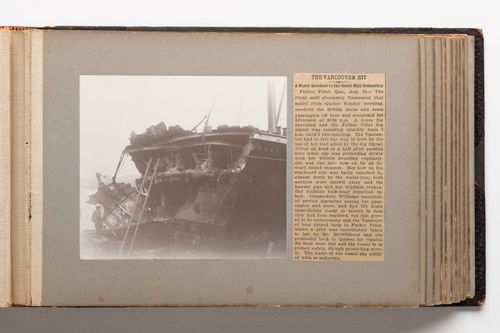
Newspaper clipping pasted on page provides context for the photgraph. The ship is identified as The Vancouver, a royal mail steamship which was involved in a collision in the St. Lawrence and was towed to dry dock at Quebec City for repairs.
PH1980:0817:023
Description:
Newspaper clipping pasted on page provides context for the photgraph. The ship is identified as The Vancouver, a royal mail steamship which was involved in a collision in the St. Lawrence and was towed to dry dock at Quebec City for repairs.
Personnes et institutions:
Date:
1889-1896
1889-1896
Titre:
Collage of a photograph of a wrecked ship and a newspaper clipping
Actions:
PH1980:0817:023
Description:
Newspaper clipping pasted on page provides context for the photgraph. The ship is identified as The Vancouver, a royal mail steamship which was involved in a collision in the St. Lawrence and was towed to dry dock at Quebec City for repairs.
Collage of a photograph of a wrecked ship and a newspaper clipping
Actions:
PH1980:0817:023
Description:
Newspaper clipping pasted on page provides context for the photgraph. The ship is identified as The Vancouver, a royal mail steamship which was involved in a collision in the St. Lawrence and was towed to dry dock at Quebec City for repairs.
Classification:
photographies
photographies
Date:
1889-1896
1889-1896
Personnes et institutions:
Niveau de description archivistique:
Projet
Projet
Numéro de référence:
AP207.S1.1968.PR04
Description:
This project series documents Pettena's installation entitled "Grazia & Giustizia", named after the Ministry of Justice in Italy. This project is the third of a series of three installations created in 1968 which consisted of large three-dimensional letters, forming words, and made purposely of perishable materials. The "Grazia & Giustizia" was created and constructed in the context of the 6th Festival of Avant-Garde Music in Palermo, in 1968. Unlike the first two installations in this series, this one was destroyed intentionally and was more of a performance as each cardboard letter was taken and thrown in the sea after a funeral procession accompanied by music played by the group MEV (Musica Elettronica Viva). The installation was re-created in 2012, this time in Civitella del Tronto, at "a great fort dating from the 16th century, which was not only the dominant architectural feature in that context but in particular the place where 'justice' used to be dispensed (or not)." [1] The project series contains photographs of the procession and of the letters once in the sea, and two drawings, including one showing the letters floating in the water. The project series also contains photographs showing the installation at the fort of Civitella del Tronto in 2012 and project descriptions in English and Italian. Source: [1] Gianni Pettena website, https://www.giannipettena.it/italiano/opere-1/inst-grazia-ii-2012-1/ (last accessed 30 October 2019)
AP207.S1.1968.PR04
Description:
This project series documents Pettena's installation entitled "Grazia & Giustizia", named after the Ministry of Justice in Italy. This project is the third of a series of three installations created in 1968 which consisted of large three-dimensional letters, forming words, and made purposely of perishable materials. The "Grazia & Giustizia" was created and constructed in the context of the 6th Festival of Avant-Garde Music in Palermo, in 1968. Unlike the first two installations in this series, this one was destroyed intentionally and was more of a performance as each cardboard letter was taken and thrown in the sea after a funeral procession accompanied by music played by the group MEV (Musica Elettronica Viva). The installation was re-created in 2012, this time in Civitella del Tronto, at "a great fort dating from the 16th century, which was not only the dominant architectural feature in that context but in particular the place where 'justice' used to be dispensed (or not)." [1] The project series contains photographs of the procession and of the letters once in the sea, and two drawings, including one showing the letters floating in the water. The project series also contains photographs showing the installation at the fort of Civitella del Tronto in 2012 and project descriptions in English and Italian. Source: [1] Gianni Pettena website, https://www.giannipettena.it/italiano/opere-1/inst-grazia-ii-2012-1/ (last accessed 30 October 2019)
Personnes et institutions:
Date:
1968-2017
1968-2017
Titre:
Grazia & Giustizia [Grace & Justice] (1968)
Actions:
AP207.S1.1968.PR04
Description:
This project series documents Pettena's installation entitled "Grazia & Giustizia", named after the Ministry of Justice in Italy. This project is the third of a series of three installations created in 1968 which consisted of large three-dimensional letters, forming words, and made purposely of perishable materials. The "Grazia & Giustizia" was created and constructed in the context of the 6th Festival of Avant-Garde Music in Palermo, in 1968. Unlike the first two installations in this series, this one was destroyed intentionally and was more of a performance as each cardboard letter was taken and thrown in the sea after a funeral procession accompanied by music played by the group MEV (Musica Elettronica Viva). The installation was re-created in 2012, this time in Civitella del Tronto, at "a great fort dating from the 16th century, which was not only the dominant architectural feature in that context but in particular the place where 'justice' used to be dispensed (or not)." [1] The project series contains photographs of the procession and of the letters once in the sea, and two drawings, including one showing the letters floating in the water. The project series also contains photographs showing the installation at the fort of Civitella del Tronto in 2012 and project descriptions in English and Italian. Source: [1] Gianni Pettena website, https://www.giannipettena.it/italiano/opere-1/inst-grazia-ii-2012-1/ (last accessed 30 October 2019)
Grazia & Giustizia [Grace & Justice] (1968)
Actions:
AP207.S1.1968.PR04
Description:
This project series documents Pettena's installation entitled "Grazia & Giustizia", named after the Ministry of Justice in Italy. This project is the third of a series of three installations created in 1968 which consisted of large three-dimensional letters, forming words, and made purposely of perishable materials. The "Grazia & Giustizia" was created and constructed in the context of the 6th Festival of Avant-Garde Music in Palermo, in 1968. Unlike the first two installations in this series, this one was destroyed intentionally and was more of a performance as each cardboard letter was taken and thrown in the sea after a funeral procession accompanied by music played by the group MEV (Musica Elettronica Viva). The installation was re-created in 2012, this time in Civitella del Tronto, at "a great fort dating from the 16th century, which was not only the dominant architectural feature in that context but in particular the place where 'justice' used to be dispensed (or not)." [1] The project series contains photographs of the procession and of the letters once in the sea, and two drawings, including one showing the letters floating in the water. The project series also contains photographs showing the installation at the fort of Civitella del Tronto in 2012 and project descriptions in English and Italian. Source: [1] Gianni Pettena website, https://www.giannipettena.it/italiano/opere-1/inst-grazia-ii-2012-1/ (last accessed 30 October 2019)
Niveau de description archivistique:
Project
Project
Date:
1968-2017
1968-2017
Personnes et institutions:
Classification:
articles
articles
Titre:
Sauver le Robin Hood
Sauver le Robin Hood
Actions:
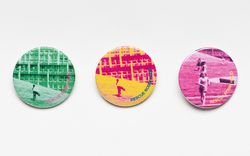
Lisa Belabed à propos d’un effort pour contrer la démolition dans le contexte d’une ville mondialisée
Mot(s)-clé(s):
Robin Hood Gardens, Londres, Smithson, habitation, logements sociaux, démolition, embourgeoisement
Robin Hood Gardens, Londres, Smithson, habitation, logements sociaux, démolition, embourgeoisement
Publié:
2 juin 2025
2 juin 2025
Titre:
Sauver le Robin Hood
Lisa Belabed à propos d’un effort pour contrer la démolition dans le contexte d’une ville mondialisée
Actions:
Sauver le Robin Hood
Lisa Belabed à propos d’un effort pour contrer la démolition dans le contexte d’une ville mondialisée
Actions:
Classification:
événements
événements
Actions:
Date:
25 juin 2024 au 17 novembre 2024
25 juin 2024 au 17 novembre 2024
Classification:
événements
événements
Date:
25 juin 2024 au
17 novembre 2024
25 juin 2024 au
17 novembre 2024
Classification:
articles
articles
Actions:
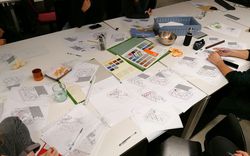
Kim Courrèges et Felipe de Ferrari de Plan Común parlent avec Carles Baiges et Cristina Gamboa de Lacol
Dossier:
Avec et au sein de
Avec et au sein de
Mot(s)-clé(s):
coopérativisme, collectif, barcelone, espagne, la borda, can batlló, économie sociale, indignados, contexte
coopérativisme, collectif, barcelone, espagne, la borda, can batlló, économie sociale, indignados, contexte
Publié:
19 avril 2021
19 avril 2021
Titre:
L'architecture de la coopération
Kim Courrèges et Felipe de Ferrari de Plan Común parlent avec Carles Baiges et Cristina Gamboa de Lacol
Actions:
L'architecture de la coopération
Kim Courrèges et Felipe de Ferrari de Plan Común parlent avec Carles Baiges et Cristina Gamboa de Lacol
Actions:
Dossier:
Avec et au sein de
Avec et au sein de
Niveau de description archivistique:
Projet
Projet
Numéro de référence:
AP180.S1.1986.PR01
Description:
This project series documents the Casa sul Lungomare, an unrealized project for the restauration of a historic three-storey house on Lungamore in Otranto, Italy. This project was undertaken in the context of the Piano di recupero di Otranto, an urban renewal scheme for the north-east sector of the historic centre of Otranto. Riva worked on this project from 1986-1987. The project series contains studies for the historic building and design development drawings, including exterior elevations, floor plans, and sections. It also contains presentation drawings showing the proposed scheme, including site plans, elevations, and plans of the existing buildings in the Piano di recupero di Otranto.
AP180.S1.1986.PR01
Description:
This project series documents the Casa sul Lungomare, an unrealized project for the restauration of a historic three-storey house on Lungamore in Otranto, Italy. This project was undertaken in the context of the Piano di recupero di Otranto, an urban renewal scheme for the north-east sector of the historic centre of Otranto. Riva worked on this project from 1986-1987. The project series contains studies for the historic building and design development drawings, including exterior elevations, floor plans, and sections. It also contains presentation drawings showing the proposed scheme, including site plans, elevations, and plans of the existing buildings in the Piano di recupero di Otranto.
Personnes et institutions:
Date:
1986
1986
Titre:
Casa sul Lungomare [House on Lungamore], Otranto, Italy (1986-1987)
Actions:
AP180.S1.1986.PR01
Description:
This project series documents the Casa sul Lungomare, an unrealized project for the restauration of a historic three-storey house on Lungamore in Otranto, Italy. This project was undertaken in the context of the Piano di recupero di Otranto, an urban renewal scheme for the north-east sector of the historic centre of Otranto. Riva worked on this project from 1986-1987. The project series contains studies for the historic building and design development drawings, including exterior elevations, floor plans, and sections. It also contains presentation drawings showing the proposed scheme, including site plans, elevations, and plans of the existing buildings in the Piano di recupero di Otranto.
Casa sul Lungomare [House on Lungamore], Otranto, Italy (1986-1987)
Actions:
AP180.S1.1986.PR01
Description:
This project series documents the Casa sul Lungomare, an unrealized project for the restauration of a historic three-storey house on Lungamore in Otranto, Italy. This project was undertaken in the context of the Piano di recupero di Otranto, an urban renewal scheme for the north-east sector of the historic centre of Otranto. Riva worked on this project from 1986-1987. The project series contains studies for the historic building and design development drawings, including exterior elevations, floor plans, and sections. It also contains presentation drawings showing the proposed scheme, including site plans, elevations, and plans of the existing buildings in the Piano di recupero di Otranto.
Niveau de description archivistique:
Project
Project
Date:
1986
1986
Personnes et institutions:
Classification:
photographies
photographies
Numéro de référence:
AP046.S1.1983.PR01.611
Description:
Original file title: "SHAUGHNESSY: SITE CONTEXT PHOTOS / Box 71". Contains photographs and negatives of the houses in the Shaughnessy House neighborhood, elevations plans, sketches, CCA floor plan of the 4th floor. Also contains a press clipping of a photograph of 2 unidentified men.
AP046.S1.1983.PR01.611
Description:
Original file title: "SHAUGHNESSY: SITE CONTEXT PHOTOS / Box 71". Contains photographs and negatives of the houses in the Shaughnessy House neighborhood, elevations plans, sketches, CCA floor plan of the 4th floor. Also contains a press clipping of a photograph of 2 unidentified men.
Personnes et institutions:
Date:
ca 1980
ca 1980
Titre:
Photographs of the Shaughnessy Village neighborhood, Canadian Centre for Architecture, Montréal, Québec
Actions:
AP046.S1.1983.PR01.611
Description:
Original file title: "SHAUGHNESSY: SITE CONTEXT PHOTOS / Box 71". Contains photographs and negatives of the houses in the Shaughnessy House neighborhood, elevations plans, sketches, CCA floor plan of the 4th floor. Also contains a press clipping of a photograph of 2 unidentified men.
Photographs of the Shaughnessy Village neighborhood, Canadian Centre for Architecture, Montréal, Québec
Actions:
AP046.S1.1983.PR01.611
Description:
Original file title: "SHAUGHNESSY: SITE CONTEXT PHOTOS / Box 71". Contains photographs and negatives of the houses in the Shaughnessy House neighborhood, elevations plans, sketches, CCA floor plan of the 4th floor. Also contains a press clipping of a photograph of 2 unidentified men.
Classification:
photographies
photographies
Date:
ca 1980
ca 1980
Personnes et institutions:


