


805 Résultats
Classification:
livres
livres
Actions:
Prix:
$52.50
(disponible sur commande)
Résumé:
This book is not about war, nor is it a history of war. Avoiding the shock and awe of wartime images, it explores the contemporary spatial configurations of power camouflaged in the infrastructures, environments, and scales of military operations. Instead of wartime highs, this book starts with drawdown lows, when demobilization and decommissioning morph into realignment(...)
Titre:
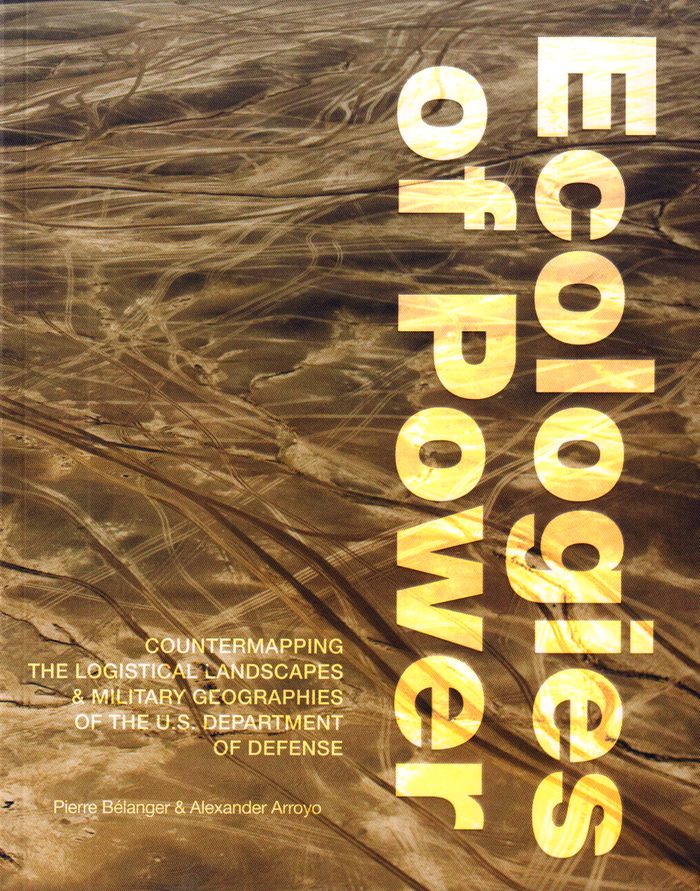
Ecologies of Power: countermapping the logistical landscapes and military geographies of the US Department of Defense
Actions:
Prix:
$52.50
(disponible sur commande)
Résumé:
This book is not about war, nor is it a history of war. Avoiding the shock and awe of wartime images, it explores the contemporary spatial configurations of power camouflaged in the infrastructures, environments, and scales of military operations. Instead of wartime highs, this book starts with drawdown lows, when demobilization and decommissioning morph into realignment and prepositioning. It is in this transitional milieu that the full material magnitudes and geographic entanglements of contemporary militarism are laid bare. Through this perpetual cycle of build up and breakdown, the U.S. Department of Defense—the single largest developer, landowner, equipment contractor, and energy consumer in the world—has engineered a planetary assemblage of “operational environments” in which militarized, demilitarized, and non-militarized landscapes are increasingly inextricable. In a series of critical cartographic essays, Pierre Bélanger and Alexander Arroyo trace this footprint far beyond the battlefield, countermapping the geographies of U.S. militarism across five of the most important and embattled operational environments: the ocean, the atmosphere, the highway, the city, and the desert. From the Indian Ocean atoll of Diego Garcia to the defense-contractor archipelago around Washington, D.C.; from the A01 Highway circling Afghanistan’s high-altitude steppe to surveillance satellites pinging the planet from low-earth orbit; and from the vast cold chain conveying military perishables worldwide to the global constellation of military dumps, sinks, and scrapyards, the book unearths the logistical infrastructures and residual landscapes that render strategy spatial, militarism material, and power operational. In so doing, Bélanger and Arroyo reveal unseen ecologies of power at work in the making and unmaking of environments—operational, built, and otherwise—to come.
Classification:
livres
livres
Publication:
octobre 2016
octobre 2016
Sujet:
Théorie de l’architecture
Théorie de l’architecture
Classification:
vidéo
vidéo
Titre:
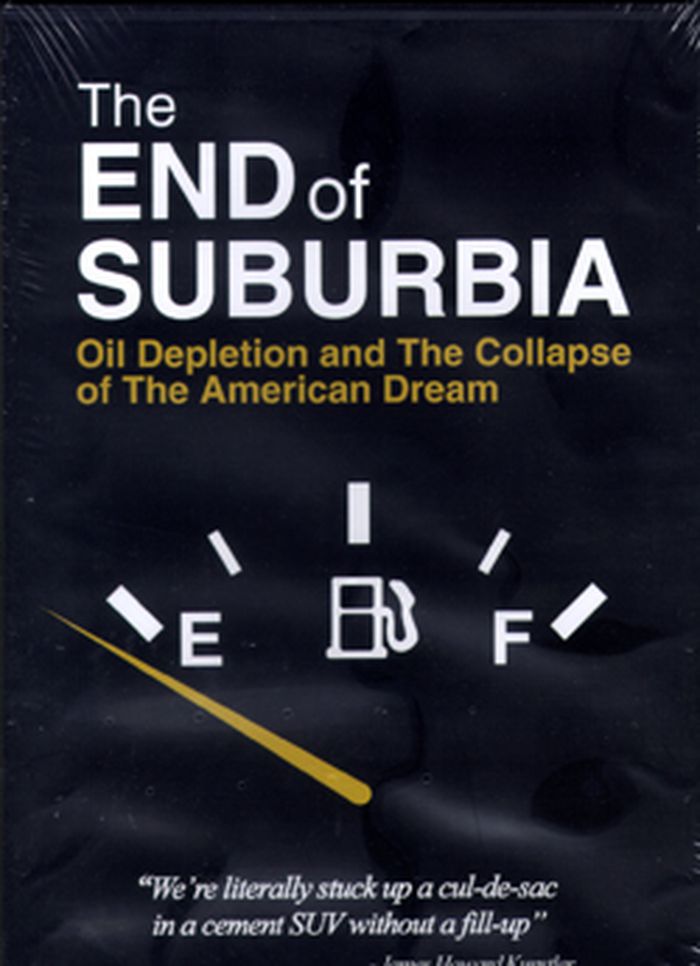
The end of suburbia
The end of suburbia
Actions:
Prix:
$25.00
(disponible sur commande)
Résumé:
Since World War II North Americans have invested much of their newfound wealth in suburbia. It has promised a sense of space, affordability, family life and upward mobility. As the population of suburban sprawl has exploded in the past 50 years, so too has the suburban way of life become embedded in the American consciousness. Suburbia, and all it promises, has become(...)
Titre:
The end of suburbia
Actions:
Prix:
$25.00
(disponible sur commande)
Résumé:
Since World War II North Americans have invested much of their newfound wealth in suburbia. It has promised a sense of space, affordability, family life and upward mobility. As the population of suburban sprawl has exploded in the past 50 years, so too has the suburban way of life become embedded in the American consciousness. Suburbia, and all it promises, has become the American Dream. But as we enter the 21st century, serious questions are beginning to emerge about the sustainability of this way of life. With brutal honesty and a touch of irony, "The End of Suburbia" explores the American Way of Life and its prospects as the planet approaches a critical era, as global demand for fossil fuels begins to outstrip supply. World Oil Peak and the inevitable decline of fossil fuels are upon us now, some scientists and policy makers argue in this documentary. The consequences of inaction in the face of this global crisis are enormous. What does Oil Peak mean for North America? As energy prices skyrocket in the coming years, how will the populations of suburbia react to the collapse of their dream? Are today's suburbs destined to become the slums of tomorrow? And what can be done NOW, individually and collectively, to avoid The End of Suburbia ? Hosted by Barrie Zwicker. Featuring James Howard Kunstler, Peter Calthorpe, Michael Klare, Richard Heinberg, Matthew Simmons, Michael C. Ruppert, Julian Darley, Colin Campbell, Kenneth Deffeyes, Ali Samsam Bakhtiari and Steve Andrews. Directed by Gregory Greene. Produced by Barry Silverthorn. Duration: 78 minutes DVD BONUS: Includes the vintage short films, "In the Suburbs" and "Destination Earth", and producer/director commentary.
Classification:
vidéo
vidéo
Publication:
novembre 2007, Toronto
novembre 2007, Toronto
Sujet:
DVD vidéo
DVD vidéo
Classification:
livres
livres

Titre:
Architecture and film
Architecture and film
Actions:
Prix:
$32.50
(disponible sur commande)
Résumé:
"Architecture and Film" looks at the ways architecture and architects are treated on screen and, conversely, how these depictions filter and shape the ways we understand the built environment. It also examines the significant effect that the film industry has had on the (...)
Publication:
février 2000, New York
février 2000, New York
Titre:
Architecture and film
Actions:
Prix:
$32.50
(disponible sur commande)
Résumé:
"Architecture and Film" looks at the ways architecture and architects are treated on screen and, conversely, how these depictions filter and shape the ways we understand the built environment. It also examines the significant effect that the film industry has had on the American public's perception of urban, suburban, and rural spaces. Contributors to this collection of essays come from a wide range of disciplines. Nancy Levinson writes on how films from "The Fountainhead" to "Jungle Fever" have depicted architects. Eric Rosenberg looks at how architecture and spatial relations shape the Beatles films "A Hard Day's Night", "Help!", and "Let It Be". Joseph Rosa discusses why modern domestic architecture in recent Hollywood films such as "The Ice Storm", "L.A. Confidential", and "The Big Lebowski" has become synonymous with unstable inhabitants. Peter Hall discusses the history of film titling, focusing on the groundbreaking work of Saul Bass and Maurice Binder. Editor Mark Lamster examines the anti-urbanism of the Star Wars trilogy. The collection also includes the voices of those from within the film industry, who are uniquely able to provide a "behind the scenes" perspective: film editor Bob Eisenhardt comments on the making of "Concert of Wills", a documentary on the construction of the Getty Museum; and Robert Kraft focuses on his work as a location director for Diane Keaton's upcoming film about Los Angeles. Also included are interviews with David Rockwell, architect of numerous Planet Hollywood restaurants worldwide and designer of a new hall to host the Academy Awards ceremony; Kyle Kooper, who created title sequences for "Seven" and "Mission Impossible"; and motion picture art director Jan Roelfs, whose credits include "Gattaca", "Orlando", and "Little Women". Previously priced at $41.50.
Classification:
livres
livres
Publication:
février 2000, New York
février 2000, New York
Classification:
livres
livres
Actions:
Prix:
$28.00
(disponible en magasin)
Résumé:
Over the past several decades, globalization has homogenized what we eat, and done so ruthlessly. The numbers are stark: Of the roughly six thousand different plants once consumed by human beings, only nine remain major staples today. Just three of these—rice, wheat, and corn—now provide fifty percent of all our calories.The source of much of the world’s food—seeds—is(...)
Titre:
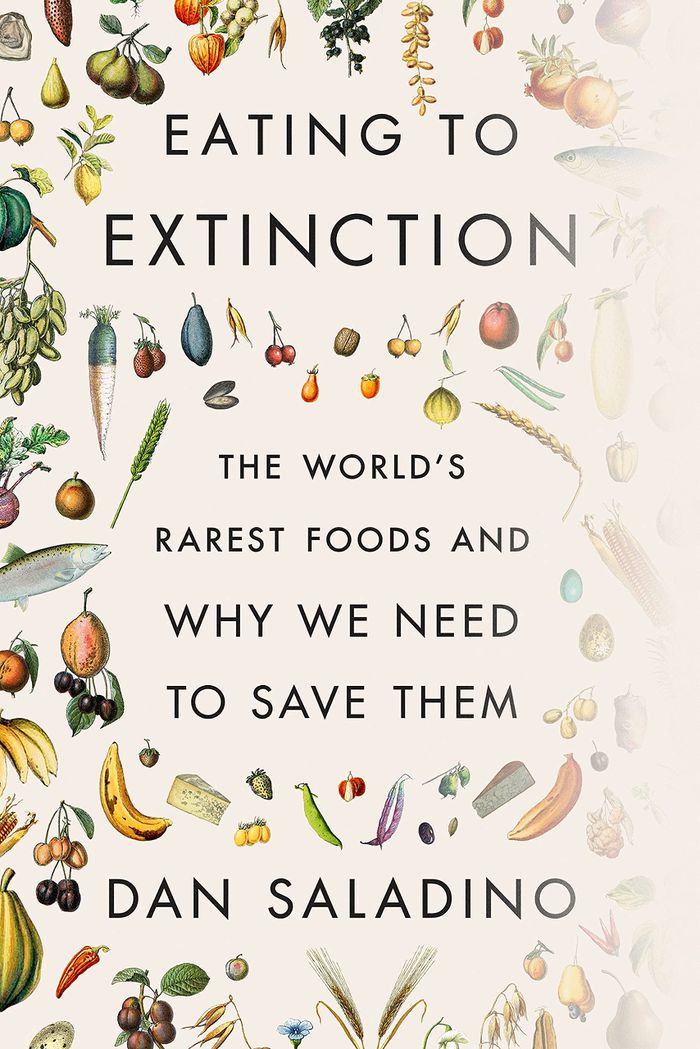
Eating to extinction: the world's rarest foods and why we need to save them
Actions:
Prix:
$28.00
(disponible en magasin)
Résumé:
Over the past several decades, globalization has homogenized what we eat, and done so ruthlessly. The numbers are stark: Of the roughly six thousand different plants once consumed by human beings, only nine remain major staples today. Just three of these—rice, wheat, and corn—now provide fifty percent of all our calories.The source of much of the world’s food—seeds—is mostly in the control of just four corporations. Ninety-five percent of milk consumed in the United States comes from a single breed of cow. Half of all the world’s cheese is made with bacteria or enzymes made by one company. And one in four beers drunk around the world is the product of one brewer. When we lose diversity and foods become endangered, we not only risk the loss of traditional foodways, but also of flavors, smells, and textures that may never be experienced again. And the consolidation of our food has other steep costs, including a lack of resilience in the face of climate change, pests, and parasites. Our food monoculture is a threat to our health—and to the planet. In ''Eating to Extinction'', the BBC food journalist Dan Saladino travels the world to experience and document our most at-risk foods before it’s too late. He tells the fascinating stories of the people who continue to cultivate, forage, hunt, cook, and consume what the rest of us have forgotten or didn’t even know existed. Take honey—not the familiar product sold in plastic bottles, but the wild honey gathered by the Hadza people of East Africa, whose diet consists of eight hundred different plants and animals and who communicate with birds in order to locate bees’ nests. Or consider murnong—once the staple food of Aboriginal Australians, this small root vegetable with the sweet taste of coconut is undergoing a revival after nearly being driven to extinction. And in Sierra Leone, there are just a few surviving stenophylla trees, a plant species now considered crucial to the future of coffee.
Classification:
livres
livres
Publication:
janvier 2023
janvier 2023
Sujet:
Bouffe
Bouffe
Classification:
livres
livres
Prix:
$85.00
(disponible sur commande)
Résumé:
Photographer Rinko Kawauchi (1972–), known for her expressive mastery of gentle color suffused with light, has revealed the mystery, radiance, frailty, and strength of life in all its forms since her earliest works. Her gaze falls equally on the fragile and delicate beings in her immediate vicinity, be they flora and fauna or family members, and the vast workings of the(...)
Titre:
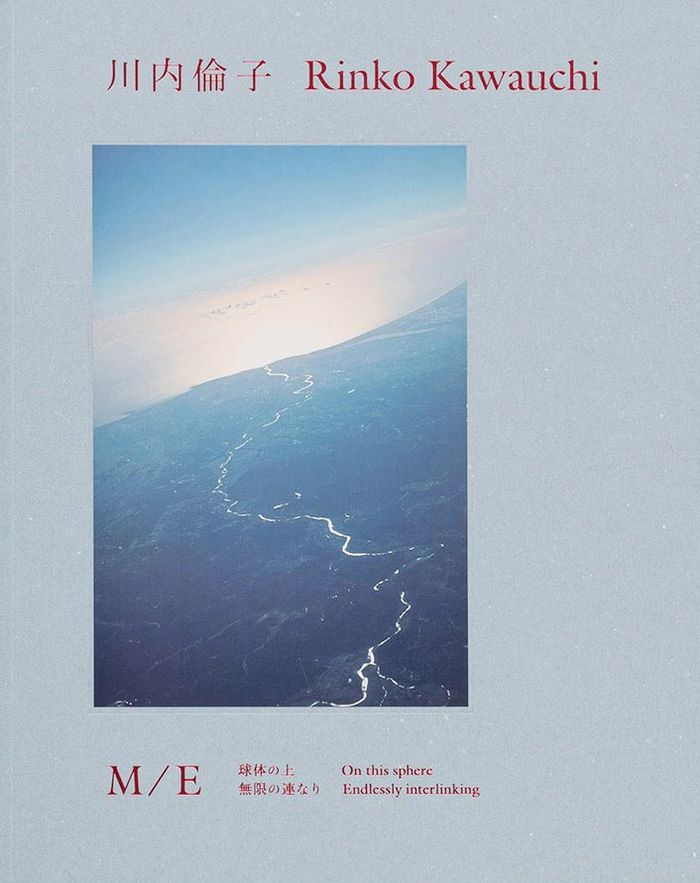
Rinko Kawauchi: M/E On this sphere, Endlessly interlinking
Actions:
Prix:
$85.00
(disponible sur commande)
Résumé:
Photographer Rinko Kawauchi (1972–), known for her expressive mastery of gentle color suffused with light, has revealed the mystery, radiance, frailty, and strength of life in all its forms since her earliest works. Her gaze falls equally on the fragile and delicate beings in her immediate vicinity, be they flora and fauna or family members, and the vast workings of the earth, such as volcanoes and glaciers formed over long eons. The unique sensibility underlying her photography reveals the connections between these subjects, which all shimmer with the same vital glow. This will be her first major exhibition in Japan in six years, showcasing the essence of Kawauchi’s oeuvre through work from the past decade combined with never-before-seen images from her archives. M/E, the main subject of this exhibition and inspiration for its title, is a new series Kawauchi began shooting in 2019. The letters stand for ''Mother'' and ''Earth,'' combining to form both ''Mother Earth'' and ''Me.'' At a glance, the series’ images of Iceland’s volcanoes and ice floes and Hokkaido’s snowy landscapes may seem distant and unrelated to the everyday scenes from the COVID-19 pandemic that accompany them in the series. However, both types of image depict events now taking place on the planet we live on, and Kawauchi’s artistry alerts us to the connection between them. This exhibition invites the viewer to reconsider a range of questions about the workings of human life and our relationship with nature. In this exhibition catalog, Kawauchi herself has composed a sequence that allows visitors to relive the three-dimensional exhibition space, from the core series of the exhibition such as the new ''M/E,'' the yet unpublished ''4%,'' and ''An interlinking'' with new images, to her latest video work. The exhibition also includes a conversation with Haruo Saji, who was an influence on Kawauchi’s practice, and three essays, of which one is written by Masatake Shinohara, exploring the current state of Kawauchi’s work through both imagery and text. By changing the format and paper for each series, despite its simple binding, the book becomes a multilayered volume that embodies the depth of the exhibition.
Classification:
livres
livres
Publication:
janvier 2023
janvier 2023
Sujet:
Monographies photo
Monographies photo


