


873 Résultats
Classification:
livres
livres
Prix:
$26.95
(disponible sur commande)
Résumé:
Part aphorism and part manifesto, this book by Canadian architect Reza Aliabadi (RZLBD) references his ideas and thoughts about space. He suggests ‘the empty room’ as the very essence of architecture, and ‘the spatial experience’ as its highest mandate. Reza revisits architecture –not as the walls that enclose the space– but rather the space in-between the walls. What he(...)
$26.95
(disponible sur commande)
Résumé:
Part aphorism and part manifesto, this book by Canadian architect Reza Aliabadi (RZLBD) references his ideas and thoughts about space. He suggests ‘the empty room’ as the very essence of architecture, and ‘the spatial experience’ as its highest mandate. Reza revisits architecture –not as the walls that enclose the space– but rather the space in-between the walls. What he(...)
Titre:
Reza Aliabadi:The empty room, fragmented thoughts on space
Actions:
Prix:
$26.95
(disponible sur commande)
Résumé:
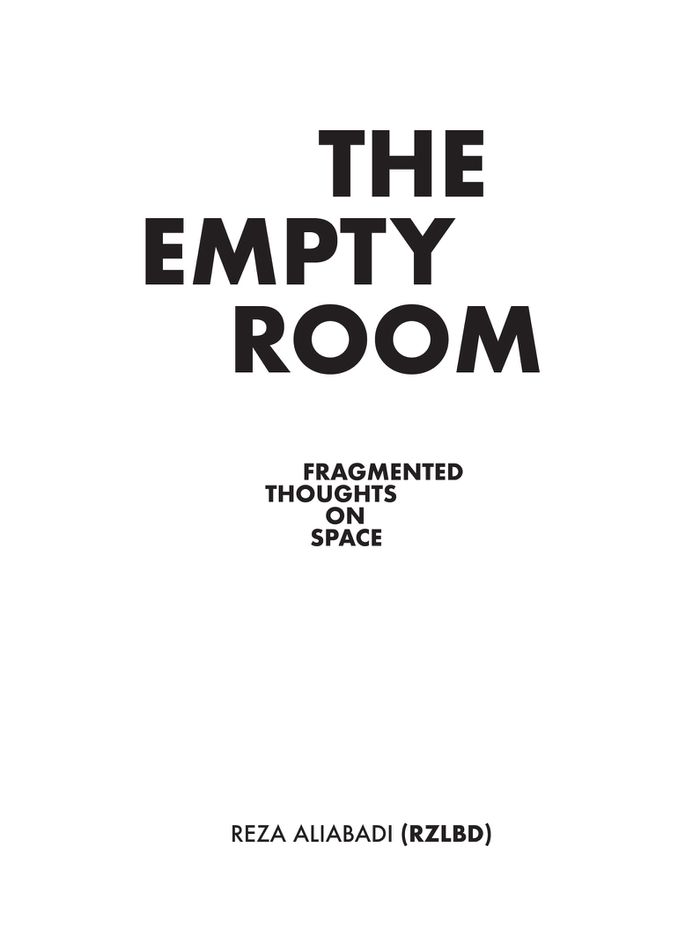
Part aphorism and part manifesto, this book by Canadian architect Reza Aliabadi (RZLBD) references his ideas and thoughts about space. He suggests ‘the empty room’ as the very essence of architecture, and ‘the spatial experience’ as its highest mandate. Reza revisits architecture –not as the walls that enclose the space– but rather the space in-between the walls. What he calls an “anti-architecture” of invisible voids. As Kahn always said: “Architecture comes from the making of a room”. This book starts with this, the very desire to dwell in a space in its most basic form — a room. Through short passages and aphorisms, this text revisits space as the only protagonist, the very foundation, and the sole essence of architecture. It affects your perception of space, it makes you to look at architecture differently — most likely to see the invisible.
Reza Aliabadi:The empty room, fragmented thoughts on space
Actions:
Prix:
$26.95
(disponible sur commande)
Résumé:
Part aphorism and part manifesto, this book by Canadian architect Reza Aliabadi (RZLBD) references his ideas and thoughts about space. He suggests ‘the empty room’ as the very essence of architecture, and ‘the spatial experience’ as its highest mandate. Reza revisits architecture –not as the walls that enclose the space– but rather the space in-between the walls. What he calls an “anti-architecture” of invisible voids. As Kahn always said: “Architecture comes from the making of a room”. This book starts with this, the very desire to dwell in a space in its most basic form — a room. Through short passages and aphorisms, this text revisits space as the only protagonist, the very foundation, and the sole essence of architecture. It affects your perception of space, it makes you to look at architecture differently — most likely to see the invisible.
Classification:
livres
livres
Publication:
août 2020
août 2020
Sujet:
Théorie de l’architecture
Théorie de l’architecture
Classification:
livres
livres
Actions:
Prix:
$77.00
(disponible sur commande)
Résumé:
Key works by today’s leading female architects, with reflections on their craft and design ethos Despite the number of women who have shaped the discipline, female architects still frequently struggle to receive the recognition their work deserves. This volume serves as a manifesto for the great achievements of contemporary female architects the world over, paying(...)
$77.00
(disponible sur commande)
Résumé:
Key works by today’s leading female architects, with reflections on their craft and design ethos Despite the number of women who have shaped the discipline, female architects still frequently struggle to receive the recognition their work deserves. This volume serves as a manifesto for the great achievements of contemporary female architects the world over, paying(...)
Titre:
Women in architecture: past, present, and future
Actions:
Prix:
$77.00
(disponible sur commande)
Résumé:
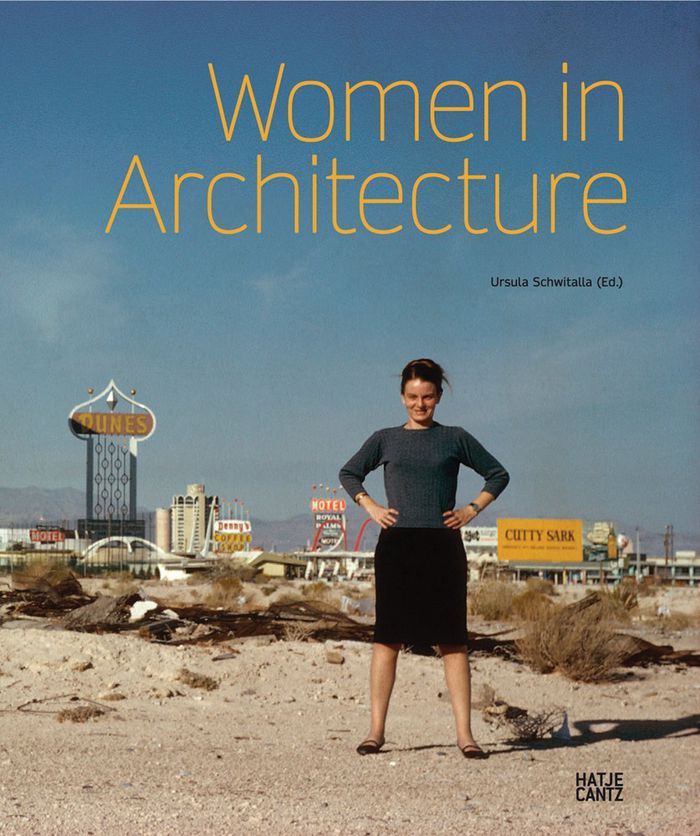
Key works by today’s leading female architects, with reflections on their craft and design ethos Despite the number of women who have shaped the discipline, female architects still frequently struggle to receive the recognition their work deserves. This volume serves as a manifesto for the great achievements of contemporary female architects the world over, paying tribute to their experiences as artists and designers as well as women in a male-dominated field. ''Women in architecture'' profiles 36 architects working today, detailing their personal creative philosophies through examples of their projects. In addition to its examination of the current state of architecture, this volume also explores works by a number of women who served as pioneering figures of the craft, seeking to expose and eventually dismantle the structural discrimination against women architects both inside and outside of the field.
Women in architecture: past, present, and future
Actions:
Prix:
$77.00
(disponible sur commande)
Résumé:
Key works by today’s leading female architects, with reflections on their craft and design ethos Despite the number of women who have shaped the discipline, female architects still frequently struggle to receive the recognition their work deserves. This volume serves as a manifesto for the great achievements of contemporary female architects the world over, paying tribute to their experiences as artists and designers as well as women in a male-dominated field. ''Women in architecture'' profiles 36 architects working today, detailing their personal creative philosophies through examples of their projects. In addition to its examination of the current state of architecture, this volume also explores works by a number of women who served as pioneering figures of the craft, seeking to expose and eventually dismantle the structural discrimination against women architects both inside and outside of the field.
Classification:
livres
livres
Publication:
mai 2021
mai 2021
Sujet:
Architecture contemporaine
Architecture contemporaine
Classification:
livres
livres
Titre:
Daniel Spoerri : eaten by
Daniel Spoerri : eaten by
Actions:
Prix:
$59.00
(disponible sur commande)
Résumé:
Daniel Spoerri was a co-signatory of the Nouveau Réalisme manifesto in 1960, an early member of Fluxus and the author of the classic "Anecdoted Topography of Chance", which recorded and annotated the contents of Spoerri's desk. In 1968 Spoerri also opened Restaurant Spoerri, introducing his concept of "Eat Art," which he had initiated a decade earlier, and which explored(...)
$59.00
(disponible sur commande)
Résumé:
Daniel Spoerri was a co-signatory of the Nouveau Réalisme manifesto in 1960, an early member of Fluxus and the author of the classic "Anecdoted Topography of Chance", which recorded and annotated the contents of Spoerri's desk. In 1968 Spoerri also opened Restaurant Spoerri, introducing his concept of "Eat Art," which he had initiated a decade earlier, and which explored(...)
Titre:
Daniel Spoerri : eaten by
Actions:
Prix:
$59.00
(disponible sur commande)
Résumé:
Daniel Spoerri was a co-signatory of the Nouveau Réalisme manifesto in 1960, an early member of Fluxus and the author of the classic "Anecdoted Topography of Chance", which recorded and annotated the contents of Spoerri's desk. In 1968 Spoerri also opened Restaurant Spoerri, introducing his concept of "Eat Art," which he had initiated a decade earlier, and which explored the creation, decay and "trapping" of food upon tables that were then recapitulated as assemblages. Marking the occasion of the artist's eightieth birthday, this publication approaches the theme of food throughout Spoerri's oeuvre, from the early 1960s to the present. It includes the artist's replica of the Restaurant Spoerri, a survey of Spoerri's trap pictures from 1978 to 1992, and a large number of more recent assemblages and sculptures, bringing his audience fully up to date.
Daniel Spoerri : eaten by
Actions:
Prix:
$59.00
(disponible sur commande)
Résumé:
Daniel Spoerri was a co-signatory of the Nouveau Réalisme manifesto in 1960, an early member of Fluxus and the author of the classic "Anecdoted Topography of Chance", which recorded and annotated the contents of Spoerri's desk. In 1968 Spoerri also opened Restaurant Spoerri, introducing his concept of "Eat Art," which he had initiated a decade earlier, and which explored the creation, decay and "trapping" of food upon tables that were then recapitulated as assemblages. Marking the occasion of the artist's eightieth birthday, this publication approaches the theme of food throughout Spoerri's oeuvre, from the early 1960s to the present. It includes the artist's replica of the Restaurant Spoerri, a survey of Spoerri's trap pictures from 1978 to 1992, and a large number of more recent assemblages and sculptures, bringing his audience fully up to date.
Classification:
livres
livres
Publication:
août 2010
août 2010
Classification:
livres
livres
Actions:
Prix:
$25.00
(disponible sur commande)
Résumé:
Preservation is Overtaking Us brings together two lectures given by Rem Koolhaas at Columbia University’s Graduate School of Architecture, Planning and Preservation, along with a response (framed as a supplement to the original lectures) by Jorge Otero-Pailos. In the first essay Koohaas describes alternative strategies for preserving Beijing, China. The second talk marks(...)
$25.00
(disponible sur commande)
Résumé:
Preservation is Overtaking Us brings together two lectures given by Rem Koolhaas at Columbia University’s Graduate School of Architecture, Planning and Preservation, along with a response (framed as a supplement to the original lectures) by Jorge Otero-Pailos. In the first essay Koohaas describes alternative strategies for preserving Beijing, China. The second talk marks(...)
Titre:
Preservation is over taking us
Actions:
Prix:
$25.00
(disponible sur commande)
Résumé:
Preservation is Overtaking Us brings together two lectures given by Rem Koolhaas at Columbia University’s Graduate School of Architecture, Planning and Preservation, along with a response (framed as a supplement to the original lectures) by Jorge Otero-Pailos. In the first essay Koohaas describes alternative strategies for preserving Beijing, China. The second talk marks the inaugural Paul Spencer Byard lecture, named in celebration of the longtime professor of Historic Preservation at GSAPP. These two lectures trace key moments of Koolhaas’ thinking on preservation, including his practice’s entry into China and the commission to redevelop the State Hermitage Museum in St. Petersburg, Russia. In a format well known to Koolhaas’ readers, Otero-Pailos reworks the lectures into a retroactive manifesto, using it to interrogate OMA’s work from within the discipline of preservation. This is the first book in the new GSAPP Transcripts series.
Preservation is over taking us
Actions:
Prix:
$25.00
(disponible sur commande)
Résumé:
Preservation is Overtaking Us brings together two lectures given by Rem Koolhaas at Columbia University’s Graduate School of Architecture, Planning and Preservation, along with a response (framed as a supplement to the original lectures) by Jorge Otero-Pailos. In the first essay Koohaas describes alternative strategies for preserving Beijing, China. The second talk marks the inaugural Paul Spencer Byard lecture, named in celebration of the longtime professor of Historic Preservation at GSAPP. These two lectures trace key moments of Koolhaas’ thinking on preservation, including his practice’s entry into China and the commission to redevelop the State Hermitage Museum in St. Petersburg, Russia. In a format well known to Koolhaas’ readers, Otero-Pailos reworks the lectures into a retroactive manifesto, using it to interrogate OMA’s work from within the discipline of preservation. This is the first book in the new GSAPP Transcripts series.
Classification:
livres
livres
Publication:
novembre 2014
novembre 2014
Sujet:
Théorie de l’architecture
Théorie de l’architecture
Classification:
livres
livres
Actions:
Exemplaires:
Description:
144 pages : illustrations (chiefly color), charts, map ; 24 cm
Description:
144 pages : illustrations (chiefly color), charts, map ; 24 cm
Auteur:
Sujet:
Publication:
Berlin : Hatje Cantz Verlag GmbH ; Cambridge, Massachusetts : The MIT Press, [2022], ©2022
Berlin : Hatje Cantz Verlag GmbH ; Cambridge, Massachusetts : The MIT Press, [2022], ©2022
Titre:
Spatializing justice : building blocks / Teddy Cruz and Fonna Forman.
Actions:
Exemplaires:
Description:
144 pages : illustrations (chiefly color), charts, map ; 24 cm
Spatializing justice : building blocks / Teddy Cruz and Fonna Forman.
Actions:
Exemplaires:
Description:
144 pages : illustrations (chiefly color), charts, map ; 24 cm
Classification:
livres
livres
Publication:
Berlin : Hatje Cantz Verlag GmbH ; Cambridge, Massachusetts : The MIT Press, [2022], ©2022
Berlin : Hatje Cantz Verlag GmbH ; Cambridge, Massachusetts : The MIT Press, [2022], ©2022
Auteur:
Sujet:
Classification:
livres
livres
Prix:
$80.95
(disponible en magasin)
Résumé:
Frank Lloyd Wright is known as the architect of an enduring modern American vision, but was himself extremely well-travelled, with journeys to far-flung corners of the world serving as opportunities to develop and promote his globalising ‘organic’ philosophy. Visits to Japan and Germany informed his Prairie House period, his Usonian manifesto was presented in Russia and(...)
$80.95
(disponible en magasin)
Résumé:
Frank Lloyd Wright is known as the architect of an enduring modern American vision, but was himself extremely well-travelled, with journeys to far-flung corners of the world serving as opportunities to develop and promote his globalising ‘organic’ philosophy. Visits to Japan and Germany informed his Prairie House period, his Usonian manifesto was presented in Russia and(...)
Titre:
Travels with Frank lloyd Wright: the first global architect
Actions:
Prix:
$80.95
(disponible en magasin)
Résumé:
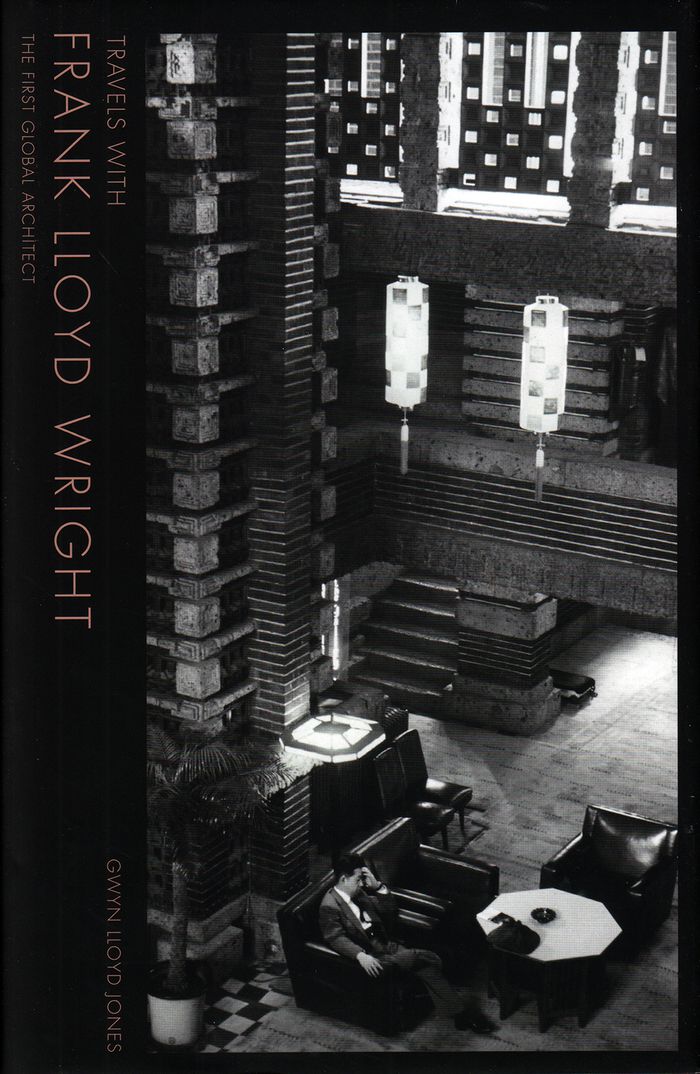
Frank Lloyd Wright is known as the architect of an enduring modern American vision, but was himself extremely well-travelled, with journeys to far-flung corners of the world serving as opportunities to develop and promote his globalising ‘organic’ philosophy. Visits to Japan and Germany informed his Prairie House period, his Usonian manifesto was presented in Russia and the UK, and later he spent time in Italy and the Middle East during his Legacy period. Gwyn Lloyd Jones retraces Lloyd Wright’s footsteps in a fascinating globetrotting narrative that reveals Lloyd Wright’s architectural legacy as having emerged from what was, at the time, a newly globalised era of architectural production. Along the way the author meets the people who are living with and experiencing Lloyd Wright’s ‘organic’ architecture today and asks whether the buildings remain true to Lloyd Wright’s intent and what it is that makes them unique.
Travels with Frank lloyd Wright: the first global architect
Actions:
Prix:
$80.95
(disponible en magasin)
Résumé:
Frank Lloyd Wright is known as the architect of an enduring modern American vision, but was himself extremely well-travelled, with journeys to far-flung corners of the world serving as opportunities to develop and promote his globalising ‘organic’ philosophy. Visits to Japan and Germany informed his Prairie House period, his Usonian manifesto was presented in Russia and the UK, and later he spent time in Italy and the Middle East during his Legacy period. Gwyn Lloyd Jones retraces Lloyd Wright’s footsteps in a fascinating globetrotting narrative that reveals Lloyd Wright’s architectural legacy as having emerged from what was, at the time, a newly globalised era of architectural production. Along the way the author meets the people who are living with and experiencing Lloyd Wright’s ‘organic’ architecture today and asks whether the buildings remain true to Lloyd Wright’s intent and what it is that makes them unique.
Classification:
livres
livres
Publication:
avril 2017
avril 2017
Sujet:
Architecture, monographies
Architecture, monographies
Classification:
livres
livres
Titre:
NEEN
NEEN
Actions:
Prix:
$42.00
(disponible sur commande)
Résumé:
As the Neen Manifesto has it, "Neen stands for Neenstars: a still-undefined generation of visual artists. Some of them belong to the contemporary art world; others are software creators, web designers, and video game directors or animators." In the spring of 2000, at the Gagosian Gallery in New York, Greek artist Miltos Manetas held a press conference to announce the(...)
$42.00
(disponible sur commande)
Résumé:
As the Neen Manifesto has it, "Neen stands for Neenstars: a still-undefined generation of visual artists. Some of them belong to the contemporary art world; others are software creators, web designers, and video game directors or animators." In the spring of 2000, at the Gagosian Gallery in New York, Greek artist Miltos Manetas held a press conference to announce the(...)
Titre:
NEEN
Actions:
Prix:
$42.00
(disponible sur commande)
Résumé:
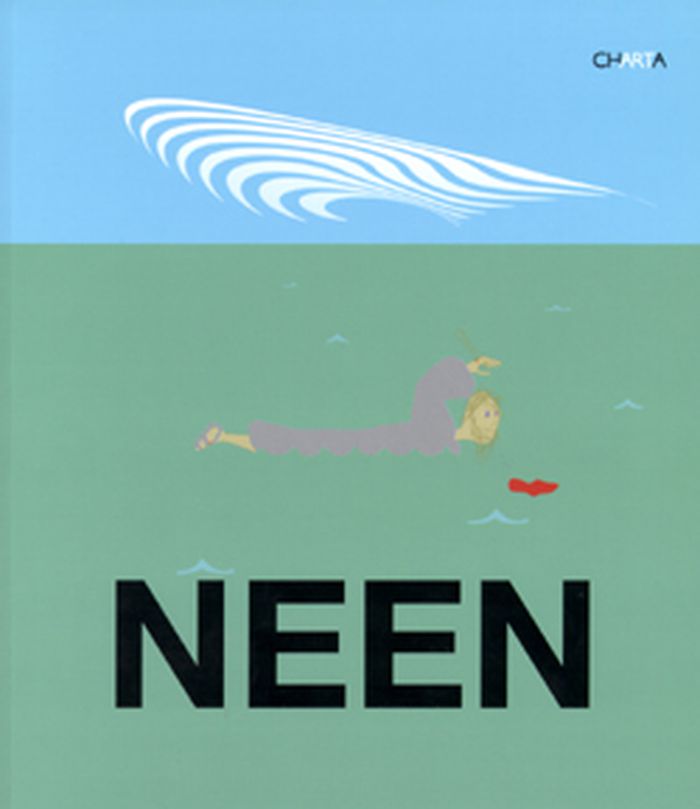
As the Neen Manifesto has it, "Neen stands for Neenstars: a still-undefined generation of visual artists. Some of them belong to the contemporary art world; others are software creators, web designers, and video game directors or animators." In the spring of 2000, at the Gagosian Gallery in New York, Greek artist Miltos Manetas held a press conference to announce the birth of the term "Neen," which he had hired a California branding company to invent. Manetas, whose work includes oil paintings of computer hardware and videos of clips from games, sought to unify the burgeoning number of artists in and around digital media. If they've been understandably skittish about this unification, or if, as The New York Times bluntly observed, "it's unlikely that any sort of new coinage cooked up as a conceptual exercise will take hold," that just makes Manetas a more prominent example of Neen-ness himself.
NEEN
Actions:
Prix:
$42.00
(disponible sur commande)
Résumé:
As the Neen Manifesto has it, "Neen stands for Neenstars: a still-undefined generation of visual artists. Some of them belong to the contemporary art world; others are software creators, web designers, and video game directors or animators." In the spring of 2000, at the Gagosian Gallery in New York, Greek artist Miltos Manetas held a press conference to announce the birth of the term "Neen," which he had hired a California branding company to invent. Manetas, whose work includes oil paintings of computer hardware and videos of clips from games, sought to unify the burgeoning number of artists in and around digital media. If they've been understandably skittish about this unification, or if, as The New York Times bluntly observed, "it's unlikely that any sort of new coinage cooked up as a conceptual exercise will take hold," that just makes Manetas a more prominent example of Neen-ness himself.
Classification:
livres
livres
Publication:
septembre 2006, Milan
septembre 2006, Milan
Classification:
livres
livres
Titre:
Siteless 1001 building forms
Siteless 1001 building forms
Actions:
Prix:
$25.95
(disponible sur commande)
Résumé:
Some may call it the first manifesto of the twenty-first century, for it lays down a new way to think about architecture. Others may think of it as the last architectural treatise, for it provides a discursive container for ideas that would otherwise be lost. Whatever genre it belongs to, SITELESS is a new kind of architecture book that seems to have come out of nowhere.(...)
$25.95
(disponible sur commande)
Résumé:
Some may call it the first manifesto of the twenty-first century, for it lays down a new way to think about architecture. Others may think of it as the last architectural treatise, for it provides a discursive container for ideas that would otherwise be lost. Whatever genre it belongs to, SITELESS is a new kind of architecture book that seems to have come out of nowhere.(...)
Titre:
Siteless 1001 building forms
Actions:
Prix:
$25.95
(disponible sur commande)
Résumé:
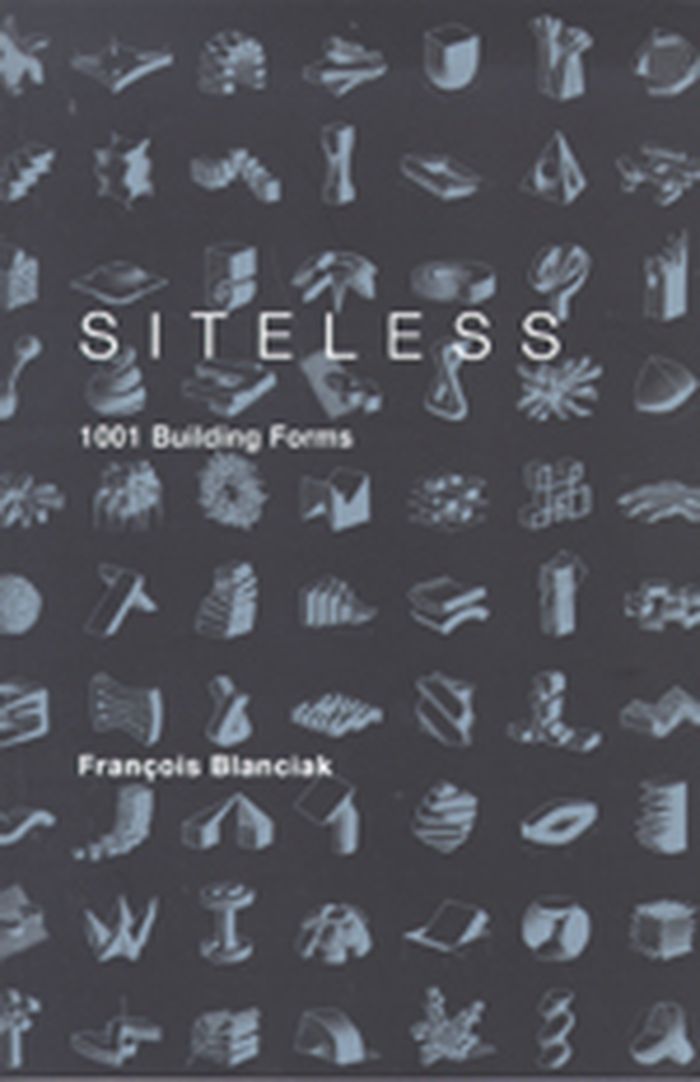
Some may call it the first manifesto of the twenty-first century, for it lays down a new way to think about architecture. Others may think of it as the last architectural treatise, for it provides a discursive container for ideas that would otherwise be lost. Whatever genre it belongs to, SITELESS is a new kind of architecture book that seems to have come out of nowhere. Its author, a young French architect practicing in Tokyo, admits he "didn't do this out of reverence toward architecture, but rather out of a profound boredom with the discipline, as a sort of compulsive reaction." What would happen, he asks, if architects liberated their minds from the constraints of site, program, and budget? The result is a book that is saturated with forms, and as free of words as any architecture book the MIT Press has ever published.
Siteless 1001 building forms
Actions:
Prix:
$25.95
(disponible sur commande)
Résumé:
Some may call it the first manifesto of the twenty-first century, for it lays down a new way to think about architecture. Others may think of it as the last architectural treatise, for it provides a discursive container for ideas that would otherwise be lost. Whatever genre it belongs to, SITELESS is a new kind of architecture book that seems to have come out of nowhere. Its author, a young French architect practicing in Tokyo, admits he "didn't do this out of reverence toward architecture, but rather out of a profound boredom with the discipline, as a sort of compulsive reaction." What would happen, he asks, if architects liberated their minds from the constraints of site, program, and budget? The result is a book that is saturated with forms, and as free of words as any architecture book the MIT Press has ever published.
Classification:
livres
livres
Publication:
mars 2008, Cambridge
mars 2008, Cambridge
Sujet:
Structures d’ingénierie
Structures d’ingénierie
Classification:
livres
livres
Actions:
Prix:
$60.00
(disponible sur commande)
Résumé:
This publication is the result of a year-long dialogue between British architect David Chipperfield (born 1953) and Swiss architect Simon Kretz (born 1982). The two began working together through the Rolex Mentor and Protégé Arts Initiative, in which Chipperfield mentored the younger architect for a year. This publication focuses on a single aspect of their(...)
$60.00
(disponible sur commande)
Résumé:
This publication is the result of a year-long dialogue between British architect David Chipperfield (born 1953) and Swiss architect Simon Kretz (born 1982). The two began working together through the Rolex Mentor and Protégé Arts Initiative, in which Chipperfield mentored the younger architect for a year. This publication focuses on a single aspect of their(...)
Sujet:
Théorie de l’urbanisme
Théorie de l’urbanisme
Publication:
juin 2018
juin 2018
Titre:
David Chipperfield & Simon Kretz: On planning, A thought experiment
Actions:
Prix:
$60.00
(disponible sur commande)
Résumé:
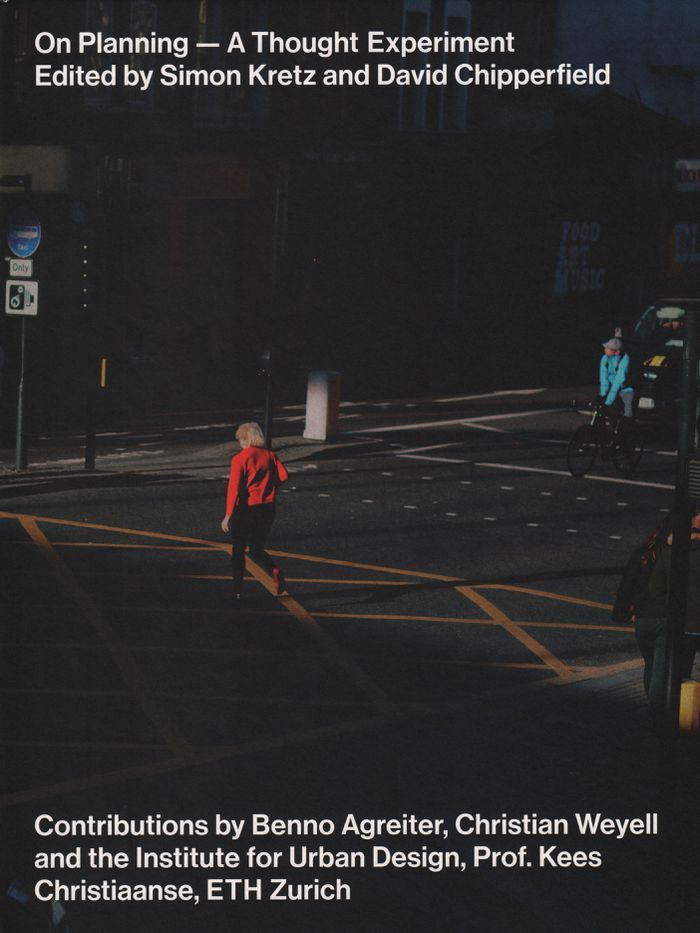
This publication is the result of a year-long dialogue between British architect David Chipperfield (born 1953) and Swiss architect Simon Kretz (born 1982). The two began working together through the Rolex Mentor and Protégé Arts Initiative, in which Chipperfield mentored the younger architect for a year. This publication focuses on a single aspect of their conversations—the problems and possibilities of planning. "On Planning" aims to intervene in the future of urban development, offering a manifesto for a relational, collective and diverse future for our cities. Using the Bishopsgate goods yard site in East London as a case study, Chipperfield and Kretz explore the conditions under which an ideal urban development project could flourish. The conclusions reached through this exercise demonstrate how future large-scale developments elsewhere could have more positive urban impact, both at the scale of the neighborhood and the wider metropolis.
David Chipperfield & Simon Kretz: On planning, A thought experiment
Actions:
Prix:
$60.00
(disponible sur commande)
Résumé:
This publication is the result of a year-long dialogue between British architect David Chipperfield (born 1953) and Swiss architect Simon Kretz (born 1982). The two began working together through the Rolex Mentor and Protégé Arts Initiative, in which Chipperfield mentored the younger architect for a year. This publication focuses on a single aspect of their conversations—the problems and possibilities of planning. "On Planning" aims to intervene in the future of urban development, offering a manifesto for a relational, collective and diverse future for our cities. Using the Bishopsgate goods yard site in East London as a case study, Chipperfield and Kretz explore the conditions under which an ideal urban development project could flourish. The conclusions reached through this exercise demonstrate how future large-scale developments elsewhere could have more positive urban impact, both at the scale of the neighborhood and the wider metropolis.
Classification:
livres
livres
Publication:
juin 2018
juin 2018
Sujet:
Théorie de l’urbanisme
Théorie de l’urbanisme
Classification:
livres
livres
Actions:
Prix:
$68.00
(disponible sur commande)
Résumé:
Text in English and German. Third Revised Edition 2018. If there is one building by Le Corbusier that represents a synthesis of his basic concepts it is certainly the Unité d’habitation built in Marseille in 1946-52. This built manifesto does not simply put forward a social model as a utopia, but also the unity of architecture and town planning. It is one of the most(...)
$68.00
(disponible sur commande)
Résumé:
Text in English and German. Third Revised Edition 2018. If there is one building by Le Corbusier that represents a synthesis of his basic concepts it is certainly the Unité d’habitation built in Marseille in 1946-52. This built manifesto does not simply put forward a social model as a utopia, but also the unity of architecture and town planning. It is one of the most(...)
Titre:
Le Cobusier, Unité d'Habitation Marseille. Opus 65
Actions:
Prix:
$68.00
(disponible sur commande)
Résumé:
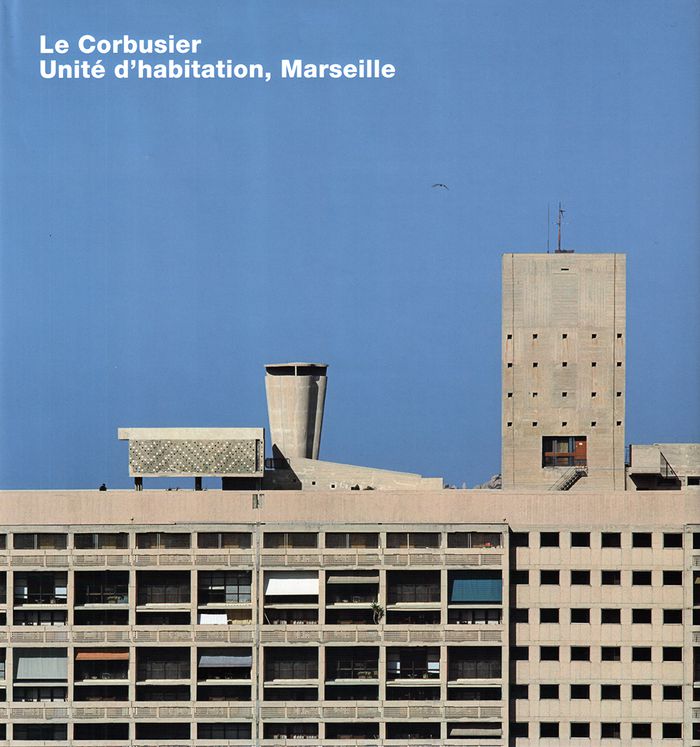
Text in English and German. Third Revised Edition 2018. If there is one building by Le Corbusier that represents a synthesis of his basic concepts it is certainly the Unité d’habitation built in Marseille in 1946-52. This built manifesto does not simply put forward a social model as a utopia, but also the unity of architecture and town planning. It is one of the most significant buildings there has ever been, but it also triggered a great deal of controversy. Despite all the criticism, it obviously still offers functional advantages that make it easier for individuals and the community to live together. As well as this, the building also offers something special in terms of concrete spatial experience. In the age of a superficial 'adventure society' it claims the intensity of an everyday experience that is both casual and at the same time complex, embracing all the senses.
Le Cobusier, Unité d'Habitation Marseille. Opus 65
Actions:
Prix:
$68.00
(disponible sur commande)
Résumé:
Text in English and German. Third Revised Edition 2018. If there is one building by Le Corbusier that represents a synthesis of his basic concepts it is certainly the Unité d’habitation built in Marseille in 1946-52. This built manifesto does not simply put forward a social model as a utopia, but also the unity of architecture and town planning. It is one of the most significant buildings there has ever been, but it also triggered a great deal of controversy. Despite all the criticism, it obviously still offers functional advantages that make it easier for individuals and the community to live together. As well as this, the building also offers something special in terms of concrete spatial experience. In the age of a superficial 'adventure society' it claims the intensity of an everyday experience that is both casual and at the same time complex, embracing all the senses.
Classification:
livres
livres
Publication:
janvier 2008
janvier 2008
Sujet:
Architecture, monographies
Architecture, monographies


