


1026 Résultats
Classification:
livres
livres
Titre:
On the digital humanities
On the digital humanities
Actions:
Prix:
$35.99
(disponible sur commande)
Résumé:
Since its inception, the digital humanities has been repeatedly attacked as a threat to the humanities: warnings from literary and cultural theorists of technology overtaking English departments and the mechanization of teaching have peppered popular media. Stephen Ramsay’s ''On the digital humanities'', a collection of essays spanning the personal to the polemic, is a(...)
$35.99
(disponible sur commande)
Résumé:
Since its inception, the digital humanities has been repeatedly attacked as a threat to the humanities: warnings from literary and cultural theorists of technology overtaking English departments and the mechanization of teaching have peppered popular media. Stephen Ramsay’s ''On the digital humanities'', a collection of essays spanning the personal to the polemic, is a(...)
Titre:
On the digital humanities
Actions:
Prix:
$35.99
(disponible sur commande)
Résumé:
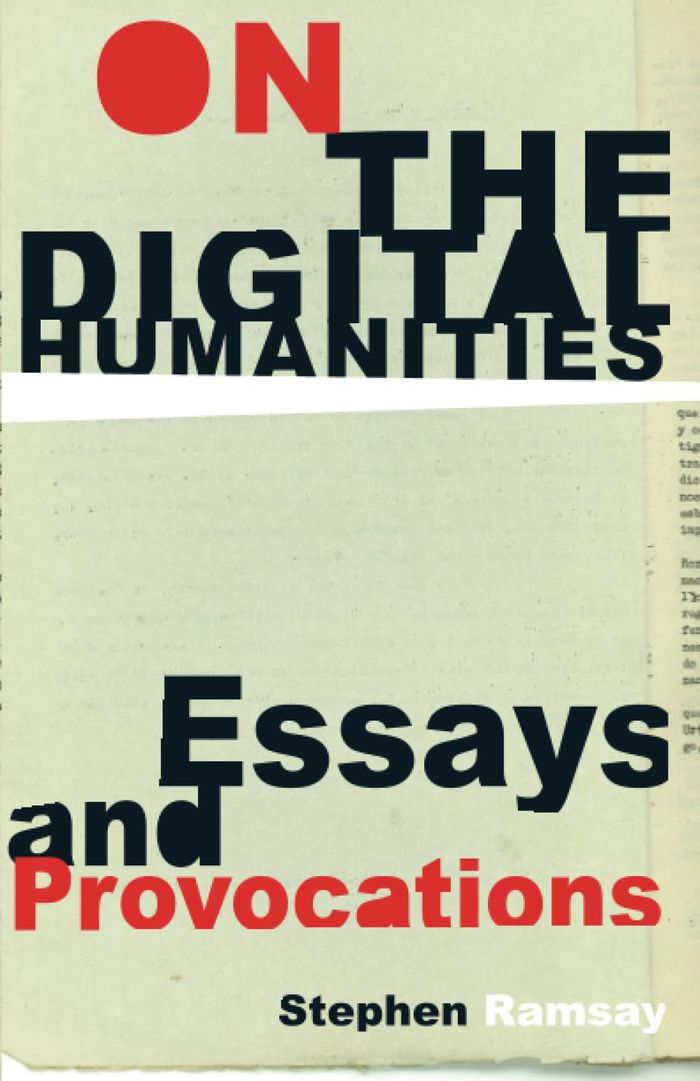
Since its inception, the digital humanities has been repeatedly attacked as a threat to the humanities: warnings from literary and cultural theorists of technology overtaking English departments and the mechanization of teaching have peppered popular media. Stephen Ramsay’s ''On the digital humanities'', a collection of essays spanning the personal to the polemic, is a spirited defense of the field of digital humanities. A founding figure in what was once known as 'humanities computing,' Ramsay has a well-known and contentious relationship with what is now called the digital humanities (DH). Here Ramsay collects and updates his most influential and notorious essays and speeches from the past fifteen years, considering DH from an array of practical and theoretical perspectives. The essays pursue a broad variety of themes, including the nature of data and its place in more conventional notions of text and interpretation, the relationship between the constraints of computation and the more open-ended nature of the humanities, the positioning of practical skills and infrastructures in both research and pedagogical contexts, the status of DH as a program for political and social action, and personal reflections on the author’s journey into the field as both a theorist and a technologist. These wide-ranging essays all center around one idea: that DH not forsake its connection to the humanities. While 'digital humanities' may sound like an entirely new form of engagement with the artifacts of human culture, Ramsay argues that the field well reveals what is most essential to humanistic inquiry.
On the digital humanities
Actions:
Prix:
$35.99
(disponible sur commande)
Résumé:
Since its inception, the digital humanities has been repeatedly attacked as a threat to the humanities: warnings from literary and cultural theorists of technology overtaking English departments and the mechanization of teaching have peppered popular media. Stephen Ramsay’s ''On the digital humanities'', a collection of essays spanning the personal to the polemic, is a spirited defense of the field of digital humanities. A founding figure in what was once known as 'humanities computing,' Ramsay has a well-known and contentious relationship with what is now called the digital humanities (DH). Here Ramsay collects and updates his most influential and notorious essays and speeches from the past fifteen years, considering DH from an array of practical and theoretical perspectives. The essays pursue a broad variety of themes, including the nature of data and its place in more conventional notions of text and interpretation, the relationship between the constraints of computation and the more open-ended nature of the humanities, the positioning of practical skills and infrastructures in both research and pedagogical contexts, the status of DH as a program for political and social action, and personal reflections on the author’s journey into the field as both a theorist and a technologist. These wide-ranging essays all center around one idea: that DH not forsake its connection to the humanities. While 'digital humanities' may sound like an entirely new form of engagement with the artifacts of human culture, Ramsay argues that the field well reveals what is most essential to humanistic inquiry.
Classification:
livres
livres
Publication:
août 2023
août 2023
Classification:
livres
livres
Actions:
Prix:
$72.50
(disponible sur commande)
Résumé:
"Urgent archives" argues that archivists can and should do more to disrupt white supremacy and hetero-patriarchy beyond the standard liberal archival solutions of more diverse collecting and more inclusive description. Grounded in the emerging field of critical archival studies, this book uncovers how dominant western archival theories and practices are oppressive by(...)
$72.50
(disponible sur commande)
Résumé:
"Urgent archives" argues that archivists can and should do more to disrupt white supremacy and hetero-patriarchy beyond the standard liberal archival solutions of more diverse collecting and more inclusive description. Grounded in the emerging field of critical archival studies, this book uncovers how dominant western archival theories and practices are oppressive by(...)
Titre:
Urgent Archives: Enacting liberatory memory work
Actions:
Prix:
$72.50
(disponible sur commande)
Résumé:
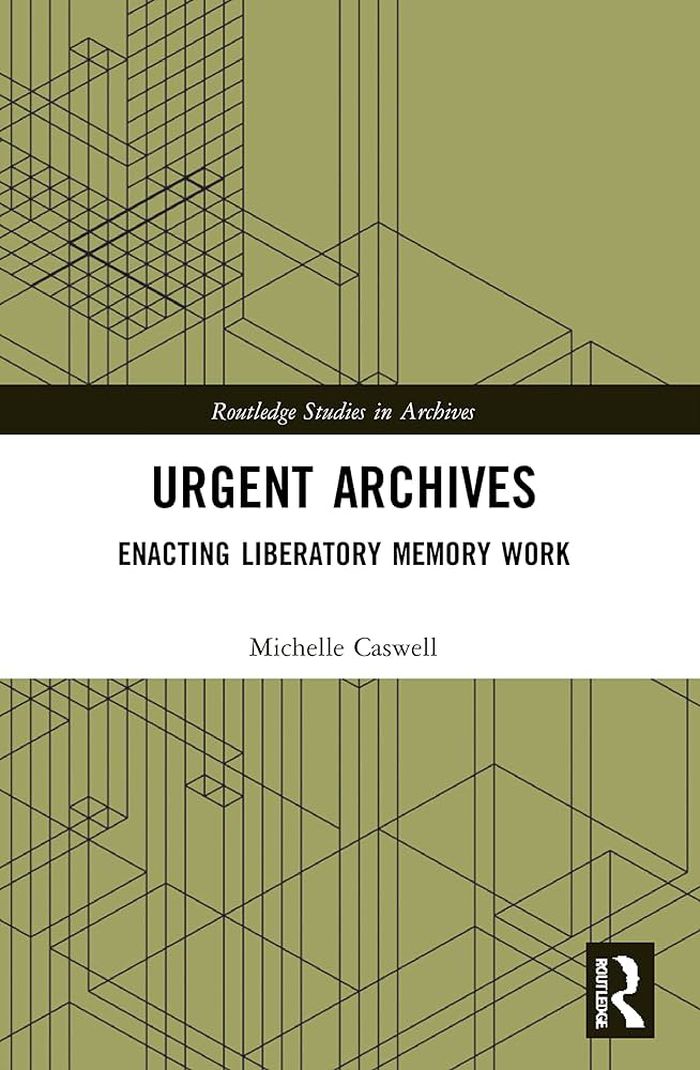
"Urgent archives" argues that archivists can and should do more to disrupt white supremacy and hetero-patriarchy beyond the standard liberal archival solutions of more diverse collecting and more inclusive description. Grounded in the emerging field of critical archival studies, this book uncovers how dominant western archival theories and practices are oppressive by design, while looking toward the the radical politics of community archives to envision new liberatory theories and practices. Based on more than a decade of ethnography at community archives sites including the South Asian American Digital Archive (SAADA), the book explores how members of minoritized communities activate records to build solidarities across and within communities, trouble linear progress narratives, and disrupt cycles of oppression. Caswell explores the temporal, representational, and material aspects of liberatory memory work, arguing that archival disruptions in time and space should be neither about the past nor the future, but about the liberatory affects and effects of memory work in the present.
Urgent Archives: Enacting liberatory memory work
Actions:
Prix:
$72.50
(disponible sur commande)
Résumé:
"Urgent archives" argues that archivists can and should do more to disrupt white supremacy and hetero-patriarchy beyond the standard liberal archival solutions of more diverse collecting and more inclusive description. Grounded in the emerging field of critical archival studies, this book uncovers how dominant western archival theories and practices are oppressive by design, while looking toward the the radical politics of community archives to envision new liberatory theories and practices. Based on more than a decade of ethnography at community archives sites including the South Asian American Digital Archive (SAADA), the book explores how members of minoritized communities activate records to build solidarities across and within communities, trouble linear progress narratives, and disrupt cycles of oppression. Caswell explores the temporal, representational, and material aspects of liberatory memory work, arguing that archival disruptions in time and space should be neither about the past nor the future, but about the liberatory affects and effects of memory work in the present.
Classification:
livres
livres
Publication:
janvier 2023
janvier 2023
Classification:
livres
livres
Actions:
Prix:
$33.00
(disponible en magasin)
Résumé:
How does media architecture distribute suspicion and trust? What is a collage of media architecture? How is media architecture vectored? How can media architecture address privilege? These questions and conceptual provocations aim to challenge the binary of techno-optimism and technological agoraphobia, offering a platform for developing new, critically and contextually(...)
$33.00
(disponible en magasin)
Résumé:
How does media architecture distribute suspicion and trust? What is a collage of media architecture? How is media architecture vectored? How can media architecture address privilege? These questions and conceptual provocations aim to challenge the binary of techno-optimism and technological agoraphobia, offering a platform for developing new, critically and contextually(...)
Publication:
novembre 2023
novembre 2023
Titre:
Provocations on media architecture
Actions:
Prix:
$33.00
(disponible en magasin)
Résumé:
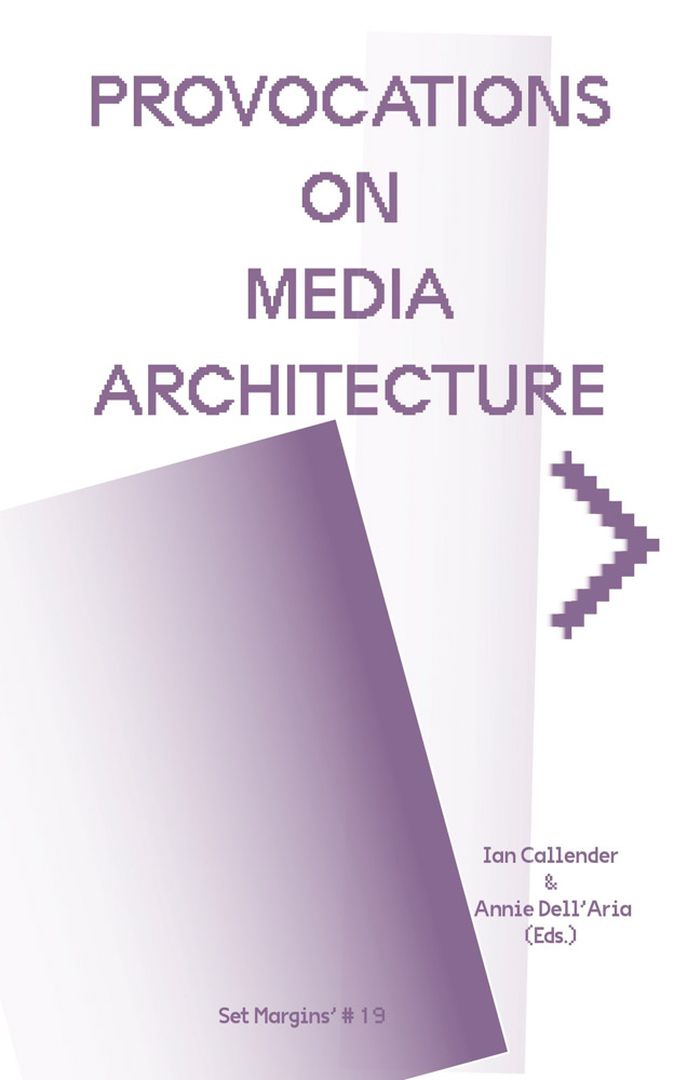
How does media architecture distribute suspicion and trust? What is a collage of media architecture? How is media architecture vectored? How can media architecture address privilege? These questions and conceptual provocations aim to challenge the binary of techno-optimism and technological agoraphobia, offering a platform for developing new, critically and contextually rooted theories that media architecture might grab hold of. Intentionally open-ended, ''Provocations on Media Architecture'' brings together 21 thought leaders across architecture, visual arts, design, curation, academia and public policy to address these ideas and themes. Authors respond with images and brief texts incorporating the perspective of their own creative and scholarly practice. Entries range from descriptions of relevant artworks and design projects to reflections spawned from first-person encounters with media architecture in situ, scholarly analyses and AI-assisted theory.
Provocations on media architecture
Actions:
Prix:
$33.00
(disponible en magasin)
Résumé:
How does media architecture distribute suspicion and trust? What is a collage of media architecture? How is media architecture vectored? How can media architecture address privilege? These questions and conceptual provocations aim to challenge the binary of techno-optimism and technological agoraphobia, offering a platform for developing new, critically and contextually rooted theories that media architecture might grab hold of. Intentionally open-ended, ''Provocations on Media Architecture'' brings together 21 thought leaders across architecture, visual arts, design, curation, academia and public policy to address these ideas and themes. Authors respond with images and brief texts incorporating the perspective of their own creative and scholarly practice. Entries range from descriptions of relevant artworks and design projects to reflections spawned from first-person encounters with media architecture in situ, scholarly analyses and AI-assisted theory.
Classification:
livres
livres
Publication:
novembre 2023
novembre 2023
Classification:
livres
livres
Titre:
Humanities in the time of AI
Humanities in the time of AI
Actions:
Prix:
$13.99
(disponible sur commande)
Résumé:
If humanistic research consists of the generation of consensus positions, simple expression, summarized texts, or passable translations, then we have arrived at the place where AI is able to accomplish these different missions to a convincing degree. However, Laurent Dubreuil argues, such tasks do not, in any way, constitute the humanities. On the contrary, he posits, a(...)
$13.99
(disponible sur commande)
Résumé:
If humanistic research consists of the generation of consensus positions, simple expression, summarized texts, or passable translations, then we have arrived at the place where AI is able to accomplish these different missions to a convincing degree. However, Laurent Dubreuil argues, such tasks do not, in any way, constitute the humanities. On the contrary, he posits, a(...)
Titre:
Humanities in the time of AI
Actions:
Prix:
$13.99
(disponible sur commande)
Résumé:
If humanistic research consists of the generation of consensus positions, simple expression, summarized texts, or passable translations, then we have arrived at the place where AI is able to accomplish these different missions to a convincing degree. However, Laurent Dubreuil argues, such tasks do not, in any way, constitute the humanities. On the contrary, he posits, a maximalist take on scholarship would not focus on generation but on creation, as a subject and as an object. Dubreuil seizes the opportunity of what AI reveals about the meaning of humanistic inquiry to offer a path for the renewal of the humanities on transhistorical, transcultural, and transdisciplinary grounds.
Humanities in the time of AI
Actions:
Prix:
$13.99
(disponible sur commande)
Résumé:
If humanistic research consists of the generation of consensus positions, simple expression, summarized texts, or passable translations, then we have arrived at the place where AI is able to accomplish these different missions to a convincing degree. However, Laurent Dubreuil argues, such tasks do not, in any way, constitute the humanities. On the contrary, he posits, a maximalist take on scholarship would not focus on generation but on creation, as a subject and as an object. Dubreuil seizes the opportunity of what AI reveals about the meaning of humanistic inquiry to offer a path for the renewal of the humanities on transhistorical, transcultural, and transdisciplinary grounds.
Classification:
livres
livres
Publication:
avril 2025
avril 2025
Classification:
livres
livres
Actions:
Prix:
$54.00
(disponible en magasin)
Résumé:
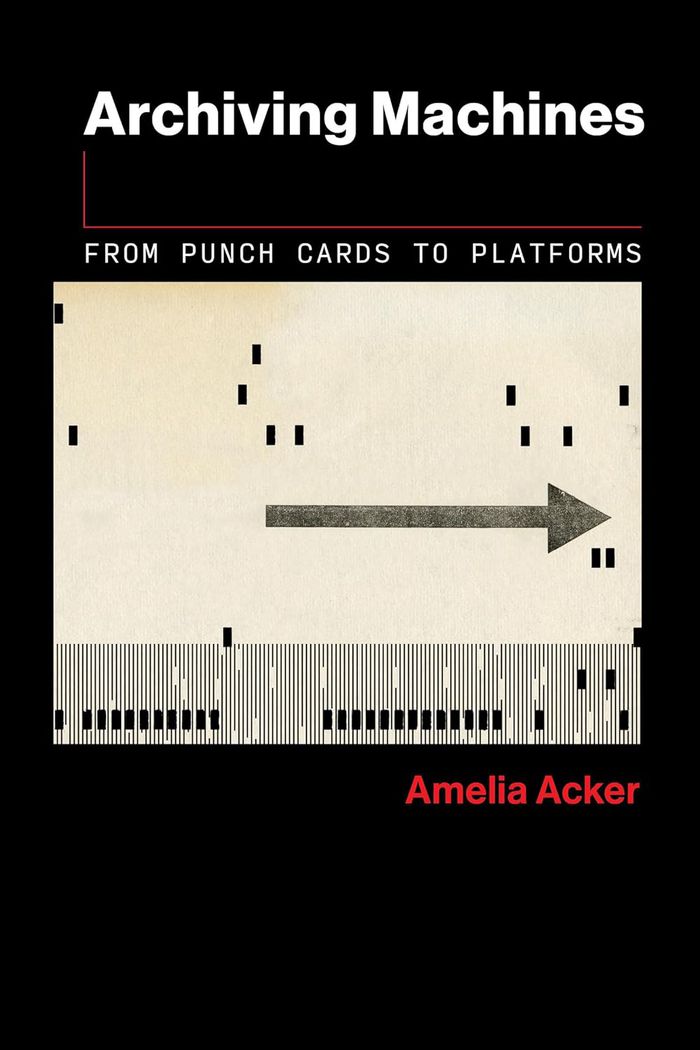
"Archiving machines" advances our understanding of memory, information, and data by charting the struggle between the computing technologies that archive data and the cultures of information that have led to platforms that assert control over its use. Amelia Acker examines the origins of data archives and the computing processes of storage, exchange, and transmission.(...)
$54.00
(disponible en magasin)
Résumé:
"Archiving machines" advances our understanding of memory, information, and data by charting the struggle between the computing technologies that archive data and the cultures of information that have led to platforms that assert control over its use. Amelia Acker examines the origins of data archives and the computing processes of storage, exchange, and transmission.(...)
Titre:
Archiving machines: From punch cards to platforms
Actions:
Prix:
$54.00
(disponible en magasin)
Résumé:
"Archiving machines" advances our understanding of memory, information, and data by charting the struggle between the computing technologies that archive data and the cultures of information that have led to platforms that assert control over its use. Amelia Acker examines the origins of data archives and the computing processes of storage, exchange, and transmission. Each chapter introduces data archiving processes that relate to the evolution of data sovereignty we experience today: from magnetic tape and timesharing computer models from the 1950s, to the establishment of data banks and the rise of database processing and managed data silos in the 1970s, to file structures and virtual containers in cloud-based information services over the past 40 years.
Archiving machines: From punch cards to platforms
Actions:
Prix:
$54.00
(disponible en magasin)
Résumé:
"Archiving machines" advances our understanding of memory, information, and data by charting the struggle between the computing technologies that archive data and the cultures of information that have led to platforms that assert control over its use. Amelia Acker examines the origins of data archives and the computing processes of storage, exchange, and transmission. Each chapter introduces data archiving processes that relate to the evolution of data sovereignty we experience today: from magnetic tape and timesharing computer models from the 1950s, to the establishment of data banks and the rise of database processing and managed data silos in the 1970s, to file structures and virtual containers in cloud-based information services over the past 40 years.
Classification:
livres
livres
Publication:
novembre 2025
novembre 2025
Classification:
livres
livres

Actions:
Prix:
$44.95
(disponible sur commande)
Résumé:
As cultural heritage institutions across the nation grapple with the realization that their collecting histories have captured an incomplete picture of history, curators and archivists like Dorothy Berry have been drawn into complicated conversations. "The house archives built and other thoughts on Black archival possibilities" brings together years of those conversations(...)
$44.95
(disponible sur commande)
Résumé:
As cultural heritage institutions across the nation grapple with the realization that their collecting histories have captured an incomplete picture of history, curators and archivists like Dorothy Berry have been drawn into complicated conversations. "The house archives built and other thoughts on Black archival possibilities" brings together years of those conversations(...)
Titre:
The house archives built and other thoughts on Black archival possibilities
Actions:
Prix:
$44.95
(disponible sur commande)
Résumé:
As cultural heritage institutions across the nation grapple with the realization that their collecting histories have captured an incomplete picture of history, curators and archivists like Dorothy Berry have been drawn into complicated conversations. "The house archives built and other thoughts on Black archival possibilities" brings together years of those conversations from their origins in conference halls, webinars, and reading rooms to open them up to the public. The labor and theory that upholds archives has been obscured, but our understandings of history and ourselves rest on those invisible foundations. This book clarifies those foundations while offering new possibilities for imagining archival futures in and outside of institutional holdings.
The house archives built and other thoughts on Black archival possibilities
Actions:
Prix:
$44.95
(disponible sur commande)
Résumé:
As cultural heritage institutions across the nation grapple with the realization that their collecting histories have captured an incomplete picture of history, curators and archivists like Dorothy Berry have been drawn into complicated conversations. "The house archives built and other thoughts on Black archival possibilities" brings together years of those conversations from their origins in conference halls, webinars, and reading rooms to open them up to the public. The labor and theory that upholds archives has been obscured, but our understandings of history and ourselves rest on those invisible foundations. This book clarifies those foundations while offering new possibilities for imagining archival futures in and outside of institutional holdings.
Classification:
livres
livres
Publication:
octobre 2025
octobre 2025
Classification:
livres
livres
Actions:
Prix:
$45.50
(disponible en magasin)
Résumé:
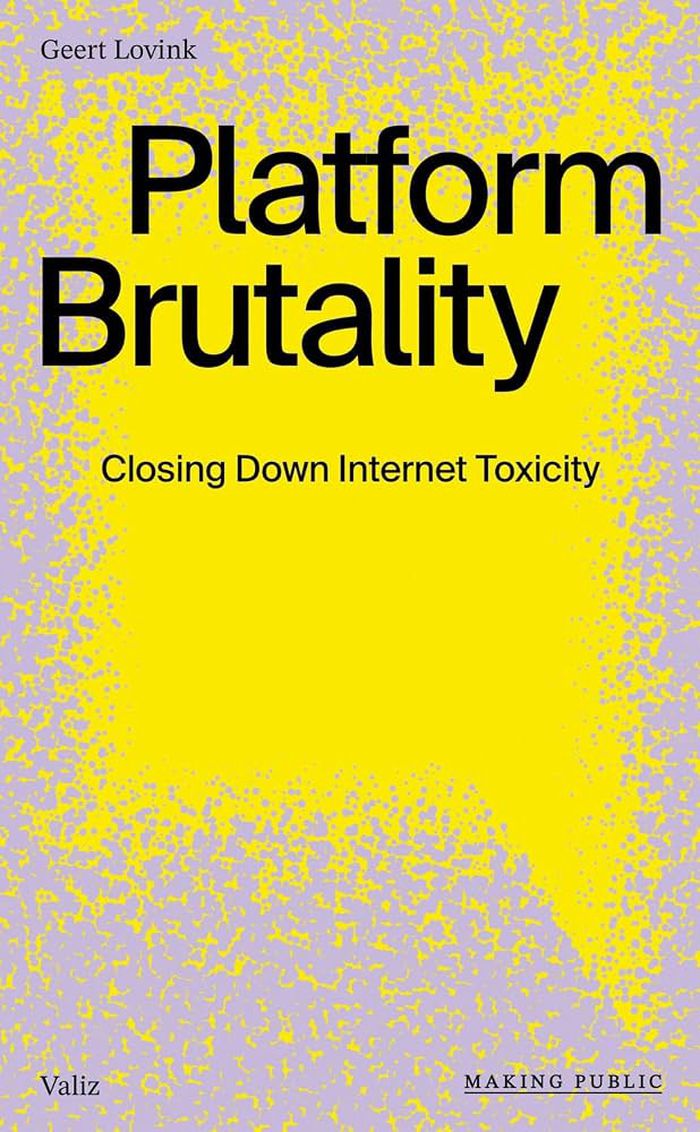
Technological violence is essentially remote, invisible and indirect. Exclusion, which many do not immediately notice, happens deep inside the code and network architecture. The answer will not be pacification or regulation but the dismantling of the platform principle itself. ''Platform Brutality'' not just offers critical analyses but also dives into alternatives.(...)
$45.50
(disponible en magasin)
Résumé:
Technological violence is essentially remote, invisible and indirect. Exclusion, which many do not immediately notice, happens deep inside the code and network architecture. The answer will not be pacification or regulation but the dismantling of the platform principle itself. ''Platform Brutality'' not just offers critical analyses but also dives into alternatives.(...)
Titre:
Platform Brutality : Closing Down Internet Toxicity
Actions:
Prix:
$45.50
(disponible en magasin)
Résumé:
Technological violence is essentially remote, invisible and indirect. Exclusion, which many do not immediately notice, happens deep inside the code and network architecture. The answer will not be pacification or regulation but the dismantling of the platform principle itself. ''Platform Brutality'' not just offers critical analyses but also dives into alternatives. Topics range from the violent turn of the internet and techno-feudalism debates, to loneliness on social media, radical data critique, mythologies that surround the smart phone, dreaming in the computer age, offline romanticism to question how to leave the platforms, bring back social networks and design a new balance between analogue and digital.
Platform Brutality : Closing Down Internet Toxicity
Actions:
Prix:
$45.50
(disponible en magasin)
Résumé:
Technological violence is essentially remote, invisible and indirect. Exclusion, which many do not immediately notice, happens deep inside the code and network architecture. The answer will not be pacification or regulation but the dismantling of the platform principle itself. ''Platform Brutality'' not just offers critical analyses but also dives into alternatives. Topics range from the violent turn of the internet and techno-feudalism debates, to loneliness on social media, radical data critique, mythologies that surround the smart phone, dreaming in the computer age, offline romanticism to question how to leave the platforms, bring back social networks and design a new balance between analogue and digital.
Classification:
livres
livres
Publication:
novembre 2025
novembre 2025
Classification:
livres
livres
Actions:
Prix:
$33.95
(disponible sur commande)
Résumé:
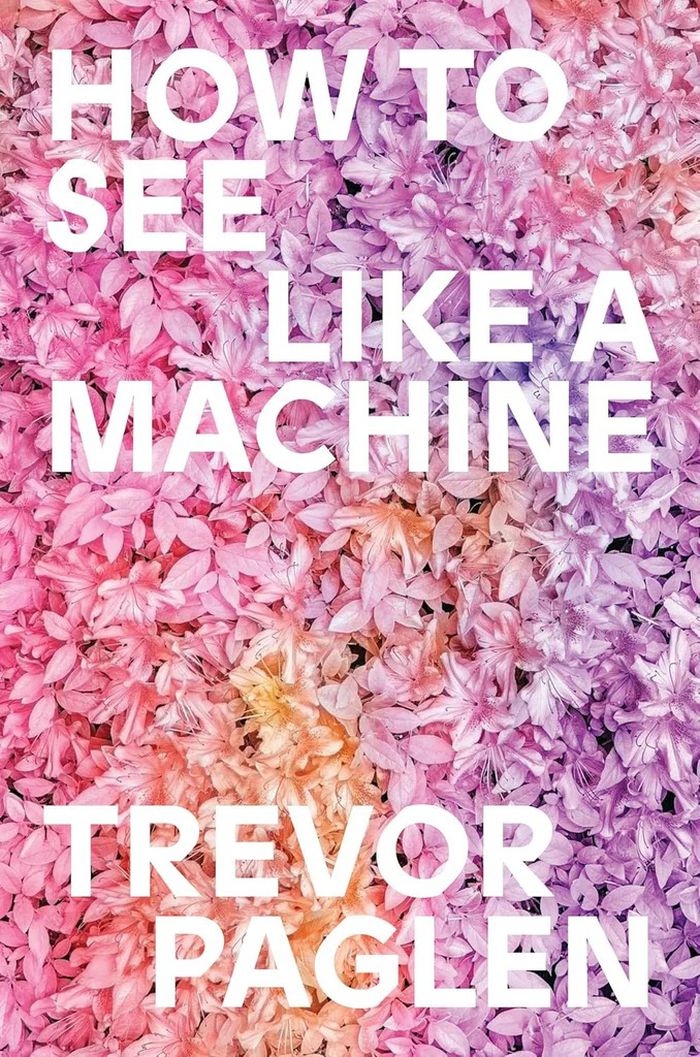
Today our world is under the watchful and tireless eye of computer vision, with cameras and monitors tracing our every move. Furthermore, generative AI is now able to render a synthetic world indistinguishable from reality for us to explore. Trevor Paglen goes in search of the ways and means of understanding this new visual universe. Instead of asking what these(...)
$33.95
(disponible sur commande)
Résumé:
Today our world is under the watchful and tireless eye of computer vision, with cameras and monitors tracing our every move. Furthermore, generative AI is now able to render a synthetic world indistinguishable from reality for us to explore. Trevor Paglen goes in search of the ways and means of understanding this new visual universe. Instead of asking what these(...)
Titre:
How to see like a machine: Images after AI
Actions:
Prix:
$33.95
(disponible sur commande)
Résumé:
Today our world is under the watchful and tireless eye of computer vision, with cameras and monitors tracing our every move. Furthermore, generative AI is now able to render a synthetic world indistinguishable from reality for us to explore. Trevor Paglen goes in search of the ways and means of understanding this new visual universe. Instead of asking what these technologies “say” about the world, he teaches us to ask what they “do” and where such images come from. Exploring the esoteric worlds of psyops, UFO imagery, magicians, and public relation gurus, Paglen shows that this apparently alien realm is more human, but much stranger, than we imagine.
How to see like a machine: Images after AI
Actions:
Prix:
$33.95
(disponible sur commande)
Résumé:
Today our world is under the watchful and tireless eye of computer vision, with cameras and monitors tracing our every move. Furthermore, generative AI is now able to render a synthetic world indistinguishable from reality for us to explore. Trevor Paglen goes in search of the ways and means of understanding this new visual universe. Instead of asking what these technologies “say” about the world, he teaches us to ask what they “do” and where such images come from. Exploring the esoteric worlds of psyops, UFO imagery, magicians, and public relation gurus, Paglen shows that this apparently alien realm is more human, but much stranger, than we imagine.
Classification:
livres
livres
Publication:
mai 2026
mai 2026
Classification:
livres
livres
Prix:
$42.00
(disponible en magasin)
Résumé:
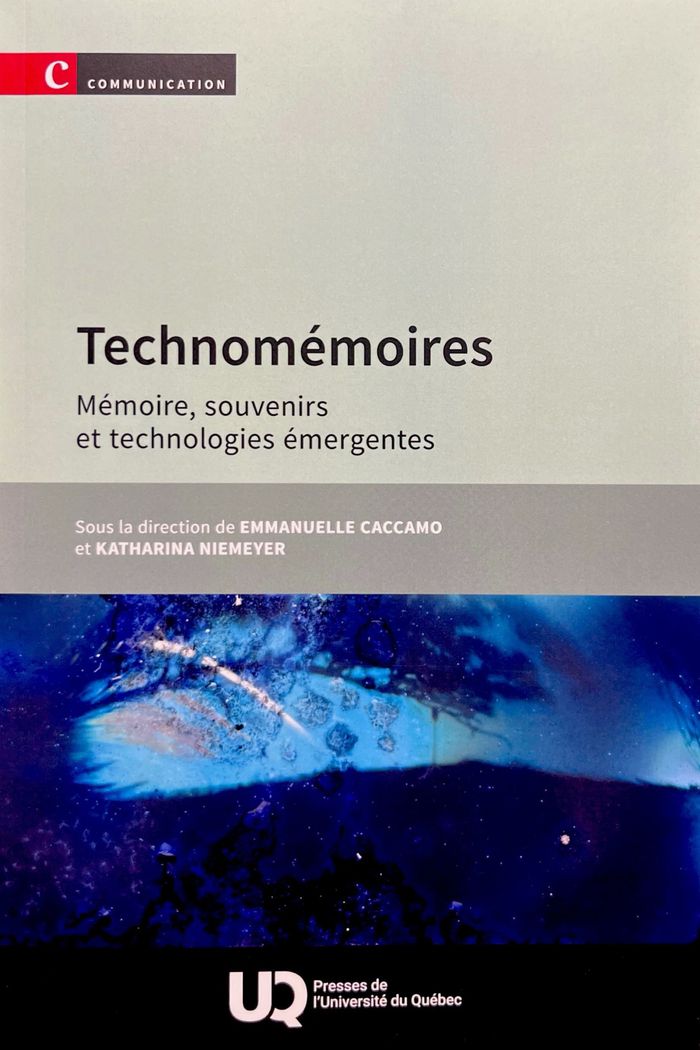
À l’heure où nos traces numériques s’accumulent, une nouvelle forme de mémoire émerge. Les technomémoires désignent ces formes hybrides que nous construisons à travers les plateformes numériques et les objets connectés. Des albums photos enrichis par l’intelligence artificielle aux assistants qui mémorisent nos habitudes, des médias socionumériques qui stockent nos(...)
$42.00
(disponible en magasin)
Résumé:
À l’heure où nos traces numériques s’accumulent, une nouvelle forme de mémoire émerge. Les technomémoires désignent ces formes hybrides que nous construisons à travers les plateformes numériques et les objets connectés. Des albums photos enrichis par l’intelligence artificielle aux assistants qui mémorisent nos habitudes, des médias socionumériques qui stockent nos(...)
Publication:
janvier 2026
janvier 2026
Titre:
Technomémoires : mémoire, souvenirs et technologies émergentes
Actions:
Prix:
$42.00
(disponible en magasin)
Résumé:
À l’heure où nos traces numériques s’accumulent, une nouvelle forme de mémoire émerge. Les technomémoires désignent ces formes hybrides que nous construisons à travers les plateformes numériques et les objets connectés. Des albums photos enrichis par l’intelligence artificielle aux assistants qui mémorisent nos habitudes, des médias socionumériques qui stockent nos interactions aux objets connectés qui documentent nos comportements quotidiens, un nouvel écosystème mémoriel se dessine. Ce livre en explore les contours à travers trois axes?: la mémoire collective ancrée dans les territoires et les objets?; les pratiques personnelles façonnées par nos interactions numériques?; et les perspectives ouvertes par l’intelligence artificielle dans la gestion – et la fabrication – de nos souvenirs. Il s’adresse aux spécialistes de la mémoire et des médias, aux personnes étudiantes en sciences humaines et sociales, ainsi qu’au grand public curieux de comprendre ce que signifie se souvenir au XXIe siècle, à l’ère des machines qui «?se remémorent?»… supposément mieux que nous.
Technomémoires : mémoire, souvenirs et technologies émergentes
Actions:
Prix:
$42.00
(disponible en magasin)
Résumé:
À l’heure où nos traces numériques s’accumulent, une nouvelle forme de mémoire émerge. Les technomémoires désignent ces formes hybrides que nous construisons à travers les plateformes numériques et les objets connectés. Des albums photos enrichis par l’intelligence artificielle aux assistants qui mémorisent nos habitudes, des médias socionumériques qui stockent nos interactions aux objets connectés qui documentent nos comportements quotidiens, un nouvel écosystème mémoriel se dessine. Ce livre en explore les contours à travers trois axes?: la mémoire collective ancrée dans les territoires et les objets?; les pratiques personnelles façonnées par nos interactions numériques?; et les perspectives ouvertes par l’intelligence artificielle dans la gestion – et la fabrication – de nos souvenirs. Il s’adresse aux spécialistes de la mémoire et des médias, aux personnes étudiantes en sciences humaines et sociales, ainsi qu’au grand public curieux de comprendre ce que signifie se souvenir au XXIe siècle, à l’ère des machines qui «?se remémorent?»… supposément mieux que nous.
Classification:
livres
livres
Publication:
janvier 2026
janvier 2026
Classification:
livres
livres
Prix:
$48.00
(disponible en magasin)
Résumé:
What has planetary-scale computation done to our geopolitical realities? It takes different forms at different scales—from energy and mineral sourcing and subterranean cloud infrastructure to urban software and massive universal addressing systems; from interfaces drawn by the augmentation of the hand and eye to users identified by self-quantification and the arrival of(...)
$48.00
(disponible en magasin)
Résumé:
What has planetary-scale computation done to our geopolitical realities? It takes different forms at different scales—from energy and mineral sourcing and subterranean cloud infrastructure to urban software and massive universal addressing systems; from interfaces drawn by the augmentation of the hand and eye to users identified by self-quantification and the arrival of(...)
Titre:
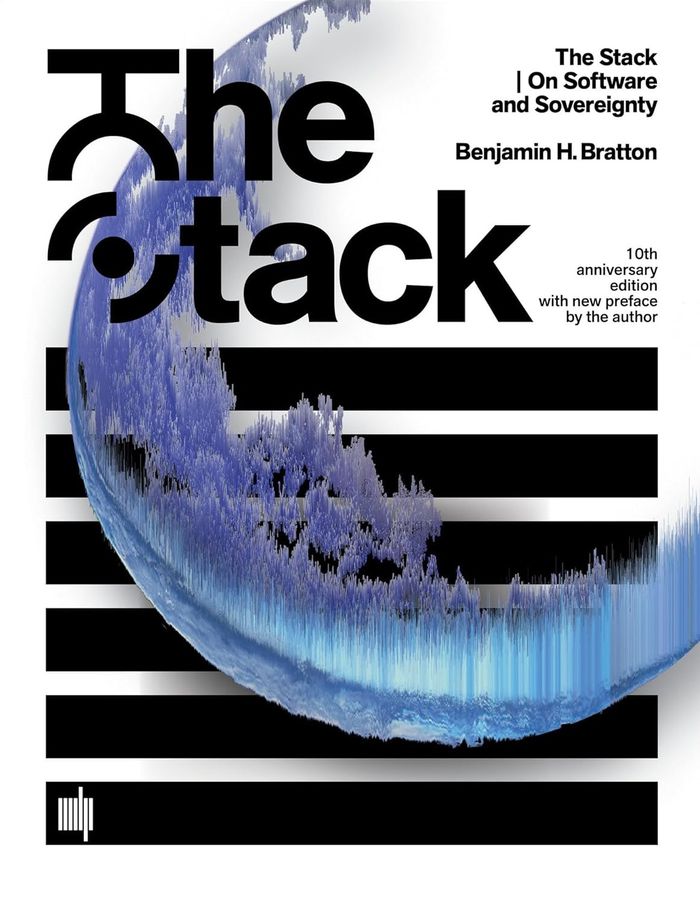
The stack: On software and sovereignty. 10th anniversary edition
Actions:
Prix:
$48.00
(disponible en magasin)
Résumé:
What has planetary-scale computation done to our geopolitical realities? It takes different forms at different scales—from energy and mineral sourcing and subterranean cloud infrastructure to urban software and massive universal addressing systems; from interfaces drawn by the augmentation of the hand and eye to users identified by self-quantification and the arrival of legions of sensors, algorithms, and robots. Together, how do these distort and deform modern political geographies and produce new territories in their own image? In an account that is both theoretical and technical, drawing on political philosophy, design theory, and computer science, Bratton explores six layers of ''The Stack'': Earth, Cloud, City, Address, Interface, User.
The stack: On software and sovereignty. 10th anniversary edition
Actions:
Prix:
$48.00
(disponible en magasin)
Résumé:
What has planetary-scale computation done to our geopolitical realities? It takes different forms at different scales—from energy and mineral sourcing and subterranean cloud infrastructure to urban software and massive universal addressing systems; from interfaces drawn by the augmentation of the hand and eye to users identified by self-quantification and the arrival of legions of sensors, algorithms, and robots. Together, how do these distort and deform modern political geographies and produce new territories in their own image? In an account that is both theoretical and technical, drawing on political philosophy, design theory, and computer science, Bratton explores six layers of ''The Stack'': Earth, Cloud, City, Address, Interface, User.
Classification:
livres
livres
Publication:
mars 2026
mars 2026


