


929 Résultats
Classification:
livres
livres
Actions:
Prix:
$44.00
(disponible sur commande)
Résumé:
In the 1970s, Manhattan’s west side waterfront was a forgotten zone of abandoned warehouses and piers. Though many saw only blight, the derelict neighborhood was alive with queer people forging new intimacies through cruising. Alongside the piers’ sexual and social worlds, artists produced work attesting to the radical transformations taking place in New York. In(...)
$44.00
(disponible sur commande)
Résumé:
In the 1970s, Manhattan’s west side waterfront was a forgotten zone of abandoned warehouses and piers. Though many saw only blight, the derelict neighborhood was alive with queer people forging new intimacies through cruising. Alongside the piers’ sexual and social worlds, artists produced work attesting to the radical transformations taking place in New York. In(...)
Titre:
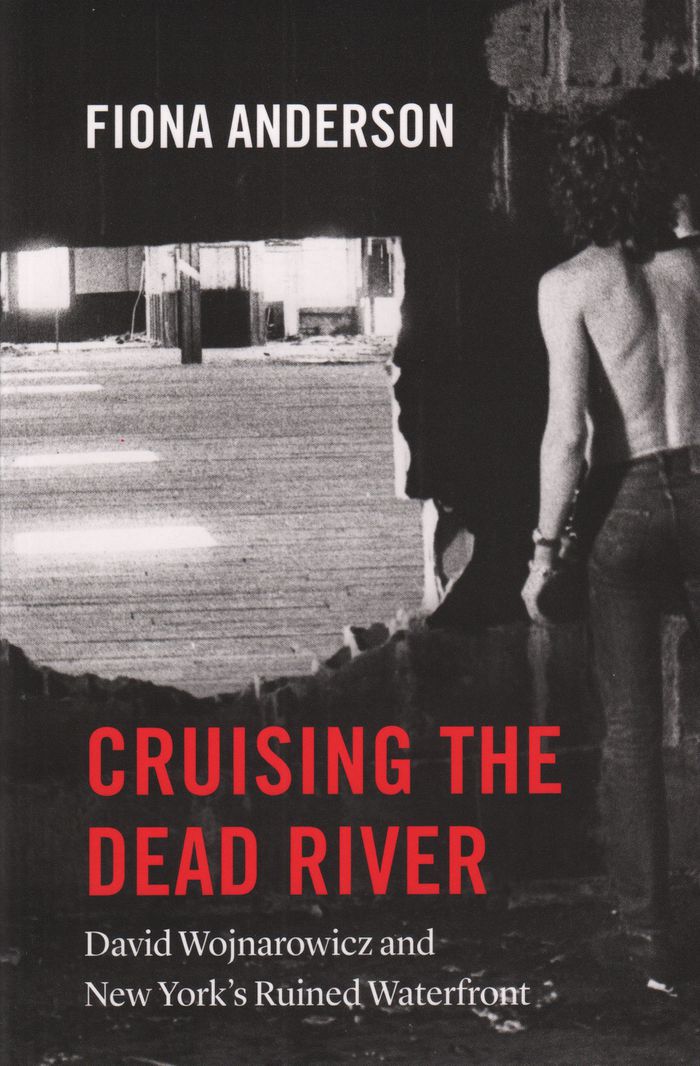
Cruising the dead river: David Wojnarowicz and New York's ruined waterfront
Actions:
Prix:
$44.00
(disponible sur commande)
Résumé:
In the 1970s, Manhattan’s west side waterfront was a forgotten zone of abandoned warehouses and piers. Though many saw only blight, the derelict neighborhood was alive with queer people forging new intimacies through cruising. Alongside the piers’ sexual and social worlds, artists produced work attesting to the radical transformations taking place in New York. In 'Cruising the Dead River', Fiona Anderson draws on Wojnarowicz’s work to explore the key role the abandoned landscape played in this explosion of queer culture. Anderson examines how the riverfront’s ruined buildings assumed a powerful erotic role and gave the area a distinct identity. By telling the story of the piers as gentrification swept New York and before the AIDS crisis, Anderson unearths the buried histories of violence, regeneration, and LGBTQ activism that developed in and around the cruising scene.
Cruising the dead river: David Wojnarowicz and New York's ruined waterfront
Actions:
Prix:
$44.00
(disponible sur commande)
Résumé:
In the 1970s, Manhattan’s west side waterfront was a forgotten zone of abandoned warehouses and piers. Though many saw only blight, the derelict neighborhood was alive with queer people forging new intimacies through cruising. Alongside the piers’ sexual and social worlds, artists produced work attesting to the radical transformations taking place in New York. In 'Cruising the Dead River', Fiona Anderson draws on Wojnarowicz’s work to explore the key role the abandoned landscape played in this explosion of queer culture. Anderson examines how the riverfront’s ruined buildings assumed a powerful erotic role and gave the area a distinct identity. By telling the story of the piers as gentrification swept New York and before the AIDS crisis, Anderson unearths the buried histories of violence, regeneration, and LGBTQ activism that developed in and around the cruising scene.
Classification:
livres
livres
Publication:
août 2019
août 2019
Sujet:
Théorie de l’art
Théorie de l’art
Classification:
livres
livres
Prix:
$39.95
(disponible sur commande)
Résumé:
Photography was invented between the publication of Adam Smith’s ''The Wealth of Nations'' and Karl Marx and Friedrich Engels’s ''The Communist Manifesto.'' Taking the intertwined development of capitalism and the camera as their starting point, the essays collected here investigate the relationship between capitalist accumulation and the photographic image, and ask(...)
$39.95
(disponible sur commande)
Résumé:
Photography was invented between the publication of Adam Smith’s ''The Wealth of Nations'' and Karl Marx and Friedrich Engels’s ''The Communist Manifesto.'' Taking the intertwined development of capitalism and the camera as their starting point, the essays collected here investigate the relationship between capitalist accumulation and the photographic image, and ask(...)
Titre:
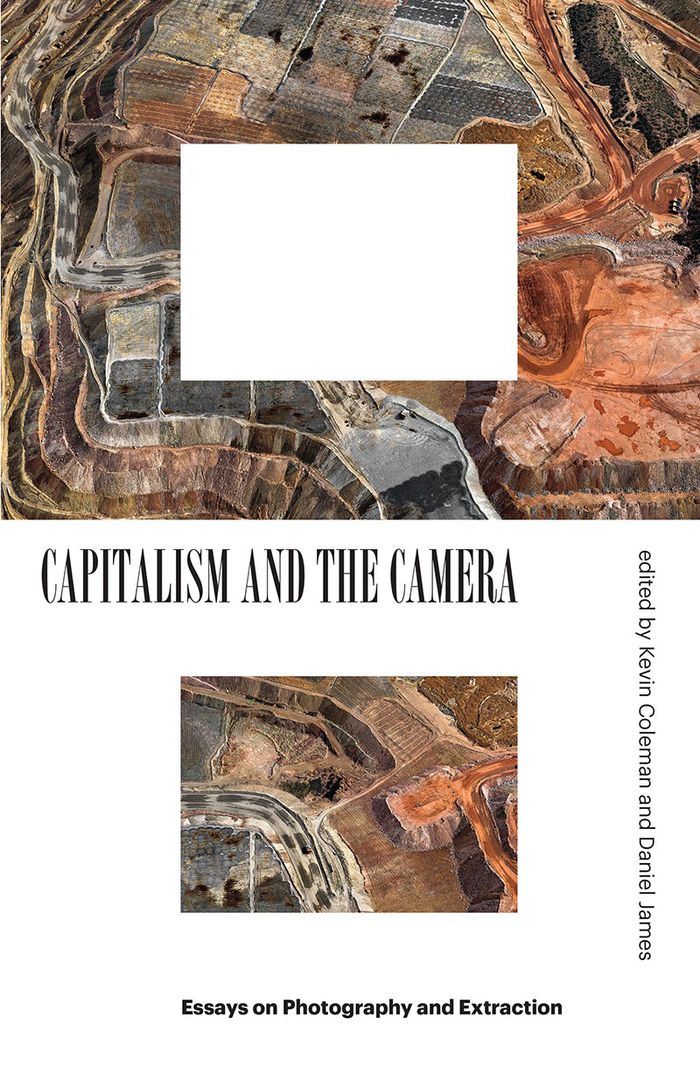
Capitalism and the camera: essays on photography and extraction
Actions:
Prix:
$39.95
(disponible sur commande)
Résumé:
Photography was invented between the publication of Adam Smith’s ''The Wealth of Nations'' and Karl Marx and Friedrich Engels’s ''The Communist Manifesto.'' Taking the intertwined development of capitalism and the camera as their starting point, the essays collected here investigate the relationship between capitalist accumulation and the photographic image, and ask whether photography might allow us to refuse capitalism’s violence—and if so, how? Drawn together in productive disagreement, the essays in this collection explore the relationship of photography to resource extraction and capital accumulation, from 1492 to the postcolonial; the camera’s potential to make visible critical understandings of capitalist production and society, especially economies of class and desire; and the ways the camera and the image can be used to build cultural and political counterpublics from which a democratic struggle against capitalism might emerge.
Capitalism and the camera: essays on photography and extraction
Actions:
Prix:
$39.95
(disponible sur commande)
Résumé:
Photography was invented between the publication of Adam Smith’s ''The Wealth of Nations'' and Karl Marx and Friedrich Engels’s ''The Communist Manifesto.'' Taking the intertwined development of capitalism and the camera as their starting point, the essays collected here investigate the relationship between capitalist accumulation and the photographic image, and ask whether photography might allow us to refuse capitalism’s violence—and if so, how? Drawn together in productive disagreement, the essays in this collection explore the relationship of photography to resource extraction and capital accumulation, from 1492 to the postcolonial; the camera’s potential to make visible critical understandings of capitalist production and society, especially economies of class and desire; and the ways the camera and the image can be used to build cultural and political counterpublics from which a democratic struggle against capitalism might emerge.
Classification:
livres
livres
Publication:
mai 2021
mai 2021
Sujet:
Théorie de la photographie
Théorie de la photographie
Classification:
livres
livres

Prix:
$69.95
(disponible sur commande)
Résumé:
This volume considers how contemporary photographers have responded to the US military’s impact on the domestic environment since the 1970s, a dynamic period for environmental activism as well as for photography. This catalogue presents a lively range of voices at the intersection of art, environmentalism, militarism, photography, and politics. Alongside interviews with(...)
$69.95
(disponible sur commande)
Résumé:
This volume considers how contemporary photographers have responded to the US military’s impact on the domestic environment since the 1970s, a dynamic period for environmental activism as well as for photography. This catalogue presents a lively range of voices at the intersection of art, environmentalism, militarism, photography, and politics. Alongside interviews with(...)
Titre:
Devour the land: War and american landscape photography since 1970
Actions:
Prix:
$69.95
(disponible sur commande)
Résumé:
This volume considers how contemporary photographers have responded to the US military’s impact on the domestic environment since the 1970s, a dynamic period for environmental activism as well as for photography. This catalogue presents a lively range of voices at the intersection of art, environmentalism, militarism, photography, and politics. Alongside interviews with prominent contemporary artists working in the landscape photography tradition, the images speak to photographers’ varied motivations, personal experiences, and artistic approaches. The result is a surprising picture of the ways violence and warfare surround us. Although most modern combat has taken place abroad, the US domestic landscape bears the footprint of armed conflict—much of the environmental damage we live with today was caused by our own military and the expansive network of industries supporting its work.
Devour the land: War and american landscape photography since 1970
Actions:
Prix:
$69.95
(disponible sur commande)
Résumé:
This volume considers how contemporary photographers have responded to the US military’s impact on the domestic environment since the 1970s, a dynamic period for environmental activism as well as for photography. This catalogue presents a lively range of voices at the intersection of art, environmentalism, militarism, photography, and politics. Alongside interviews with prominent contemporary artists working in the landscape photography tradition, the images speak to photographers’ varied motivations, personal experiences, and artistic approaches. The result is a surprising picture of the ways violence and warfare surround us. Although most modern combat has taken place abroad, the US domestic landscape bears the footprint of armed conflict—much of the environmental damage we live with today was caused by our own military and the expansive network of industries supporting its work.
Classification:
livres
livres
Publication:
janvier 2022
janvier 2022
Sujet:
Photographie par région
Photographie par région
Classification:
livres
livres

Titre:
Transbordeur, no 06
Transbordeur, no 06
Actions:
Prix:
$54.95
(disponible sur commande)
Résumé:
Le numéro 6 de la revueTransbordeur revisite cette histoire de la photographie aérienne en éclairant en particulier sa dimension politique et épistémologique. Dans cette perspective, nous privilégions la notion d’« image verticale » à celle, plus générique, de vue aérienne. Cette notion permet non seulement de renvoyer à un arrangement spatial spécifique, mais également(...)
$54.95
(disponible sur commande)
Résumé:
Le numéro 6 de la revueTransbordeur revisite cette histoire de la photographie aérienne en éclairant en particulier sa dimension politique et épistémologique. Dans cette perspective, nous privilégions la notion d’« image verticale » à celle, plus générique, de vue aérienne. Cette notion permet non seulement de renvoyer à un arrangement spatial spécifique, mais également(...)
Titre:
Transbordeur, no 06
Actions:
Prix:
$54.95
(disponible sur commande)
Résumé:
Le numéro 6 de la revueTransbordeur revisite cette histoire de la photographie aérienne en éclairant en particulier sa dimension politique et épistémologique. Dans cette perspective, nous privilégions la notion d’« image verticale » à celle, plus générique, de vue aérienne. Cette notion permet non seulement de renvoyer à un arrangement spatial spécifique, mais également de souligner les relations de pouvoir qui le soutiennent et le modélisent. À la fois représentation et matérialisation de rapports de domination coloniale et impérialiste ou de politiques de surveillance policière et militaire, l’image verticale est productrice d’un savoir qui forge ces rapports et les rend possibles. À l’inverse, dans une démarche militante ou citoyenne, elle peut fournir une preuve permettant d’exposer et de dénoncer la violence et l’illégalité des agressions commises par des acteurs étatiques et institutionnels.
Transbordeur, no 06
Actions:
Prix:
$54.95
(disponible sur commande)
Résumé:
Le numéro 6 de la revueTransbordeur revisite cette histoire de la photographie aérienne en éclairant en particulier sa dimension politique et épistémologique. Dans cette perspective, nous privilégions la notion d’« image verticale » à celle, plus générique, de vue aérienne. Cette notion permet non seulement de renvoyer à un arrangement spatial spécifique, mais également de souligner les relations de pouvoir qui le soutiennent et le modélisent. À la fois représentation et matérialisation de rapports de domination coloniale et impérialiste ou de politiques de surveillance policière et militaire, l’image verticale est productrice d’un savoir qui forge ces rapports et les rend possibles. À l’inverse, dans une démarche militante ou citoyenne, elle peut fournir une preuve permettant d’exposer et de dénoncer la violence et l’illégalité des agressions commises par des acteurs étatiques et institutionnels.
Classification:
livres
livres
Publication:
avril 2022
avril 2022
Sujet:
Photographie- collections
Photographie- collections
Classification:
livres
livres
Prix:
$29.95
(disponible sur commande)
Résumé:
Si pour beaucoup d’hommes, le féminisme est une affaire de femmes, bell hooks s’attelle ici à démontrer le contraire. La culture patriarcale, pour fabriquer de « vrais hommes », exige d’eux un sacrifice. Malgré les avantages et le rôle de premier choix dont ils bénéficient, ces derniers doivent se faire violence et violenter leurs proches pour devenir des dominants,(...)
$29.95
(disponible sur commande)
Résumé:
Si pour beaucoup d’hommes, le féminisme est une affaire de femmes, bell hooks s’attelle ici à démontrer le contraire. La culture patriarcale, pour fabriquer de « vrais hommes », exige d’eux un sacrifice. Malgré les avantages et le rôle de premier choix dont ils bénéficient, ces derniers doivent se faire violence et violenter leurs proches pour devenir des dominants,(...)
Titre:
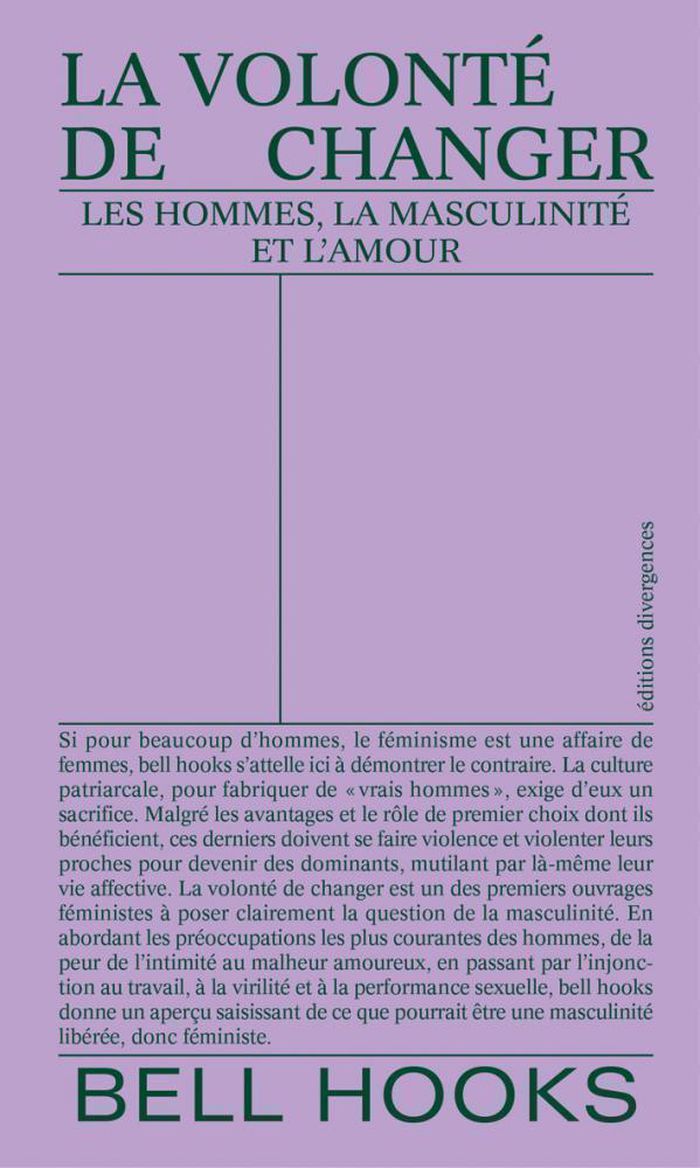
La Volonté de changer : les hommes, la masculinité et l'amour
Actions:
Prix:
$29.95
(disponible sur commande)
Résumé:
Si pour beaucoup d’hommes, le féminisme est une affaire de femmes, bell hooks s’attelle ici à démontrer le contraire. La culture patriarcale, pour fabriquer de « vrais hommes », exige d’eux un sacrifice. Malgré les avantages et le rôle de premier choix dont ils bénéficient, ces derniers doivent se faire violence et violenter leurs proches pour devenir des dominants, mutilant par là-même leur vie affective. La volonté de changer est un des premiers ouvrages féministes à poser clairement la question de la masculinité. En abordant les préoccupations les plus courantes des hommes, de la peur de l’intimité au malheur amoureux, en passant par l’injonction au travail, à la virilité et à la performance sexuelle, bell hooks donne un aperçu saisissant de ce que pourrait être une masculinité libérée, donc féministe.
La Volonté de changer : les hommes, la masculinité et l'amour
Actions:
Prix:
$29.95
(disponible sur commande)
Résumé:
Si pour beaucoup d’hommes, le féminisme est une affaire de femmes, bell hooks s’attelle ici à démontrer le contraire. La culture patriarcale, pour fabriquer de « vrais hommes », exige d’eux un sacrifice. Malgré les avantages et le rôle de premier choix dont ils bénéficient, ces derniers doivent se faire violence et violenter leurs proches pour devenir des dominants, mutilant par là-même leur vie affective. La volonté de changer est un des premiers ouvrages féministes à poser clairement la question de la masculinité. En abordant les préoccupations les plus courantes des hommes, de la peur de l’intimité au malheur amoureux, en passant par l’injonction au travail, à la virilité et à la performance sexuelle, bell hooks donne un aperçu saisissant de ce que pourrait être une masculinité libérée, donc féministe.
Classification:
livres
livres
Publication:
juin 2022
juin 2022
Sujet:
Social
Social
Classification:
livres
livres
Actions:
Prix:
$33.95
(disponible sur commande)
Résumé:
In this book, Lauren Berlant continues to explore our affective engagement with the world. Berlant focuses on the encounter with and the desire for the bother of other people and objects, showing that to be driven toward attachment is to desire to be inconvenienced. Drawing on a range of sources, including Last Tango in Paris, Ralph Waldo Emerson, Claudia Rankine,(...)
$33.95
(disponible sur commande)
Résumé:
In this book, Lauren Berlant continues to explore our affective engagement with the world. Berlant focuses on the encounter with and the desire for the bother of other people and objects, showing that to be driven toward attachment is to desire to be inconvenienced. Drawing on a range of sources, including Last Tango in Paris, Ralph Waldo Emerson, Claudia Rankine,(...)
Titre:
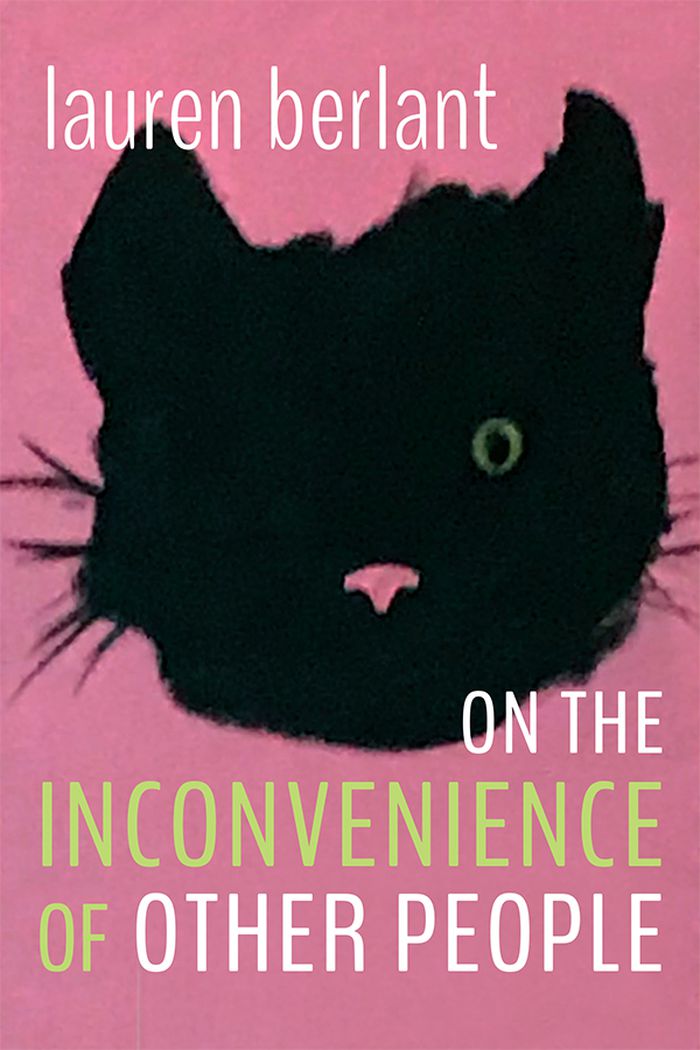
On the inconvenience of other people
Actions:
Prix:
$33.95
(disponible sur commande)
Résumé:
In this book, Lauren Berlant continues to explore our affective engagement with the world. Berlant focuses on the encounter with and the desire for the bother of other people and objects, showing that to be driven toward attachment is to desire to be inconvenienced. Drawing on a range of sources, including Last Tango in Paris, Ralph Waldo Emerson, Claudia Rankine, Christopher Isherwood, Bhanu Kapil, the Occupy movement, and resistance to anti-Black state violence, Berlant poses inconvenience as an affective relation and considers how we might loosen our attachments in ways that allow us to build new forms of life. Collecting strategies for breaking apart a world in need of disturbing, the book’s experiments in thought and writing cement Berlant’s status as one of the most inventive and influential thinkers of our time.
On the inconvenience of other people
Actions:
Prix:
$33.95
(disponible sur commande)
Résumé:
In this book, Lauren Berlant continues to explore our affective engagement with the world. Berlant focuses on the encounter with and the desire for the bother of other people and objects, showing that to be driven toward attachment is to desire to be inconvenienced. Drawing on a range of sources, including Last Tango in Paris, Ralph Waldo Emerson, Claudia Rankine, Christopher Isherwood, Bhanu Kapil, the Occupy movement, and resistance to anti-Black state violence, Berlant poses inconvenience as an affective relation and considers how we might loosen our attachments in ways that allow us to build new forms of life. Collecting strategies for breaking apart a world in need of disturbing, the book’s experiments in thought and writing cement Berlant’s status as one of the most inventive and influential thinkers of our time.
Classification:
livres
livres
Publication:
septembre 2022
septembre 2022
Sujet:
Social
Social
Classification:
livres
livres

Actions:
Prix:
$28.00
(disponible sur commande)
Résumé:
Anselm Kiefer's Die Argonauten series was inspired by a casual dinner with friends. At the end of a meal, the artist noted the table's resemblance to a battlefield, and this quickly led him to delve into the Greek myth of Jason and the Argonauts. Despite the unlikely informality of the original prompt, Kiefer's choice to reinterpret the hero Jason's quest for the golden(...)
$28.00
(disponible sur commande)
Résumé:
Anselm Kiefer's Die Argonauten series was inspired by a casual dinner with friends. At the end of a meal, the artist noted the table's resemblance to a battlefield, and this quickly led him to delve into the Greek myth of Jason and the Argonauts. Despite the unlikely informality of the original prompt, Kiefer's choice to reinterpret the hero Jason's quest for the golden(...)
Titre:
Anselm Kiefer: Die Argonauten
Actions:
Prix:
$28.00
(disponible sur commande)
Résumé:
Anselm Kiefer's Die Argonauten series was inspired by a casual dinner with friends. At the end of a meal, the artist noted the table's resemblance to a battlefield, and this quickly led him to delve into the Greek myth of Jason and the Argonauts. Despite the unlikely informality of the original prompt, Kiefer's choice to reinterpret the hero Jason's quest for the golden fleece continues central motifs in his work of violence, chauvinism and systems of power--derived, as ever, from the artist's assiduous study of poetry, mythology and cultural history. The project evolved into an installation composed of various totemic objects and weathered remnants, left over, so it appears, from Jason's quest. Die Argonauten reproduces this ambitious series for the first time, along with a text by the artist.
Anselm Kiefer: Die Argonauten
Actions:
Prix:
$28.00
(disponible sur commande)
Résumé:
Anselm Kiefer's Die Argonauten series was inspired by a casual dinner with friends. At the end of a meal, the artist noted the table's resemblance to a battlefield, and this quickly led him to delve into the Greek myth of Jason and the Argonauts. Despite the unlikely informality of the original prompt, Kiefer's choice to reinterpret the hero Jason's quest for the golden fleece continues central motifs in his work of violence, chauvinism and systems of power--derived, as ever, from the artist's assiduous study of poetry, mythology and cultural history. The project evolved into an installation composed of various totemic objects and weathered remnants, left over, so it appears, from Jason's quest. Die Argonauten reproduces this ambitious series for the first time, along with a text by the artist.
Classification:
livres
livres
Publication:
mars 2011
mars 2011
Classification:
livres
livres
Actions:
Prix:
$65.00
(disponible en magasin)
Résumé:
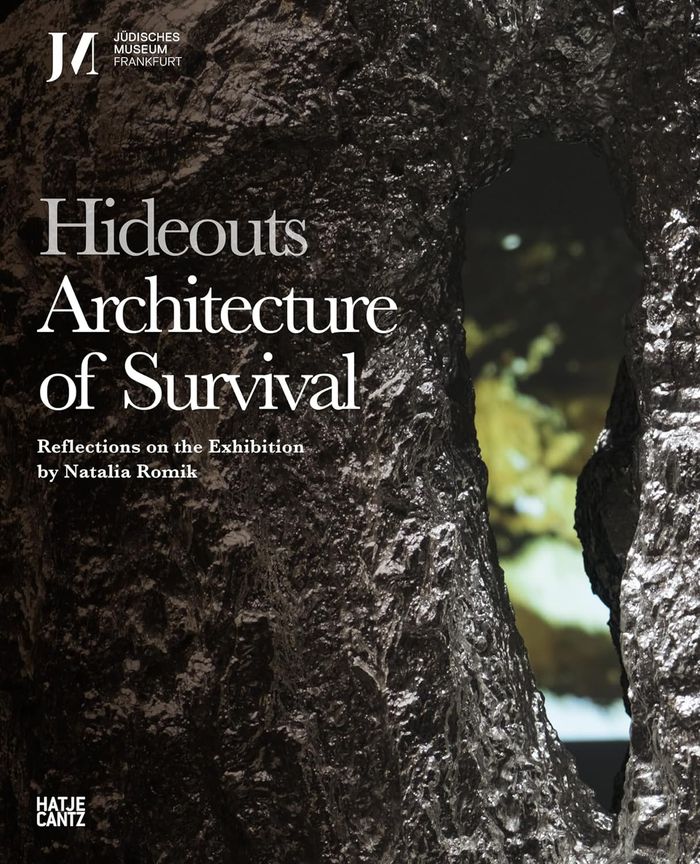
During the Holocaust, approximately 50,000 Jews survived in occupied Poland and Ukraine by seeking shelter in unlikely hiding spots. Driven by necessity, they were forced to take refuge in unexpected and inhospitable spaces such as tree hollows, closets, basements or sewers—remaining there for hours, days and sometimes even months. Architect, scholar and artist Natalia(...)
$65.00
(disponible en magasin)
Résumé:
During the Holocaust, approximately 50,000 Jews survived in occupied Poland and Ukraine by seeking shelter in unlikely hiding spots. Driven by necessity, they were forced to take refuge in unexpected and inhospitable spaces such as tree hollows, closets, basements or sewers—remaining there for hours, days and sometimes even months. Architect, scholar and artist Natalia(...)
Sujet:
Théorie de l’architecture
Théorie de l’architecture
Publication:
avril 2024
avril 2024
Titre:
Hideouts: Architecture of survival
Actions:
Prix:
$65.00
(disponible en magasin)
Résumé:
During the Holocaust, approximately 50,000 Jews survived in occupied Poland and Ukraine by seeking shelter in unlikely hiding spots. Driven by necessity, they were forced to take refuge in unexpected and inhospitable spaces such as tree hollows, closets, basements or sewers—remaining there for hours, days and sometimes even months. Architect, scholar and artist Natalia Romik has identified and studied several such hideouts that still exist today. Her research accentuates the material and spatial dimensions of living in hiding, gathering the evidence of vernacular architectural creativity employed under life-threatening conditions. Romik views hideouts as concealed monuments to the ingenuity of Holocaust survivors and their helpers. This interdisciplinary catalog makes tangible the fragile physical reality of these places and addresses the fundamental question of the function of architecture in relation to the history of violence and our culture of commemoration.
Hideouts: Architecture of survival
Actions:
Prix:
$65.00
(disponible en magasin)
Résumé:
During the Holocaust, approximately 50,000 Jews survived in occupied Poland and Ukraine by seeking shelter in unlikely hiding spots. Driven by necessity, they were forced to take refuge in unexpected and inhospitable spaces such as tree hollows, closets, basements or sewers—remaining there for hours, days and sometimes even months. Architect, scholar and artist Natalia Romik has identified and studied several such hideouts that still exist today. Her research accentuates the material and spatial dimensions of living in hiding, gathering the evidence of vernacular architectural creativity employed under life-threatening conditions. Romik views hideouts as concealed monuments to the ingenuity of Holocaust survivors and their helpers. This interdisciplinary catalog makes tangible the fragile physical reality of these places and addresses the fundamental question of the function of architecture in relation to the history of violence and our culture of commemoration.
Classification:
livres
livres
Publication:
avril 2024
avril 2024
Sujet:
Théorie de l’architecture
Théorie de l’architecture
Classification:
livres
livres

Titre:
Big mall
Big mall
Actions:
Prix:
$23.95
(disponible sur commande)
Résumé:
A phenomenology of the mall: If the mall makes us feel bad, why do we keep going back? In a world poisoned by capitalism, is shopping what makes life worth living? Kate Black grew up in West Edmonton Mall – a mall on steroids, notorious for its indoor waterpark, deadly roller coaster, and controversial dolphin shows. But everyone has a favourite mall, or a mall that is(...)
$23.95
(disponible sur commande)
Résumé:
A phenomenology of the mall: If the mall makes us feel bad, why do we keep going back? In a world poisoned by capitalism, is shopping what makes life worth living? Kate Black grew up in West Edmonton Mall – a mall on steroids, notorious for its indoor waterpark, deadly roller coaster, and controversial dolphin shows. But everyone has a favourite mall, or a mall that is(...)
Titre:
Big mall
Actions:
Prix:
$23.95
(disponible sur commande)
Résumé:
A phenomenology of the mall: If the mall makes us feel bad, why do we keep going back? In a world poisoned by capitalism, is shopping what makes life worth living? Kate Black grew up in West Edmonton Mall – a mall on steroids, notorious for its indoor waterpark, deadly roller coaster, and controversial dolphin shows. But everyone has a favourite mall, or a mall that is their own personal memory palace. It's a place people love to hate and hate to love – a site of pleasure and pain, of death and violence, of (sub)urban legend. Blending a history of shopping with a story of coming of age in North America's largest and strangest mall, "Big mall" investigates how these structures have become the ultimate symbol of late-capitalist dread – and, surprisingly, a subversive site of hope.
Big mall
Actions:
Prix:
$23.95
(disponible sur commande)
Résumé:
A phenomenology of the mall: If the mall makes us feel bad, why do we keep going back? In a world poisoned by capitalism, is shopping what makes life worth living? Kate Black grew up in West Edmonton Mall – a mall on steroids, notorious for its indoor waterpark, deadly roller coaster, and controversial dolphin shows. But everyone has a favourite mall, or a mall that is their own personal memory palace. It's a place people love to hate and hate to love – a site of pleasure and pain, of death and violence, of (sub)urban legend. Blending a history of shopping with a story of coming of age in North America's largest and strangest mall, "Big mall" investigates how these structures have become the ultimate symbol of late-capitalist dread – and, surprisingly, a subversive site of hope.
Classification:
livres
livres
Publication:
février 2024
février 2024
Classification:
livres
livres

Titre:
The Funambulist 8: Police
The Funambulist 8: Police
Actions:
Prix:
$17.95
(disponible sur commande)
Résumé:
This eighth issue of The Funambulist Magazine, dedicated to the police, can be read in continuity with Issue 04 (March-April 2016), which was focused on carceral environments. Its axiomatic editorial line is resolutely the same: just as there cannot be “better prisons,” there cannot be “better police,” at least not within the logics through which they are currently(...)
$17.95
(disponible sur commande)
Résumé:
This eighth issue of The Funambulist Magazine, dedicated to the police, can be read in continuity with Issue 04 (March-April 2016), which was focused on carceral environments. Its axiomatic editorial line is resolutely the same: just as there cannot be “better prisons,” there cannot be “better police,” at least not within the logics through which they are currently(...)
Titre:
The Funambulist 8: Police
Actions:
Prix:
$17.95
(disponible sur commande)
Résumé:
This eighth issue of The Funambulist Magazine, dedicated to the police, can be read in continuity with Issue 04 (March-April 2016), which was focused on carceral environments. Its axiomatic editorial line is resolutely the same: just as there cannot be “better prisons,” there cannot be “better police,” at least not within the logics through which they are currently operating in a majority of the world’s societies. In this regard, the numerous murders of Native and Black bodies by the United States police, the violence of the Apartheid police in Jerusalem against Palestinians, the murderous operations of the Brazilian military police in the favelas, or the legalized abuse of power by the French and Turkish police during ongoing states of emergency; not as “police brutality” that would require reforms but, rather, as the very essence of policing itself, which calls for abolition.
The Funambulist 8: Police
Actions:
Prix:
$17.95
(disponible sur commande)
Résumé:
This eighth issue of The Funambulist Magazine, dedicated to the police, can be read in continuity with Issue 04 (March-April 2016), which was focused on carceral environments. Its axiomatic editorial line is resolutely the same: just as there cannot be “better prisons,” there cannot be “better police,” at least not within the logics through which they are currently operating in a majority of the world’s societies. In this regard, the numerous murders of Native and Black bodies by the United States police, the violence of the Apartheid police in Jerusalem against Palestinians, the murderous operations of the Brazilian military police in the favelas, or the legalized abuse of power by the French and Turkish police during ongoing states of emergency; not as “police brutality” that would require reforms but, rather, as the very essence of policing itself, which calls for abolition.
Classification:
livres
livres
Publication:
novembre 2016
novembre 2016
Sujet:
Revues
Revues


