


834 Résultats
Classification:
livres
livres

Titre:
Ma découverte de l'Amérique
Ma découverte de l'Amérique
Actions:
Prix:
$32.95
(disponible sur commande)
Résumé:
"Un document d'une importance inconttestable" (Colum McCann) L'envie de Maïakovski de se rendre en Amérique tient à l'attrait profond que ce pays exerce sur lui - pays qu'il considère comme celui du futur et de la technologie, un véritable modèle pour le développement de la jeune Russie soviétique -, et ce malgré le fait que les États-Unis soient à ses yeux la terre du(...)
Titre:
Ma découverte de l'Amérique
Actions:
Prix:
$32.95
(disponible sur commande)
Résumé:
"Un document d'une importance inconttestable" (Colum McCann) L'envie de Maïakovski de se rendre en Amérique tient à l'attrait profond que ce pays exerce sur lui - pays qu'il considère comme celui du futur et de la technologie, un véritable modèle pour le développement de la jeune Russie soviétique -, et ce malgré le fait que les États-Unis soient à ses yeux la terre du capitalisme. Sa séparation, en 1924, d'avec sa maîtresse Lily Brik, lui donne l'occasion de ce voyage. Profondément bouleversé par cette rupture, Maïakovski envisage pour commencer un tour du monde. Contraint par des raisons financières (il se fait voler son argent à Paris où il fait escale pour rejoindre le port de Saint-Nazaire), il se contente d'un séjour sur le continent américain. Après une traversée qui le mène à La Havane, il entre aux États-Unis par le Mexique, en se faisant passer pour peintre - sa position de poète officiel donnant souvent à ses voyages un caractère de propagande, son visa lui est plusieurs fois refusé. New York, Cleveland, Detroit, Chicago, Philadelphie, Pittsburgh?: durant son séjour, il donne de nombreuses conférences, lors desquelles il déclame ses poèmes, évoque l'Union soviétique et parle de ses impressions sur les États-Unis. Et ce devant un auditoire nombreux et enthousiaste.
Classification:
livres
livres
Publication:
novembre 2019
novembre 2019
Sujet:
Trajets
Trajets
Classification:
livres
livres
Titre:
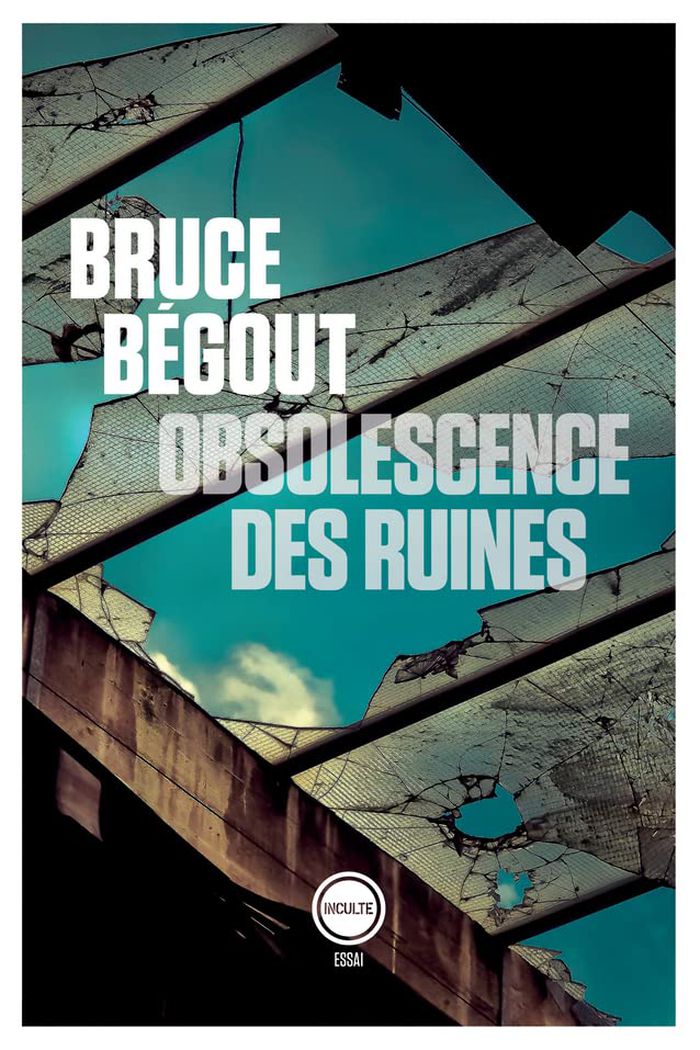
Obsolescence des ruines
Obsolescence des ruines
Actions:
Prix:
$46.95
(disponible sur commande)
Résumé:
Il serait difficile de nier que les ruines occupent une place de plus en plus grande dans l'imaginaire de notre temps. Nous ne parlons pas ici des ruines antiques et gothiques, mais de l'espace délabré des villes contemporaines, comprenant les usines désaffectées, les gares abandonnées, tous les lieux oubliés de la modernité. L'aura noire d'une ville comme Detroit, Pompéi(...)
Titre:
Obsolescence des ruines
Actions:
Prix:
$46.95
(disponible sur commande)
Résumé:
Il serait difficile de nier que les ruines occupent une place de plus en plus grande dans l'imaginaire de notre temps. Nous ne parlons pas ici des ruines antiques et gothiques, mais de l'espace délabré des villes contemporaines, comprenant les usines désaffectées, les gares abandonnées, tous les lieux oubliés de la modernité. L'aura noire d'une ville comme Detroit, Pompéi actuelle de la désindustrialisation, nimbe chaque bâtiment délaissé du monde. Elle est devenue en quelque temps la Mecque de l'exploration urbaine, dont le Detroit's Michigan Theater transformé en parking représente le cube de la Kaaba autour duquel tournoient les nouveaux pèlerins du Hajj de la dévastation urbaine. La ruine industrielle appartient encore pour une grande part au culte classique du monument effondré. Elle en rejoue la grandeur passée, l'évocation nostalgique de la civilisation fragile et mortelle. Dans les colonnes d'un temple ruiné ou dans les usines en friche, ce sont encore les beaux restes d'un Empire que l'on loue. Nous sommes entrés dans le troisième âge de la ruine. Après le temps des ruines antiques, puis celui ces ruines modernes, voici l'ère de la ruine instantanée, de la ruine du présent lui-même qui, née de l'urgence et vaincue par elle, ne dure plus, mais s'efface au moment même de son édification.
Classification:
livres
livres
Publication:
mars 2022
mars 2022
Sujet:
Théorie de l’architecture
Théorie de l’architecture
Classification:
livres
livres
Actions:
Prix:
$48.95
(disponible sur commande)
Résumé:
When the automobile was first introduced, few Americans predicted its fundamental impact, not only on how people would travel, but on the American landscape itself. Instead of reducing the amount of wheeled transport on public roads, the advent of mass-produced cars caused congestion, at the curb and in the right-of-way, from small midwestern farm towns to New York,(...)
Sujet:
Théorie de l’urbanisme
Théorie de l’urbanisme
Publication:
juin 2004, Charlottesville
juin 2004, Charlottesville
Titre:
Lots of parking : land use in a car culture
Actions:
Prix:
$48.95
(disponible sur commande)
Résumé:
When the automobile was first introduced, few Americans predicted its fundamental impact, not only on how people would travel, but on the American landscape itself. Instead of reducing the amount of wheeled transport on public roads, the advent of mass-produced cars caused congestion, at the curb and in the right-of-way, from small midwestern farm towns to New York, Chicago, Detroit, and Los Angeles. "Lots of Parking" examines a neglected aspect of this rise of the automobile: the impact on America not of cars in motion but of cars at rest. While most studies have tended to focus on highway construction and engineering improvements to accommodate increasing flow and the desire for speed, John A. Jakle and Keith A. Sculle examine a fundamental feature of the urban, and suburban, scene — the parking lot. Their lively and exhaustive exploration traces the history of parking from the curbside to the rise of public and commercial parking lots and garages and the concomitant demolition of the old pedestrian-oriented urban infrastructure. In an accessible style enhanced by a range of interesting and unusual illustrations, Jakle and Sculle discuss the role of parking in downtown revitalization efforts and, by contrast, its role in the promotion of outlying suburban shopping districts and its incorporation into our neighbourhoods and residences.
Classification:
livres
livres
Publication:
juin 2004, Charlottesville
juin 2004, Charlottesville
Sujet:
Théorie de l’urbanisme
Théorie de l’urbanisme
Classification:
livres
livres
Actions:
Prix:
$66.00
(disponible sur commande)
Résumé:
This unique look at the evolution of nightclubs across America and Europe since the 1960s reveals an unwavering truth about club culture--the one constant is change. Opening with the psychedelic haunts of the 1960s New York pop art scene and closing more than half a century later with the rise of post-club happenings, this publication shows how nightlife spaces have(...)
Titre:
Temporary pleasure: Nightclub architecture, design and culture from the 1960s to today
Actions:
Prix:
$66.00
(disponible sur commande)
Résumé:
This unique look at the evolution of nightclubs across America and Europe since the 1960s reveals an unwavering truth about club culture--the one constant is change. Opening with the psychedelic haunts of the 1960s New York pop art scene and closing more than half a century later with the rise of post-club happenings, this publication shows how nightlife spaces have evolved to meet the needs of their generation, and how each generation was seeking something a little different from the one before. Each chapter focuses on a distinct phase and city: Italy's politically radical clubs of the '60s, New York City's disco scene, Detroit and Chicago's house and techno paradises, Ibiza's counterculture communal retreats, Britain's rave culture, and Berlin's techno scene. The clubs come to life in double-page spreads that feature specs and detailed profiles. Author John Leo Gillen offers his take on various important cultural, design and architectural details, while numerous photographs offer their own vibey stories. The book features interviews with people who were involved in a number of the scenes included, from NYC disco mainstay DJ Justin Strauss to Ben Kelly, architect of Manchester's legendary venue The Haçienda. As the world emerges from its Covid-induced isolation, this celebration of crowded rooms, dance-worthy beats, and communal transcendence feels more important than ever.
Classification:
livres
livres
Publication:
avril 2023
avril 2023
Classification:
livres
livres
Actions:
Prix:
$33.95
(disponible sur commande)
Résumé:
American cities, once economic and social launch pads for their residents, are all too often plagued by poverty and decay. One need only to look at the ruins of Detroit to see how far some once-great cities have fallen, or to Boston and San Francisco for evidence that such decline is reversible. In Boom Towns, Stephen J.K. Walters diagnoses the root causes of urban(...)
Titre:
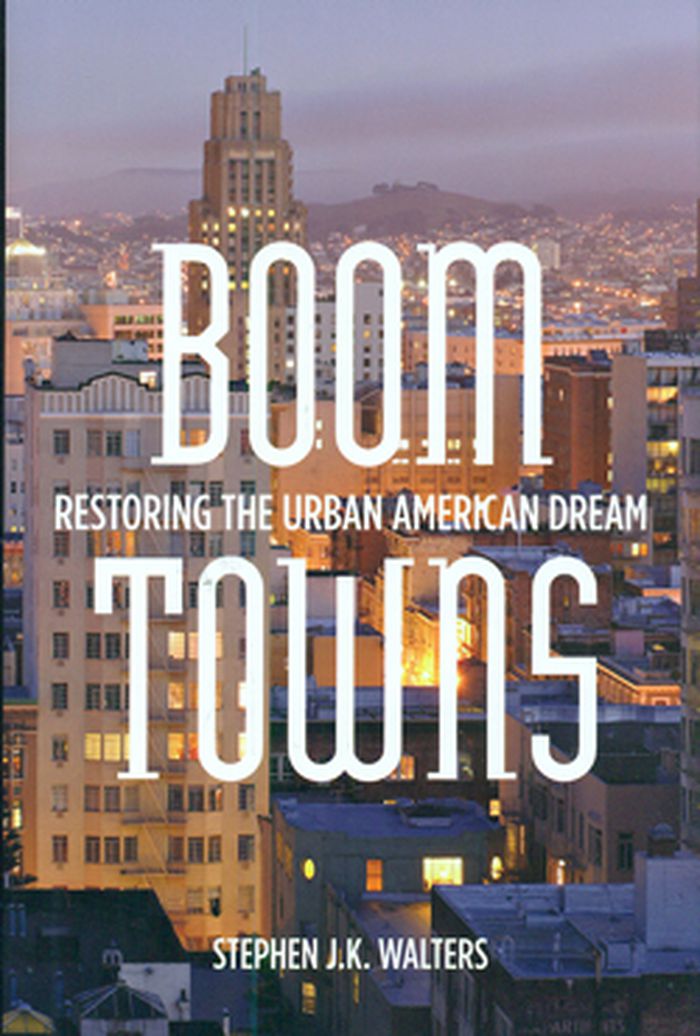
Boom towns: restoring the urban american dream
Actions:
Prix:
$33.95
(disponible sur commande)
Résumé:
American cities, once economic and social launch pads for their residents, are all too often plagued by poverty and decay. One need only to look at the ruins of Detroit to see how far some once-great cities have fallen, or to Boston and San Francisco for evidence that such decline is reversible. In Boom Towns, Stephen J.K. Walters diagnoses the root causes of urban decline in order to prescribe remedies that will enable cities to thrive once again. Arguing that commonplace explanations for urban decay misunderstand the nature our towns, Walters reconceives of cities as dense accumulations of capital in all of its forms — places that attract people by making their labor more productive and their leisure more pleasurable. Policymakers, therefore, must properly define and enforce property rights in order to prevent the flight of capital and the resulting demise of urban centers. Using vivid evocations of iconic towns and the people who crucially affected their destinies, Walters shows how public policy measures which aim to revitalize often do more harm than good. He then outlines a more promising set of policies to remedy the capital shortage that continues to afflict many cities and needlessly limit their residents' opportunities. With its fresh interpretation of one of the American quandaries of our day, Boom Towns offers a novel contribution to the debate about American cities and a program for their restoration.
Classification:
livres
livres
Publication:
septembre 2014
septembre 2014
Sujet:
Théorie de l’urbanisme
Théorie de l’urbanisme
Classification:
livres
livres
Prix:
$52.95
(disponible sur commande)
Résumé:
In recent years the idea of sacred space has not been considered a relevant topic in contemporary architecture, a neglect that is even more pronounced in terms of debates about the city. The texts and projects collected together in this book aim to redress this oversight, and re-open a contemporary understanding and discussion of the architecture of sacred space. The book(...)
Sujet:
Architecture contemporaine
Architecture contemporaine
Publication:
novembre 2016
novembre 2016
Titre:
AA Agendas: Rituals and walls. The architecture of sacred space
Actions:
Prix:
$52.95
(disponible sur commande)
Résumé:
In recent years the idea of sacred space has not been considered a relevant topic in contemporary architecture, a neglect that is even more pronounced in terms of debates about the city. The texts and projects collected together in this book aim to redress this oversight, and re-open a contemporary understanding and discussion of the architecture of sacred space. The book itself is the result of a year-long investigation on the nature of sacred space and its manifestation developed in the AA’s Diploma Unit 14. It consists of design proposals that range from a multi-faith school in Strasbourg to the reconstruction of a festival hall in the city of Xian, China; from a Jesuit monastery in Detroit to a women’s Islamic centre in Paris. Each proposal is introduced by critical texts that analyse the political and ideological meaning of religious architecture. The book is complemented by essays by Pier Vittorio Aureli, Maria Sheherazade Giudici and Hamed Khosravi that focus on the relationship between forms of worship and architecture, and argue that within sacred space form must follow function – in other words, architectural space must adhere to the rituals through which the sacred is enacted, and that the meaning of sacred space goes far beyond the stereotypes of contemplation and spirituality, and instead aligns with the political and social ethos of the city.
Classification:
livres
livres
Publication:
novembre 2016
novembre 2016
Sujet:
Architecture contemporaine
Architecture contemporaine
Classification:
périodiques
périodiques
Titre:
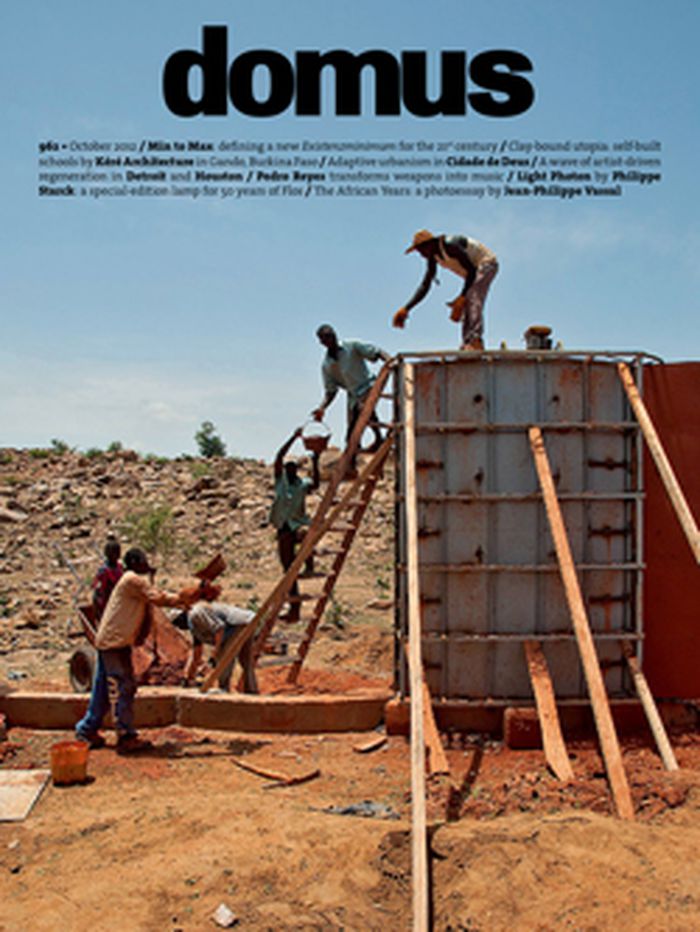
Domus 962
Domus 962
Actions:
Prix:
$35.00
(disponible sur commande)
Résumé:
The October issue of Domus focuses on the theme of affordable housing, tackling the question of what "minimum subsistence dwelling" could mean in the 21st century. It builds on the investigation started at the Min to Max international architecture symposium in Berlin. Guest edited by Ilka and Andreas Ruby, it starts with Berlin-based architecture studio Something(...)
Titre:
Domus 962
Actions:
Prix:
$35.00
(disponible sur commande)
Résumé:
The October issue of Domus focuses on the theme of affordable housing, tackling the question of what "minimum subsistence dwelling" could mean in the 21st century. It builds on the investigation started at the Min to Max international architecture symposium in Berlin. Guest edited by Ilka and Andreas Ruby, it starts with Berlin-based architecture studio Something Fantastic's manifesto on the creative opportunities and innovation allowed by the world recession. Domus then surveys the globe in search of positive strategies where design is subjected to constant experimentation, from Burkina Faso — where, in Gando, Diébédo Francis Kéré runs his experimental architecture workshop —, to Athens — where a group of teachers and researchers finds in the typical Greek polykatoikia the possibility of generating a host of collective and shared spaces —, passing through Detroit, Houston, New York City, Berlin, and Rio de Janeiro. Fresh after the opening of the Venice Architecture Biennale, issue 962 presents Gabriele Basilico's photographic survey of the Biennale's national pavilions, empty and waiting for their annual occupation. Jean-Philippe Vassal's photo essay captures extraordinary moments in the production of everyday space in Africa, and, in Mexico, artist Pedro Reyes transforms agents of death into instruments of life: by converting half a tonne of confiscated weapons into musical instruments, Reyes challenges us to imagine a change for the better.
Classification:
périodiques
périodiques
Publication:
novembre 2012
novembre 2012
Sujet:
Revues
Revues
Classification:
livres
livres
Titre:
Black landscapes matter
Black landscapes matter
Actions:
Prix:
$47.95
(disponible sur commande)
Résumé:
The question "Do black landscapes matter?" cuts deep to the core of American history. From the plantations of slavery to contemporary segregated cities, from freedman villages to northern migrations for freedom, the nation’s landscape bears the detritus of diverse origins. Black landscapes matter because they tell the truth. In this vital new collection, acclaimed(...)
Titre:
Black landscapes matter
Actions:
Prix:
$47.95
(disponible sur commande)
Résumé:
The question "Do black landscapes matter?" cuts deep to the core of American history. From the plantations of slavery to contemporary segregated cities, from freedman villages to northern migrations for freedom, the nation’s landscape bears the detritus of diverse origins. Black landscapes matter because they tell the truth. In this vital new collection, acclaimed landscape designer and public artist Walter Hood assembles a group of notable landscape architecture and planning professionals and scholars to probe how race, memory, and meaning intersect in the American landscape. Essayists examine a variety of U.S. places— ranging from New Orleans and Charlotte to Milwaukee and Detroit— exposing racism endemic in the built environment and acknowledging the widespread erasure of black geographies and cultural landscapes. Through a combination of case studies, critiques, and calls to action, contributors reveal the deficient, normative portrayals of landscape that affect communities of color and question how public design and preservation efforts can support people in these places. In a culture in which historical omissions and specious narratives routinely provoke disinvestment in minority communities, creative solutions by designers, planners, artists, and residents are necessary to activate them in novel ways. Black people have built and shaped the American landscape in ways that can never be fully known. ''Black landscapes matter'' is a timely and necessary reminder that without recognizing and reconciling these histories and spaces, America’s past and future cannot be understood.
Classification:
livres
livres
Publication:
novembre 2020
novembre 2020
Sujet:
Théorie du paysage
Théorie du paysage
Classification:
livres
livres
Actions:
Exemplaires:
Description:
323 pages, 15 pages of plates : illustrations ; 23 cm
Description:
323 pages, 15 pages of plates : illustrations ; 23 cm
Auteur:
Sujet:
Publication:
Los Angeles, Calif. : Process ; London : Turnaround [distributor], ©2010.
Los Angeles, Calif. : Process ; London : Turnaround [distributor], ©2010.
Titre:
The modern utopian : alternative communities of the '60s and '70s / by Richard Fairfield ; contributions from Timothy Miller [and others].
Actions:
Exemplaires:
Description:
323 pages, 15 pages of plates : illustrations ; 23 cm
The modern utopian : alternative communities of the '60s and '70s / by Richard Fairfield ; contributions from Timothy Miller [and others].
Actions:
Exemplaires:
Description:
323 pages, 15 pages of plates : illustrations ; 23 cm
Classification:
livres
livres
Publication:
Los Angeles, Calif. : Process ; London : Turnaround [distributor], ©2010.
Los Angeles, Calif. : Process ; London : Turnaround [distributor], ©2010.
Auteur:
Sujet:
Classification:
livres
livres
Actions:
Prix:
$43.95
(disponible sur commande)
Résumé:
Over the past hundred years, the global motto has been "more, more, more" in terms of growth - of population, of the built environment, of human and financial capital, and of all manner of worldly goods. This was the reality as the world population boomed during the 1960s and 1970s. But reality is changing in front of our eyes. Growth is already slowing down, and(...)
Titre:
Smaller cities in a shrinking world: learning to thrive without growth
Actions:
Prix:
$43.95
(disponible sur commande)
Résumé:
Over the past hundred years, the global motto has been "more, more, more" in terms of growth - of population, of the built environment, of human and financial capital, and of all manner of worldly goods. This was the reality as the world population boomed during the 1960s and 1970s. But reality is changing in front of our eyes. Growth is already slowing down, and according to the most sophisticated demographers, the earth's population will begin to decline not hundreds of years from now, but within the lifetimes of many of the people now living on the planet. In ''Smaller cities in a shrinking world'', urban policy expert Alan Mallach seeks to understand how declining population and economic growth, coupled with the other forces that will influence their fates, particularly climate change, will affect the world's cities over the coming decades. What will it mean to have a world full of shrinking cities? Does it mean that they are doomed to decline in more ways than simply population numbers, or can we uncouple population decline from economic decay, abandoned buildings and impoverishment? Mallach has spent much of the last thirty or more years working in, looking at, thinking, and writing about shrinking cities-from Trenton, New Jersey, where he was director of housing and economic development, to other American cities like Detroit, Flint, and St. Louis, and from there to cities in Japan and Central and Eastern Europe. He has woven together his experience, research, and analysis in this fascinating, realistic yet hopeful look at how smaller, shrinking cities can thrive, despite the daunting challenges they face.
Classification:
livres
livres
Publication:
juin 2023
juin 2023
Sujet:
Théorie de l’urbanisme
Théorie de l’urbanisme


