


1077 Résultats
Classification:
livres
livres
Actions:
Description:
256 pages : illustrations en couleur ; 29 cm
Auteur:
Sujet:
Publication:
Paris : Mana books, 2020.
Paris : Mana books, 2020.
Titre:
Anime Architecture : mondes des imaginaires et mégalopoles infinies / Stefan Riekeles ; [traduction, Laurent Laget]
Actions:
Description:
256 pages : illustrations en couleur ; 29 cm
Anime Architecture : mondes des imaginaires et mégalopoles infinies / Stefan Riekeles ; [traduction, Laurent Laget]
Actions:
Description:
256 pages : illustrations en couleur ; 29 cm
Classification:
livres
livres
Publication:
Paris : Mana books, 2020.
Paris : Mana books, 2020.
Auteur:
Sujet:
Classification:
artéfacts
artéfacts
Actions:
Exemplaires:
Description:
1 set of building blocks : wood ; various sizes in wooden box 32 x 37 x 6 cm + 1 design sheet ([1] leaf : color illustrations ; 29 x 33 cm)
Description:
1 set of building blocks : wood ; various sizes in wooden box 32 x 37 x 6 cm + 1 design sheet ([1] leaf : color illustrations ; 29 x 33 cm)
Sujet:
Publication:
[approximately 1910] ([United States? : publisher not identified])
[approximately 1910] ([United States? : publisher not identified])
Titre:
Hygienic building blocks. No. 822.
Actions:
Exemplaires:
Description:
1 set of building blocks : wood ; various sizes in wooden box 32 x 37 x 6 cm + 1 design sheet ([1] leaf : color illustrations ; 29 x 33 cm)
Hygienic building blocks. No. 822.
Actions:
Exemplaires:
Description:
1 set of building blocks : wood ; various sizes in wooden box 32 x 37 x 6 cm + 1 design sheet ([1] leaf : color illustrations ; 29 x 33 cm)
Classification:
artéfacts
artéfacts
Publication:
[approximately 1910] ([United States? : publisher not identified])
[approximately 1910] ([United States? : publisher not identified])
Sujet:
Classification:
artéfacts
artéfacts
Titre:
Building blocks. no. 50.
Building blocks. no. 50.
Actions:
Exemplaires:
Description:
1 set of building blocks : wood ; various sizes in wooden box 29 x 22 x 6 cm
Description:
1 set of building blocks : wood ; various sizes in wooden box 29 x 22 x 6 cm
Auteur:
Sujet:
Publication:
[approximately 1865] (Brooklyn, N.Y. : S.L. Hill & Son)
[approximately 1865] (Brooklyn, N.Y. : S.L. Hill & Son)
Titre:
Building blocks. no. 50.
Actions:
Exemplaires:
Description:
1 set of building blocks : wood ; various sizes in wooden box 29 x 22 x 6 cm
Building blocks. no. 50.
Actions:
Exemplaires:
Description:
1 set of building blocks : wood ; various sizes in wooden box 29 x 22 x 6 cm
Classification:
artéfacts
artéfacts
Publication:
[approximately 1865] (Brooklyn, N.Y. : S.L. Hill & Son)
[approximately 1865] (Brooklyn, N.Y. : S.L. Hill & Son)
Auteur:
Sujet:
Classification:
archives
archives
Actions:
Description:
still image
Sujet:
Publication:
S.F.F. [ca. 1880]
S.F.F. [ca. 1880]
Titre:
The architect in the nursery after Fröbel's system the unity is the cube = Der Baumeister im Kindergarten nach Fröbels System : die Einheit ist der Würfel = L'architecture dans le jardin des enfants d'après le système de Fröbel : l'unité c'est le cube. [electronic resource].
Actions:
Description:
still image
Classification:
archives
archives
Publication:
S.F.F. [ca. 1880]
S.F.F. [ca. 1880]
Sujet:
Classification:
artéfacts
artéfacts
Actions:
Exemplaires:
Description:
1 set of tablets : sandstone, color ; various sizes in wooden box 23 x 31 x 4 cm + 2 design books
Description:
1 set of tablets : sandstone, color ; various sizes in wooden box 23 x 31 x 4 cm + 2 design books
Auteur:
Sujet:
Publication:
[approximately 1915?] ([Rudolstadt? : F. Ad. Richter & Co.])
[approximately 1915?] ([Rudolstadt? : F. Ad. Richter & Co.])
Titre:
Richter's Anker-Täfelchenlegen. 2 = Richter's "Anchor" tablet laying = Richter's pose-tablettes à l'ancre.
Actions:
Exemplaires:
Description:
1 set of tablets : sandstone, color ; various sizes in wooden box 23 x 31 x 4 cm + 2 design books
Richter's Anker-Täfelchenlegen. 2 = Richter's "Anchor" tablet laying = Richter's pose-tablettes à l'ancre.
Actions:
Exemplaires:
Description:
1 set of tablets : sandstone, color ; various sizes in wooden box 23 x 31 x 4 cm + 2 design books
Classification:
artéfacts
artéfacts
Publication:
[approximately 1915?] ([Rudolstadt? : F. Ad. Richter & Co.])
[approximately 1915?] ([Rudolstadt? : F. Ad. Richter & Co.])
Auteur:
Sujet:
Classification:
archives
archives
Actions:
Description:
still image
Sujet:
Publication:
Domusto-Werke [1913?]
Domusto-Werke [1913?]
Titre:
Völkerschlacht-Denkmal als Domusto-Steinbaukasten Domusto-stone-building-brick-box, Monument of the Battle of Nations = Boîte de constructions en pierre Domusto, Monument de la bataille des nations = Caja de piedras constructura Domusto, Monument de la batalla de las naciones. [electronic resource].
Actions:
Description:
still image
Classification:
archives
archives
Publication:
Domusto-Werke [1913?]
Domusto-Werke [1913?]
Sujet:
Classification:
archives
archives
Titre:
[Design sheets for Ladislav Sutnar's ""Build the Town"" building blocks]. [electronic resource].
[Design sheets for Ladislav Sutnar's ""Build the Town"" building blocks]. [electronic resource].
Actions:
Description:
still image
Sujet:
Publication:
[approximately 1942]
[approximately 1942]
Titre:
[Design sheets for Ladislav Sutnar's ""Build the Town"" building blocks]. [electronic resource].
Actions:
Description:
still image
[Design sheets for Ladislav Sutnar's ""Build the Town"" building blocks]. [electronic resource].
Actions:
Description:
still image
Classification:
archives
archives
Publication:
[approximately 1942]
[approximately 1942]
Sujet:
Classification:
artéfacts
artéfacts
Actions:
Exemplaires:
Description:
1 set of building blocks (8 pieces) : wood, color ; in cardboard box 8 x 8 x 5 cm
Description:
1 set of building blocks (8 pieces) : wood, color ; in cardboard box 8 x 8 x 5 cm
Auteur:
Sujet:
Publication:
[1993]
[1993]
Titre:
[Set of blocks with stacked-triangle elements] / [designed and handcrafted by Ray Sherman].
Actions:
Exemplaires:
Description:
1 set of building blocks (8 pieces) : wood, color ; in cardboard box 8 x 8 x 5 cm
[Set of blocks with stacked-triangle elements] / [designed and handcrafted by Ray Sherman].
Actions:
Exemplaires:
Description:
1 set of building blocks (8 pieces) : wood, color ; in cardboard box 8 x 8 x 5 cm
Classification:
artéfacts
artéfacts
Publication:
[1993]
[1993]
Auteur:
Sujet:
Classification:
artéfacts
artéfacts
Titre:
Ticonderoga.
Ticonderoga.
Actions:
Exemplaires:
Description:
1 set of building blocks : wood, color ; various sizes in wooden box 28 x 33 x 13 cm
Description:
1 set of building blocks : wood, color ; various sizes in wooden box 28 x 33 x 13 cm
Sujet:
Publication:
[approximately 1890] ([United States)
[approximately 1890] ([United States)
Titre:
Ticonderoga.
Actions:
Exemplaires:
Description:
1 set of building blocks : wood, color ; various sizes in wooden box 28 x 33 x 13 cm
Ticonderoga.
Actions:
Exemplaires:
Description:
1 set of building blocks : wood, color ; various sizes in wooden box 28 x 33 x 13 cm
Classification:
artéfacts
artéfacts
Publication:
[approximately 1890] ([United States)
[approximately 1890] ([United States)
Sujet:
Classification:
livres
livres
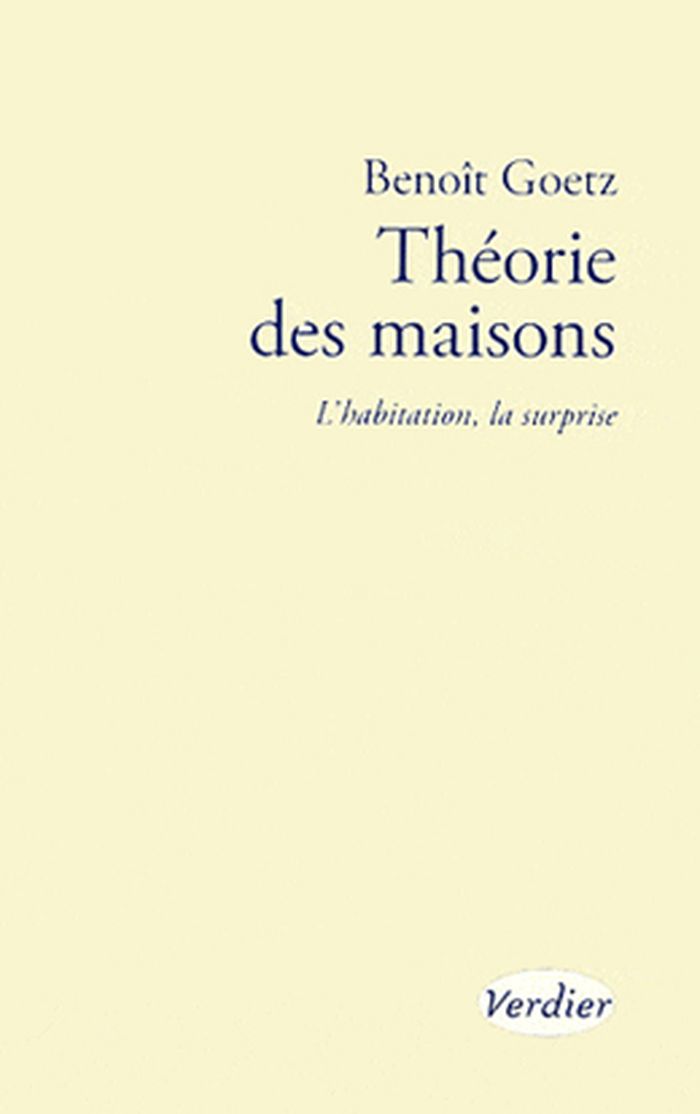
Titre:
Théorie des maisons
Théorie des maisons
Actions:
Prix:
$24.95
(disponible sur commande)
Résumé:
Théorie des maisons vise à mettre au jour - chez les penseurs modernes et contemporains parmi lesquels Benjamin, Deleuze, Derrida, Heidegger et Lévinas - une architecture qui, très souvent, ne se manifeste pas explicitement. L'auteur se propose de nommer cette architecture cachée : "une maison", la maison des philosophes. Cette maison, qui n'est pas toujours thématisée(...)
Titre:
Théorie des maisons
Actions:
Prix:
$24.95
(disponible sur commande)
Résumé:
Théorie des maisons vise à mettre au jour - chez les penseurs modernes et contemporains parmi lesquels Benjamin, Deleuze, Derrida, Heidegger et Lévinas - une architecture qui, très souvent, ne se manifeste pas explicitement. L'auteur se propose de nommer cette architecture cachée : "une maison", la maison des philosophes. Cette maison, qui n'est pas toujours thématisée et dessinée dans ses contours, il s'agit de chercher à la localiser et à la rendre perceptible, comme dans ces jeux de devinette où une figure surgit d'un coup et saute aux yeux. Cet essai engage ainsi à un déplacement du regard. La "maison" ne se réduit plus aux visions du monde que le lecteur serait invité à habiter.
Classification:
livres
livres
Publication:
novembre 2011
novembre 2011
Sujet:
Théorie de l’architecture
Théorie de l’architecture


