


3965 Résultats
Classification:
photographies
photographies
Numéro de référence:
AP140.S2.SS7.D2.P7
Description:
views of various projects by the successive firms of Stirling and Gowan, James Stirling and James Stirling and Partner, including Flats at Ham Common, School Assembly Hall, Brunswick Park Primary School, Dorman Long Headquarters, Florey Building, Queen's College, University of Oxford and British Olivetti Headquarters in Milton Keynes, also views of Liverpool, of the Maison de verre in Paris by architect Pierre Charreau, the Alton Estate in Roehampton, the Atomium at the 1958 Exposition universelle et internationale in Brussels, Keeling House in London by architect Denys Lasdun, buildings by architect Antoni Gaudí, projects by Le Corbusier for lectures by James Stirling, of travels in the United States, including San Francisco, also includes a few negatives
AP140.S2.SS7.D2.P7
Description:
views of various projects by the successive firms of Stirling and Gowan, James Stirling and James Stirling and Partner, including Flats at Ham Common, School Assembly Hall, Brunswick Park Primary School, Dorman Long Headquarters, Florey Building, Queen's College, University of Oxford and British Olivetti Headquarters in Milton Keynes, also views of Liverpool, of the Maison de verre in Paris by architect Pierre Charreau, the Alton Estate in Roehampton, the Atomium at the 1958 Exposition universelle et internationale in Brussels, Keeling House in London by architect Denys Lasdun, buildings by architect Antoni Gaudí, projects by Le Corbusier for lectures by James Stirling, of travels in the United States, including San Francisco, also includes a few negatives
Personnes et institutions:
Titre:
Views of various projects by the successive firms of Stirling and Gowan, James Stirling and James Stirling and Partner
Actions:
AP140.S2.SS7.D2.P7
Description:
views of various projects by the successive firms of Stirling and Gowan, James Stirling and James Stirling and Partner, including Flats at Ham Common, School Assembly Hall, Brunswick Park Primary School, Dorman Long Headquarters, Florey Building, Queen's College, University of Oxford and British Olivetti Headquarters in Milton Keynes, also views of Liverpool, of the Maison de verre in Paris by architect Pierre Charreau, the Alton Estate in Roehampton, the Atomium at the 1958 Exposition universelle et internationale in Brussels, Keeling House in London by architect Denys Lasdun, buildings by architect Antoni Gaudí, projects by Le Corbusier for lectures by James Stirling, of travels in the United States, including San Francisco, also includes a few negatives
Views of various projects by the successive firms of Stirling and Gowan, James Stirling and James Stirling and Partner
Actions:
AP140.S2.SS7.D2.P7
Description:
views of various projects by the successive firms of Stirling and Gowan, James Stirling and James Stirling and Partner, including Flats at Ham Common, School Assembly Hall, Brunswick Park Primary School, Dorman Long Headquarters, Florey Building, Queen's College, University of Oxford and British Olivetti Headquarters in Milton Keynes, also views of Liverpool, of the Maison de verre in Paris by architect Pierre Charreau, the Alton Estate in Roehampton, the Atomium at the 1958 Exposition universelle et internationale in Brussels, Keeling House in London by architect Denys Lasdun, buildings by architect Antoni Gaudí, projects by Le Corbusier for lectures by James Stirling, of travels in the United States, including San Francisco, also includes a few negatives
Classification:
photographies
photographies
Personnes et institutions:
Classification:
documents textuels
documents textuels
Numéro de référence:
AP197.S1.SS9.003
Description:
The box is comprised of notes, articles, interviews, lectures, and keynote speeches by Kenneth Frampton. The materials are organized alphabetically by either title or the architect's last name, from FO-MO. Subjects and architects explored in these texts include: Norman Foster; interviews with Kenneth Frampton; Tony Fretton; Hiromi Fujii; Naum Gabo; Luca Gazzaniga; genesis of the Philharmonie; German aesthetic philosophy; German enlightenment; global architecture; Michael Graves; Eileen Gray; Dan Hanganu; John Hejduk; Herman Hertzberger; Anthony Hill; Stephen Holl; Hans Hollein; IBA housing in Berlin; invention of liberty; India; Arata Isozaki; Japanese architecture; Michel Kagan; Louis Kahn; Kritisher regionalism; Panos Koulermos; Le Corbusier; Adolf Loos; Anthony Lumsden; John McAslan; Richard Meier; and modernism.
AP197.S1.SS9.003
Description:
The box is comprised of notes, articles, interviews, lectures, and keynote speeches by Kenneth Frampton. The materials are organized alphabetically by either title or the architect's last name, from FO-MO. Subjects and architects explored in these texts include: Norman Foster; interviews with Kenneth Frampton; Tony Fretton; Hiromi Fujii; Naum Gabo; Luca Gazzaniga; genesis of the Philharmonie; German aesthetic philosophy; German enlightenment; global architecture; Michael Graves; Eileen Gray; Dan Hanganu; John Hejduk; Herman Hertzberger; Anthony Hill; Stephen Holl; Hans Hollein; IBA housing in Berlin; invention of liberty; India; Arata Isozaki; Japanese architecture; Michel Kagan; Louis Kahn; Kritisher regionalism; Panos Koulermos; Le Corbusier; Adolf Loos; Anthony Lumsden; John McAslan; Richard Meier; and modernism.
Personnes et institutions:
Date:
circa 1965-2015
circa 1965-2015
Titre:
Kenneth Frampton texts, articles and notes FO-MO
Actions:
AP197.S1.SS9.003
Description:
The box is comprised of notes, articles, interviews, lectures, and keynote speeches by Kenneth Frampton. The materials are organized alphabetically by either title or the architect's last name, from FO-MO. Subjects and architects explored in these texts include: Norman Foster; interviews with Kenneth Frampton; Tony Fretton; Hiromi Fujii; Naum Gabo; Luca Gazzaniga; genesis of the Philharmonie; German aesthetic philosophy; German enlightenment; global architecture; Michael Graves; Eileen Gray; Dan Hanganu; John Hejduk; Herman Hertzberger; Anthony Hill; Stephen Holl; Hans Hollein; IBA housing in Berlin; invention of liberty; India; Arata Isozaki; Japanese architecture; Michel Kagan; Louis Kahn; Kritisher regionalism; Panos Koulermos; Le Corbusier; Adolf Loos; Anthony Lumsden; John McAslan; Richard Meier; and modernism.
Kenneth Frampton texts, articles and notes FO-MO
Actions:
AP197.S1.SS9.003
Description:
The box is comprised of notes, articles, interviews, lectures, and keynote speeches by Kenneth Frampton. The materials are organized alphabetically by either title or the architect's last name, from FO-MO. Subjects and architects explored in these texts include: Norman Foster; interviews with Kenneth Frampton; Tony Fretton; Hiromi Fujii; Naum Gabo; Luca Gazzaniga; genesis of the Philharmonie; German aesthetic philosophy; German enlightenment; global architecture; Michael Graves; Eileen Gray; Dan Hanganu; John Hejduk; Herman Hertzberger; Anthony Hill; Stephen Holl; Hans Hollein; IBA housing in Berlin; invention of liberty; India; Arata Isozaki; Japanese architecture; Michel Kagan; Louis Kahn; Kritisher regionalism; Panos Koulermos; Le Corbusier; Adolf Loos; Anthony Lumsden; John McAslan; Richard Meier; and modernism.
Classification:
documents textuels
documents textuels
Date:
circa 1965-2015
circa 1965-2015
Personnes et institutions:
Classification:
événements
événements

Actions:
Description:
David Goldblatt et Ivan Vladislavić parlent de leur publication conjointe intitulée TJ/Double Negative, qui combine de façon novatrice des photographies et des textes de fiction afin de tenter de donner un sens à Johannesburg. Ils discutent de leur démarche visant à représenter en images et en mots cette ville trouble mais intrigante. Goldblatt est un documentariste(...)
David Goldblatt et Ivan Vladislavić parlent de leur publication conjointe intitulée TJ/Double Negative, qui combine de façon novatrice des photographies et des textes de fiction afin de tenter de donner un sens à Johannesburg. Ils discutent de leur démarche visant à représenter en images et en mots cette ville trouble mais intrigante. Goldblatt est un documentariste(...)
Localisation:
Théâtre Paul-Desmarais
Théâtre Paul-Desmarais
Date:
9 mai 2013 , 19h
9 mai 2013 , 19h
Titre:
L'enseignement de... Johannesburg
Actions:
Description:
David Goldblatt et Ivan Vladislavić parlent de leur publication conjointe intitulée TJ/Double Negative, qui combine de façon novatrice des photographies et des textes de fiction afin de tenter de donner un sens à Johannesburg. Ils discutent de leur démarche visant à représenter en images et en mots cette ville trouble mais intrigante. Goldblatt est un documentariste(...)
L'enseignement de... Johannesburg
Actions:
Description:
David Goldblatt et Ivan Vladislavić parlent de leur publication conjointe intitulée TJ/Double Negative, qui combine de façon novatrice des photographies et des textes de fiction afin de tenter de donner un sens à Johannesburg. Ils discutent de leur démarche visant à représenter en images et en mots cette ville trouble mais intrigante. Goldblatt est un documentariste(...)
Classification:
événements
événements
Date:
9 mai 2013
19h
9 mai 2013
19h
Localisation:
Théâtre Paul-Desmarais
Théâtre Paul-Desmarais
Classification:
événements
événements
Actions:
Description:
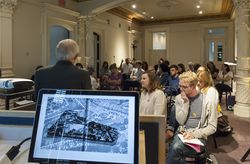
Le CCA présente Outils daujourdhui 2014, un séminaire dété tenu dans le cadre du Programme de subventions de recherche dans la Collection CCA-Groupe Banque TD. Cette année, le séminaire abordes des questions en architecture contemporaine en montrant comment des projets divergent et senrichissent mutuellement, et comment leur différences résultent de points de vue(...)
Le CCA présente Outils daujourdhui 2014, un séminaire dété tenu dans le cadre du Programme de subventions de recherche dans la Collection CCA-Groupe Banque TD. Cette année, le séminaire abordes des questions en architecture contemporaine en montrant comment des projets divergent et senrichissent mutuellement, et comment leur différences résultent de points de vue(...)
Date:
23 juin 2014 au 28 juin 2014
23 juin 2014 au 28 juin 2014
Titre:
Outils d’aujourd’hui : Matériels et atmosphères
Actions:
Description:
Le CCA présente Outils daujourdhui 2014, un séminaire dété tenu dans le cadre du Programme de subventions de recherche dans la Collection CCA-Groupe Banque TD. Cette année, le séminaire abordes des questions en architecture contemporaine en montrant comment des projets divergent et senrichissent mutuellement, et comment leur différences résultent de points de vue(...)
Outils d’aujourd’hui : Matériels et atmosphères
Actions:
Description:
Le CCA présente Outils daujourdhui 2014, un séminaire dété tenu dans le cadre du Programme de subventions de recherche dans la Collection CCA-Groupe Banque TD. Cette année, le séminaire abordes des questions en architecture contemporaine en montrant comment des projets divergent et senrichissent mutuellement, et comment leur différences résultent de points de vue(...)
Classification:
événements
événements
Date:
23 juin 2014 au
28 juin 2014
23 juin 2014 au
28 juin 2014
Classification:
dessins
dessins
Actions:
Numéro de référence:
DR1994:0011:001 R/V
Description:
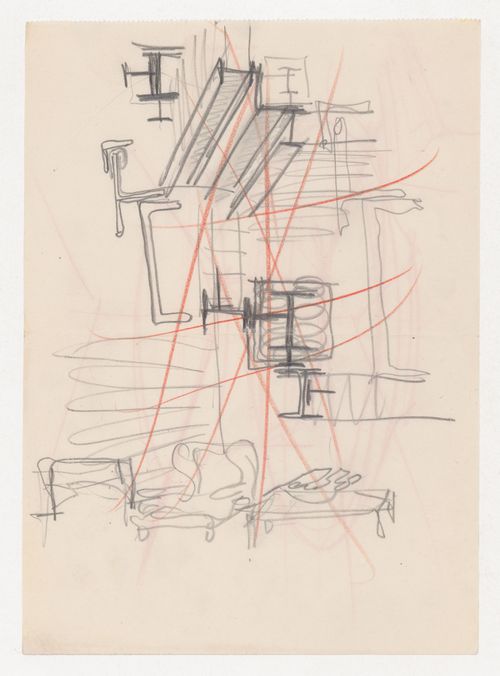
- Group DR1994:0011:001 R/V - DR1994:0011:030 includes three sketches (DR1994:0011:001 R/V - DR1994:0011:002 R/V and DR1994:0011:030), 24 pages of notes (DR1994:0011:003 - DR1994:0011:026), two sketchbooks (DR1994:0011:027:001-035 and DR1994:0011:028:001-008 R/V), and the envelope in which these materials were housed at acquisition (DR1994:0011:029). The sketches are for various subjects including I-beams (DR1994:0011:001 R/V), a column-to-beam connection and an unidentified building (DR1994:0011:002 R/V), and a sketch plan of Mies' 1928-1929 design for the Friedrichstrasse office building in Berlin (DR1994:0011:030). Notes DR1994:0011:003 - DR1994:0011:024 are written in German and are generally illegible. Many changes have been made to the notes, and some sheets appear to have been reordered or struck out. Some of the notes may be about urban planning. The number in the upper left corner of sheets DR1994:0011:010, DR1994:0011:012-016 and DR1994:0011:020-021 may indicate the order of the topics dealt with in the notes. Notes DR1994:0011:025 are illegible. Notes DR1994:0011:026 are written in English, and may be notes of a lecture. The notes in sketchbook DR1994:0011:027:001-035 are written in German, are generally illegible, and are usually written in point form or sometimes as lists. Chicago is mentioned on several of the sheets. There is a shift in the clarity of the handwriting halfway through the sketchbook and some of the notes in the latter half may relate to Mies' readings of philosophy. Some of the notes in sketchbook DR1994:0028:001-008 R/V are written in German and some in English. The first and second pages of the sketchbook describe measurements for addresses on the campus of IIT, as well as for the Power Plant. The last three pages of the sketchbook discuss the architectural education programm at IIT and an exhibition of student work.
DR1994:0011:001 R/V
Description:
- Group DR1994:0011:001 R/V - DR1994:0011:030 includes three sketches (DR1994:0011:001 R/V - DR1994:0011:002 R/V and DR1994:0011:030), 24 pages of notes (DR1994:0011:003 - DR1994:0011:026), two sketchbooks (DR1994:0011:027:001-035 and DR1994:0011:028:001-008 R/V), and the envelope in which these materials were housed at acquisition (DR1994:0011:029). The sketches are for various subjects including I-beams (DR1994:0011:001 R/V), a column-to-beam connection and an unidentified building (DR1994:0011:002 R/V), and a sketch plan of Mies' 1928-1929 design for the Friedrichstrasse office building in Berlin (DR1994:0011:030). Notes DR1994:0011:003 - DR1994:0011:024 are written in German and are generally illegible. Many changes have been made to the notes, and some sheets appear to have been reordered or struck out. Some of the notes may be about urban planning. The number in the upper left corner of sheets DR1994:0011:010, DR1994:0011:012-016 and DR1994:0011:020-021 may indicate the order of the topics dealt with in the notes. Notes DR1994:0011:025 are illegible. Notes DR1994:0011:026 are written in English, and may be notes of a lecture. The notes in sketchbook DR1994:0011:027:001-035 are written in German, are generally illegible, and are usually written in point form or sometimes as lists. Chicago is mentioned on several of the sheets. There is a shift in the clarity of the handwriting halfway through the sketchbook and some of the notes in the latter half may relate to Mies' readings of philosophy. Some of the notes in sketchbook DR1994:0028:001-008 R/V are written in German and some in English. The first and second pages of the sketchbook describe measurements for addresses on the campus of IIT, as well as for the Power Plant. The last three pages of the sketchbook discuss the architectural education programm at IIT and an exhibition of student work.
Personnes et institutions:
Sujet:
architecture
architecture
Date:
1944-1965
1944-1965
Titre:
Sketch of a teacup; verso: Study sketches for I-beams and sketch of a chair and table
Actions:
DR1994:0011:001 R/V
Description:
- Group DR1994:0011:001 R/V - DR1994:0011:030 includes three sketches (DR1994:0011:001 R/V - DR1994:0011:002 R/V and DR1994:0011:030), 24 pages of notes (DR1994:0011:003 - DR1994:0011:026), two sketchbooks (DR1994:0011:027:001-035 and DR1994:0011:028:001-008 R/V), and the envelope in which these materials were housed at acquisition (DR1994:0011:029). The sketches are for various subjects including I-beams (DR1994:0011:001 R/V), a column-to-beam connection and an unidentified building (DR1994:0011:002 R/V), and a sketch plan of Mies' 1928-1929 design for the Friedrichstrasse office building in Berlin (DR1994:0011:030). Notes DR1994:0011:003 - DR1994:0011:024 are written in German and are generally illegible. Many changes have been made to the notes, and some sheets appear to have been reordered or struck out. Some of the notes may be about urban planning. The number in the upper left corner of sheets DR1994:0011:010, DR1994:0011:012-016 and DR1994:0011:020-021 may indicate the order of the topics dealt with in the notes. Notes DR1994:0011:025 are illegible. Notes DR1994:0011:026 are written in English, and may be notes of a lecture. The notes in sketchbook DR1994:0011:027:001-035 are written in German, are generally illegible, and are usually written in point form or sometimes as lists. Chicago is mentioned on several of the sheets. There is a shift in the clarity of the handwriting halfway through the sketchbook and some of the notes in the latter half may relate to Mies' readings of philosophy. Some of the notes in sketchbook DR1994:0028:001-008 R/V are written in German and some in English. The first and second pages of the sketchbook describe measurements for addresses on the campus of IIT, as well as for the Power Plant. The last three pages of the sketchbook discuss the architectural education programm at IIT and an exhibition of student work.
Sketch of a teacup; verso: Study sketches for I-beams and sketch of a chair and table
Actions:
DR1994:0011:001 R/V
Description:
- Group DR1994:0011:001 R/V - DR1994:0011:030 includes three sketches (DR1994:0011:001 R/V - DR1994:0011:002 R/V and DR1994:0011:030), 24 pages of notes (DR1994:0011:003 - DR1994:0011:026), two sketchbooks (DR1994:0011:027:001-035 and DR1994:0011:028:001-008 R/V), and the envelope in which these materials were housed at acquisition (DR1994:0011:029). The sketches are for various subjects including I-beams (DR1994:0011:001 R/V), a column-to-beam connection and an unidentified building (DR1994:0011:002 R/V), and a sketch plan of Mies' 1928-1929 design for the Friedrichstrasse office building in Berlin (DR1994:0011:030). Notes DR1994:0011:003 - DR1994:0011:024 are written in German and are generally illegible. Many changes have been made to the notes, and some sheets appear to have been reordered or struck out. Some of the notes may be about urban planning. The number in the upper left corner of sheets DR1994:0011:010, DR1994:0011:012-016 and DR1994:0011:020-021 may indicate the order of the topics dealt with in the notes. Notes DR1994:0011:025 are illegible. Notes DR1994:0011:026 are written in English, and may be notes of a lecture. The notes in sketchbook DR1994:0011:027:001-035 are written in German, are generally illegible, and are usually written in point form or sometimes as lists. Chicago is mentioned on several of the sheets. There is a shift in the clarity of the handwriting halfway through the sketchbook and some of the notes in the latter half may relate to Mies' readings of philosophy. Some of the notes in sketchbook DR1994:0028:001-008 R/V are written in German and some in English. The first and second pages of the sketchbook describe measurements for addresses on the campus of IIT, as well as for the Power Plant. The last three pages of the sketchbook discuss the architectural education programm at IIT and an exhibition of student work.
Classification:
dessins
dessins
Date:
1944-1965
1944-1965
Personnes et institutions:
Sujet:
architecture
architecture
Classification:
dessins
dessins
Actions:
Numéro de référence:
DR1994:0011:002 R/V
Description:
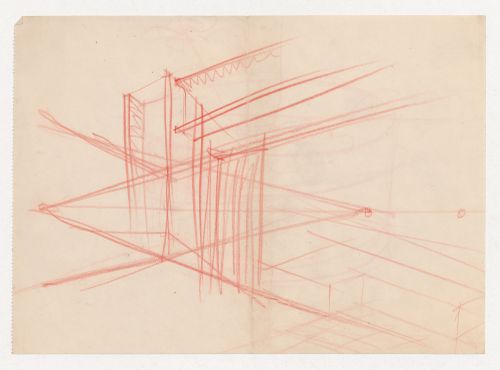
- Group DR1994:0011:001 R/V - DR1994:0011:030 includes three sketches (DR1994:0011:001 R/V - DR1994:0011:002 R/V and DR1994:0011:030), 24 pages of notes (DR1994:0011:003 - DR1994:0011:026), two sketchbooks (DR1994:0011:027:001-035 and DR1994:0011:028:001-008 R/V), and the envelope in which these materials were housed at acquisition (DR1994:0011:029). The sketches are for various subjects including I-beams (DR1994:0011:001 R/V), a column-to-beam connection and an unidentified building (DR1994:0011:002 R/V), and a sketch plan of Mies' 1928-1929 design for the Friedrichstrasse office building in Berlin (DR1994:0011:030). Notes DR1994:0011:003 - DR1994:0011:024 are written in German and are generally illegible. Many changes have been made to the notes, and some sheets appear to have been reordered or struck out. Some of the notes may be about urban planning. The number in the upper left corner of sheets DR1994:0011:010, DR1994:0011:012-016 and DR1994:0011:020-021 may indicate the order of the topics dealt with in the notes. Notes DR1994:0011:025 are illegible. Notes DR1994:0011:026 are written in English, and may be notes of a lecture. The notes in sketchbook DR1994:0011:027:001-035 are written in German, are generally illegible, and are usually written in point form or sometimes as lists. Chicago is mentioned on several of the sheets. There is a shift in the clarity of the handwriting halfway through the sketchbook and some of the notes in the latter half may relate to Mies' readings of philosophy. Some of the notes in sketchbook DR1994:0028:001-008 R/V are written in German and some in English. The first and second pages of the sketchbook describe measurements for addresses on the campus of IIT, as well as for the Power Plant. The last three pages of the sketchbook discuss the architectural education programm at IIT and an exhibition of student work.
DR1994:0011:002 R/V
Description:
- Group DR1994:0011:001 R/V - DR1994:0011:030 includes three sketches (DR1994:0011:001 R/V - DR1994:0011:002 R/V and DR1994:0011:030), 24 pages of notes (DR1994:0011:003 - DR1994:0011:026), two sketchbooks (DR1994:0011:027:001-035 and DR1994:0011:028:001-008 R/V), and the envelope in which these materials were housed at acquisition (DR1994:0011:029). The sketches are for various subjects including I-beams (DR1994:0011:001 R/V), a column-to-beam connection and an unidentified building (DR1994:0011:002 R/V), and a sketch plan of Mies' 1928-1929 design for the Friedrichstrasse office building in Berlin (DR1994:0011:030). Notes DR1994:0011:003 - DR1994:0011:024 are written in German and are generally illegible. Many changes have been made to the notes, and some sheets appear to have been reordered or struck out. Some of the notes may be about urban planning. The number in the upper left corner of sheets DR1994:0011:010, DR1994:0011:012-016 and DR1994:0011:020-021 may indicate the order of the topics dealt with in the notes. Notes DR1994:0011:025 are illegible. Notes DR1994:0011:026 are written in English, and may be notes of a lecture. The notes in sketchbook DR1994:0011:027:001-035 are written in German, are generally illegible, and are usually written in point form or sometimes as lists. Chicago is mentioned on several of the sheets. There is a shift in the clarity of the handwriting halfway through the sketchbook and some of the notes in the latter half may relate to Mies' readings of philosophy. Some of the notes in sketchbook DR1994:0028:001-008 R/V are written in German and some in English. The first and second pages of the sketchbook describe measurements for addresses on the campus of IIT, as well as for the Power Plant. The last three pages of the sketchbook discuss the architectural education programm at IIT and an exhibition of student work.
Personnes et institutions:
Sujet:
architecture
architecture
Date:
1944-1965
1944-1965
Titre:
Sketch of a container with a plant; verso: Perspective sketch, possibly for a column to beam connection, and axonometric sketch for an unidentified building
Actions:
DR1994:0011:002 R/V
Description:
- Group DR1994:0011:001 R/V - DR1994:0011:030 includes three sketches (DR1994:0011:001 R/V - DR1994:0011:002 R/V and DR1994:0011:030), 24 pages of notes (DR1994:0011:003 - DR1994:0011:026), two sketchbooks (DR1994:0011:027:001-035 and DR1994:0011:028:001-008 R/V), and the envelope in which these materials were housed at acquisition (DR1994:0011:029). The sketches are for various subjects including I-beams (DR1994:0011:001 R/V), a column-to-beam connection and an unidentified building (DR1994:0011:002 R/V), and a sketch plan of Mies' 1928-1929 design for the Friedrichstrasse office building in Berlin (DR1994:0011:030). Notes DR1994:0011:003 - DR1994:0011:024 are written in German and are generally illegible. Many changes have been made to the notes, and some sheets appear to have been reordered or struck out. Some of the notes may be about urban planning. The number in the upper left corner of sheets DR1994:0011:010, DR1994:0011:012-016 and DR1994:0011:020-021 may indicate the order of the topics dealt with in the notes. Notes DR1994:0011:025 are illegible. Notes DR1994:0011:026 are written in English, and may be notes of a lecture. The notes in sketchbook DR1994:0011:027:001-035 are written in German, are generally illegible, and are usually written in point form or sometimes as lists. Chicago is mentioned on several of the sheets. There is a shift in the clarity of the handwriting halfway through the sketchbook and some of the notes in the latter half may relate to Mies' readings of philosophy. Some of the notes in sketchbook DR1994:0028:001-008 R/V are written in German and some in English. The first and second pages of the sketchbook describe measurements for addresses on the campus of IIT, as well as for the Power Plant. The last three pages of the sketchbook discuss the architectural education programm at IIT and an exhibition of student work.
Sketch of a container with a plant; verso: Perspective sketch, possibly for a column to beam connection, and axonometric sketch for an unidentified building
Actions:
DR1994:0011:002 R/V
Description:
- Group DR1994:0011:001 R/V - DR1994:0011:030 includes three sketches (DR1994:0011:001 R/V - DR1994:0011:002 R/V and DR1994:0011:030), 24 pages of notes (DR1994:0011:003 - DR1994:0011:026), two sketchbooks (DR1994:0011:027:001-035 and DR1994:0011:028:001-008 R/V), and the envelope in which these materials were housed at acquisition (DR1994:0011:029). The sketches are for various subjects including I-beams (DR1994:0011:001 R/V), a column-to-beam connection and an unidentified building (DR1994:0011:002 R/V), and a sketch plan of Mies' 1928-1929 design for the Friedrichstrasse office building in Berlin (DR1994:0011:030). Notes DR1994:0011:003 - DR1994:0011:024 are written in German and are generally illegible. Many changes have been made to the notes, and some sheets appear to have been reordered or struck out. Some of the notes may be about urban planning. The number in the upper left corner of sheets DR1994:0011:010, DR1994:0011:012-016 and DR1994:0011:020-021 may indicate the order of the topics dealt with in the notes. Notes DR1994:0011:025 are illegible. Notes DR1994:0011:026 are written in English, and may be notes of a lecture. The notes in sketchbook DR1994:0011:027:001-035 are written in German, are generally illegible, and are usually written in point form or sometimes as lists. Chicago is mentioned on several of the sheets. There is a shift in the clarity of the handwriting halfway through the sketchbook and some of the notes in the latter half may relate to Mies' readings of philosophy. Some of the notes in sketchbook DR1994:0028:001-008 R/V are written in German and some in English. The first and second pages of the sketchbook describe measurements for addresses on the campus of IIT, as well as for the Power Plant. The last three pages of the sketchbook discuss the architectural education programm at IIT and an exhibition of student work.
Classification:
dessins
dessins
Date:
1944-1965
1944-1965
Personnes et institutions:
Sujet:
architecture
architecture
Classification:
documents textuels
documents textuels
Actions:
Numéro de référence:
DR1994:0011:025
Description:
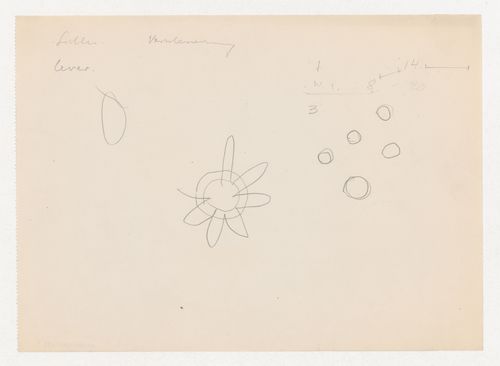
- Group DR1994:0011:001 R/V - DR1994:0011:030 includes three sketches (DR1994:0011:001 R/V - DR1994:0011:002 R/V and DR1994:0011:030), 24 pages of notes (DR1994:0011:003 - DR1994:0011:026), two sketchbooks (DR1994:0011:027:001-035 and DR1994:0011:028:001-008 R/V), and the envelope in which these materials were housed at acquisition (DR1994:0011:029). The sketches are for various subjects including I-beams (DR1994:0011:001 R/V), a column-to-beam connection and an unidentified building (DR1994:0011:002 R/V), and a sketch plan of Mies' 1928-1929 design for the Friedrichstrasse office building in Berlin (DR1994:0011:030). Notes DR1994:0011:003 - DR1994:0011:024 are written in German and are generally illegible. Many changes have been made to the notes, and some sheets appear to have been reordered or struck out. Some of the notes may be about urban planning. The number in the upper left corner of sheets DR1994:0011:010, DR1994:0011:012-016 and DR1994:0011:020-021 may indicate the order of the topics dealt with in the notes. Notes DR1994:0011:025 are illegible. Notes DR1994:0011:026 are written in English, and may be notes of a lecture. The notes in sketchbook DR1994:0011:027:001-035 are written in German, are generally illegible, and are usually written in point form or sometimes as lists. Chicago is mentioned on several of the sheets. There is a shift in the clarity of the handwriting halfway through the sketchbook and some of the notes in the latter half may relate to Mies' readings of philosophy. Some of the notes in sketchbook DR1994:0028:001-008 R/V are written in German and some in English. The first and second pages of the sketchbook describe measurements for addresses on the campus of IIT, as well as for the Power Plant. The last three pages of the sketchbook discuss the architectural education programm at IIT and an exhibition of student work.
DR1994:0011:025
Description:
- Group DR1994:0011:001 R/V - DR1994:0011:030 includes three sketches (DR1994:0011:001 R/V - DR1994:0011:002 R/V and DR1994:0011:030), 24 pages of notes (DR1994:0011:003 - DR1994:0011:026), two sketchbooks (DR1994:0011:027:001-035 and DR1994:0011:028:001-008 R/V), and the envelope in which these materials were housed at acquisition (DR1994:0011:029). The sketches are for various subjects including I-beams (DR1994:0011:001 R/V), a column-to-beam connection and an unidentified building (DR1994:0011:002 R/V), and a sketch plan of Mies' 1928-1929 design for the Friedrichstrasse office building in Berlin (DR1994:0011:030). Notes DR1994:0011:003 - DR1994:0011:024 are written in German and are generally illegible. Many changes have been made to the notes, and some sheets appear to have been reordered or struck out. Some of the notes may be about urban planning. The number in the upper left corner of sheets DR1994:0011:010, DR1994:0011:012-016 and DR1994:0011:020-021 may indicate the order of the topics dealt with in the notes. Notes DR1994:0011:025 are illegible. Notes DR1994:0011:026 are written in English, and may be notes of a lecture. The notes in sketchbook DR1994:0011:027:001-035 are written in German, are generally illegible, and are usually written in point form or sometimes as lists. Chicago is mentioned on several of the sheets. There is a shift in the clarity of the handwriting halfway through the sketchbook and some of the notes in the latter half may relate to Mies' readings of philosophy. Some of the notes in sketchbook DR1994:0028:001-008 R/V are written in German and some in English. The first and second pages of the sketchbook describe measurements for addresses on the campus of IIT, as well as for the Power Plant. The last three pages of the sketchbook discuss the architectural education programm at IIT and an exhibition of student work.
Personnes et institutions:
Sujet:
architecture
architecture
Date:
1955
1955
Titre:
Sheet of illegible words and doodles
Actions:
DR1994:0011:025
Description:
- Group DR1994:0011:001 R/V - DR1994:0011:030 includes three sketches (DR1994:0011:001 R/V - DR1994:0011:002 R/V and DR1994:0011:030), 24 pages of notes (DR1994:0011:003 - DR1994:0011:026), two sketchbooks (DR1994:0011:027:001-035 and DR1994:0011:028:001-008 R/V), and the envelope in which these materials were housed at acquisition (DR1994:0011:029). The sketches are for various subjects including I-beams (DR1994:0011:001 R/V), a column-to-beam connection and an unidentified building (DR1994:0011:002 R/V), and a sketch plan of Mies' 1928-1929 design for the Friedrichstrasse office building in Berlin (DR1994:0011:030). Notes DR1994:0011:003 - DR1994:0011:024 are written in German and are generally illegible. Many changes have been made to the notes, and some sheets appear to have been reordered or struck out. Some of the notes may be about urban planning. The number in the upper left corner of sheets DR1994:0011:010, DR1994:0011:012-016 and DR1994:0011:020-021 may indicate the order of the topics dealt with in the notes. Notes DR1994:0011:025 are illegible. Notes DR1994:0011:026 are written in English, and may be notes of a lecture. The notes in sketchbook DR1994:0011:027:001-035 are written in German, are generally illegible, and are usually written in point form or sometimes as lists. Chicago is mentioned on several of the sheets. There is a shift in the clarity of the handwriting halfway through the sketchbook and some of the notes in the latter half may relate to Mies' readings of philosophy. Some of the notes in sketchbook DR1994:0028:001-008 R/V are written in German and some in English. The first and second pages of the sketchbook describe measurements for addresses on the campus of IIT, as well as for the Power Plant. The last three pages of the sketchbook discuss the architectural education programm at IIT and an exhibition of student work.
Sheet of illegible words and doodles
Actions:
DR1994:0011:025
Description:
- Group DR1994:0011:001 R/V - DR1994:0011:030 includes three sketches (DR1994:0011:001 R/V - DR1994:0011:002 R/V and DR1994:0011:030), 24 pages of notes (DR1994:0011:003 - DR1994:0011:026), two sketchbooks (DR1994:0011:027:001-035 and DR1994:0011:028:001-008 R/V), and the envelope in which these materials were housed at acquisition (DR1994:0011:029). The sketches are for various subjects including I-beams (DR1994:0011:001 R/V), a column-to-beam connection and an unidentified building (DR1994:0011:002 R/V), and a sketch plan of Mies' 1928-1929 design for the Friedrichstrasse office building in Berlin (DR1994:0011:030). Notes DR1994:0011:003 - DR1994:0011:024 are written in German and are generally illegible. Many changes have been made to the notes, and some sheets appear to have been reordered or struck out. Some of the notes may be about urban planning. The number in the upper left corner of sheets DR1994:0011:010, DR1994:0011:012-016 and DR1994:0011:020-021 may indicate the order of the topics dealt with in the notes. Notes DR1994:0011:025 are illegible. Notes DR1994:0011:026 are written in English, and may be notes of a lecture. The notes in sketchbook DR1994:0011:027:001-035 are written in German, are generally illegible, and are usually written in point form or sometimes as lists. Chicago is mentioned on several of the sheets. There is a shift in the clarity of the handwriting halfway through the sketchbook and some of the notes in the latter half may relate to Mies' readings of philosophy. Some of the notes in sketchbook DR1994:0028:001-008 R/V are written in German and some in English. The first and second pages of the sketchbook describe measurements for addresses on the campus of IIT, as well as for the Power Plant. The last three pages of the sketchbook discuss the architectural education programm at IIT and an exhibition of student work.
Classification:
documents textuels
documents textuels
Date:
1955
1955
Personnes et institutions:
Sujet:
architecture
architecture
Classification:
documents textuels
documents textuels
Actions:
Numéro de référence:
DR1994:0011:026
Description:
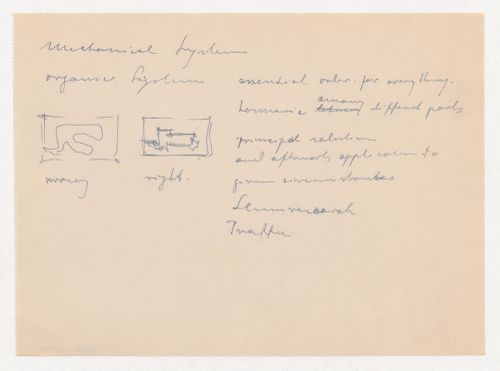
- Group DR1994:0011:001 R/V - DR1994:0011:030 includes three sketches (DR1994:0011:001 R/V - DR1994:0011:002 R/V and DR1994:0011:030), 24 pages of notes (DR1994:0011:003 - DR1994:0011:026), two sketchbooks (DR1994:0011:027:001-035 and DR1994:0011:028:001-008 R/V), and the envelope in which these materials were housed at acquisition (DR1994:0011:029). The sketches are for various subjects including I-beams (DR1994:0011:001 R/V), a column-to-beam connection and an unidentified building (DR1994:0011:002 R/V), and a sketch plan of Mies' 1928-1929 design for the Friedrichstrasse office building in Berlin (DR1994:0011:030). Notes DR1994:0011:003 - DR1994:0011:024 are written in German and are generally illegible. Many changes have been made to the notes, and some sheets appear to have been reordered or struck out. Some of the notes may be about urban planning. The number in the upper left corner of sheets DR1994:0011:010, DR1994:0011:012-016 and DR1994:0011:020-021 may indicate the order of the topics dealt with in the notes. Notes DR1994:0011:025 are illegible. Notes DR1994:0011:026 are written in English, and may be notes of a lecture. The notes in sketchbook DR1994:0011:027:001-035 are written in German, are generally illegible, and are usually written in point form or sometimes as lists. Chicago is mentioned on several of the sheets. There is a shift in the clarity of the handwriting halfway through the sketchbook and some of the notes in the latter half may relate to Mies' readings of philosophy. Some of the notes in sketchbook DR1994:0028:001-008 R/V are written in German and some in English. The first and second pages of the sketchbook describe measurements for addresses on the campus of IIT, as well as for the Power Plant. The last three pages of the sketchbook discuss the architectural education programm at IIT and an exhibition of student work.
DR1994:0011:026
Description:
- Group DR1994:0011:001 R/V - DR1994:0011:030 includes three sketches (DR1994:0011:001 R/V - DR1994:0011:002 R/V and DR1994:0011:030), 24 pages of notes (DR1994:0011:003 - DR1994:0011:026), two sketchbooks (DR1994:0011:027:001-035 and DR1994:0011:028:001-008 R/V), and the envelope in which these materials were housed at acquisition (DR1994:0011:029). The sketches are for various subjects including I-beams (DR1994:0011:001 R/V), a column-to-beam connection and an unidentified building (DR1994:0011:002 R/V), and a sketch plan of Mies' 1928-1929 design for the Friedrichstrasse office building in Berlin (DR1994:0011:030). Notes DR1994:0011:003 - DR1994:0011:024 are written in German and are generally illegible. Many changes have been made to the notes, and some sheets appear to have been reordered or struck out. Some of the notes may be about urban planning. The number in the upper left corner of sheets DR1994:0011:010, DR1994:0011:012-016 and DR1994:0011:020-021 may indicate the order of the topics dealt with in the notes. Notes DR1994:0011:025 are illegible. Notes DR1994:0011:026 are written in English, and may be notes of a lecture. The notes in sketchbook DR1994:0011:027:001-035 are written in German, are generally illegible, and are usually written in point form or sometimes as lists. Chicago is mentioned on several of the sheets. There is a shift in the clarity of the handwriting halfway through the sketchbook and some of the notes in the latter half may relate to Mies' readings of philosophy. Some of the notes in sketchbook DR1994:0028:001-008 R/V are written in German and some in English. The first and second pages of the sketchbook describe measurements for addresses on the campus of IIT, as well as for the Power Plant. The last three pages of the sketchbook discuss the architectural education programm at IIT and an exhibition of student work.
Personnes et institutions:
Sujet:
architecture
architecture
Date:
1955
1955
Titre:
Notes and unidentified sketches
Actions:
DR1994:0011:026
Description:
- Group DR1994:0011:001 R/V - DR1994:0011:030 includes three sketches (DR1994:0011:001 R/V - DR1994:0011:002 R/V and DR1994:0011:030), 24 pages of notes (DR1994:0011:003 - DR1994:0011:026), two sketchbooks (DR1994:0011:027:001-035 and DR1994:0011:028:001-008 R/V), and the envelope in which these materials were housed at acquisition (DR1994:0011:029). The sketches are for various subjects including I-beams (DR1994:0011:001 R/V), a column-to-beam connection and an unidentified building (DR1994:0011:002 R/V), and a sketch plan of Mies' 1928-1929 design for the Friedrichstrasse office building in Berlin (DR1994:0011:030). Notes DR1994:0011:003 - DR1994:0011:024 are written in German and are generally illegible. Many changes have been made to the notes, and some sheets appear to have been reordered or struck out. Some of the notes may be about urban planning. The number in the upper left corner of sheets DR1994:0011:010, DR1994:0011:012-016 and DR1994:0011:020-021 may indicate the order of the topics dealt with in the notes. Notes DR1994:0011:025 are illegible. Notes DR1994:0011:026 are written in English, and may be notes of a lecture. The notes in sketchbook DR1994:0011:027:001-035 are written in German, are generally illegible, and are usually written in point form or sometimes as lists. Chicago is mentioned on several of the sheets. There is a shift in the clarity of the handwriting halfway through the sketchbook and some of the notes in the latter half may relate to Mies' readings of philosophy. Some of the notes in sketchbook DR1994:0028:001-008 R/V are written in German and some in English. The first and second pages of the sketchbook describe measurements for addresses on the campus of IIT, as well as for the Power Plant. The last three pages of the sketchbook discuss the architectural education programm at IIT and an exhibition of student work.
Notes and unidentified sketches
Actions:
DR1994:0011:026
Description:
- Group DR1994:0011:001 R/V - DR1994:0011:030 includes three sketches (DR1994:0011:001 R/V - DR1994:0011:002 R/V and DR1994:0011:030), 24 pages of notes (DR1994:0011:003 - DR1994:0011:026), two sketchbooks (DR1994:0011:027:001-035 and DR1994:0011:028:001-008 R/V), and the envelope in which these materials were housed at acquisition (DR1994:0011:029). The sketches are for various subjects including I-beams (DR1994:0011:001 R/V), a column-to-beam connection and an unidentified building (DR1994:0011:002 R/V), and a sketch plan of Mies' 1928-1929 design for the Friedrichstrasse office building in Berlin (DR1994:0011:030). Notes DR1994:0011:003 - DR1994:0011:024 are written in German and are generally illegible. Many changes have been made to the notes, and some sheets appear to have been reordered or struck out. Some of the notes may be about urban planning. The number in the upper left corner of sheets DR1994:0011:010, DR1994:0011:012-016 and DR1994:0011:020-021 may indicate the order of the topics dealt with in the notes. Notes DR1994:0011:025 are illegible. Notes DR1994:0011:026 are written in English, and may be notes of a lecture. The notes in sketchbook DR1994:0011:027:001-035 are written in German, are generally illegible, and are usually written in point form or sometimes as lists. Chicago is mentioned on several of the sheets. There is a shift in the clarity of the handwriting halfway through the sketchbook and some of the notes in the latter half may relate to Mies' readings of philosophy. Some of the notes in sketchbook DR1994:0028:001-008 R/V are written in German and some in English. The first and second pages of the sketchbook describe measurements for addresses on the campus of IIT, as well as for the Power Plant. The last three pages of the sketchbook discuss the architectural education programm at IIT and an exhibition of student work.
Classification:
documents textuels
documents textuels
Date:
1955
1955
Personnes et institutions:
Sujet:
architecture
architecture
Classification:
dessins
dessins
Actions:
Numéro de référence:
DR1994:0011:030
Description:
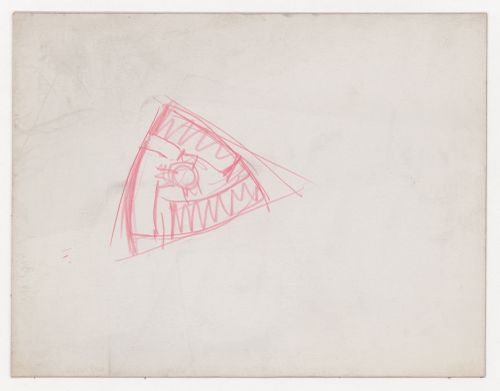
- Group DR1994:0011:001 R/V - DR1994:0011:030 includes three sketches (DR1994:0011:001 R/V - DR1994:0011:002 R/V and DR1994:0011:030), 24 pages of notes (DR1994:0011:003 - DR1994:0011:026), two sketchbooks (DR1994:0011:027:001-035 and DR1994:0011:028:001-008 R/V), and the envelope in which these materials were housed at acquisition (DR1994:0011:029). The sketches are for various subjects including I-beams (DR1994:0011:001 R/V), a column-to-beam connection and an unidentified building (DR1994:0011:002 R/V), and a sketch plan of Mies' 1928-1929 design for the Friedrichstrasse office building in Berlin (DR1994:0011:030). Notes DR1994:0011:003 - DR1994:0011:024 are written in German and are generally illegible. Many changes have been made to the notes, and some sheets appear to have been reordered or struck out. Some of the notes may be about urban planning. The number in the upper left corner of sheets DR1994:0011:010, DR1994:0011:012-016 and DR1994:0011:020-021 may indicate the order of the topics dealt with in the notes. Notes DR1994:0011:025 are illegible. Notes DR1994:0011:026 are written in English, and may be notes of a lecture. The notes in sketchbook DR1994:0011:027:001-035 are written in German, are generally illegible, and are usually written in point form or sometimes as lists. Chicago is mentioned on several of the sheets. There is a shift in the clarity of the handwriting halfway through the sketchbook and some of the notes in the latter half may relate to Mies' readings of philosophy. Some of the notes in sketchbook DR1994:0028:001-008 R/V are written in German and some in English. The first and second pages of the sketchbook describe measurements for addresses on the campus of IIT, as well as for the Power Plant. The last three pages of the sketchbook discuss the architectural education programm at IIT and an exhibition of student work.
DR1994:0011:030
Description:
- Group DR1994:0011:001 R/V - DR1994:0011:030 includes three sketches (DR1994:0011:001 R/V - DR1994:0011:002 R/V and DR1994:0011:030), 24 pages of notes (DR1994:0011:003 - DR1994:0011:026), two sketchbooks (DR1994:0011:027:001-035 and DR1994:0011:028:001-008 R/V), and the envelope in which these materials were housed at acquisition (DR1994:0011:029). The sketches are for various subjects including I-beams (DR1994:0011:001 R/V), a column-to-beam connection and an unidentified building (DR1994:0011:002 R/V), and a sketch plan of Mies' 1928-1929 design for the Friedrichstrasse office building in Berlin (DR1994:0011:030). Notes DR1994:0011:003 - DR1994:0011:024 are written in German and are generally illegible. Many changes have been made to the notes, and some sheets appear to have been reordered or struck out. Some of the notes may be about urban planning. The number in the upper left corner of sheets DR1994:0011:010, DR1994:0011:012-016 and DR1994:0011:020-021 may indicate the order of the topics dealt with in the notes. Notes DR1994:0011:025 are illegible. Notes DR1994:0011:026 are written in English, and may be notes of a lecture. The notes in sketchbook DR1994:0011:027:001-035 are written in German, are generally illegible, and are usually written in point form or sometimes as lists. Chicago is mentioned on several of the sheets. There is a shift in the clarity of the handwriting halfway through the sketchbook and some of the notes in the latter half may relate to Mies' readings of philosophy. Some of the notes in sketchbook DR1994:0028:001-008 R/V are written in German and some in English. The first and second pages of the sketchbook describe measurements for addresses on the campus of IIT, as well as for the Power Plant. The last three pages of the sketchbook discuss the architectural education programm at IIT and an exhibition of student work.
Personnes et institutions:
Date:
1955
1955
Titre:
Sketch plan of the 1928-1929 design for an office building on the Friedrichstrasse, Berlin
Actions:
DR1994:0011:030
Description:
- Group DR1994:0011:001 R/V - DR1994:0011:030 includes three sketches (DR1994:0011:001 R/V - DR1994:0011:002 R/V and DR1994:0011:030), 24 pages of notes (DR1994:0011:003 - DR1994:0011:026), two sketchbooks (DR1994:0011:027:001-035 and DR1994:0011:028:001-008 R/V), and the envelope in which these materials were housed at acquisition (DR1994:0011:029). The sketches are for various subjects including I-beams (DR1994:0011:001 R/V), a column-to-beam connection and an unidentified building (DR1994:0011:002 R/V), and a sketch plan of Mies' 1928-1929 design for the Friedrichstrasse office building in Berlin (DR1994:0011:030). Notes DR1994:0011:003 - DR1994:0011:024 are written in German and are generally illegible. Many changes have been made to the notes, and some sheets appear to have been reordered or struck out. Some of the notes may be about urban planning. The number in the upper left corner of sheets DR1994:0011:010, DR1994:0011:012-016 and DR1994:0011:020-021 may indicate the order of the topics dealt with in the notes. Notes DR1994:0011:025 are illegible. Notes DR1994:0011:026 are written in English, and may be notes of a lecture. The notes in sketchbook DR1994:0011:027:001-035 are written in German, are generally illegible, and are usually written in point form or sometimes as lists. Chicago is mentioned on several of the sheets. There is a shift in the clarity of the handwriting halfway through the sketchbook and some of the notes in the latter half may relate to Mies' readings of philosophy. Some of the notes in sketchbook DR1994:0028:001-008 R/V are written in German and some in English. The first and second pages of the sketchbook describe measurements for addresses on the campus of IIT, as well as for the Power Plant. The last three pages of the sketchbook discuss the architectural education programm at IIT and an exhibition of student work.
Sketch plan of the 1928-1929 design for an office building on the Friedrichstrasse, Berlin
Actions:
DR1994:0011:030
Description:
- Group DR1994:0011:001 R/V - DR1994:0011:030 includes three sketches (DR1994:0011:001 R/V - DR1994:0011:002 R/V and DR1994:0011:030), 24 pages of notes (DR1994:0011:003 - DR1994:0011:026), two sketchbooks (DR1994:0011:027:001-035 and DR1994:0011:028:001-008 R/V), and the envelope in which these materials were housed at acquisition (DR1994:0011:029). The sketches are for various subjects including I-beams (DR1994:0011:001 R/V), a column-to-beam connection and an unidentified building (DR1994:0011:002 R/V), and a sketch plan of Mies' 1928-1929 design for the Friedrichstrasse office building in Berlin (DR1994:0011:030). Notes DR1994:0011:003 - DR1994:0011:024 are written in German and are generally illegible. Many changes have been made to the notes, and some sheets appear to have been reordered or struck out. Some of the notes may be about urban planning. The number in the upper left corner of sheets DR1994:0011:010, DR1994:0011:012-016 and DR1994:0011:020-021 may indicate the order of the topics dealt with in the notes. Notes DR1994:0011:025 are illegible. Notes DR1994:0011:026 are written in English, and may be notes of a lecture. The notes in sketchbook DR1994:0011:027:001-035 are written in German, are generally illegible, and are usually written in point form or sometimes as lists. Chicago is mentioned on several of the sheets. There is a shift in the clarity of the handwriting halfway through the sketchbook and some of the notes in the latter half may relate to Mies' readings of philosophy. Some of the notes in sketchbook DR1994:0028:001-008 R/V are written in German and some in English. The first and second pages of the sketchbook describe measurements for addresses on the campus of IIT, as well as for the Power Plant. The last three pages of the sketchbook discuss the architectural education programm at IIT and an exhibition of student work.
Classification:
dessins
dessins
Date:
1955
1955
Personnes et institutions:
Classification:
événements
événements
Actions:
Description:
Quand Gordon Matta-Clark se procure les titres de propriété et la documentation d’une douzaine de petites parcelles non occupées à New York entre 1974 et 1977 (qui, en 1992, ont fait l’objet d’une exposition intitulée Reality Properties: Fake Estates), il n’a pas d’intention précise – autre que sa conviction suivant laquelle « l’existence de lots vacants et sous-utilisés(...)
Quand Gordon Matta-Clark se procure les titres de propriété et la documentation d’une douzaine de petites parcelles non occupées à New York entre 1974 et 1977 (qui, en 1992, ont fait l’objet d’une exposition intitulée Reality Properties: Fake Estates), il n’a pas d’intention précise – autre que sa conviction suivant laquelle « l’existence de lots vacants et sous-utilisés(...)
Localisation:
Théâtre Paul-Desmarais
Théâtre Paul-Desmarais
Date:
22 septembre 2016, 18h
22 septembre 2016, 18h
Titre:
Nicholas de Monchaux : Local Code
Actions:
Description:
Quand Gordon Matta-Clark se procure les titres de propriété et la documentation d’une douzaine de petites parcelles non occupées à New York entre 1974 et 1977 (qui, en 1992, ont fait l’objet d’une exposition intitulée Reality Properties: Fake Estates), il n’a pas d’intention précise – autre que sa conviction suivant laquelle « l’existence de lots vacants et sous-utilisés(...)
Nicholas de Monchaux : Local Code
Actions:
Description:
Quand Gordon Matta-Clark se procure les titres de propriété et la documentation d’une douzaine de petites parcelles non occupées à New York entre 1974 et 1977 (qui, en 1992, ont fait l’objet d’une exposition intitulée Reality Properties: Fake Estates), il n’a pas d’intention précise – autre que sa conviction suivant laquelle « l’existence de lots vacants et sous-utilisés(...)
Classification:
événements
événements
Date:
22 septembre 2016
18h
22 septembre 2016
18h
Localisation:
Théâtre Paul-Desmarais
Théâtre Paul-Desmarais


