


951 Résultats
Classification:
livres
livres
Titre:
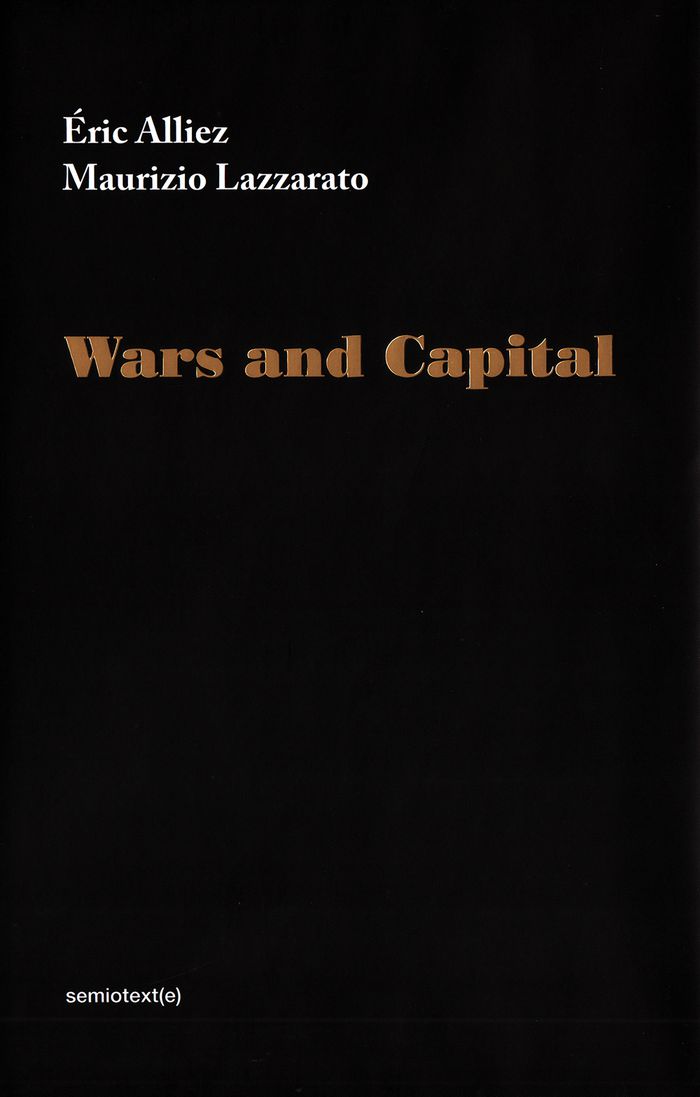
Wars and capital
Wars and capital
Actions:
Prix:
$37.50
(disponible sur commande)
Résumé:
In "Wars and Capital", Éric Alliez and Maurizio Lazzarato propose a counter-history of capitalism to recover the reality of the wars that are inflicted on us and denied to us. We experience not the ideal war of philosophers, but wars of class, race, sex, and gender; wars of civilization and the environment; wars of subjectivity that are raging within populations and that(...)
$37.50
(disponible sur commande)
Résumé:
In "Wars and Capital", Éric Alliez and Maurizio Lazzarato propose a counter-history of capitalism to recover the reality of the wars that are inflicted on us and denied to us. We experience not the ideal war of philosophers, but wars of class, race, sex, and gender; wars of civilization and the environment; wars of subjectivity that are raging within populations and that(...)
Titre:
Wars and capital
Actions:
Prix:
$37.50
(disponible sur commande)
Résumé:
In "Wars and Capital", Éric Alliez and Maurizio Lazzarato propose a counter-history of capitalism to recover the reality of the wars that are inflicted on us and denied to us. We experience not the ideal war of philosophers, but wars of class, race, sex, and gender; wars of civilization and the environment; wars of subjectivity that are raging within populations and that constitute the secret motor of liberal governmentality. By naming the enemy (refugees, migrants, Muslims), the new fascisms establish their hegemony on the processes of political subjectivation by reducing them to racist, sexist, and xenophobic slogans, fanning the flames of war among the poor and maintaining the total war philosophy of neoliberalism.
Wars and capital
Actions:
Prix:
$37.50
(disponible sur commande)
Résumé:
In "Wars and Capital", Éric Alliez and Maurizio Lazzarato propose a counter-history of capitalism to recover the reality of the wars that are inflicted on us and denied to us. We experience not the ideal war of philosophers, but wars of class, race, sex, and gender; wars of civilization and the environment; wars of subjectivity that are raging within populations and that constitute the secret motor of liberal governmentality. By naming the enemy (refugees, migrants, Muslims), the new fascisms establish their hegemony on the processes of political subjectivation by reducing them to racist, sexist, and xenophobic slogans, fanning the flames of war among the poor and maintaining the total war philosophy of neoliberalism.
Classification:
livres
livres
Publication:
mai 2018
mai 2018
Sujet:
Théorie/ philosophie
Théorie/ philosophie
Classification:
livres
livres

Titre:
Saving beauty
Saving beauty
Actions:
Prix:
$15.95
(disponible en magasin)
Résumé:
Beauty today is a paradox. The cult of beauty is ubiquitous but it has lost its transcendence and become little more than an aspect of consumerism, the aesthetic dimension of capitalism. The sublime and unsettling aspects of beauty have given way to corporeal pleasures and 'likes', resulting in a kind of 'pornography' of beauty. In this book, cultural theorist Byung-Chul(...)
$15.95
(disponible en magasin)
Résumé:
Beauty today is a paradox. The cult of beauty is ubiquitous but it has lost its transcendence and become little more than an aspect of consumerism, the aesthetic dimension of capitalism. The sublime and unsettling aspects of beauty have given way to corporeal pleasures and 'likes', resulting in a kind of 'pornography' of beauty. In this book, cultural theorist Byung-Chul(...)
Titre:
Saving beauty
Actions:
Prix:
$15.95
(disponible en magasin)
Résumé:
Beauty today is a paradox. The cult of beauty is ubiquitous but it has lost its transcendence and become little more than an aspect of consumerism, the aesthetic dimension of capitalism. The sublime and unsettling aspects of beauty have given way to corporeal pleasures and 'likes', resulting in a kind of 'pornography' of beauty. In this book, cultural theorist Byung-Chul Han reinvigorates aesthetic theory for our digital age. He interrogates our preoccupation with all things slick and smooth, from Jeff Koon's sculptures and the iPhone to Brazilian waxing. Reaching far deeper than our superficial reactions to viral videos and memes, Han reclaims beauty, showing how it manifests itself as truth, temptation and even disaster.
Saving beauty
Actions:
Prix:
$15.95
(disponible en magasin)
Résumé:
Beauty today is a paradox. The cult of beauty is ubiquitous but it has lost its transcendence and become little more than an aspect of consumerism, the aesthetic dimension of capitalism. The sublime and unsettling aspects of beauty have given way to corporeal pleasures and 'likes', resulting in a kind of 'pornography' of beauty. In this book, cultural theorist Byung-Chul Han reinvigorates aesthetic theory for our digital age. He interrogates our preoccupation with all things slick and smooth, from Jeff Koon's sculptures and the iPhone to Brazilian waxing. Reaching far deeper than our superficial reactions to viral videos and memes, Han reclaims beauty, showing how it manifests itself as truth, temptation and even disaster.
Classification:
livres
livres
Publication:
novembre 2017
novembre 2017
Sujet:
Théorie/ philosophie
Théorie/ philosophie
Classification:
livres
livres

Prix:
$45.50
(disponible sur commande)
Résumé:
Martin J. Murray brings together a wide range of urban theory and local knowledge to draw a nuanced portrait of contemporary Johannesburg. In Taming the Disorderly City, he provides a focused intellectual and political critique of the often-ambivalent urban dynamics that have emerged after the end of apartheid. Exploring the behaviors of the rich and poor, each empowered(...)
$45.50
(disponible sur commande)
Résumé:
Martin J. Murray brings together a wide range of urban theory and local knowledge to draw a nuanced portrait of contemporary Johannesburg. In Taming the Disorderly City, he provides a focused intellectual and political critique of the often-ambivalent urban dynamics that have emerged after the end of apartheid. Exploring the behaviors of the rich and poor, each empowered(...)
Titre:
Catalog: the illustrated history of mail-order shopping
Actions:
Prix:
$45.50
(disponible sur commande)
Résumé:
Martin J. Murray brings together a wide range of urban theory and local knowledge to draw a nuanced portrait of contemporary Johannesburg. In Taming the Disorderly City, he provides a focused intellectual and political critique of the often-ambivalent urban dynamics that have emerged after the end of apartheid. Exploring the behaviors of the rich and poor, each empowered in their own way, as they rebuild a new Johannesburg, we see the entrepreneurial city: high-rises, shopping districts, and gated communities surrounded by and intermingled with poverty. In graceful prose, Murray offers a compelling portrait of the everyday lives of the urban poor as seen through the lens of real-estate capitalism and revitalization efforts.
Catalog: the illustrated history of mail-order shopping
Actions:
Prix:
$45.50
(disponible sur commande)
Résumé:
Martin J. Murray brings together a wide range of urban theory and local knowledge to draw a nuanced portrait of contemporary Johannesburg. In Taming the Disorderly City, he provides a focused intellectual and political critique of the often-ambivalent urban dynamics that have emerged after the end of apartheid. Exploring the behaviors of the rich and poor, each empowered in their own way, as they rebuild a new Johannesburg, we see the entrepreneurial city: high-rises, shopping districts, and gated communities surrounded by and intermingled with poverty. In graceful prose, Murray offers a compelling portrait of the everyday lives of the urban poor as seen through the lens of real-estate capitalism and revitalization efforts.
Classification:
livres
livres
Publication:
novembre 2008, New York
novembre 2008, New York
Sujet:
Design d’intérieur
Design d’intérieur
Classification:
livres
livres
Actions:
Prix:
$39.95
(disponible en magasin)
Résumé:
Things We Do Together. The Post-Reader is a collection of essays and honest conversations with practitioners. It is based on experiences and observations of long-term processes taking place at the intersection of art, education, and activism. Collaboration is more than simply a mechanism for the collective management of resources. It can be a way of disrupting existing(...)
$39.95
(disponible en magasin)
Résumé:
Things We Do Together. The Post-Reader is a collection of essays and honest conversations with practitioners. It is based on experiences and observations of long-term processes taking place at the intersection of art, education, and activism. Collaboration is more than simply a mechanism for the collective management of resources. It can be a way of disrupting existing(...)
Publication:
août 2021
août 2021
Titre:
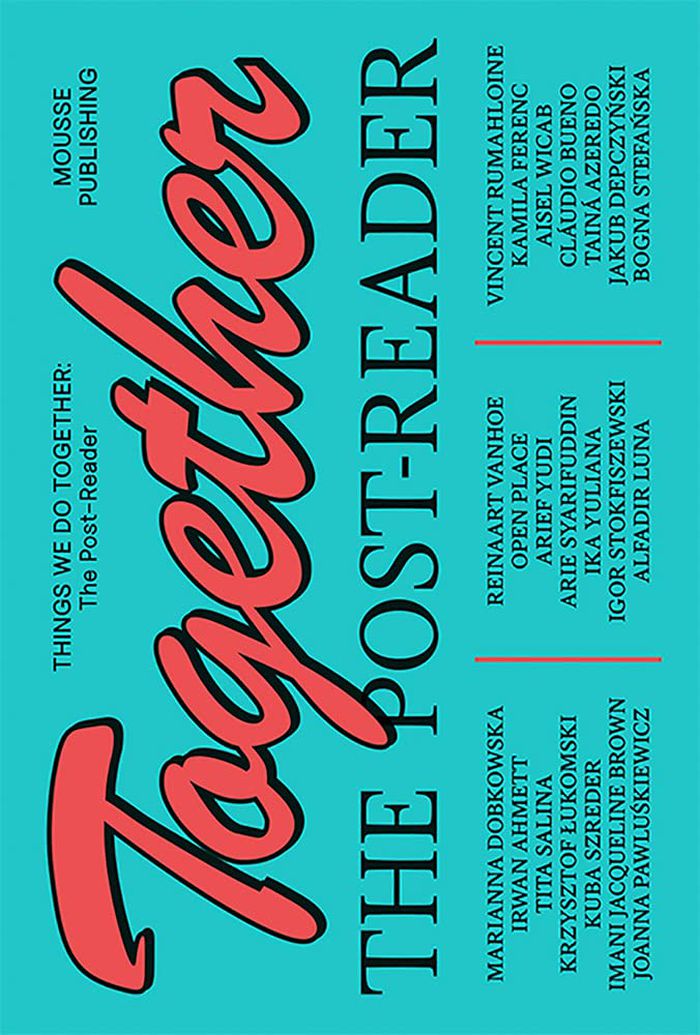
Things we do together: The post-reader
Actions:
Prix:
$39.95
(disponible en magasin)
Résumé:
Things We Do Together. The Post-Reader is a collection of essays and honest conversations with practitioners. It is based on experiences and observations of long-term processes taking place at the intersection of art, education, and activism. Collaboration is more than simply a mechanism for the collective management of resources. It can be a way of disrupting existing systems both in the art world and in everyday life, where capitalism and extreme individualism lead to the collapse of communities and the deepening of social inequalities. The publication’s starting point was the exhibition-meeting "Gotong Royong Things We Do Together" at Ujazdowski Castle Centre for Contemporary Art, Warsaw, at the end of 2017.
Things we do together: The post-reader
Actions:
Prix:
$39.95
(disponible en magasin)
Résumé:
Things We Do Together. The Post-Reader is a collection of essays and honest conversations with practitioners. It is based on experiences and observations of long-term processes taking place at the intersection of art, education, and activism. Collaboration is more than simply a mechanism for the collective management of resources. It can be a way of disrupting existing systems both in the art world and in everyday life, where capitalism and extreme individualism lead to the collapse of communities and the deepening of social inequalities. The publication’s starting point was the exhibition-meeting "Gotong Royong Things We Do Together" at Ujazdowski Castle Centre for Contemporary Art, Warsaw, at the end of 2017.
Classification:
livres
livres
Publication:
août 2021
août 2021
Classification:
livres
livres
Prix:
$22.95
(disponible sur commande)
Résumé:
In this uncompromising essay, Jonathan Crary presents the obvious but unsayable reality: our ''digital age'' is synonymous with the disastrous terminal stage of global capitalism and its financialisation of social existence, mass impoverishment, ecocide, and military terror. ''Scorched earth'' surveys the wrecking of a living world by the internet complex and its(...)
$22.95
(disponible sur commande)
Résumé:
In this uncompromising essay, Jonathan Crary presents the obvious but unsayable reality: our ''digital age'' is synonymous with the disastrous terminal stage of global capitalism and its financialisation of social existence, mass impoverishment, ecocide, and military terror. ''Scorched earth'' surveys the wrecking of a living world by the internet complex and its(...)
Titre:
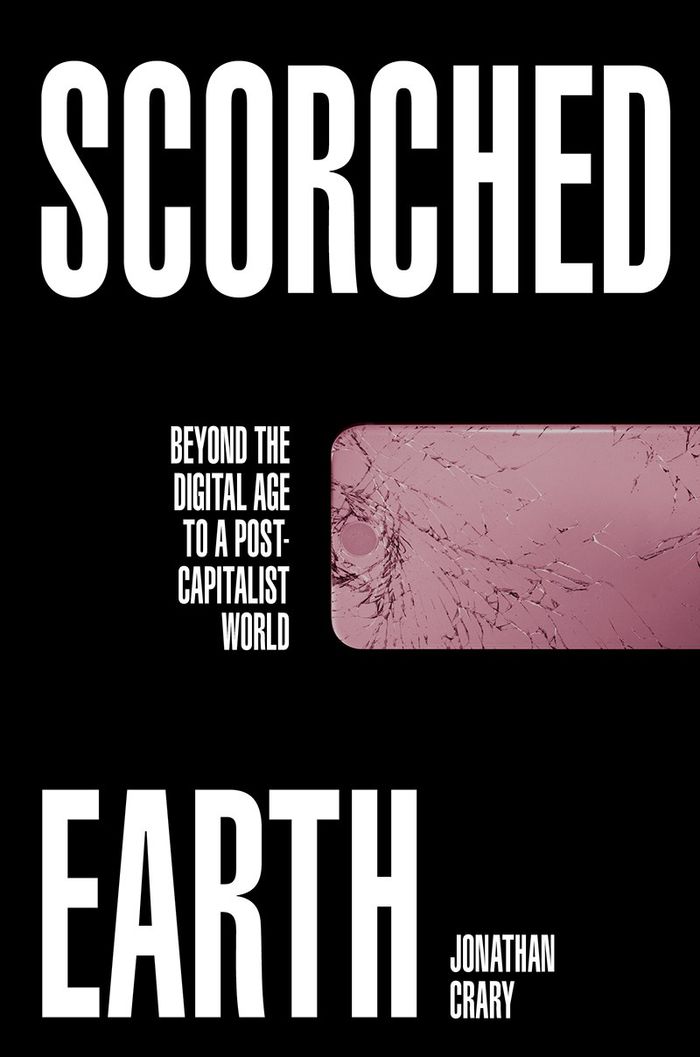
Scorched earth: Beyond the digital age to a post-capitalist world
Actions:
Prix:
$22.95
(disponible sur commande)
Résumé:
In this uncompromising essay, Jonathan Crary presents the obvious but unsayable reality: our ''digital age'' is synonymous with the disastrous terminal stage of global capitalism and its financialisation of social existence, mass impoverishment, ecocide, and military terror. ''Scorched earth'' surveys the wrecking of a living world by the internet complex and its devastation of communities and their capacities for mutual support. This polemic by the author of 24/7 dismantles the presumption that social media could be an instrument of radical change and contends that the networks and platforms of transnational corporations are intrinsically incompatible with a habitable earth or with the human interdependence needed to build egalitarian post-capitalist forms of life.
Scorched earth: Beyond the digital age to a post-capitalist world
Actions:
Prix:
$22.95
(disponible sur commande)
Résumé:
In this uncompromising essay, Jonathan Crary presents the obvious but unsayable reality: our ''digital age'' is synonymous with the disastrous terminal stage of global capitalism and its financialisation of social existence, mass impoverishment, ecocide, and military terror. ''Scorched earth'' surveys the wrecking of a living world by the internet complex and its devastation of communities and their capacities for mutual support. This polemic by the author of 24/7 dismantles the presumption that social media could be an instrument of radical change and contends that the networks and platforms of transnational corporations are intrinsically incompatible with a habitable earth or with the human interdependence needed to build egalitarian post-capitalist forms of life.
Classification:
livres
livres
Publication:
avril 2022
avril 2022
Sujet:
Social
Social
Classification:
livres
livres

Actions:
Prix:
$77.50
(disponible en magasin)
Résumé:
Over the last decade, Adam Lampton has photographed the former Portuguese colony of Macau (now a Special Administrative Region of the People’s Republic of China) and witnessed its transformation from a small enclave into an international gambling Mecca and leisure destination. As of 2007, Macau had surpassed Las Vegas in revenue to become the world’s most valuable(...)
$77.50
(disponible en magasin)
Résumé:
Over the last decade, Adam Lampton has photographed the former Portuguese colony of Macau (now a Special Administrative Region of the People’s Republic of China) and witnessed its transformation from a small enclave into an international gambling Mecca and leisure destination. As of 2007, Macau had surpassed Las Vegas in revenue to become the world’s most valuable(...)
Titre:
Adam Lampton: Nothing serious can happen here: Photographs from Macau
Actions:
Prix:
$77.50
(disponible en magasin)
Résumé:
Over the last decade, Adam Lampton has photographed the former Portuguese colony of Macau (now a Special Administrative Region of the People’s Republic of China) and witnessed its transformation from a small enclave into an international gambling Mecca and leisure destination. As of 2007, Macau had surpassed Las Vegas in revenue to become the world’s most valuable gambling market. The colonial legacy, the communist experiment in capitalism, and the Chinese traditions continually collide and remake Macau through the filter of each other’s histories.This complexity is reflected in the large-format photos, which oscillate between past and present, expression and observation. In addition to exhibiting internationally, Lampton’s work has been featured in Art in America, The Boston Globe, and Camera Austria.
Adam Lampton: Nothing serious can happen here: Photographs from Macau
Actions:
Prix:
$77.50
(disponible en magasin)
Résumé:
Over the last decade, Adam Lampton has photographed the former Portuguese colony of Macau (now a Special Administrative Region of the People’s Republic of China) and witnessed its transformation from a small enclave into an international gambling Mecca and leisure destination. As of 2007, Macau had surpassed Las Vegas in revenue to become the world’s most valuable gambling market. The colonial legacy, the communist experiment in capitalism, and the Chinese traditions continually collide and remake Macau through the filter of each other’s histories.This complexity is reflected in the large-format photos, which oscillate between past and present, expression and observation. In addition to exhibiting internationally, Lampton’s work has been featured in Art in America, The Boston Globe, and Camera Austria.
Classification:
livres
livres
Publication:
avril 2025
avril 2025
Sujet:
Monographies photo
Monographies photo
Classification:
livres
livres

Actions:
Prix:
$49.50
(disponible sur commande)
Résumé:
"One place after another" offers a critical history of site-specific art since the late 1960s and a theoretical framework for examining the rhetoric of aesthetic vanguardism and political progressivism associated with its many permutations. Informed by urban theory, postmodernist criticism in art and architecture, and debates concerning identity politics and the public(...)
$49.50
(disponible sur commande)
Résumé:
"One place after another" offers a critical history of site-specific art since the late 1960s and a theoretical framework for examining the rhetoric of aesthetic vanguardism and political progressivism associated with its many permutations. Informed by urban theory, postmodernist criticism in art and architecture, and debates concerning identity politics and the public(...)
Publication:
novembre 2001, Cambridge, Mass.
novembre 2001, Cambridge, Mass.
Titre:
One place after another : site-specific art and locational identity
Actions:
Prix:
$49.50
(disponible sur commande)
Résumé:
"One place after another" offers a critical history of site-specific art since the late 1960s and a theoretical framework for examining the rhetoric of aesthetic vanguardism and political progressivism associated with its many permutations. Informed by urban theory, postmodernist criticism in art and architecture, and debates concerning identity politics and the public sphere, the book addresses the siting of art as more than an artistic problem. It examines site specificity as a complex cipher of the unstable relationship between location and identity in the era of late capitalism. The book addresses the work of, among others, John Ahearn, Mark Dion, Andrea Fraser, Donald Judd, Renée Green, Suzanne Lacy, Iñigo Manglano-Ovalle, Richard Serra, Mierle Laderman Ukeles, and Fred Wilson.
One place after another : site-specific art and locational identity
Actions:
Prix:
$49.50
(disponible sur commande)
Résumé:
"One place after another" offers a critical history of site-specific art since the late 1960s and a theoretical framework for examining the rhetoric of aesthetic vanguardism and political progressivism associated with its many permutations. Informed by urban theory, postmodernist criticism in art and architecture, and debates concerning identity politics and the public sphere, the book addresses the siting of art as more than an artistic problem. It examines site specificity as a complex cipher of the unstable relationship between location and identity in the era of late capitalism. The book addresses the work of, among others, John Ahearn, Mark Dion, Andrea Fraser, Donald Judd, Renée Green, Suzanne Lacy, Iñigo Manglano-Ovalle, Richard Serra, Mierle Laderman Ukeles, and Fred Wilson.
Classification:
livres
livres
Publication:
novembre 2001, Cambridge, Mass.
novembre 2001, Cambridge, Mass.
Classification:
livres
livres
Prix:
$79.00
(disponible sur commande)
Résumé:
In "Albert Kahn Inc." Claire Zimmerman provides a history of second-wave industrialization associated with the growth and development of the United States auto industry and its global footprint. A forensic analysis of the "architects of Ford," the book theorizes how building and capitalism intersected in the case of twentieth-century industrial buildings, but also in(...)
$79.00
(disponible sur commande)
Résumé:
In "Albert Kahn Inc." Claire Zimmerman provides a history of second-wave industrialization associated with the growth and development of the United States auto industry and its global footprint. A forensic analysis of the "architects of Ford," the book theorizes how building and capitalism intersected in the case of twentieth-century industrial buildings, but also in(...)
Titre:
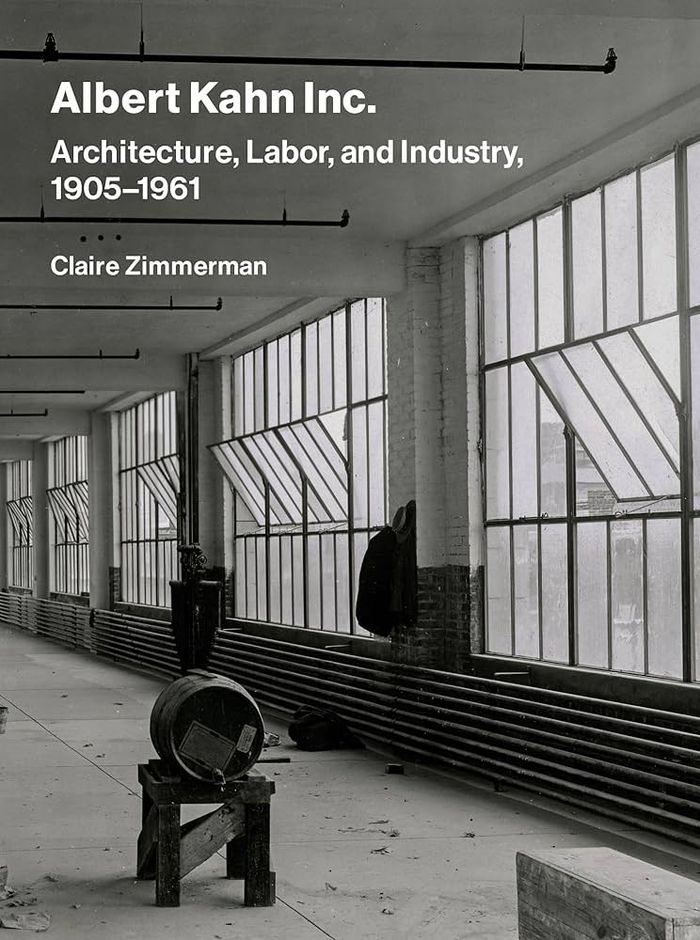
Albert Kahn Inc.: Architecture, labor, and industry, 1905-1961
Actions:
Prix:
$79.00
(disponible sur commande)
Résumé:
In "Albert Kahn Inc." Claire Zimmerman provides a history of second-wave industrialization associated with the growth and development of the United States auto industry and its global footprint. A forensic analysis of the "architects of Ford," the book theorizes how building and capitalism intersected in the case of twentieth-century industrial buildings, but also in other kinds of architecture and in the built environment writ large. Generally a marginal subject in histories of architecture, industrialism here exposes the expansionist modern project in Western architecture and culture, which was based on natural resource extraction and labor exploitation. With more than 140 full-color illustrations, the book combines an analysis of industrial architecture with compelling photographic evidence drawn from assorted archives.
Albert Kahn Inc.: Architecture, labor, and industry, 1905-1961
Actions:
Prix:
$79.00
(disponible sur commande)
Résumé:
In "Albert Kahn Inc." Claire Zimmerman provides a history of second-wave industrialization associated with the growth and development of the United States auto industry and its global footprint. A forensic analysis of the "architects of Ford," the book theorizes how building and capitalism intersected in the case of twentieth-century industrial buildings, but also in other kinds of architecture and in the built environment writ large. Generally a marginal subject in histories of architecture, industrialism here exposes the expansionist modern project in Western architecture and culture, which was based on natural resource extraction and labor exploitation. With more than 140 full-color illustrations, the book combines an analysis of industrial architecture with compelling photographic evidence drawn from assorted archives.
Classification:
livres
livres
Publication:
août 2025
août 2025
Sujet:
Architecture, monographies
Architecture, monographies
Classification:
livres
livres
Actions:
Prix:
$54.00
(disponible sur commande)
Résumé:
"One Place after Another" offers a critical history of site-specific art since the late 1960s and a theoretical framework for examining the rhetoric of aesthetic vanguardism and political progressivism associated with its many permutations. Informed by urban theory, postmodernist criticism in art and architecture, and debates concerning identity politics and the public(...)
$54.00
(disponible sur commande)
Résumé:
"One Place after Another" offers a critical history of site-specific art since the late 1960s and a theoretical framework for examining the rhetoric of aesthetic vanguardism and political progressivism associated with its many permutations. Informed by urban theory, postmodernist criticism in art and architecture, and debates concerning identity politics and the public(...)
Titre:
One place after another : site-specific art and locational identity
Actions:
Prix:
$54.00
(disponible sur commande)
Résumé:
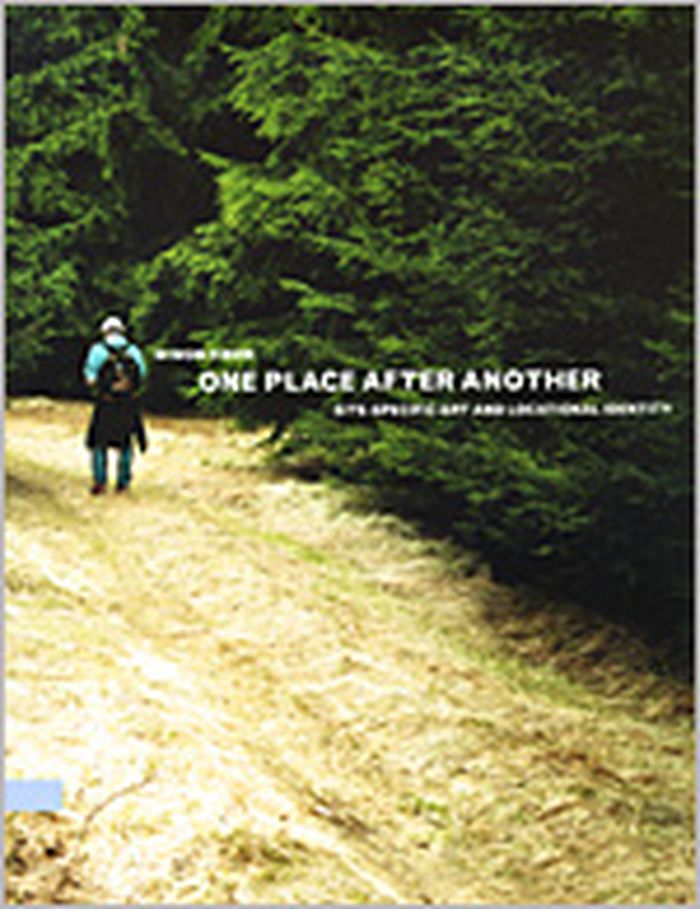
"One Place after Another" offers a critical history of site-specific art since the late 1960s and a theoretical framework for examining the rhetoric of aesthetic vanguardism and political progressivism associated with its many permutations. Informed by urban theory, postmodernist criticism in art and architecture, and debates concerning identity politics and the public sphere, the book addresses the siting of art as more than an artistic problem. It examines site specificity as a complex cipher of the unstable relationship between location and identity in the era of late capitalism. The book addresses the work of, among others, John Ahearn, Mark Dion, Andrea Fraser, Donald Judd, René¥ Green, Suzanne Lacy, Iñ©§¯ Manglano-Ovalle, Richard Serra, Mierle Laderman Ukeles, and Fred Wilson.
One place after another : site-specific art and locational identity
Actions:
Prix:
$54.00
(disponible sur commande)
Résumé:
"One Place after Another" offers a critical history of site-specific art since the late 1960s and a theoretical framework for examining the rhetoric of aesthetic vanguardism and political progressivism associated with its many permutations. Informed by urban theory, postmodernist criticism in art and architecture, and debates concerning identity politics and the public sphere, the book addresses the siting of art as more than an artistic problem. It examines site specificity as a complex cipher of the unstable relationship between location and identity in the era of late capitalism. The book addresses the work of, among others, John Ahearn, Mark Dion, Andrea Fraser, Donald Judd, René¥ Green, Suzanne Lacy, Iñ©§¯ Manglano-Ovalle, Richard Serra, Mierle Laderman Ukeles, and Fred Wilson.
Classification:
livres
livres
Publication:
avril 2004, Cambridge, Mass.
avril 2004, Cambridge, Mass.
Sujet:
Théorie de l’art
Théorie de l’art
Classification:
livres
livres
Titre:
War primer 2
War primer 2
Actions:
Prix:
$58.00
(disponible sur commande)
Résumé:
Originally released in 2011 as a limited edition hardback, this paperback edition is a facsimile of the book which earned Adam Broomberg and Oliver Chanarin the 2013 Deutsche Börse Photography Prize. War Primer 2 appropriates the first English-language version of Bertolt Brecht’s remarkable 1955 Kriegsfibel in which Brecht combined press photographs from the World Wars(...)
$58.00
(disponible sur commande)
Résumé:
Originally released in 2011 as a limited edition hardback, this paperback edition is a facsimile of the book which earned Adam Broomberg and Oliver Chanarin the 2013 Deutsche Börse Photography Prize. War Primer 2 appropriates the first English-language version of Bertolt Brecht’s remarkable 1955 Kriegsfibel in which Brecht combined press photographs from the World Wars(...)
Titre:
War primer 2
Actions:
Prix:
$58.00
(disponible sur commande)
Résumé:
Originally released in 2011 as a limited edition hardback, this paperback edition is a facsimile of the book which earned Adam Broomberg and Oliver Chanarin the 2013 Deutsche Börse Photography Prize. War Primer 2 appropriates the first English-language version of Bertolt Brecht’s remarkable 1955 Kriegsfibel in which Brecht combined press photographs from the World Wars with four-line poems. Compiled intermittently over three decades, Brecht’s book was a visual and lyrical attack on war and its propagandists under modern capitalism. Shifting the critique to contemporary narratives perpetuated by the so-called 'War on Terror', Broomberg and Chanarin strategically overlay the pages of Brecht’s War Primer with images culled from the internet and generated by the actors, propagators and reporters of the contemporary conflict.
War primer 2
Actions:
Prix:
$58.00
(disponible sur commande)
Résumé:
Originally released in 2011 as a limited edition hardback, this paperback edition is a facsimile of the book which earned Adam Broomberg and Oliver Chanarin the 2013 Deutsche Börse Photography Prize. War Primer 2 appropriates the first English-language version of Bertolt Brecht’s remarkable 1955 Kriegsfibel in which Brecht combined press photographs from the World Wars with four-line poems. Compiled intermittently over three decades, Brecht’s book was a visual and lyrical attack on war and its propagandists under modern capitalism. Shifting the critique to contemporary narratives perpetuated by the so-called 'War on Terror', Broomberg and Chanarin strategically overlay the pages of Brecht’s War Primer with images culled from the internet and generated by the actors, propagators and reporters of the contemporary conflict.
Classification:
livres
livres
Publication:
février 2018
février 2018
Sujet:
Monographies photo
Monographies photo


