


1126 Résultats
Classification:
livres
livres
Actions:
Description:
1 online resource
Auteur:
Sujet:
Publication:
[Place of publication not identified] : Institute of Network Cultures, 2011.
[Place of publication not identified] : Institute of Network Cultures, 2011.
Classification:
livres
livres
Publication:
[Place of publication not identified] : Institute of Network Cultures, 2011.
[Place of publication not identified] : Institute of Network Cultures, 2011.
Auteur:
Sujet:
Classification:
livres
livres
Actions:
Exemplaires:
Description:
224 pages : illustrations (chiefly color) ; 29 cm
Description:
224 pages : illustrations (chiefly color) ; 29 cm
Auteur:
Sujet:
Publication:
Berlin : Gestalten, 2012.
Berlin : Gestalten, 2012.
Titre:
Aram Bartholl : the speed book / [edited by Domenico Quaranta ; designed by Manuel Buerger ; with texts by Josephine Bosma and others].
Actions:
Exemplaires:
Description:
224 pages : illustrations (chiefly color) ; 29 cm
Aram Bartholl : the speed book / [edited by Domenico Quaranta ; designed by Manuel Buerger ; with texts by Josephine Bosma and others].
Actions:
Exemplaires:
Description:
224 pages : illustrations (chiefly color) ; 29 cm
Classification:
livres
livres
Publication:
Berlin : Gestalten, 2012.
Berlin : Gestalten, 2012.
Auteur:
Sujet:
Classification:
livres
livres
Actions:
Exemplaires:
Description:
ix, 111 pages ; 22 cm.
Description:
ix, 111 pages ; 22 cm.
Auteur:
Sujet:
Publication:
Cambridge, UK ; Medford, MA : Polity, [2022], ©2022
Cambridge, UK ; Medford, MA : Polity, [2022], ©2022
Titre:
Non-things : upheaval in the lifeworld / Byung-Chul Han ; translated by Daniel Steuer.
Actions:
Exemplaires:
Description:
ix, 111 pages ; 22 cm.
Non-things : upheaval in the lifeworld / Byung-Chul Han ; translated by Daniel Steuer.
Actions:
Exemplaires:
Description:
ix, 111 pages ; 22 cm.
Classification:
livres
livres
Publication:
Cambridge, UK ; Medford, MA : Polity, [2022], ©2022
Cambridge, UK ; Medford, MA : Polity, [2022], ©2022
Auteur:
Sujet:
Classification:
livres
livres
Actions:
Exemplaires:
Description:
255 pages : illustrations ; 25 cm
Description:
255 pages : illustrations ; 25 cm
Auteur:
Sujet:
Publication:
Basel, Switzerland : Birkhäuser Verlag GmbH, [2015], ©2015
Basel, Switzerland : Birkhäuser Verlag GmbH, [2015], ©2015
Titre:
Research - Observe - Make (ROM) : an alternative manual for architectural education / Michelle Howard (Ed.).
Actions:
Exemplaires:
Description:
255 pages : illustrations ; 25 cm
Research - Observe - Make (ROM) : an alternative manual for architectural education / Michelle Howard (Ed.).
Actions:
Exemplaires:
Description:
255 pages : illustrations ; 25 cm
Classification:
livres
livres
Publication:
Basel, Switzerland : Birkhäuser Verlag GmbH, [2015], ©2015
Basel, Switzerland : Birkhäuser Verlag GmbH, [2015], ©2015
Auteur:
Sujet:
Classification:
livres
livres
Actions:
Prix:
$42.00
(disponible en magasin)
Résumé:
When is the digital in architecture? What are the conditions that led architects to integrate digital tools into their practices? Over the course of the Archaeology of the Digital research program, the CCA has collected the archival records of twenty-five projects realized between the late 1980s and the early 2000s in order to understand this moment as a point of origin(...)
$42.00
(disponible en magasin)
Résumé:
When is the digital in architecture? What are the conditions that led architects to integrate digital tools into their practices? Over the course of the Archaeology of the Digital research program, the CCA has collected the archival records of twenty-five projects realized between the late 1980s and the early 2000s in order to understand this moment as a point of origin(...)
Titre:
When is the digital in architecture?
Actions:
Prix:
$42.00
(disponible en magasin)
Résumé:
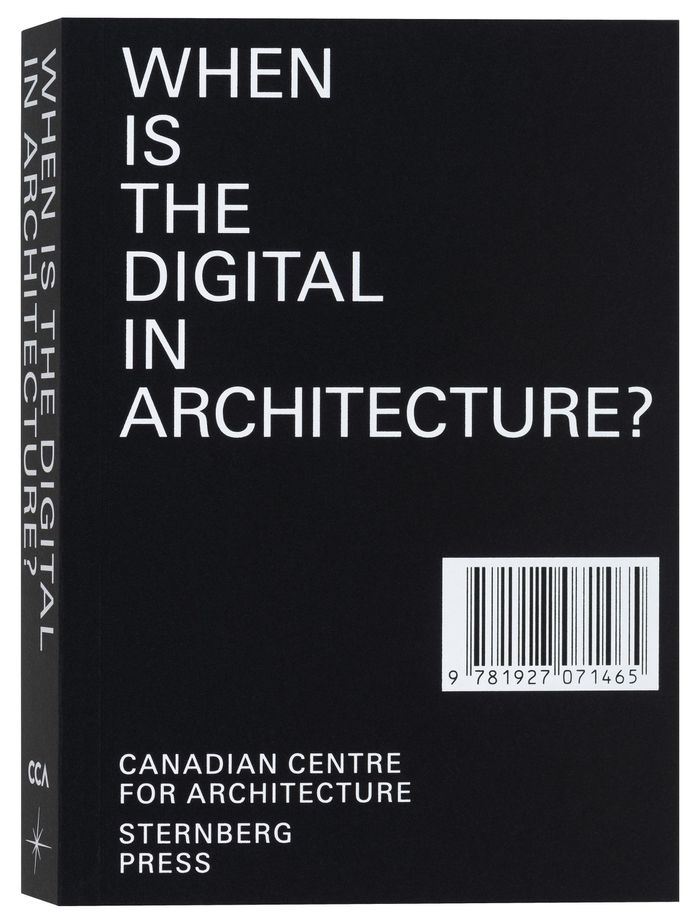
When is the digital in architecture? What are the conditions that led architects to integrate digital tools into their practices? Over the course of the Archaeology of the Digital research program, the CCA has collected the archival records of twenty-five projects realized between the late 1980s and the early 2000s in order to understand this moment as a point of origin for the digital. But if we take care to identify the digital as a condition that is made possible by the conceptual foundations of digital media and not necessarily by digital media itself, the boundaries of the digital moment—when it began and under what circumstances—become less clear. There are eight million stories of the origins of the digital in architecture, and this book brings together fourteen of them in a chronology of responses to the question of when the digital is in architecture. The arguments address specific changes in ways of thinking about architecture, building, and cities, as well as the shifts in technology that resulted from these changes, marking both a capstone to Archaeology of the Digital and the beginning of an investigation of other beginnings of the digital in architecture. Asking a question like When is the digital in architecture? can produce eight million stories in response, and eight million digressions and redirections that narrow in focus and change geographies, producing a Tristram Shandy of the digital as the CCA continues to build its digital archive and makes it increasingly accessible to researchers. If this novel of digressions is distributed across future research projects and extended with studies of new archival material, so much the better for the reader, in our opinion.
When is the digital in architecture?
Actions:
Prix:
$42.00
(disponible en magasin)
Résumé:
When is the digital in architecture? What are the conditions that led architects to integrate digital tools into their practices? Over the course of the Archaeology of the Digital research program, the CCA has collected the archival records of twenty-five projects realized between the late 1980s and the early 2000s in order to understand this moment as a point of origin for the digital. But if we take care to identify the digital as a condition that is made possible by the conceptual foundations of digital media and not necessarily by digital media itself, the boundaries of the digital moment—when it began and under what circumstances—become less clear. There are eight million stories of the origins of the digital in architecture, and this book brings together fourteen of them in a chronology of responses to the question of when the digital is in architecture. The arguments address specific changes in ways of thinking about architecture, building, and cities, as well as the shifts in technology that resulted from these changes, marking both a capstone to Archaeology of the Digital and the beginning of an investigation of other beginnings of the digital in architecture. Asking a question like When is the digital in architecture? can produce eight million stories in response, and eight million digressions and redirections that narrow in focus and change geographies, producing a Tristram Shandy of the digital as the CCA continues to build its digital archive and makes it increasingly accessible to researchers. If this novel of digressions is distributed across future research projects and extended with studies of new archival material, so much the better for the reader, in our opinion.
Classification:
livres
livres
Publication:
juin 2017
juin 2017
Sujet:
Publications du CCA
Publications du CCA
Classification:
livres
livres
Actions:
Prix:
$50.95
(disponible sur commande)
Résumé:
This new edition of The Photographic Image in Digital Culture explores the condition of photography after some 20 years of remediation and transformation by digital technology. Through ten especially commissioned essays, by some of the leading scholars in the field of contemporary photography studies, a range of key topics are discussed including: the meaning of(...)
$50.95
(disponible sur commande)
Résumé:
This new edition of The Photographic Image in Digital Culture explores the condition of photography after some 20 years of remediation and transformation by digital technology. Through ten especially commissioned essays, by some of the leading scholars in the field of contemporary photography studies, a range of key topics are discussed including: the meaning of(...)
Titre:
The photographic image in digital culture
Actions:
Prix:
$50.95
(disponible sur commande)
Résumé:
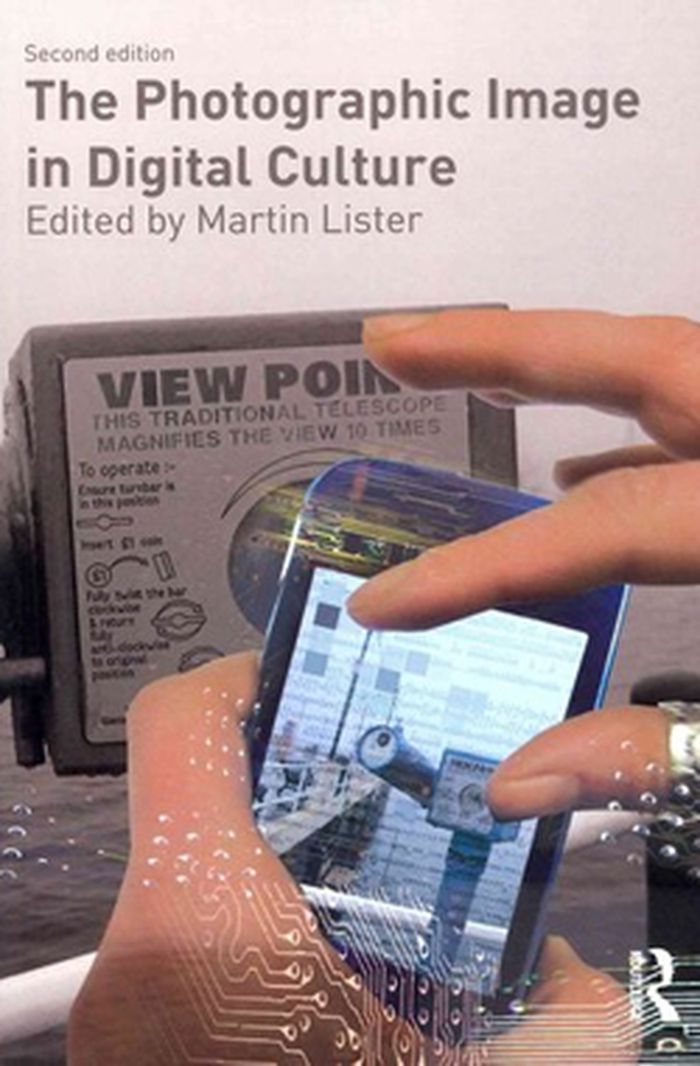
This new edition of The Photographic Image in Digital Culture explores the condition of photography after some 20 years of remediation and transformation by digital technology. Through ten especially commissioned essays, by some of the leading scholars in the field of contemporary photography studies, a range of key topics are discussed including: the meaning of software in the production of photograph; the nature of networked photographs; the screen as the site of photographic display; the simulation of photography in the videogame; photography, ubiquitous computing and technologies of ambient intelligence; developments in vernacular photography and social media; the photograph and the digital archive; the curation and exhibition of the networked photograph; the dominance of the image bank in commercial and advertising photography; the complexities of citizen photojournalism.
The photographic image in digital culture
Actions:
Prix:
$50.95
(disponible sur commande)
Résumé:
This new edition of The Photographic Image in Digital Culture explores the condition of photography after some 20 years of remediation and transformation by digital technology. Through ten especially commissioned essays, by some of the leading scholars in the field of contemporary photography studies, a range of key topics are discussed including: the meaning of software in the production of photograph; the nature of networked photographs; the screen as the site of photographic display; the simulation of photography in the videogame; photography, ubiquitous computing and technologies of ambient intelligence; developments in vernacular photography and social media; the photograph and the digital archive; the curation and exhibition of the networked photograph; the dominance of the image bank in commercial and advertising photography; the complexities of citizen photojournalism.
Classification:
livres
livres
Publication:
octobre 2013
octobre 2013
Sujet:
Théorie de la photographie
Théorie de la photographie
Classification:
livres
livres
Titre:
After art / David Joselit.
After art / David Joselit.
Actions:
Exemplaires:
Description:
116 pages : color illustrations ; 20 cm.
Description:
116 pages : color illustrations ; 20 cm.
Auteur:
Sujet:
Publication:
Princeton : Princeton University Press, [2013], ©2013
Princeton : Princeton University Press, [2013], ©2013
Titre:
After art / David Joselit.
Actions:
Exemplaires:
Description:
116 pages : color illustrations ; 20 cm.
After art / David Joselit.
Actions:
Exemplaires:
Description:
116 pages : color illustrations ; 20 cm.
Classification:
livres
livres
Publication:
Princeton : Princeton University Press, [2013], ©2013
Princeton : Princeton University Press, [2013], ©2013
Auteur:
Sujet:
Classification:
livres
livres
Actions:
Prix:
$21.50
(disponible sur commande)
Résumé:
Digital Ground is an architect's response to the design challenge posed by pervasive computing. One century into the electronic age, people have become accustomed to interacting indirectly, mediated through networks. But now as digital technology becomes invisibly embedded in everyday things, even more activities become mediated, and networks extend rather than replace(...)
$21.50
(disponible sur commande)
Résumé:
Digital Ground is an architect's response to the design challenge posed by pervasive computing. One century into the electronic age, people have become accustomed to interacting indirectly, mediated through networks. But now as digital technology becomes invisibly embedded in everyday things, even more activities become mediated, and networks extend rather than replace(...)
Titre:
Digital ground : architecture, pervasive computing, and environmental knowing
Actions:
Prix:
$21.50
(disponible sur commande)
Résumé:
Digital Ground is an architect's response to the design challenge posed by pervasive computing. One century into the electronic age, people have become accustomed to interacting indirectly, mediated through networks. But now as digital technology becomes invisibly embedded in everyday things, even more activities become mediated, and networks extend rather than replace architecture. The young field of interaction design reflects not only how people deal with machine interfaces but also how people deal with each other in situations where interactivity has become ambient. It shifts previously utilitarian digital design concerns to a cultural level, adding notions of premise, appropriateness, and appreciation. Malcolm McCullough offers an account of the intersections of architecture and interaction design, arguing that the ubiquitous technology does not obviate the human need for place. His concept of "digital ground" expresses an alternative to anytime-anyplace sameness in computing; he shows that context not only shapes usability but ideally becomes the subject matter of interaction design and that "environmental knowing" is a process that technology may serve and not erode. Drawing on arguments from architecture, psychology, software engineering, and geography, writing for practicing interaction designers, pervasive computing researchers, architects, and the general reader on digital culture, McCullough gives us a theory of place for interaction design. Part I, "Expectations," explores our technological predispositions -- many of which ("situated interactions") arise from our embodiment in architectural settings. Part II, "Technologies," discusses hardware, software, and applications, including embedded technology ("bashing the desktop"), and building technology genres around life situations. Part III, "Practices," argues for design as a liberal art, seeing interactivity as a cultural -- not only technological -- challenge and a practical notion of place as essential. Part IV, "Epilogue," acknowledges the epochal changes occurring today, and argues for the role of "digital ground" in the necessary adaptation.
Digital ground : architecture, pervasive computing, and environmental knowing
Actions:
Prix:
$21.50
(disponible sur commande)
Résumé:
Digital Ground is an architect's response to the design challenge posed by pervasive computing. One century into the electronic age, people have become accustomed to interacting indirectly, mediated through networks. But now as digital technology becomes invisibly embedded in everyday things, even more activities become mediated, and networks extend rather than replace architecture. The young field of interaction design reflects not only how people deal with machine interfaces but also how people deal with each other in situations where interactivity has become ambient. It shifts previously utilitarian digital design concerns to a cultural level, adding notions of premise, appropriateness, and appreciation. Malcolm McCullough offers an account of the intersections of architecture and interaction design, arguing that the ubiquitous technology does not obviate the human need for place. His concept of "digital ground" expresses an alternative to anytime-anyplace sameness in computing; he shows that context not only shapes usability but ideally becomes the subject matter of interaction design and that "environmental knowing" is a process that technology may serve and not erode. Drawing on arguments from architecture, psychology, software engineering, and geography, writing for practicing interaction designers, pervasive computing researchers, architects, and the general reader on digital culture, McCullough gives us a theory of place for interaction design. Part I, "Expectations," explores our technological predispositions -- many of which ("situated interactions") arise from our embodiment in architectural settings. Part II, "Technologies," discusses hardware, software, and applications, including embedded technology ("bashing the desktop"), and building technology genres around life situations. Part III, "Practices," argues for design as a liberal art, seeing interactivity as a cultural -- not only technological -- challenge and a practical notion of place as essential. Part IV, "Epilogue," acknowledges the epochal changes occurring today, and argues for the role of "digital ground" in the necessary adaptation.
Classification:
livres
livres
Publication:
octobre 2005, Cambridge
octobre 2005, Cambridge
Sujet:
Théorie de l’architecture
Théorie de l’architecture
Classification:
livres
livres
Actions:
Exemplaires:
Description:
479 pages : illustrations (some color) ; 25 cm
Description:
479 pages : illustrations (some color) ; 25 cm
Auteur:
Sujet:
Publication:
London : Tate Pub. : in association with Afterall ; New York : Distributed in the United States and Canada by Harry N. Abrams, 2007.
London : Tate Pub. : in association with Afterall ; New York : Distributed in the United States and Canada by Harry N. Abrams, 2007.
Titre:
Art and social change : a critical reader / edited by Will Bradley and Charles Esche.
Actions:
Exemplaires:
Description:
479 pages : illustrations (some color) ; 25 cm
Art and social change : a critical reader / edited by Will Bradley and Charles Esche.
Actions:
Exemplaires:
Description:
479 pages : illustrations (some color) ; 25 cm
Classification:
livres
livres
Publication:
London : Tate Pub. : in association with Afterall ; New York : Distributed in the United States and Canada by Harry N. Abrams, 2007.
London : Tate Pub. : in association with Afterall ; New York : Distributed in the United States and Canada by Harry N. Abrams, 2007.
Auteur:
Sujet:
Classification:
livres
livres
Actions:
Prix:
$49.50
(disponible sur commande)
Résumé:
"Digital Ground" is an architect's response to the design challenge posed by pervasive computing. One century into the electronic age, people have become accustomed to interacting indirectly, mediated through networks. But now as digital technology becomes invisibly embedded in everyday things, even more activities become mediated, and networks extend rather than replace(...)
$49.50
(disponible sur commande)
Résumé:
"Digital Ground" is an architect's response to the design challenge posed by pervasive computing. One century into the electronic age, people have become accustomed to interacting indirectly, mediated through networks. But now as digital technology becomes invisibly embedded in everyday things, even more activities become mediated, and networks extend rather than replace(...)
Sujet:
Théorie de l’architecture
Théorie de l’architecture
Publication:
avril 2004, Cambridge, Mass.
avril 2004, Cambridge, Mass.
Titre:
Digital ground : architecture, pervasive computing, and environmental knowing
Actions:
Prix:
$49.50
(disponible sur commande)
Résumé:
"Digital Ground" is an architect's response to the design challenge posed by pervasive computing. One century into the electronic age, people have become accustomed to interacting indirectly, mediated through networks. But now as digital technology becomes invisibly embedded in everyday things, even more activities become mediated, and networks extend rather than replace architecture. The young field of interaction design reflects not only how people deal with machine interfaces but also how people deal with each other in situations where interactivity has become ambient. It shifts previously utilitarian digital design concerns to a cultural level, adding notions of premise, appropriateness, and appreciation. Malcolm McCullough offers an account of the intersections of architecture and interaction design, arguing that the ubiquitous technology does not obviate the human need for place. His concept of "digital ground" expresses an alternative to anytime-anyplace sameness in computing; he shows that context not only shapes usability but ideally becomes the subject matter of interaction design and that "environmental knowing" is a process that technology may serve and not erode.
Digital ground : architecture, pervasive computing, and environmental knowing
Actions:
Prix:
$49.50
(disponible sur commande)
Résumé:
"Digital Ground" is an architect's response to the design challenge posed by pervasive computing. One century into the electronic age, people have become accustomed to interacting indirectly, mediated through networks. But now as digital technology becomes invisibly embedded in everyday things, even more activities become mediated, and networks extend rather than replace architecture. The young field of interaction design reflects not only how people deal with machine interfaces but also how people deal with each other in situations where interactivity has become ambient. It shifts previously utilitarian digital design concerns to a cultural level, adding notions of premise, appropriateness, and appreciation. Malcolm McCullough offers an account of the intersections of architecture and interaction design, arguing that the ubiquitous technology does not obviate the human need for place. His concept of "digital ground" expresses an alternative to anytime-anyplace sameness in computing; he shows that context not only shapes usability but ideally becomes the subject matter of interaction design and that "environmental knowing" is a process that technology may serve and not erode.
Classification:
livres
livres
Publication:
avril 2004, Cambridge, Mass.
avril 2004, Cambridge, Mass.
Sujet:
Théorie de l’architecture
Théorie de l’architecture


