


8417 Résultats
Classification:
livres
livres
Actions:
Prix:
$47.95
(disponible sur commande)
Résumé:
"Design Culture Now" is the first survey of American design to cut across the disciplines of architecture, product design, and graphic design. This comprehensive work, organized by the Smithsonian's National Design Museum, catalogues the best in (...)
$47.95
(disponible sur commande)
Résumé:
"Design Culture Now" is the first survey of American design to cut across the disciplines of architecture, product design, and graphic design. This comprehensive work, organized by the Smithsonian's National Design Museum, catalogues the best in (...)
Sujet:
Design d’intérieur
Design d’intérieur
Publication:
mars 2000, New York
mars 2000, New York
Titre:
National design triennial : design culture now
Actions:
Prix:
$47.95
(disponible sur commande)
Résumé:
"Design Culture Now" is the first survey of American design to cut across the disciplines of architecture, product design, and graphic design. This comprehensive work, organized by the Smithsonian's National Design Museum, catalogues the best in architecture, interiors, environments, landscapes, products, furniture, fashion, objects, typefaces, posters, publications, film graphics, and interactive media produced over the last three years. Organized around a series of themes -- Branded, Fluid, Local, Minimal, Narrative, Physical, Reclaimed, and Unbelievable -- "Design Culture Now" presents current projects by up-and-coming designers who are forging new ideas at the margins of the profession as well as established masters whose work continues to evolve. Some of the over 80 individuals and firms whose work is repre-sented include Kyle Cooper, who created the titles for the films "Seven", "The Mummy", and "Mission: Impossible"; graphic designers Bruce Mau and Stefan Sagmeister; Jonathan Ive, designer of the iMac; style guru Martha Stewart; Arlen and Cory Ness, customizers of Harley-Davidson motorcycles; Julie Taymor, director and designer of the Broadway musical "The Lion King"; architects Neil Denari and Frank Gehry; Dante Ferretti, art director of the films Kundun and Casino; fashion designers Kate Spade and Geoffrey Beene; and John Kricfalusi, creator of the cartoon "Ren & Stimpy". Authoritative essays by Donald Albrecht, Ellen Lupton, and Steven Skov Holt describe the state of design at the beginning of the new millennium. Vibrantly designed, this exhaustive survey includes hundreds of full-colour images.
National design triennial : design culture now
Actions:
Prix:
$47.95
(disponible sur commande)
Résumé:
"Design Culture Now" is the first survey of American design to cut across the disciplines of architecture, product design, and graphic design. This comprehensive work, organized by the Smithsonian's National Design Museum, catalogues the best in architecture, interiors, environments, landscapes, products, furniture, fashion, objects, typefaces, posters, publications, film graphics, and interactive media produced over the last three years. Organized around a series of themes -- Branded, Fluid, Local, Minimal, Narrative, Physical, Reclaimed, and Unbelievable -- "Design Culture Now" presents current projects by up-and-coming designers who are forging new ideas at the margins of the profession as well as established masters whose work continues to evolve. Some of the over 80 individuals and firms whose work is repre-sented include Kyle Cooper, who created the titles for the films "Seven", "The Mummy", and "Mission: Impossible"; graphic designers Bruce Mau and Stefan Sagmeister; Jonathan Ive, designer of the iMac; style guru Martha Stewart; Arlen and Cory Ness, customizers of Harley-Davidson motorcycles; Julie Taymor, director and designer of the Broadway musical "The Lion King"; architects Neil Denari and Frank Gehry; Dante Ferretti, art director of the films Kundun and Casino; fashion designers Kate Spade and Geoffrey Beene; and John Kricfalusi, creator of the cartoon "Ren & Stimpy". Authoritative essays by Donald Albrecht, Ellen Lupton, and Steven Skov Holt describe the state of design at the beginning of the new millennium. Vibrantly designed, this exhaustive survey includes hundreds of full-colour images.
Classification:
livres
livres
Publication:
mars 2000, New York
mars 2000, New York
Sujet:
Design d’intérieur
Design d’intérieur
Classification:
livres
livres
Actions:
Prix:
$78.00
(disponible sur commande)
Résumé:
Curious about how Alsop Architects managed to construct that flying, translucent rectangle at the Ontario College of Art and Design? Wonder about the sustainability of the Genzyme Building? The saying "the truth is in the details" reveals an essential quality of architectural design. How a staircase curves, a roof seemingly floats, or a concrete wall illuminates are(...)
$78.00
(disponible sur commande)
Résumé:
Curious about how Alsop Architects managed to construct that flying, translucent rectangle at the Ontario College of Art and Design? Wonder about the sustainability of the Genzyme Building? The saying "the truth is in the details" reveals an essential quality of architectural design. How a staircase curves, a roof seemingly floats, or a concrete wall illuminates are(...)
Publication:
décembre 2006, New York
décembre 2006, New York
Titre:
Details in contemporary architecture
Actions:
Prix:
$78.00
(disponible sur commande)
Résumé:
Curious about how Alsop Architects managed to construct that flying, translucent rectangle at the Ontario College of Art and Design? Wonder about the sustainability of the Genzyme Building? The saying "the truth is in the details" reveals an essential quality of architectural design. How a staircase curves, a roof seemingly floats, or a concrete wall illuminates are critical questions for architects looking at or creating new work. You might forgive designers for closely guarding their signature techniques. Fortunately, editors Christine Killory and René Davids culled an amazing collection of the best trade secrets in "Details in contemporary architecture". By looking at the best work of the past two years, the book demonstrates how complicated design problems have been handled by architects to achieve beautiful, functional, innovative, sustainable, and, where necessary, economical results. Including work by David Chipperfield, Herzog and de Meuron, Morphosis, ShoP, and many other well-known firms, "Details in contemporary architecture" extensively explores the common as well as more exotic architectural detailing (screens and walls, doors and windows, roofs, bridges, and stairs) that so often gets lost in the pages and photographs of the design media. "Details in contemporary architecture" is the first volume of a new series entitled "AsBuilt". AsBuilt features details from a representative range of building types and materials of recent built work in America. The series seeks to ground both practice and theory more deeply while fostering a better understanding of the relationships between architectural form and technology.
Details in contemporary architecture
Actions:
Prix:
$78.00
(disponible sur commande)
Résumé:
Curious about how Alsop Architects managed to construct that flying, translucent rectangle at the Ontario College of Art and Design? Wonder about the sustainability of the Genzyme Building? The saying "the truth is in the details" reveals an essential quality of architectural design. How a staircase curves, a roof seemingly floats, or a concrete wall illuminates are critical questions for architects looking at or creating new work. You might forgive designers for closely guarding their signature techniques. Fortunately, editors Christine Killory and René Davids culled an amazing collection of the best trade secrets in "Details in contemporary architecture". By looking at the best work of the past two years, the book demonstrates how complicated design problems have been handled by architects to achieve beautiful, functional, innovative, sustainable, and, where necessary, economical results. Including work by David Chipperfield, Herzog and de Meuron, Morphosis, ShoP, and many other well-known firms, "Details in contemporary architecture" extensively explores the common as well as more exotic architectural detailing (screens and walls, doors and windows, roofs, bridges, and stairs) that so often gets lost in the pages and photographs of the design media. "Details in contemporary architecture" is the first volume of a new series entitled "AsBuilt". AsBuilt features details from a representative range of building types and materials of recent built work in America. The series seeks to ground both practice and theory more deeply while fostering a better understanding of the relationships between architectural form and technology.
Classification:
livres
livres
Publication:
décembre 2006, New York
décembre 2006, New York
Classification:
livres
livres
Actions:
Prix:
$72.00
(disponible sur commande)
Résumé:
Transforming words into icons and images into wide-screen epics, Ed Ruscha has wholly reconceived the terms of painting for our era. Tagged variously as a Conceptualist, Pop artist or latter-day Surrealist, Ruscha flouts category, or rather incorporates all categories, always surprising and experimenting with both subject and method. His paintings are steeped in our(...)
$72.00
(disponible sur commande)
Résumé:
Transforming words into icons and images into wide-screen epics, Ed Ruscha has wholly reconceived the terms of painting for our era. Tagged variously as a Conceptualist, Pop artist or latter-day Surrealist, Ruscha flouts category, or rather incorporates all categories, always surprising and experimenting with both subject and method. His paintings are steeped in our(...)
Publication:
février 2010
février 2010
Titre:
Ed Ruscha: fifty years of painting
Actions:
Prix:
$72.00
(disponible sur commande)
Résumé:
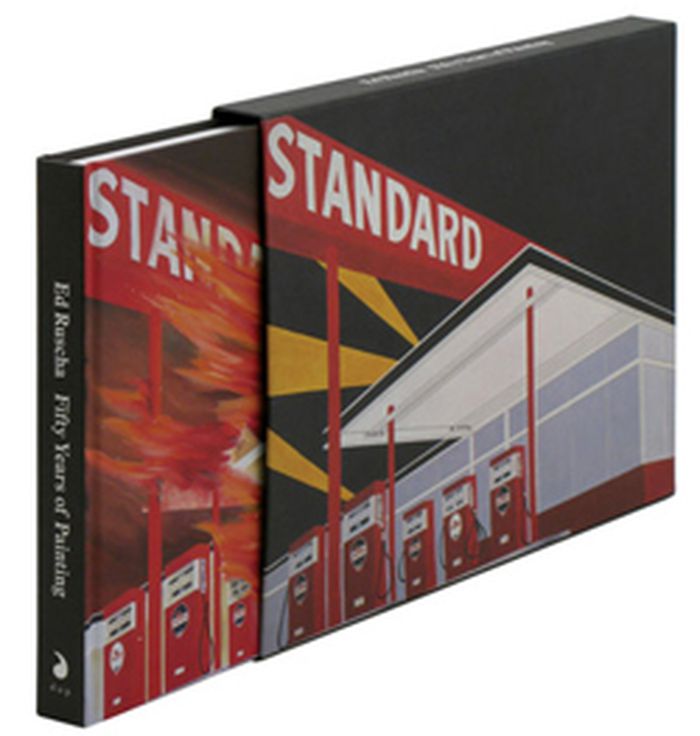
Transforming words into icons and images into wide-screen epics, Ed Ruscha has wholly reconceived the terms of painting for our era. Tagged variously as a Conceptualist, Pop artist or latter-day Surrealist, Ruscha flouts category, or rather incorporates all categories, always surprising and experimenting with both subject and method. His paintings are steeped in our times: cinema, advertising, logos, late capitalism and the twists and turns of postwar art have all informed his iconography since the early 1960s, arriving on the cool surfaces of his canvases with magnetic detachment. Ruscha eschews process and focuses exclusively on the final product: “the means to the end has always been secondary in my art,” he has said. Ruscha has also reinvented the use of words in art, finding disquieting ways to invest language with a weird, throbbing, ambient static, never aspiring to what he calls “word gestures,” since “each word is an excursion unto itself.” Fifty Years of Painting focuses on Ruscha's majestic oeuvre of paintings. A magnificent publication, it comes housed in a slipcase that sports the artist's classic painting “Standard Station” (1966), and, alongside fantastic reproductions, it contains a preface by novelist James Ellroy, essays by Ralph Rugoff, Alexandra Schwartz and Ulrich Wilmes, a text by novelist Bruce Wagner, an interview with the artist by Kristine McKenna, an illustrated chronology and an exhibition history. Ed Ruscha (born 1937) has made pioneering work in the media of painting, printmaking, drawing, bookmaking, photography and film since 1958.
Ed Ruscha: fifty years of painting
Actions:
Prix:
$72.00
(disponible sur commande)
Résumé:
Transforming words into icons and images into wide-screen epics, Ed Ruscha has wholly reconceived the terms of painting for our era. Tagged variously as a Conceptualist, Pop artist or latter-day Surrealist, Ruscha flouts category, or rather incorporates all categories, always surprising and experimenting with both subject and method. His paintings are steeped in our times: cinema, advertising, logos, late capitalism and the twists and turns of postwar art have all informed his iconography since the early 1960s, arriving on the cool surfaces of his canvases with magnetic detachment. Ruscha eschews process and focuses exclusively on the final product: “the means to the end has always been secondary in my art,” he has said. Ruscha has also reinvented the use of words in art, finding disquieting ways to invest language with a weird, throbbing, ambient static, never aspiring to what he calls “word gestures,” since “each word is an excursion unto itself.” Fifty Years of Painting focuses on Ruscha's majestic oeuvre of paintings. A magnificent publication, it comes housed in a slipcase that sports the artist's classic painting “Standard Station” (1966), and, alongside fantastic reproductions, it contains a preface by novelist James Ellroy, essays by Ralph Rugoff, Alexandra Schwartz and Ulrich Wilmes, a text by novelist Bruce Wagner, an interview with the artist by Kristine McKenna, an illustrated chronology and an exhibition history. Ed Ruscha (born 1937) has made pioneering work in the media of painting, printmaking, drawing, bookmaking, photography and film since 1958.
Classification:
livres
livres
Publication:
février 2010
février 2010
Classification:
livres
livres
Prix:
$44.95
(disponible sur commande)
Résumé:
This book attempts to chart the history of art and its interaction with written language. It examines the use of words (or language) in many genres of art – most often painting, but including prints, the book as art, sculpture, installation, and performance. This book asks what does it mean when a painting is 'invaded' by language? How do the two forms converse and(...)
$44.95
(disponible sur commande)
Résumé:
This book attempts to chart the history of art and its interaction with written language. It examines the use of words (or language) in many genres of art – most often painting, but including prints, the book as art, sculpture, installation, and performance. This book asks what does it mean when a painting is 'invaded' by language? How do the two forms converse and(...)
Sujet:
Théorie de l’art
Théorie de l’art
Publication:
septembre 2011
septembre 2011
Titre:
Art, word and image : 2,000 years of visual/textual interaction
Actions:
Prix:
$44.95
(disponible sur commande)
Résumé:
This book attempts to chart the history of art and its interaction with written language. It examines the use of words (or language) in many genres of art – most often painting, but including prints, the book as art, sculpture, installation, and performance. This book asks what does it mean when a painting is 'invaded' by language? How do the two forms converse and combine, and what messages are intended for the viewer? In addition, other important themes that are also addressed include the naming or titling of paintings, the uses of narrative in art, and the literary connections and aspirations of artists. The book is constructed around three wide-ranging essays by John Dixon Hunt, David Lomas and Michael Corris. These essays discuss the use and significance of words in art – from Classical Greece and Assyria, through to the Middle Ages and the Renaissance, to modern times and today’s digital media, where the words and image question has become a central issue. The essays cover a variety of movements (Pre-Raphaelites, Cubists, Surrealists, and Lettrists, for example) and many artists, among them Duchamp, Picasso, Ernst, Twombly, Michaux, Warhol and Kruger. The book also includes ‘spotlight’ essays on artists whose work engages substantially with questions of word and image: Blake, Klee, Schwitters, Haack, Pettibon, McCahon and Walla. With contributions by Jeremy Adler, Stephen Barber, Rex Butler and Laurence Simmons, Michael Corris, John Dixon Hunt, Michael R. Leaman, David Lomas, Joseph Viscomi, Hamza Walker, Barbara Weyandt and Michael White.
Art, word and image : 2,000 years of visual/textual interaction
Actions:
Prix:
$44.95
(disponible sur commande)
Résumé:
This book attempts to chart the history of art and its interaction with written language. It examines the use of words (or language) in many genres of art – most often painting, but including prints, the book as art, sculpture, installation, and performance. This book asks what does it mean when a painting is 'invaded' by language? How do the two forms converse and combine, and what messages are intended for the viewer? In addition, other important themes that are also addressed include the naming or titling of paintings, the uses of narrative in art, and the literary connections and aspirations of artists. The book is constructed around three wide-ranging essays by John Dixon Hunt, David Lomas and Michael Corris. These essays discuss the use and significance of words in art – from Classical Greece and Assyria, through to the Middle Ages and the Renaissance, to modern times and today’s digital media, where the words and image question has become a central issue. The essays cover a variety of movements (Pre-Raphaelites, Cubists, Surrealists, and Lettrists, for example) and many artists, among them Duchamp, Picasso, Ernst, Twombly, Michaux, Warhol and Kruger. The book also includes ‘spotlight’ essays on artists whose work engages substantially with questions of word and image: Blake, Klee, Schwitters, Haack, Pettibon, McCahon and Walla. With contributions by Jeremy Adler, Stephen Barber, Rex Butler and Laurence Simmons, Michael Corris, John Dixon Hunt, Michael R. Leaman, David Lomas, Joseph Viscomi, Hamza Walker, Barbara Weyandt and Michael White.
Classification:
livres
livres
Publication:
septembre 2011
septembre 2011
Sujet:
Théorie de l’art
Théorie de l’art
Classification:
livres
livres
Actions:
Prix:
$17.95
(disponible sur commande)
Résumé:
Almost a half-century after Yayoi Kusama debuted her landmark installation Infinity Mirror Room - Phalli's Field (1965) in New York, the work remains challenging and unclassifiable. Shifting between the Pop-like and the Surreal, the Minimal and the metaphorical, the figurative and the abstract, the psychotic and the erotic, with references to "free love" and psychedelia,(...)
$17.95
(disponible sur commande)
Résumé:
Almost a half-century after Yayoi Kusama debuted her landmark installation Infinity Mirror Room - Phalli's Field (1965) in New York, the work remains challenging and unclassifiable. Shifting between the Pop-like and the Surreal, the Minimal and the metaphorical, the figurative and the abstract, the psychotic and the erotic, with references to "free love" and psychedelia,(...)
Titre:
Yayoi Kusuma : Infinity mirror room - Phalli's Field
Actions:
Prix:
$17.95
(disponible sur commande)
Résumé:
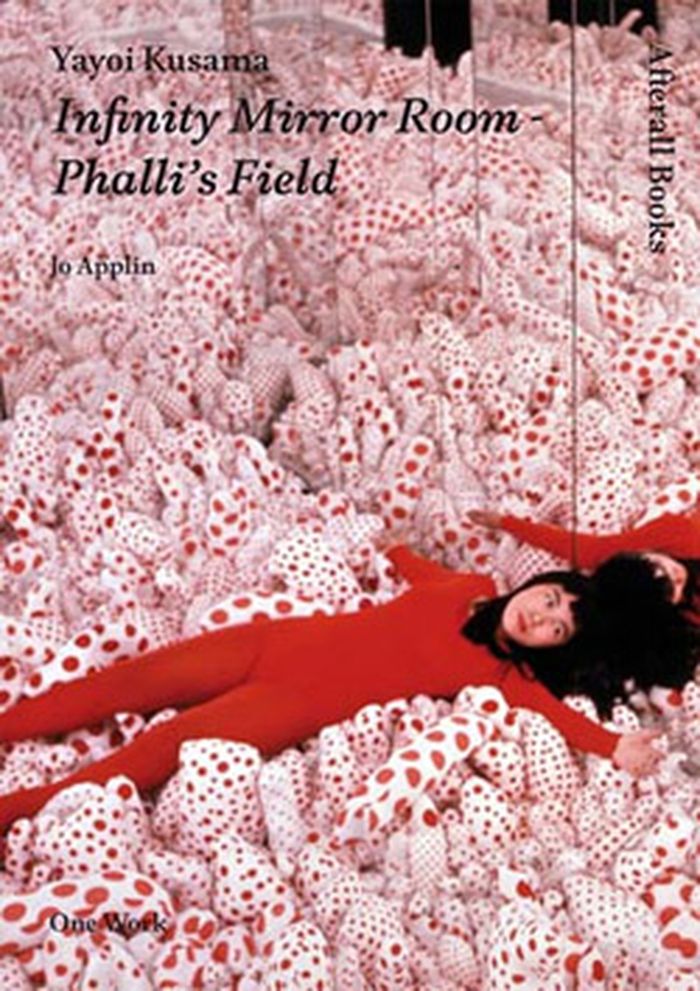
Almost a half-century after Yayoi Kusama debuted her landmark installation Infinity Mirror Room - Phalli's Field (1965) in New York, the work remains challenging and unclassifiable. Shifting between the Pop-like and the Surreal, the Minimal and the metaphorical, the figurative and the abstract, the psychotic and the erotic, with references to "free love" and psychedelia, it seemed to embody all that the 1960s was about, while at the same time denying the prevailing aesthetics of its time. The installation itself was a room lined with mirrored panels and carpeted with several hundred brightly polka-dotted soft fabric protrusions into which the visitor was completely absorbed. Kusama simply called it "a sublime, miraculous field of phalluses." A precursor of performance-based feminist art practice, media pranksterism, and "Occupy" movements, Kusama (born in 1929) was once as well known as her admirers - Andy Warhol, Donald Judd, and Joseph Cornell. In this first monograph on an epoch-defining work, Jo Applin looks at the installation in detail and places it in the context of subsequent art practice and theory as well as Kusama's own (as she called it) "obsessional art." Applin also discusses Kusama's relationship to her contemporaries, particularly those working with environments, abstract-erotic sculpture, and mirrors, and those grappling with such issues as abstraction, eroticism, sexuality, and softness. The work of Lee Lozano, Claes Oldenburg, Louise Bourgeois, and Eva Hesse is seen anew when considered in relation to Yayoi Kusama's.
Yayoi Kusuma : Infinity mirror room - Phalli's Field
Actions:
Prix:
$17.95
(disponible sur commande)
Résumé:
Almost a half-century after Yayoi Kusama debuted her landmark installation Infinity Mirror Room - Phalli's Field (1965) in New York, the work remains challenging and unclassifiable. Shifting between the Pop-like and the Surreal, the Minimal and the metaphorical, the figurative and the abstract, the psychotic and the erotic, with references to "free love" and psychedelia, it seemed to embody all that the 1960s was about, while at the same time denying the prevailing aesthetics of its time. The installation itself was a room lined with mirrored panels and carpeted with several hundred brightly polka-dotted soft fabric protrusions into which the visitor was completely absorbed. Kusama simply called it "a sublime, miraculous field of phalluses." A precursor of performance-based feminist art practice, media pranksterism, and "Occupy" movements, Kusama (born in 1929) was once as well known as her admirers - Andy Warhol, Donald Judd, and Joseph Cornell. In this first monograph on an epoch-defining work, Jo Applin looks at the installation in detail and places it in the context of subsequent art practice and theory as well as Kusama's own (as she called it) "obsessional art." Applin also discusses Kusama's relationship to her contemporaries, particularly those working with environments, abstract-erotic sculpture, and mirrors, and those grappling with such issues as abstraction, eroticism, sexuality, and softness. The work of Lee Lozano, Claes Oldenburg, Louise Bourgeois, and Eva Hesse is seen anew when considered in relation to Yayoi Kusama's.
Classification:
livres
livres
Publication:
novembre 2012
novembre 2012
Sujet:
Théorie de l’art
Théorie de l’art
Classification:
livres
livres
Actions:
Exemplaires:
Description:
491 pages : illustrations ; 20 cm.
Description:
491 pages : illustrations ; 20 cm.
Auteur:
Sujet:
Publication:
Aosta : Le château, ©2006.
Aosta : Le château, ©2006.
Titre:
Stefano Mossettaz : architetto, ingegnere e scultore : la civiltà cortese in Valle d'Aosta nella prima metà del Quattrocento / Bruno Orlandoni.
Actions:
Exemplaires:
Description:
491 pages : illustrations ; 20 cm.
Stefano Mossettaz : architetto, ingegnere e scultore : la civiltà cortese in Valle d'Aosta nella prima metà del Quattrocento / Bruno Orlandoni.
Actions:
Exemplaires:
Description:
491 pages : illustrations ; 20 cm.
Classification:
livres
livres
Publication:
Aosta : Le château, ©2006.
Aosta : Le château, ©2006.
Auteur:
Sujet:
Classification:
livres
livres
Prix:
$39.95
(disponible sur commande)
Résumé:
Beginning with agoraphobia and claustrophobia in the late nineteenth century, followed by shell shock and panic fear after World War I, phobias and anxiety came to be seen as the mental condition of modern life. They became incorporated into the media and arts, in particular the (...)
$39.95
(disponible sur commande)
Résumé:
Beginning with agoraphobia and claustrophobia in the late nineteenth century, followed by shell shock and panic fear after World War I, phobias and anxiety came to be seen as the mental condition of modern life. They became incorporated into the media and arts, in particular the (...)
Titre:
Warped space : art, architecture, and anxiety in modern culture
Actions:
Prix:
$39.95
(disponible sur commande)
Résumé:
Beginning with agoraphobia and claustrophobia in the late nineteenth century, followed by shell shock and panic fear after World War I, phobias and anxiety came to be seen as the mental condition of modern life. They became incorporated into the media and arts, in particular the spatial arts of architecture, urbanism, and film. This "spatial warping" is now being reshaped by digitalization and virtual reality. Anthony Vidler is concerned with two forms of warped space. The first, a psychological space, is the repository of neuroses and phobias. This space is not empty but full of disturbing forms, including those of architecture and the city. The second kind of warping is produced when artists break the boundaries of genre to depict space in new ways. Vidler traces the emergence of a psychological idea of space from Pascal and Freud to the identification of agoraphobia and claustrophobia in the nineteenth century to twentieth-century theories of spatial alienation and estrangement in the writings of Georg Simmel, Siegfried Kracauer, and Walter Benjamin. Focusing on current conditions of displacement and placelessness, he examines ways in which contemporary artists and architects have produced new forms of spatial warping. The discussion ranges from theorists such as Jacques Lacan and Gilles Deleuze to artists such as Vito Acconci, Mike Kelley, Martha Rosler, and Rachel Whiteread. Finally, Vidler looks at the architectural experiments of Frank Gehry, Coop Himmelblau, Daniel Libeskind, Greg Lynn, Morphosis, and Eric Owen Moss in the light of new digital techniques that, while relying on traditional perspective, have radically transformed the composition, production, and experience of architecture.
Warped space : art, architecture, and anxiety in modern culture
Actions:
Prix:
$39.95
(disponible sur commande)
Résumé:
Beginning with agoraphobia and claustrophobia in the late nineteenth century, followed by shell shock and panic fear after World War I, phobias and anxiety came to be seen as the mental condition of modern life. They became incorporated into the media and arts, in particular the spatial arts of architecture, urbanism, and film. This "spatial warping" is now being reshaped by digitalization and virtual reality. Anthony Vidler is concerned with two forms of warped space. The first, a psychological space, is the repository of neuroses and phobias. This space is not empty but full of disturbing forms, including those of architecture and the city. The second kind of warping is produced when artists break the boundaries of genre to depict space in new ways. Vidler traces the emergence of a psychological idea of space from Pascal and Freud to the identification of agoraphobia and claustrophobia in the nineteenth century to twentieth-century theories of spatial alienation and estrangement in the writings of Georg Simmel, Siegfried Kracauer, and Walter Benjamin. Focusing on current conditions of displacement and placelessness, he examines ways in which contemporary artists and architects have produced new forms of spatial warping. The discussion ranges from theorists such as Jacques Lacan and Gilles Deleuze to artists such as Vito Acconci, Mike Kelley, Martha Rosler, and Rachel Whiteread. Finally, Vidler looks at the architectural experiments of Frank Gehry, Coop Himmelblau, Daniel Libeskind, Greg Lynn, Morphosis, and Eric Owen Moss in the light of new digital techniques that, while relying on traditional perspective, have radically transformed the composition, production, and experience of architecture.
Classification:
livres
livres
Publication:
avril 2002, Cambridge, Mass.
avril 2002, Cambridge, Mass.
Sujet:
Théorie de l’architecture
Théorie de l’architecture
Classification:
livres
livres
Titre:
Design by numbers
Design by numbers
Actions:
Prix:
$44.95
(disponible en magasin)
Résumé:
Most art and technology projects pair artists with engineers or scientists: the artist has the conception, and the technical person provides the know-how. John Maeda is an artist and a computer scientist, and he views the computer not as a substitute for brush and paint but as an artistic medium in its own right. Design By Numbers is a reader-friendly tutorial on both the(...)
$44.95
(disponible en magasin)
Résumé:
Most art and technology projects pair artists with engineers or scientists: the artist has the conception, and the technical person provides the know-how. John Maeda is an artist and a computer scientist, and he views the computer not as a substitute for brush and paint but as an artistic medium in its own right. Design By Numbers is a reader-friendly tutorial on both the(...)
Publication:
octobre 2001, Cambridge, Mass.
octobre 2001, Cambridge, Mass.
Titre:
Design by numbers
Actions:
Prix:
$44.95
(disponible en magasin)
Résumé:
Most art and technology projects pair artists with engineers or scientists: the artist has the conception, and the technical person provides the know-how. John Maeda is an artist and a computer scientist, and he views the computer not as a substitute for brush and paint but as an artistic medium in its own right. Design By Numbers is a reader-friendly tutorial on both the philosophy and nuts-and-bolts techniques of programming for artists. Practicing what he preaches, Maeda composed Design By Numbers using a computational process he developed specifically for the book. He introduces a programming language and development environment, available on the Web, which can be freely downloaded or run directly within any JAVA-enabled Web browser. Appropriately, the new language is called DBN (for "design by numbers"). Designed for "visual" people--artists, designers, anyone who likes to pick up a pencil and doodle--DBN has very few commands and consists of elements resembling those of many other languages, such as LISP, LOGO, C/JAVA, and BASIC. Throughout the book Maeda emphasizes the importance--and delights--of understanding the motivation behind computer programming, as well as the many wonders that emerge from well-written programs. Sympathetic to the "mathematically challenged," he places minimal emphasis on mathematics in the first half of the book. Because computation is inherently mathematical, the books second half uses intermediate mathematical concepts that generally do not go beyond high-school algebra. The reader who masters the skills so clearly set out by Maeda will be ready to exploit the true character of digital media design.
Design by numbers
Actions:
Prix:
$44.95
(disponible en magasin)
Résumé:
Most art and technology projects pair artists with engineers or scientists: the artist has the conception, and the technical person provides the know-how. John Maeda is an artist and a computer scientist, and he views the computer not as a substitute for brush and paint but as an artistic medium in its own right. Design By Numbers is a reader-friendly tutorial on both the philosophy and nuts-and-bolts techniques of programming for artists. Practicing what he preaches, Maeda composed Design By Numbers using a computational process he developed specifically for the book. He introduces a programming language and development environment, available on the Web, which can be freely downloaded or run directly within any JAVA-enabled Web browser. Appropriately, the new language is called DBN (for "design by numbers"). Designed for "visual" people--artists, designers, anyone who likes to pick up a pencil and doodle--DBN has very few commands and consists of elements resembling those of many other languages, such as LISP, LOGO, C/JAVA, and BASIC. Throughout the book Maeda emphasizes the importance--and delights--of understanding the motivation behind computer programming, as well as the many wonders that emerge from well-written programs. Sympathetic to the "mathematically challenged," he places minimal emphasis on mathematics in the first half of the book. Because computation is inherently mathematical, the books second half uses intermediate mathematical concepts that generally do not go beyond high-school algebra. The reader who masters the skills so clearly set out by Maeda will be ready to exploit the true character of digital media design.
Classification:
livres
livres
Publication:
octobre 2001, Cambridge, Mass.
octobre 2001, Cambridge, Mass.
Classification:
livres
livres
Prix:
$43.95
(disponible sur commande)
Résumé:
Why do we have such extraordinarily powerful responses toward the images and pictures we see in everyday life? Why do we behave as if pictures were alive, possessing the power to influence us, to demand things from us, to persuade us, seduce us, or even lead us astray? According to W. J. T. Mitchell, we need to reckon with images not just as inert objects that convey(...)
$43.95
(disponible sur commande)
Résumé:
Why do we have such extraordinarily powerful responses toward the images and pictures we see in everyday life? Why do we behave as if pictures were alive, possessing the power to influence us, to demand things from us, to persuade us, seduce us, or even lead us astray? According to W. J. T. Mitchell, we need to reckon with images not just as inert objects that convey(...)
Titre:
What do pictures want? : the lives and loves of images
Actions:
Prix:
$43.95
(disponible sur commande)
Résumé:
Why do we have such extraordinarily powerful responses toward the images and pictures we see in everyday life? Why do we behave as if pictures were alive, possessing the power to influence us, to demand things from us, to persuade us, seduce us, or even lead us astray? According to W. J. T. Mitchell, we need to reckon with images not just as inert objects that convey meaning but as animated beings with desires, needs, appetites, demands, and drives of their own. "What Do Pictures Want?" explores this idea and highlights Mitchell's innovative and profoundly influential thinking on picture theory and the lives and loves of images. Ranging across the visual arts, literature, and mass media, Mitchell applies characteristically brilliant and wry analyses to Byzantine icons and cyberpunk films, racial stereotypes and public monuments, ancient idols and modern clones, offensive images and found objects, American photography and aboriginal painting. Opening new vistas in iconology and the emergent field of visual culture, he also considers the importance of Dolly the Sheep - who, as a clone, fulfills the ancient dream of creating a living image - and the destruction of the World Trade Center on 9/11, which, among other things, signifies a new and virulent form of iconoclasm. "What Do Pictures Want?" offers an immensely rich and suggestive account of the interplay between the visible and the readable. A work by one of our leading theorists of visual representation, it will be a touchstone for art historians, literary critics, anthropologists, and philosophers alike.
What do pictures want? : the lives and loves of images
Actions:
Prix:
$43.95
(disponible sur commande)
Résumé:
Why do we have such extraordinarily powerful responses toward the images and pictures we see in everyday life? Why do we behave as if pictures were alive, possessing the power to influence us, to demand things from us, to persuade us, seduce us, or even lead us astray? According to W. J. T. Mitchell, we need to reckon with images not just as inert objects that convey meaning but as animated beings with desires, needs, appetites, demands, and drives of their own. "What Do Pictures Want?" explores this idea and highlights Mitchell's innovative and profoundly influential thinking on picture theory and the lives and loves of images. Ranging across the visual arts, literature, and mass media, Mitchell applies characteristically brilliant and wry analyses to Byzantine icons and cyberpunk films, racial stereotypes and public monuments, ancient idols and modern clones, offensive images and found objects, American photography and aboriginal painting. Opening new vistas in iconology and the emergent field of visual culture, he also considers the importance of Dolly the Sheep - who, as a clone, fulfills the ancient dream of creating a living image - and the destruction of the World Trade Center on 9/11, which, among other things, signifies a new and virulent form of iconoclasm. "What Do Pictures Want?" offers an immensely rich and suggestive account of the interplay between the visible and the readable. A work by one of our leading theorists of visual representation, it will be a touchstone for art historians, literary critics, anthropologists, and philosophers alike.
Classification:
livres
livres
Publication:
juin 2005, Chicago
juin 2005, Chicago
Sujet:
Théorie de l’architecture
Théorie de l’architecture
Classification:
livres
livres
Actions:
Prix:
$74.95
(disponible sur commande)
Résumé:
In an era of globalisation, there is an unprecedented scale and nature of contemporary migrant flows, as well as the flow of goods, capital, ideas, images and technology. This sheer number and mobility of contemporary migrants clearly has massively disruptive effects on traditional modes of dwelling however they were manifest in everyday life. But contemporary migrancy(...)
$74.95
(disponible sur commande)
Résumé:
In an era of globalisation, there is an unprecedented scale and nature of contemporary migrant flows, as well as the flow of goods, capital, ideas, images and technology. This sheer number and mobility of contemporary migrants clearly has massively disruptive effects on traditional modes of dwelling however they were manifest in everyday life. But contemporary migrancy(...)
Sujet:
Théorie de l’architecture
Théorie de l’architecture
Publication:
septembre 2003, London / New York
septembre 2003, London / New York
Titre:
Drifting : architecture and migrancy
Actions:
Prix:
$74.95
(disponible sur commande)
Résumé:
In an era of globalisation, there is an unprecedented scale and nature of contemporary migrant flows, as well as the flow of goods, capital, ideas, images and technology. This sheer number and mobility of contemporary migrants clearly has massively disruptive effects on traditional modes of dwelling however they were manifest in everyday life. But contemporary migrancy also has important consequences for the way dwelling is conceptualised more generally. This book is concerned with the modes of dwelling that emerge through migrancy; it is also concerned with the effects these modes of dwelling have for dominant conceptions of space and place; and finally, it is interested in the kinds of architectures that become possible if those effects are taken seriously. This book inspects the intersections between architectures of place and flows of migrancy. It does so without seeking to defend the idea of place, nor lament its passing. Rather, this book is an exploration of the often complex and unorthodox modes of dwelling that are emerging precisely from within the ruins of the idea of place. This exploration is informed by post-structuralist analyses of architecture and urbanism, and their representation in media such as film. It focuses on the Pacific Rim as an intensified zone of global flows. Within the Pacific Rim there are complex tensions between the new economies of Asia and the settler nations of Canada, the US, Australia and New Zealand. These tensions produce difficulties for the narrative of the nation state, and herald conditions that no longer conform to the geo-political norms of the old world.
Drifting : architecture and migrancy
Actions:
Prix:
$74.95
(disponible sur commande)
Résumé:
In an era of globalisation, there is an unprecedented scale and nature of contemporary migrant flows, as well as the flow of goods, capital, ideas, images and technology. This sheer number and mobility of contemporary migrants clearly has massively disruptive effects on traditional modes of dwelling however they were manifest in everyday life. But contemporary migrancy also has important consequences for the way dwelling is conceptualised more generally. This book is concerned with the modes of dwelling that emerge through migrancy; it is also concerned with the effects these modes of dwelling have for dominant conceptions of space and place; and finally, it is interested in the kinds of architectures that become possible if those effects are taken seriously. This book inspects the intersections between architectures of place and flows of migrancy. It does so without seeking to defend the idea of place, nor lament its passing. Rather, this book is an exploration of the often complex and unorthodox modes of dwelling that are emerging precisely from within the ruins of the idea of place. This exploration is informed by post-structuralist analyses of architecture and urbanism, and their representation in media such as film. It focuses on the Pacific Rim as an intensified zone of global flows. Within the Pacific Rim there are complex tensions between the new economies of Asia and the settler nations of Canada, the US, Australia and New Zealand. These tensions produce difficulties for the narrative of the nation state, and herald conditions that no longer conform to the geo-political norms of the old world.
Classification:
livres
livres
Publication:
septembre 2003, London / New York
septembre 2003, London / New York
Sujet:
Théorie de l’architecture
Théorie de l’architecture


