


8417 Résultats
Classification:
livres
livres
Titre:
In the swarm
In the swarm
Actions:
Prix:
$18.95
(disponible sur commande)
Résumé:
Digital communication and social media have taken over our lives. In this contrarian reflection on digitized life, Byung-Chul Han counters the cheerleaders for Twitter revolutions and Facebook activism by arguing that digital communication is in fact responsible for the disintegration of community and public space and is slowly eroding any possibility for real political(...)
$18.95
(disponible sur commande)
Résumé:
Digital communication and social media have taken over our lives. In this contrarian reflection on digitized life, Byung-Chul Han counters the cheerleaders for Twitter revolutions and Facebook activism by arguing that digital communication is in fact responsible for the disintegration of community and public space and is slowly eroding any possibility for real political(...)
Titre:
In the swarm
Actions:
Prix:
$18.95
(disponible sur commande)
Résumé:
Digital communication and social media have taken over our lives. In this contrarian reflection on digitized life, Byung-Chul Han counters the cheerleaders for Twitter revolutions and Facebook activism by arguing that digital communication is in fact responsible for the disintegration of community and public space and is slowly eroding any possibility for real political action and meaningful political discourse. In the predigital, analog era, by the time an angry letter to the editor had been composed, mailed, and received, the immediate agitation had passed. Today, digital communication enables instantaneous, impulsive reaction, meant to express and stir up outrage on the spot. “The shitstorm,” writes Han, ”represents an authentic phenomenon of digital communication.” Meanwhile, the public, the senders and receivers of these communications have become a digital swarm—not a mass, or a crowd, or Negri and Hardt’s antiquated notion of a “multitude,” but a set of isolated individuals incapable of forming a “we,” incapable of calling dominant power relations into question, incapable of formulating a future because of an obsession with the present. The digital swarm is a fragmented entity that can focus on individual persons only in order to make them an object of scandal. Han, one of the most widely read philosophers in Europe today, describes a society in which information has overrun thought, in which the same algorithms are employed by Facebook, the stock market, and the intelligence services. Democracy is under threat because digital communication has made freedom and control indistinguishable. Big Brother has been succeeded by Big Data.
In the swarm
Actions:
Prix:
$18.95
(disponible sur commande)
Résumé:
Digital communication and social media have taken over our lives. In this contrarian reflection on digitized life, Byung-Chul Han counters the cheerleaders for Twitter revolutions and Facebook activism by arguing that digital communication is in fact responsible for the disintegration of community and public space and is slowly eroding any possibility for real political action and meaningful political discourse. In the predigital, analog era, by the time an angry letter to the editor had been composed, mailed, and received, the immediate agitation had passed. Today, digital communication enables instantaneous, impulsive reaction, meant to express and stir up outrage on the spot. “The shitstorm,” writes Han, ”represents an authentic phenomenon of digital communication.” Meanwhile, the public, the senders and receivers of these communications have become a digital swarm—not a mass, or a crowd, or Negri and Hardt’s antiquated notion of a “multitude,” but a set of isolated individuals incapable of forming a “we,” incapable of calling dominant power relations into question, incapable of formulating a future because of an obsession with the present. The digital swarm is a fragmented entity that can focus on individual persons only in order to make them an object of scandal. Han, one of the most widely read philosophers in Europe today, describes a society in which information has overrun thought, in which the same algorithms are employed by Facebook, the stock market, and the intelligence services. Democracy is under threat because digital communication has made freedom and control indistinguishable. Big Brother has been succeeded by Big Data.
Classification:
livres
livres
Publication:
avril 2017
avril 2017
Classification:
livres
livres
Actions:
Prix:
$85.00
(disponible en magasin)
Résumé:
Published for a major exhibition at The Museum of Modern Art, this catalog reveals new perspectives on the work of Frank Lloyd Wright, a designer so prolific and familiar as to nearly preclude critical reexamination. Structured as a series of inquiries into the Frank Lloyd Wright Foundation Archives at Taliesin West, Arizona (recently acquired by MoMA and Avery(...)
$85.00
(disponible en magasin)
Résumé:
Published for a major exhibition at The Museum of Modern Art, this catalog reveals new perspectives on the work of Frank Lloyd Wright, a designer so prolific and familiar as to nearly preclude critical reexamination. Structured as a series of inquiries into the Frank Lloyd Wright Foundation Archives at Taliesin West, Arizona (recently acquired by MoMA and Avery(...)
Titre:
Frank Lloyd Wright: unpacking the archive
Actions:
Prix:
$85.00
(disponible en magasin)
Résumé:
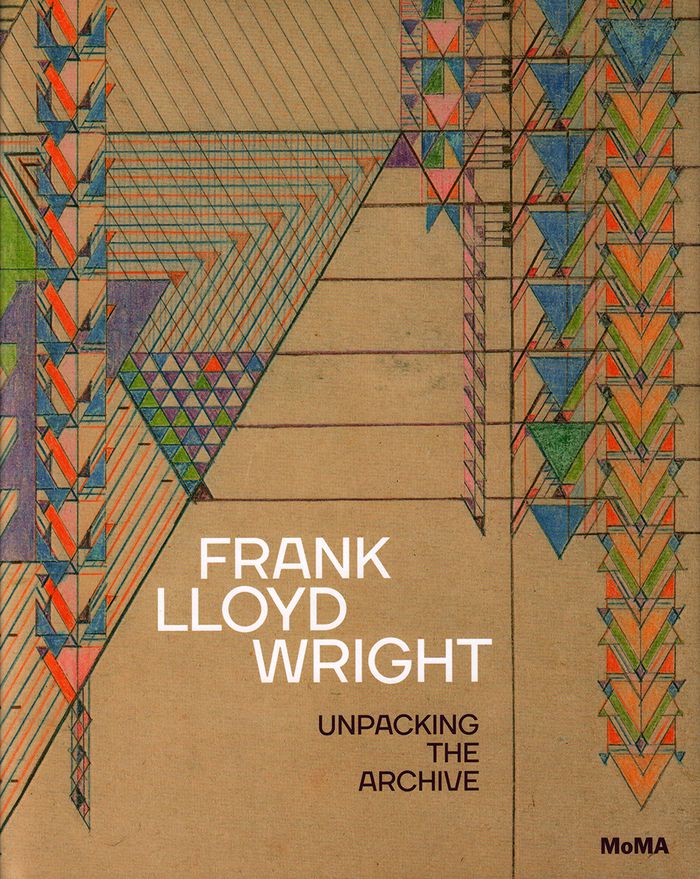
Published for a major exhibition at The Museum of Modern Art, this catalog reveals new perspectives on the work of Frank Lloyd Wright, a designer so prolific and familiar as to nearly preclude critical reexamination. Structured as a series of inquiries into the Frank Lloyd Wright Foundation Archives at Taliesin West, Arizona (recently acquired by MoMA and Avery Architectural & Fine Arts Library, Columbia University), the book is a collection of scholarly explorations rather than an attempt to construct a master narrative. Each chapter centers on a key object from the archive that an invited author has “unpacked”— tracing its meanings and connections, and juxtaposing it with other works from the archive, from MoMA, or from outside collections. Wright’s quest to build a mile-high skyscraper reveals him to be one of the earliest celebrity architects, using television, press relations and other forms of mass media to advance his own self-crafted image. A little-known project for a Rosenwald School for African-American children, together with other projects that engage Japanese and Native American culture, ask provocative questions about Wright’s positions on race and cultural identity. Still other investigations engage the architect’s lifelong dedication to affordable and do-it-yourself housing, as well as the ecological systems, both social and environmental, that informed his approach to cities, landscapes and even ornament. The publication aims to open up Wright’s work to questions, interrogations and debates, and to highlight interpretations by contemporary scholars, both established Wright experts and others considering this iconic figure from new and illuminating perspectives.
Frank Lloyd Wright: unpacking the archive
Actions:
Prix:
$85.00
(disponible en magasin)
Résumé:
Published for a major exhibition at The Museum of Modern Art, this catalog reveals new perspectives on the work of Frank Lloyd Wright, a designer so prolific and familiar as to nearly preclude critical reexamination. Structured as a series of inquiries into the Frank Lloyd Wright Foundation Archives at Taliesin West, Arizona (recently acquired by MoMA and Avery Architectural & Fine Arts Library, Columbia University), the book is a collection of scholarly explorations rather than an attempt to construct a master narrative. Each chapter centers on a key object from the archive that an invited author has “unpacked”— tracing its meanings and connections, and juxtaposing it with other works from the archive, from MoMA, or from outside collections. Wright’s quest to build a mile-high skyscraper reveals him to be one of the earliest celebrity architects, using television, press relations and other forms of mass media to advance his own self-crafted image. A little-known project for a Rosenwald School for African-American children, together with other projects that engage Japanese and Native American culture, ask provocative questions about Wright’s positions on race and cultural identity. Still other investigations engage the architect’s lifelong dedication to affordable and do-it-yourself housing, as well as the ecological systems, both social and environmental, that informed his approach to cities, landscapes and even ornament. The publication aims to open up Wright’s work to questions, interrogations and debates, and to highlight interpretations by contemporary scholars, both established Wright experts and others considering this iconic figure from new and illuminating perspectives.
Classification:
livres
livres
Publication:
juin 2017
juin 2017
Sujet:
Architecture, monographies
Architecture, monographies
Classification:
livres
livres
Actions:
Prix:
$27.00
(disponible sur commande)
Résumé:
This new survey provides a complete history of American art and architecture from its seventeenth-century colonial beginnings to the latest installation and video work. Structured chronologically, the book defines the characteristics of the different periods and highlights the consistent forms, techniques, and styles that mark the art and architecture as distinctively(...)
$27.00
(disponible sur commande)
Résumé:
This new survey provides a complete history of American art and architecture from its seventeenth-century colonial beginnings to the latest installation and video work. Structured chronologically, the book defines the characteristics of the different periods and highlights the consistent forms, techniques, and styles that mark the art and architecture as distinctively(...)
Titre:
American art and architecture
Actions:
Prix:
$27.00
(disponible sur commande)
Résumé:
This new survey provides a complete history of American art and architecture from its seventeenth-century colonial beginnings to the latest installation and video work. Structured chronologically, the book defines the characteristics of the different periods and highlights the consistent forms, techniques, and styles that mark the art and architecture as distinctively American. Michael J. Lewis charts the ways in which American artists and architects both adopted and diverged from earlier European models to create an original visual language of their own. He also shows how that language in turn came to influence and eventually dominate art and architecture around the world. The author integrates discussions of both buildings and works of visual art, revealing the shared social and aesthetic concerns that underlie the two. Vernacular, religious, secular, and corporate architecture appears alongside paintings, sculpture, photography, and new-media art. Major American artists and works from the seventeenth century to today are included, such as epic history paintings by Benjamin West and John Singleton Copley; sublime landscapes by Thomas Cole, Albert Bierstadt, and Frederick Church; society portraits by John Singer Sargent; groundbreaking abstract expressionist and pop art by Jackson Pollock, Barnett Newman, and Andy Warhol; and challenging sculptural, installation, and video works from more recent years by Robert Gober, Fred Wilson, and Matthew Barney. In architecture, dozens of different building types are illustrated and discussed, from the earliest colonial houses and churches to the most spectacular modernist and postmodernist houses, stations, museums, and iconic skyscrapers. 275 illustrations, 175 in color.
American art and architecture
Actions:
Prix:
$27.00
(disponible sur commande)
Résumé:
This new survey provides a complete history of American art and architecture from its seventeenth-century colonial beginnings to the latest installation and video work. Structured chronologically, the book defines the characteristics of the different periods and highlights the consistent forms, techniques, and styles that mark the art and architecture as distinctively American. Michael J. Lewis charts the ways in which American artists and architects both adopted and diverged from earlier European models to create an original visual language of their own. He also shows how that language in turn came to influence and eventually dominate art and architecture around the world. The author integrates discussions of both buildings and works of visual art, revealing the shared social and aesthetic concerns that underlie the two. Vernacular, religious, secular, and corporate architecture appears alongside paintings, sculpture, photography, and new-media art. Major American artists and works from the seventeenth century to today are included, such as epic history paintings by Benjamin West and John Singleton Copley; sublime landscapes by Thomas Cole, Albert Bierstadt, and Frederick Church; society portraits by John Singer Sargent; groundbreaking abstract expressionist and pop art by Jackson Pollock, Barnett Newman, and Andy Warhol; and challenging sculptural, installation, and video works from more recent years by Robert Gober, Fred Wilson, and Matthew Barney. In architecture, dozens of different building types are illustrated and discussed, from the earliest colonial houses and churches to the most spectacular modernist and postmodernist houses, stations, museums, and iconic skyscrapers. 275 illustrations, 175 in color.
Classification:
livres
livres
Publication:
mai 2006, London
mai 2006, London
Sujet:
Modernisme
Modernisme
Classification:
livres
livres
Prix:
$75.00
(disponible sur commande)
Résumé:
Over the past decade installation art has achieved mainstream status within contemporary visual culture. Its ubiquitous presence has given rise to new terms that redefine the art form and impact not just on art, but also on international fashion shows, movie design, and club culture. This volume surveys how installation has evolved, embracing often unexpected media, and(...)
$75.00
(disponible sur commande)
Résumé:
Over the past decade installation art has achieved mainstream status within contemporary visual culture. Its ubiquitous presence has given rise to new terms that redefine the art form and impact not just on art, but also on international fashion shows, movie design, and club culture. This volume surveys how installation has evolved, embracing often unexpected media, and(...)
Publication:
octobre 2003, London
octobre 2003, London
Titre:
Installation art in the new millenium : the empire of the senses
Actions:
Prix:
$75.00
(disponible sur commande)
Résumé:
Over the past decade installation art has achieved mainstream status within contemporary visual culture. Its ubiquitous presence has given rise to new terms that redefine the art form and impact not just on art, but also on international fashion shows, movie design, and club culture. This volume surveys how installation has evolved, embracing often unexpected media, and its far-reaching influence worldwide. The new "immersive" installation reflects a desire for sensual pleasure, as the viewer is totally enveloped in a hermetic and narcissistic artwork, as illustrated by the American artist Doug Aitken and the Japanese artist Kazuo Katase, among others. New dynamics have developed between the artist and institutions, and installation is more than ever an open-ended experiment that transforms the museum into a cultural laboratory, as seen in the work of Hans Haacke. Installation refuses to accept fixed boundaries, and practitioners, such as the Mexican Jose Dávila, are now looking to forge relationships on a global level, collaborating with specialists in other non-art areas. In a rapidly changing world, time and memory become key concerns, and artists such as Christian Boltanksi and Damien Hirst prefer to construct their own spaces of memory. The culmination of these processes has made the audience itself the key site of the installation as witnessed in the works of Vanessa Beecroft, Gary Hill, Mariko Mori, and Bill Viola. This astonishing process returns us to the body, to the spectator, a space that is both sentient and active, the "empire of the senses."
Installation art in the new millenium : the empire of the senses
Actions:
Prix:
$75.00
(disponible sur commande)
Résumé:
Over the past decade installation art has achieved mainstream status within contemporary visual culture. Its ubiquitous presence has given rise to new terms that redefine the art form and impact not just on art, but also on international fashion shows, movie design, and club culture. This volume surveys how installation has evolved, embracing often unexpected media, and its far-reaching influence worldwide. The new "immersive" installation reflects a desire for sensual pleasure, as the viewer is totally enveloped in a hermetic and narcissistic artwork, as illustrated by the American artist Doug Aitken and the Japanese artist Kazuo Katase, among others. New dynamics have developed between the artist and institutions, and installation is more than ever an open-ended experiment that transforms the museum into a cultural laboratory, as seen in the work of Hans Haacke. Installation refuses to accept fixed boundaries, and practitioners, such as the Mexican Jose Dávila, are now looking to forge relationships on a global level, collaborating with specialists in other non-art areas. In a rapidly changing world, time and memory become key concerns, and artists such as Christian Boltanksi and Damien Hirst prefer to construct their own spaces of memory. The culmination of these processes has made the audience itself the key site of the installation as witnessed in the works of Vanessa Beecroft, Gary Hill, Mariko Mori, and Bill Viola. This astonishing process returns us to the body, to the spectator, a space that is both sentient and active, the "empire of the senses."
Classification:
livres
livres
Publication:
octobre 2003, London
octobre 2003, London
Classification:
livres
livres

Titre:
Ant Farm 1968-1978
Ant Farm 1968-1978
Actions:
Prix:
$7.99
(disponible sur commande)
Résumé:
This richly illustrated book, created to accompany the traveling exhibition of the same name, provides a fascinating critical overview of Ant Farm, the radical architecture collective that brought us Cadillac Ranch, Media Burn, and The Eternal Frame. Established by several young renegade architects in 1968, Ant Farm was a collaborative art and design group eager to bring(...)
$7.99
(disponible sur commande)
Résumé:
This richly illustrated book, created to accompany the traveling exhibition of the same name, provides a fascinating critical overview of Ant Farm, the radical architecture collective that brought us Cadillac Ranch, Media Burn, and The Eternal Frame. Established by several young renegade architects in 1968, Ant Farm was a collaborative art and design group eager to bring(...)
Sujet:
livres soldés
livres soldés
Publication:
février 2004, Berkeley
février 2004, Berkeley
Titre:
Ant Farm 1968-1978
Actions:
Prix:
$7.99
(disponible sur commande)
Résumé:
This richly illustrated book, created to accompany the traveling exhibition of the same name, provides a fascinating critical overview of Ant Farm, the radical architecture collective that brought us Cadillac Ranch, Media Burn, and The Eternal Frame. Established by several young renegade architects in 1968, Ant Farm was a collaborative art and design group eager to bring to its practice a revolutionary spirit more consistent with the times. Its vision encompassed creations for a nomadic lifestyle, including inflatable structures and radical environments that culminated in projects such as the organically appointed House of the Century and the unrealized aquatic edifice The Dolphin Embassy. Ant Farm 1968-1978 explores the sweeping career of this inspired and inspiring visionary collective as its architectural projects broadened to embrace a range of undertakings that challenged the visual architecture of image, icon, and power. Constance Lewallen provides an in-depth, anecdotally rich interview with founding members Chip Lord, Doug Michels, and Curtis Schreier. An essay by Michael Sorkin gives the multivalent cultural context for Ant Farm's radical architecture. Steve Seid takes a comprehensive look at Ant Farm's influential videotapes. Caroline Maniaque's "Searching for Energy" details the group's inflatable structures in relationship to contemporaneous architects working in a similar vein. The catalog also includes a substantial excerpt from Chip Lord's 1976 meditation on car culture, with a new epilogue; a graphically playful timeline recounting Ant Farm's essential art projects; and a rich montage of images and ephemera capturing the humor, originality, and prescience of this feisty enterprise.
Ant Farm 1968-1978
Actions:
Prix:
$7.99
(disponible sur commande)
Résumé:
This richly illustrated book, created to accompany the traveling exhibition of the same name, provides a fascinating critical overview of Ant Farm, the radical architecture collective that brought us Cadillac Ranch, Media Burn, and The Eternal Frame. Established by several young renegade architects in 1968, Ant Farm was a collaborative art and design group eager to bring to its practice a revolutionary spirit more consistent with the times. Its vision encompassed creations for a nomadic lifestyle, including inflatable structures and radical environments that culminated in projects such as the organically appointed House of the Century and the unrealized aquatic edifice The Dolphin Embassy. Ant Farm 1968-1978 explores the sweeping career of this inspired and inspiring visionary collective as its architectural projects broadened to embrace a range of undertakings that challenged the visual architecture of image, icon, and power. Constance Lewallen provides an in-depth, anecdotally rich interview with founding members Chip Lord, Doug Michels, and Curtis Schreier. An essay by Michael Sorkin gives the multivalent cultural context for Ant Farm's radical architecture. Steve Seid takes a comprehensive look at Ant Farm's influential videotapes. Caroline Maniaque's "Searching for Energy" details the group's inflatable structures in relationship to contemporaneous architects working in a similar vein. The catalog also includes a substantial excerpt from Chip Lord's 1976 meditation on car culture, with a new epilogue; a graphically playful timeline recounting Ant Farm's essential art projects; and a rich montage of images and ephemera capturing the humor, originality, and prescience of this feisty enterprise.
Classification:
livres
livres
Publication:
février 2004, Berkeley
février 2004, Berkeley
Sujet:
livres soldés
livres soldés
Classification:
livres
livres
Titre:
On the digital humanities
On the digital humanities
Actions:
Prix:
$35.99
(disponible sur commande)
Résumé:
Since its inception, the digital humanities has been repeatedly attacked as a threat to the humanities: warnings from literary and cultural theorists of technology overtaking English departments and the mechanization of teaching have peppered popular media. Stephen Ramsay’s ''On the digital humanities'', a collection of essays spanning the personal to the polemic, is a(...)
$35.99
(disponible sur commande)
Résumé:
Since its inception, the digital humanities has been repeatedly attacked as a threat to the humanities: warnings from literary and cultural theorists of technology overtaking English departments and the mechanization of teaching have peppered popular media. Stephen Ramsay’s ''On the digital humanities'', a collection of essays spanning the personal to the polemic, is a(...)
Titre:
On the digital humanities
Actions:
Prix:
$35.99
(disponible sur commande)
Résumé:
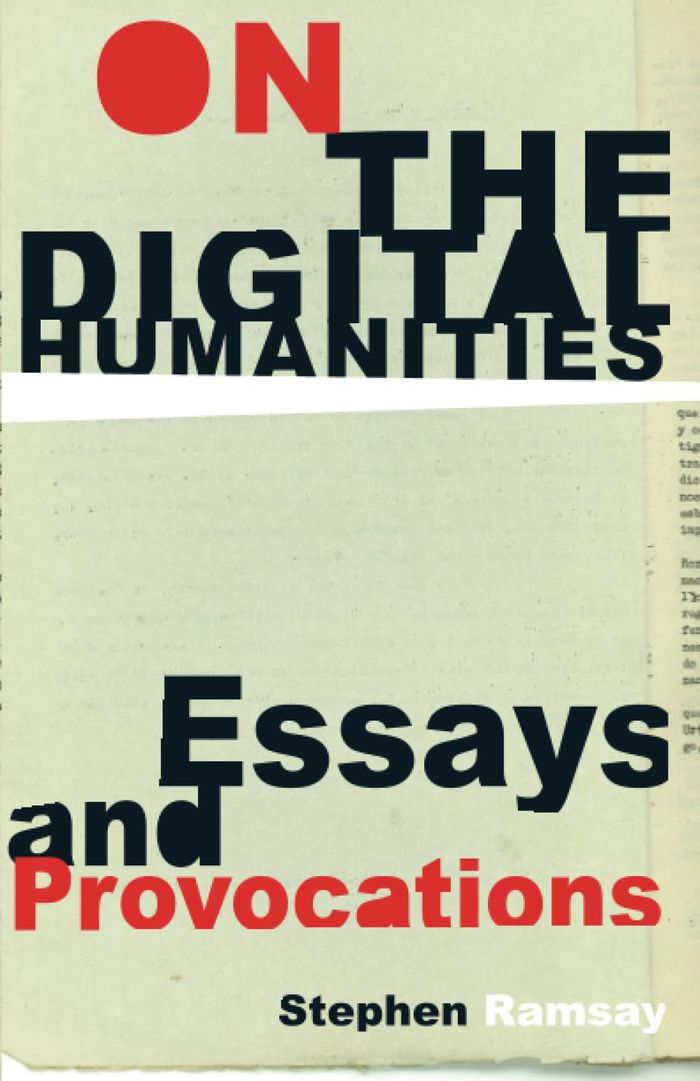
Since its inception, the digital humanities has been repeatedly attacked as a threat to the humanities: warnings from literary and cultural theorists of technology overtaking English departments and the mechanization of teaching have peppered popular media. Stephen Ramsay’s ''On the digital humanities'', a collection of essays spanning the personal to the polemic, is a spirited defense of the field of digital humanities. A founding figure in what was once known as 'humanities computing,' Ramsay has a well-known and contentious relationship with what is now called the digital humanities (DH). Here Ramsay collects and updates his most influential and notorious essays and speeches from the past fifteen years, considering DH from an array of practical and theoretical perspectives. The essays pursue a broad variety of themes, including the nature of data and its place in more conventional notions of text and interpretation, the relationship between the constraints of computation and the more open-ended nature of the humanities, the positioning of practical skills and infrastructures in both research and pedagogical contexts, the status of DH as a program for political and social action, and personal reflections on the author’s journey into the field as both a theorist and a technologist. These wide-ranging essays all center around one idea: that DH not forsake its connection to the humanities. While 'digital humanities' may sound like an entirely new form of engagement with the artifacts of human culture, Ramsay argues that the field well reveals what is most essential to humanistic inquiry.
On the digital humanities
Actions:
Prix:
$35.99
(disponible sur commande)
Résumé:
Since its inception, the digital humanities has been repeatedly attacked as a threat to the humanities: warnings from literary and cultural theorists of technology overtaking English departments and the mechanization of teaching have peppered popular media. Stephen Ramsay’s ''On the digital humanities'', a collection of essays spanning the personal to the polemic, is a spirited defense of the field of digital humanities. A founding figure in what was once known as 'humanities computing,' Ramsay has a well-known and contentious relationship with what is now called the digital humanities (DH). Here Ramsay collects and updates his most influential and notorious essays and speeches from the past fifteen years, considering DH from an array of practical and theoretical perspectives. The essays pursue a broad variety of themes, including the nature of data and its place in more conventional notions of text and interpretation, the relationship between the constraints of computation and the more open-ended nature of the humanities, the positioning of practical skills and infrastructures in both research and pedagogical contexts, the status of DH as a program for political and social action, and personal reflections on the author’s journey into the field as both a theorist and a technologist. These wide-ranging essays all center around one idea: that DH not forsake its connection to the humanities. While 'digital humanities' may sound like an entirely new form of engagement with the artifacts of human culture, Ramsay argues that the field well reveals what is most essential to humanistic inquiry.
Classification:
livres
livres
Publication:
août 2023
août 2023
Classification:
livres
livres
Titre:
The new downtown library
The new downtown library
Actions:
Prix:
$45.00
(disponible sur commande)
Résumé:
The past twenty years have seen a building boom for downtown public libraries. From Brooklyn to Seattle, architects, civic leaders, and citizens in major U.S. cities have worked to reassert the relevance of the central library. While the libraries’ primary functions—as public spaces where information is gathered, organized, preserved, and made available for use—have not(...)
$45.00
(disponible sur commande)
Résumé:
The past twenty years have seen a building boom for downtown public libraries. From Brooklyn to Seattle, architects, civic leaders, and citizens in major U.S. cities have worked to reassert the relevance of the central library. While the libraries’ primary functions—as public spaces where information is gathered, organized, preserved, and made available for use—have not(...)
Publication:
janvier 2007, Minneapolis / London
janvier 2007, Minneapolis / London
Titre:
The new downtown library
Actions:
Prix:
$45.00
(disponible sur commande)
Résumé:
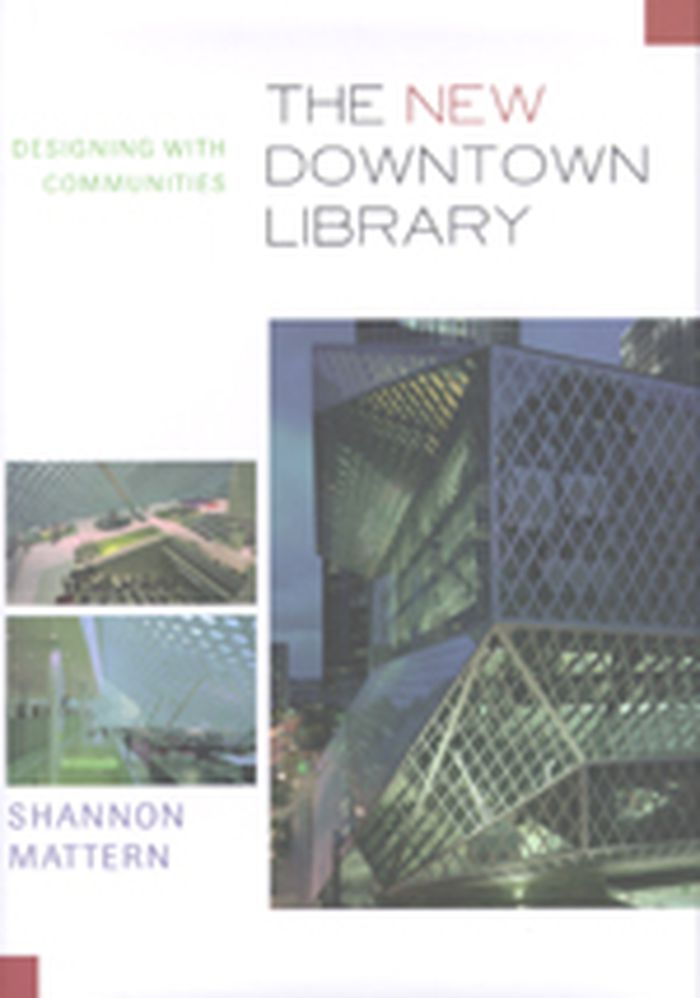
The past twenty years have seen a building boom for downtown public libraries. From Brooklyn to Seattle, architects, civic leaders, and citizens in major U.S. cities have worked to reassert the relevance of the central library. While the libraries’ primary functions—as public spaces where information is gathered, organized, preserved, and made available for use—have not changed over the years, the processes by which they accomplish these goals have. These new processes, and the public debates surrounding them, have radically influenced the utility and design of new library buildings. In The New Downtown Library, Shannon Mattern draws on a diverse range of sources to investigate how libraries serve as multiuse public spaces, anchors in urban redevelopment, civic icons, and showcases of renowned architects like Rem Koolhaas, Cesar Pelli, and Enrique Norton. Mattern’s clear and careful analysis reveals the complexity of contemporary dialogues in library design, highlighting the roles that staff, the public, and other special interest groups play. Mattern also describes how the libraries manifest changing demographics, new ways of organizing collections and delivering media, and current philosophies of librarianship. By identifying unifying themes as well as examining the differences among various design projects, Mattern brings to light the social forces, as well as their architectural expressions, that form the essence of new libraries and their vital place in public life. Featured libraries are located in Brooklyn, Cincinnati, Cleveland, Chicago, Denver, Los Angeles, Minneapolis, Nashville, New York, Phoenix, Salt Lake City, San Antonio, San Francisco, Seattle, and Toledo.
The new downtown library
Actions:
Prix:
$45.00
(disponible sur commande)
Résumé:
The past twenty years have seen a building boom for downtown public libraries. From Brooklyn to Seattle, architects, civic leaders, and citizens in major U.S. cities have worked to reassert the relevance of the central library. While the libraries’ primary functions—as public spaces where information is gathered, organized, preserved, and made available for use—have not changed over the years, the processes by which they accomplish these goals have. These new processes, and the public debates surrounding them, have radically influenced the utility and design of new library buildings. In The New Downtown Library, Shannon Mattern draws on a diverse range of sources to investigate how libraries serve as multiuse public spaces, anchors in urban redevelopment, civic icons, and showcases of renowned architects like Rem Koolhaas, Cesar Pelli, and Enrique Norton. Mattern’s clear and careful analysis reveals the complexity of contemporary dialogues in library design, highlighting the roles that staff, the public, and other special interest groups play. Mattern also describes how the libraries manifest changing demographics, new ways of organizing collections and delivering media, and current philosophies of librarianship. By identifying unifying themes as well as examining the differences among various design projects, Mattern brings to light the social forces, as well as their architectural expressions, that form the essence of new libraries and their vital place in public life. Featured libraries are located in Brooklyn, Cincinnati, Cleveland, Chicago, Denver, Los Angeles, Minneapolis, Nashville, New York, Phoenix, Salt Lake City, San Antonio, San Francisco, Seattle, and Toledo.
Classification:
livres
livres
Publication:
janvier 2007, Minneapolis / London
janvier 2007, Minneapolis / London
Classification:
livres
livres
Prix:
$49.50
(disponible sur commande)
Résumé:
Beginning with agoraphobia and claustrophobia in the late nineteenth century, followed by shell shock and panic fear after World War I, phobias and anxiety came to be seen as the mental condition of modern life. They became incorporated into the media and arts, in particular the (...)
$49.50
(disponible sur commande)
Résumé:
Beginning with agoraphobia and claustrophobia in the late nineteenth century, followed by shell shock and panic fear after World War I, phobias and anxiety came to be seen as the mental condition of modern life. They became incorporated into the media and arts, in particular the (...)
Titre:
Warped space : art, architecture, and anxiety in modern culture
Actions:
Prix:
$49.50
(disponible sur commande)
Résumé:
Beginning with agoraphobia and claustrophobia in the late nineteenth century, followed by shell shock and panic fear after World War I, phobias and anxiety came to be seen as the mental condition of modern life. They became incorporated into the media and arts, in particular the spatial arts of architecture, urbanism, and film. This "spatial warping" is now being reshaped by digitalization and virtual reality. Anthony Vidler is concerned with two forms of warped space. The first, a psychological space, is the repository of neuroses and phobias. This space is not empty but full of disturbing forms, including those of architecture and the city. The second kind of warping is produced when artists break the boundaries of genre to depict space in new ways. Vidler traces the emergence of a psychological idea of space from Pascal and Freud to the identification of agoraphobia and claustrophobia in the nineteenth century to twentieth-century theories of spatial alienation and estrangement in the writings of Georg Simmel, Siegfried Kracauer, and Walter Benjamin. Focusing on current conditions of displacement and placelessness, he examines ways in which contemporary artists and architects have produced new forms of spatial warping. The discussion ranges from theorists such as Jacques Lacan and Gilles Deleuze to artists such as Vito Acconci, Mike Kelley, Martha Rosler, and Rachel Whiteread. Finally, Vidler looks at the architectural experiments of Frank Gehry, Coop Himmelblau, Daniel Libeskind, Greg Lynn, Morphosis, and Eric Owen Moss in the light of new digital techniques that, while relying on traditional perspective, have radically transformed the composition, production, and experience of architecture.
Warped space : art, architecture, and anxiety in modern culture
Actions:
Prix:
$49.50
(disponible sur commande)
Résumé:
Beginning with agoraphobia and claustrophobia in the late nineteenth century, followed by shell shock and panic fear after World War I, phobias and anxiety came to be seen as the mental condition of modern life. They became incorporated into the media and arts, in particular the spatial arts of architecture, urbanism, and film. This "spatial warping" is now being reshaped by digitalization and virtual reality. Anthony Vidler is concerned with two forms of warped space. The first, a psychological space, is the repository of neuroses and phobias. This space is not empty but full of disturbing forms, including those of architecture and the city. The second kind of warping is produced when artists break the boundaries of genre to depict space in new ways. Vidler traces the emergence of a psychological idea of space from Pascal and Freud to the identification of agoraphobia and claustrophobia in the nineteenth century to twentieth-century theories of spatial alienation and estrangement in the writings of Georg Simmel, Siegfried Kracauer, and Walter Benjamin. Focusing on current conditions of displacement and placelessness, he examines ways in which contemporary artists and architects have produced new forms of spatial warping. The discussion ranges from theorists such as Jacques Lacan and Gilles Deleuze to artists such as Vito Acconci, Mike Kelley, Martha Rosler, and Rachel Whiteread. Finally, Vidler looks at the architectural experiments of Frank Gehry, Coop Himmelblau, Daniel Libeskind, Greg Lynn, Morphosis, and Eric Owen Moss in the light of new digital techniques that, while relying on traditional perspective, have radically transformed the composition, production, and experience of architecture.
Classification:
livres
livres
Publication:
juin 2000, Cambridge, Mass.
juin 2000, Cambridge, Mass.
Sujet:
Théorie de l’architecture
Théorie de l’architecture
Classification:
livres
livres
Titre:
New retail
New retail
Actions:
Prix:
$89.95
(disponible sur commande)
Résumé:
about the book In the decades since the advent of the shopping mall, shopping has become synonymous with entertainment and the retail store a key player in establishing brand identity. In a growing trend, high-profile architects are designing provocative storefronts and interiors that create an aura of exclusivity, draw in customers, and attract media attention(...)
$89.95
(disponible sur commande)
Résumé:
about the book In the decades since the advent of the shopping mall, shopping has become synonymous with entertainment and the retail store a key player in establishing brand identity. In a growing trend, high-profile architects are designing provocative storefronts and interiors that create an aura of exclusivity, draw in customers, and attract media attention(...)
Publication:
mai 2005, London, New York
mai 2005, London, New York
Titre:
New retail
Actions:
Prix:
$89.95
(disponible sur commande)
Résumé:
about the book In the decades since the advent of the shopping mall, shopping has become synonymous with entertainment and the retail store a key player in establishing brand identity. In a growing trend, high-profile architects are designing provocative storefronts and interiors that create an aura of exclusivity, draw in customers, and attract media attention rivaling the goods within. New Retail examines this phenomenon with an overview of 24 of the most innovative retail spaces built around the world in recent years, designed by high-profile international architects as well as smaller cutting-edge firms. Projects in the book include the Carlos Miele store in New York (Asymptote), three stores for Louis Vuitton in New York and Tokyo (Jun Aoki), Selfridges in Birmingham, the UK (Future Systems), two clothing boutiques in São Paulo (Isay Weinfeld), the Mandarina Duck store in Paris (NL Architects), and the Mpries Supermarket in Austria (Dominique Perrault), among others. More than 250 color photographs as well as floor plans and site plans showcase the architectural and interior design, lighting, and often experimental materials that create these ultimate retail spaces. For the Selfridges department store, for example, Future Systems clad the building with 15,000 aluminum disks attached to a sprayed concrete surface. In New York, the interior of the Carlos Miele store by Asymptote features a sensual, sculptural white ceiling of molded high-gloss PVC-based material. Each project is accompanied by a 500-to-700-word description that explains the design concept, site, program, and significant building technologies and materials. A general introduction discusses precedents to these projects and current issues in the architecture and design of retail spaces.
New retail
Actions:
Prix:
$89.95
(disponible sur commande)
Résumé:
about the book In the decades since the advent of the shopping mall, shopping has become synonymous with entertainment and the retail store a key player in establishing brand identity. In a growing trend, high-profile architects are designing provocative storefronts and interiors that create an aura of exclusivity, draw in customers, and attract media attention rivaling the goods within. New Retail examines this phenomenon with an overview of 24 of the most innovative retail spaces built around the world in recent years, designed by high-profile international architects as well as smaller cutting-edge firms. Projects in the book include the Carlos Miele store in New York (Asymptote), three stores for Louis Vuitton in New York and Tokyo (Jun Aoki), Selfridges in Birmingham, the UK (Future Systems), two clothing boutiques in São Paulo (Isay Weinfeld), the Mandarina Duck store in Paris (NL Architects), and the Mpries Supermarket in Austria (Dominique Perrault), among others. More than 250 color photographs as well as floor plans and site plans showcase the architectural and interior design, lighting, and often experimental materials that create these ultimate retail spaces. For the Selfridges department store, for example, Future Systems clad the building with 15,000 aluminum disks attached to a sprayed concrete surface. In New York, the interior of the Carlos Miele store by Asymptote features a sensual, sculptural white ceiling of molded high-gloss PVC-based material. Each project is accompanied by a 500-to-700-word description that explains the design concept, site, program, and significant building technologies and materials. A general introduction discusses precedents to these projects and current issues in the architecture and design of retail spaces.
Classification:
livres
livres
Publication:
mai 2005, London, New York
mai 2005, London, New York
Classification:
périodiques
périodiques
Titre:
Open 6 (in)security
Open 6 (in)security
Actions:
Prix:
$36.00
(disponible sur commande)
Résumé:
There is a yearning for security in today's public domain. The individual and the community are increasingly demanding protection from and control over the space, themselves and others. A society of control is looming, but one lacking a clear idea about the nature and the origin of its underlying fears. This cahier examines the consequences of the current preoccupation(...)
$36.00
(disponible sur commande)
Résumé:
There is a yearning for security in today's public domain. The individual and the community are increasingly demanding protection from and control over the space, themselves and others. A society of control is looming, but one lacking a clear idea about the nature and the origin of its underlying fears. This cahier examines the consequences of the current preoccupation(...)
Sujet:
Revues
Revues
Publication:
août 2004, Rotterdam
août 2004, Rotterdam
Titre:
Open 6 (in)security
Actions:
Prix:
$36.00
(disponible sur commande)
Résumé:
There is a yearning for security in today's public domain. The individual and the community are increasingly demanding protection from and control over the space, themselves and others. A society of control is looming, but one lacking a clear idea about the nature and the origin of its underlying fears. This cahier examines the consequences of the current preoccupation with security for the public space and the visual arts. What are the implications for the functioning of the public domain, for its arrangement, design and experience? And how does this influence the task and perception of art? From art, architecture, philosophy and politics come theoretical and practical scenarios, proposals and visions that expose something of today's security paradigm, advocate alternative (conceptual) models or offer insights into the current ethics and aesthetics of security. Gijs van Oenen subjects the 'new securityscape' to a critical analysis. Lieven De Cauter digs into the various strata of the new fear. Sean Snyder presents images from his Temporary Occupation project. Thomas Y. Levin looks at how artists deal with surveillance in the public space. Sven Lütticken reflects on the concept of a 'human park' in philosophy, art and media. Harm Tilman focuses on architecture in a society of control. Mark Wigley analyses the issue of security in relation to the World Trade Center buildings in New York. Hans Boutellier wishes art would apply the brakes to the security Utopia. Jouke Kleerebezem calls for vigilance in the information society. Willem van Weelden discusses the project in Kanaleneiland, Utrecht. Q.S. Serafijn shows multiple dimensions of the interactive D-Tower in Doetinchem. Mark Wigley dissects the abode of the Unabomber.
Open 6 (in)security
Actions:
Prix:
$36.00
(disponible sur commande)
Résumé:
There is a yearning for security in today's public domain. The individual and the community are increasingly demanding protection from and control over the space, themselves and others. A society of control is looming, but one lacking a clear idea about the nature and the origin of its underlying fears. This cahier examines the consequences of the current preoccupation with security for the public space and the visual arts. What are the implications for the functioning of the public domain, for its arrangement, design and experience? And how does this influence the task and perception of art? From art, architecture, philosophy and politics come theoretical and practical scenarios, proposals and visions that expose something of today's security paradigm, advocate alternative (conceptual) models or offer insights into the current ethics and aesthetics of security. Gijs van Oenen subjects the 'new securityscape' to a critical analysis. Lieven De Cauter digs into the various strata of the new fear. Sean Snyder presents images from his Temporary Occupation project. Thomas Y. Levin looks at how artists deal with surveillance in the public space. Sven Lütticken reflects on the concept of a 'human park' in philosophy, art and media. Harm Tilman focuses on architecture in a society of control. Mark Wigley analyses the issue of security in relation to the World Trade Center buildings in New York. Hans Boutellier wishes art would apply the brakes to the security Utopia. Jouke Kleerebezem calls for vigilance in the information society. Willem van Weelden discusses the project in Kanaleneiland, Utrecht. Q.S. Serafijn shows multiple dimensions of the interactive D-Tower in Doetinchem. Mark Wigley dissects the abode of the Unabomber.
Classification:
périodiques
périodiques
Publication:
août 2004, Rotterdam
août 2004, Rotterdam
Sujet:
Revues
Revues


