


1026 Résultats
Classification:
livres
livres
Titre:
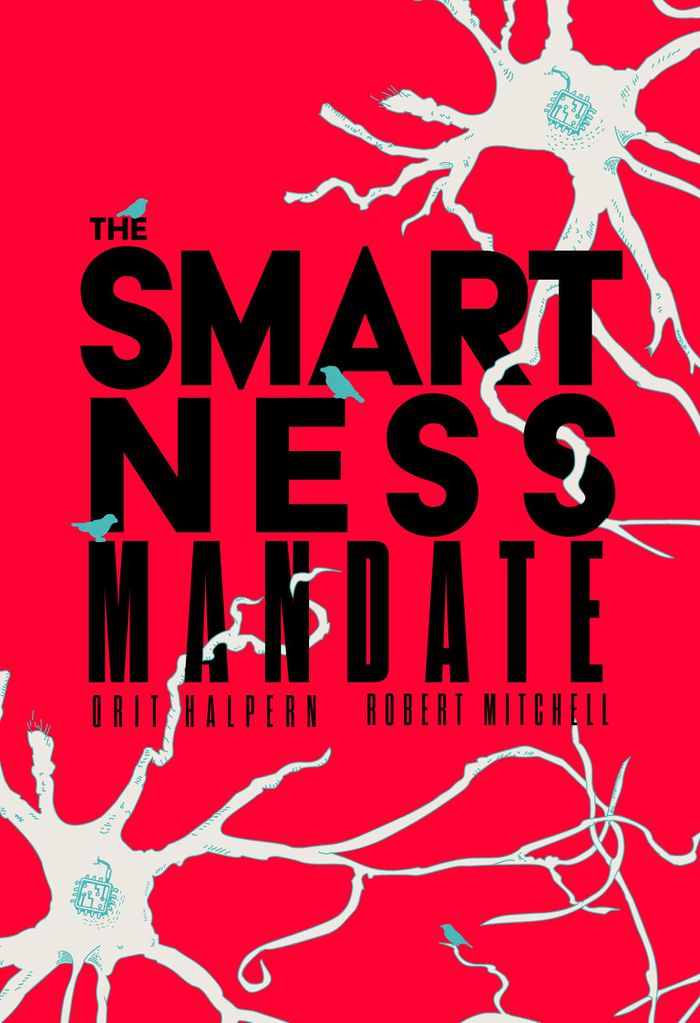
The smartness mandate
The smartness mandate
Actions:
Prix:
$47.00
(disponible sur commande)
Résumé:
In this book, the authors suggest that "smartness" is not primarily a technology, but rather an epistemology. Through this lens, they offer a critical exploration of the practices, technologies, and subjects that such an understanding relies upon—above all, artificial intelligence and machine learning. They approach these not simply as techniques for solving problems of(...)
$47.00
(disponible sur commande)
Résumé:
In this book, the authors suggest that "smartness" is not primarily a technology, but rather an epistemology. Through this lens, they offer a critical exploration of the practices, technologies, and subjects that such an understanding relies upon—above all, artificial intelligence and machine learning. They approach these not simply as techniques for solving problems of(...)
Publication:
décembre 2022
décembre 2022
Titre:
The smartness mandate
Actions:
Prix:
$47.00
(disponible sur commande)
Résumé:
In this book, the authors suggest that "smartness" is not primarily a technology, but rather an epistemology. Through this lens, they offer a critical exploration of the practices, technologies, and subjects that such an understanding relies upon—above all, artificial intelligence and machine learning. They approach these not simply as techniques for solving problems of calculations, but rather as modes of managing life (human and other) in terms of neo-Darwinian evolution, distributed intelligences, and "resilience," all of which have serious implications for society, politics, and the environment.
The smartness mandate
Actions:
Prix:
$47.00
(disponible sur commande)
Résumé:
In this book, the authors suggest that "smartness" is not primarily a technology, but rather an epistemology. Through this lens, they offer a critical exploration of the practices, technologies, and subjects that such an understanding relies upon—above all, artificial intelligence and machine learning. They approach these not simply as techniques for solving problems of calculations, but rather as modes of managing life (human and other) in terms of neo-Darwinian evolution, distributed intelligences, and "resilience," all of which have serious implications for society, politics, and the environment.
Classification:
livres
livres
Publication:
décembre 2022
décembre 2022
Classification:
livres
livres

Actions:
Prix:
$47.00
(disponible sur commande)
Résumé:
The only way to handle data responsibly, says Melanie Feinberg in this incisive work, is to take into account its human character. Though the data she discusses may seem familiar, close scrutiny shows it to be ambiguous, complicated, and uncertain: unruly. Drawing on the tools of information science, she uses everyday events to demonstrate a practical, critical, and(...)
$47.00
(disponible sur commande)
Résumé:
The only way to handle data responsibly, says Melanie Feinberg in this incisive work, is to take into account its human character. Though the data she discusses may seem familiar, close scrutiny shows it to be ambiguous, complicated, and uncertain: unruly. Drawing on the tools of information science, she uses everyday events to demonstrate a practical, critical, and(...)
Titre:
Everyday adventures with unruly data
Actions:
Prix:
$47.00
(disponible sur commande)
Résumé:
The only way to handle data responsibly, says Melanie Feinberg in this incisive work, is to take into account its human character. Though the data she discusses may seem familiar, close scrutiny shows it to be ambiguous, complicated, and uncertain: unruly. Drawing on the tools of information science, she uses everyday events to demonstrate a practical, critical, and generative mode of thinking about data: its creation, management, aggregation, and use. As she reflects on the implications of commonplace events, Feinberg explicates fundamental concepts of data that reveal the many tiny design decisions—which may not even seem like design at all—that shape how data comes to be. Through the themes of serendipity, objectivity, equivalence, interoperability, taxonomy, labels, and locality, she illuminates the surprisingly pervasive role of data in our daily thoughts and lives.
Everyday adventures with unruly data
Actions:
Prix:
$47.00
(disponible sur commande)
Résumé:
The only way to handle data responsibly, says Melanie Feinberg in this incisive work, is to take into account its human character. Though the data she discusses may seem familiar, close scrutiny shows it to be ambiguous, complicated, and uncertain: unruly. Drawing on the tools of information science, she uses everyday events to demonstrate a practical, critical, and generative mode of thinking about data: its creation, management, aggregation, and use. As she reflects on the implications of commonplace events, Feinberg explicates fundamental concepts of data that reveal the many tiny design decisions—which may not even seem like design at all—that shape how data comes to be. Through the themes of serendipity, objectivity, equivalence, interoperability, taxonomy, labels, and locality, she illuminates the surprisingly pervasive role of data in our daily thoughts and lives.
Classification:
livres
livres
Publication:
octobre 2022
octobre 2022
Classification:
livres
livres

Titre:
DNA 14: Archives and Utopia
DNA 14: Archives and Utopia
Actions:
Prix:
$21.00
(disponible en magasin)
Résumé:
Traditional archivism runs the risk of perpetuating hegemonic ways of thinking by anticipating what will be of importance in the future through the framework of present-day realities and power structures. These genre-busting ruminations gather new methods for designing views of potential worlds and forms of archival activism.
$21.00
(disponible en magasin)
Résumé:
Traditional archivism runs the risk of perpetuating hegemonic ways of thinking by anticipating what will be of importance in the future through the framework of present-day realities and power structures. These genre-busting ruminations gather new methods for designing views of potential worlds and forms of archival activism.
Publication:
décembre 2022
décembre 2022
Titre:
DNA 14: Archives and Utopia
Actions:
Prix:
$21.00
(disponible en magasin)
Résumé:
Traditional archivism runs the risk of perpetuating hegemonic ways of thinking by anticipating what will be of importance in the future through the framework of present-day realities and power structures. These genre-busting ruminations gather new methods for designing views of potential worlds and forms of archival activism.
DNA 14: Archives and Utopia
Actions:
Prix:
$21.00
(disponible en magasin)
Résumé:
Traditional archivism runs the risk of perpetuating hegemonic ways of thinking by anticipating what will be of importance in the future through the framework of present-day realities and power structures. These genre-busting ruminations gather new methods for designing views of potential worlds and forms of archival activism.
Classification:
livres
livres
Publication:
décembre 2022
décembre 2022
Classification:
livres
livres

Prix:
$25.00
(disponible sur commande)
Résumé:
This volume explores the curious afterlives of the floppy disk in the 21st century through the work of those involved with the medium today. The book reflects on notions of obsolescence, media preservation and nostalgia, and challenges these by showing the endurance and versatility of this familiar piece of technology. From floppy filmmakers to floppy painters and beyond:(...)
$25.00
(disponible sur commande)
Résumé:
This volume explores the curious afterlives of the floppy disk in the 21st century through the work of those involved with the medium today. The book reflects on notions of obsolescence, media preservation and nostalgia, and challenges these by showing the endurance and versatility of this familiar piece of technology. From floppy filmmakers to floppy painters and beyond:(...)
Publication:
novembre 2022
novembre 2022
Titre:
Floppy disk fever: The curious afterlives of a flexible medium
Actions:
Prix:
$25.00
(disponible sur commande)
Résumé:
This volume explores the curious afterlives of the floppy disk in the 21st century through the work of those involved with the medium today. The book reflects on notions of obsolescence, media preservation and nostalgia, and challenges these by showing the endurance and versatility of this familiar piece of technology. From floppy filmmakers to floppy painters and beyond: what drives people to continue working with the medium that is typically deemed obsolete? What challenges and affordances does it provide? And what does the future hold in store for the familiar black square? By looking at the current presence of past technology we can assess our present-day situation and speculate on the future developments of our media landscape. After all, the technology of the past is also part of our future. This volume features interviews with key players in the contemporary floppy-disk world, including not only artists and filmmakers using floppy disks in their practice but also businessmen, archivists and museum proprietors working to preserve the medium.
Floppy disk fever: The curious afterlives of a flexible medium
Actions:
Prix:
$25.00
(disponible sur commande)
Résumé:
This volume explores the curious afterlives of the floppy disk in the 21st century through the work of those involved with the medium today. The book reflects on notions of obsolescence, media preservation and nostalgia, and challenges these by showing the endurance and versatility of this familiar piece of technology. From floppy filmmakers to floppy painters and beyond: what drives people to continue working with the medium that is typically deemed obsolete? What challenges and affordances does it provide? And what does the future hold in store for the familiar black square? By looking at the current presence of past technology we can assess our present-day situation and speculate on the future developments of our media landscape. After all, the technology of the past is also part of our future. This volume features interviews with key players in the contemporary floppy-disk world, including not only artists and filmmakers using floppy disks in their practice but also businessmen, archivists and museum proprietors working to preserve the medium.
Classification:
livres
livres
Publication:
novembre 2022
novembre 2022
Classification:
livres
livres

Prix:
$23.95
(disponible sur commande)
Résumé:
This book makes available for the first time in English an important interview on the topic of photography that Jacques Derrida granted in 1992 to the German theorist of photography Hubertus von Amelunxen and the German literary and media theorist Michael Wetzel. Their conversation addresses questions of presence and its manufacture, the technicity of presentation, the(...)
$23.95
(disponible sur commande)
Résumé:
This book makes available for the first time in English an important interview on the topic of photography that Jacques Derrida granted in 1992 to the German theorist of photography Hubertus von Amelunxen and the German literary and media theorist Michael Wetzel. Their conversation addresses questions of presence and its manufacture, the technicity of presentation, the(...)
Publication:
août 2010
août 2010
Titre:
Copy, archive, signature: A conversation on photography
Actions:
Prix:
$23.95
(disponible sur commande)
Résumé:
This book makes available for the first time in English an important interview on the topic of photography that Jacques Derrida granted in 1992 to the German theorist of photography Hubertus von Amelunxen and the German literary and media theorist Michael Wetzel. Their conversation addresses questions of presence and its manufacture, the technicity of presentation, the volatility of the authorial subject, and the concept of memory. Derrida offers a penetrating intervention with regard to the distinctive nature of photography vis-à-vis related technologies such as cinema, television, and video. Questioning the divides between so-called old and new media, original and reproduction, analog and digital modes of recording and presenting, he provides stimulating insights into the ways in which we think and speak about the photographic image today.
Copy, archive, signature: A conversation on photography
Actions:
Prix:
$23.95
(disponible sur commande)
Résumé:
This book makes available for the first time in English an important interview on the topic of photography that Jacques Derrida granted in 1992 to the German theorist of photography Hubertus von Amelunxen and the German literary and media theorist Michael Wetzel. Their conversation addresses questions of presence and its manufacture, the technicity of presentation, the volatility of the authorial subject, and the concept of memory. Derrida offers a penetrating intervention with regard to the distinctive nature of photography vis-à-vis related technologies such as cinema, television, and video. Questioning the divides between so-called old and new media, original and reproduction, analog and digital modes of recording and presenting, he provides stimulating insights into the ways in which we think and speak about the photographic image today.
Classification:
livres
livres
Publication:
août 2010
août 2010
Classification:
livres
livres
Titre:
Digital cultures
Digital cultures
Actions:
Prix:
$26.00
(disponible sur commande)
Résumé:
Writing accessibly about the underlying technology, Doueihi explores the multidimensional question of what it means to participate in online culture—from literacy and citizenship to texts, archiving, and storage. By bringing together topics explored separately elsewhere—such as copyright, digital subjectivity, and social networks—Digital Cultures offers a comprehensive(...)
$26.00
(disponible sur commande)
Résumé:
Writing accessibly about the underlying technology, Doueihi explores the multidimensional question of what it means to participate in online culture—from literacy and citizenship to texts, archiving, and storage. By bringing together topics explored separately elsewhere—such as copyright, digital subjectivity, and social networks—Digital Cultures offers a comprehensive(...)
Titre:
Digital cultures
Actions:
Prix:
$26.00
(disponible sur commande)
Résumé:
Writing accessibly about the underlying technology, Doueihi explores the multidimensional question of what it means to participate in online culture—from literacy and citizenship to texts, archiving, and storage. By bringing together topics explored separately elsewhere—such as copyright, digital subjectivity, and social networks—Digital Cultures offers a comprehensive view of the emerging digital space.
Digital cultures
Actions:
Prix:
$26.00
(disponible sur commande)
Résumé:
Writing accessibly about the underlying technology, Doueihi explores the multidimensional question of what it means to participate in online culture—from literacy and citizenship to texts, archiving, and storage. By bringing together topics explored separately elsewhere—such as copyright, digital subjectivity, and social networks—Digital Cultures offers a comprehensive view of the emerging digital space.
Classification:
livres
livres
Publication:
mars 2011
mars 2011
Classification:
livres
livres

Actions:
Prix:
$31.00
(disponible sur commande)
Résumé:
Today on almost every desk in every office sits a computer. Eighty years ago, desktops were equipped with a nonelectronic data processing machine: a card file. In this publication, Markus Krajewski traces the evolution of this proto-computer of rearrangeable parts (file cards) that became ubiquitous in offices between the world wars. The story begins with Konrad(...)
$31.00
(disponible sur commande)
Résumé:
Today on almost every desk in every office sits a computer. Eighty years ago, desktops were equipped with a nonelectronic data processing machine: a card file. In this publication, Markus Krajewski traces the evolution of this proto-computer of rearrangeable parts (file cards) that became ubiquitous in offices between the world wars. The story begins with Konrad(...)
Titre:
Paper machines : about cards & catalogs, 1548-1929
Actions:
Prix:
$31.00
(disponible sur commande)
Résumé:
Today on almost every desk in every office sits a computer. Eighty years ago, desktops were equipped with a nonelectronic data processing machine: a card file. In this publication, Markus Krajewski traces the evolution of this proto-computer of rearrangeable parts (file cards) that became ubiquitous in offices between the world wars. The story begins with Konrad Gessner, a sixteenth-century Swiss polymath who described a new method of processing data: to cut up a sheet of handwritten notes into slips of paper, with one fact or topic per slip, and arrange as desired. In the late eighteenth century, the card catalog became the librarian's answer to the threat of information overload. Then, at the turn of the twentieth century, business adopted the technology of the card catalog as a bookkeeping tool. Krajewski explores this conceptual development and casts the card file as a "universal paper machine" that accomplishes the basic operations of Turing's universal discrete machine: storing, processing, and transferring data. In telling his story, Krajewski takes the reader on a number of illuminating detours, telling us, for example, that the card catalog and the numbered street address emerged at the same time in the same city (Vienna), and that Harvard University's home-grown cataloging system grew out of a librarian's laziness; and that Melvil Dewey (originator of the Dewey Decimal System) helped bring about the technology transfer of card files to business.
Paper machines : about cards & catalogs, 1548-1929
Actions:
Prix:
$31.00
(disponible sur commande)
Résumé:
Today on almost every desk in every office sits a computer. Eighty years ago, desktops were equipped with a nonelectronic data processing machine: a card file. In this publication, Markus Krajewski traces the evolution of this proto-computer of rearrangeable parts (file cards) that became ubiquitous in offices between the world wars. The story begins with Konrad Gessner, a sixteenth-century Swiss polymath who described a new method of processing data: to cut up a sheet of handwritten notes into slips of paper, with one fact or topic per slip, and arrange as desired. In the late eighteenth century, the card catalog became the librarian's answer to the threat of information overload. Then, at the turn of the twentieth century, business adopted the technology of the card catalog as a bookkeeping tool. Krajewski explores this conceptual development and casts the card file as a "universal paper machine" that accomplishes the basic operations of Turing's universal discrete machine: storing, processing, and transferring data. In telling his story, Krajewski takes the reader on a number of illuminating detours, telling us, for example, that the card catalog and the numbered street address emerged at the same time in the same city (Vienna), and that Harvard University's home-grown cataloging system grew out of a librarian's laziness; and that Melvil Dewey (originator of the Dewey Decimal System) helped bring about the technology transfer of card files to business.
Classification:
livres
livres
Publication:
octobre 2011
octobre 2011
Classification:
livres
livres
Actions:
Prix:
$39.95
(disponible sur commande)
Résumé:
Since the early twentieth century, contemporary art and art theory have creatively challenged the status of representation. During that time, the court of law has come to rely on a variety of new representational modes and technologies. The law is increasingly staged on a screen and the photographs, video documents, audio recordings used as evidence are not entirely(...)
$39.95
(disponible sur commande)
Résumé:
Since the early twentieth century, contemporary art and art theory have creatively challenged the status of representation. During that time, the court of law has come to rely on a variety of new representational modes and technologies. The law is increasingly staged on a screen and the photographs, video documents, audio recordings used as evidence are not entirely(...)
Publication:
janvier 2012
janvier 2012
Titre:
A thousand eyes: media technology, law and esthetics
Actions:
Prix:
$39.95
(disponible sur commande)
Résumé:
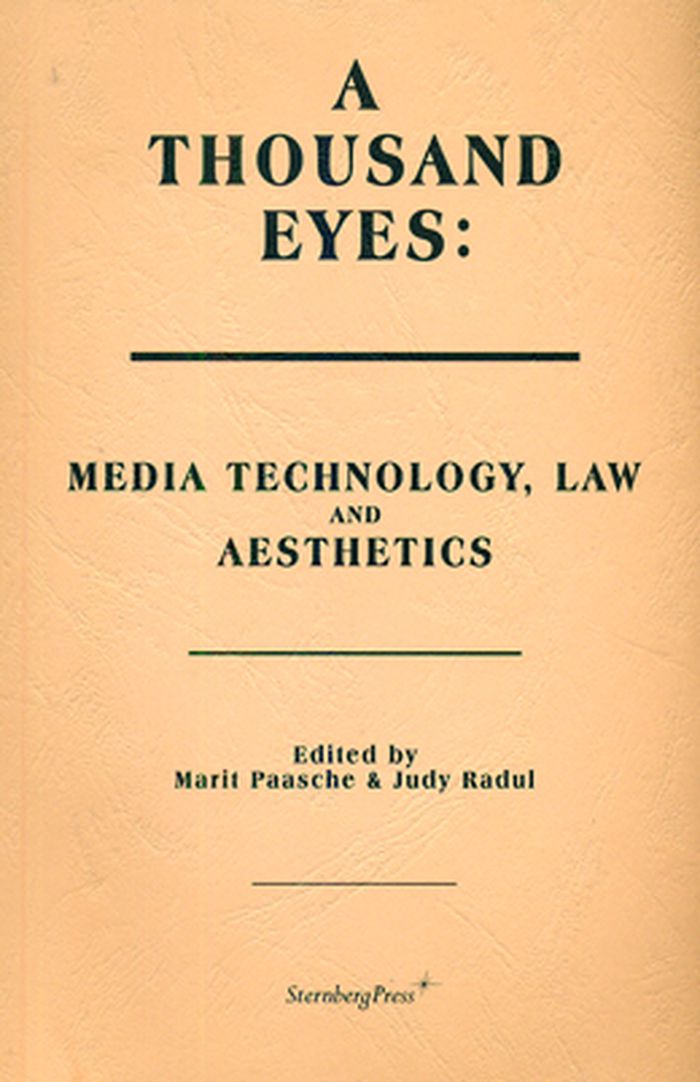
Since the early twentieth century, contemporary art and art theory have creatively challenged the status of representation. During that time, the court of law has come to rely on a variety of new representational modes and technologies. The law is increasingly staged on a screen and the photographs, video documents, audio recordings used as evidence are not entirely distinct from their correlates in contemporary art, cinema and mass media. What questions of representation, judgment and justice cross borders between art and the law? Through the contribution of internationally renowned artists and scholars, this anthology explores how the aesthetics of new media technology and its spatial implementations affect the judicial system in relation to fundamental concepts such as truth and representation. Artistic contributions by John Baldessari, Dan Graham, Harun Farocki, Stan Douglas, Aernout Mik, Agency, Judy Radul, Renzo Martens, Ana Torfs, The Atlas Group, René Magritte, Model Court, Rana Hamadeh, Thomas Demand, Les Levine Essays by Julie A. Cassiday, Costas Douzinas, Piyel Haldar, Martin Jay, Peter Goodrich, Richard Mohr, Judy Radul, Avital Ronell, Eyal Sivan, Cornelia Vismann
A thousand eyes: media technology, law and esthetics
Actions:
Prix:
$39.95
(disponible sur commande)
Résumé:
Since the early twentieth century, contemporary art and art theory have creatively challenged the status of representation. During that time, the court of law has come to rely on a variety of new representational modes and technologies. The law is increasingly staged on a screen and the photographs, video documents, audio recordings used as evidence are not entirely distinct from their correlates in contemporary art, cinema and mass media. What questions of representation, judgment and justice cross borders between art and the law? Through the contribution of internationally renowned artists and scholars, this anthology explores how the aesthetics of new media technology and its spatial implementations affect the judicial system in relation to fundamental concepts such as truth and representation. Artistic contributions by John Baldessari, Dan Graham, Harun Farocki, Stan Douglas, Aernout Mik, Agency, Judy Radul, Renzo Martens, Ana Torfs, The Atlas Group, René Magritte, Model Court, Rana Hamadeh, Thomas Demand, Les Levine Essays by Julie A. Cassiday, Costas Douzinas, Piyel Haldar, Martin Jay, Peter Goodrich, Richard Mohr, Judy Radul, Avital Ronell, Eyal Sivan, Cornelia Vismann
Classification:
livres
livres
Publication:
janvier 2012
janvier 2012
Classification:
livres
livres
Actions:
Prix:
$38.99
(disponible en magasin)
Résumé:
Digital Memory and the Archive, the first English-language collection of the German media theorist’s work, brings together essays that present Wolfgang Ernst’s controversial materialist approach to media theory and history. His insights are central to the emerging field of media archaeology, which uncovers the role of specific technologies and mechanisms, rather than(...)
$38.99
(disponible en magasin)
Résumé:
Digital Memory and the Archive, the first English-language collection of the German media theorist’s work, brings together essays that present Wolfgang Ernst’s controversial materialist approach to media theory and history. His insights are central to the emerging field of media archaeology, which uncovers the role of specific technologies and mechanisms, rather than(...)
Titre:
Digital memory and the archive
Actions:
Prix:
$38.99
(disponible en magasin)
Résumé:
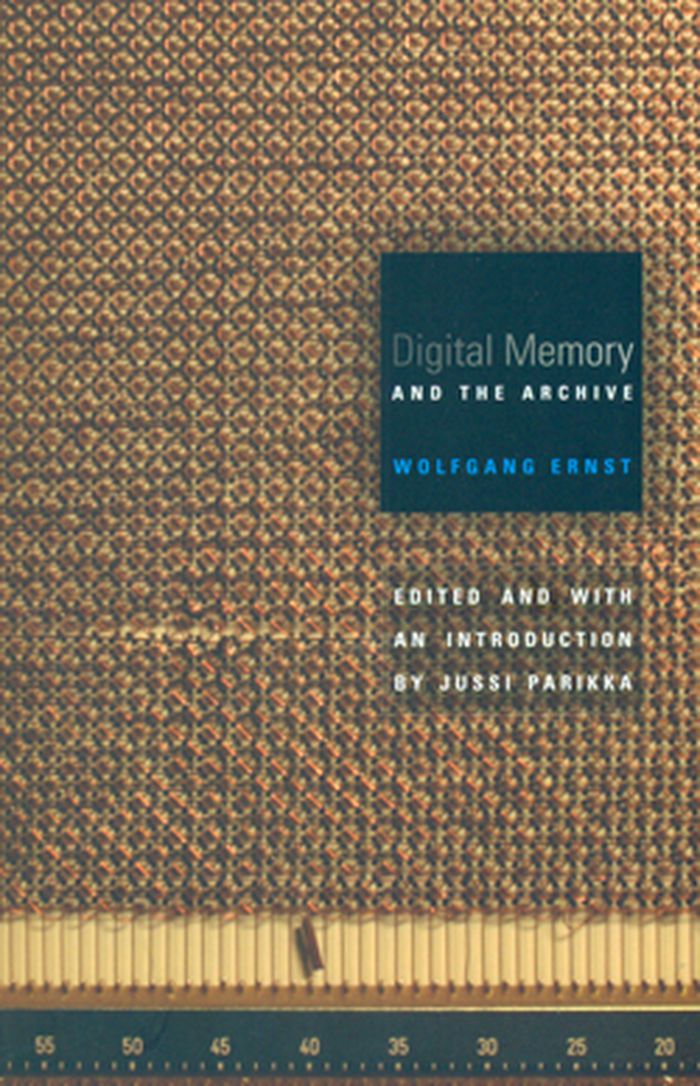
Digital Memory and the Archive, the first English-language collection of the German media theorist’s work, brings together essays that present Wolfgang Ernst’s controversial materialist approach to media theory and history. His insights are central to the emerging field of media archaeology, which uncovers the role of specific technologies and mechanisms, rather than content, in shaping contemporary culture and society.
Digital memory and the archive
Actions:
Prix:
$38.99
(disponible en magasin)
Résumé:
Digital Memory and the Archive, the first English-language collection of the German media theorist’s work, brings together essays that present Wolfgang Ernst’s controversial materialist approach to media theory and history. His insights are central to the emerging field of media archaeology, which uncovers the role of specific technologies and mechanisms, rather than content, in shaping contemporary culture and society.
Classification:
livres
livres
Publication:
décembre 2012
décembre 2012
Classification:
livres
livres
Prix:
$34.95
(disponible sur commande)
Résumé:
This book introduces an archaeological approach to the study of media - one that sifts through the evidence to learn how media were written about, used, designed, preserved, and sometimes discarded. Edited by Erkki Huhtamo and Jussi Parikka, with contributions from internationally prominent scholars from Europe, North America, and Japan, the essays help us understand how(...)
$34.95
(disponible sur commande)
Résumé:
This book introduces an archaeological approach to the study of media - one that sifts through the evidence to learn how media were written about, used, designed, preserved, and sometimes discarded. Edited by Erkki Huhtamo and Jussi Parikka, with contributions from internationally prominent scholars from Europe, North America, and Japan, the essays help us understand how(...)
Titre:
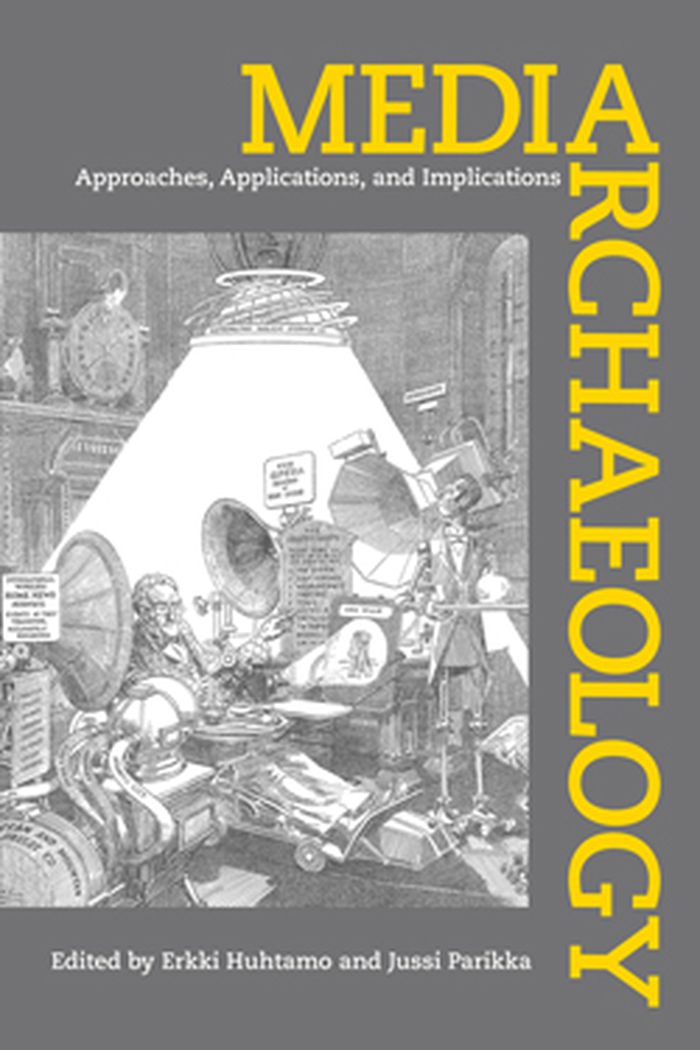
Media archaeology: approaches, applications, and implications
Actions:
Prix:
$34.95
(disponible sur commande)
Résumé:
This book introduces an archaeological approach to the study of media - one that sifts through the evidence to learn how media were written about, used, designed, preserved, and sometimes discarded. Edited by Erkki Huhtamo and Jussi Parikka, with contributions from internationally prominent scholars from Europe, North America, and Japan, the essays help us understand how the media that predate today's interactive, digital forms were in their time contested, adopted and embedded in the everyday.
Media archaeology: approaches, applications, and implications
Actions:
Prix:
$34.95
(disponible sur commande)
Résumé:
This book introduces an archaeological approach to the study of media - one that sifts through the evidence to learn how media were written about, used, designed, preserved, and sometimes discarded. Edited by Erkki Huhtamo and Jussi Parikka, with contributions from internationally prominent scholars from Europe, North America, and Japan, the essays help us understand how the media that predate today's interactive, digital forms were in their time contested, adopted and embedded in the everyday.
Classification:
livres
livres
Publication:
avril 2011
avril 2011


