


8452 Résultats
Classification:
livres
livres
Titre:
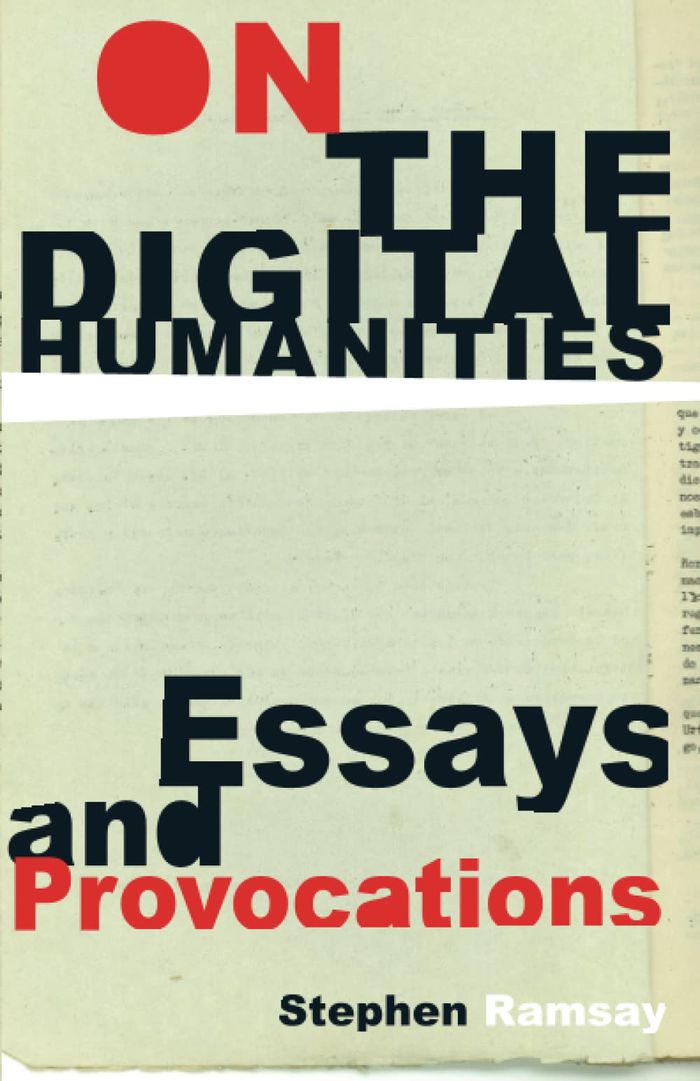
On the digital humanities
On the digital humanities
Actions:
Prix:
$35.99
(disponible sur commande)
Résumé:
Since its inception, the digital humanities has been repeatedly attacked as a threat to the humanities: warnings from literary and cultural theorists of technology overtaking English departments and the mechanization of teaching have peppered popular media. Stephen Ramsay’s ''On the digital humanities'', a collection of essays spanning the personal to the polemic, is a(...)
Titre:
On the digital humanities
Actions:
Prix:
$35.99
(disponible sur commande)
Résumé:
Since its inception, the digital humanities has been repeatedly attacked as a threat to the humanities: warnings from literary and cultural theorists of technology overtaking English departments and the mechanization of teaching have peppered popular media. Stephen Ramsay’s ''On the digital humanities'', a collection of essays spanning the personal to the polemic, is a spirited defense of the field of digital humanities. A founding figure in what was once known as 'humanities computing,' Ramsay has a well-known and contentious relationship with what is now called the digital humanities (DH). Here Ramsay collects and updates his most influential and notorious essays and speeches from the past fifteen years, considering DH from an array of practical and theoretical perspectives. The essays pursue a broad variety of themes, including the nature of data and its place in more conventional notions of text and interpretation, the relationship between the constraints of computation and the more open-ended nature of the humanities, the positioning of practical skills and infrastructures in both research and pedagogical contexts, the status of DH as a program for political and social action, and personal reflections on the author’s journey into the field as both a theorist and a technologist. These wide-ranging essays all center around one idea: that DH not forsake its connection to the humanities. While 'digital humanities' may sound like an entirely new form of engagement with the artifacts of human culture, Ramsay argues that the field well reveals what is most essential to humanistic inquiry.
Classification:
livres
livres
Publication:
août 2023
août 2023
Classification:
livres
livres
Titre:
The new downtown library
The new downtown library
Actions:
Prix:
$45.00
(disponible sur commande)
Résumé:
The past twenty years have seen a building boom for downtown public libraries. From Brooklyn to Seattle, architects, civic leaders, and citizens in major U.S. cities have worked to reassert the relevance of the central library. While the libraries’ primary functions—as public spaces where information is gathered, organized, preserved, and made available for use—have not(...)
Publication:
janvier 2007, Minneapolis / London
janvier 2007, Minneapolis / London
Titre:
The new downtown library
Actions:
Prix:
$45.00
(disponible sur commande)
Résumé:
The past twenty years have seen a building boom for downtown public libraries. From Brooklyn to Seattle, architects, civic leaders, and citizens in major U.S. cities have worked to reassert the relevance of the central library. While the libraries’ primary functions—as public spaces where information is gathered, organized, preserved, and made available for use—have not changed over the years, the processes by which they accomplish these goals have. These new processes, and the public debates surrounding them, have radically influenced the utility and design of new library buildings. In The New Downtown Library, Shannon Mattern draws on a diverse range of sources to investigate how libraries serve as multiuse public spaces, anchors in urban redevelopment, civic icons, and showcases of renowned architects like Rem Koolhaas, Cesar Pelli, and Enrique Norton. Mattern’s clear and careful analysis reveals the complexity of contemporary dialogues in library design, highlighting the roles that staff, the public, and other special interest groups play. Mattern also describes how the libraries manifest changing demographics, new ways of organizing collections and delivering media, and current philosophies of librarianship. By identifying unifying themes as well as examining the differences among various design projects, Mattern brings to light the social forces, as well as their architectural expressions, that form the essence of new libraries and their vital place in public life. Featured libraries are located in Brooklyn, Cincinnati, Cleveland, Chicago, Denver, Los Angeles, Minneapolis, Nashville, New York, Phoenix, Salt Lake City, San Antonio, San Francisco, Seattle, and Toledo.
Classification:
livres
livres
Publication:
janvier 2007, Minneapolis / London
janvier 2007, Minneapolis / London
Classification:
livres
livres
Prix:
$49.50
(disponible sur commande)
Résumé:
Beginning with agoraphobia and claustrophobia in the late nineteenth century, followed by shell shock and panic fear after World War I, phobias and anxiety came to be seen as the mental condition of modern life. They became incorporated into the media and arts, in particular the (...)
Titre:
Warped space : art, architecture, and anxiety in modern culture
Actions:
Prix:
$49.50
(disponible sur commande)
Résumé:
Beginning with agoraphobia and claustrophobia in the late nineteenth century, followed by shell shock and panic fear after World War I, phobias and anxiety came to be seen as the mental condition of modern life. They became incorporated into the media and arts, in particular the spatial arts of architecture, urbanism, and film. This "spatial warping" is now being reshaped by digitalization and virtual reality. Anthony Vidler is concerned with two forms of warped space. The first, a psychological space, is the repository of neuroses and phobias. This space is not empty but full of disturbing forms, including those of architecture and the city. The second kind of warping is produced when artists break the boundaries of genre to depict space in new ways. Vidler traces the emergence of a psychological idea of space from Pascal and Freud to the identification of agoraphobia and claustrophobia in the nineteenth century to twentieth-century theories of spatial alienation and estrangement in the writings of Georg Simmel, Siegfried Kracauer, and Walter Benjamin. Focusing on current conditions of displacement and placelessness, he examines ways in which contemporary artists and architects have produced new forms of spatial warping. The discussion ranges from theorists such as Jacques Lacan and Gilles Deleuze to artists such as Vito Acconci, Mike Kelley, Martha Rosler, and Rachel Whiteread. Finally, Vidler looks at the architectural experiments of Frank Gehry, Coop Himmelblau, Daniel Libeskind, Greg Lynn, Morphosis, and Eric Owen Moss in the light of new digital techniques that, while relying on traditional perspective, have radically transformed the composition, production, and experience of architecture.
Classification:
livres
livres
Publication:
juin 2000, Cambridge, Mass.
juin 2000, Cambridge, Mass.
Sujet:
Théorie de l’architecture
Théorie de l’architecture
Classification:
livres
livres
Titre:
New retail
New retail
Actions:
Prix:
$89.95
(disponible sur commande)
Résumé:
about the book In the decades since the advent of the shopping mall, shopping has become synonymous with entertainment and the retail store a key player in establishing brand identity. In a growing trend, high-profile architects are designing provocative storefronts and interiors that create an aura of exclusivity, draw in customers, and attract media attention(...)
Publication:
mai 2005, London, New York
mai 2005, London, New York
Titre:
New retail
Actions:
Prix:
$89.95
(disponible sur commande)
Résumé:
about the book In the decades since the advent of the shopping mall, shopping has become synonymous with entertainment and the retail store a key player in establishing brand identity. In a growing trend, high-profile architects are designing provocative storefronts and interiors that create an aura of exclusivity, draw in customers, and attract media attention rivaling the goods within. New Retail examines this phenomenon with an overview of 24 of the most innovative retail spaces built around the world in recent years, designed by high-profile international architects as well as smaller cutting-edge firms. Projects in the book include the Carlos Miele store in New York (Asymptote), three stores for Louis Vuitton in New York and Tokyo (Jun Aoki), Selfridges in Birmingham, the UK (Future Systems), two clothing boutiques in São Paulo (Isay Weinfeld), the Mandarina Duck store in Paris (NL Architects), and the Mpries Supermarket in Austria (Dominique Perrault), among others. More than 250 color photographs as well as floor plans and site plans showcase the architectural and interior design, lighting, and often experimental materials that create these ultimate retail spaces. For the Selfridges department store, for example, Future Systems clad the building with 15,000 aluminum disks attached to a sprayed concrete surface. In New York, the interior of the Carlos Miele store by Asymptote features a sensual, sculptural white ceiling of molded high-gloss PVC-based material. Each project is accompanied by a 500-to-700-word description that explains the design concept, site, program, and significant building technologies and materials. A general introduction discusses precedents to these projects and current issues in the architecture and design of retail spaces.
Classification:
livres
livres
Publication:
mai 2005, London, New York
mai 2005, London, New York
Classification:
périodiques
périodiques
Titre:
Open 6 (in)security
Open 6 (in)security
Actions:
Prix:
$36.00
(disponible sur commande)
Résumé:
There is a yearning for security in today's public domain. The individual and the community are increasingly demanding protection from and control over the space, themselves and others. A society of control is looming, but one lacking a clear idea about the nature and the origin of its underlying fears. This cahier examines the consequences of the current preoccupation(...)
Sujet:
Revues
Revues
Publication:
août 2004, Rotterdam
août 2004, Rotterdam
Titre:
Open 6 (in)security
Actions:
Prix:
$36.00
(disponible sur commande)
Résumé:
There is a yearning for security in today's public domain. The individual and the community are increasingly demanding protection from and control over the space, themselves and others. A society of control is looming, but one lacking a clear idea about the nature and the origin of its underlying fears. This cahier examines the consequences of the current preoccupation with security for the public space and the visual arts. What are the implications for the functioning of the public domain, for its arrangement, design and experience? And how does this influence the task and perception of art? From art, architecture, philosophy and politics come theoretical and practical scenarios, proposals and visions that expose something of today's security paradigm, advocate alternative (conceptual) models or offer insights into the current ethics and aesthetics of security. Gijs van Oenen subjects the 'new securityscape' to a critical analysis. Lieven De Cauter digs into the various strata of the new fear. Sean Snyder presents images from his Temporary Occupation project. Thomas Y. Levin looks at how artists deal with surveillance in the public space. Sven Lütticken reflects on the concept of a 'human park' in philosophy, art and media. Harm Tilman focuses on architecture in a society of control. Mark Wigley analyses the issue of security in relation to the World Trade Center buildings in New York. Hans Boutellier wishes art would apply the brakes to the security Utopia. Jouke Kleerebezem calls for vigilance in the information society. Willem van Weelden discusses the project in Kanaleneiland, Utrecht. Q.S. Serafijn shows multiple dimensions of the interactive D-Tower in Doetinchem. Mark Wigley dissects the abode of the Unabomber.
Classification:
périodiques
périodiques
Publication:
août 2004, Rotterdam
août 2004, Rotterdam
Sujet:
Revues
Revues
Classification:
périodiques
périodiques
Actions:
Prix:
$18.00
(disponible sur commande)
Résumé:
Text(e)s sur/ on : Franko B., David Cronenberg, Bruno Dumont, Philippe Grandrieux, Michael Haneke, Maria Marshall, Paul McCarthy, Shahryar Nashat, Orlan, Gina Pane, … Par / by : Christa Blümlinger, Tim Clark, Amelia Jones, Jean-Ernest Joos, Thomas Y. Levin, Thérèse St-Gelais, Giovanna Zapperi … '' Comment aborder le problème de la violence dans le monde quand on est(...)
Titre:
Parachute 123 : violence , psycho ,
Actions:
Prix:
$18.00
(disponible sur commande)
Résumé:
Text(e)s sur/ on : Franko B., David Cronenberg, Bruno Dumont, Philippe Grandrieux, Michael Haneke, Maria Marshall, Paul McCarthy, Shahryar Nashat, Orlan, Gina Pane, … Par / by : Christa Blümlinger, Tim Clark, Amelia Jones, Jean-Ernest Joos, Thomas Y. Levin, Thérèse St-Gelais, Giovanna Zapperi … '' Comment aborder le problème de la violence dans le monde quand on est artiste ? Est-ce que la violence est innommable, intraitable ? Le cinéma ou les médias nous la montrent pourtant à profusion : guerre, sexes, criminalité, tortures psychologiques et physiques. Quand est-il de la question de la représentation quand il s'agit de violence. La montrer, est-ce la recréer ou l'encourager ? Les pratiques artistiques des dernières années abordent la violence en photographie et en vidéo par exemple. L'exacerbation de la violence et sa propagation par les images provoquent des questionnements inédits. Retrouve-t-on ce questionnement en art contemporain ? Comment se montre-t-il ? Quelles formes prend-il ? /// How do artists broach the question of violence in the contemporary world? Is violence unutterable, untouchable? Cinema and the media do not cease to showcase violence in its most varied manifestations: war, sexuality, criminality, psychological and physical torture, etc. What is the status of representation when it comes to showing violence? Do representations of violent acts necessarily disseminate and recreate them? Many recent artistic practices address violence by means of photography or video. The exacerbation of violence and its dissemination by means of countless images raises new and important questions. How are such questions formulated in the field of contemporary art? How do they manifest themselves? What are their forms? '' Chantal Pontbriand.
Classification:
périodiques
périodiques
Publication:
juin 2006, Montréal
juin 2006, Montréal
Sujet:
Revues
Revues
Classification:
livres
livres
Actions:
Prix:
$65.99
(disponible sur commande)
Résumé:
Today, the physical scale model is a centrepiece for design education, celebrated practices and architecture’s public relations. The development of digital fabrication devices has made model manufacture even more pervasive. The physical model is the most accessible form of architectural communication. Clients and the general public seem to immediately respond to and(...)
Titre:
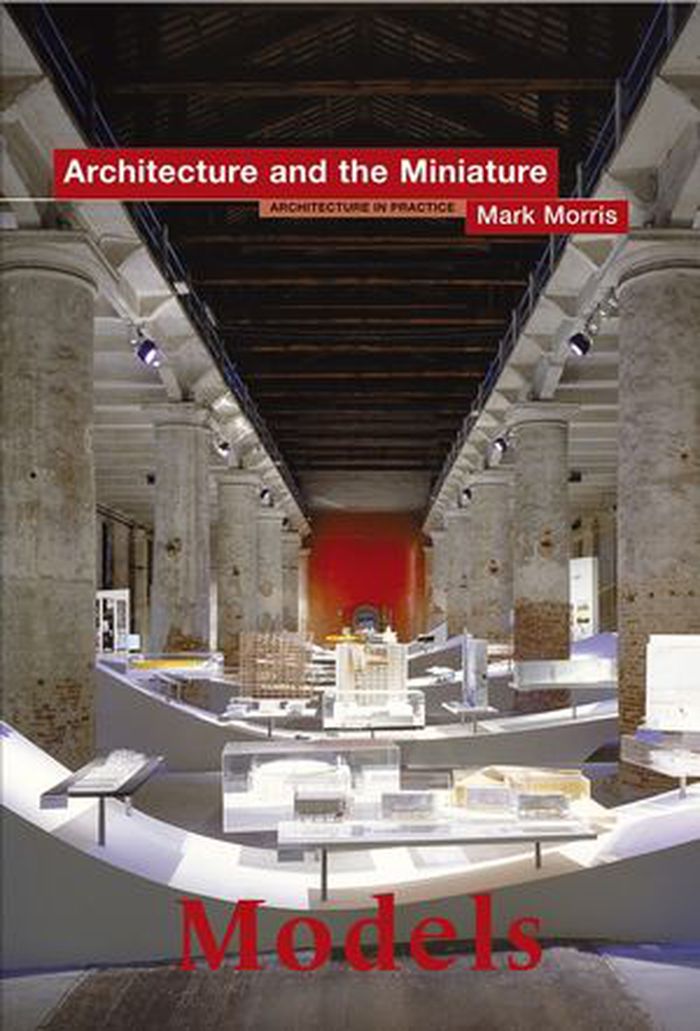
Architecture and the miniature : models
Actions:
Prix:
$65.99
(disponible sur commande)
Résumé:
Today, the physical scale model is a centrepiece for design education, celebrated practices and architecture’s public relations. The development of digital fabrication devices has made model manufacture even more pervasive. The physical model is the most accessible form of architectural communication. Clients and the general public seem to immediately respond to and understand the model, over blueprints and computer simulations. Many architects use finished models for presentations, competitions and exhibitions. Others also embrace sketch models as quick, economic and flexible generative tools. It is only with the rise of the virtual that the advantages and disadvantages of more traditional models can be fully evaluated. As attested by this book, we are now at an important watershed for the model in architecture. Practitioners and educators alike are seeking to fully understand the multiplicity of model types and how they might be strategically deployed at appropriate stages in the design process. The historic role that the model has played is outlined with attention paid to Alberti, John Soane, the Bauhaus and education reforms. A cultural history is offered by examining models in the guise of toys, food, cinema, product design, souvenirs, narrative and art. Model theories are considered and tied to specific examples in the field. New technologies and creative combinations of traditional model-making techniques are evaluated. Kinetic, multi-media, nightscape and interdisciplinary models reveal the broad scope and exceptional versatility offered by this important tool. Models: Architecture and the Miniature focuses on current model use and experimentation by architects across the globe including David Chipperfield, Peter Eisenman, Frank Gehry, Zaha Hadid, Coop Himmelb(l)au, Daniel Libeskind, Greg Lynn and UN Studio.
Classification:
livres
livres
Publication:
octobre 2005, Chichester
octobre 2005, Chichester
Sujet:
Maquettes
Maquettes
Classification:
livres
livres
Titre:
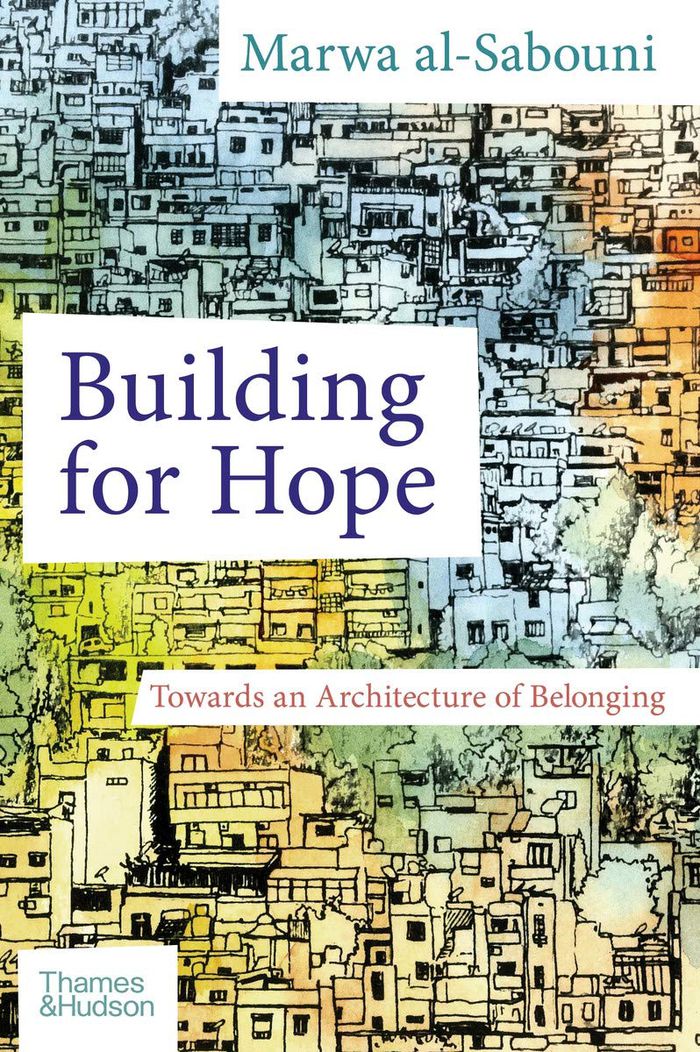
Building for hope
Building for hope
Actions:
Prix:
$39.95
(disponible sur commande)
Résumé:
This new book by Syrian architect Marwa al-Sabouni, seeks to understand how cities and buildings- scarred by conflict, blight, and pandemic- can be healed through design and urban mindfulness. When Marwa al-Sabouni published Battle for Home in 2016, she was a little-known architect, living in battle-ravaged Homs, Syria, unable to practice her profession. She turned her(...)
Titre:
Building for hope
Actions:
Prix:
$39.95
(disponible sur commande)
Résumé:
This new book by Syrian architect Marwa al-Sabouni, seeks to understand how cities and buildings- scarred by conflict, blight, and pandemic- can be healed through design and urban mindfulness. When Marwa al-Sabouni published Battle for Home in 2016, she was a little-known architect, living in battle-ravaged Homs, Syria, unable to practice her profession. She turned her fierce intelligence to chronicling how her city and country were undone through decades of architectural mismanagement and mistakes. Once published, Marwa al-Sabouni’s book and story attracted the attention of international media- CNN, The New York Times- and received critical acclaim worldwide. The United Nations called on her for insights and expertise. She became a TED fellow, was invited to speak to audiences around the world, and some suggested she be nominated for architecture’s highest honor, the Pritzker Prize. Al-Sabouni’s deep understanding of Middle Eastern heritage and architecture gives her insight into a wide range of cities, informing her views on how cities work best, how they might fail, and what can be done to harmonize the lives of all their inhabitants. In this new book, al-Sabouni draws together several narratives: her personal and professional observations of some of the world’s most fascinating cities, from Detroit to Helsinki; the lessons that Western societies might learn from Islamic culture and design; and philosophical reflections on how our personal and communal spaces can provide the basic foundations for happiness. Through this tapestry of personal experience, unblinking perspective, and insight, al-Sabouni offers real-world solutions- and hope- for how peace might be created through mindful urban planning.
Classification:
livres
livres
Publication:
avril 2021
avril 2021
Sujet:
Théorie de l’architecture
Théorie de l’architecture
Classification:
livres
livres
Actions:
Prix:
$39.99
(disponible sur commande)
Résumé:
Event-Cities 4 is the latest in the Event-Cities series from Bernard Tschumi, documenting recent built and theoretical projects in the context of his evolving views on architecture, urbanism, and design. Event-Cities 4 follows directly from the work of Event-Cities 3, which examined the interaction of architectural content, concept, and context. This volume takes the(...)
Titre:
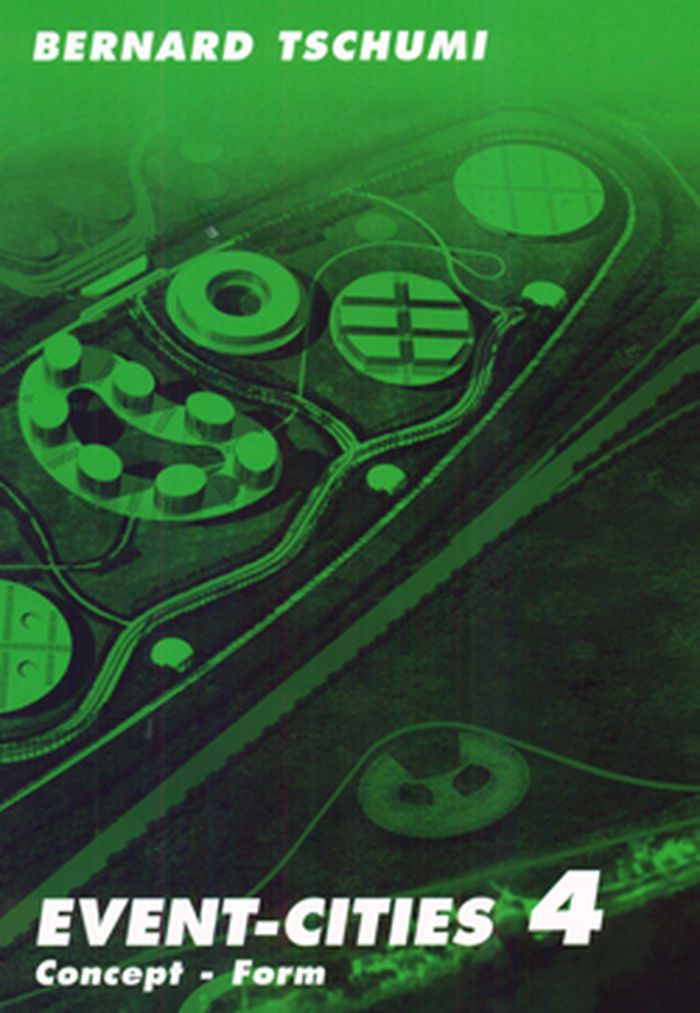
Bernard Tschumi : event-cities 4, concept - form
Actions:
Prix:
$39.99
(disponible sur commande)
Résumé:
Event-Cities 4 is the latest in the Event-Cities series from Bernard Tschumi, documenting recent built and theoretical projects in the context of his evolving views on architecture, urbanism, and design. Event-Cities 4 follows directly from the work of Event-Cities 3, which examined the interaction of architectural content, concept, and context. This volume takes the interaction a step further, looking at a series of projects for which program or context are insufficient as a generative conceptual strategy, hence requiring a different approach. Tschumi has said, "Over the past years, there is one word I have almost never used, except in order to attack it: 'form.'" In Event-Cities 4, Tschumi introduces the "concept-form": a concept generating a form, or a form generating a concept, so that one reinforces the other. The concept may be programmatic, technological, or social. The form may be singular or multiple, regular or irregular. Concept-forms act as organizing devices or common denominators for the multiple dimensions of programs and their evolution over time, and drive the projects featured in this book. Highlights include master plans for a pair of media-based work spaces and cultural campuses in Singapore and Abu Dhabi; a major master plan for a financial center with 40,000 projected inhabitants in the Dominican Republic; the innovative Blue Residential Tower in New York City; a group of museums and cultural buildings in France, Abu Dhabi, Dubai, and South Korea; a pedestrian bridge in France; and a "multi-programmatic" furniture piece, the TypoLounger. The book contains more than twenty of the Tschumi firm's recent projects.
Classification:
livres
livres
Publication:
septembre 2010
septembre 2010
Sujet:
Architecture, monographies
Architecture, monographies
Classification:
livres
livres
Actions:
Exemplaires:
Description:
xlix, 697 pages : illustrations, maps ; 32 cm
Description:
xlix, 697 pages : illustrations, maps ; 32 cm
Auteur:
Sujet:
Publication:
Princeton, N.J. : Dept. of Art and Archaeology, Princeton University, ©1995.
Princeton, N.J. : Dept. of Art and Archaeology, Princeton University, ©1995.
Titre:
Byzantine East, Latin West : art-historical studies in honor of Kurt Weitzmann / editorial board, Doula Mouriki [and others] ; edited by Christopher Moss, Katherine Kiefer.
Actions:
Exemplaires:
Description:
xlix, 697 pages : illustrations, maps ; 32 cm
Byzantine East, Latin West : art-historical studies in honor of Kurt Weitzmann / editorial board, Doula Mouriki [and others] ; edited by Christopher Moss, Katherine Kiefer.
Actions:
Exemplaires:
Description:
xlix, 697 pages : illustrations, maps ; 32 cm
Classification:
livres
livres
Publication:
Princeton, N.J. : Dept. of Art and Archaeology, Princeton University, ©1995.
Princeton, N.J. : Dept. of Art and Archaeology, Princeton University, ©1995.
Auteur:
Sujet:


