


13794 Résultats
Classification:
livres
livres
Titre:
L'art comme procédé
L'art comme procédé
Actions:
Prix:
$10.95
(disponible sur commande)
Résumé:
Texte fondamental du “formalisme” russe, L’Art comme procédé récuse la dichotomie de la forme et du fond. Renversant l’idée soutenue notamment par le mouvement symboliste selon laquelle “l’art est avant tout créateur de symboles”, il distingue deux types de langage, le prosaïque et le poétique. Le premier implique un processus de reconnaissance par schématisation,(...)
$10.95
(disponible sur commande)
Résumé:
Texte fondamental du “formalisme” russe, L’Art comme procédé récuse la dichotomie de la forme et du fond. Renversant l’idée soutenue notamment par le mouvement symboliste selon laquelle “l’art est avant tout créateur de symboles”, il distingue deux types de langage, le prosaïque et le poétique. Le premier implique un processus de reconnaissance par schématisation,(...)
Titre:
L'art comme procédé
Actions:
Prix:
$10.95
(disponible sur commande)
Résumé:
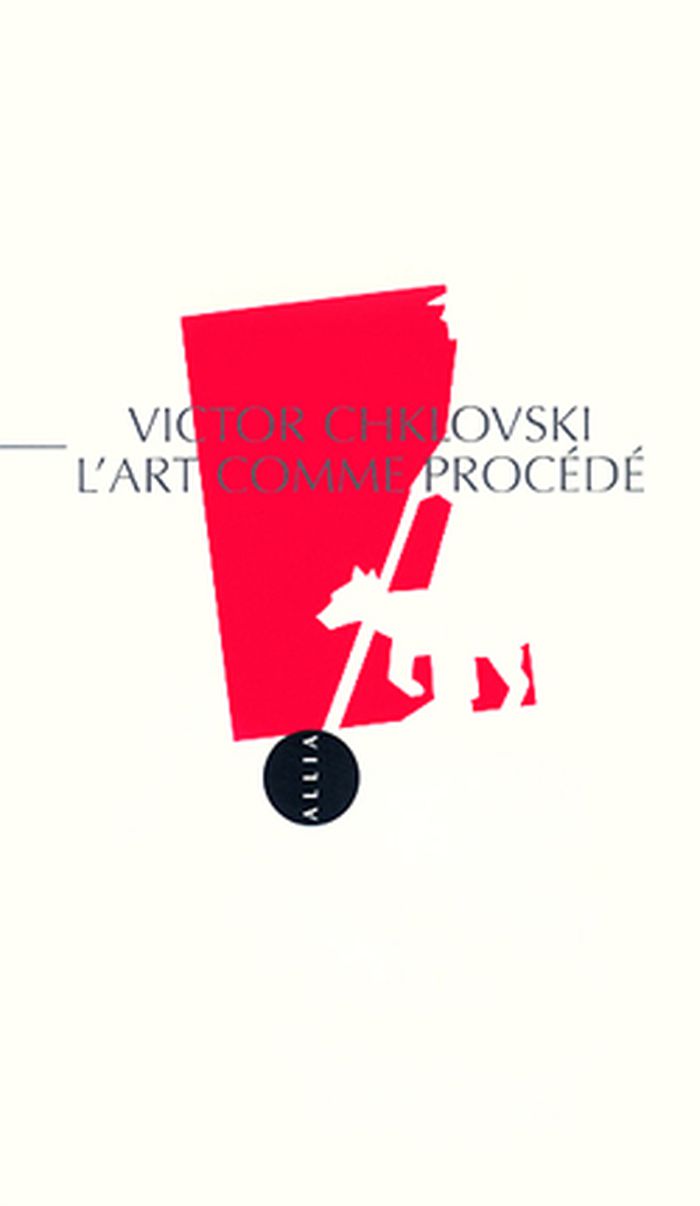
Texte fondamental du “formalisme” russe, L’Art comme procédé récuse la dichotomie de la forme et du fond. Renversant l’idée soutenue notamment par le mouvement symboliste selon laquelle “l’art est avant tout créateur de symboles”, il distingue deux types de langage, le prosaïque et le poétique. Le premier implique un processus de reconnaissance par schématisation, codification permise par l’usage des symboles. De celui-ci découle une forme d’aliénation, inhérente à toute pratique routinière, dont la fonction est l’usage quotidien et économique. Ainsi Chklovski s’insurge : “Si toute la vie complexe de bien des gens s’écoule inconsciemment, c’est comme si cette vie n’avait pas lieu.” Pour éviter cet écueil, il introduit la notion d’étrangisation et développe l’idée de l’art comme procédé de lutte contre l’usure des mots et l’automatisation.
L'art comme procédé
Actions:
Prix:
$10.95
(disponible sur commande)
Résumé:
Texte fondamental du “formalisme” russe, L’Art comme procédé récuse la dichotomie de la forme et du fond. Renversant l’idée soutenue notamment par le mouvement symboliste selon laquelle “l’art est avant tout créateur de symboles”, il distingue deux types de langage, le prosaïque et le poétique. Le premier implique un processus de reconnaissance par schématisation, codification permise par l’usage des symboles. De celui-ci découle une forme d’aliénation, inhérente à toute pratique routinière, dont la fonction est l’usage quotidien et économique. Ainsi Chklovski s’insurge : “Si toute la vie complexe de bien des gens s’écoule inconsciemment, c’est comme si cette vie n’avait pas lieu.” Pour éviter cet écueil, il introduit la notion d’étrangisation et développe l’idée de l’art comme procédé de lutte contre l’usure des mots et l’automatisation.
Classification:
livres
livres
Publication:
mars 2014
mars 2014
Sujet:
Théorie de l’art
Théorie de l’art
Classification:
livres
livres
Actions:
Prix:
$11.95
(disponible sur commande)
Résumé:
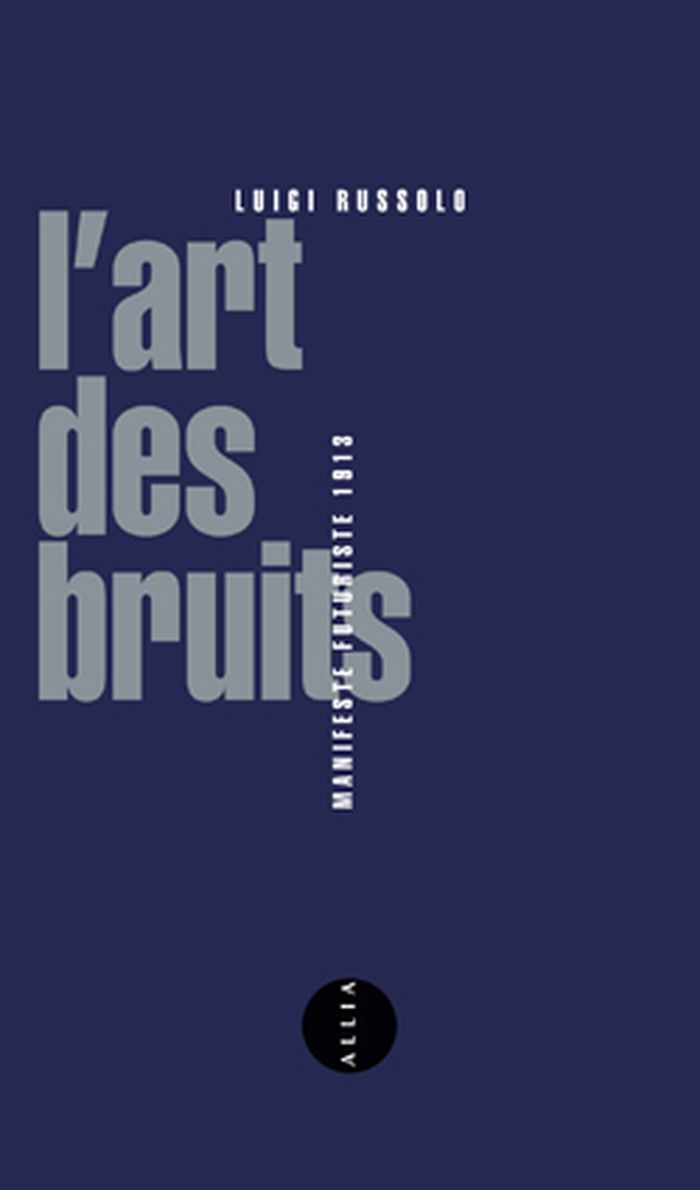
Daté de 1913, L’Art des bruits, sous-titré “Manifeste futuriste”, impressionne par son anticipation des nouvelles formes de musique qui règnent aujourd’hui : partant du principe que les sons purs ont fait leur temps, il affirme que la musique nouvelle devra régler harmoniquement et rythmiquement des bruits très variés.
$11.95
(disponible sur commande)
Résumé:
Daté de 1913, L’Art des bruits, sous-titré “Manifeste futuriste”, impressionne par son anticipation des nouvelles formes de musique qui règnent aujourd’hui : partant du principe que les sons purs ont fait leur temps, il affirme que la musique nouvelle devra régler harmoniquement et rythmiquement des bruits très variés.
Titre:
L'art des bruits : manifeste futuriste 1913
Actions:
Prix:
$11.95
(disponible sur commande)
Résumé:
Daté de 1913, L’Art des bruits, sous-titré “Manifeste futuriste”, impressionne par son anticipation des nouvelles formes de musique qui règnent aujourd’hui : partant du principe que les sons purs ont fait leur temps, il affirme que la musique nouvelle devra régler harmoniquement et rythmiquement des bruits très variés.
L'art des bruits : manifeste futuriste 1913
Actions:
Prix:
$11.95
(disponible sur commande)
Résumé:
Daté de 1913, L’Art des bruits, sous-titré “Manifeste futuriste”, impressionne par son anticipation des nouvelles formes de musique qui règnent aujourd’hui : partant du principe que les sons purs ont fait leur temps, il affirme que la musique nouvelle devra régler harmoniquement et rythmiquement des bruits très variés.
Classification:
livres
livres
Publication:
mars 2014
mars 2014
Sujet:
Théorie de l’art
Théorie de l’art
Classification:
livres
livres
Prix:
$11.95
(disponible sur commande)
Résumé:
Véritable laboratoire social et urbanistique, Los Angeles préfigure le modèle à venir des mégapoles modernes : destruction de toute mixité sociale par le cloisonnement strict des populations dans des quartiers réservés, laissés, pour certains, à l’abandon et à la domination des gangs, tandis que les couches les plus aisées se “bunkerisent" grâce à la généralisation de la(...)
$11.95
(disponible sur commande)
Résumé:
Véritable laboratoire social et urbanistique, Los Angeles préfigure le modèle à venir des mégapoles modernes : destruction de toute mixité sociale par le cloisonnement strict des populations dans des quartiers réservés, laissés, pour certains, à l’abandon et à la domination des gangs, tandis que les couches les plus aisées se “bunkerisent" grâce à la généralisation de la(...)
Titre:
Au-delà de Blade Runner: Los Angeles et l'imagination du désastre
Actions:
Prix:
$11.95
(disponible sur commande)
Résumé:
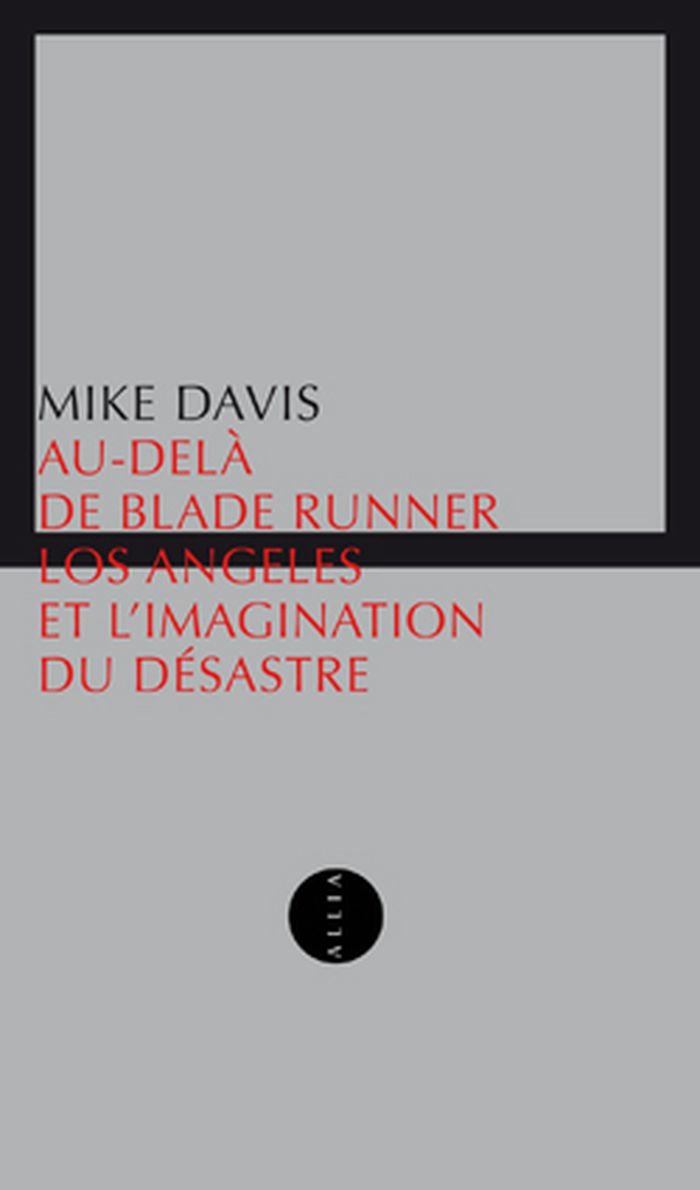
Véritable laboratoire social et urbanistique, Los Angeles préfigure le modèle à venir des mégapoles modernes : destruction de toute mixité sociale par le cloisonnement strict des populations dans des quartiers réservés, laissés, pour certains, à l’abandon et à la domination des gangs, tandis que les couches les plus aisées se “bunkerisent" grâce à la généralisation de la vidéo-surveillance et des milices de sécurité privées. La ville vit désormais dans un état perpétuel de “guerre sociale de faible intensité”, susceptible à tout moment d’éclater, comme lors des émeutes provoquées par le tabassage de Rodney King. À la fois sociologique, urbanistique et politique, illustré de photos saisissantes, l’essai de Mike Davis, qui s’appuie autant sur des statistiques précises que sur son expérience personnelle, offre, au-delà du cas de Los Angeles, un portrait poignant de l’Amérique contemporaine et présage de l’évolution qui menace les sociétés occidentales.
Au-delà de Blade Runner: Los Angeles et l'imagination du désastre
Actions:
Prix:
$11.95
(disponible sur commande)
Résumé:
Véritable laboratoire social et urbanistique, Los Angeles préfigure le modèle à venir des mégapoles modernes : destruction de toute mixité sociale par le cloisonnement strict des populations dans des quartiers réservés, laissés, pour certains, à l’abandon et à la domination des gangs, tandis que les couches les plus aisées se “bunkerisent" grâce à la généralisation de la vidéo-surveillance et des milices de sécurité privées. La ville vit désormais dans un état perpétuel de “guerre sociale de faible intensité”, susceptible à tout moment d’éclater, comme lors des émeutes provoquées par le tabassage de Rodney King. À la fois sociologique, urbanistique et politique, illustré de photos saisissantes, l’essai de Mike Davis, qui s’appuie autant sur des statistiques précises que sur son expérience personnelle, offre, au-delà du cas de Los Angeles, un portrait poignant de l’Amérique contemporaine et présage de l’évolution qui menace les sociétés occidentales.
Classification:
livres
livres
Publication:
mars 2014
mars 2014
Sujet:
Théorie de l’art
Théorie de l’art
Classification:
livres
livres
Titre:
Le droit à la paresse
Le droit à la paresse
Actions:
Prix:
$11.95
(disponible sur commande)
Résumé:
“Une étrange folie possède les classes ouvrières des nations où règne la civilisation capitaliste. Cette folie traîne à sa suite des misères individuelles et sociales qui, depuis deux siècles, torturent la triste humanité. Cette folie est l’amour du travail, la passion moribonde du travail, poussée jusqu’à l’épuisement des forces vitales de l’individu et de sa(...)
$11.95
(disponible sur commande)
Résumé:
“Une étrange folie possède les classes ouvrières des nations où règne la civilisation capitaliste. Cette folie traîne à sa suite des misères individuelles et sociales qui, depuis deux siècles, torturent la triste humanité. Cette folie est l’amour du travail, la passion moribonde du travail, poussée jusqu’à l’épuisement des forces vitales de l’individu et de sa(...)
Titre:
Le droit à la paresse
Actions:
Prix:
$11.95
(disponible sur commande)
Résumé:
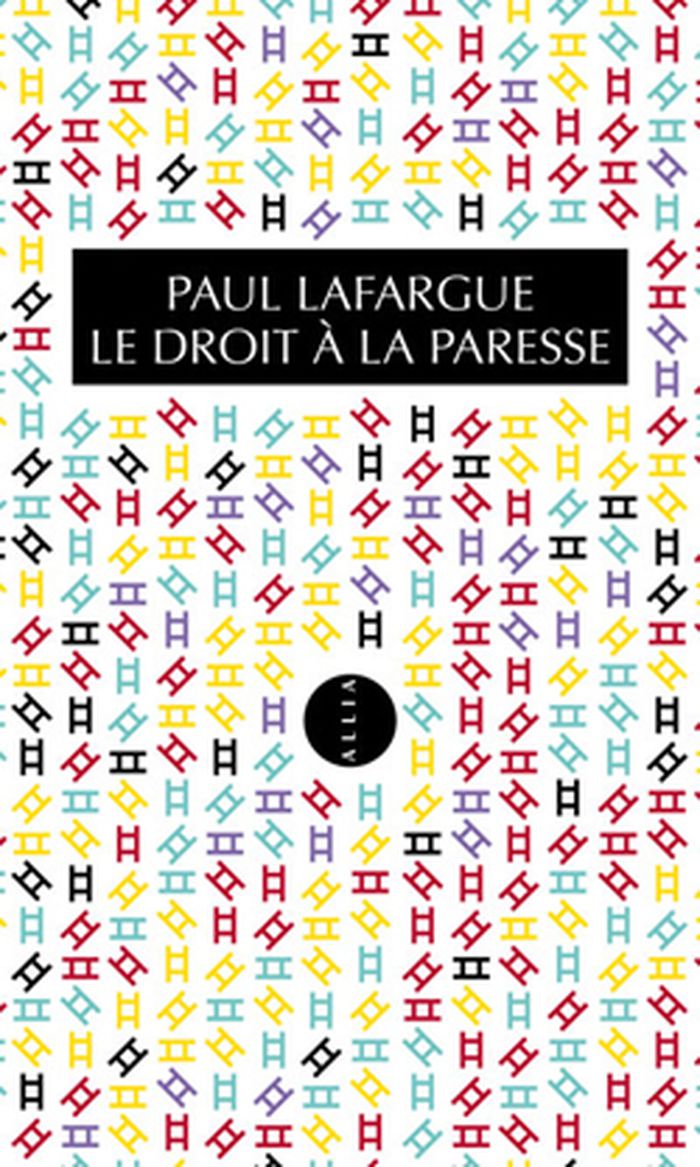
“Une étrange folie possède les classes ouvrières des nations où règne la civilisation capitaliste. Cette folie traîne à sa suite des misères individuelles et sociales qui, depuis deux siècles, torturent la triste humanité. Cette folie est l’amour du travail, la passion moribonde du travail, poussée jusqu’à l’épuisement des forces vitales de l’individu et de sa progéniture.” Dénonçant un illusoire droit au travail qui n’est pour lui que droit à la misère, Lafargue soutient qu’une activité proprement humaine ne peut avoir lieu que dans l’oisiveté, hors du circuit infernal de la production et de la consommation, réalisant ainsi le projet de l’homme intégral de Marx.
Le droit à la paresse
Actions:
Prix:
$11.95
(disponible sur commande)
Résumé:
“Une étrange folie possède les classes ouvrières des nations où règne la civilisation capitaliste. Cette folie traîne à sa suite des misères individuelles et sociales qui, depuis deux siècles, torturent la triste humanité. Cette folie est l’amour du travail, la passion moribonde du travail, poussée jusqu’à l’épuisement des forces vitales de l’individu et de sa progéniture.” Dénonçant un illusoire droit au travail qui n’est pour lui que droit à la misère, Lafargue soutient qu’une activité proprement humaine ne peut avoir lieu que dans l’oisiveté, hors du circuit infernal de la production et de la consommation, réalisant ainsi le projet de l’homme intégral de Marx.
Classification:
livres
livres
Publication:
mars 2014
mars 2014
Sujet:
Théorie/ philosophie
Théorie/ philosophie
Classification:
livres
livres

Titre:
Kulturindustrie
Kulturindustrie
Actions:
Prix:
$11.95
(disponible sur commande)
Résumé:
Il est une chose à propos de laquelle, il est vrai, l’idéologie creuse ne badine pas : la sécurité sociale. 'Nul ne doit avoir faim ou froid ; tout contrevenant ira au camp de concentration' : cette plaisanterie qui vient de l’Allemagne d’Hitler pourrait servir d’enseigne à toutes les entrées d’établissements de l’industrie culturelle.
$11.95
(disponible sur commande)
Résumé:
Il est une chose à propos de laquelle, il est vrai, l’idéologie creuse ne badine pas : la sécurité sociale. 'Nul ne doit avoir faim ou froid ; tout contrevenant ira au camp de concentration' : cette plaisanterie qui vient de l’Allemagne d’Hitler pourrait servir d’enseigne à toutes les entrées d’établissements de l’industrie culturelle.
Titre:
Kulturindustrie
Actions:
Prix:
$11.95
(disponible sur commande)
Résumé:
Il est une chose à propos de laquelle, il est vrai, l’idéologie creuse ne badine pas : la sécurité sociale. 'Nul ne doit avoir faim ou froid ; tout contrevenant ira au camp de concentration' : cette plaisanterie qui vient de l’Allemagne d’Hitler pourrait servir d’enseigne à toutes les entrées d’établissements de l’industrie culturelle.
Kulturindustrie
Actions:
Prix:
$11.95
(disponible sur commande)
Résumé:
Il est une chose à propos de laquelle, il est vrai, l’idéologie creuse ne badine pas : la sécurité sociale. 'Nul ne doit avoir faim ou froid ; tout contrevenant ira au camp de concentration' : cette plaisanterie qui vient de l’Allemagne d’Hitler pourrait servir d’enseigne à toutes les entrées d’établissements de l’industrie culturelle.
Classification:
livres
livres
Publication:
mars 2014
mars 2014
Sujet:
Théorie/ philosophie
Théorie/ philosophie
Classification:
livres
livres
Titre:
Liquidation de l'art
Liquidation de l'art
Actions:
Prix:
$11.95
(disponible sur commande)
Résumé:
“Et l’art est le manuscrit immédiat de la vie.” Liquidation de l’art contient les premiers écrits de Karel Teige et jette les bases théoriques d’une nouvelle création où “le nouvel art ne sera plus l’art”. En témoignent les reproductions nombreuses et étonnantes qui émaillent ces textes comme ils illustrent parfaitement l’alliance, à première vue incongrue, entre(...)
$11.95
(disponible sur commande)
Résumé:
“Et l’art est le manuscrit immédiat de la vie.” Liquidation de l’art contient les premiers écrits de Karel Teige et jette les bases théoriques d’une nouvelle création où “le nouvel art ne sera plus l’art”. En témoignent les reproductions nombreuses et étonnantes qui émaillent ces textes comme ils illustrent parfaitement l’alliance, à première vue incongrue, entre(...)
Titre:
Liquidation de l'art
Actions:
Prix:
$11.95
(disponible sur commande)
Résumé:
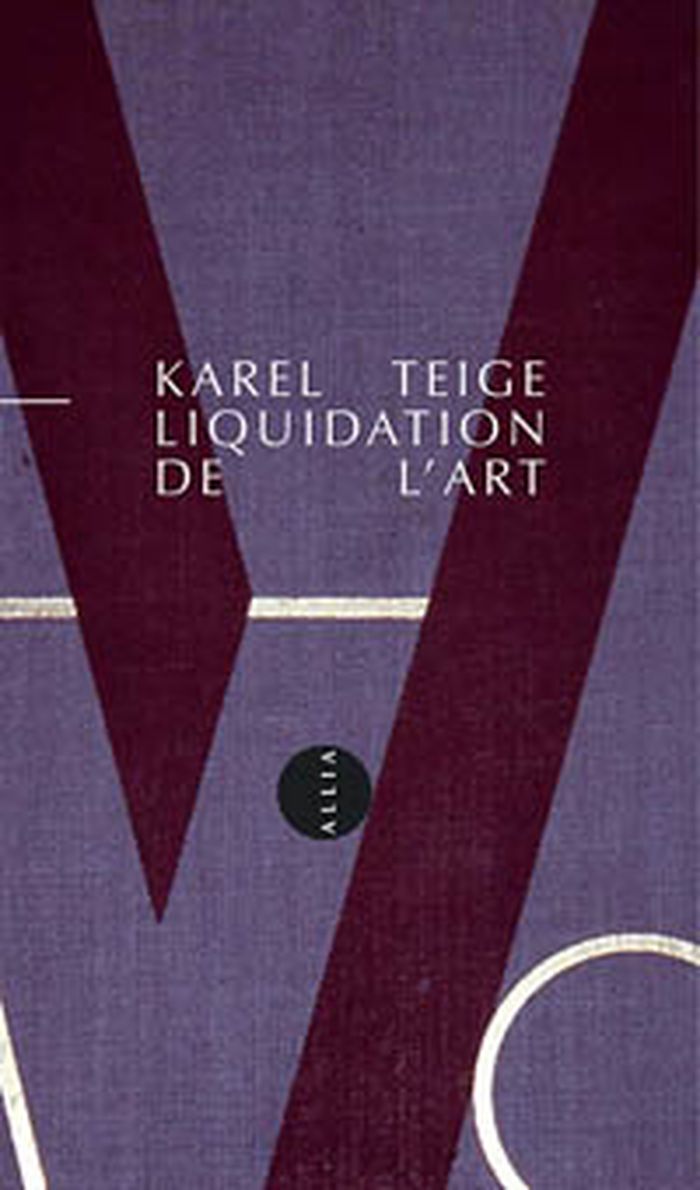
“Et l’art est le manuscrit immédiat de la vie.” Liquidation de l’art contient les premiers écrits de Karel Teige et jette les bases théoriques d’une nouvelle création où “le nouvel art ne sera plus l’art”. En témoignent les reproductions nombreuses et étonnantes qui émaillent ces textes comme ils illustrent parfaitement l’alliance, à première vue incongrue, entre poétisme et constructivisme.
Liquidation de l'art
Actions:
Prix:
$11.95
(disponible sur commande)
Résumé:
“Et l’art est le manuscrit immédiat de la vie.” Liquidation de l’art contient les premiers écrits de Karel Teige et jette les bases théoriques d’une nouvelle création où “le nouvel art ne sera plus l’art”. En témoignent les reproductions nombreuses et étonnantes qui émaillent ces textes comme ils illustrent parfaitement l’alliance, à première vue incongrue, entre poétisme et constructivisme.
Classification:
livres
livres
Publication:
mars 2014
mars 2014
Sujet:
Théorie de l’art
Théorie de l’art
Classification:
livres
livres
Titre:
La nature
La nature
Actions:
Prix:
$11.95
(disponible sur commande)
Résumé:
“La raison pour laquelle le monde manque d’unité et gît brisé et en morceaux, c’est que l’homme est séparé d’avec lui-même. Il ne peut étudier la nature tant qu’il ne satisfait pas à toutes les exigences de l’esprit. L’amour lui est aussi nécessaire que la faculté de percevoir. En fait, aucun des deux ne peut atteindre la perfection sans l’autre. Au plein sens du terme,(...)
$11.95
(disponible sur commande)
Résumé:
“La raison pour laquelle le monde manque d’unité et gît brisé et en morceaux, c’est que l’homme est séparé d’avec lui-même. Il ne peut étudier la nature tant qu’il ne satisfait pas à toutes les exigences de l’esprit. L’amour lui est aussi nécessaire que la faculté de percevoir. En fait, aucun des deux ne peut atteindre la perfection sans l’autre. Au plein sens du terme,(...)
Titre:
La nature
Actions:
Prix:
$11.95
(disponible sur commande)
Résumé:
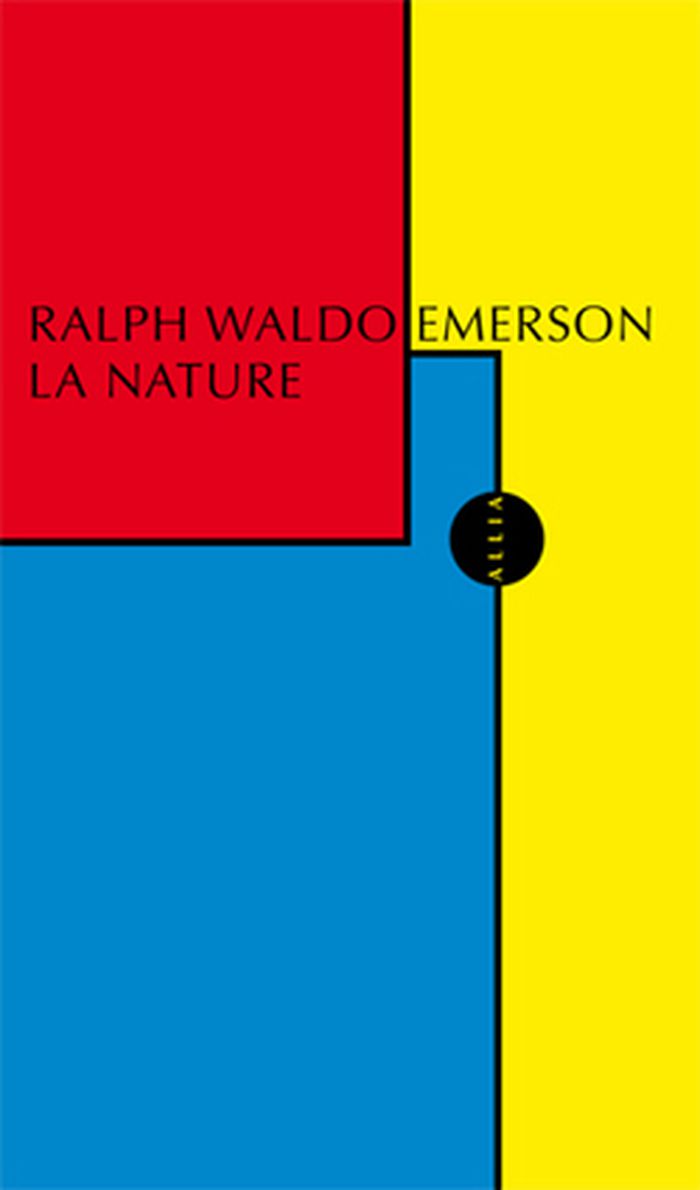
“La raison pour laquelle le monde manque d’unité et gît brisé et en morceaux, c’est que l’homme est séparé d’avec lui-même. Il ne peut étudier la nature tant qu’il ne satisfait pas à toutes les exigences de l’esprit. L’amour lui est aussi nécessaire que la faculté de percevoir. En fait, aucun des deux ne peut atteindre la perfection sans l’autre. Au plein sens du terme, la pensée est ferveur, et la ferveur est pensée.” Dans La Nature, sa première œuvre, Emerson expose avec lyrisme les principes philosophiques qui dirigeront toute son œuvre : la cohérence intime de l’univers, la plénitude et l’harmonie de l’esprit individuel, la correspondance symbolique entre lois naturelles et lois morales.
La nature
Actions:
Prix:
$11.95
(disponible sur commande)
Résumé:
“La raison pour laquelle le monde manque d’unité et gît brisé et en morceaux, c’est que l’homme est séparé d’avec lui-même. Il ne peut étudier la nature tant qu’il ne satisfait pas à toutes les exigences de l’esprit. L’amour lui est aussi nécessaire que la faculté de percevoir. En fait, aucun des deux ne peut atteindre la perfection sans l’autre. Au plein sens du terme, la pensée est ferveur, et la ferveur est pensée.” Dans La Nature, sa première œuvre, Emerson expose avec lyrisme les principes philosophiques qui dirigeront toute son œuvre : la cohérence intime de l’univers, la plénitude et l’harmonie de l’esprit individuel, la correspondance symbolique entre lois naturelles et lois morales.
Classification:
livres
livres
Publication:
mars 2014
mars 2014
Sujet:
Théorie/ philosophie
Théorie/ philosophie
Classification:
livres
livres
Titre:
Le Park
Le Park
Actions:
Prix:
$11.95
(disponible sur commande)
Résumé:
“Peut-être est-il temps de dire, à ceux qui ne l'auraient pas déjà compris, en quoi consiste exactement Le ParK ? Le principe en est très simple. Son concepteur a voulu rassembler en un seul parc toutes ses formes possibles. Le ParK associe ainsi, en une totalité neuve, une réserve animale à un parc d'attraction, un camp de concentration à une technopole, une foire aux(...)
$11.95
(disponible sur commande)
Résumé:
“Peut-être est-il temps de dire, à ceux qui ne l'auraient pas déjà compris, en quoi consiste exactement Le ParK ? Le principe en est très simple. Son concepteur a voulu rassembler en un seul parc toutes ses formes possibles. Le ParK associe ainsi, en une totalité neuve, une réserve animale à un parc d'attraction, un camp de concentration à une technopole, une foire aux(...)
Titre:
Le Park
Actions:
Prix:
$11.95
(disponible sur commande)
Résumé:
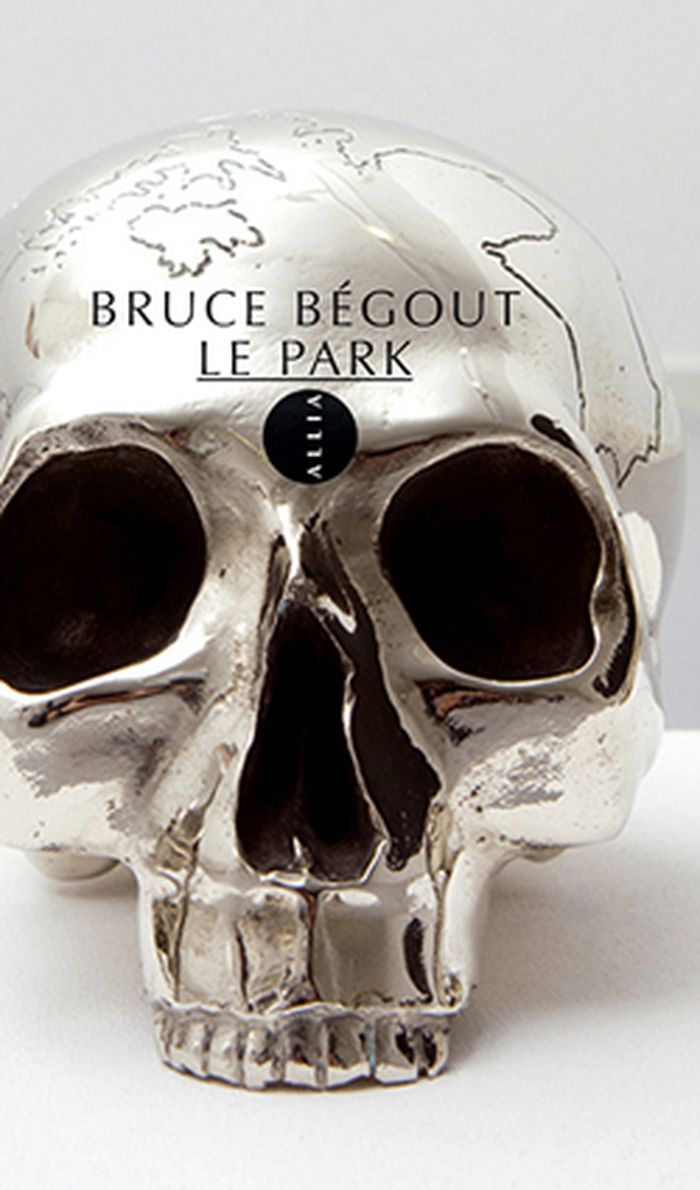
“Peut-être est-il temps de dire, à ceux qui ne l'auraient pas déjà compris, en quoi consiste exactement Le ParK ? Le principe en est très simple. Son concepteur a voulu rassembler en un seul parc toutes ses formes possibles. Le ParK associe ainsi, en une totalité neuve, une réserve animale à un parc d'attraction, un camp de concentration à une technopole, une foire aux plaisirs à un cantonnement de réfugiés, un cimetière à un Kindergarten, un jardin zoologique à une maison de retraite, un arboretum à une prison. Mais il ne les associe pas de manière à ce que chacun de ces éléments maintienne son autonomie et continue de fonctionner à part. Il les combine entièrement, joint tel caractère à tel autre, jette des ponts, mélange les genres, confond les bâtiments, agrège les populations, intervertit les rôles.”
Le Park
Actions:
Prix:
$11.95
(disponible sur commande)
Résumé:
“Peut-être est-il temps de dire, à ceux qui ne l'auraient pas déjà compris, en quoi consiste exactement Le ParK ? Le principe en est très simple. Son concepteur a voulu rassembler en un seul parc toutes ses formes possibles. Le ParK associe ainsi, en une totalité neuve, une réserve animale à un parc d'attraction, un camp de concentration à une technopole, une foire aux plaisirs à un cantonnement de réfugiés, un cimetière à un Kindergarten, un jardin zoologique à une maison de retraite, un arboretum à une prison. Mais il ne les associe pas de manière à ce que chacun de ces éléments maintienne son autonomie et continue de fonctionner à part. Il les combine entièrement, joint tel caractère à tel autre, jette des ponts, mélange les genres, confond les bâtiments, agrège les populations, intervertit les rôles.”
Classification:
livres
livres
Publication:
mars 2014
mars 2014
Sujet:
Théorie/ philosophie
Théorie/ philosophie
Classification:
livres
livres
Actions:
Prix:
$10.95
(disponible sur commande)
Résumé:
«Je fus un toxicomane appliqué. Tout de suite, je considérai comme un rare privilège de prendre de l'héroïne. Cette joie, jamais je ne l'ai bradée. Tout du rituel et du plaisir conserva son aspect lustral. Rien de peccamineux dans mon intoxication. Ce fut la grande affaire de ma vie. J'avais rencontré ma Béatrice. Je dois à l'héroïne mes plus grandes jouissances en ce monde.
$10.95
(disponible sur commande)
Résumé:
«Je fus un toxicomane appliqué. Tout de suite, je considérai comme un rare privilège de prendre de l'héroïne. Cette joie, jamais je ne l'ai bradée. Tout du rituel et du plaisir conserva son aspect lustral. Rien de peccamineux dans mon intoxication. Ce fut la grande affaire de ma vie. J'avais rencontré ma Béatrice. Je dois à l'héroïne mes plus grandes jouissances en ce monde.
Titre:
Les rêveries du toxicomane solitaire
Actions:
Prix:
$10.95
(disponible sur commande)
Résumé:
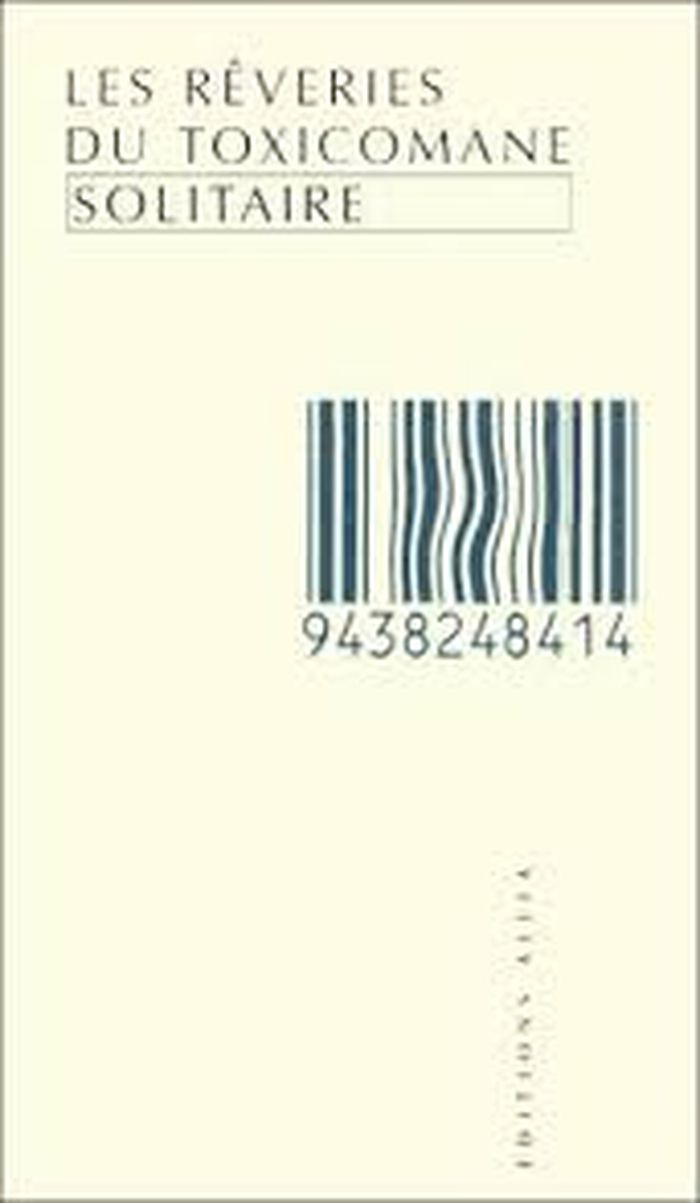
«Je fus un toxicomane appliqué. Tout de suite, je considérai comme un rare privilège de prendre de l'héroïne. Cette joie, jamais je ne l'ai bradée. Tout du rituel et du plaisir conserva son aspect lustral. Rien de peccamineux dans mon intoxication. Ce fut la grande affaire de ma vie. J'avais rencontré ma Béatrice. Je dois à l'héroïne mes plus grandes jouissances en ce monde.
Les rêveries du toxicomane solitaire
Actions:
Prix:
$10.95
(disponible sur commande)
Résumé:
«Je fus un toxicomane appliqué. Tout de suite, je considérai comme un rare privilège de prendre de l'héroïne. Cette joie, jamais je ne l'ai bradée. Tout du rituel et du plaisir conserva son aspect lustral. Rien de peccamineux dans mon intoxication. Ce fut la grande affaire de ma vie. J'avais rencontré ma Béatrice. Je dois à l'héroïne mes plus grandes jouissances en ce monde.
Classification:
livres
livres
Publication:
mars 2014
mars 2014
Sujet:
Théorie/ philosophie
Théorie/ philosophie
Classification:
livres
livres
Actions:
Prix:
$62.95
(disponible sur commande)
Résumé:
La confrontation de la pensée urbaine et de la mobilité a conduit une vingtaine d’auteurs à approcher de nouveaux thèmes, comme la « ville lente », la « ville fractale » ou la « ville cohérente », ou encore la « ville morcelée », témoignant de l’essor de préoccupations morphologiques reliées à la pratique. D’autres thèmes très variés ont pris de l’importance, comme la(...)
$62.95
(disponible sur commande)
Résumé:
La confrontation de la pensée urbaine et de la mobilité a conduit une vingtaine d’auteurs à approcher de nouveaux thèmes, comme la « ville lente », la « ville fractale » ou la « ville cohérente », ou encore la « ville morcelée », témoignant de l’essor de préoccupations morphologiques reliées à la pratique. D’autres thèmes très variés ont pris de l’importance, comme la(...)
Titre:
Ville et mobilité: nouveaux regards
Actions:
Prix:
$62.95
(disponible sur commande)
Résumé:
La confrontation de la pensée urbaine et de la mobilité a conduit une vingtaine d’auteurs à approcher de nouveaux thèmes, comme la « ville lente », la « ville fractale » ou la « ville cohérente », ou encore la « ville morcelée », témoignant de l’essor de préoccupations morphologiques reliées à la pratique. D’autres thèmes très variés ont pris de l’importance, comme la logistique urbaine, les « budgets-temps », les inégalités ou les modèles « transport-urbanisme ». Il faut saluer aussi le développement des travaux économiques et financiers appliqués à la mobilité urbaine, sans oublier non plus la prospective. Cet ouvrage fait une large place aux résultats du programme de recherche et d’innovation dans les transports terrestres Predit. En effet, à l’initiative notamment de la direction de la recherche et de l’innovation du ministère chargé du développement durable et de l’Ademe, ce programme a fortement contribué à la construction d’un édifice conceptuel polyphonique, mais qui ne manque pas d’une certaine cohérence dans sa diversité et a produit de véritables outils d’aide à la décision publique.
Ville et mobilité: nouveaux regards
Actions:
Prix:
$62.95
(disponible sur commande)
Résumé:
La confrontation de la pensée urbaine et de la mobilité a conduit une vingtaine d’auteurs à approcher de nouveaux thèmes, comme la « ville lente », la « ville fractale » ou la « ville cohérente », ou encore la « ville morcelée », témoignant de l’essor de préoccupations morphologiques reliées à la pratique. D’autres thèmes très variés ont pris de l’importance, comme la logistique urbaine, les « budgets-temps », les inégalités ou les modèles « transport-urbanisme ». Il faut saluer aussi le développement des travaux économiques et financiers appliqués à la mobilité urbaine, sans oublier non plus la prospective. Cet ouvrage fait une large place aux résultats du programme de recherche et d’innovation dans les transports terrestres Predit. En effet, à l’initiative notamment de la direction de la recherche et de l’innovation du ministère chargé du développement durable et de l’Ademe, ce programme a fortement contribué à la construction d’un édifice conceptuel polyphonique, mais qui ne manque pas d’une certaine cohérence dans sa diversité et a produit de véritables outils d’aide à la décision publique.
Classification:
livres
livres
Publication:
mars 2014
mars 2014
Sujet:
Théorie de l’urbanisme
Théorie de l’urbanisme


