


876 Résultats
Classification:
livres
livres
Titre:
Drivers of change
Drivers of change
Actions:
Prix:
$80.00
(disponible sur commande)
Résumé:
Conceived and designed by the Foresight, innovation and incubation team at Arup, the influential consulting firm that advises on all aspects of the built environment, this card set features seven topics that have been chosen as headings for further discussion: energy, waste, climate change, water, demographics, urbanization and poverty. The 189 cards are divided into five(...)
$80.00
(disponible sur commande)
Résumé:
Conceived and designed by the Foresight, innovation and incubation team at Arup, the influential consulting firm that advises on all aspects of the built environment, this card set features seven topics that have been chosen as headings for further discussion: energy, waste, climate change, water, demographics, urbanization and poverty. The 189 cards are divided into five(...)
Titre:
Drivers of change
Actions:
Prix:
$80.00
(disponible sur commande)
Résumé:
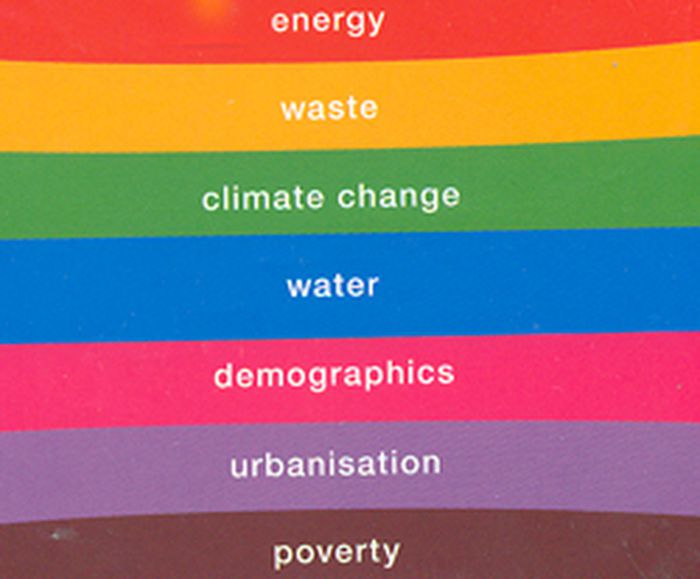
Conceived and designed by the Foresight, innovation and incubation team at Arup, the influential consulting firm that advises on all aspects of the built environment, this card set features seven topics that have been chosen as headings for further discussion: energy, waste, climate change, water, demographics, urbanization and poverty. The 189 cards are divided into five domains known as the steep framework: societal, technological, economic, environmental, and political. Each card represents a single driver of change-for instance urban migration, ageing population, austerity-along with a challenging and thought-provoking question. The flip side of the card provides pertinent data to expand on the question, as well as maps, graphs, and other illustrations. An accompanying booklet offers tips on how to use these cards independently or in a group setting. Whether brainstorming for new ideas or facilitating a discussion, these graphically sophisticated cards are an excellent resource for anyone interested in the future of technology, design and sustainability or indeed the way we might live in the years to come.
Drivers of change
Actions:
Prix:
$80.00
(disponible sur commande)
Résumé:
Conceived and designed by the Foresight, innovation and incubation team at Arup, the influential consulting firm that advises on all aspects of the built environment, this card set features seven topics that have been chosen as headings for further discussion: energy, waste, climate change, water, demographics, urbanization and poverty. The 189 cards are divided into five domains known as the steep framework: societal, technological, economic, environmental, and political. Each card represents a single driver of change-for instance urban migration, ageing population, austerity-along with a challenging and thought-provoking question. The flip side of the card provides pertinent data to expand on the question, as well as maps, graphs, and other illustrations. An accompanying booklet offers tips on how to use these cards independently or in a group setting. Whether brainstorming for new ideas or facilitating a discussion, these graphically sophisticated cards are an excellent resource for anyone interested in the future of technology, design and sustainability or indeed the way we might live in the years to come.
Classification:
livres
livres
Publication:
juillet 2009
juillet 2009
Sujet:
Architecture écologique
Architecture écologique
Classification:
livres
livres
Actions:
Prix:
$46.50
(disponible sur commande)
Résumé:
Are there significant variations in the ways planners in different nations have influenced urban, regional, and national development? Do such variations arise from differences in planning cultures, meaning the collective ethos and dominant attitude of planners in different nations towards the appropriate roles of the state, market forces, and civil society? How are such(...)
$46.50
(disponible sur commande)
Résumé:
Are there significant variations in the ways planners in different nations have influenced urban, regional, and national development? Do such variations arise from differences in planning cultures, meaning the collective ethos and dominant attitude of planners in different nations towards the appropriate roles of the state, market forces, and civil society? How are such(...)
Titre:
Comparative planning cultures
Actions:
Prix:
$46.50
(disponible sur commande)
Résumé:
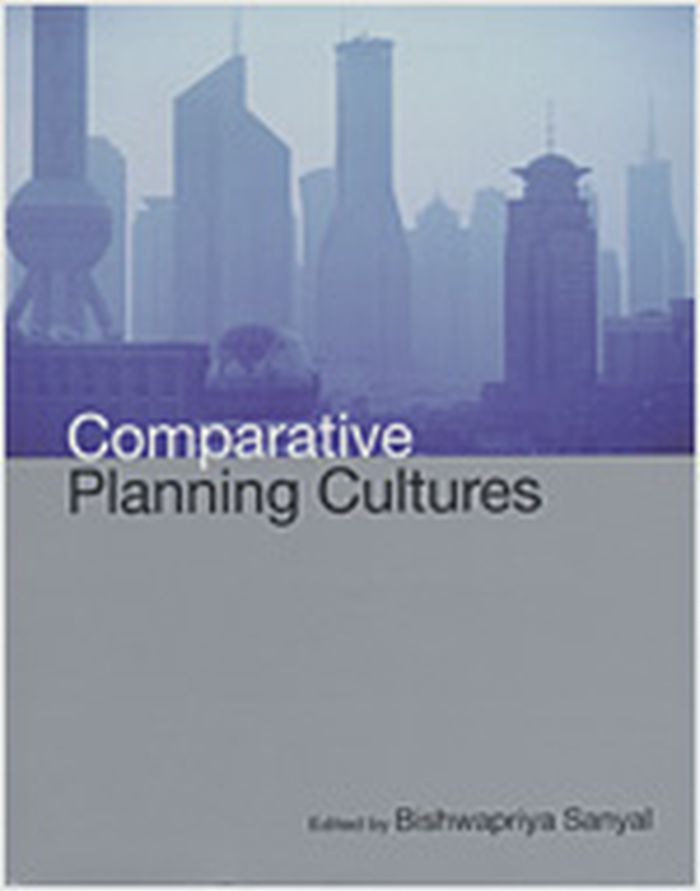
Are there significant variations in the ways planners in different nations have influenced urban, regional, and national development? Do such variations arise from differences in planning cultures, meaning the collective ethos and dominant attitude of planners in different nations towards the appropriate roles of the state, market forces, and civil society? How are such professional cultures formed? Are they indigenous and immutable, or do they evolve with social, political, and economic changes both within and outside the national territories? Specifically, what has been the impact of the intensification of global interconnectedness in trade, capital flows, labor migration, and technological connectivity on national planning cultures? "Comparative planning cultures" addresses these questions, drawing on the planning experience in ten nations and at different territorial levels. The result is an understanding of planning culture that is complex and dynamic-in contrast to traditional notions of culture that evoke a sense of immutability and inheritance of unchanging social attributes of planners. The volume concludes that there is no cultural nucleus or core planning culture, no social gene that can be decoded to reveal the cultural DNA of planning practice of any nation.
Comparative planning cultures
Actions:
Prix:
$46.50
(disponible sur commande)
Résumé:
Are there significant variations in the ways planners in different nations have influenced urban, regional, and national development? Do such variations arise from differences in planning cultures, meaning the collective ethos and dominant attitude of planners in different nations towards the appropriate roles of the state, market forces, and civil society? How are such professional cultures formed? Are they indigenous and immutable, or do they evolve with social, political, and economic changes both within and outside the national territories? Specifically, what has been the impact of the intensification of global interconnectedness in trade, capital flows, labor migration, and technological connectivity on national planning cultures? "Comparative planning cultures" addresses these questions, drawing on the planning experience in ten nations and at different territorial levels. The result is an understanding of planning culture that is complex and dynamic-in contrast to traditional notions of culture that evoke a sense of immutability and inheritance of unchanging social attributes of planners. The volume concludes that there is no cultural nucleus or core planning culture, no social gene that can be decoded to reveal the cultural DNA of planning practice of any nation.
Classification:
livres
livres
Publication:
avril 2005, New York / London
avril 2005, New York / London
Sujet:
Théorie de l’urbanisme
Théorie de l’urbanisme
Classification:
livres
livres
Actions:
Prix:
$49.95
(disponible en magasin)
Résumé:
In the final days before the fall of Saigon in 1975, 125,000 Vietnamese who were evacuated or who made their own way out of the country resettled in the United States. Finding themselves in unfamiliar places yet still connected in exile, these refugees began building their own communities as memorials to a lost homeland. Known both officially and unofficially as Little(...)
$49.95
(disponible en magasin)
Résumé:
In the final days before the fall of Saigon in 1975, 125,000 Vietnamese who were evacuated or who made their own way out of the country resettled in the United States. Finding themselves in unfamiliar places yet still connected in exile, these refugees began building their own communities as memorials to a lost homeland. Known both officially and unofficially as Little(...)
Titre:
Building Little Saigon: Refugee urbanism in American cities and suburbs
Actions:
Prix:
$49.95
(disponible en magasin)
Résumé:
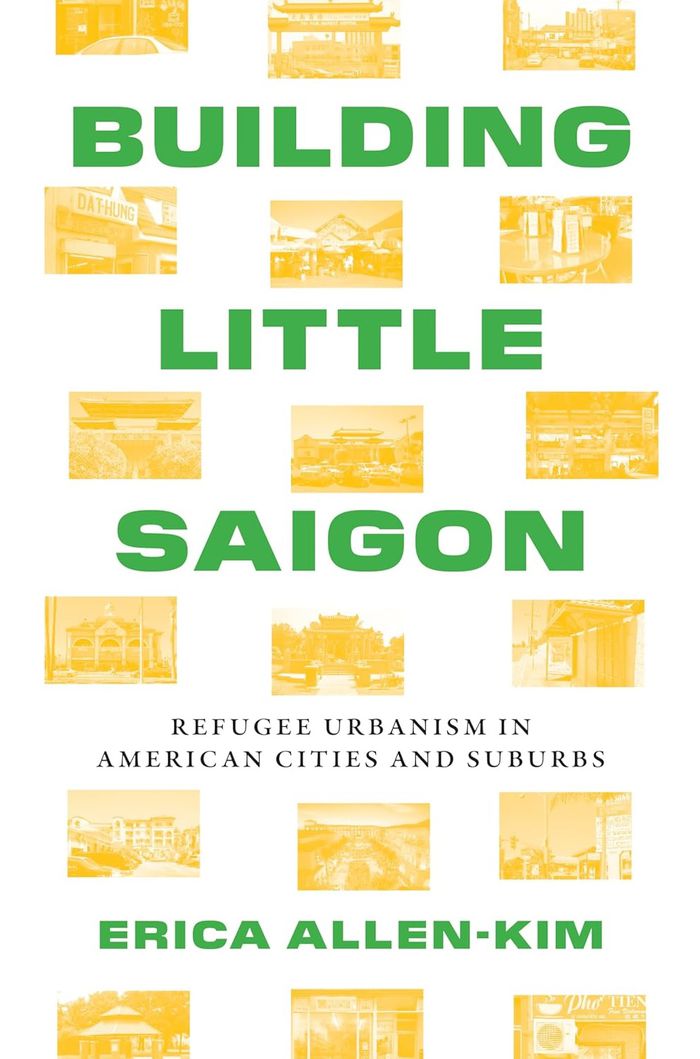
In the final days before the fall of Saigon in 1975, 125,000 Vietnamese who were evacuated or who made their own way out of the country resettled in the United States. Finding themselves in unfamiliar places yet still connected in exile, these refugees began building their own communities as memorials to a lost homeland. Known both officially and unofficially as Little Saigons, these built landscapes offer space for everyday activities as well as the staging of cultural heritage and political events. "Building Little Saigon" examines nearly fifty years of city building by Vietnamese Americans-who number over 2.2 million today. Author Erica Allen-Kim highlights architecture and planning ideas adapted by the Vietnamese communities who, in turn, have influenced planning policies and mainstream practices. Allen-Kim traveled to ten Little Saigons in the United States to visit archives, buildings, and public art and to converse with developers, community planners, artists, business owners, and Vietnam veterans. By examining everyday buildings-who made them and what they mean for those who know them-"Building Little Saigon" shows us the complexities of migration unfolding across lifetimes and generations.
Building Little Saigon: Refugee urbanism in American cities and suburbs
Actions:
Prix:
$49.95
(disponible en magasin)
Résumé:
In the final days before the fall of Saigon in 1975, 125,000 Vietnamese who were evacuated or who made their own way out of the country resettled in the United States. Finding themselves in unfamiliar places yet still connected in exile, these refugees began building their own communities as memorials to a lost homeland. Known both officially and unofficially as Little Saigons, these built landscapes offer space for everyday activities as well as the staging of cultural heritage and political events. "Building Little Saigon" examines nearly fifty years of city building by Vietnamese Americans-who number over 2.2 million today. Author Erica Allen-Kim highlights architecture and planning ideas adapted by the Vietnamese communities who, in turn, have influenced planning policies and mainstream practices. Allen-Kim traveled to ten Little Saigons in the United States to visit archives, buildings, and public art and to converse with developers, community planners, artists, business owners, and Vietnam veterans. By examining everyday buildings-who made them and what they mean for those who know them-"Building Little Saigon" shows us the complexities of migration unfolding across lifetimes and generations.
Classification:
livres
livres
Publication:
juillet 2024
juillet 2024
Sujet:
Théorie de l’urbanisme
Théorie de l’urbanisme
Classification:
livres
livres
Prix:
$26.00
(disponible sur commande)
Résumé:
Newark's volatile past is infamous. The city has become synonymous with the Black Power movement and urban crisis. Its history reveals a vibrant and contentious political culture punctuated by traditional civic pride and an understudied tradition of protest in the black community. Newark charts this important city's place in the nation, from its founding in 1666 by a(...)
$26.00
(disponible sur commande)
Résumé:
Newark's volatile past is infamous. The city has become synonymous with the Black Power movement and urban crisis. Its history reveals a vibrant and contentious political culture punctuated by traditional civic pride and an understudied tradition of protest in the black community. Newark charts this important city's place in the nation, from its founding in 1666 by a(...)
Titre:
Newark: a history of race, rights, and riots in America
Actions:
Prix:
$26.00
(disponible sur commande)
Résumé:
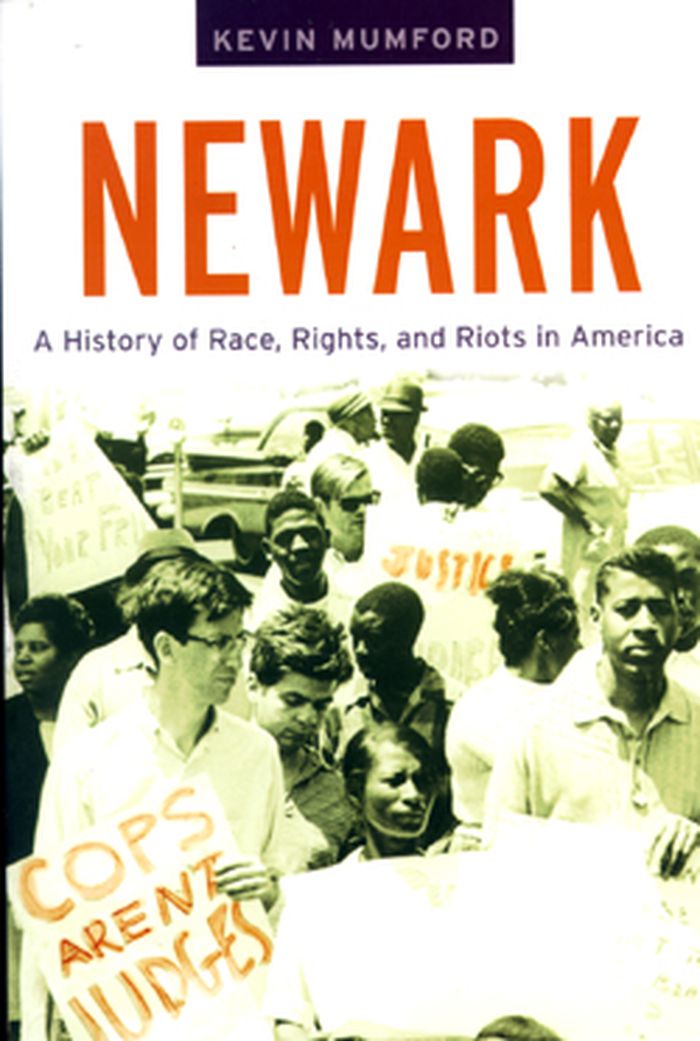
Newark's volatile past is infamous. The city has become synonymous with the Black Power movement and urban crisis. Its history reveals a vibrant and contentious political culture punctuated by traditional civic pride and an understudied tradition of protest in the black community. Newark charts this important city's place in the nation, from its founding in 1666 by a dissident Puritan as a refuge from intolerance, through the days of Jim Crow and World War II civil rights activism, to the height of postwar integration and the election of its first black mayor. In this broad and balanced history of Newark, Kevin Mumford applies the concept of the public sphere to the problem of race relations, demonstrating how political ideas and print culture were instrumental in shaping African American consciousness. He draws on both public and personal archives, interpreting official documents-such as newspapers, commission testimony, and government records-alongside interviews, political flyers, meeting minutes, and rare photos. From the migration out of the south to the rise of public housing and ethnic conflict, Newark explains the impact of African Americans on the reconstruction of American cities in the twentieth century.
Newark: a history of race, rights, and riots in America
Actions:
Prix:
$26.00
(disponible sur commande)
Résumé:
Newark's volatile past is infamous. The city has become synonymous with the Black Power movement and urban crisis. Its history reveals a vibrant and contentious political culture punctuated by traditional civic pride and an understudied tradition of protest in the black community. Newark charts this important city's place in the nation, from its founding in 1666 by a dissident Puritan as a refuge from intolerance, through the days of Jim Crow and World War II civil rights activism, to the height of postwar integration and the election of its first black mayor. In this broad and balanced history of Newark, Kevin Mumford applies the concept of the public sphere to the problem of race relations, demonstrating how political ideas and print culture were instrumental in shaping African American consciousness. He draws on both public and personal archives, interpreting official documents-such as newspapers, commission testimony, and government records-alongside interviews, political flyers, meeting minutes, and rare photos. From the migration out of the south to the rise of public housing and ethnic conflict, Newark explains the impact of African Americans on the reconstruction of American cities in the twentieth century.
Classification:
livres
livres
Publication:
novembre 2008, New York
novembre 2008, New York
Sujet:
Théorie/ philosophie
Théorie/ philosophie
Classification:
livres
livres

Titre:
Stéphane Duroy: Unknown
Stéphane Duroy: Unknown
Actions:
Prix:
$59.95
(disponible sur commande)
Résumé:
L'enjeu de ce travail, après les tragédies de l'Europe du XXe siècle, sera d'envisager l'Amérique comme terre d'accueil, réceptacle des drames de la vieille Europe, transposition optimiste de la misère, de la brutalité des guerres et révolutions. L'exil impose à l'homme américain une mutation radicale qui lui permet au prix d'un reniement de sa propre mémoire,(...)
$59.95
(disponible sur commande)
Résumé:
L'enjeu de ce travail, après les tragédies de l'Europe du XXe siècle, sera d'envisager l'Amérique comme terre d'accueil, réceptacle des drames de la vieille Europe, transposition optimiste de la misère, de la brutalité des guerres et révolutions. L'exil impose à l'homme américain une mutation radicale qui lui permet au prix d'un reniement de sa propre mémoire,(...)
Titre:
Stéphane Duroy: Unknown
Actions:
Prix:
$59.95
(disponible sur commande)
Résumé:
L'enjeu de ce travail, après les tragédies de l'Europe du XXe siècle, sera d'envisager l'Amérique comme terre d'accueil, réceptacle des drames de la vieille Europe, transposition optimiste de la misère, de la brutalité des guerres et révolutions. L'exil impose à l'homme américain une mutation radicale qui lui permet au prix d'un reniement de sa propre mémoire, d'intégrer une nouvelle conception du monde fondée sur l'éphémère, l'abandon et le mouvement perpétuel, proche du nomadisme. Stucturé par son destin d'exilé, ce peuple puise sa force et son inventivité dans la rupture. La nostalgie devient mortifère et l'avenir trop distant pour en rêver. Il reste alors le privilège de créer l'instant et de s'adapter. Compte tenu de la radicalité de cet engagement dans le destin d'un homme, il me semble qu'à l'échelle d'un peuple, les conséquences seront certainement surprenantes. Ce travail photographique né d'un fort parti pris ignore les grands mouvements de cette 'jeune civilisation' où information, spiritualité, environnement, culture, diplomatie, riment avec consommation et profit. Pour la cohérence du projet, l'investigation se limite à New York, porte de l'Amérique, et à l'État du Montana, achèvement de la lente migration vers l'inconnu. Stéphane Leroy
Stéphane Duroy: Unknown
Actions:
Prix:
$59.95
(disponible sur commande)
Résumé:
L'enjeu de ce travail, après les tragédies de l'Europe du XXe siècle, sera d'envisager l'Amérique comme terre d'accueil, réceptacle des drames de la vieille Europe, transposition optimiste de la misère, de la brutalité des guerres et révolutions. L'exil impose à l'homme américain une mutation radicale qui lui permet au prix d'un reniement de sa propre mémoire, d'intégrer une nouvelle conception du monde fondée sur l'éphémère, l'abandon et le mouvement perpétuel, proche du nomadisme. Stucturé par son destin d'exilé, ce peuple puise sa force et son inventivité dans la rupture. La nostalgie devient mortifère et l'avenir trop distant pour en rêver. Il reste alors le privilège de créer l'instant et de s'adapter. Compte tenu de la radicalité de cet engagement dans le destin d'un homme, il me semble qu'à l'échelle d'un peuple, les conséquences seront certainement surprenantes. Ce travail photographique né d'un fort parti pris ignore les grands mouvements de cette 'jeune civilisation' où information, spiritualité, environnement, culture, diplomatie, riment avec consommation et profit. Pour la cohérence du projet, l'investigation se limite à New York, porte de l'Amérique, et à l'État du Montana, achèvement de la lente migration vers l'inconnu. Stéphane Leroy
Classification:
livres
livres
Publication:
mars 2008, Paris
mars 2008, Paris
Sujet:
Monographies photo
Monographies photo
Classification:
livres
livres
Titre:
Border environments: CRA 1
Border environments: CRA 1
Actions:
Prix:
$50.50
(disponible sur commande)
Résumé:
Over the past fifteen years, the Centre for Research Architecture at Goldsmiths, University of London, has brought together established and emergent scholars who convene to work with each other and share their ideas and insights. These assemblies have produced a space of critical encounter for developing new investigative methods, expanded spatial practices, and(...)
$50.50
(disponible sur commande)
Résumé:
Over the past fifteen years, the Centre for Research Architecture at Goldsmiths, University of London, has brought together established and emergent scholars who convene to work with each other and share their ideas and insights. These assemblies have produced a space of critical encounter for developing new investigative methods, expanded spatial practices, and(...)
Sujet:
L'écologie de l'architecure
L'écologie de l'architecure
Publication:
septembre 2023
septembre 2023
Titre:
Border environments: CRA 1
Actions:
Prix:
$50.50
(disponible sur commande)
Résumé:
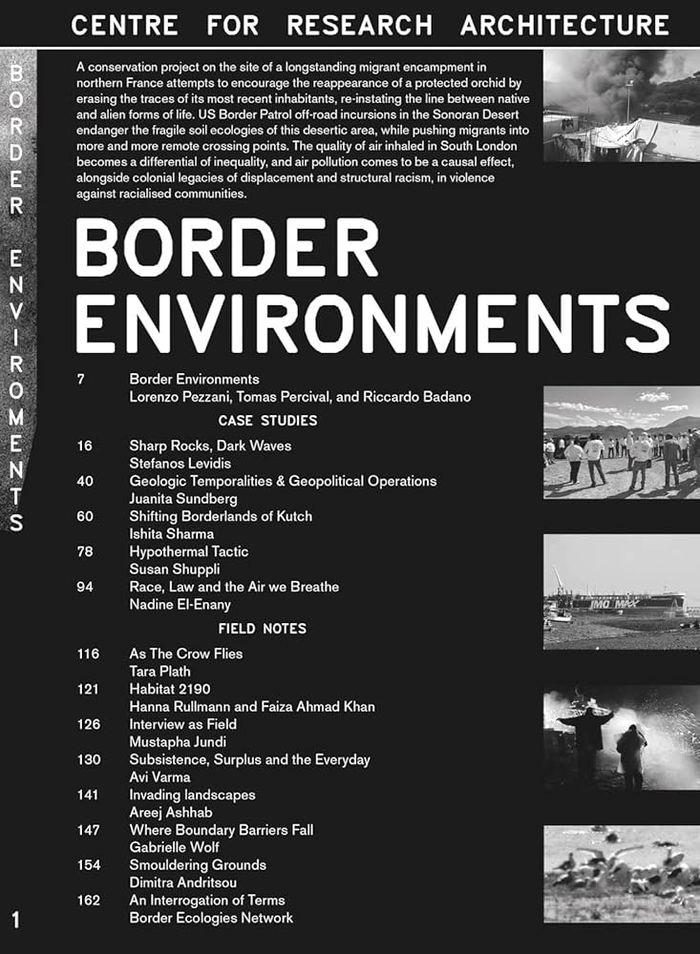
Over the past fifteen years, the Centre for Research Architecture at Goldsmiths, University of London, has brought together established and emergent scholars who convene to work with each other and share their ideas and insights. These assemblies have produced a space of critical encounter for developing new investigative methods, expanded spatial practices, and speculative propositions designed to respond to and intervene in the urgent political conditions of our time. This new series invites the reader into this ever-evolving pedagogical context. Each book is organized around a specific spatial issue and brings together a heterogeneous range of materials and contributors. The first work in the series, ''Border Environments'', explores the entanglement of ecology and migration. It examines the interplay between discriminatory politics, emergent technologies, and bordering practices within the context of (constructed) natures by highlighting a variety of interventions, investigative techniques, visual projects, and modes of witnessing that address the role of both human and more-than-human actors in border struggles. As such, the book is also a provocation that can be used to identify and organize new lines of struggle connecting environmental and mobility justice.
Border environments: CRA 1
Actions:
Prix:
$50.50
(disponible sur commande)
Résumé:
Over the past fifteen years, the Centre for Research Architecture at Goldsmiths, University of London, has brought together established and emergent scholars who convene to work with each other and share their ideas and insights. These assemblies have produced a space of critical encounter for developing new investigative methods, expanded spatial practices, and speculative propositions designed to respond to and intervene in the urgent political conditions of our time. This new series invites the reader into this ever-evolving pedagogical context. Each book is organized around a specific spatial issue and brings together a heterogeneous range of materials and contributors. The first work in the series, ''Border Environments'', explores the entanglement of ecology and migration. It examines the interplay between discriminatory politics, emergent technologies, and bordering practices within the context of (constructed) natures by highlighting a variety of interventions, investigative techniques, visual projects, and modes of witnessing that address the role of both human and more-than-human actors in border struggles. As such, the book is also a provocation that can be used to identify and organize new lines of struggle connecting environmental and mobility justice.
Classification:
livres
livres
Publication:
septembre 2023
septembre 2023
Sujet:
L'écologie de l'architecure
L'écologie de l'architecure
Classification:
livres
livres
Prix:
$62.95
(disponible en magasin)
Résumé:
Throughout the early twentieth century, waves of migration brought working-class people to the outskirts of Buenos Aires. This prompted a dilemma: Where should these restive populations be situated relative to the city’s spatial politics? Enter Antonio Bonet, a Catalan architect inspired by the transatlantic modernist and surrealist movements. Ana María León follows(...)
$62.95
(disponible en magasin)
Résumé:
Throughout the early twentieth century, waves of migration brought working-class people to the outskirts of Buenos Aires. This prompted a dilemma: Where should these restive populations be situated relative to the city’s spatial politics? Enter Antonio Bonet, a Catalan architect inspired by the transatlantic modernist and surrealist movements. Ana María León follows(...)
Titre:
Modernity for the masses: Antonio Bonet's Dreams for Buenos Aires
Actions:
Prix:
$62.95
(disponible en magasin)
Résumé:
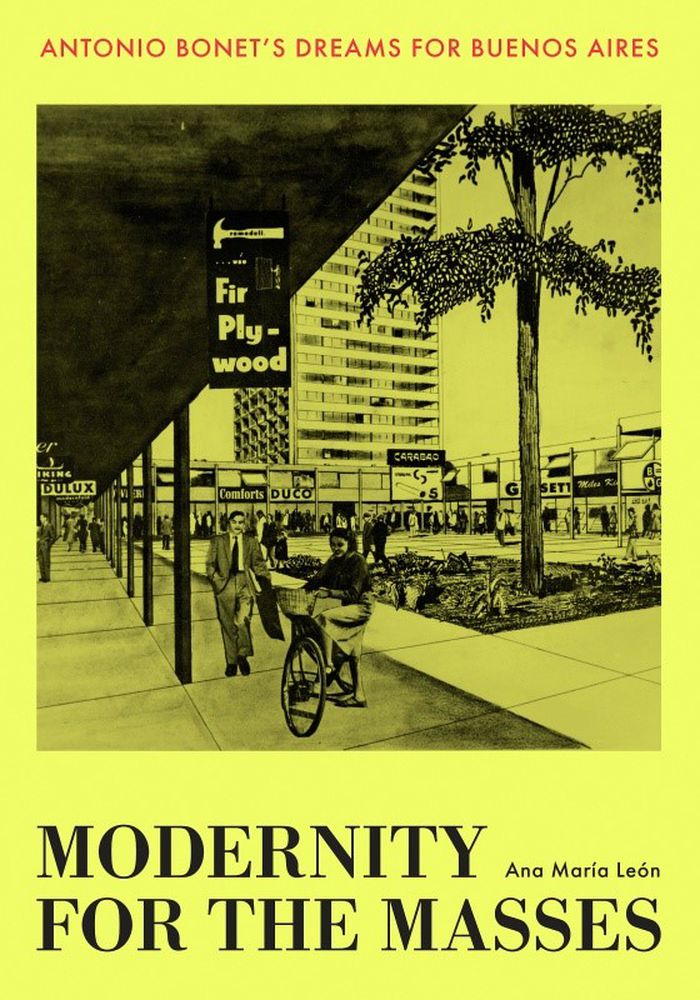
Throughout the early twentieth century, waves of migration brought working-class people to the outskirts of Buenos Aires. This prompted a dilemma: Where should these restive populations be situated relative to the city’s spatial politics? Enter Antonio Bonet, a Catalan architect inspired by the transatlantic modernist and surrealist movements. Ana María León follows Bonet's decades-long, state-backed quest to house Buenos Aires's diverse and fractious population. Working with totalitarian and populist regimes, Bonet developed three large-scale housing plans, each scuttled as a new government took over. Yet these incomplete plans—Bonet's dreams—teach us much about the relationship between modernism and state power. This volume finds in Bonet's projects the disconnect between modern architecture’s discourse of emancipation and the reality of its rationalizing control. Although he and his patrons constantly glorified the people and depicted them in housing plans, Bonet never consulted them. Instead he succumbed to official and elite fears of the people's latent political power. In careful readings of Bonet's work, León discovers the progressive erasure of surrealism's psychological sensitivity, replaced with an impulse, realized in modernist design, to contain the increasingly empowered population.
Modernity for the masses: Antonio Bonet's Dreams for Buenos Aires
Actions:
Prix:
$62.95
(disponible en magasin)
Résumé:
Throughout the early twentieth century, waves of migration brought working-class people to the outskirts of Buenos Aires. This prompted a dilemma: Where should these restive populations be situated relative to the city’s spatial politics? Enter Antonio Bonet, a Catalan architect inspired by the transatlantic modernist and surrealist movements. Ana María León follows Bonet's decades-long, state-backed quest to house Buenos Aires's diverse and fractious population. Working with totalitarian and populist regimes, Bonet developed three large-scale housing plans, each scuttled as a new government took over. Yet these incomplete plans—Bonet's dreams—teach us much about the relationship between modernism and state power. This volume finds in Bonet's projects the disconnect between modern architecture’s discourse of emancipation and the reality of its rationalizing control. Although he and his patrons constantly glorified the people and depicted them in housing plans, Bonet never consulted them. Instead he succumbed to official and elite fears of the people's latent political power. In careful readings of Bonet's work, León discovers the progressive erasure of surrealism's psychological sensitivity, replaced with an impulse, realized in modernist design, to contain the increasingly empowered population.
Classification:
livres
livres
Publication:
avril 2021
avril 2021
Sujet:
Théorie de l’urbanisme
Théorie de l’urbanisme
Classification:
livres
livres

Actions:
Prix:
$26.95
(disponible sur commande)
Résumé:
The Salton Sea is a man-made catastrophe, redolent with the smell of algae and decomposing fish. Nevertheless, the lake's vast, placid expanses continue to attract birdwatchers, tourists and artists. In Greetings from the Salton Sea, photographer Kim Stringfellow explores the history of California's largest lake from its disastrous beginnings—the "sea" was formed when(...)
$26.95
(disponible sur commande)
Résumé:
The Salton Sea is a man-made catastrophe, redolent with the smell of algae and decomposing fish. Nevertheless, the lake's vast, placid expanses continue to attract birdwatchers, tourists and artists. In Greetings from the Salton Sea, photographer Kim Stringfellow explores the history of California's largest lake from its disastrous beginnings—the "sea" was formed when(...)
Titre:
Greetings from the Salton Sea: folly and intervention in the southern California landscape, 1905-2005
Actions:
Prix:
$26.95
(disponible sur commande)
Résumé:
The Salton Sea is a man-made catastrophe, redolent with the smell of algae and decomposing fish. Nevertheless, the lake's vast, placid expanses continue to attract birdwatchers, tourists and artists. In Greetings from the Salton Sea, photographer Kim Stringfellow explores the history of California's largest lake from its disastrous beginnings—the "sea" was formed when Colorado River levees broke and spilled into a depression 280 feet below sea level—to its heyday as a desert paradise in the 1950s and its current state as an environmental battleground. Like the 400-plus species of birds that use the lake as a halfway point in their annual migration, developers flocked to the water too: they planted palm trees, built golf courses, and hired showstoppers such as the Beach Boys to perform at area resorts. These days, politicians seek to redirect the lake's only source of replenishment—agricultural runoff from surrounding farms—to water golf courses and green lawns elsewhere. Greetings from the Salton Sea's photographs capture the war among policymakers, environmentalists, developers, and the individuals still living along the lake's shores. As Stringfellow aptly documents, it is a war for water and, ultimately, for existence.
Greetings from the Salton Sea: folly and intervention in the southern California landscape, 1905-2005
Actions:
Prix:
$26.95
(disponible sur commande)
Résumé:
The Salton Sea is a man-made catastrophe, redolent with the smell of algae and decomposing fish. Nevertheless, the lake's vast, placid expanses continue to attract birdwatchers, tourists and artists. In Greetings from the Salton Sea, photographer Kim Stringfellow explores the history of California's largest lake from its disastrous beginnings—the "sea" was formed when Colorado River levees broke and spilled into a depression 280 feet below sea level—to its heyday as a desert paradise in the 1950s and its current state as an environmental battleground. Like the 400-plus species of birds that use the lake as a halfway point in their annual migration, developers flocked to the water too: they planted palm trees, built golf courses, and hired showstoppers such as the Beach Boys to perform at area resorts. These days, politicians seek to redirect the lake's only source of replenishment—agricultural runoff from surrounding farms—to water golf courses and green lawns elsewhere. Greetings from the Salton Sea's photographs capture the war among policymakers, environmentalists, developers, and the individuals still living along the lake's shores. As Stringfellow aptly documents, it is a war for water and, ultimately, for existence.
Classification:
livres
livres
Publication:
octobre 2011
octobre 2011
Sujet:
Théorie de l’urbanisme
Théorie de l’urbanisme
Classification:
livres
livres

Titre:
Dandelions
Dandelions
Actions:
Prix:
$27.50
(disponible sur commande)
Résumé:
In ''Dandelions'', Thea Lenarduzzi pieces together her family history through four generations’ worth of migration between Italy and England, and the stories scattered like seeds along the way. Where, or what, is home? What has it meant, historically and personally, to be 'Italian' or 'English', or both in a culture that prefers us to choose? What does it mean to have(...)
$27.50
(disponible sur commande)
Résumé:
In ''Dandelions'', Thea Lenarduzzi pieces together her family history through four generations’ worth of migration between Italy and England, and the stories scattered like seeds along the way. Where, or what, is home? What has it meant, historically and personally, to be 'Italian' or 'English', or both in a culture that prefers us to choose? What does it mean to have(...)
Titre:
Dandelions
Actions:
Prix:
$27.50
(disponible sur commande)
Résumé:
In ''Dandelions'', Thea Lenarduzzi pieces together her family history through four generations’ worth of migration between Italy and England, and the stories scattered like seeds along the way. Where, or what, is home? What has it meant, historically and personally, to be 'Italian' or 'English', or both in a culture that prefers us to choose? What does it mean to have roots? Or to have left a piece of oneself somewhere long since abandoned? At the heart of this book brimming with the lives of remarkable and apparently unremarkable people is Thea’s grandmother Dirce, a former seamstress, who, now approaching 100, is a repository of tales that are by turns unpredictable, unreliable, significant. And that lead us deeper. There’s the one about Mussolini’s modern Icarus who crashed into the murk of a lake; about the Manchester factory worker who wanted only to be seen; about the shadowy demon who visits in your sleep; and the monument to a murdered politician that, when it rains, runs the colour of blood. Through the journeys of Dirce and her relatives, from the Friuli to Sheffield and Manchester and back again, a different kind of history emerges, in which self and place are warp and weft, tightly woven, with threads left hazardously trailing.
Dandelions
Actions:
Prix:
$27.50
(disponible sur commande)
Résumé:
In ''Dandelions'', Thea Lenarduzzi pieces together her family history through four generations’ worth of migration between Italy and England, and the stories scattered like seeds along the way. Where, or what, is home? What has it meant, historically and personally, to be 'Italian' or 'English', or both in a culture that prefers us to choose? What does it mean to have roots? Or to have left a piece of oneself somewhere long since abandoned? At the heart of this book brimming with the lives of remarkable and apparently unremarkable people is Thea’s grandmother Dirce, a former seamstress, who, now approaching 100, is a repository of tales that are by turns unpredictable, unreliable, significant. And that lead us deeper. There’s the one about Mussolini’s modern Icarus who crashed into the murk of a lake; about the Manchester factory worker who wanted only to be seen; about the shadowy demon who visits in your sleep; and the monument to a murdered politician that, when it rains, runs the colour of blood. Through the journeys of Dirce and her relatives, from the Friuli to Sheffield and Manchester and back again, a different kind of history emerges, in which self and place are warp and weft, tightly woven, with threads left hazardously trailing.
Classification:
livres
livres
Publication:
mai 2023
mai 2023
Sujet:
Littérature et poésie
Littérature et poésie
Classification:
livres
livres
Prix:
$67.95
(disponible sur commande)
Résumé:
The uncertain state of Europe is the primary concern of Multiplicity : a multidisciplinary group of Europeans architects, photographers, urban developers and artists who met to explore and develop a series of studies focusing on contemporary European cities and their ongoing changes. The group uses on-site investigations, documented with beautiful photographs by(...)
$67.95
(disponible sur commande)
Résumé:
The uncertain state of Europe is the primary concern of Multiplicity : a multidisciplinary group of Europeans architects, photographers, urban developers and artists who met to explore and develop a series of studies focusing on contemporary European cities and their ongoing changes. The group uses on-site investigations, documented with beautiful photographs by(...)
Titre:
USE- Uncertain states of Europe : a trip through a changing Europe
Actions:
Prix:
$67.95
(disponible sur commande)
Résumé:
The uncertain state of Europe is the primary concern of Multiplicity : a multidisciplinary group of Europeans architects, photographers, urban developers and artists who met to explore and develop a series of studies focusing on contemporary European cities and their ongoing changes. The group uses on-site investigations, documented with beautiful photographs by Francesco Jodice and Gabriele Basilico, to illustrate the radical and dramatic changes occurring on European land and in its cities. Traditional spaces are slowly, yet forcefully, transforming due to the constant economic, political, and social upheavals and alterations. With an introduction by prominent political and intellectual figures such as Etienne Balibar, Rem Koolhas and Jeremy Rifkin, this volume analyses 24 cases of urban transformation. The cases cover geographical locations from Paris to Pristina, Helsinki to Bucharest, and show the extraordinary riches a modern city can offer while, at the same time, highlighting the abnormal spaces created by the existence of a so-called secondary world. The final section is dedicated to a series of ideas which view Europe as a single entity : a network of relations, trade, encounters, migration, transportation, construction, and offers an absolutely novel view of the ‘old’ world. Richly illustrated, this tome includes passages by architectural critics such as Stefano Boeri, Yorgos Semiforidis, Eduard Bru, Bart Lootsma.
USE- Uncertain states of Europe : a trip through a changing Europe
Actions:
Prix:
$67.95
(disponible sur commande)
Résumé:
The uncertain state of Europe is the primary concern of Multiplicity : a multidisciplinary group of Europeans architects, photographers, urban developers and artists who met to explore and develop a series of studies focusing on contemporary European cities and their ongoing changes. The group uses on-site investigations, documented with beautiful photographs by Francesco Jodice and Gabriele Basilico, to illustrate the radical and dramatic changes occurring on European land and in its cities. Traditional spaces are slowly, yet forcefully, transforming due to the constant economic, political, and social upheavals and alterations. With an introduction by prominent political and intellectual figures such as Etienne Balibar, Rem Koolhas and Jeremy Rifkin, this volume analyses 24 cases of urban transformation. The cases cover geographical locations from Paris to Pristina, Helsinki to Bucharest, and show the extraordinary riches a modern city can offer while, at the same time, highlighting the abnormal spaces created by the existence of a so-called secondary world. The final section is dedicated to a series of ideas which view Europe as a single entity : a network of relations, trade, encounters, migration, transportation, construction, and offers an absolutely novel view of the ‘old’ world. Richly illustrated, this tome includes passages by architectural critics such as Stefano Boeri, Yorgos Semiforidis, Eduard Bru, Bart Lootsma.
Classification:
livres
livres
Publication:
mai 2002, Milano
mai 2002, Milano
Sujet:
Théorie de l’urbanisme
Théorie de l’urbanisme


