


8583 Résultats
Classification:
livres
livres
Actions:
Prix:
$85.00
(disponible en magasin)
Résumé:
The photographer Édouard Baldus (1813-1889), a central figure in the early development of French photography and acknowledged in his day as a pioneer in the still-experimental field, was widely acclaimed both for his aesthetic sensitivity and for his technical prowess. Establishing a new mode of representing architecture and describing the emerging modern landscape with(...)
$85.00
(disponible en magasin)
Résumé:
The photographer Édouard Baldus (1813-1889), a central figure in the early development of French photography and acknowledged in his day as a pioneer in the still-experimental field, was widely acclaimed both for his aesthetic sensitivity and for his technical prowess. Establishing a new mode of representing architecture and describing the emerging modern landscape with(...)
Sujet:
Publications du CCA
Publications du CCA
Publication:
octobre 1994, Montréal / New York
octobre 1994, Montréal / New York
Titre:
The photographs of Edouard Baldus
Actions:
Prix:
$85.00
(disponible en magasin)
Résumé:
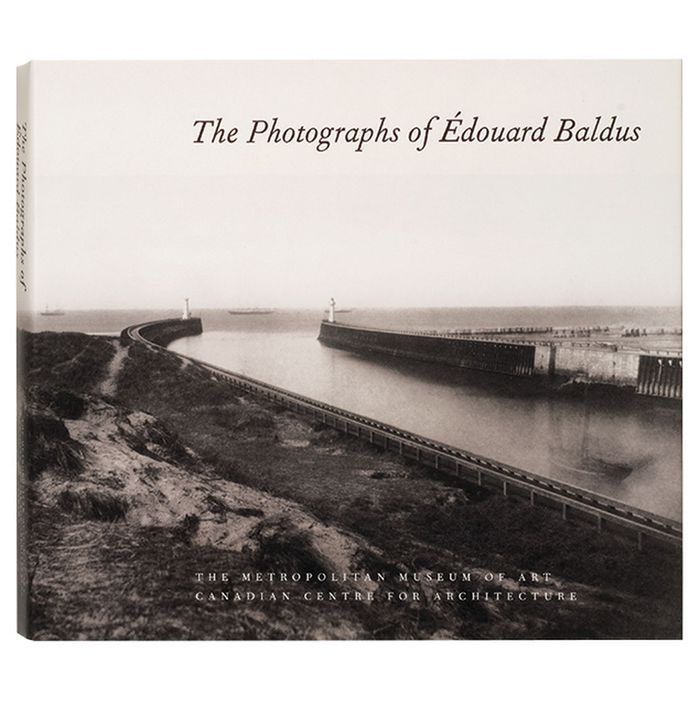
The photographer Édouard Baldus (1813-1889), a central figure in the early development of French photography and acknowledged in his day as a pioneer in the still-experimental field, was widely acclaimed both for his aesthetic sensitivity and for his technical prowess. Establishing a new mode of representing architecture and describing the emerging modern landscape with magnificent authority, he enjoyed high patronage in the 1850s and 1860s. Yet, despite the artist's renown during his lifetime, his name is all but unknown today, his work savored only by connoisseurs. This book, the first to chronicle the life and career of this important artist, brings his work once more before the public. The superb quality of the reproductions captures the subtle tones and soft matte surfaces of the original prints, many of which are published here for the first time. Baldus made his reputation with views of the monuments of Paris and the south of France, with dramatic landscape of the Auvergne, with photographs of the New Louvre, and with a poignant record of the devastating floods of 1856. But it is his two railroad albums -- the first commissioned in 1855 by Baron James de Rothschild for presentation to Queen Victoria, the second in 1861 by the Paris-Lyon-Méditerranée railroad company -- that are his greatest achievement. Here he brought together his earlier architectural and scenic images with bold geometric views of the modern landscape -- railroad tracks, stations, bridges, viaducts, and tunnels -- to address the influence of technology (of which both the railroad and the camera are prime examples). In so doing, Baldus anticipated the concerns of Impressionnist painters a decade later and those of many artists of our own day, meeting his task with a clarity and directness not since surpassed.
The photographs of Edouard Baldus
Actions:
Prix:
$85.00
(disponible en magasin)
Résumé:
The photographer Édouard Baldus (1813-1889), a central figure in the early development of French photography and acknowledged in his day as a pioneer in the still-experimental field, was widely acclaimed both for his aesthetic sensitivity and for his technical prowess. Establishing a new mode of representing architecture and describing the emerging modern landscape with magnificent authority, he enjoyed high patronage in the 1850s and 1860s. Yet, despite the artist's renown during his lifetime, his name is all but unknown today, his work savored only by connoisseurs. This book, the first to chronicle the life and career of this important artist, brings his work once more before the public. The superb quality of the reproductions captures the subtle tones and soft matte surfaces of the original prints, many of which are published here for the first time. Baldus made his reputation with views of the monuments of Paris and the south of France, with dramatic landscape of the Auvergne, with photographs of the New Louvre, and with a poignant record of the devastating floods of 1856. But it is his two railroad albums -- the first commissioned in 1855 by Baron James de Rothschild for presentation to Queen Victoria, the second in 1861 by the Paris-Lyon-Méditerranée railroad company -- that are his greatest achievement. Here he brought together his earlier architectural and scenic images with bold geometric views of the modern landscape -- railroad tracks, stations, bridges, viaducts, and tunnels -- to address the influence of technology (of which both the railroad and the camera are prime examples). In so doing, Baldus anticipated the concerns of Impressionnist painters a decade later and those of many artists of our own day, meeting his task with a clarity and directness not since surpassed.
Classification:
livres
livres
Publication:
octobre 1994, Montréal / New York
octobre 1994, Montréal / New York
Sujet:
Publications du CCA
Publications du CCA
Classification:
livres
livres
Actions:
Prix:
$19.95
(disponible en magasin)
Résumé:
Ce Dictionnaire de l’artiste architecte et urbaniste Melvin Charney se pre´sente comme une collection de de´coupages d’articles de presse illustre´s d’une photographie, classe´s par se´ries the´matiques. Ces de´coupages, ou` compte surtout l’image, sont partiellement couverts de le´gers traits de peinture qui accentuent la valeur d’exposition de l’ensemble; le(...)
$19.95
(disponible en magasin)
Résumé:
Ce Dictionnaire de l’artiste architecte et urbaniste Melvin Charney se pre´sente comme une collection de de´coupages d’articles de presse illustre´s d’une photographie, classe´s par se´ries the´matiques. Ces de´coupages, ou` compte surtout l’image, sont partiellement couverts de le´gers traits de peinture qui accentuent la valeur d’exposition de l’ensemble; le(...)
Sujet:
Publications du CCA
Publications du CCA
Publication:
juin 2000, Montréal
juin 2000, Montréal
Titre:
Tracking images : Melvin Charney, un dictionnaire...
Actions:
Prix:
$19.95
(disponible en magasin)
Résumé:
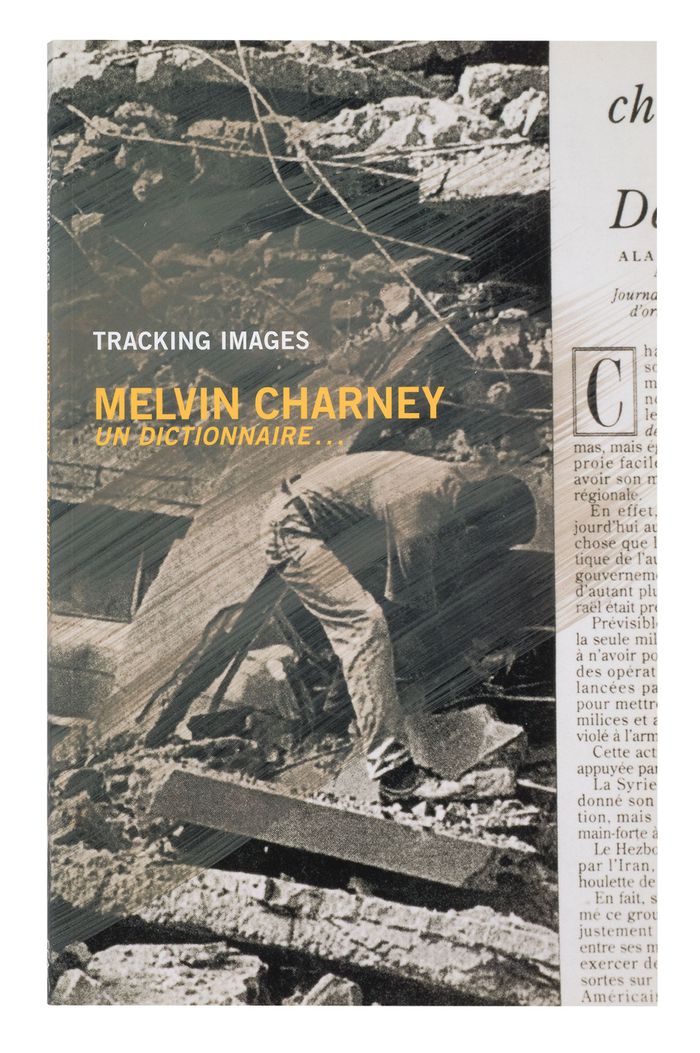
Ce Dictionnaire de l’artiste architecte et urbaniste Melvin Charney se pre´sente comme une collection de de´coupages d’articles de presse illustre´s d’une photographie, classe´s par se´ries the´matiques. Ces de´coupages, ou` compte surtout l’image, sont partiellement couverts de le´gers traits de peinture qui accentuent la valeur d’exposition de l’ensemble; le de´placement de la page imprime´e a` l’espace de la galerie ou du muse´e. Ce dictionnaire est une forme composite qui re´sulte d’une activite´ a` re´sonances multiples dans l’histoire des relations entre art et information, dans l’histoire de la critique architec- turale et dans celle de l’architecture critique. Les e´ve´nements fortuits que transmettent ces images collige´es par Charney nous forcent a` voir l’architecture dans un cadre qui n’est plus celui de sa repre´sentation comme construction monumentale isole´e. Cette publication accompagnait la participation canadienne a` la 7e Exposition internationale d’architecture de la Biennale de Venise, dont le the`me e´tait « La ville : moins d’esthe´tique, plus d’e´thique ». The Montre´al-based Canadian artist and architect Melvin Charney describes the history of modern architecture as a series of significant monuments that have been reproduced and documented. Here, the unexpected events transmitted by wire-service news photographs—selected, classified into various thematic areas, and collated by Charney—confront us with the shock or recognition that allows us to see architecture from outside its presentation as an isolated monument. The choices made by Charney from the ideas enclosed in the pre-packaged “news” images order them into a “dictionary,” and show the built and inhabited world as it appears through journalistic information. This publication accompanied the Canadian entry to the Venice Biennale’s 7th International Architecture Exhibition, whose theme was “The City: Less Aesthetics, More Ethics.”
Tracking images : Melvin Charney, un dictionnaire...
Actions:
Prix:
$19.95
(disponible en magasin)
Résumé:
Ce Dictionnaire de l’artiste architecte et urbaniste Melvin Charney se pre´sente comme une collection de de´coupages d’articles de presse illustre´s d’une photographie, classe´s par se´ries the´matiques. Ces de´coupages, ou` compte surtout l’image, sont partiellement couverts de le´gers traits de peinture qui accentuent la valeur d’exposition de l’ensemble; le de´placement de la page imprime´e a` l’espace de la galerie ou du muse´e. Ce dictionnaire est une forme composite qui re´sulte d’une activite´ a` re´sonances multiples dans l’histoire des relations entre art et information, dans l’histoire de la critique architec- turale et dans celle de l’architecture critique. Les e´ve´nements fortuits que transmettent ces images collige´es par Charney nous forcent a` voir l’architecture dans un cadre qui n’est plus celui de sa repre´sentation comme construction monumentale isole´e. Cette publication accompagnait la participation canadienne a` la 7e Exposition internationale d’architecture de la Biennale de Venise, dont le the`me e´tait « La ville : moins d’esthe´tique, plus d’e´thique ». The Montre´al-based Canadian artist and architect Melvin Charney describes the history of modern architecture as a series of significant monuments that have been reproduced and documented. Here, the unexpected events transmitted by wire-service news photographs—selected, classified into various thematic areas, and collated by Charney—confront us with the shock or recognition that allows us to see architecture from outside its presentation as an isolated monument. The choices made by Charney from the ideas enclosed in the pre-packaged “news” images order them into a “dictionary,” and show the built and inhabited world as it appears through journalistic information. This publication accompanied the Canadian entry to the Venice Biennale’s 7th International Architecture Exhibition, whose theme was “The City: Less Aesthetics, More Ethics.”
Classification:
livres
livres
Publication:
juin 2000, Montréal
juin 2000, Montréal
Sujet:
Publications du CCA
Publications du CCA
Classification:
livres
livres
Actions:
Exemplaires:
Description:
[20], 399, [41] pages ; 24 cm (4to)
Description:
[20], 399, [41] pages ; 24 cm (4to)
Auteur:
Sujet:
Publication:
In Roma : Appresso Domenico Basa, MDLXXXIX (1589)
In Roma : Appresso Domenico Basa, MDLXXXIX (1589)
Titre:
De gli obelischi di Roma : ‡b alla Santità di N.S. Sisto Quinto Pontefice Massimo / di monsig. Michele Mercati Protonot. Apostolico
Actions:
Exemplaires:
Description:
[20], 399, [41] pages ; 24 cm (4to)
De gli obelischi di Roma : ‡b alla Santità di N.S. Sisto Quinto Pontefice Massimo / di monsig. Michele Mercati Protonot. Apostolico
Actions:
Exemplaires:
Description:
[20], 399, [41] pages ; 24 cm (4to)
Classification:
livres
livres
Publication:
In Roma : Appresso Domenico Basa, MDLXXXIX (1589)
In Roma : Appresso Domenico Basa, MDLXXXIX (1589)
Auteur:
Sujet:
Classification:
livres
livres
Actions:
Exemplaires:
Description:
360 pages : illustrations (some color) ; 29 cm
Description:
360 pages : illustrations (some color) ; 29 cm
Auteur:
Sujet:
Publication:
München : Hirmer Verlag, 2012.
München : Hirmer Verlag, 2012.
Titre:
Karl Friedrich Schinkel : Geschichte und Poesie / für das Kupferstichkabinett-Staatliche Museen zu Berlin und die Kunsthalle der Hypo-Kulturstiftung München herausgegeben von Hein-Th. Schulze Altcappenberg ; Rolf H. Johannsen und Christiane Lange under Mitarbeit von Nadine Rottau und Felix von Lüttichau ; mit einem Essay von Werner Hofmann.
Actions:
Exemplaires:
Description:
360 pages : illustrations (some color) ; 29 cm
Karl Friedrich Schinkel : Geschichte und Poesie / für das Kupferstichkabinett-Staatliche Museen zu Berlin und die Kunsthalle der Hypo-Kulturstiftung München herausgegeben von Hein-Th. Schulze Altcappenberg ; Rolf H. Johannsen und Christiane Lange under Mitarbeit von Nadine Rottau und Felix von Lüttichau ; mit einem Essay von Werner Hofmann.
Actions:
Exemplaires:
Description:
360 pages : illustrations (some color) ; 29 cm
Classification:
livres
livres
Publication:
München : Hirmer Verlag, 2012.
München : Hirmer Verlag, 2012.
Auteur:
Sujet:
Classification:
livres
livres
Prix:
$26.00
(disponible sur commande)
Résumé:
"Draw it with your eyes closed: the art of the art assignment" is a unique and wide-ranging anthology featuring essays, drawings, and assignments from over one hundred contributors including John Baldessari, William Pope.L, Mira Schor, Rochelle Feinstein, Bob Nickas, Chris Kraus, Liam Gillick, Amy Sillman, James Benning, and Michelle Grabner. Bringing together(...)
$26.00
(disponible sur commande)
Résumé:
"Draw it with your eyes closed: the art of the art assignment" is a unique and wide-ranging anthology featuring essays, drawings, and assignments from over one hundred contributors including John Baldessari, William Pope.L, Mira Schor, Rochelle Feinstein, Bob Nickas, Chris Kraus, Liam Gillick, Amy Sillman, James Benning, and Michelle Grabner. Bringing together(...)
Titre:
Draw it with your eyes closed: the art of the art assignment
Actions:
Prix:
$26.00
(disponible sur commande)
Résumé:
"Draw it with your eyes closed: the art of the art assignment" is a unique and wide-ranging anthology featuring essays, drawings, and assignments from over one hundred contributors including John Baldessari, William Pope.L, Mira Schor, Rochelle Feinstein, Bob Nickas, Chris Kraus, Liam Gillick, Amy Sillman, James Benning, and Michelle Grabner. Bringing together assignments, anti-assignments, and artworks from both teachers and students from a broad range of institutions, we hope it simultaneously serves as an archive and an instigation, a teaching tool and a question mark, a critique and a tribute.
Draw it with your eyes closed: the art of the art assignment
Actions:
Prix:
$26.00
(disponible sur commande)
Résumé:
"Draw it with your eyes closed: the art of the art assignment" is a unique and wide-ranging anthology featuring essays, drawings, and assignments from over one hundred contributors including John Baldessari, William Pope.L, Mira Schor, Rochelle Feinstein, Bob Nickas, Chris Kraus, Liam Gillick, Amy Sillman, James Benning, and Michelle Grabner. Bringing together assignments, anti-assignments, and artworks from both teachers and students from a broad range of institutions, we hope it simultaneously serves as an archive and an instigation, a teaching tool and a question mark, a critique and a tribute.
Classification:
livres
livres
Publication:
février 2012
février 2012
Sujet:
Théorie de l’art
Théorie de l’art
Classification:
archives
archives
Actions:
Exemplaires:
Description:
143,342 digital files (517.39 GB), 24.24 linear meters of textual records, 17,086 photographic materials, 1125 drawings, 195 ephemera, 59 périodiques, 50 audio cassettes,...
Description:
143,342 digital files (517.39 GB), 24.24 linear meters of textual records, 17,086 photographic materials, 1125 drawings, 195 ephemera, 59 périodiques, 50 audio cassettes,...
Auteur:
Sujet:
Titre:
Jean-Louis Cohen fonds, 1968-2023
Actions:
Exemplaires:
Description:
143,342 digital files (517.39 GB), 24.24 linear meters of textual records, 17,086 photographic materials, 1125 drawings, 195 ephemera, 59 périodiques, 50 audio cassettes,...
Jean-Louis Cohen fonds, 1968-2023
Actions:
Exemplaires:
Description:
143,342 digital files (517.39 GB), 24.24 linear meters of textual records, 17,086 photographic materials, 1125 drawings, 195 ephemera, 59 périodiques, 50 audio cassettes,...
Classification:
archives
archives
Auteur:
Sujet:
Classification:
livres
livres

Prix:
$39.99
(disponible sur commande)
Résumé:
The National Mall in Washington, D.C., has held an important place in the American psyche since the early nineteenth century. Home to monuments and museums dedicated to the ideals upon which the United States rests, the Mall serves as a gathering place for public protest and celebration. But as the nation ages and the population diversifies, demands for additional(...)
$39.99
(disponible sur commande)
Résumé:
The National Mall in Washington, D.C., has held an important place in the American psyche since the early nineteenth century. Home to monuments and museums dedicated to the ideals upon which the United States rests, the Mall serves as a gathering place for public protest and celebration. But as the nation ages and the population diversifies, demands for additional(...)
Sujet:
Théorie de l’urbanisme
Théorie de l’urbanisme
Publication:
avril 2008, Baltimore
avril 2008, Baltimore
Titre:
The national mail: rethinking Washington's monumental core
Actions:
Prix:
$39.99
(disponible sur commande)
Résumé:
The National Mall in Washington, D.C., has held an important place in the American psyche since the early nineteenth century. Home to monuments and museums dedicated to the ideals upon which the United States rests, the Mall serves as a gathering place for public protest and celebration. But as the nation ages and the population diversifies, demands for additional structures and uses have sparked debates over the Mall's future and the necessity of preserving its legacy and the vision of its designers. The National Mall addresses these issues with a novel and compelling collection of essays, the work of leading design professionals, historians, and social scientists. Supplemented by eye-catching illustrations and photographs, this cross-disciplinary examination follows the discussion over the Mall's design and use, from its conceptual origins as part of Pierre Charles L'Enfant's vision for the capital to the 1902 McMillan Plan to the present day and beyond. It assesses how architectural, societal, and political changes have altered the park-like space between the Capitol and the Lincoln Memorial and explores the influence that disparate interest groups and creeping corporatism have already had on -- and are likely to exert upon -- America's public square. The National Mall presents an overarching account of how a democratic society plans, creates, and expands a national ceremonial space, opening the way for a broadly based inquiry into the Mall as it was, is, and will become. Urban planners, architectural and design historians, and engaged citizens will be challenged and well served by the thoughtful essays collected by Nathan Glazer and Cynthia R. Field. Nathan Glazer is an emeritus professor of sociology and education at Harvard University. He is the author or editor of many books on public policy and urban problems, among them The Public Face of Architecture and From a Cause to a Style: Modernist Architecture's Encounter with the American City. Cynthia R. Field is the architectural historian emerita at the Smithsonian Institution and a faculty member at the Corcoran College of Art. She is the coauthor of The Castle: An Illustrated History of the Smithsonian Building.
The national mail: rethinking Washington's monumental core
Actions:
Prix:
$39.99
(disponible sur commande)
Résumé:
The National Mall in Washington, D.C., has held an important place in the American psyche since the early nineteenth century. Home to monuments and museums dedicated to the ideals upon which the United States rests, the Mall serves as a gathering place for public protest and celebration. But as the nation ages and the population diversifies, demands for additional structures and uses have sparked debates over the Mall's future and the necessity of preserving its legacy and the vision of its designers. The National Mall addresses these issues with a novel and compelling collection of essays, the work of leading design professionals, historians, and social scientists. Supplemented by eye-catching illustrations and photographs, this cross-disciplinary examination follows the discussion over the Mall's design and use, from its conceptual origins as part of Pierre Charles L'Enfant's vision for the capital to the 1902 McMillan Plan to the present day and beyond. It assesses how architectural, societal, and political changes have altered the park-like space between the Capitol and the Lincoln Memorial and explores the influence that disparate interest groups and creeping corporatism have already had on -- and are likely to exert upon -- America's public square. The National Mall presents an overarching account of how a democratic society plans, creates, and expands a national ceremonial space, opening the way for a broadly based inquiry into the Mall as it was, is, and will become. Urban planners, architectural and design historians, and engaged citizens will be challenged and well served by the thoughtful essays collected by Nathan Glazer and Cynthia R. Field. Nathan Glazer is an emeritus professor of sociology and education at Harvard University. He is the author or editor of many books on public policy and urban problems, among them The Public Face of Architecture and From a Cause to a Style: Modernist Architecture's Encounter with the American City. Cynthia R. Field is the architectural historian emerita at the Smithsonian Institution and a faculty member at the Corcoran College of Art. She is the coauthor of The Castle: An Illustrated History of the Smithsonian Building.
Classification:
livres
livres
Publication:
avril 2008, Baltimore
avril 2008, Baltimore
Sujet:
Théorie de l’urbanisme
Théorie de l’urbanisme
Classification:
livres
livres
Actions:
Prix:
$22.00
(disponible sur commande)
Résumé:
Paper Monument's new anthology surveys thirty curators, educators, and art administrators on the contemporary role, responsibilities, and possibilities of the art institution.
$22.00
(disponible sur commande)
Résumé:
Paper Monument's new anthology surveys thirty curators, educators, and art administrators on the contemporary role, responsibilities, and possibilities of the art institution.
Titre:
As radical, as mother, as salad, as shelter: what should art institutions do now?
Actions:
Prix:
$22.00
(disponible sur commande)
Résumé:
Paper Monument's new anthology surveys thirty curators, educators, and art administrators on the contemporary role, responsibilities, and possibilities of the art institution.
As radical, as mother, as salad, as shelter: what should art institutions do now?
Actions:
Prix:
$22.00
(disponible sur commande)
Résumé:
Paper Monument's new anthology surveys thirty curators, educators, and art administrators on the contemporary role, responsibilities, and possibilities of the art institution.
Classification:
livres
livres
Publication:
octobre 2018
octobre 2018
Sujet:
Théorie de l’art
Théorie de l’art
Classification:
livres
livres
Actions:
Prix:
$49.50
(disponible sur commande)
Résumé:
Les sept civitates de Lyonnaise occidentale qui font l'objet de cet ouvrage (Osismes, Coriosolites, Vénètes, Riédons, Namnètes, Aulerques Diablintes et Andécaves) ne conservent que bien peu de souvenirs monumentaux de l'époque romaine. N'étaient les vestiges suggestifs et remarquablement mis en valeur de Jublains (Mayenne), les ruines de l'amphithéâtre et du «nymphée» de(...)
$49.50
(disponible sur commande)
Résumé:
Les sept civitates de Lyonnaise occidentale qui font l'objet de cet ouvrage (Osismes, Coriosolites, Vénètes, Riédons, Namnètes, Aulerques Diablintes et Andécaves) ne conservent que bien peu de souvenirs monumentaux de l'époque romaine. N'étaient les vestiges suggestifs et remarquablement mis en valeur de Jublains (Mayenne), les ruines de l'amphithéâtre et du «nymphée» de(...)
Titre:
L'architecture romaine dans l'ouest de la Gaule
Actions:
Prix:
$49.50
(disponible sur commande)
Résumé:
Les sept civitates de Lyonnaise occidentale qui font l'objet de cet ouvrage (Osismes, Coriosolites, Vénètes, Riédons, Namnètes, Aulerques Diablintes et Andécaves) ne conservent que bien peu de souvenirs monumentaux de l'époque romaine. N'étaient les vestiges suggestifs et remarquablement mis en valeur de Jublains (Mayenne), les ruines de l'amphithéâtre et du «nymphée» de Gennes (Maine-et-Loire) et le sanctuaire du Haut-Bécherel, à Corseul (Côtes-d'Armor), le bilan se réduirait à quelques lambeaux d'enceintes urbaines, aux traces très arasées de quelques villae et à de maigres tronçons d'aqueducs. Encadrés par les puissantes architectures néolithiques et d'innombrables réalisations des périodes médiévale et moderne, les monuments de l'époque impériale ont longtemps eu quelque peine à satisfaire la curiosité du touriste et à susciter celle du savant. On comprend dès lors aisément que la région n'occupe qu'une place très modeste dans les synthèses, même les mieux informées, quand elle n'en est pas tout simplement absente. Cette rareté des vestiges monumentaux a ancré dans bien des esprits l'idée que ces confins occidentaux des Gaules étaient largement restés à l'écart du mouvement de romanisation, et que, pour des raisons variées - manque d'intérêt de la part du conquérant, inertie, voire défiance du provincial -, elle n'est pas devenue aussi profondément romaine que les autres secteurs de la Gaule. Les fouilles et prospections de ces dernières décennies, l'étude d'une documentation épigraphique peu abondante mais non dépourvue d'intérêt et l'inventaire des blocs d'architecture corrigent largement cette image. Si les cités de l'ouest de la Gaule n'ont jamais cédé au gigantisme, si la monumentalisation y est avant tout réservée aux villes chefs-lieux et si certains édifices font apparemment défaut aux panoplies monumentales, l'intégration à l'Empire et l'adhésion des élites aux pratiques et valeurs de la romanité trouvent, ici comme ailleurs, une traduction concrète dans l'architecture publique et privée, urbaine et rurale. C'est ce qu'entend démontrer le présent ouvrage. Il dresse d'abord un état des connaissances sur plusieurs types d'édifices, pour lesquels les données disponibles autorisent désormais l'établissement d'un bilan: les forums, les édifices religieux, les domus, les villae et les tombes monumentales. Ces études sont complétées par deux enquêtes thématiques, consacrées l'une au décor architectonique, documentation jusqu'alors pratiquement inexploitée, l'autre au financement de la parure monumentale. L'ouvrage s'achève par une tentative de bilan sur l'activité édilitaire des sept cités concernées entre la fin du Ier s. avant notre ère et la fin du IVe siècle.
L'architecture romaine dans l'ouest de la Gaule
Actions:
Prix:
$49.50
(disponible sur commande)
Résumé:
Les sept civitates de Lyonnaise occidentale qui font l'objet de cet ouvrage (Osismes, Coriosolites, Vénètes, Riédons, Namnètes, Aulerques Diablintes et Andécaves) ne conservent que bien peu de souvenirs monumentaux de l'époque romaine. N'étaient les vestiges suggestifs et remarquablement mis en valeur de Jublains (Mayenne), les ruines de l'amphithéâtre et du «nymphée» de Gennes (Maine-et-Loire) et le sanctuaire du Haut-Bécherel, à Corseul (Côtes-d'Armor), le bilan se réduirait à quelques lambeaux d'enceintes urbaines, aux traces très arasées de quelques villae et à de maigres tronçons d'aqueducs. Encadrés par les puissantes architectures néolithiques et d'innombrables réalisations des périodes médiévale et moderne, les monuments de l'époque impériale ont longtemps eu quelque peine à satisfaire la curiosité du touriste et à susciter celle du savant. On comprend dès lors aisément que la région n'occupe qu'une place très modeste dans les synthèses, même les mieux informées, quand elle n'en est pas tout simplement absente. Cette rareté des vestiges monumentaux a ancré dans bien des esprits l'idée que ces confins occidentaux des Gaules étaient largement restés à l'écart du mouvement de romanisation, et que, pour des raisons variées - manque d'intérêt de la part du conquérant, inertie, voire défiance du provincial -, elle n'est pas devenue aussi profondément romaine que les autres secteurs de la Gaule. Les fouilles et prospections de ces dernières décennies, l'étude d'une documentation épigraphique peu abondante mais non dépourvue d'intérêt et l'inventaire des blocs d'architecture corrigent largement cette image. Si les cités de l'ouest de la Gaule n'ont jamais cédé au gigantisme, si la monumentalisation y est avant tout réservée aux villes chefs-lieux et si certains édifices font apparemment défaut aux panoplies monumentales, l'intégration à l'Empire et l'adhésion des élites aux pratiques et valeurs de la romanité trouvent, ici comme ailleurs, une traduction concrète dans l'architecture publique et privée, urbaine et rurale. C'est ce qu'entend démontrer le présent ouvrage. Il dresse d'abord un état des connaissances sur plusieurs types d'édifices, pour lesquels les données disponibles autorisent désormais l'établissement d'un bilan: les forums, les édifices religieux, les domus, les villae et les tombes monumentales. Ces études sont complétées par deux enquêtes thématiques, consacrées l'une au décor architectonique, documentation jusqu'alors pratiquement inexploitée, l'autre au financement de la parure monumentale. L'ouvrage s'achève par une tentative de bilan sur l'activité édilitaire des sept cités concernées entre la fin du Ier s. avant notre ère et la fin du IVe siècle.
Classification:
livres
livres
Publication:
janvier 2007, Rennes
janvier 2007, Rennes
Classification:
livres
livres
Actions:
Exemplaires:
Description:
xvi, 188 pages : illustrations (some color) ; 37 cm
Description:
xvi, 188 pages : illustrations (some color) ; 37 cm
Auteur:
Sujet:
Publication:
Cambridge, Massachusetts ; London, England : The MIT Press, [1972], ©1972
Cambridge, Massachusetts ; London, England : The MIT Press, [1972], ©1972
Titre:
Learning from Las Vegas / Robert Venturi, Denise Scott Brown, and Steven Izenour.
Actions:
Exemplaires:
Description:
xvi, 188 pages : illustrations (some color) ; 37 cm
Learning from Las Vegas / Robert Venturi, Denise Scott Brown, and Steven Izenour.
Actions:
Exemplaires:
Description:
xvi, 188 pages : illustrations (some color) ; 37 cm
Classification:
livres
livres
Publication:
Cambridge, Massachusetts ; London, England : The MIT Press, [1972], ©1972
Cambridge, Massachusetts ; London, England : The MIT Press, [1972], ©1972
Auteur:
Sujet:


