


36239 Résultats
Classification:
photographies
photographies
Actions:
Numéro de référence:
PH2025:0003:022
Description:
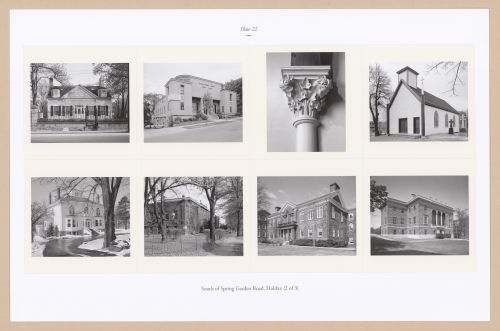
Sheet includes eight images of scructures, streetscapes, and architectural details South of Spring Garden Road in Halifax. Depicted are the Thornedean House, the Broadcasting House, Fort Massey Church, Chapel Built-In-A-Day in Holy Cross Cemetary, the Oakville building, Dalhousie Medical School, Macdonald Library, and the Old Public Archives, Chase Building.
PH2025:0003:022
Description:
Sheet includes eight images of scructures, streetscapes, and architectural details South of Spring Garden Road in Halifax. Depicted are the Thornedean House, the Broadcasting House, Fort Massey Church, Chapel Built-In-A-Day in Holy Cross Cemetary, the Oakville building, Dalhousie Medical School, Macdonald Library, and the Old Public Archives, Chase Building.
Personnes et institutions:
Date:
1984-1994 (printed 2020)
1984-1994 (printed 2020)
Titre:
Plate 22: South of Spring Garden Road (2 of 3), from the portfolio, A Nova Scotia Archive
Actions:
PH2025:0003:022
Description:
Sheet includes eight images of scructures, streetscapes, and architectural details South of Spring Garden Road in Halifax. Depicted are the Thornedean House, the Broadcasting House, Fort Massey Church, Chapel Built-In-A-Day in Holy Cross Cemetary, the Oakville building, Dalhousie Medical School, Macdonald Library, and the Old Public Archives, Chase Building.
Plate 22: South of Spring Garden Road (2 of 3), from the portfolio, A Nova Scotia Archive
Actions:
PH2025:0003:022
Description:
Sheet includes eight images of scructures, streetscapes, and architectural details South of Spring Garden Road in Halifax. Depicted are the Thornedean House, the Broadcasting House, Fort Massey Church, Chapel Built-In-A-Day in Holy Cross Cemetary, the Oakville building, Dalhousie Medical School, Macdonald Library, and the Old Public Archives, Chase Building.
Classification:
photographies
photographies
Date:
1984-1994 (printed 2020)
1984-1994 (printed 2020)
Personnes et institutions:
Classification:
documents textuels
documents textuels
Numéro de référence:
ARCH274251
Description:
4 files- includes draft of the policy and program for public art on the ocean plaza, Portside Trade and Convention Centre, meeting agendas, correspondence, project workplan, project cancellation information, plans, sketches, notes, the Comprehensive Development Agreement application to Council, design requirements and reports. Also includes some material relating to other projects.
ARCH274251
Description:
4 files- includes draft of the policy and program for public art on the ocean plaza, Portside Trade and Convention Centre, meeting agendas, correspondence, project workplan, project cancellation information, plans, sketches, notes, the Comprehensive Development Agreement application to Council, design requirements and reports. Also includes some material relating to other projects.
Personnes et institutions:
Date:
1995-1998
1995-1998
Titre:
Meetings, correspondence, project workplan, plans and sketches, notes, design requirements and reports
Actions:
ARCH274251
Description:
4 files- includes draft of the policy and program for public art on the ocean plaza, Portside Trade and Convention Centre, meeting agendas, correspondence, project workplan, project cancellation information, plans, sketches, notes, the Comprehensive Development Agreement application to Council, design requirements and reports. Also includes some material relating to other projects.
Meetings, correspondence, project workplan, plans and sketches, notes, design requirements and reports
Actions:
ARCH274251
Description:
4 files- includes draft of the policy and program for public art on the ocean plaza, Portside Trade and Convention Centre, meeting agendas, correspondence, project workplan, project cancellation information, plans, sketches, notes, the Comprehensive Development Agreement application to Council, design requirements and reports. Also includes some material relating to other projects.
Classification:
documents textuels
documents textuels
Date:
1995-1998
1995-1998
Personnes et institutions:
Niveau de description archivistique:
Projet
Projet
Numéro de référence:
AP056.S1.1989.PR08
Description:
This project series documents the winning competition entry and subsequent construction for Kitchener City Hall in Kitchener, Ontario from 1989-1993. The office identified the project number as 8928. This project consisted of a U-shaped civic building comprised of a circular rotunda in the centre, an office tower to the right, the council chambers to the left, and two rectangular arms on either side to create the arms of the U. These elements, which wrapped around a large reflecting pool that doubled as a skating rink, were visually separated but coherent in their design and use of materials. Located on the block between Young, College, Duke and King Streets, the interior and exteriors of the property were designed for city government, but also for the larger public with community, public spaces, and open interaction with local government as key design concepts for the project. After entering the Civic Square outside the building, patrons can pass through the main portico, into the Interior Civic Square were the round Civic Rotunda rests in the centre. The rotunda’s interior was designed for use as a public gathering space, where events and activities could be held. The top of the rotunda had sandblasted glass windows with patinated copper frames, letting natural light shine into the large space below. A staircase from the main Civic Square led to an exterior terrace that wrapped around the top of the rotunda. The Administrative Office Tower was ten-storeys with a mechanical penthouse, and was used for civic offices. The Council Chamber was comprised of limestone with refinished metal panels forming a curved roof on top. The two wings along the sides of the property contained tenant areas, a restaurant, information offices, alderman’s offices and the mayor’s office, among other spaces. The back of the property had landscaped exteriors and outdoor play areas for the building’s daycare. The project is recorded through drawings, photographic materials, presentation paintings and models dating from 1989-1993. The drawings consist of concepts for both the competition entry and the subsequent construction of the project. These include sketches, base maps and area surveys produced by the city and contractors, presentation boards and paintings, plans, elevations, sections, perspectives, details and axonometric drawings. There are also photographic reproductions of presentation drawings. The photographs show finished interiors and exteriors and the project model.
AP056.S1.1989.PR08
Description:
This project series documents the winning competition entry and subsequent construction for Kitchener City Hall in Kitchener, Ontario from 1989-1993. The office identified the project number as 8928. This project consisted of a U-shaped civic building comprised of a circular rotunda in the centre, an office tower to the right, the council chambers to the left, and two rectangular arms on either side to create the arms of the U. These elements, which wrapped around a large reflecting pool that doubled as a skating rink, were visually separated but coherent in their design and use of materials. Located on the block between Young, College, Duke and King Streets, the interior and exteriors of the property were designed for city government, but also for the larger public with community, public spaces, and open interaction with local government as key design concepts for the project. After entering the Civic Square outside the building, patrons can pass through the main portico, into the Interior Civic Square were the round Civic Rotunda rests in the centre. The rotunda’s interior was designed for use as a public gathering space, where events and activities could be held. The top of the rotunda had sandblasted glass windows with patinated copper frames, letting natural light shine into the large space below. A staircase from the main Civic Square led to an exterior terrace that wrapped around the top of the rotunda. The Administrative Office Tower was ten-storeys with a mechanical penthouse, and was used for civic offices. The Council Chamber was comprised of limestone with refinished metal panels forming a curved roof on top. The two wings along the sides of the property contained tenant areas, a restaurant, information offices, alderman’s offices and the mayor’s office, among other spaces. The back of the property had landscaped exteriors and outdoor play areas for the building’s daycare. The project is recorded through drawings, photographic materials, presentation paintings and models dating from 1989-1993. The drawings consist of concepts for both the competition entry and the subsequent construction of the project. These include sketches, base maps and area surveys produced by the city and contractors, presentation boards and paintings, plans, elevations, sections, perspectives, details and axonometric drawings. There are also photographic reproductions of presentation drawings. The photographs show finished interiors and exteriors and the project model.
Personnes et institutions:
Date:
1989-1993
1989-1993
Titre:
Kitchener City Hall Competition, Ontario (1989-1993)
Actions:
AP056.S1.1989.PR08
Description:
This project series documents the winning competition entry and subsequent construction for Kitchener City Hall in Kitchener, Ontario from 1989-1993. The office identified the project number as 8928. This project consisted of a U-shaped civic building comprised of a circular rotunda in the centre, an office tower to the right, the council chambers to the left, and two rectangular arms on either side to create the arms of the U. These elements, which wrapped around a large reflecting pool that doubled as a skating rink, were visually separated but coherent in their design and use of materials. Located on the block between Young, College, Duke and King Streets, the interior and exteriors of the property were designed for city government, but also for the larger public with community, public spaces, and open interaction with local government as key design concepts for the project. After entering the Civic Square outside the building, patrons can pass through the main portico, into the Interior Civic Square were the round Civic Rotunda rests in the centre. The rotunda’s interior was designed for use as a public gathering space, where events and activities could be held. The top of the rotunda had sandblasted glass windows with patinated copper frames, letting natural light shine into the large space below. A staircase from the main Civic Square led to an exterior terrace that wrapped around the top of the rotunda. The Administrative Office Tower was ten-storeys with a mechanical penthouse, and was used for civic offices. The Council Chamber was comprised of limestone with refinished metal panels forming a curved roof on top. The two wings along the sides of the property contained tenant areas, a restaurant, information offices, alderman’s offices and the mayor’s office, among other spaces. The back of the property had landscaped exteriors and outdoor play areas for the building’s daycare. The project is recorded through drawings, photographic materials, presentation paintings and models dating from 1989-1993. The drawings consist of concepts for both the competition entry and the subsequent construction of the project. These include sketches, base maps and area surveys produced by the city and contractors, presentation boards and paintings, plans, elevations, sections, perspectives, details and axonometric drawings. There are also photographic reproductions of presentation drawings. The photographs show finished interiors and exteriors and the project model.
Kitchener City Hall Competition, Ontario (1989-1993)
Actions:
AP056.S1.1989.PR08
Description:
This project series documents the winning competition entry and subsequent construction for Kitchener City Hall in Kitchener, Ontario from 1989-1993. The office identified the project number as 8928. This project consisted of a U-shaped civic building comprised of a circular rotunda in the centre, an office tower to the right, the council chambers to the left, and two rectangular arms on either side to create the arms of the U. These elements, which wrapped around a large reflecting pool that doubled as a skating rink, were visually separated but coherent in their design and use of materials. Located on the block between Young, College, Duke and King Streets, the interior and exteriors of the property were designed for city government, but also for the larger public with community, public spaces, and open interaction with local government as key design concepts for the project. After entering the Civic Square outside the building, patrons can pass through the main portico, into the Interior Civic Square were the round Civic Rotunda rests in the centre. The rotunda’s interior was designed for use as a public gathering space, where events and activities could be held. The top of the rotunda had sandblasted glass windows with patinated copper frames, letting natural light shine into the large space below. A staircase from the main Civic Square led to an exterior terrace that wrapped around the top of the rotunda. The Administrative Office Tower was ten-storeys with a mechanical penthouse, and was used for civic offices. The Council Chamber was comprised of limestone with refinished metal panels forming a curved roof on top. The two wings along the sides of the property contained tenant areas, a restaurant, information offices, alderman’s offices and the mayor’s office, among other spaces. The back of the property had landscaped exteriors and outdoor play areas for the building’s daycare. The project is recorded through drawings, photographic materials, presentation paintings and models dating from 1989-1993. The drawings consist of concepts for both the competition entry and the subsequent construction of the project. These include sketches, base maps and area surveys produced by the city and contractors, presentation boards and paintings, plans, elevations, sections, perspectives, details and axonometric drawings. There are also photographic reproductions of presentation drawings. The photographs show finished interiors and exteriors and the project model.
Niveau de description archivistique:
Project
Project
Date:
1989-1993
1989-1993
Personnes et institutions:
Classification:
événements
événements
Actions:
Description:
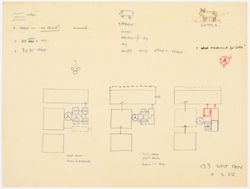
La viande et les produits laitiers sont des ingrédients omniprésents dans l’alimentation mondiale. Cependant, les bâtiments qui transforment les êtres vivants en marchandises sont généralement cachés aux yeux du public. L’architecture de l’élevage industriel peut sembler anonyme et banale, et pourtant elle est rendue possible par des technologies sophistiquées et des(...)
La viande et les produits laitiers sont des ingrédients omniprésents dans l’alimentation mondiale. Cependant, les bâtiments qui transforment les êtres vivants en marchandises sont généralement cachés aux yeux du public. L’architecture de l’élevage industriel peut sembler anonyme et banale, et pourtant elle est rendue possible par des technologies sophistiquées et des(...)
Date:
20 juillet 2023, 18h à 19h30
20 juillet 2023, 18h à 19h30
Titre:
Des cages pour les non-humains : une histoire architecturale de l'élevage
Actions:
Description:
La viande et les produits laitiers sont des ingrédients omniprésents dans l’alimentation mondiale. Cependant, les bâtiments qui transforment les êtres vivants en marchandises sont généralement cachés aux yeux du public. L’architecture de l’élevage industriel peut sembler anonyme et banale, et pourtant elle est rendue possible par des technologies sophistiquées et des(...)
Des cages pour les non-humains : une histoire architecturale de l'élevage
Actions:
Description:
La viande et les produits laitiers sont des ingrédients omniprésents dans l’alimentation mondiale. Cependant, les bâtiments qui transforment les êtres vivants en marchandises sont généralement cachés aux yeux du public. L’architecture de l’élevage industriel peut sembler anonyme et banale, et pourtant elle est rendue possible par des technologies sophistiquées et des(...)
Classification:
événements
événements
Date:
20 juillet 2023
18h à 19h30
20 juillet 2023
18h à 19h30
Classification:
événements
événements
Actions:
Description:
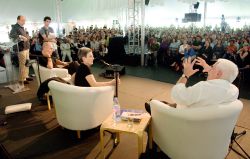
Célébrités du monde de l’architecture, Rem Hoolhaas et Peter Eisenman abordent chacun un sujet auquel ils accordent une importance vitale en architecture contemporaine et devant lequel ils éprouvent un sentiment d’urgence. À la suite de leurs présentations, les architectes engagent une conversation publique avec Phyllis Lambert, directeur fondateur et président du Conseil(...)
Célébrités du monde de l’architecture, Rem Hoolhaas et Peter Eisenman abordent chacun un sujet auquel ils accordent une importance vitale en architecture contemporaine et devant lequel ils éprouvent un sentiment d’urgence. À la suite de leurs présentations, les architectes engagent une conversation publique avec Phyllis Lambert, directeur fondateur et président du Conseil(...)
Date:
8 juin 2007
8 juin 2007
Titre:
Urgence 2007 : Rem Koolhaas et Peter Eisenman
Actions:
Description:
Célébrités du monde de l’architecture, Rem Hoolhaas et Peter Eisenman abordent chacun un sujet auquel ils accordent une importance vitale en architecture contemporaine et devant lequel ils éprouvent un sentiment d’urgence. À la suite de leurs présentations, les architectes engagent une conversation publique avec Phyllis Lambert, directeur fondateur et président du Conseil(...)
Urgence 2007 : Rem Koolhaas et Peter Eisenman
Actions:
Description:
Célébrités du monde de l’architecture, Rem Hoolhaas et Peter Eisenman abordent chacun un sujet auquel ils accordent une importance vitale en architecture contemporaine et devant lequel ils éprouvent un sentiment d’urgence. À la suite de leurs présentations, les architectes engagent une conversation publique avec Phyllis Lambert, directeur fondateur et président du Conseil(...)
Classification:
événements
événements
Date:
8 juin 2007
8 juin 2007
Niveau de description archivistique:
Projet
Projet
Numéro de référence:
AP206.S1.1982.PR16
Description:
This project series documents a competition entry for clusters of housing blocks in Navi Mumbai, likely sometime in the 1980s or 1990s. The project, proposed for the Kalamboli region of the city, consisted of the site development of diamond shaped housing blocks, each with a sports field in its centre courtyard. Two circular commerce blocks were also planned for the neighbourhood, as well as spaces for a school, playground, public utilities and community services. The project is recorded through original drawings of site plans and elevations, probably dating from sometime in the 1980s-1990s. It should be noted that the previous name of Navi Mumbai was New Bombay, which is the name used on these materials.
AP206.S1.1982.PR16
Description:
This project series documents a competition entry for clusters of housing blocks in Navi Mumbai, likely sometime in the 1980s or 1990s. The project, proposed for the Kalamboli region of the city, consisted of the site development of diamond shaped housing blocks, each with a sports field in its centre courtyard. Two circular commerce blocks were also planned for the neighbourhood, as well as spaces for a school, playground, public utilities and community services. The project is recorded through original drawings of site plans and elevations, probably dating from sometime in the 1980s-1990s. It should be noted that the previous name of Navi Mumbai was New Bombay, which is the name used on these materials.
Personnes et institutions:
Date:
circa 1980s-1990s
circa 1980s-1990s
Titre:
Housing complex competition, Navi Mumbai (circa 1980s-1990s)
Actions:
AP206.S1.1982.PR16
Description:
This project series documents a competition entry for clusters of housing blocks in Navi Mumbai, likely sometime in the 1980s or 1990s. The project, proposed for the Kalamboli region of the city, consisted of the site development of diamond shaped housing blocks, each with a sports field in its centre courtyard. Two circular commerce blocks were also planned for the neighbourhood, as well as spaces for a school, playground, public utilities and community services. The project is recorded through original drawings of site plans and elevations, probably dating from sometime in the 1980s-1990s. It should be noted that the previous name of Navi Mumbai was New Bombay, which is the name used on these materials.
Housing complex competition, Navi Mumbai (circa 1980s-1990s)
Actions:
AP206.S1.1982.PR16
Description:
This project series documents a competition entry for clusters of housing blocks in Navi Mumbai, likely sometime in the 1980s or 1990s. The project, proposed for the Kalamboli region of the city, consisted of the site development of diamond shaped housing blocks, each with a sports field in its centre courtyard. Two circular commerce blocks were also planned for the neighbourhood, as well as spaces for a school, playground, public utilities and community services. The project is recorded through original drawings of site plans and elevations, probably dating from sometime in the 1980s-1990s. It should be noted that the previous name of Navi Mumbai was New Bombay, which is the name used on these materials.
Niveau de description archivistique:
Project
Project
Date:
circa 1980s-1990s
circa 1980s-1990s
Personnes et institutions:
Niveau de description archivistique:
Projet
Projet
Numéro de référence:
AP180.S1.1989.PR01
Description:
This project series documents the Piazza San Nazaro, a public square in Milan, Italy. This project was realized. Riva worked on this project from 1989-1993 in collaboration with Giacomo Borella, Paolo Froncillo, Giovanni Drugman, and Franscesca Riva. Umberto Riva also designed the outdoor furnishings of the piazza, including the street lights and the base of a statue. The project was commissioned by the Metropolitana Milanese and was shown in the exhibition "Umberto Riva, sistemazioni urbane" in 1993, at the Pinacoteca civica Franscesco Podesti in Ancona. The project series contains studies and design development drawings, including a site plan, elevations, sections, plans, and details for the street lamps, as well as a small description for the project.
AP180.S1.1989.PR01
Description:
This project series documents the Piazza San Nazaro, a public square in Milan, Italy. This project was realized. Riva worked on this project from 1989-1993 in collaboration with Giacomo Borella, Paolo Froncillo, Giovanni Drugman, and Franscesca Riva. Umberto Riva also designed the outdoor furnishings of the piazza, including the street lights and the base of a statue. The project was commissioned by the Metropolitana Milanese and was shown in the exhibition "Umberto Riva, sistemazioni urbane" in 1993, at the Pinacoteca civica Franscesco Podesti in Ancona. The project series contains studies and design development drawings, including a site plan, elevations, sections, plans, and details for the street lamps, as well as a small description for the project.
Personnes et institutions:
Date:
1991-1993
1991-1993
Titre:
Piazza San Nazaro, Milan, Italy (1989-1993)
Actions:
AP180.S1.1989.PR01
Description:
This project series documents the Piazza San Nazaro, a public square in Milan, Italy. This project was realized. Riva worked on this project from 1989-1993 in collaboration with Giacomo Borella, Paolo Froncillo, Giovanni Drugman, and Franscesca Riva. Umberto Riva also designed the outdoor furnishings of the piazza, including the street lights and the base of a statue. The project was commissioned by the Metropolitana Milanese and was shown in the exhibition "Umberto Riva, sistemazioni urbane" in 1993, at the Pinacoteca civica Franscesco Podesti in Ancona. The project series contains studies and design development drawings, including a site plan, elevations, sections, plans, and details for the street lamps, as well as a small description for the project.
Piazza San Nazaro, Milan, Italy (1989-1993)
Actions:
AP180.S1.1989.PR01
Description:
This project series documents the Piazza San Nazaro, a public square in Milan, Italy. This project was realized. Riva worked on this project from 1989-1993 in collaboration with Giacomo Borella, Paolo Froncillo, Giovanni Drugman, and Franscesca Riva. Umberto Riva also designed the outdoor furnishings of the piazza, including the street lights and the base of a statue. The project was commissioned by the Metropolitana Milanese and was shown in the exhibition "Umberto Riva, sistemazioni urbane" in 1993, at the Pinacoteca civica Franscesco Podesti in Ancona. The project series contains studies and design development drawings, including a site plan, elevations, sections, plans, and details for the street lamps, as well as a small description for the project.
Niveau de description archivistique:
Project
Project
Date:
1991-1993
1991-1993
Personnes et institutions:
Niveau de description archivistique:
Série(s)
Série(s)
Numéro de référence:
AP162.S8
Description:
Series documents the contribution of architect Bruno Taut to the correspondence circle of Die gläserne Kette. Bruno Taut participated under the pseudonym Glas. Born in 1880 in Königsberg, Germany, Bruno Taut studied architecture at the Bauwerkschule in Königsberg. After working in architectural firms from 1903 to 1909, he worked in partnership with Franz Hoffman and later with his brother Max Taut. Bruno Taut undertook various architectural projects including housing projects, public commissions, and later projects for universities and schools. In 1918, he founded the Arbeisrat für Kunst, a union of architects, painters, writers and other artists based in Berlin and dedicated to bring architectural and artisit tendencies of the time to a broader public. This union also involved some members of the Die gläserne Kette circle. Between 1920 and 1921, Bruno Taut was editor to the magazine "Frühlich". He taught architecture at the Technische Hochschule at Berlin-Charlottenburg from 1930 to 1932, and undertook a working visit in Russia in 1932 to 1933. After spending time in Japan between 1933 and 1936 due to enforced emigration, he taught at the Academy of Arts in Istanbul. He died in Istanbul in 1938. (Source: Ian Boyd Whyte, Bruno Taut and the Architecture of Activism. Cambridge: Cambridge University Press, 1982) This series comprises part of Bruno Taut's correspondence to the Die gläserne Kette circle, along with related drawings and documents. The series also includes photographic materials of some of his architectural projects.
AP162.S8
Description:
Series documents the contribution of architect Bruno Taut to the correspondence circle of Die gläserne Kette. Bruno Taut participated under the pseudonym Glas. Born in 1880 in Königsberg, Germany, Bruno Taut studied architecture at the Bauwerkschule in Königsberg. After working in architectural firms from 1903 to 1909, he worked in partnership with Franz Hoffman and later with his brother Max Taut. Bruno Taut undertook various architectural projects including housing projects, public commissions, and later projects for universities and schools. In 1918, he founded the Arbeisrat für Kunst, a union of architects, painters, writers and other artists based in Berlin and dedicated to bring architectural and artisit tendencies of the time to a broader public. This union also involved some members of the Die gläserne Kette circle. Between 1920 and 1921, Bruno Taut was editor to the magazine "Frühlich". He taught architecture at the Technische Hochschule at Berlin-Charlottenburg from 1930 to 1932, and undertook a working visit in Russia in 1932 to 1933. After spending time in Japan between 1933 and 1936 due to enforced emigration, he taught at the Academy of Arts in Istanbul. He died in Istanbul in 1938. (Source: Ian Boyd Whyte, Bruno Taut and the Architecture of Activism. Cambridge: Cambridge University Press, 1982) This series comprises part of Bruno Taut's correspondence to the Die gläserne Kette circle, along with related drawings and documents. The series also includes photographic materials of some of his architectural projects.
Personnes et institutions:
Date:
between 1919 and 1920
between 1919 and 1920
Titre:
Bruno Taut
Actions:
AP162.S8
Description:
Series documents the contribution of architect Bruno Taut to the correspondence circle of Die gläserne Kette. Bruno Taut participated under the pseudonym Glas. Born in 1880 in Königsberg, Germany, Bruno Taut studied architecture at the Bauwerkschule in Königsberg. After working in architectural firms from 1903 to 1909, he worked in partnership with Franz Hoffman and later with his brother Max Taut. Bruno Taut undertook various architectural projects including housing projects, public commissions, and later projects for universities and schools. In 1918, he founded the Arbeisrat für Kunst, a union of architects, painters, writers and other artists based in Berlin and dedicated to bring architectural and artisit tendencies of the time to a broader public. This union also involved some members of the Die gläserne Kette circle. Between 1920 and 1921, Bruno Taut was editor to the magazine "Frühlich". He taught architecture at the Technische Hochschule at Berlin-Charlottenburg from 1930 to 1932, and undertook a working visit in Russia in 1932 to 1933. After spending time in Japan between 1933 and 1936 due to enforced emigration, he taught at the Academy of Arts in Istanbul. He died in Istanbul in 1938. (Source: Ian Boyd Whyte, Bruno Taut and the Architecture of Activism. Cambridge: Cambridge University Press, 1982) This series comprises part of Bruno Taut's correspondence to the Die gläserne Kette circle, along with related drawings and documents. The series also includes photographic materials of some of his architectural projects.
Bruno Taut
Actions:
AP162.S8
Description:
Series documents the contribution of architect Bruno Taut to the correspondence circle of Die gläserne Kette. Bruno Taut participated under the pseudonym Glas. Born in 1880 in Königsberg, Germany, Bruno Taut studied architecture at the Bauwerkschule in Königsberg. After working in architectural firms from 1903 to 1909, he worked in partnership with Franz Hoffman and later with his brother Max Taut. Bruno Taut undertook various architectural projects including housing projects, public commissions, and later projects for universities and schools. In 1918, he founded the Arbeisrat für Kunst, a union of architects, painters, writers and other artists based in Berlin and dedicated to bring architectural and artisit tendencies of the time to a broader public. This union also involved some members of the Die gläserne Kette circle. Between 1920 and 1921, Bruno Taut was editor to the magazine "Frühlich". He taught architecture at the Technische Hochschule at Berlin-Charlottenburg from 1930 to 1932, and undertook a working visit in Russia in 1932 to 1933. After spending time in Japan between 1933 and 1936 due to enforced emigration, he taught at the Academy of Arts in Istanbul. He died in Istanbul in 1938. (Source: Ian Boyd Whyte, Bruno Taut and the Architecture of Activism. Cambridge: Cambridge University Press, 1982) This series comprises part of Bruno Taut's correspondence to the Die gläserne Kette circle, along with related drawings and documents. The series also includes photographic materials of some of his architectural projects.
Niveau de description archivistique:
series
series
Date:
between 1919 and 1920
between 1919 and 1920
Personnes et institutions:
Niveau de description archivistique:
Projet
Projet
Actions:
Numéro de référence:
CI005.S1.1919.PR3
Description:
The post-First World War shortage of affordable housing led the city of Rotterdam to initiate low income dwelling developments to alleviate the crisis in housing for working class residents. Oud's involvement with the Rotterdam Housing Authority -- the Rotterdam Woningdienst -- allowed him to use public housing projects as a platform for his ideas about urban development, including this design for a semi-detached dwelling in reinforced concrete. Oud's plans were never realized as Rotterdam only experimented with concrete building projects later, in 1921 (Taverne et al. 2001,191, 210-212). The project series includes Oud's drawings of plans for the Double Worker's Dwelling in Reinforced Concrete.
CI005.S1.1919.PR3
Description:
The post-First World War shortage of affordable housing led the city of Rotterdam to initiate low income dwelling developments to alleviate the crisis in housing for working class residents. Oud's involvement with the Rotterdam Housing Authority -- the Rotterdam Woningdienst -- allowed him to use public housing projects as a platform for his ideas about urban development, including this design for a semi-detached dwelling in reinforced concrete. Oud's plans were never realized as Rotterdam only experimented with concrete building projects later, in 1921 (Taverne et al. 2001,191, 210-212). The project series includes Oud's drawings of plans for the Double Worker's Dwelling in Reinforced Concrete.
Personnes et institutions:
Date:
1918
1918
Titre:
Double Worker's Dwelling in Reinforced Concrete, Rotterdam, Netherlands (1919)
Actions:
CI005.S1.1919.PR3
Description:
The post-First World War shortage of affordable housing led the city of Rotterdam to initiate low income dwelling developments to alleviate the crisis in housing for working class residents. Oud's involvement with the Rotterdam Housing Authority -- the Rotterdam Woningdienst -- allowed him to use public housing projects as a platform for his ideas about urban development, including this design for a semi-detached dwelling in reinforced concrete. Oud's plans were never realized as Rotterdam only experimented with concrete building projects later, in 1921 (Taverne et al. 2001,191, 210-212). The project series includes Oud's drawings of plans for the Double Worker's Dwelling in Reinforced Concrete.
Double Worker's Dwelling in Reinforced Concrete, Rotterdam, Netherlands (1919)
Actions:
CI005.S1.1919.PR3
Description:
The post-First World War shortage of affordable housing led the city of Rotterdam to initiate low income dwelling developments to alleviate the crisis in housing for working class residents. Oud's involvement with the Rotterdam Housing Authority -- the Rotterdam Woningdienst -- allowed him to use public housing projects as a platform for his ideas about urban development, including this design for a semi-detached dwelling in reinforced concrete. Oud's plans were never realized as Rotterdam only experimented with concrete building projects later, in 1921 (Taverne et al. 2001,191, 210-212). The project series includes Oud's drawings of plans for the Double Worker's Dwelling in Reinforced Concrete.
Niveau de description archivistique:
project
project
Date:
1918
1918
Personnes et institutions:
Classification:
événements
événements
Titre:
En réaction à
En réaction à
Actions:
Description:
En réaction à est une série de séminaires publics qui marqueront les dernières semaines de l’exposition L’architecte, autrement. Si l’exposition présente des modèles et approches alternatives qui ont remis en question les pratiques de design traditionnelles, ces séminaires offriront des points de vue de commissariat alternatifs sur l’exposition et sur la publication. Les(...)
En réaction à est une série de séminaires publics qui marqueront les dernières semaines de l’exposition L’architecte, autrement. Si l’exposition présente des modèles et approches alternatives qui ont remis en question les pratiques de design traditionnelles, ces séminaires offriront des points de vue de commissariat alternatifs sur l’exposition et sur la publication. Les(...)
Localisation:
Salles principales
Salles principales
Date:
10 mars 2016 au 1 avril 2016
10 mars 2016 au 1 avril 2016
Titre:
En réaction à
Actions:
Description:
En réaction à est une série de séminaires publics qui marqueront les dernières semaines de l’exposition L’architecte, autrement. Si l’exposition présente des modèles et approches alternatives qui ont remis en question les pratiques de design traditionnelles, ces séminaires offriront des points de vue de commissariat alternatifs sur l’exposition et sur la publication. Les(...)
En réaction à
Actions:
Description:
En réaction à est une série de séminaires publics qui marqueront les dernières semaines de l’exposition L’architecte, autrement. Si l’exposition présente des modèles et approches alternatives qui ont remis en question les pratiques de design traditionnelles, ces séminaires offriront des points de vue de commissariat alternatifs sur l’exposition et sur la publication. Les(...)
Classification:
événements
événements
Date:
10 mars 2016 au
1 avril 2016
10 mars 2016 au
1 avril 2016
Localisation:
Salles principales
Salles principales


