


36173 Résultats
Classification:
livres
livres
Actions:
Prix:
$26.95
(disponible sur commande)
Résumé:
There are an estimated 600,000,000 passenger cars in the world, and that number is increasing every day. So too is Earth’s supply of parking spaces. In some cities, parking lots cover more than one-third of the metropolitan footprint. It’s official:we have paved paradise and put up a parking lot. In this publication,author Eran Ben-Joseph shares a different vision for(...)
$26.95
(disponible sur commande)
Résumé:
There are an estimated 600,000,000 passenger cars in the world, and that number is increasing every day. So too is Earth’s supply of parking spaces. In some cities, parking lots cover more than one-third of the metropolitan footprint. It’s official:we have paved paradise and put up a parking lot. In this publication,author Eran Ben-Joseph shares a different vision for(...)
Titre:
Rethinking a lot : the design and culture of parking
Actions:
Prix:
$26.95
(disponible sur commande)
Résumé:
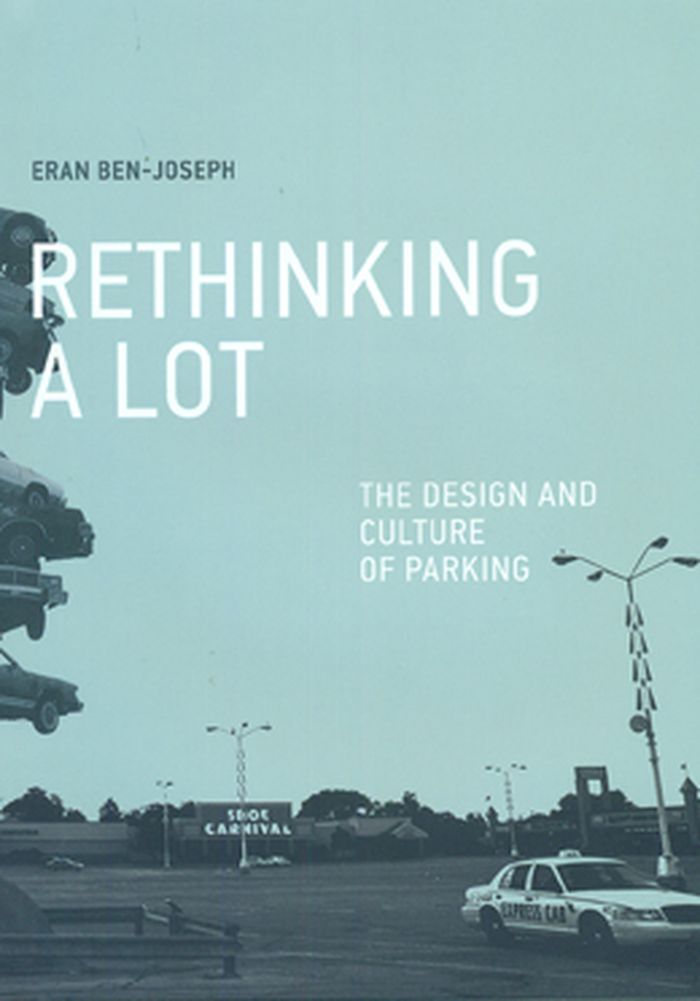
There are an estimated 600,000,000 passenger cars in the world, and that number is increasing every day. So too is Earth’s supply of parking spaces. In some cities, parking lots cover more than one-third of the metropolitan footprint. It’s official:we have paved paradise and put up a parking lot. In this publication,author Eran Ben-Joseph shares a different vision for parking’s future. Parking lots, he writes, are ripe for transformation. After all, as he points out, their design and function has not been rethought since the 1950s. With this book, Ben-Joseph pushes the parking lot into the twenty-first century. Can’t parking lots be aesthetically pleasing, environmentally and architecturally responsible? Used for something other than car storage? Ben-Joseph shows us that they can. He provides a visual history of this often ignored urban space, introducing us to some of the many alternative and nonparking purposes that parking lots have served - from RV campgrounds to stages for “Shakespeare in the Parking Lot.” He shows us parking lots that are not concrete wastelands but lushly planted with trees and flowers and beautifully integrated with the rest of the built environment. With purposeful design, Ben-Joseph argues, parking lots could be significant public places, contributing as much to their communities as great boulevards, parks, or plazas. For all the acreage they cover, parking lots have received scant attention. It’s time to change that; it’s time to rethink the lot.
Rethinking a lot : the design and culture of parking
Actions:
Prix:
$26.95
(disponible sur commande)
Résumé:
There are an estimated 600,000,000 passenger cars in the world, and that number is increasing every day. So too is Earth’s supply of parking spaces. In some cities, parking lots cover more than one-third of the metropolitan footprint. It’s official:we have paved paradise and put up a parking lot. In this publication,author Eran Ben-Joseph shares a different vision for parking’s future. Parking lots, he writes, are ripe for transformation. After all, as he points out, their design and function has not been rethought since the 1950s. With this book, Ben-Joseph pushes the parking lot into the twenty-first century. Can’t parking lots be aesthetically pleasing, environmentally and architecturally responsible? Used for something other than car storage? Ben-Joseph shows us that they can. He provides a visual history of this often ignored urban space, introducing us to some of the many alternative and nonparking purposes that parking lots have served - from RV campgrounds to stages for “Shakespeare in the Parking Lot.” He shows us parking lots that are not concrete wastelands but lushly planted with trees and flowers and beautifully integrated with the rest of the built environment. With purposeful design, Ben-Joseph argues, parking lots could be significant public places, contributing as much to their communities as great boulevards, parks, or plazas. For all the acreage they cover, parking lots have received scant attention. It’s time to change that; it’s time to rethink the lot.
Classification:
livres
livres
Publication:
mars 2012
mars 2012
Classification:
livres
livres
Titre:
Doug Patt : how to architect
Doug Patt : how to architect
Actions:
Prix:
$15.95
(disponible sur commande)
Résumé:
The word "architect" is a noun, but Doug Patt uses it as a verb - coining a term and making a point about using parts of speech and parts of buildings in new ways. Changing the function of a word, or a room, can produce surprise and meaning. In "How to Architect," Patt - an architect and the creator of a series of wildly popular online videos about architecture -presents(...)
$15.95
(disponible sur commande)
Résumé:
The word "architect" is a noun, but Doug Patt uses it as a verb - coining a term and making a point about using parts of speech and parts of buildings in new ways. Changing the function of a word, or a room, can produce surprise and meaning. In "How to Architect," Patt - an architect and the creator of a series of wildly popular online videos about architecture -presents(...)
Titre:
Doug Patt : how to architect
Actions:
Prix:
$15.95
(disponible sur commande)
Résumé:
The word "architect" is a noun, but Doug Patt uses it as a verb - coining a term and making a point about using parts of speech and parts of buildings in new ways. Changing the function of a word, or a room, can produce surprise and meaning. In "How to Architect," Patt - an architect and the creator of a series of wildly popular online videos about architecture -presents the basics of architecture in A-Z form, starting with "A is for Asymmetry" (as seen in Chartres Cathedral and Frank Gehry), detouring through "N is for Narrative," and ending with "Z is for Zeal" (a quality that successful architects tend to have, even in fiction - see T "The Fountainhead's" architect-hero Howard Roark.)
Doug Patt : how to architect
Actions:
Prix:
$15.95
(disponible sur commande)
Résumé:
The word "architect" is a noun, but Doug Patt uses it as a verb - coining a term and making a point about using parts of speech and parts of buildings in new ways. Changing the function of a word, or a room, can produce surprise and meaning. In "How to Architect," Patt - an architect and the creator of a series of wildly popular online videos about architecture -presents the basics of architecture in A-Z form, starting with "A is for Asymmetry" (as seen in Chartres Cathedral and Frank Gehry), detouring through "N is for Narrative," and ending with "Z is for Zeal" (a quality that successful architects tend to have, even in fiction - see T "The Fountainhead's" architect-hero Howard Roark.)
Classification:
livres
livres
Publication:
mars 2012
mars 2012
Sujet:
Théorie de l’architecture
Théorie de l’architecture
Classification:
livres
livres
Actions:
Prix:
$64.95
(disponible en magasin)
Résumé:
How did a small art college in Nova Scotia become the epicenter of art education - and to a large extent of the postmimimalist and conceptual art world itself - in the 1960s and 1970s ? Like the unorthodox experiments and rich human resources that made Black Mountain College an improbable center of art a generation earlier, the activities and artists at Nova Scotia(...)
$64.95
(disponible en magasin)
Résumé:
How did a small art college in Nova Scotia become the epicenter of art education - and to a large extent of the postmimimalist and conceptual art world itself - in the 1960s and 1970s ? Like the unorthodox experiments and rich human resources that made Black Mountain College an improbable center of art a generation earlier, the activities and artists at Nova Scotia(...)
Publication:
avril 2012
avril 2012
Titre:
The last art college: Nova Scotia College of Art and Design, 1968-1978
Actions:
Prix:
$64.95
(disponible en magasin)
Résumé:
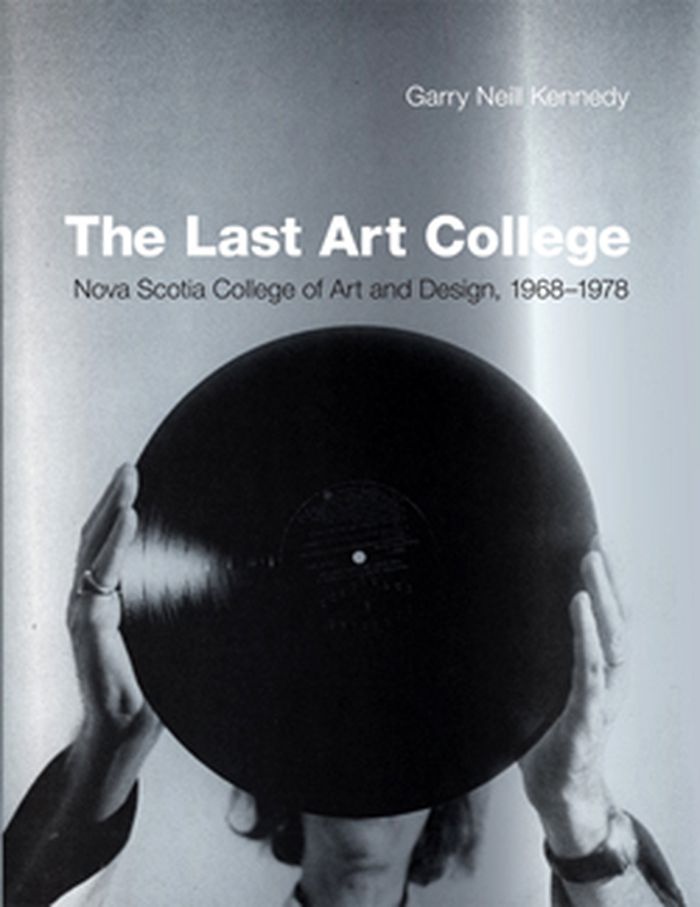
How did a small art college in Nova Scotia become the epicenter of art education - and to a large extent of the postmimimalist and conceptual art world itself - in the 1960s and 1970s ? Like the unorthodox experiments and rich human resources that made Black Mountain College an improbable center of art a generation earlier, the activities and artists at Nova Scotia College of Art and Design (aka NSCAD) in the 1970s redefined the means and methods of art education and the shape of art far beyond Halifax. A partial list of visiting artists and faculty members at NSCAD would include: Joseph Beuys, Sol LeWitt, Gerhard Richter, Dan Graham, Lucy Lippard, John Baldessari, Jenny Holzer and Eric Fischl. Kasper Koenig and Benjamin Buchloh ran the NSCAD Press, publishing books by Hollis Frampton, Lawrence Weiner, Donald Judd, Daniel Buren, Michael Asher, Martha Rosler, and Michael Snow, among others. The Lithography Workshop produced early works by many of today's masters, including John Baldessari, Vito Acconci, and Claes Oldenburg.
The last art college: Nova Scotia College of Art and Design, 1968-1978
Actions:
Prix:
$64.95
(disponible en magasin)
Résumé:
How did a small art college in Nova Scotia become the epicenter of art education - and to a large extent of the postmimimalist and conceptual art world itself - in the 1960s and 1970s ? Like the unorthodox experiments and rich human resources that made Black Mountain College an improbable center of art a generation earlier, the activities and artists at Nova Scotia College of Art and Design (aka NSCAD) in the 1970s redefined the means and methods of art education and the shape of art far beyond Halifax. A partial list of visiting artists and faculty members at NSCAD would include: Joseph Beuys, Sol LeWitt, Gerhard Richter, Dan Graham, Lucy Lippard, John Baldessari, Jenny Holzer and Eric Fischl. Kasper Koenig and Benjamin Buchloh ran the NSCAD Press, publishing books by Hollis Frampton, Lawrence Weiner, Donald Judd, Daniel Buren, Michael Asher, Martha Rosler, and Michael Snow, among others. The Lithography Workshop produced early works by many of today's masters, including John Baldessari, Vito Acconci, and Claes Oldenburg.
Classification:
livres
livres
Publication:
avril 2012
avril 2012
Classification:
livres
livres
Actions:
Prix:
$54.95
(disponible sur commande)
Résumé:
Rooted in the British apprenticeship system, the French Beaux-Arts, and the German polytechnical schools, architecture education in North America has had a unique history spanning almost three hundred years. Although architects in the United States and Canada began to identify themselves as professionals by the late eighteenth century, it was not until nearly a century(...)
$54.95
(disponible sur commande)
Résumé:
Rooted in the British apprenticeship system, the French Beaux-Arts, and the German polytechnical schools, architecture education in North America has had a unique history spanning almost three hundred years. Although architects in the United States and Canada began to identify themselves as professionals by the late eighteenth century, it was not until nearly a century(...)
Titre:
Architecture school: three centuries of educating architects in North America
Actions:
Prix:
$54.95
(disponible sur commande)
Résumé:
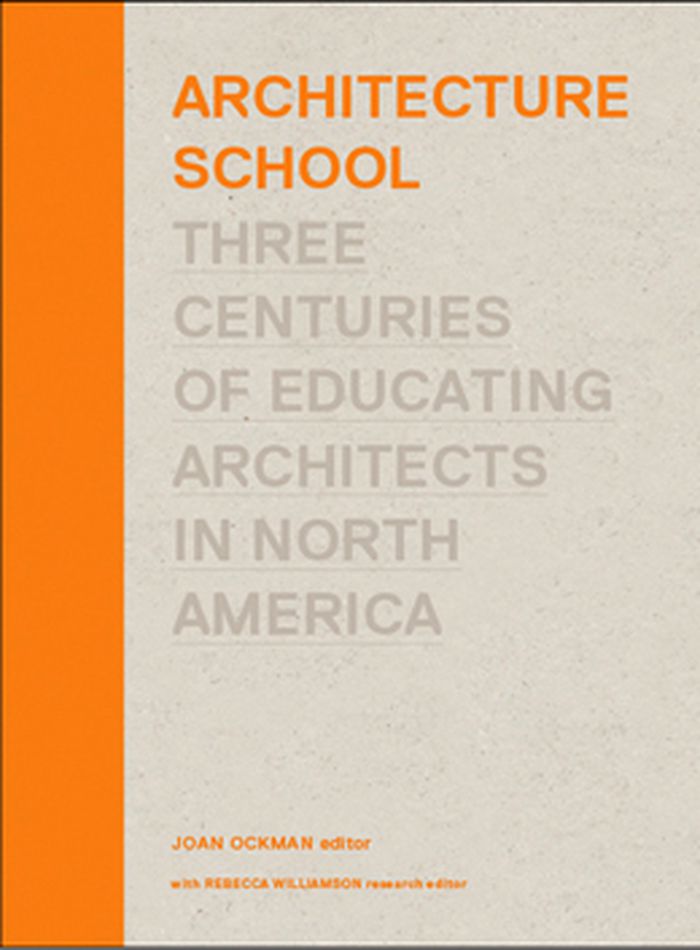
Rooted in the British apprenticeship system, the French Beaux-Arts, and the German polytechnical schools, architecture education in North America has had a unique history spanning almost three hundred years. Although architects in the United States and Canada began to identify themselves as professionals by the late eighteenth century, it was not until nearly a century later that North American universities began to offer formal architectural training; the first program was established at MIT in 1865. Today most architects receive their training within an academic setting that draws on the humanities, fine arts, applied science, and public service for its philosophy and methodology. This book, published in conjunction with the centennial of the Association of Collegiate Schools of Architecture (ACSA), provides the first comprehensive history of North American architecture education. Architecture School opens with six chronological essays, each devoted to a major period of development: before 1860; 1860--1920; 1920--1940; 1940--1968; 1968--1990; and 1990 to the present. This overview is followed by a "lexicon" containing shorter articles on more than two dozen topics that have figured centrally in archictecture education's history, from competitions and design pedagogy to research, structures, studio culture, and travel.
Architecture school: three centuries of educating architects in North America
Actions:
Prix:
$54.95
(disponible sur commande)
Résumé:
Rooted in the British apprenticeship system, the French Beaux-Arts, and the German polytechnical schools, architecture education in North America has had a unique history spanning almost three hundred years. Although architects in the United States and Canada began to identify themselves as professionals by the late eighteenth century, it was not until nearly a century later that North American universities began to offer formal architectural training; the first program was established at MIT in 1865. Today most architects receive their training within an academic setting that draws on the humanities, fine arts, applied science, and public service for its philosophy and methodology. This book, published in conjunction with the centennial of the Association of Collegiate Schools of Architecture (ACSA), provides the first comprehensive history of North American architecture education. Architecture School opens with six chronological essays, each devoted to a major period of development: before 1860; 1860--1920; 1920--1940; 1940--1968; 1968--1990; and 1990 to the present. This overview is followed by a "lexicon" containing shorter articles on more than two dozen topics that have figured centrally in archictecture education's history, from competitions and design pedagogy to research, structures, studio culture, and travel.
Classification:
livres
livres
Publication:
mars 2012
mars 2012
Classification:
livres
livres
Titre:
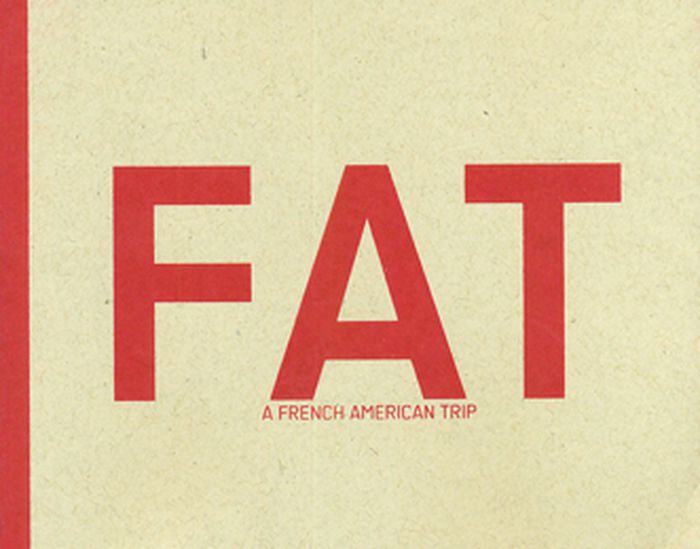
FAT: a french american trip
FAT: a french american trip
Actions:
Prix:
$15.00
(disponible en magasin)
Résumé:
Poursuivant son étude pop et sérielle du paysage français, Eric Tabuchi interroge la validité de sa démarche photographique face à la puissance considérable de Google qui, via son entreprise de numérisation du territoire global, réalise finalement le projet d'une photographie véritablement objective et totalisante. Ainsi, contrairement à son habitude qui consiste à(...)
$15.00
(disponible en magasin)
Résumé:
Poursuivant son étude pop et sérielle du paysage français, Eric Tabuchi interroge la validité de sa démarche photographique face à la puissance considérable de Google qui, via son entreprise de numérisation du territoire global, réalise finalement le projet d'une photographie véritablement objective et totalisante. Ainsi, contrairement à son habitude qui consiste à(...)
Titre:
FAT: a french american trip
Actions:
Prix:
$15.00
(disponible en magasin)
Résumé:
Poursuivant son étude pop et sérielle du paysage français, Eric Tabuchi interroge la validité de sa démarche photographique face à la puissance considérable de Google qui, via son entreprise de numérisation du territoire global, réalise finalement le projet d'une photographie véritablement objective et totalisante. Ainsi, contrairement à son habitude qui consiste à sillonner le terrain, Eric Tabuchi s'est attaché à explorer des lieux qui lui sont familiers mais cette fois dans ce monde parallèle, sorte d'empreinte du réel, que constitue Street View. De fait, FAT met en tension les deux niveaux de perception que sont désormais, pour chacun de nous, le virtuel et le réel, l'espace de projection et le territoire concret. FAT, c'est l'Amérique projeté dans l'imaginaire français, numérisé par Google et finalement compilé par Eric Tabuchi comme une sorte de condensé vertigineux de ce que pourrait être la mondialisation à l'ère du web.
FAT: a french american trip
Actions:
Prix:
$15.00
(disponible en magasin)
Résumé:
Poursuivant son étude pop et sérielle du paysage français, Eric Tabuchi interroge la validité de sa démarche photographique face à la puissance considérable de Google qui, via son entreprise de numérisation du territoire global, réalise finalement le projet d'une photographie véritablement objective et totalisante. Ainsi, contrairement à son habitude qui consiste à sillonner le terrain, Eric Tabuchi s'est attaché à explorer des lieux qui lui sont familiers mais cette fois dans ce monde parallèle, sorte d'empreinte du réel, que constitue Street View. De fait, FAT met en tension les deux niveaux de perception que sont désormais, pour chacun de nous, le virtuel et le réel, l'espace de projection et le territoire concret. FAT, c'est l'Amérique projeté dans l'imaginaire français, numérisé par Google et finalement compilé par Eric Tabuchi comme une sorte de condensé vertigineux de ce que pourrait être la mondialisation à l'ère du web.
Classification:
livres
livres
Publication:
février 2012
février 2012
Classification:
livres
livres
Titre:
Taylor Holland: eurobus
Taylor Holland: eurobus
Actions:
Prix:
$25.00
(disponible en magasin)
Résumé:
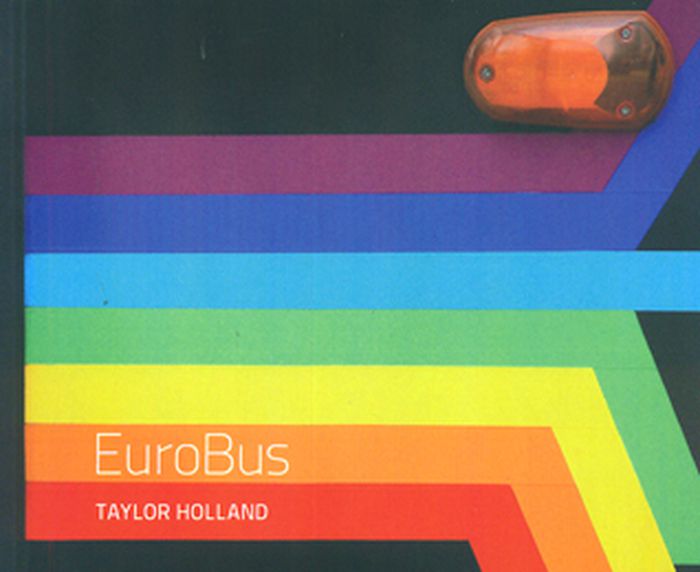
This series of 58 digital photographs was shot on bicycle commutes in Paris, France in Spring 2011. This book is dedicated to the anonymous designers of European tour bus graphics, who have embraced an underappreciated art space and made it their own.
$25.00
(disponible en magasin)
Résumé:
This series of 58 digital photographs was shot on bicycle commutes in Paris, France in Spring 2011. This book is dedicated to the anonymous designers of European tour bus graphics, who have embraced an underappreciated art space and made it their own.
Sujet:
Monographies photo, Design graphique et typographie, Transport, tourisme, migration, Consignation
Monographies photo, Design graphique et typographie, Transport, tourisme, migration, Consignation
Publication:
février 2012
février 2012
Titre:
Taylor Holland: eurobus
Actions:
Prix:
$25.00
(disponible en magasin)
Résumé:
This series of 58 digital photographs was shot on bicycle commutes in Paris, France in Spring 2011. This book is dedicated to the anonymous designers of European tour bus graphics, who have embraced an underappreciated art space and made it their own.
Taylor Holland: eurobus
Actions:
Prix:
$25.00
(disponible en magasin)
Résumé:
This series of 58 digital photographs was shot on bicycle commutes in Paris, France in Spring 2011. This book is dedicated to the anonymous designers of European tour bus graphics, who have embraced an underappreciated art space and made it their own.
Classification:
livres
livres
Publication:
février 2012
février 2012
Classification:
livres
livres
Titre:
Toward a minor architecture
Toward a minor architecture
Actions:
Prix:
$28.95
(disponible sur commande)
Résumé:
Architecture can no longer limit itself to the art of making buildings; it must also invent the politics of taking them apart. This is Jill Stoner’s premise for a minor architecture. Her architect’s eye tracks differently from most, drawn not to the lauded and iconic but to what she calls “the landscape of our constructed mistakes”--metropolitan hinterlands rife with(...)
$28.95
(disponible sur commande)
Résumé:
Architecture can no longer limit itself to the art of making buildings; it must also invent the politics of taking them apart. This is Jill Stoner’s premise for a minor architecture. Her architect’s eye tracks differently from most, drawn not to the lauded and iconic but to what she calls “the landscape of our constructed mistakes”--metropolitan hinterlands rife with(...)
Titre:
Toward a minor architecture
Actions:
Prix:
$28.95
(disponible sur commande)
Résumé:
Architecture can no longer limit itself to the art of making buildings; it must also invent the politics of taking them apart. This is Jill Stoner’s premise for a minor architecture. Her architect’s eye tracks differently from most, drawn not to the lauded and iconic but to what she calls “the landscape of our constructed mistakes”--metropolitan hinterlands rife with failed and foreclosed developments, undersubscribed office parks, chain hotels, and abandoned malls. These graveyards of capital, Stoner asserts, may be stripped of their excess and become sites of strategic spatial operations. But first we must dissect and dismantle prevalent architectural mythologies that brought them into being--western obsessions with interiority, with the autonomy of the building-object, with the architect’s mantle of celebrity, and with the idea of nature as that which is “other” than the built metropolis. These four myths form the warp of the book.
Toward a minor architecture
Actions:
Prix:
$28.95
(disponible sur commande)
Résumé:
Architecture can no longer limit itself to the art of making buildings; it must also invent the politics of taking them apart. This is Jill Stoner’s premise for a minor architecture. Her architect’s eye tracks differently from most, drawn not to the lauded and iconic but to what she calls “the landscape of our constructed mistakes”--metropolitan hinterlands rife with failed and foreclosed developments, undersubscribed office parks, chain hotels, and abandoned malls. These graveyards of capital, Stoner asserts, may be stripped of their excess and become sites of strategic spatial operations. But first we must dissect and dismantle prevalent architectural mythologies that brought them into being--western obsessions with interiority, with the autonomy of the building-object, with the architect’s mantle of celebrity, and with the idea of nature as that which is “other” than the built metropolis. These four myths form the warp of the book.
Classification:
livres
livres
Publication:
mars 2012
mars 2012
Sujet:
Théorie de l’architecture
Théorie de l’architecture
Classification:
livres
livres

Actions:
Prix:
$43.95
(disponible sur commande)
Résumé:
Over the past twenty years, an abundance of art forms have emerged that use aesthetics to affect social dynamics. These works are often produced by collectives or come out of a community context; they emphasize participation, dialogue, and action, and appear in situations ranging from theater to activism to urban planning to visual art to health care. Engaged with the(...)
$43.95
(disponible sur commande)
Résumé:
Over the past twenty years, an abundance of art forms have emerged that use aesthetics to affect social dynamics. These works are often produced by collectives or come out of a community context; they emphasize participation, dialogue, and action, and appear in situations ranging from theater to activism to urban planning to visual art to health care. Engaged with the(...)
Titre:
Living as form : socially engaged art from 1991-2011
Actions:
Prix:
$43.95
(disponible sur commande)
Résumé:
Over the past twenty years, an abundance of art forms have emerged that use aesthetics to affect social dynamics. These works are often produced by collectives or come out of a community context; they emphasize participation, dialogue, and action, and appear in situations ranging from theater to activism to urban planning to visual art to health care. Engaged with the texture of living, these art works often blur the line between art and life. This book offers the first global portrait of a complex and exciting mode of cultural production — one that has virtually redefined contemporary art practice. This publication grew out of a major exhibition at Creative Time in New York City. Like the exhibition, the book is a landmark survey of more than 100 projects selected by a thirty-person curatorial advisory team; each project is documented by a selection of color images. The artists include the Danish collective Superflex, who empower communities to challenge corporate interest; Turner Prize nominee Jeremy Deller, creator of socially and politically charged performance works; Women on Waves, who provide abortion services and information to women in regions where the procedure is illegal; and Santiágo Cirugeda, an architect who builds temporary structures to solve housing problems.
Living as form : socially engaged art from 1991-2011
Actions:
Prix:
$43.95
(disponible sur commande)
Résumé:
Over the past twenty years, an abundance of art forms have emerged that use aesthetics to affect social dynamics. These works are often produced by collectives or come out of a community context; they emphasize participation, dialogue, and action, and appear in situations ranging from theater to activism to urban planning to visual art to health care. Engaged with the texture of living, these art works often blur the line between art and life. This book offers the first global portrait of a complex and exciting mode of cultural production — one that has virtually redefined contemporary art practice. This publication grew out of a major exhibition at Creative Time in New York City. Like the exhibition, the book is a landmark survey of more than 100 projects selected by a thirty-person curatorial advisory team; each project is documented by a selection of color images. The artists include the Danish collective Superflex, who empower communities to challenge corporate interest; Turner Prize nominee Jeremy Deller, creator of socially and politically charged performance works; Women on Waves, who provide abortion services and information to women in regions where the procedure is illegal; and Santiágo Cirugeda, an architect who builds temporary structures to solve housing problems.
Classification:
livres
livres
Publication:
mars 2012
mars 2012
Classification:
livres
livres
Actions:
Prix:
$22.00
(disponible en magasin)
Résumé:
Nova Cantabrigiensis is a utopian island in the middle of the Minas Basin, Nova Scotia. It is the invention of visionary outsider artist John Devlin, and was designed to recreate the atmosphere and architecture of Cambridge, England, which John considers to be the perfect city. John came to study in Cambridge in 1979, and fell in love with its unique ambience.(...)
$22.00
(disponible en magasin)
Résumé:
Nova Cantabrigiensis is a utopian island in the middle of the Minas Basin, Nova Scotia. It is the invention of visionary outsider artist John Devlin, and was designed to recreate the atmosphere and architecture of Cambridge, England, which John considers to be the perfect city. John came to study in Cambridge in 1979, and fell in love with its unique ambience.(...)
Titre:
John Devlin: Nova Cantabrigiensis
Actions:
Prix:
$22.00
(disponible en magasin)
Résumé:
Nova Cantabrigiensis is a utopian island in the middle of the Minas Basin, Nova Scotia. It is the invention of visionary outsider artist John Devlin, and was designed to recreate the atmosphere and architecture of Cambridge, England, which John considers to be the perfect city. John came to study in Cambridge in 1979, and fell in love with its unique ambience. When mental illness forced him to return home to Canada after just one year, he became obsessed with discovering the secret to 'the Cambridge essence'. Over ten years, John created over 360 beautiful and unique illustrations, dream-like sketches of re-imagined and reconfigured Cambridge buildings, drawn again and again in the pursuit of perfection. The book Nova Cantabrigiensis presents a selection of John's illustrations, as well as an essay describing his plans for the island and his mathematical theories about architecture. It is published by Island Editions.
John Devlin: Nova Cantabrigiensis
Actions:
Prix:
$22.00
(disponible en magasin)
Résumé:
Nova Cantabrigiensis is a utopian island in the middle of the Minas Basin, Nova Scotia. It is the invention of visionary outsider artist John Devlin, and was designed to recreate the atmosphere and architecture of Cambridge, England, which John considers to be the perfect city. John came to study in Cambridge in 1979, and fell in love with its unique ambience. When mental illness forced him to return home to Canada after just one year, he became obsessed with discovering the secret to 'the Cambridge essence'. Over ten years, John created over 360 beautiful and unique illustrations, dream-like sketches of re-imagined and reconfigured Cambridge buildings, drawn again and again in the pursuit of perfection. The book Nova Cantabrigiensis presents a selection of John's illustrations, as well as an essay describing his plans for the island and his mathematical theories about architecture. It is published by Island Editions.
Classification:
livres
livres
Publication:
février 2012
février 2012
Classification:
livres
livres
Actions:
Prix:
$32.00
(disponible sur commande)
Résumé:
With the emergence of conceptual art in the mid-1960s, the traditional notion of the studio became at least partly obsolete. Other sites emerged for the generation of art, leading to the idea of "post-studio practice." But the studio never went away; it was continually reinvented in response to new realities. This collection, expanding on current critical interest in(...)
$32.00
(disponible sur commande)
Résumé:
With the emergence of conceptual art in the mid-1960s, the traditional notion of the studio became at least partly obsolete. Other sites emerged for the generation of art, leading to the idea of "post-studio practice." But the studio never went away; it was continually reinvented in response to new realities. This collection, expanding on current critical interest in(...)
Titre:
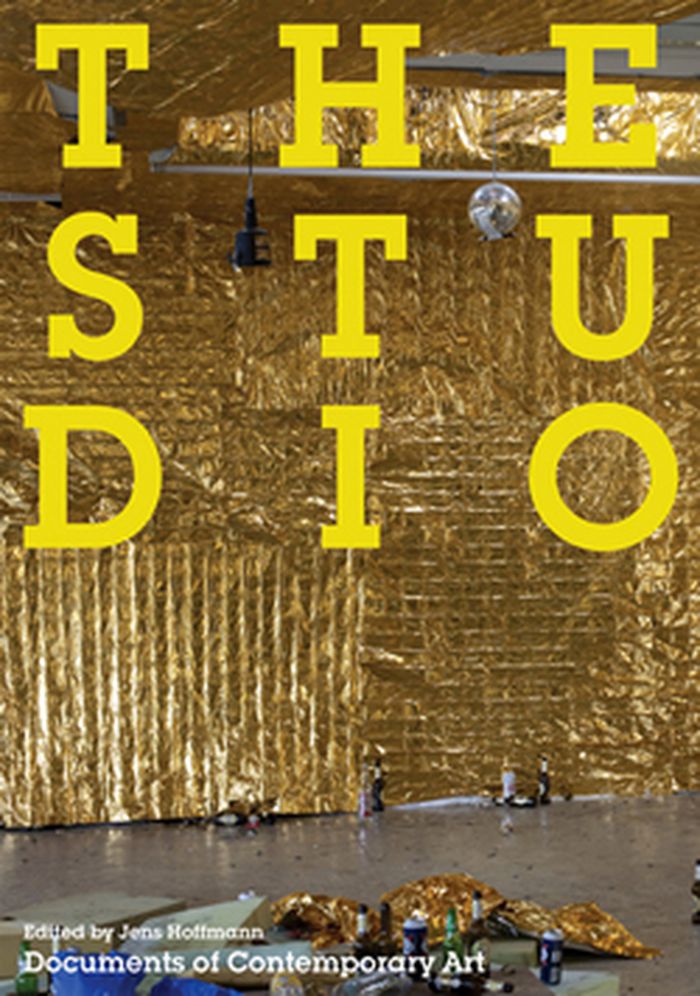
Documents of contemporary art : the studio
Actions:
Prix:
$32.00
(disponible sur commande)
Résumé:
With the emergence of conceptual art in the mid-1960s, the traditional notion of the studio became at least partly obsolete. Other sites emerged for the generation of art, leading to the idea of "post-studio practice." But the studio never went away; it was continually reinvented in response to new realities. This collection, expanding on current critical interest in issues of production and situation, looks at the evolution of studio - and "post-studio" - practice over the last half century. In recent decades many artists have turned their studios into offices from which they organize a multiplicity of operations and interactions. Others use the studio as a quasi-exhibition space, or work on a laptop computer - mobile, flexible, and ready to follow the next commission.
Documents of contemporary art : the studio
Actions:
Prix:
$32.00
(disponible sur commande)
Résumé:
With the emergence of conceptual art in the mid-1960s, the traditional notion of the studio became at least partly obsolete. Other sites emerged for the generation of art, leading to the idea of "post-studio practice." But the studio never went away; it was continually reinvented in response to new realities. This collection, expanding on current critical interest in issues of production and situation, looks at the evolution of studio - and "post-studio" - practice over the last half century. In recent decades many artists have turned their studios into offices from which they organize a multiplicity of operations and interactions. Others use the studio as a quasi-exhibition space, or work on a laptop computer - mobile, flexible, and ready to follow the next commission.
Classification:
livres
livres
Publication:
mars 2012
mars 2012
Sujet:
Théorie de l’art
Théorie de l’art


