


13794 Résultats
Classification:
livres
livres
Actions:
Prix:
$22.00
(disponible en magasin)
Résumé:
Atelier Van Lieshout, Boundary Umlimited, DUS Architects, Haas & Hahn, Nicoline van Harskamp, Anne Holtrop and Bas Princen, Wouter Klein Velderman, Krijn de Koning, NIO Architects and Onix: the artists and architects in this catalogue of the eponymous exhibition in the Centro per l’arte contemporanea Luigi Pecci in Prato seek a direct relationship with reality,(...)
$22.00
(disponible en magasin)
Résumé:
Atelier Van Lieshout, Boundary Umlimited, DUS Architects, Haas & Hahn, Nicoline van Harskamp, Anne Holtrop and Bas Princen, Wouter Klein Velderman, Krijn de Koning, NIO Architects and Onix: the artists and architects in this catalogue of the eponymous exhibition in the Centro per l’arte contemporanea Luigi Pecci in Prato seek a direct relationship with reality,(...)
Titre:
Triggering reality : new conditions for art and architecture in the Netherlands
Actions:
Prix:
$22.00
(disponible en magasin)
Résumé:
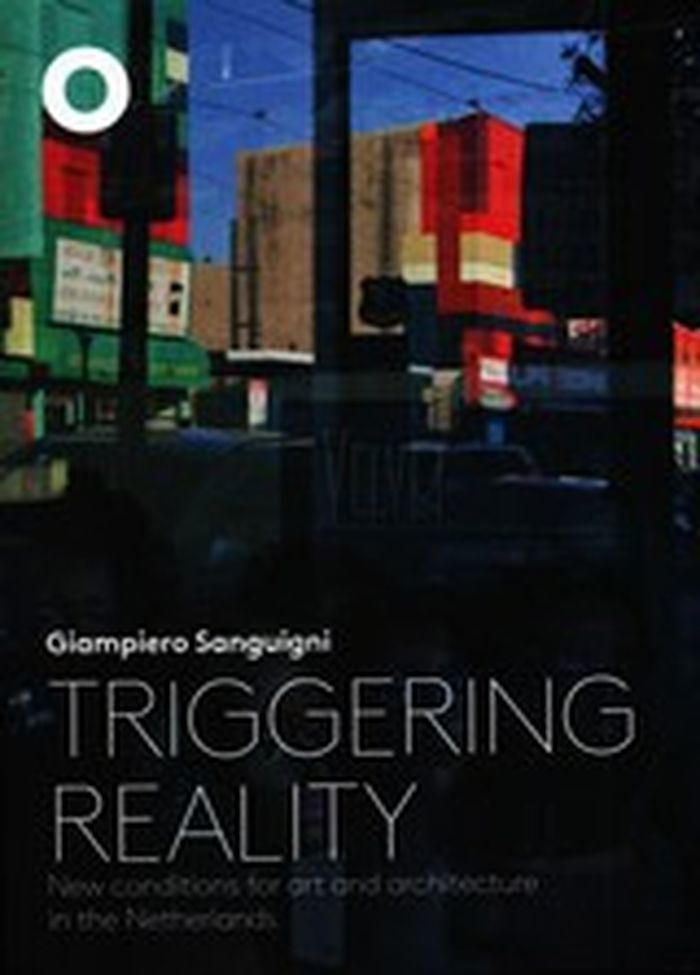
Atelier Van Lieshout, Boundary Umlimited, DUS Architects, Haas & Hahn, Nicoline van Harskamp, Anne Holtrop and Bas Princen, Wouter Klein Velderman, Krijn de Koning, NIO Architects and Onix: the artists and architects in this catalogue of the eponymous exhibition in the Centro per l’arte contemporanea Luigi Pecci in Prato seek a direct relationship with reality, investigating and reproducing it, representing and criticizing it.Their approach is increasingly trans-disciplinary: architects utilize media and supports typical of the arts, while artists investigate urban realities in three-dimensional architectural installations.
Triggering reality : new conditions for art and architecture in the Netherlands
Actions:
Prix:
$22.00
(disponible en magasin)
Résumé:
Atelier Van Lieshout, Boundary Umlimited, DUS Architects, Haas & Hahn, Nicoline van Harskamp, Anne Holtrop and Bas Princen, Wouter Klein Velderman, Krijn de Koning, NIO Architects and Onix: the artists and architects in this catalogue of the eponymous exhibition in the Centro per l’arte contemporanea Luigi Pecci in Prato seek a direct relationship with reality, investigating and reproducing it, representing and criticizing it.Their approach is increasingly trans-disciplinary: architects utilize media and supports typical of the arts, while artists investigate urban realities in three-dimensional architectural installations.
Classification:
livres
livres
Publication:
janvier 2013
janvier 2013
Sujet:
Théorie de l’architecture
Théorie de l’architecture
Classification:
livres
livres
Actions:
Prix:
$39.95
(disponible sur commande)
Résumé:
Charles Jencks and Nathan Silver's book was a manifesto for a generation that took pleasure in doing things ad hoc, using materials at hand to solve real-world problems. The implications were subversive. Turned-off citizens of the 1970s immediately adopted the book as a DIY guide. The word "adhocism" entered the vocabulary, the concept of adhocism became part of the(...)
$39.95
(disponible sur commande)
Résumé:
Charles Jencks and Nathan Silver's book was a manifesto for a generation that took pleasure in doing things ad hoc, using materials at hand to solve real-world problems. The implications were subversive. Turned-off citizens of the 1970s immediately adopted the book as a DIY guide. The word "adhocism" entered the vocabulary, the concept of adhocism became part of the(...)
Titre:
Adhocism: the case for improvisation
Actions:
Prix:
$39.95
(disponible sur commande)
Résumé:
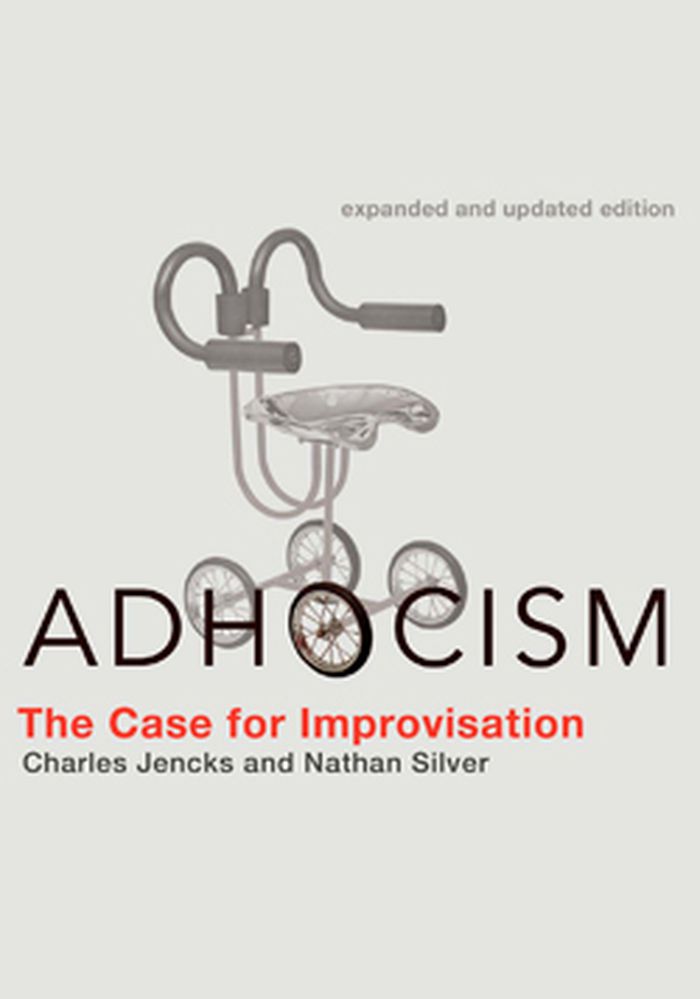
Charles Jencks and Nathan Silver's book was a manifesto for a generation that took pleasure in doing things ad hoc, using materials at hand to solve real-world problems. The implications were subversive. Turned-off citizens of the 1970s immediately adopted the book as a DIY guide. The word "adhocism" entered the vocabulary, the concept of adhocism became part of the designer's toolkit, and "Adhocism" became a cult classic. Now "Adhocism" is available again, with new texts by Jencks and Silver reflecting on the past forty years of adhocism and new illustrations demonstrating adhocism's continuing relevance.
Adhocism: the case for improvisation
Actions:
Prix:
$39.95
(disponible sur commande)
Résumé:
Charles Jencks and Nathan Silver's book was a manifesto for a generation that took pleasure in doing things ad hoc, using materials at hand to solve real-world problems. The implications were subversive. Turned-off citizens of the 1970s immediately adopted the book as a DIY guide. The word "adhocism" entered the vocabulary, the concept of adhocism became part of the designer's toolkit, and "Adhocism" became a cult classic. Now "Adhocism" is available again, with new texts by Jencks and Silver reflecting on the past forty years of adhocism and new illustrations demonstrating adhocism's continuing relevance.
Classification:
livres
livres
Publication:
avril 2013
avril 2013
Sujet:
Théorie de l’architecture
Théorie de l’architecture
Classification:
livres
livres
Prix:
$56.95
(disponible sur commande)
Résumé:
The geography of the visual arts changed with the end of the Cold War. Contemporary art was no longer defined, exhibited, interpreted, and acquired according to a blueprint drawn up in New York, London, Paris, or Berlin. With the emergence of new art scenes in Asia and the Middle East and the explosion of biennials, the visual arts have become globalized as surely as the(...)
$56.95
(disponible sur commande)
Résumé:
The geography of the visual arts changed with the end of the Cold War. Contemporary art was no longer defined, exhibited, interpreted, and acquired according to a blueprint drawn up in New York, London, Paris, or Berlin. With the emergence of new art scenes in Asia and the Middle East and the explosion of biennials, the visual arts have become globalized as surely as the(...)
Titre:
The global contemporary and the rise of new art worlds
Actions:
Prix:
$56.95
(disponible sur commande)
Résumé:
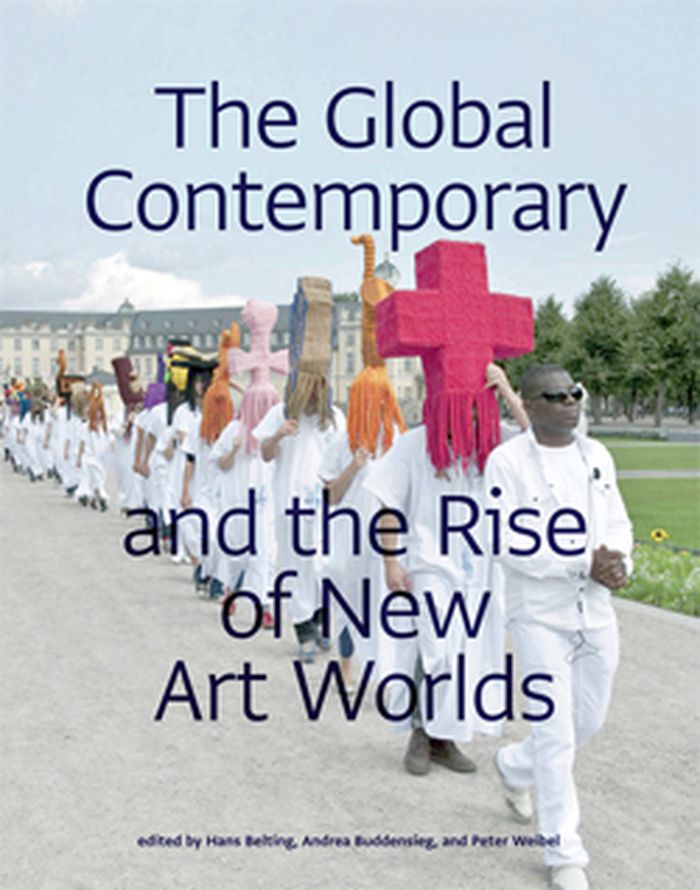
The geography of the visual arts changed with the end of the Cold War. Contemporary art was no longer defined, exhibited, interpreted, and acquired according to a blueprint drawn up in New York, London, Paris, or Berlin. With the emergence of new art scenes in Asia and the Middle East and the explosion of biennials, the visual arts have become globalized as surely as the world economy has. The Global Contemporary and the Rise of New Art Worlds documents the globalization of the visual arts and the rise of the contemporary over the last twenty years.
The global contemporary and the rise of new art worlds
Actions:
Prix:
$56.95
(disponible sur commande)
Résumé:
The geography of the visual arts changed with the end of the Cold War. Contemporary art was no longer defined, exhibited, interpreted, and acquired according to a blueprint drawn up in New York, London, Paris, or Berlin. With the emergence of new art scenes in Asia and the Middle East and the explosion of biennials, the visual arts have become globalized as surely as the world economy has. The Global Contemporary and the Rise of New Art Worlds documents the globalization of the visual arts and the rise of the contemporary over the last twenty years.
Classification:
livres
livres
Publication:
mars 2013
mars 2013
Sujet:
Théorie de l’art
Théorie de l’art
Classification:
livres
livres
Titre:
What was contemporary art?
What was contemporary art?
Actions:
Prix:
$38.95
(disponible sur commande)
Résumé:
Contemporary art in the early twenty-first century is often discussed as though it were a radically new phenomenon unmoored from history. Yet all works of art were once contemporary to the artist and culture that produced them. In What Was Contemporary Art? Richard Meyer reclaims the contemporary from historical amnesia, exploring episodes in the study, exhibition, and(...)
$38.95
(disponible sur commande)
Résumé:
Contemporary art in the early twenty-first century is often discussed as though it were a radically new phenomenon unmoored from history. Yet all works of art were once contemporary to the artist and culture that produced them. In What Was Contemporary Art? Richard Meyer reclaims the contemporary from historical amnesia, exploring episodes in the study, exhibition, and(...)
Titre:
What was contemporary art?
Actions:
Prix:
$38.95
(disponible sur commande)
Résumé:
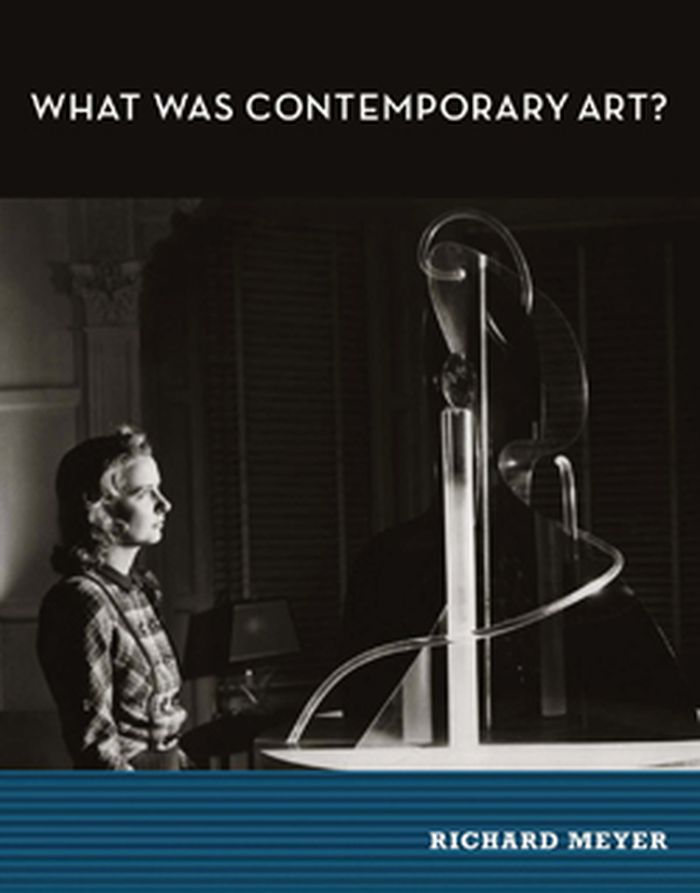
Contemporary art in the early twenty-first century is often discussed as though it were a radically new phenomenon unmoored from history. Yet all works of art were once contemporary to the artist and culture that produced them. In What Was Contemporary Art? Richard Meyer reclaims the contemporary from historical amnesia, exploring episodes in the study, exhibition, and reception of early twentieth-century art and visual culture.
What was contemporary art?
Actions:
Prix:
$38.95
(disponible sur commande)
Résumé:
Contemporary art in the early twenty-first century is often discussed as though it were a radically new phenomenon unmoored from history. Yet all works of art were once contemporary to the artist and culture that produced them. In What Was Contemporary Art? Richard Meyer reclaims the contemporary from historical amnesia, exploring episodes in the study, exhibition, and reception of early twentieth-century art and visual culture.
Classification:
livres
livres
Publication:
mars 2013
mars 2013
Sujet:
Théorie de l’art
Théorie de l’art
Classification:
livres
livres
Prix:
$31.25
(disponible sur commande)
Résumé:
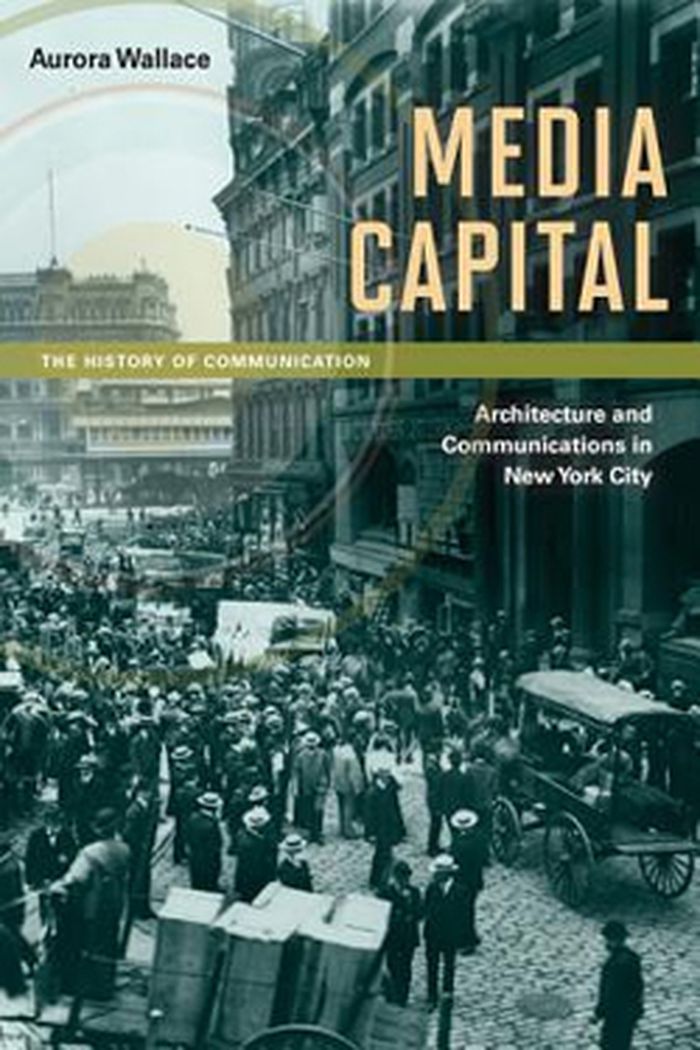
This book illustrates how the media have continued to use the city as a space in which to inscribe and assert their power. With a unique focus on corporate headquarters as embodiments of the values of the press and as signposts for understanding media culture, Media Capital demonstrates the mutually supporting relationship between the media and urban space.
$31.25
(disponible sur commande)
Résumé:
This book illustrates how the media have continued to use the city as a space in which to inscribe and assert their power. With a unique focus on corporate headquarters as embodiments of the values of the press and as signposts for understanding media culture, Media Capital demonstrates the mutually supporting relationship between the media and urban space.
Titre:
Media capital : architecture and communications in New York city
Actions:
Prix:
$31.25
(disponible sur commande)
Résumé:
This book illustrates how the media have continued to use the city as a space in which to inscribe and assert their power. With a unique focus on corporate headquarters as embodiments of the values of the press and as signposts for understanding media culture, Media Capital demonstrates the mutually supporting relationship between the media and urban space.
Media capital : architecture and communications in New York city
Actions:
Prix:
$31.25
(disponible sur commande)
Résumé:
This book illustrates how the media have continued to use the city as a space in which to inscribe and assert their power. With a unique focus on corporate headquarters as embodiments of the values of the press and as signposts for understanding media culture, Media Capital demonstrates the mutually supporting relationship between the media and urban space.
Classification:
livres
livres
Publication:
février 2012
février 2012
Sujet:
Théorie de l’architecture
Théorie de l’architecture
Classification:
livres
livres
Titre:
No medium
No medium
Actions:
Prix:
$24.50
(disponible sur commande)
Résumé:
In No Medium, Craig Dworkin looks at works that are blank, erased, clear, or silent, writing critically and substantively about works for which there would seem to be not only nothing to see but nothing to say. Examined closely, these ostensibly contentless works of art, literature, and music point to a new understanding of media and the limits of the artistic object.
$24.50
(disponible sur commande)
Résumé:
In No Medium, Craig Dworkin looks at works that are blank, erased, clear, or silent, writing critically and substantively about works for which there would seem to be not only nothing to see but nothing to say. Examined closely, these ostensibly contentless works of art, literature, and music point to a new understanding of media and the limits of the artistic object.
Titre:
No medium
Actions:
Prix:
$24.50
(disponible sur commande)
Résumé:
In No Medium, Craig Dworkin looks at works that are blank, erased, clear, or silent, writing critically and substantively about works for which there would seem to be not only nothing to see but nothing to say. Examined closely, these ostensibly contentless works of art, literature, and music point to a new understanding of media and the limits of the artistic object.
No medium
Actions:
Prix:
$24.50
(disponible sur commande)
Résumé:
In No Medium, Craig Dworkin looks at works that are blank, erased, clear, or silent, writing critically and substantively about works for which there would seem to be not only nothing to see but nothing to say. Examined closely, these ostensibly contentless works of art, literature, and music point to a new understanding of media and the limits of the artistic object.
Classification:
livres
livres
Publication:
mars 2013
mars 2013
Sujet:
Théorie de l’art
Théorie de l’art
Classification:
livres
livres
Actions:
Prix:
$27.95
(disponible sur commande)
Résumé:
This anthology reconsiders crucial aspects of abstraction's resurgence in contemporary art, exploring three equally significant strategies explored in current practice: formal abstraction, economic abstraction, and social abstraction. In the 1960s, movements as diverse as Latin American neo-concretism, op art and "eccentric abstraction" disrupted the homogeneity,(...)
$27.95
(disponible sur commande)
Résumé:
This anthology reconsiders crucial aspects of abstraction's resurgence in contemporary art, exploring three equally significant strategies explored in current practice: formal abstraction, economic abstraction, and social abstraction. In the 1960s, movements as diverse as Latin American neo-concretism, op art and "eccentric abstraction" disrupted the homogeneity,(...)
Titre:
Abstraction (Documents of contemporary art serie)
Actions:
Prix:
$27.95
(disponible sur commande)
Résumé:
This anthology reconsiders crucial aspects of abstraction's resurgence in contemporary art, exploring three equally significant strategies explored in current practice: formal abstraction, economic abstraction, and social abstraction. In the 1960s, movements as diverse as Latin American neo-concretism, op art and "eccentric abstraction" disrupted the homogeneity, universality, and rationality associated with abstraction. These modes of abstraction opened up new forms of engagement with the phenomenal world as well as the possibility of diverse readings of the same forms, ranging from formalist and transcendental to socio-economic and conceptual.
Abstraction (Documents of contemporary art serie)
Actions:
Prix:
$27.95
(disponible sur commande)
Résumé:
This anthology reconsiders crucial aspects of abstraction's resurgence in contemporary art, exploring three equally significant strategies explored in current practice: formal abstraction, economic abstraction, and social abstraction. In the 1960s, movements as diverse as Latin American neo-concretism, op art and "eccentric abstraction" disrupted the homogeneity, universality, and rationality associated with abstraction. These modes of abstraction opened up new forms of engagement with the phenomenal world as well as the possibility of diverse readings of the same forms, ranging from formalist and transcendental to socio-economic and conceptual.
Classification:
livres
livres
Publication:
mars 2013
mars 2013
Sujet:
Théorie de l’art
Théorie de l’art
Classification:
livres
livres
Actions:
Prix:
$14.50
(disponible sur commande)
Résumé:
Looking at recent social struggles including the university strikes in Europe, the Spanish ¡Democracia real YA! organization, the Arab revolts, and the Occupy movement, Raunig argues for a reassessment of the importance of cultural and knowledge production. The central role of the university, he asserts, is not as a factory of knowledge but as a place of creative(...)
$14.50
(disponible sur commande)
Résumé:
Looking at recent social struggles including the university strikes in Europe, the Spanish ¡Democracia real YA! organization, the Arab revolts, and the Occupy movement, Raunig argues for a reassessment of the importance of cultural and knowledge production. The central role of the university, he asserts, is not as a factory of knowledge but as a place of creative(...)
Titre:
Factories of knowledge, industries of creativity
Actions:
Prix:
$14.50
(disponible sur commande)
Résumé:
Looking at recent social struggles including the university strikes in Europe, the Spanish ¡Democracia real YA! organization, the Arab revolts, and the Occupy movement, Raunig argues for a reassessment of the importance of cultural and knowledge production. The central role of the university, he asserts, is not as a factory of knowledge but as a place of creative disobedience. Drawing on Gilles Deleuze's concept of "modulation" as the market-driven imperative for the constant transformation and reinvention of subjectivity, in Factories of Knowledge, Industries of Creativity, Raunig charts alternative horizons for resistance.
Factories of knowledge, industries of creativity
Actions:
Prix:
$14.50
(disponible sur commande)
Résumé:
Looking at recent social struggles including the university strikes in Europe, the Spanish ¡Democracia real YA! organization, the Arab revolts, and the Occupy movement, Raunig argues for a reassessment of the importance of cultural and knowledge production. The central role of the university, he asserts, is not as a factory of knowledge but as a place of creative disobedience. Drawing on Gilles Deleuze's concept of "modulation" as the market-driven imperative for the constant transformation and reinvention of subjectivity, in Factories of Knowledge, Industries of Creativity, Raunig charts alternative horizons for resistance.
Classification:
livres
livres
Publication:
mars 2013
mars 2013
Sujet:
Théorie/ philosophie
Théorie/ philosophie
Classification:
livres
livres
Prix:
$48.00
(disponible sur commande)
Résumé:
In Contagious Architecture, Luciana Parisi offers a philosophical inquiry into the status of the algorithm in architectural and interaction design. Her thesis is that algorithmic computation is not simply an abstract mathematical tool but constitutes a mode of thought in its own right, in that its operation extends into forms of abstraction that lie beyond direct human(...)
$48.00
(disponible sur commande)
Résumé:
In Contagious Architecture, Luciana Parisi offers a philosophical inquiry into the status of the algorithm in architectural and interaction design. Her thesis is that algorithmic computation is not simply an abstract mathematical tool but constitutes a mode of thought in its own right, in that its operation extends into forms of abstraction that lie beyond direct human(...)
Titre:
Contagious architecture: computation, aesthetics, and space
Actions:
Prix:
$48.00
(disponible sur commande)
Résumé:
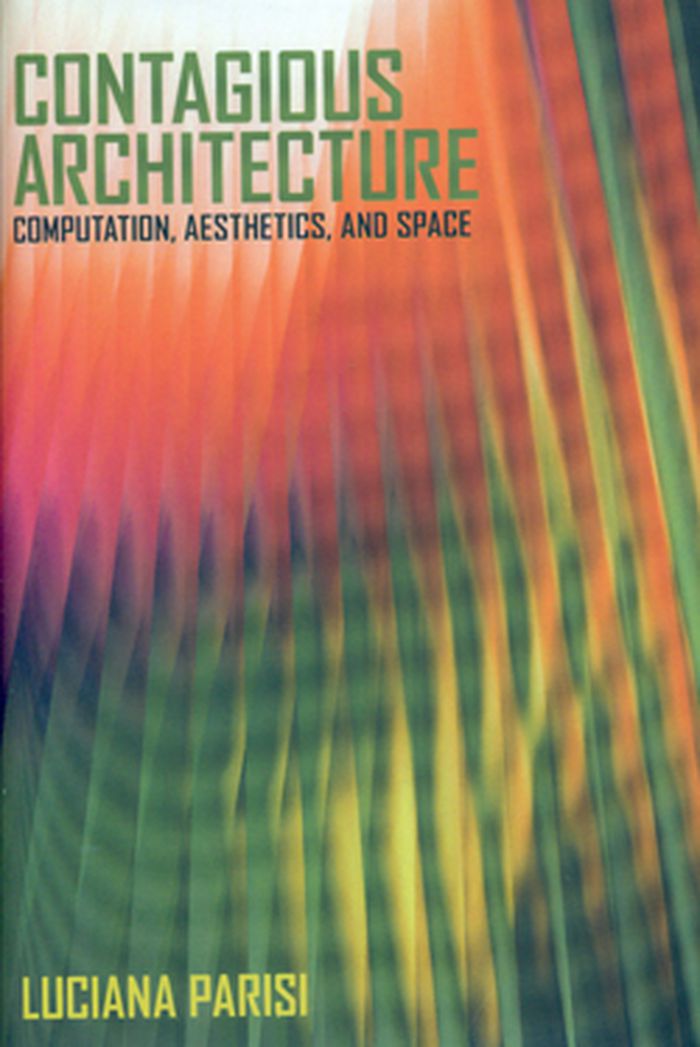
In Contagious Architecture, Luciana Parisi offers a philosophical inquiry into the status of the algorithm in architectural and interaction design. Her thesis is that algorithmic computation is not simply an abstract mathematical tool but constitutes a mode of thought in its own right, in that its operation extends into forms of abstraction that lie beyond direct human cognition and control. These include modes of infinity, contingency, and indeterminacy, as well as incomputable quantities underlying the iterative process of algorithmic processing.
Contagious architecture: computation, aesthetics, and space
Actions:
Prix:
$48.00
(disponible sur commande)
Résumé:
In Contagious Architecture, Luciana Parisi offers a philosophical inquiry into the status of the algorithm in architectural and interaction design. Her thesis is that algorithmic computation is not simply an abstract mathematical tool but constitutes a mode of thought in its own right, in that its operation extends into forms of abstraction that lie beyond direct human cognition and control. These include modes of infinity, contingency, and indeterminacy, as well as incomputable quantities underlying the iterative process of algorithmic processing.
Classification:
livres
livres
Publication:
mars 2013
mars 2013
Sujet:
Théorie de l’architecture
Théorie de l’architecture
Classification:
livres
livres
Prix:
$39.95
(disponible sur commande)
Résumé:
Tracing the history of architecture’s relationship with retail environments during a time of significant transformation in urban centers and in open suburban landscapes, Smiley expands and qualifies the making of American modernism.
$39.95
(disponible sur commande)
Résumé:
Tracing the history of architecture’s relationship with retail environments during a time of significant transformation in urban centers and in open suburban landscapes, Smiley expands and qualifies the making of American modernism.
Titre:
Pedestrian modern: shopping and american architecture, 1925-1956
Actions:
Prix:
$39.95
(disponible sur commande)
Résumé:
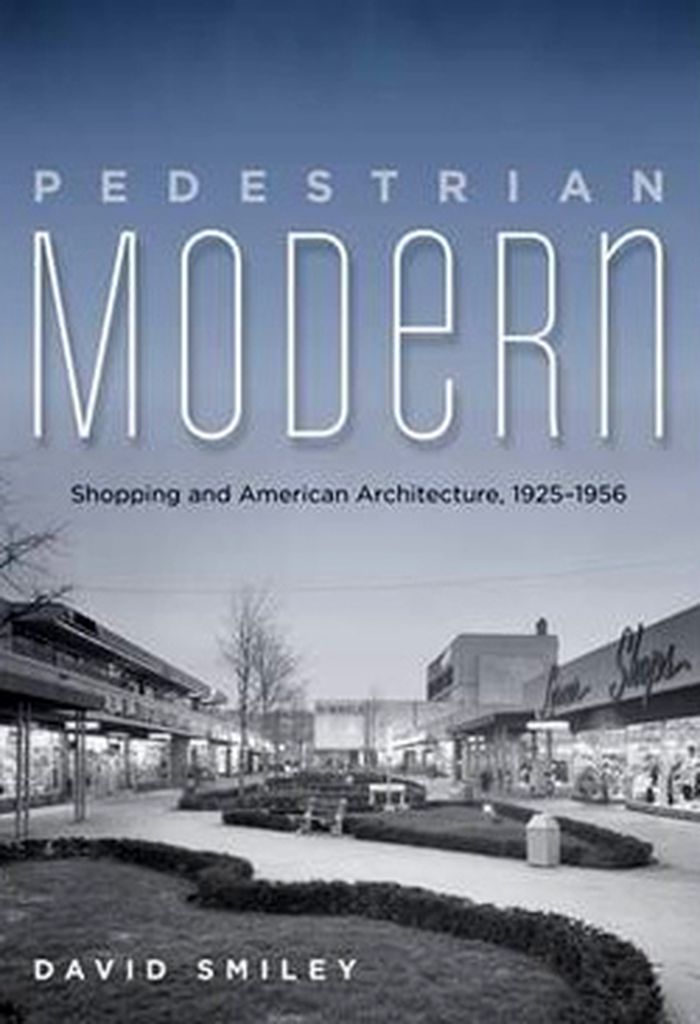
Tracing the history of architecture’s relationship with retail environments during a time of significant transformation in urban centers and in open suburban landscapes, Smiley expands and qualifies the making of American modernism.
Pedestrian modern: shopping and american architecture, 1925-1956
Actions:
Prix:
$39.95
(disponible sur commande)
Résumé:
Tracing the history of architecture’s relationship with retail environments during a time of significant transformation in urban centers and in open suburban landscapes, Smiley expands and qualifies the making of American modernism.
Classification:
livres
livres
Publication:
juillet 2013
juillet 2013
Sujet:
Théorie de l’architecture
Théorie de l’architecture


