


873 Résultats
Classification:
livres
livres
Actions:
Prix:
$130.00
(disponible sur commande)
Résumé:
For five decades, photographer Gianfranco Gorgoni (1941-2019) built his reputation as the premier documentarian of Land Art in the US and beyond. After leaving Italy, Gorgoni started making portraits of the major artists of the New York scene, including Michael Heizer, Robert Smithson, Nancy Holt, Walter De Maria, Carl Andre, and Richard Serra. It was not long before he(...)
$130.00
(disponible sur commande)
Résumé:
For five decades, photographer Gianfranco Gorgoni (1941-2019) built his reputation as the premier documentarian of Land Art in the US and beyond. After leaving Italy, Gorgoni started making portraits of the major artists of the New York scene, including Michael Heizer, Robert Smithson, Nancy Holt, Walter De Maria, Carl Andre, and Richard Serra. It was not long before he(...)
Titre:
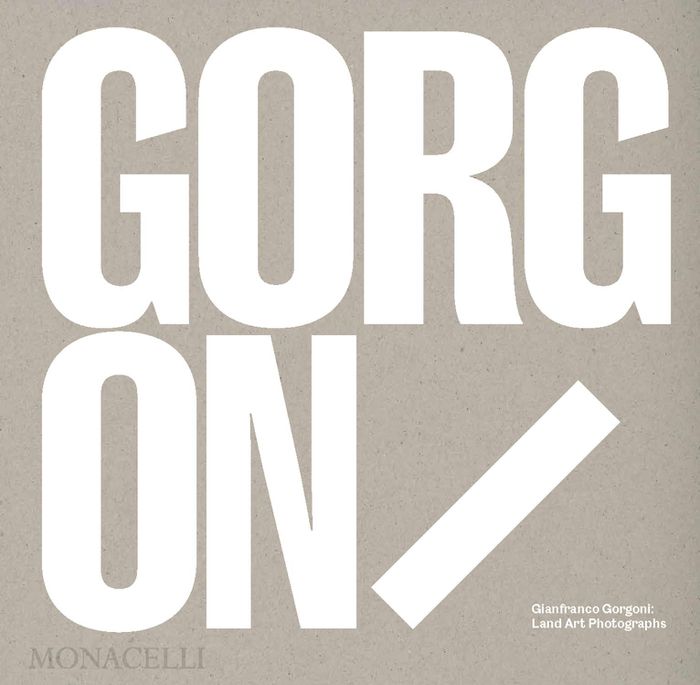
Gianfranco Gorgoni: Land Art photographs
Actions:
Prix:
$130.00
(disponible sur commande)
Résumé:
For five decades, photographer Gianfranco Gorgoni (1941-2019) built his reputation as the premier documentarian of Land Art in the US and beyond. After leaving Italy, Gorgoni started making portraits of the major artists of the New York scene, including Michael Heizer, Robert Smithson, Nancy Holt, Walter De Maria, Carl Andre, and Richard Serra. It was not long before he was traveling with Heizer, Smithson, and De Maria to the American West in the late 1960s to plot the works that would famously break art practice out of the confines of the gallery world. In Nevada, New Mexico, and Utah, these artists embarked on major Land Art installations that would redefine contemporary art practice of the era. In many cases, Gorgoni was the only photographer on the ground to document their projects, and his images often serve as the definitive photographic record of the planning and creation of these groundbreaking works. Published to coincide with the first major exhibition of Gorgoni's photographic Land Art images at the Nevada Museum of Art, featuring over fifty of his large-scale photographs, "Gianfranco Gorgoni: Land Art Photographs" includes an introduction by Ann M. Wolfe, Andrea and John C. Deane Family senior curator and deputy director at the Nevada Museum of Art, an essay by the late art historian and critic Germano Celant, whose contribution here is among the last he wrote before his death in 2020, and William L. Fox, the Peter E. Pool Director of the Center for Art + Environment.
Gianfranco Gorgoni: Land Art photographs
Actions:
Prix:
$130.00
(disponible sur commande)
Résumé:
For five decades, photographer Gianfranco Gorgoni (1941-2019) built his reputation as the premier documentarian of Land Art in the US and beyond. After leaving Italy, Gorgoni started making portraits of the major artists of the New York scene, including Michael Heizer, Robert Smithson, Nancy Holt, Walter De Maria, Carl Andre, and Richard Serra. It was not long before he was traveling with Heizer, Smithson, and De Maria to the American West in the late 1960s to plot the works that would famously break art practice out of the confines of the gallery world. In Nevada, New Mexico, and Utah, these artists embarked on major Land Art installations that would redefine contemporary art practice of the era. In many cases, Gorgoni was the only photographer on the ground to document their projects, and his images often serve as the definitive photographic record of the planning and creation of these groundbreaking works. Published to coincide with the first major exhibition of Gorgoni's photographic Land Art images at the Nevada Museum of Art, featuring over fifty of his large-scale photographs, "Gianfranco Gorgoni: Land Art Photographs" includes an introduction by Ann M. Wolfe, Andrea and John C. Deane Family senior curator and deputy director at the Nevada Museum of Art, an essay by the late art historian and critic Germano Celant, whose contribution here is among the last he wrote before his death in 2020, and William L. Fox, the Peter E. Pool Director of the Center for Art + Environment.
Classification:
livres
livres
Publication:
août 2021
août 2021
Sujet:
Monographies photo
Monographies photo
Classification:
livres
livres
Actions:
Prix:
$37.50
(disponible sur commande)
Résumé:
Toward the end of the sixteenth century, and throughout the seventeenth, thinking in spatial terms assumed extraordinary urgency among Russia's ruling elites. The two great developments of this era in Russian history - the enserfment of the peasantry and the conquest of a vast Eastern empire-fundamentally concerned spatial control and concepts of movements across the(...)
$37.50
(disponible sur commande)
Résumé:
Toward the end of the sixteenth century, and throughout the seventeenth, thinking in spatial terms assumed extraordinary urgency among Russia's ruling elites. The two great developments of this era in Russian history - the enserfment of the peasantry and the conquest of a vast Eastern empire-fundamentally concerned spatial control and concepts of movements across the(...)
Titre:
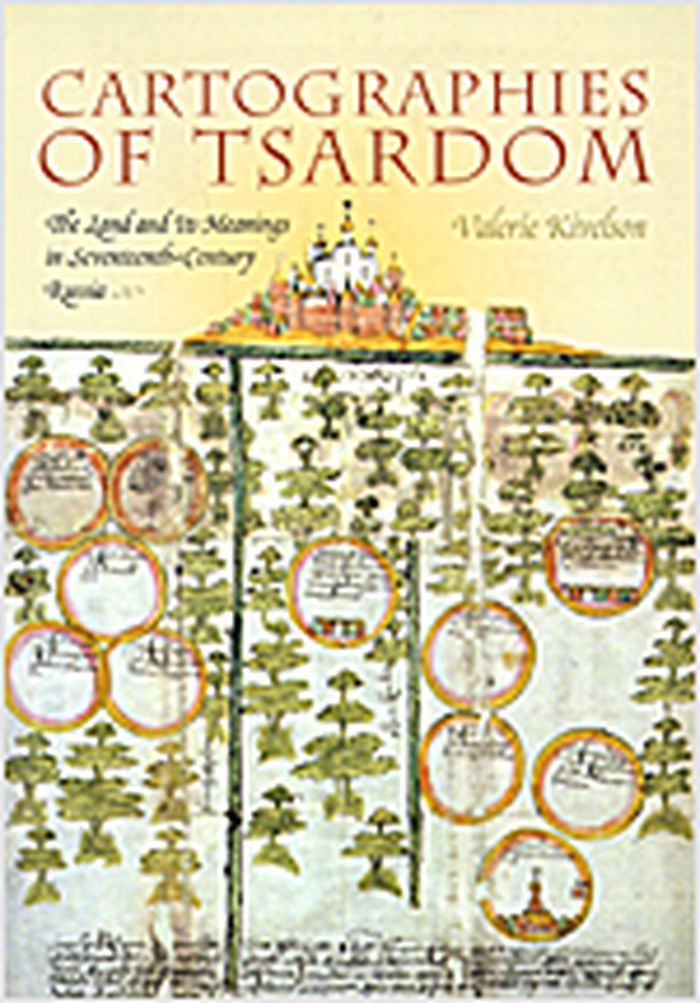
Cartographies of tsardom : the land and its meaning in seventeenth-century Russia
Actions:
Prix:
$37.50
(disponible sur commande)
Résumé:
Toward the end of the sixteenth century, and throughout the seventeenth, thinking in spatial terms assumed extraordinary urgency among Russia's ruling elites. The two great developments of this era in Russian history - the enserfment of the peasantry and the conquest of a vast Eastern empire-fundamentally concerned spatial control and concepts of movements across the land. In "Cartographies of tsardom", Valerie Kivelson explores how these twin themes of fixity and mobility obliged Russians, from tsar to peasant, to think in spatial terms. She builds her case through close study of two very different kinds of maps: the hundreds of local maps hand-drawn by amateurs as evidence in property litigations, and the maps of the new territories that stretched from the Urals to the Pacific. In both the simple maps that local residents drafted and in the more formal maps of the newly conquered Siberian spaces, Kivelson shows that the Russians saw the land (be it a peasant's plot or the Siberian taiga) as marked by the grace of divine providence. She argues that the unceasing tension between fixity and mobility led to the emergence in Eurasia of an empire quite different from that in North America. In her words, the Russian empire that took shape in the decades before Peter the Great proclaimed its existence was a “spacious mantle,” a “patchwork quilt of difference under a single tsar” that granted religious and cultural space to non-Russian, non-Orthodox populations even as it strove to tie them down to serve its own growing fiscal needs. The unresolved, perhaps unresolvable, tension between these contrary impulses was both the strength and the weakness of empire in Russia.
Cartographies of tsardom : the land and its meaning in seventeenth-century Russia
Actions:
Prix:
$37.50
(disponible sur commande)
Résumé:
Toward the end of the sixteenth century, and throughout the seventeenth, thinking in spatial terms assumed extraordinary urgency among Russia's ruling elites. The two great developments of this era in Russian history - the enserfment of the peasantry and the conquest of a vast Eastern empire-fundamentally concerned spatial control and concepts of movements across the land. In "Cartographies of tsardom", Valerie Kivelson explores how these twin themes of fixity and mobility obliged Russians, from tsar to peasant, to think in spatial terms. She builds her case through close study of two very different kinds of maps: the hundreds of local maps hand-drawn by amateurs as evidence in property litigations, and the maps of the new territories that stretched from the Urals to the Pacific. In both the simple maps that local residents drafted and in the more formal maps of the newly conquered Siberian spaces, Kivelson shows that the Russians saw the land (be it a peasant's plot or the Siberian taiga) as marked by the grace of divine providence. She argues that the unceasing tension between fixity and mobility led to the emergence in Eurasia of an empire quite different from that in North America. In her words, the Russian empire that took shape in the decades before Peter the Great proclaimed its existence was a “spacious mantle,” a “patchwork quilt of difference under a single tsar” that granted religious and cultural space to non-Russian, non-Orthodox populations even as it strove to tie them down to serve its own growing fiscal needs. The unresolved, perhaps unresolvable, tension between these contrary impulses was both the strength and the weakness of empire in Russia.
Classification:
livres
livres
Publication:
septembre 2006, Ithaca, London
septembre 2006, Ithaca, London
Sujet:
Histoire jusqu’à 1900
Histoire jusqu’à 1900
Classification:
livres
livres
Actions:
Exemplaires:
Description:
349 pages : illustrations ; 29 cm
Description:
349 pages : illustrations ; 29 cm
Auteur:
Sujet:
Publication:
New York : Van Nostrand Reinhold, ©1994.
New York : Van Nostrand Reinhold, ©1994.
Titre:
Production systems for architects and designers : a handbook / by Fred A. Stitt.
Actions:
Exemplaires:
Description:
349 pages : illustrations ; 29 cm
Production systems for architects and designers : a handbook / by Fred A. Stitt.
Actions:
Exemplaires:
Description:
349 pages : illustrations ; 29 cm
Classification:
livres
livres
Publication:
New York : Van Nostrand Reinhold, ©1994.
New York : Van Nostrand Reinhold, ©1994.
Auteur:
Sujet:


