


1024 Résultats
Classification:
livres
livres
Actions:
Prix:
$25.95
(disponible en magasin)
Résumé:
From the excesses of world expositions to myths of better living through technology, modernist design, in its European-based guises, has excluded and oppressed the very people whose lands and lives it reshaped. This book first asks how modernist design has encompassed and advanced the harmful project of colonization—then shows how design might address these harms by(...)
Titre:
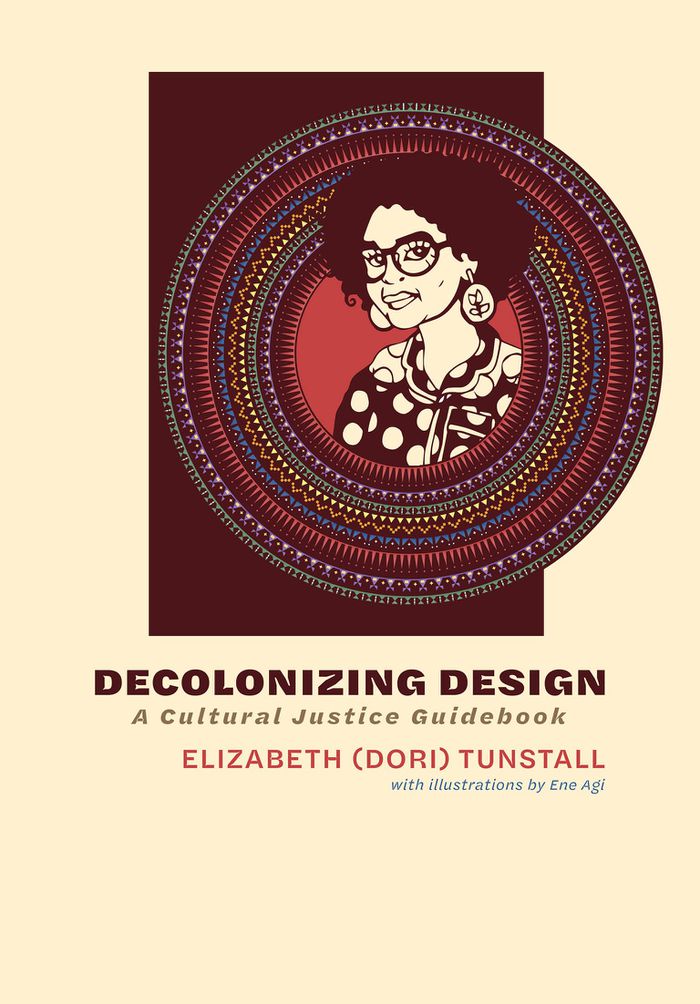
Decolonizing design: A cultural justice guidebook
Actions:
Prix:
$25.95
(disponible en magasin)
Résumé:
From the excesses of world expositions to myths of better living through technology, modernist design, in its European-based guises, has excluded and oppressed the very people whose lands and lives it reshaped. This book first asks how modernist design has encompassed and advanced the harmful project of colonization—then shows how design might address these harms by recentering its theory and practice in global Indigenous cultures and histories. A leading figure in the movement to decolonize design, Dori Tunstall uses hard-hitting real-life examples and case studies drawn from over fifteen years of working to transform institutions to better reflect the lived experiences of Indigenous, Black, and People of Color communities. Her book is at once enlightening, inspiring, and practical, interweaving her lived experiences with extensive research to show what decolonizing design means, how it heals, and how to practice it in our institutions today.
Classification:
livres
livres
Publication:
février 2023
février 2023
Sujet:
Social
Social
Classification:
livres
livres
Prix:
$25.00
(disponible en magasin)
Résumé:
As Indigenous scientist and author of "Braiding sweetgrass" Robin Wall Kimmerer harvests serviceberries alongside the birds, she considers the ethic of reciprocity that lies at the heart of the gift economy. How, she asks, can we learn from Indigenous wisdom and the plant world to reimagine what we value most? Our economy is rooted in scarcity, competition, and the(...)
Publication:
novembre 2024
novembre 2024
Titre:
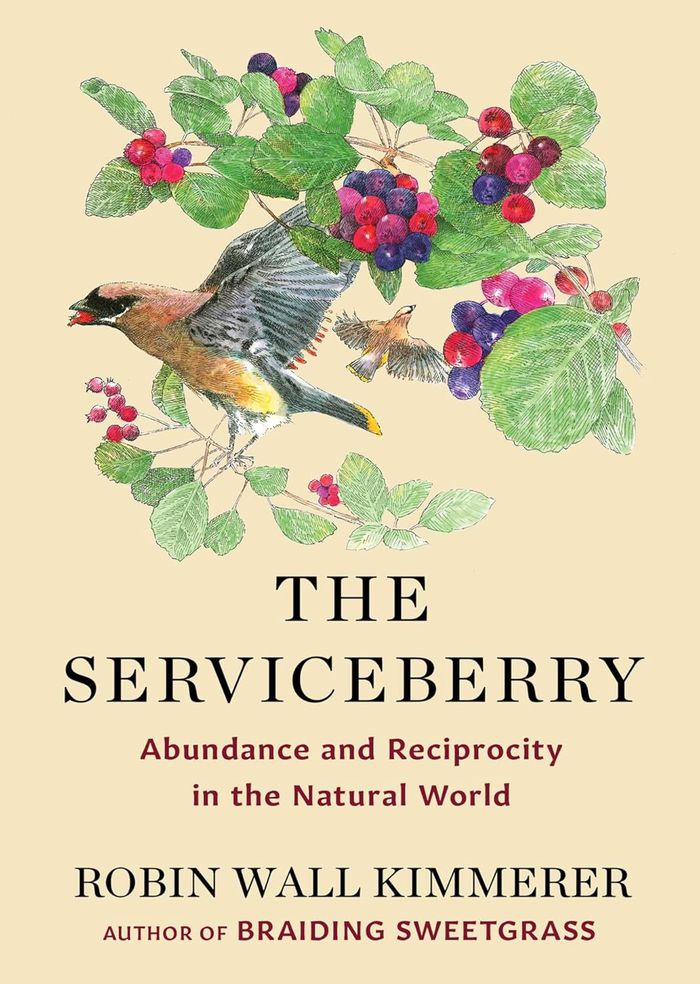
The serviceberry: Abundance and reciprocity in the natural world
Actions:
Prix:
$25.00
(disponible en magasin)
Résumé:
As Indigenous scientist and author of "Braiding sweetgrass" Robin Wall Kimmerer harvests serviceberries alongside the birds, she considers the ethic of reciprocity that lies at the heart of the gift economy. How, she asks, can we learn from Indigenous wisdom and the plant world to reimagine what we value most? Our economy is rooted in scarcity, competition, and the hoarding of resources, and we have surrendered our values to a system that actively harms what we love. Meanwhile, the serviceberry’s relationship with the natural world is an embodiment of reciprocity, interconnectedness, and gratitude. The tree distributes its wealth—its abundance of sweet, juicy berries—to meet the needs of its natural community. And this distribution ensures its own survival. As Kimmerer explains, "Serviceberries show us another model, one based upon reciprocity, where wealth comes from the quality of your relationships, not from the illusion of self-sufficiency."
Classification:
livres
livres
Publication:
novembre 2024
novembre 2024
Classification:
livres
livres
Actions:
Prix:
$70.00
(disponible sur commande)
Résumé:
Three hundred years ago, intellectuals of the European Enlightenment constructed a mythology of technology. Influenced by a confluence of humanism, colonialism, and racism, this mythology ignored local wisdom and indigenous innovation, deeming it primitive. Today, we have slowly come to realize that the legacy of this mythology is haunting us. Designers understand the(...)
Titre:
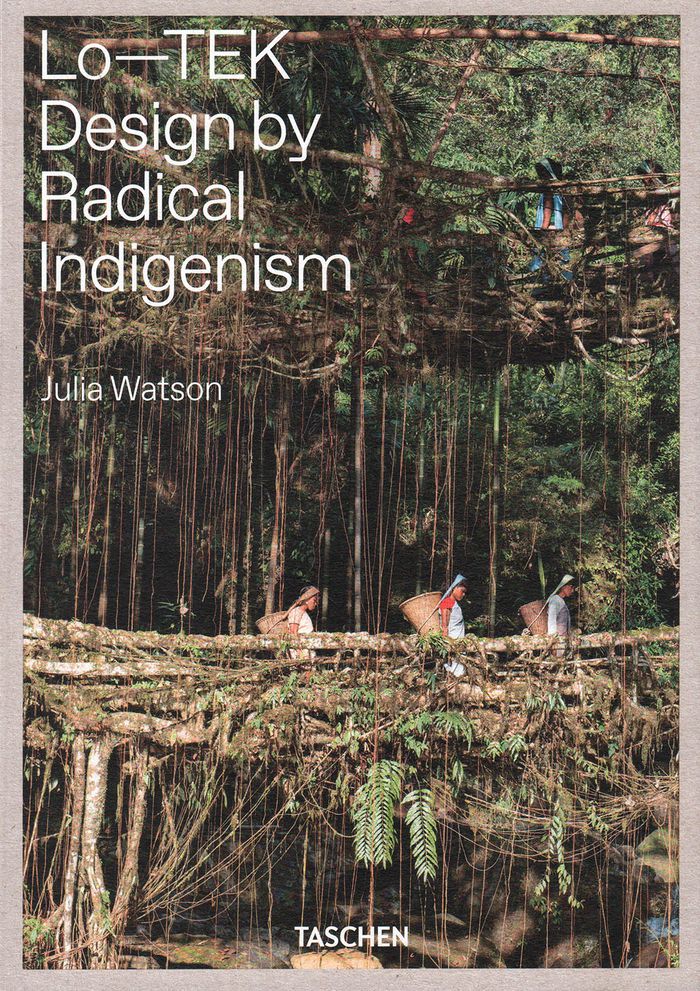
Lo-Tek. Design by radical indigenism
Actions:
Prix:
$70.00
(disponible sur commande)
Résumé:
Three hundred years ago, intellectuals of the European Enlightenment constructed a mythology of technology. Influenced by a confluence of humanism, colonialism, and racism, this mythology ignored local wisdom and indigenous innovation, deeming it primitive. Today, we have slowly come to realize that the legacy of this mythology is haunting us. Designers understand the urgency of reducing humanity’s negative environmental impact, yet perpetuate the same mythology of technology that relies on exploiting nature. Responding to climate change by building hard infrastructures and favoring high-tech homogenous design, we are ignoring millennia-old knowledge of how to live in symbiosis with nature. Without implementing soft systems that use biodiversity as a building block, designs remain inherently unsustainable. Lo-TEK, derived from Traditional Ecological Knowledge, is a cumulative body of multigenerational knowledge, practices, and beliefs, countering the idea that indigenous innovation is primitive and exists isolated from technology. It is sophisticated and designed to sustainably work with complex ecosystems.
Classification:
livres
livres
Publication:
janvier 2020
janvier 2020
Sujet:
Architecture écologique
Architecture écologique
Classification:
livres
livres

Actions:
Prix:
$105.00
(disponible sur commande)
Résumé:
During the last five decades we have witnessed an increase in activity among artists identifying themselves as Sami, the only recognised indigenous people of Scandinavia. At the same time, art and duodji (traditional Sami art and craft) have been organized and institutionalized, not least by the Sami artists themselves. ''Sami art and aesthetics'' discusses and highlights(...)
Titre:
Sami art and aesthetics: Contemporary perspectives
Actions:
Prix:
$105.00
(disponible sur commande)
Résumé:
During the last five decades we have witnessed an increase in activity among artists identifying themselves as Sami, the only recognised indigenous people of Scandinavia. At the same time, art and duodji (traditional Sami art and craft) have been organized and institutionalized, not least by the Sami artists themselves. ''Sami art and aesthetics'' discusses and highlights these developments and places them in historical and contemporary contexts for an international audience. At stake are complex, changing terms regarding the creative and the political agencies. The question is not how indigeneity, identity, people, art, duodji, and aesthetics correspond to conventional Western ideas, rather it is how they interact with the Sami and their neighbouring cultures and societies. The volume is written by some of the foremost art historians and literary scholars in Sami art, craft, architecture, culture, and indigenous studies. Artists presented include Johan Turi, Ivar Jaks, Outi Pieski, Folke Fjellstrom, Katarina Pirak Sikku, Geir Tore Holm, and Silje Figenschou Thoresen.
Classification:
livres
livres
Publication:
juillet 2017
juillet 2017
Sujet:
Expositions en cours
Expositions en cours
Classification:
livres
livres
Actions:
Prix:
$65.00
(disponible sur commande)
Résumé:
A presentation of the mid-century modern California style, offering a new perspective on the work of Edward h. Fickett. The mid-century houses of this architect are coveted today, were ubiquitous during their time, and have always demonstrated a presciently deep understanding of the use of indigenous, cost-efficient materials and the integration of interior space with(...)
Titre:
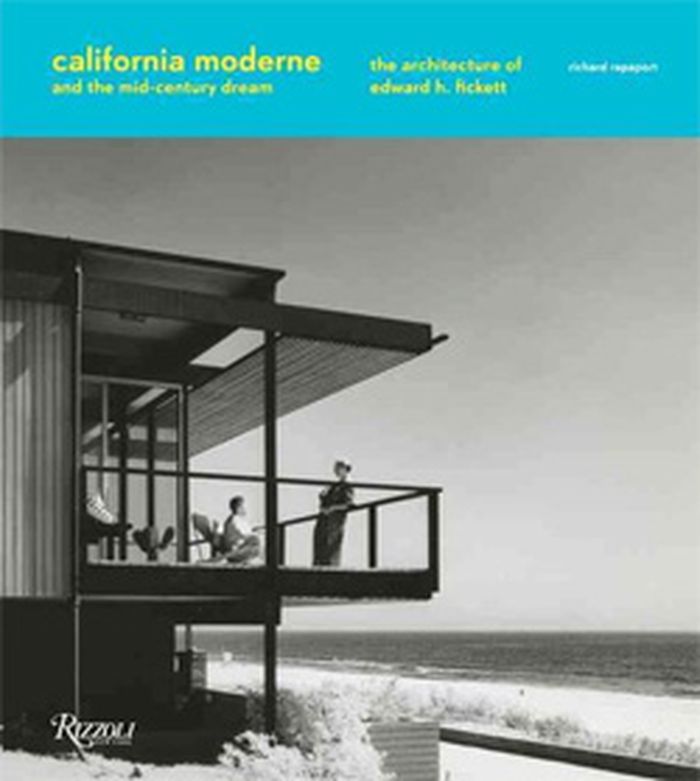
California moderne and the mid-century dream: the architecture of edward h.fickett
Actions:
Prix:
$65.00
(disponible sur commande)
Résumé:
A presentation of the mid-century modern California style, offering a new perspective on the work of Edward h. Fickett. The mid-century houses of this architect are coveted today, were ubiquitous during their time, and have always demonstrated a presciently deep understanding of the use of indigenous, cost-efficient materials and the integration of interior space with Southern California's Mediterranean climate.
Classification:
livres
livres
Publication:
mai 2014
mai 2014
Sujet:
Architecture résidentielle
Architecture résidentielle
Classification:
livres
livres

Prix:
$82.00
(disponible en magasin)
Résumé:
"The course of water: Fieldnotes from California’s Owens Valley" explores the environmental and social histories of California’s Owens Valley by attending to the implications of its peculiar hydrology. A stolen river, a dry lake kept wet, Sierra snowmelt, turquoise springs: water takes strange paths in this desert landscape, rerouted by the lives of the people –(...)
Publication:
septembre 2025
septembre 2025
Titre:
The course of water: Fieldnotes from California's Owens Valley
Actions:
Prix:
$82.00
(disponible en magasin)
Résumé:
"The course of water: Fieldnotes from California’s Owens Valley" explores the environmental and social histories of California’s Owens Valley by attending to the implications of its peculiar hydrology. A stolen river, a dry lake kept wet, Sierra snowmelt, turquoise springs: water takes strange paths in this desert landscape, rerouted by the lives of the people – Indigenous, settler, internee – who have called it home.
Classification:
livres
livres
Publication:
septembre 2025
septembre 2025
Classification:
livres
livres
Titre:
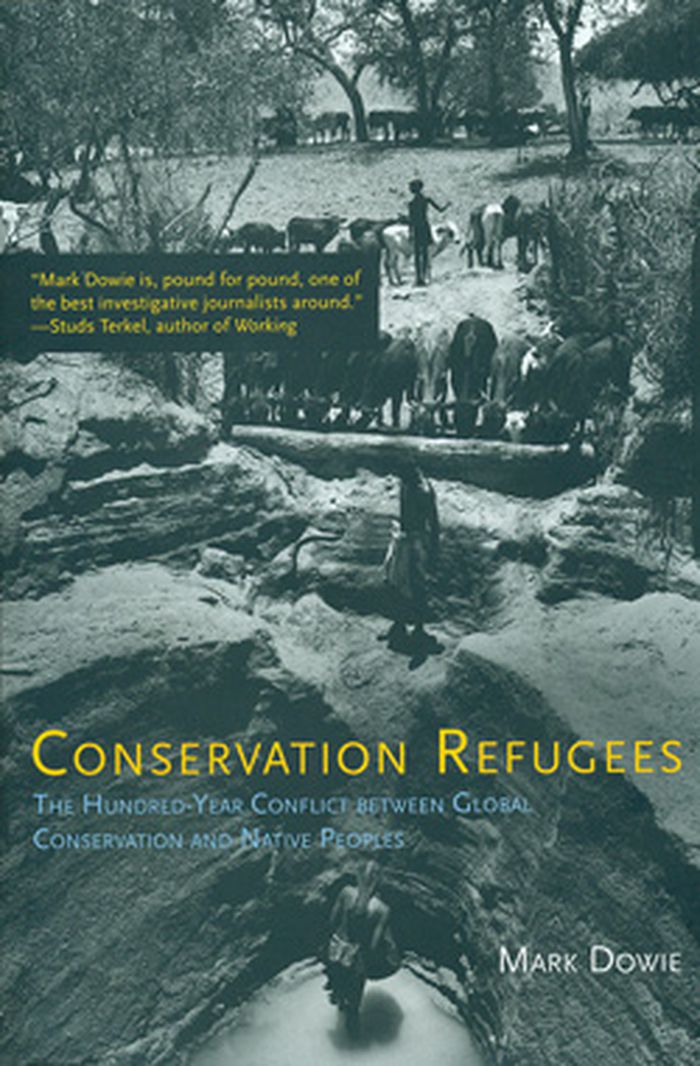
Conservation refugees: the hundred-year conflict between global conservation and native peoples
Conservation refugees: the hundred-year conflict between global conservation and native peoples
Actions:
Prix:
$31.99
(disponible sur commande)
Résumé:
Since 1900, more than 108,000 officially protected conservation areas have been established worldwide, largely at the urging of five international conservation organizations. About half of these areas were occupied or regularly used by indigenous peoples. Millions who had been living sustainably on their land for generations were displaced in the interests of(...)
Publication:
avril 2009, Cambridge, London
avril 2009, Cambridge, London
Titre:
Conservation refugees: the hundred-year conflict between global conservation and native peoples
Actions:
Prix:
$31.99
(disponible sur commande)
Résumé:
Since 1900, more than 108,000 officially protected conservation areas have been established worldwide, largely at the urging of five international conservation organizations. About half of these areas were occupied or regularly used by indigenous peoples. Millions who had been living sustainably on their land for generations were displaced in the interests of conservation. In Conservation Refugees, Mark Dowie tells this story.
Classification:
livres
livres
Publication:
avril 2009, Cambridge, London
avril 2009, Cambridge, London
Classification:
livres
livres

Prix:
$23.95
(disponible sur commande)
Résumé:
An urgent call for climate justice from Teen Vogue, one of this generation’s leading voices, using an intersectional lens – with critical feminist, Indigenous, antiracist, and internationalist perspectives. As the political classes watch our world burn, a new movement of young people is rising to meet the challenge of climate catastrophe. This book is a guide, a toolkit,(...)
Titre:
No Planet B: A Teen Vogue guide to the climate crisis
Actions:
Prix:
$23.95
(disponible sur commande)
Résumé:
An urgent call for climate justice from Teen Vogue, one of this generation’s leading voices, using an intersectional lens – with critical feminist, Indigenous, antiracist, and internationalist perspectives. As the political classes watch our world burn, a new movement of young people is rising to meet the challenge of climate catastrophe. This book is a guide, a toolkit, a warning, and a cause for hope.
Classification:
livres
livres
Publication:
avril 2021
avril 2021
Classification:
périodiques
périodiques

Titre:
MacGuffin 12: The Log
MacGuffin 12: The Log
Actions:
Prix:
$47.00
(disponible sur commande)
Résumé:
‘The Log’ takes a walk in the woods to explore the design and politics of timber. From the last Norwegian trunks that floated down the Glomma to the indigenous logs that help map the Amazon, and from Jamaican lacebark trees to online chatbots, meet the logs that function as totems, design tools, oracles, wormholes, comic figures, activist artworks, village idiots, prison(...)
Titre:
MacGuffin 12: The Log
Actions:
Prix:
$47.00
(disponible sur commande)
Résumé:
‘The Log’ takes a walk in the woods to explore the design and politics of timber. From the last Norwegian trunks that floated down the Glomma to the indigenous logs that help map the Amazon, and from Jamaican lacebark trees to online chatbots, meet the logs that function as totems, design tools, oracles, wormholes, comic figures, activist artworks, village idiots, prison cells, logbooks, nightmares, and dreams.
Classification:
périodiques
périodiques
Publication:
juin 2023
juin 2023
Sujet:
Revues
Revues
Classification:
livres
livres
Actions:
Prix:
$25.00
(disponible sur commande)
Résumé:
Computational models of urbanism — smart cities that use data-driven planning and algorithmic administration — promise to deliver new urban efficiencies and conveniences. Yet these models limit our understanding of what we can know about a city. 'A City Is Not a Computer' reveals how cities encompass myriad forms of local and indigenous intelligences and knowledge(...)
Titre:
A city is not a computer: other urban intelligences
Actions:
Prix:
$25.00
(disponible sur commande)
Résumé:
Computational models of urbanism — smart cities that use data-driven planning and algorithmic administration — promise to deliver new urban efficiencies and conveniences. Yet these models limit our understanding of what we can know about a city. 'A City Is Not a Computer' reveals how cities encompass myriad forms of local and indigenous intelligences and knowledge institutions, arguing that these resources are a vital supplement and corrective to increasingly prevalent algorithmic models.
Classification:
livres
livres
Publication:
septembre 2021
septembre 2021
Sujet:
Théorie de l’urbanisme
Théorie de l’urbanisme


