


12071 Résultats
Classification:
livres
livres
Actions:
Prix:
$22.95
(disponible sur commande)
Résumé:
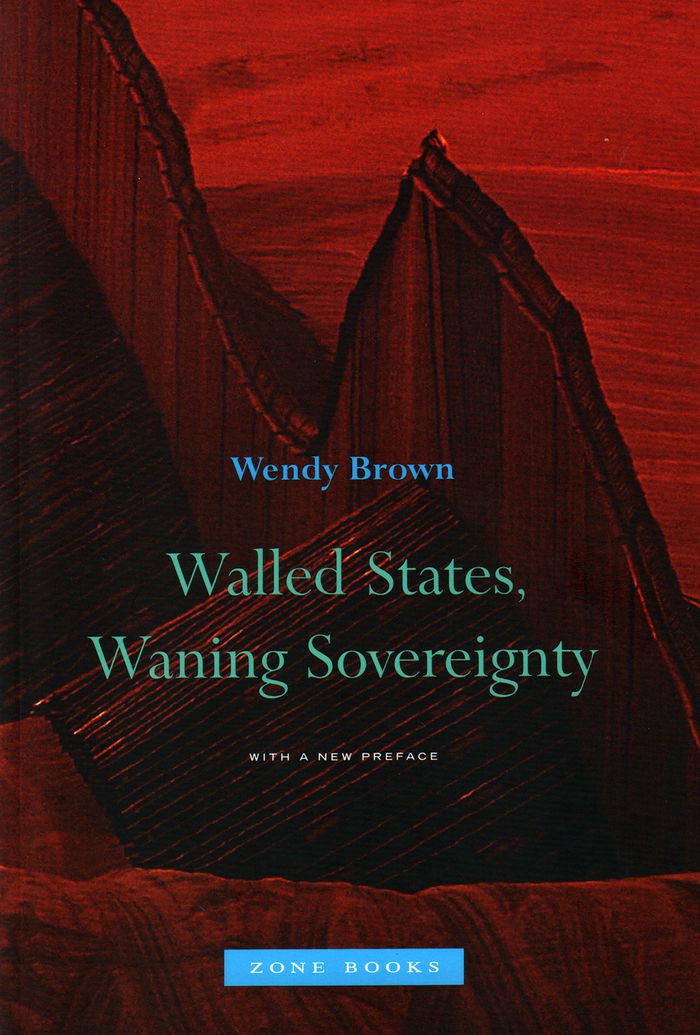
Why do walls marking national boundaries proliferate amid widespread proclamations of global connectedness and despite anticipation of a world without borders? Why are barricades built of concrete, steel, and barbed wire when threats to the nation today are so often miniaturized, vaporous, clandestine, dispersed, or networked? In "Walled states, waning sovereignty", Wendy(...)
Titre:
Walled states, waning sovereignty, New edition
Actions:
Prix:
$22.95
(disponible sur commande)
Résumé:
Why do walls marking national boundaries proliferate amid widespread proclamations of global connectedness and despite anticipation of a world without borders? Why are barricades built of concrete, steel, and barbed wire when threats to the nation today are so often miniaturized, vaporous, clandestine, dispersed, or networked? In "Walled states, waning sovereignty", Wendy Brown considers the recent spate of wall building in contrast to the erosion of nation-state sovereignty. Drawing on classical and contemporary political theories of state sovereignty in order to understand how state power and national identity persist amid its decline, Brown considers both the need of the state for legitimacy and the popular desires that incite the contemporary building of walls. The new walls—dividing Texas from Mexico, Israel from Palestine, South Africa from Zimbabwe—consecrate the broken boundaries they would seem to contest and signify the ungovernability of a range of forces unleashed by globalization. Yet these same walls often amount to little more than theatrical props, frequently breached, and blur the distinction between law and lawlessness that they are intended to represent. But if today’s walls fail to resolve the conflicts between globalization and national identity, they nonetheless project a stark image of sovereign power. Walls, Brown argues, address human desires for containment and protection in a world increasingly without these provisions. Walls respond to the wish for horizons even as horizons are vanquished.
Classification:
livres
livres
Publication:
avril 2017
avril 2017
Sujet:
Théorie de l’architecture
Théorie de l’architecture
Classification:
livres
livres

Titre:
The fabric of interface
The fabric of interface
Actions:
Prix:
$38.95
(disponible sur commande)
Résumé:
In The Fabric of Interface, Stephen Monteiro argues that our everyday digital practice has taken on traits common to textile and needlecraft culture. Our smart phones and tablets use some of the same skills—manual dexterity, pattern making, and linking—required by the handloom, the needlepoint hoop, and the lap-sized quilting frame. Monteiro goes on to argue that the(...)
Titre:
The fabric of interface
Actions:
Prix:
$38.95
(disponible sur commande)
Résumé:
In The Fabric of Interface, Stephen Monteiro argues that our everyday digital practice has taken on traits common to textile and needlecraft culture. Our smart phones and tablets use some of the same skills—manual dexterity, pattern making, and linking—required by the handloom, the needlepoint hoop, and the lap-sized quilting frame. Monteiro goes on to argue that the capacity of textile metaphors to describe computing (weaving code, threaded discussions, zipped files, software patches, switch fabrics) represents deeper connections between digital communication and what has been called “homecraft” or “women’s work.”
Classification:
livres
livres
Publication:
novembre 2017
novembre 2017
Sujet:
Architecture numérique
Architecture numérique
Classification:
livres
livres
Titre:
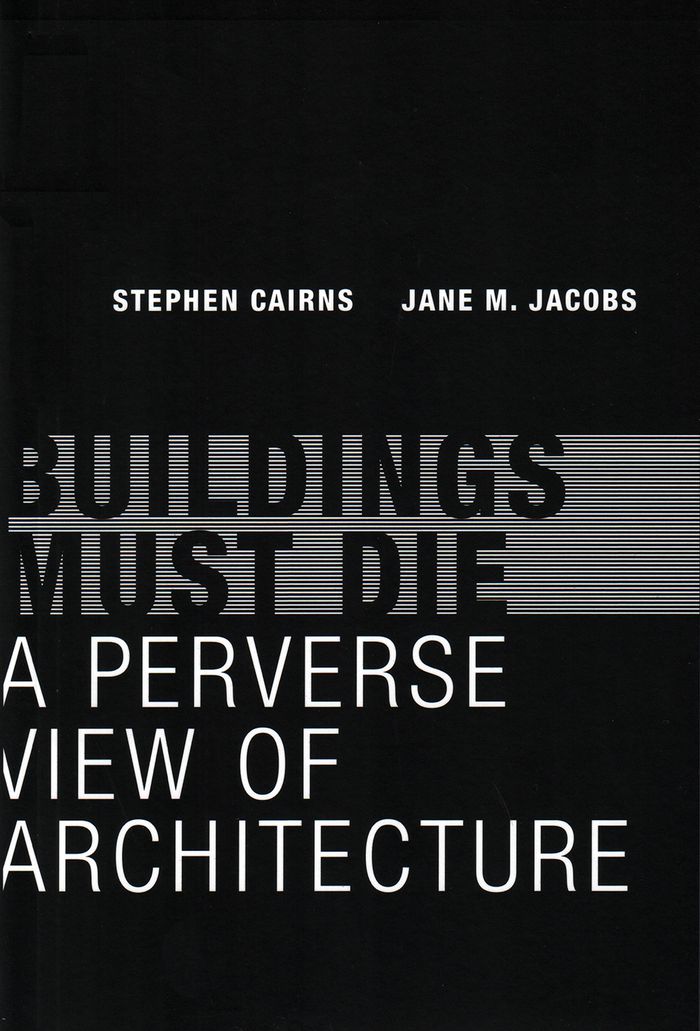
Buildings must die
Buildings must die
Actions:
Prix:
$38.95
(disponible sur commande)
Résumé:
Buildings, although inanimate, are often assumed to have “life.” And the architect, through the act of design, is assumed to be their conceiver and creator. But what of the “death” of buildings? What of the decay, deterioration, and destruction to which they are inevitably subject? And what might such endings mean for architecture’s sense of itself? In Buildings Must Die,(...)
Titre:
Buildings must die
Actions:
Prix:
$38.95
(disponible sur commande)
Résumé:
Buildings, although inanimate, are often assumed to have “life.” And the architect, through the act of design, is assumed to be their conceiver and creator. But what of the “death” of buildings? What of the decay, deterioration, and destruction to which they are inevitably subject? And what might such endings mean for architecture’s sense of itself? In Buildings Must Die, Stephen Cairns and Jane Jacobs look awry at core architectural concerns. They examine spalling concrete and creeping rust, contemplate ruins old and new, and pick through the rubble of earthquake-shattered churches, imploded housing projects, and demolished Brutalist office buildings. Their investigation of the death of buildings reorders architectural notions of creativity, reshapes architecture’s preoccupation with good form, loosens its vanities of durability, and expands its sense of value. It does so not to kill off architecture as we know it, but to rethink its agency and its capacity to make worlds differently. Cairns and Jacobs offer an original contemplation of architecture that draws on theories of waste and value. Their richly illustrated case studies of building “deaths” include the planned and the unintended, the lamented and the celebrated. They take us from Moline to Christchurch, from London to Bangkok, from Tokyo to Paris. And they feature the work of such architects as Eero Saarinen, Carlo Scarpa, Cedric Price, Arata Isozaki, Rem Koolhaas and François Roche.
Classification:
livres
livres
Publication:
août 2017
août 2017
Sujet:
Théorie de l’architecture
Théorie de l’architecture
Classification:
livres
livres

Actions:
Prix:
$52.50
(disponible sur commande)
Résumé:
Built Unbuilt revisits 16 years of Julien De Smedt’s work from the inception of the architectural practice PLOT with Bjarke Ingels in 2001 to the work of JDSA and the founding of the design studio Makers With Agendas with William Ravn in 2013. Julien De Smedt is an architect and engineer who began his career by working at Rem Koolhaas Architectural Bureau. Later he(...)
Titre:
Julian de Smedt: Built unbuilt
Actions:
Prix:
$52.50
(disponible sur commande)
Résumé:
Built Unbuilt revisits 16 years of Julien De Smedt’s work from the inception of the architectural practice PLOT with Bjarke Ingels in 2001 to the work of JDSA and the founding of the design studio Makers With Agendas with William Ravn in 2013. Julien De Smedt is an architect and engineer who began his career by working at Rem Koolhaas Architectural Bureau. Later he co-founded PLOT in 2001, before going on to found his own architecture firm in 2006. Julien De Smedt Architects is a multidisciplinary firm with offices in Brussels, Copenhagen and Shanghai. The team works on everything from large-scale planning to furniture following processes that involve intense research and analysis of practical and theoretical matters into the driving forces of design.
Classification:
livres
livres
Publication:
septembre 2017
septembre 2017
Sujet:
Architecture, monographies
Architecture, monographies
Classification:
livres
livres
Actions:
Prix:
$58.95
(disponible sur commande)
Résumé:
"Recycled theory" is a multidisciplinary dictionary made of entries in form of texts, drawings and quotes, which explore the concept of “recycling” in design cultures and in the theories that nurture them. Usually we recycle things, objects, spaces but more often we return on principles and approaches to rearrange them, put them back into circulation, and override them.(...)
Titre:
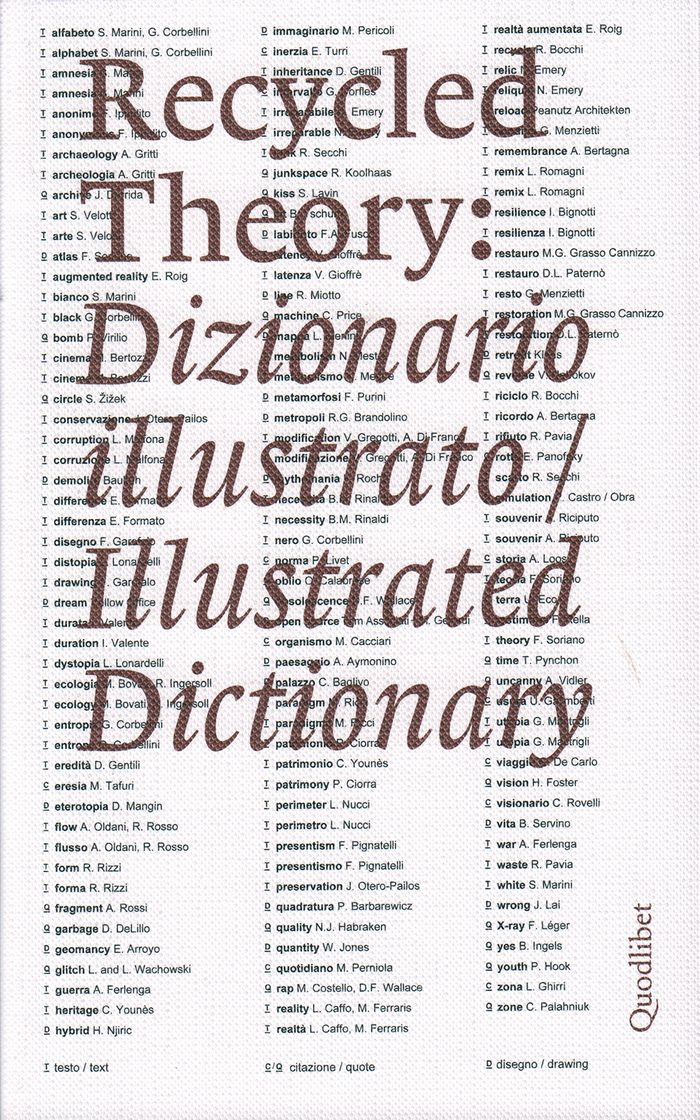
Recycled theory: illustrated dictionary
Actions:
Prix:
$58.95
(disponible sur commande)
Résumé:
"Recycled theory" is a multidisciplinary dictionary made of entries in form of texts, drawings and quotes, which explore the concept of “recycling” in design cultures and in the theories that nurture them. Usually we recycle things, objects, spaces but more often we return on principles and approaches to rearrange them, put them back into circulation, and override them. The practice of recycling is therefore placed in an area of negotiation between memory and amnesia, it brings out the unexpected self-regeneration potential of what exists, our ability to preserve and reinvent it, even through its partial breakdown. The words here collected (from “amnesia” to “zone”) identify materials, procedures, ambiguities, deviations, and potential nexus of recycling, recording terms that tell the different processes of production and sense of city and landscape after recent socio-economic upheavals and the widening of preservation as the prevalent scenario for the project. Recycled Theory comes out of the collaboration of eleven Italian universities engaged in the research “Re-cycle Italy: New Life Cycles for Architecture and Infrastructure of City and Landscape.”
Classification:
livres
livres
Publication:
novembre 2016
novembre 2016
Sujet:
Architecture écologique
Architecture écologique
Classification:
livres
livres
Prix:
$34.95
(disponible en magasin)
Résumé:
National historic sites commemorate decisive moments in the making of Canada. But seen through an environmental lens, these sites become artifacts of a bigger story: the occupation and transformation of nature into nation. In an age of pressing discussions about environmental sustainability, there is a growing need to know more about the history of our relationship with(...)
Titre:
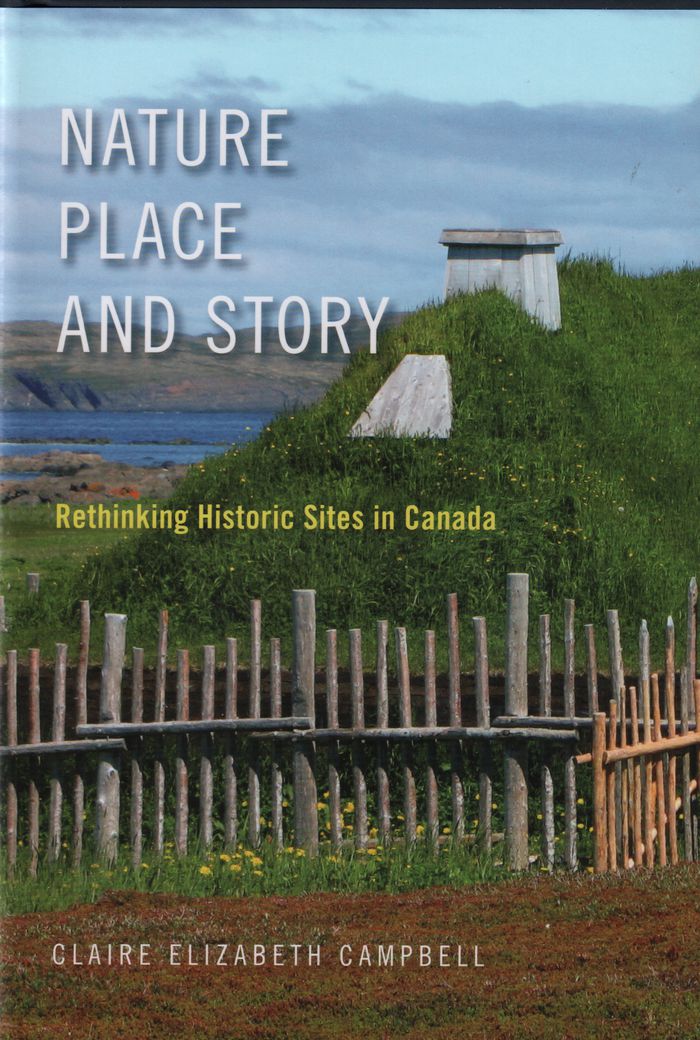
Nature, place, and story: rethinking historic sites in Canada
Actions:
Prix:
$34.95
(disponible en magasin)
Résumé:
National historic sites commemorate decisive moments in the making of Canada. But seen through an environmental lens, these sites become artifacts of a bigger story: the occupation and transformation of nature into nation. In an age of pressing discussions about environmental sustainability, there is a growing need to know more about the history of our relationship with the natural world and what lessons these places of public history, regional identity, and national narrative can teach us. "Nature, place, and story" provides new interpretations for five of Canada’s largest and most iconic historic sites (two of which are UNESCO World Heritage Sites): L’Anse aux Meadows, Newfoundland; Grand Pré, Nova Scotia; Fort William, Ontario; the Forks of the Red River, Manitoba; and the Bar U Ranch, Alberta. At each location, Claire Campbell rewrites public history as environmental history, revealing the country’s debt to the power and fragility of the natural world, and the relevance of the past to understanding climate change, agricultural sustainability, wilderness protection, urban reclamation, and fossil fuel extraction. From the medieval Atlantic to modern ranchlands, environmental history speaks directly to contemporary questions about the health of Canada’s habitat. Bringing together public and environmental history in an entirely new way, "Nature, place, and story" is a lively and ambitious call for a fresh perspective on natural heritage.
Classification:
livres
livres
Publication:
août 2017
août 2017
Sujet:
Architecture du Canada
Architecture du Canada
Classification:
livres
livres
Titre:
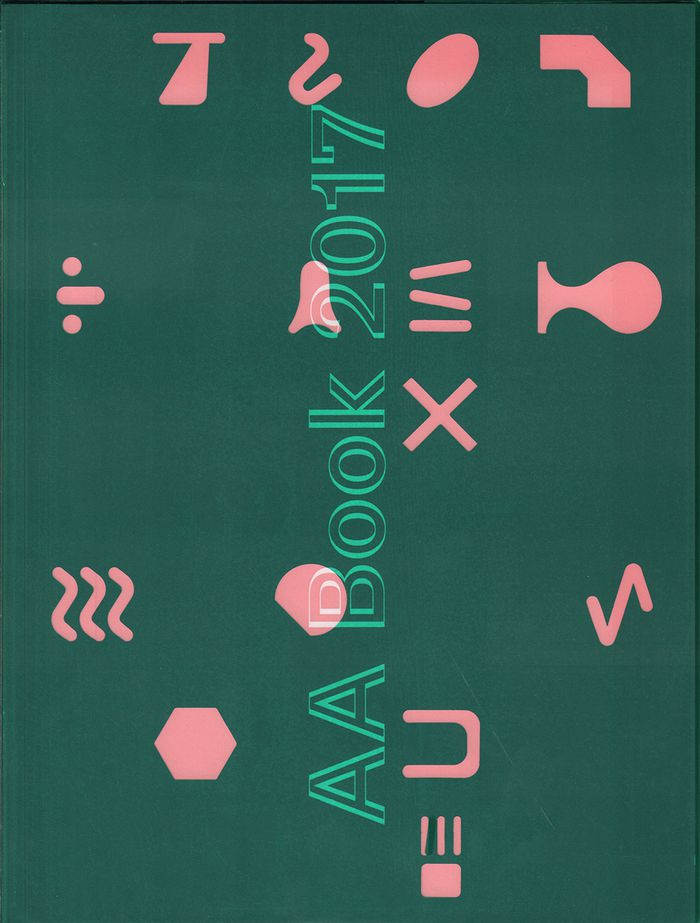
AA book project review 2017
AA book project review 2017
Actions:
Prix:
$45.95
(disponible sur commande)
Résumé:
"Projects review" offers an overview of the AA’s 2016/17 academic year. Accompanying the school’s end-of-year show, the book features hundreds of drawings, models, installations, photographs and other materials documenting the world’s most international and experimental school of architecture.
Titre:
AA book project review 2017
Actions:
Prix:
$45.95
(disponible sur commande)
Résumé:
"Projects review" offers an overview of the AA’s 2016/17 academic year. Accompanying the school’s end-of-year show, the book features hundreds of drawings, models, installations, photographs and other materials documenting the world’s most international and experimental school of architecture.
Classification:
livres
livres
Publication:
août 2017
août 2017
Sujet:
Architecture contemporaine
Architecture contemporaine
Classification:
livres
livres

Prix:
$56.00
(disponible en magasin)
Résumé:
'Go field and towers' is the result of the conversations that occurred in studios taught by Guillaume Othenin-Girard and Nigel Peake between 2012-2014 as part of the first-year course in architectural design directed by the Atelier de la Conception de l’Espace (ALICE) at the Swiss Federal Institute of Technology in Lausanne (EPFL). By the nature of tutorials, their(...)
Sujet:
Théorie de l’architecture
Théorie de l’architecture
Publication:
août 2017
août 2017
Titre:
Go field and towers: Guillaume Othenin-Girard, Nigel Peake
Actions:
Prix:
$56.00
(disponible en magasin)
Résumé:
'Go field and towers' is the result of the conversations that occurred in studios taught by Guillaume Othenin-Girard and Nigel Peake between 2012-2014 as part of the first-year course in architectural design directed by the Atelier de la Conception de l’Espace (ALICE) at the Swiss Federal Institute of Technology in Lausanne (EPFL). By the nature of tutorials, their conversation would often stray to other fields – academic and artistic and in-between. As they worked on this book, they invited guests to make contributions, some of which appear as short essays, others as notes from a conversation.
Classification:
livres
livres
Publication:
août 2017
août 2017
Sujet:
Théorie de l’architecture
Théorie de l’architecture
Classification:
livres
livres

Titre:
Chaos sublime
Chaos sublime
Actions:
Prix:
$15.95
(disponible sur commande)
Résumé:
« Il faut accepter d’emblée la logique du désordre urbain. D’où le chaos. Un chaos sublime ». Ce livre est l’histoire d’une amitié, puisqu’il est issu de vingt ans de conversations avec Paolo Conti, écrivain et journaliste italien. Il est né aussi du besoin de comprendre les processus de création contemporains, en tenant compte des passions politiques et sociales de notre(...)
Titre:
Chaos sublime
Actions:
Prix:
$15.95
(disponible sur commande)
Résumé:
« Il faut accepter d’emblée la logique du désordre urbain. D’où le chaos. Un chaos sublime ». Ce livre est l’histoire d’une amitié, puisqu’il est issu de vingt ans de conversations avec Paolo Conti, écrivain et journaliste italien. Il est né aussi du besoin de comprendre les processus de création contemporains, en tenant compte des passions politiques et sociales de notre temps qui ont bouleversé et bouleverseront notre façon d’habiter la ville. C’est à travers cette vision de l’architecture que sont abordés tous les grands thèmes contemporains des croissances des villes, des banlieues, des œuvres d’art comme des faillites de l’architecture.
Classification:
livres
livres
Publication:
août 2017
août 2017
Sujet:
Théorie de l’architecture
Théorie de l’architecture
Classification:
livres
livres
Titre:
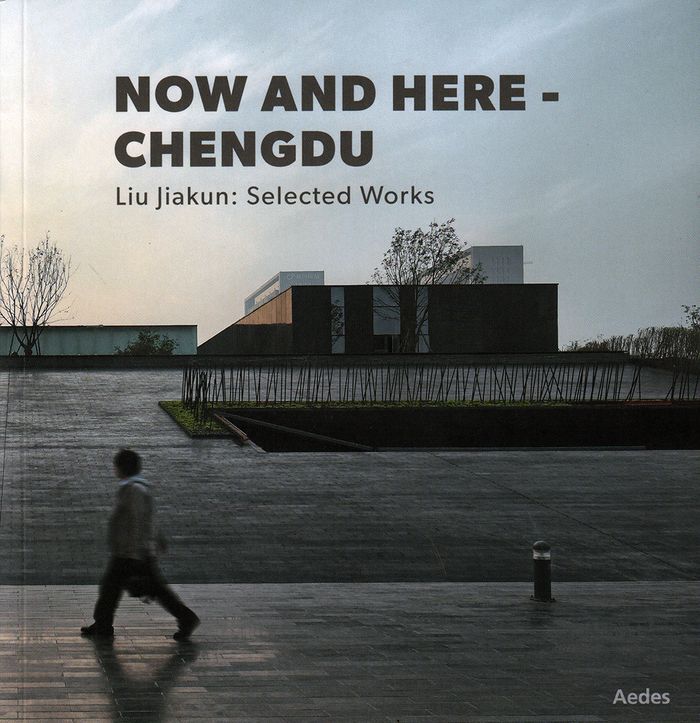
Now and here: Chengdu
Now and here: Chengdu
Actions:
Prix:
$23.50
(disponible sur commande)
Résumé:
With a focus on social reality and a respect for local context and vernacular craftsmanship, Liu Jiakun's work shows a rare attempt to translate and transfer traditional Chinese cultural ethos into contemporary architectural language, and represents a fine quality of intertexture between individual and collective memories. Many of these projects throw light on the(...)
Sujet:
Architecture, monographies
Architecture, monographies
Publication:
août 2017
août 2017
Titre:
Now and here: Chengdu
Actions:
Prix:
$23.50
(disponible sur commande)
Résumé:
With a focus on social reality and a respect for local context and vernacular craftsmanship, Liu Jiakun's work shows a rare attempt to translate and transfer traditional Chinese cultural ethos into contemporary architectural language, and represents a fine quality of intertexture between individual and collective memories. Many of these projects throw light on the reciprocal relation between Chinese people's public life and urban cultural space. Aedes exclusively presents mainly local projects in Chengdu including West Village Yard. The exhibition unfolds urban evolutionary history and the genius loci of the city, as well as demonstrates Chengdu's humanistic standpoint in practicing a new model of urbanization. It aims to open a new chapter of urban development dialogue between Germany and China.
Classification:
livres
livres
Publication:
août 2017
août 2017
Sujet:
Architecture, monographies
Architecture, monographies


