


951 Résultats
Classification:
livres
livres

Actions:
Prix:
$37.95
(disponible sur commande)
Résumé:
In "The politics of collecting," Eunsong Kim traces how racial capitalism and colonialism situated the rise of US museum collections and conceptual art forms. Investigating historical legal and property claims, she argues that regimes of expropriation--rather than merit or good taste--are responsible for popular ideas of formal innovation and artistic genius. In doing so,(...)
$37.95
(disponible sur commande)
Résumé:
In "The politics of collecting," Eunsong Kim traces how racial capitalism and colonialism situated the rise of US museum collections and conceptual art forms. Investigating historical legal and property claims, she argues that regimes of expropriation--rather than merit or good taste--are responsible for popular ideas of formal innovation and artistic genius. In doing so,(...)
Titre:
The politics of collecting: Race and the aestheticization of property
Actions:
Prix:
$37.95
(disponible sur commande)
Résumé:
In "The politics of collecting," Eunsong Kim traces how racial capitalism and colonialism situated the rise of US museum collections and conceptual art forms. Investigating historical legal and property claims, she argues that regimes of expropriation--rather than merit or good taste--are responsible for popular ideas of formal innovation and artistic genius. In doing so, she details how Marcel Duchamp's canonization has more to do with his patron's donations to museums than it does the quality of Duchamp's work, and she uncovers the racialized and financialized logic behind the Archive of New Poetry's collecting practices. Ranging from the conception of philanthropy devised by the robber barons of the late nineteenth century to ongoing digitization projects, Kim provides a new history of contemporary art that accounts for the complicated entanglement of race, capital, and labor behind storied art institutions and artists. Drawing on history, theory, and economics, Kim challenges received notions of artistic success and talent and calls for a new vision of art beyond the cultural institution.
The politics of collecting: Race and the aestheticization of property
Actions:
Prix:
$37.95
(disponible sur commande)
Résumé:
In "The politics of collecting," Eunsong Kim traces how racial capitalism and colonialism situated the rise of US museum collections and conceptual art forms. Investigating historical legal and property claims, she argues that regimes of expropriation--rather than merit or good taste--are responsible for popular ideas of formal innovation and artistic genius. In doing so, she details how Marcel Duchamp's canonization has more to do with his patron's donations to museums than it does the quality of Duchamp's work, and she uncovers the racialized and financialized logic behind the Archive of New Poetry's collecting practices. Ranging from the conception of philanthropy devised by the robber barons of the late nineteenth century to ongoing digitization projects, Kim provides a new history of contemporary art that accounts for the complicated entanglement of race, capital, and labor behind storied art institutions and artists. Drawing on history, theory, and economics, Kim challenges received notions of artistic success and talent and calls for a new vision of art beyond the cultural institution.
Classification:
livres
livres
Publication:
août 2024
août 2024
Classification:
livres
livres

Prix:
$32.95
(disponible en magasin)
Résumé:
There have been many things written about Canada’s violent siege of Kanehsatà:ke and Kahnawà:ke in the summer of 1990, but "When the pine needles fall: Indigenous acts of resistance" is the first book from the perspective of Katsi’tsakwas Ellen Gabriel, who was the Kanien’kehá:ka (Mohawk) spokesperson during the siege. "When the pine needles fall," written in a(...)
$32.95
(disponible en magasin)
Résumé:
There have been many things written about Canada’s violent siege of Kanehsatà:ke and Kahnawà:ke in the summer of 1990, but "When the pine needles fall: Indigenous acts of resistance" is the first book from the perspective of Katsi’tsakwas Ellen Gabriel, who was the Kanien’kehá:ka (Mohawk) spokesperson during the siege. "When the pine needles fall," written in a(...)
Titre:
When the pine needles fall: Indigenous acts of resistance
Actions:
Prix:
$32.95
(disponible en magasin)
Résumé:
There have been many things written about Canada’s violent siege of Kanehsatà:ke and Kahnawà:ke in the summer of 1990, but "When the pine needles fall: Indigenous acts of resistance" is the first book from the perspective of Katsi’tsakwas Ellen Gabriel, who was the Kanien’kehá:ka (Mohawk) spokesperson during the siege. "When the pine needles fall," written in a conversational style by Gabriel with historian Sean Carleton, offers an intimate look at Gabriel’s life leading up to the 1990 siege, her experiences as spokesperson for her community, and her work since then as an Indigenous land defender, human rights activist, and feminist leader. More than just the memoir of an extraordinary individual, "When the pine needles fall" offers insight into Indigenous language, history, and philosophy, reflections on our relationship with the land, and calls to action against both colonialism and capitalism as we face the climate crisis. Gabriel’s hopes for a decolonial future make clear why protecting Indigenous homelands is vital not only for the survival of Indigenous peoples, but for all who live on this planet.
When the pine needles fall: Indigenous acts of resistance
Actions:
Prix:
$32.95
(disponible en magasin)
Résumé:
There have been many things written about Canada’s violent siege of Kanehsatà:ke and Kahnawà:ke in the summer of 1990, but "When the pine needles fall: Indigenous acts of resistance" is the first book from the perspective of Katsi’tsakwas Ellen Gabriel, who was the Kanien’kehá:ka (Mohawk) spokesperson during the siege. "When the pine needles fall," written in a conversational style by Gabriel with historian Sean Carleton, offers an intimate look at Gabriel’s life leading up to the 1990 siege, her experiences as spokesperson for her community, and her work since then as an Indigenous land defender, human rights activist, and feminist leader. More than just the memoir of an extraordinary individual, "When the pine needles fall" offers insight into Indigenous language, history, and philosophy, reflections on our relationship with the land, and calls to action against both colonialism and capitalism as we face the climate crisis. Gabriel’s hopes for a decolonial future make clear why protecting Indigenous homelands is vital not only for the survival of Indigenous peoples, but for all who live on this planet.
Classification:
livres
livres
Publication:
septembre 2024
septembre 2024
Sujet:
Autochtone
Autochtone
Classification:
livres
livres

Prix:
$34.00
(disponible sur commande)
Résumé:
Since September 11, the war on terrorism, and the war in Iraq, it has been almost impossible to dissociate architecture from its social context. Add to this the massive influence of capitalism on architecture, disturbing demographic developments, and associated political, social, and ecological catastrophes, and the result is a robotic snapshot of a society dominated by(...)
$34.00
(disponible sur commande)
Résumé:
Since September 11, the war on terrorism, and the war in Iraq, it has been almost impossible to dissociate architecture from its social context. Add to this the massive influence of capitalism on architecture, disturbing demographic developments, and associated political, social, and ecological catastrophes, and the result is a robotic snapshot of a society dominated by(...)
Titre:
The capsular civilization : on the city in the age of fear
Actions:
Prix:
$34.00
(disponible sur commande)
Résumé:
Since September 11, the war on terrorism, and the war in Iraq, it has been almost impossible to dissociate architecture from its social context. Add to this the massive influence of capitalism on architecture, disturbing demographic developments, and associated political, social, and ecological catastrophes, and the result is a robotic snapshot of a society dominated by fear, exclusion, and simulation. Lieven De Cauter, a leading theoretician on the subject of capsularisation, has worked over the past six years on the essays and articles contained in this book, and has documented and analyzed our changing societies before and after 9/11. For the first time, the link between the global economy, demographic changes, world terror, and the role played by the United States under the Bush admisinstration, are examined in detail in a single publication. De Cauter sketches a realistic and alarming account of the new world order that is an everyday concern for the architects and planners of the contemporary city as well as for its inhabitants and users.
The capsular civilization : on the city in the age of fear
Actions:
Prix:
$34.00
(disponible sur commande)
Résumé:
Since September 11, the war on terrorism, and the war in Iraq, it has been almost impossible to dissociate architecture from its social context. Add to this the massive influence of capitalism on architecture, disturbing demographic developments, and associated political, social, and ecological catastrophes, and the result is a robotic snapshot of a society dominated by fear, exclusion, and simulation. Lieven De Cauter, a leading theoretician on the subject of capsularisation, has worked over the past six years on the essays and articles contained in this book, and has documented and analyzed our changing societies before and after 9/11. For the first time, the link between the global economy, demographic changes, world terror, and the role played by the United States under the Bush admisinstration, are examined in detail in a single publication. De Cauter sketches a realistic and alarming account of the new world order that is an everyday concern for the architects and planners of the contemporary city as well as for its inhabitants and users.
Classification:
livres
livres
Publication:
janvier 1900, Rotterdam
janvier 1900, Rotterdam
Sujet:
Théorie de l’urbanisme
Théorie de l’urbanisme
Classification:
livres
livres

Actions:
Prix:
$225.95
(disponible sur commande)
Résumé:
The current phase of capitalist development manifests itself through a very diverse range of spatial byproducts: data centers, warehouses, container terminals, logistics parks, and many others. These architectural episodes express specific power relations, exacerbate issues of labor, and generate dramatic processes of subjectivity. Most importantly, these architectures,(...)
$225.95
(disponible sur commande)
Résumé:
The current phase of capitalist development manifests itself through a very diverse range of spatial byproducts: data centers, warehouses, container terminals, logistics parks, and many others. These architectural episodes express specific power relations, exacerbate issues of labor, and generate dramatic processes of subjectivity. Most importantly, these architectures,(...)
Titre:
Exteriorless architecture: Form, space, and urbanities of neoliberalism
Actions:
Prix:
$225.95
(disponible sur commande)
Résumé:
The current phase of capitalist development manifests itself through a very diverse range of spatial byproducts: data centers, warehouses, container terminals, logistics parks, and many others. These architectural episodes express specific power relations, exacerbate issues of labor, and generate dramatic processes of subjectivity. Most importantly, these architectures, despite their formal and typological heterogeneity, belong to a common paradigm: the exteriorless. How can an architecture of the exteriorless be defined? How does it differentiate from examples and manifestations of the past? How do notions of legibility, form versus function, typological articulation come into play? In situating the spatialities of contemporary capitalism within the larger debate on Anthropocene, Post-Anthropocene, and Capitalocene, the book attempts to answer those questions by delineating three main characteristics for an architecture of the exteriorless: its physical and symbolic role as interface; its ambiguous condition of being at the same time local and global, isolated and connected, compressed and expanded; and, lastly, its contribution to new forms of urbanity in absence of the traditional city.
Exteriorless architecture: Form, space, and urbanities of neoliberalism
Actions:
Prix:
$225.95
(disponible sur commande)
Résumé:
The current phase of capitalist development manifests itself through a very diverse range of spatial byproducts: data centers, warehouses, container terminals, logistics parks, and many others. These architectural episodes express specific power relations, exacerbate issues of labor, and generate dramatic processes of subjectivity. Most importantly, these architectures, despite their formal and typological heterogeneity, belong to a common paradigm: the exteriorless. How can an architecture of the exteriorless be defined? How does it differentiate from examples and manifestations of the past? How do notions of legibility, form versus function, typological articulation come into play? In situating the spatialities of contemporary capitalism within the larger debate on Anthropocene, Post-Anthropocene, and Capitalocene, the book attempts to answer those questions by delineating three main characteristics for an architecture of the exteriorless: its physical and symbolic role as interface; its ambiguous condition of being at the same time local and global, isolated and connected, compressed and expanded; and, lastly, its contribution to new forms of urbanity in absence of the traditional city.
Classification:
livres
livres
Publication:
juin 2023
juin 2023
Sujet:
Théorie de l’architecture
Théorie de l’architecture
Classification:
livres
livres
Titre:
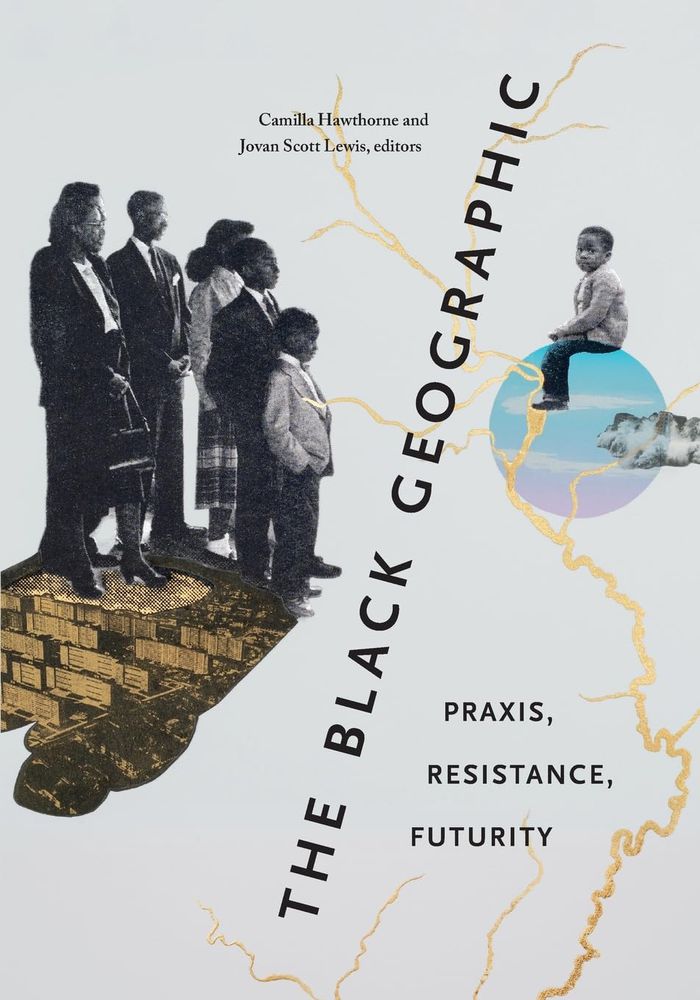
The Black geographic
The Black geographic
Actions:
Prix:
$38.95
(disponible sur commande)
Résumé:
The contributors to ''The Black geographic'' explore the theoretical innovations of Black Geographies scholarship and how it approaches Blackness as historically and spatially situated. In studies that span from Oakland to the Alabama Black Belt to Senegal to Brazil, the contributors draw on ethnography, archival records, digital humanities, literary criticism, and art to(...)
$38.95
(disponible sur commande)
Résumé:
The contributors to ''The Black geographic'' explore the theoretical innovations of Black Geographies scholarship and how it approaches Blackness as historically and spatially situated. In studies that span from Oakland to the Alabama Black Belt to Senegal to Brazil, the contributors draw on ethnography, archival records, digital humanities, literary criticism, and art to(...)
Titre:
The Black geographic
Actions:
Prix:
$38.95
(disponible sur commande)
Résumé:
The contributors to ''The Black geographic'' explore the theoretical innovations of Black Geographies scholarship and how it approaches Blackness as historically and spatially situated. In studies that span from Oakland to the Alabama Black Belt to Senegal to Brazil, the contributors draw on ethnography, archival records, digital humanities, literary criticism, and art to show how understanding the spatial dimensions of Black life contributes to a broader understanding of race and space. They examine key sites of inquiry: Black spatial imaginaries, resistance to racial violence, the geographies of racial capitalism, and struggles over urban space. Throughout, the contributors demonstrate that Blackness is itself a situating and place-making force, even as it is shaped by spatial processes and diasporic routes. Whether discussing eighteenth- and nineteenth-century abolitionist print records or migration and surveillance in Niger, this volume demonstrates that Black Geographies is a mode of analyzing Blackness that fundamentally challenges the very foundations of the field of geography and its historical entwinement with colonialism, enslavement, and imperialism. In short, it marks a new step in the evolution of the field.
The Black geographic
Actions:
Prix:
$38.95
(disponible sur commande)
Résumé:
The contributors to ''The Black geographic'' explore the theoretical innovations of Black Geographies scholarship and how it approaches Blackness as historically and spatially situated. In studies that span from Oakland to the Alabama Black Belt to Senegal to Brazil, the contributors draw on ethnography, archival records, digital humanities, literary criticism, and art to show how understanding the spatial dimensions of Black life contributes to a broader understanding of race and space. They examine key sites of inquiry: Black spatial imaginaries, resistance to racial violence, the geographies of racial capitalism, and struggles over urban space. Throughout, the contributors demonstrate that Blackness is itself a situating and place-making force, even as it is shaped by spatial processes and diasporic routes. Whether discussing eighteenth- and nineteenth-century abolitionist print records or migration and surveillance in Niger, this volume demonstrates that Black Geographies is a mode of analyzing Blackness that fundamentally challenges the very foundations of the field of geography and its historical entwinement with colonialism, enslavement, and imperialism. In short, it marks a new step in the evolution of the field.
Classification:
livres
livres
Publication:
octobre 2023
octobre 2023
Sujet:
Social
Social
Classification:
livres
livres

Actions:
Prix:
$39.99
(disponible en magasin)
Résumé:
In 1664, England decided to invade the Dutch-controlled city of New Amsterdam on Manhattan Island. Charles II and his brother, the Duke of York, had dreams of empire, and their archrivals, the Dutch, were in the way. But Richard Nicolls, the military officer who led the English flotilla bent on destruction, changed his strategy once he encountered Peter Stuyvesant, New(...)
$39.99
(disponible en magasin)
Résumé:
In 1664, England decided to invade the Dutch-controlled city of New Amsterdam on Manhattan Island. Charles II and his brother, the Duke of York, had dreams of empire, and their archrivals, the Dutch, were in the way. But Richard Nicolls, the military officer who led the English flotilla bent on destruction, changed his strategy once he encountered Peter Stuyvesant, New(...)
Titre:
Taking Manhattan: The extraordinary events that created New York and shaped America
Actions:
Prix:
$39.99
(disponible en magasin)
Résumé:
In 1664, England decided to invade the Dutch-controlled city of New Amsterdam on Manhattan Island. Charles II and his brother, the Duke of York, had dreams of empire, and their archrivals, the Dutch, were in the way. But Richard Nicolls, the military officer who led the English flotilla bent on destruction, changed his strategy once he encountered Peter Stuyvesant, New Netherland’s canny director general. Bristling with vibrant characters, "Taking Manhattan" reveals the founding of New York to be an invention, the result of creative negotiations that would blend the multiethnic, capitalistic society of New Amsterdam with the power of the rising English empire. But the birth of what might be termed the first modern city is also a story of the brutal dispossession of Native Americans and of the roots of American slavery. The book draws from newly translated materials and illuminates neglected histories—of religious refugees, Indigenous tribes, and free and enslaved Africans. "Taking Manhattan" tells the riveting story of the birth of New York City as a center of capitalism and pluralism, a foundation from which America would rise.
Taking Manhattan: The extraordinary events that created New York and shaped America
Actions:
Prix:
$39.99
(disponible en magasin)
Résumé:
In 1664, England decided to invade the Dutch-controlled city of New Amsterdam on Manhattan Island. Charles II and his brother, the Duke of York, had dreams of empire, and their archrivals, the Dutch, were in the way. But Richard Nicolls, the military officer who led the English flotilla bent on destruction, changed his strategy once he encountered Peter Stuyvesant, New Netherland’s canny director general. Bristling with vibrant characters, "Taking Manhattan" reveals the founding of New York to be an invention, the result of creative negotiations that would blend the multiethnic, capitalistic society of New Amsterdam with the power of the rising English empire. But the birth of what might be termed the first modern city is also a story of the brutal dispossession of Native Americans and of the roots of American slavery. The book draws from newly translated materials and illuminates neglected histories—of religious refugees, Indigenous tribes, and free and enslaved Africans. "Taking Manhattan" tells the riveting story of the birth of New York City as a center of capitalism and pluralism, a foundation from which America would rise.
Classification:
livres
livres
Publication:
mars 2025
mars 2025
Classification:
livres
livres

Titre:
The care economy
The care economy
Actions:
Prix:
$36.95
(disponible en magasin)
Résumé:
Care is the foundation of organic life. But its fate in the economy is precarious and uncertain. The labour of care is arduous and underpaid. Yet without it health and vitality are impossible. Care itself ends up leading a curious dual life. In our hearts it’s honoured as an irreducible good. But in the market it’s treated as a second class citizen – barely recognised in(...)
$36.95
(disponible en magasin)
Résumé:
Care is the foundation of organic life. But its fate in the economy is precarious and uncertain. The labour of care is arduous and underpaid. Yet without it health and vitality are impossible. Care itself ends up leading a curious dual life. In our hearts it’s honoured as an irreducible good. But in the market it’s treated as a second class citizen – barely recognised in(...)
Titre:
The care economy
Actions:
Prix:
$36.95
(disponible en magasin)
Résumé:
Care is the foundation of organic life. But its fate in the economy is precarious and uncertain. The labour of care is arduous and underpaid. Yet without it health and vitality are impossible. Care itself ends up leading a curious dual life. In our hearts it’s honoured as an irreducible good. But in the market it’s treated as a second class citizen – barely recognised in the relentless rush for productivity and wealth. How did we arrive in this dysfunctional place? And what can we do to change things? What would it mean to take health seriously as a societal goal? What would it take to adopt care as an organising principle in the economy? Tim Jackson sets out to tackle these questions in this timely and deeply personal book. His journey travels through the history of medicine, the economics of capitalism and the philosophical underpinnings of health. He unpacks the gender politics of care, revisits the birthplace of a universal dream and confronts the demons that prevent us from realising it.
The care economy
Actions:
Prix:
$36.95
(disponible en magasin)
Résumé:
Care is the foundation of organic life. But its fate in the economy is precarious and uncertain. The labour of care is arduous and underpaid. Yet without it health and vitality are impossible. Care itself ends up leading a curious dual life. In our hearts it’s honoured as an irreducible good. But in the market it’s treated as a second class citizen – barely recognised in the relentless rush for productivity and wealth. How did we arrive in this dysfunctional place? And what can we do to change things? What would it mean to take health seriously as a societal goal? What would it take to adopt care as an organising principle in the economy? Tim Jackson sets out to tackle these questions in this timely and deeply personal book. His journey travels through the history of medicine, the economics of capitalism and the philosophical underpinnings of health. He unpacks the gender politics of care, revisits the birthplace of a universal dream and confronts the demons that prevent us from realising it.
Classification:
livres
livres
Publication:
mai 2025
mai 2025
Sujet:
Social
Social
Classification:
livres
livres

Titre:
Koh-i-noor
Koh-i-noor
Actions:
Prix:
$24.95
(disponible en magasin)
Résumé:
It’s 2011 on Nova Scotia’s South Shore, and Sean Lohan is at a crossroads. The son of Colorado Buddhists, Sean wonders if he should accept his parents’ offer to join their natural cosmetics company or venture out on his own. When an art history professor opens Sean’s eyes to the contradictions of capitalism, he realizes he can’t avoid or transcend his own personal(...)
$24.95
(disponible en magasin)
Résumé:
It’s 2011 on Nova Scotia’s South Shore, and Sean Lohan is at a crossroads. The son of Colorado Buddhists, Sean wonders if he should accept his parents’ offer to join their natural cosmetics company or venture out on his own. When an art history professor opens Sean’s eyes to the contradictions of capitalism, he realizes he can’t avoid or transcend his own personal(...)
Titre:
Koh-i-noor
Actions:
Prix:
$24.95
(disponible en magasin)
Résumé:
It’s 2011 on Nova Scotia’s South Shore, and Sean Lohan is at a crossroads. The son of Colorado Buddhists, Sean wonders if he should accept his parents’ offer to join their natural cosmetics company or venture out on his own. When an art history professor opens Sean’s eyes to the contradictions of capitalism, he realizes he can’t avoid or transcend his own personal dilemmas and instead chooses to face them head-on. Sean’s ultimate decision to found a social enterprise leads him to China. At the same time, his close friend Jerry becomes entangled in a Google-like tech enterprise in California, and his girlfriend Samantha pursues her own high-minded interventions in Cuba—each path leading to increasingly risky and complex outcomes. In the roving literary style of Thomas Pynchon and Mathias Énard, this enthralling debut offers readers a fast-paced adventure through the diverging nuances of economics, spirituality, and extraction. In a period of increasing uncertainty, Koh-i-Noor is a timely doomscroll through four decades of globalization, generational change, and the search for one’s own values.
Koh-i-noor
Actions:
Prix:
$24.95
(disponible en magasin)
Résumé:
It’s 2011 on Nova Scotia’s South Shore, and Sean Lohan is at a crossroads. The son of Colorado Buddhists, Sean wonders if he should accept his parents’ offer to join their natural cosmetics company or venture out on his own. When an art history professor opens Sean’s eyes to the contradictions of capitalism, he realizes he can’t avoid or transcend his own personal dilemmas and instead chooses to face them head-on. Sean’s ultimate decision to found a social enterprise leads him to China. At the same time, his close friend Jerry becomes entangled in a Google-like tech enterprise in California, and his girlfriend Samantha pursues her own high-minded interventions in Cuba—each path leading to increasingly risky and complex outcomes. In the roving literary style of Thomas Pynchon and Mathias Énard, this enthralling debut offers readers a fast-paced adventure through the diverging nuances of economics, spirituality, and extraction. In a period of increasing uncertainty, Koh-i-Noor is a timely doomscroll through four decades of globalization, generational change, and the search for one’s own values.
Classification:
livres
livres
Publication:
mai 2026
mai 2026
Sujet:
Littérature et poésie
Littérature et poésie
Classification:
livres
livres
Prix:
$27.95
(disponible sur commande)
Résumé:
As early as the end of the 19th century, anarchists such as Peter Kropotkin and Élisée Reclus became interested in indigenous peoples, many of whom they saw as societies without a state or private property, living a form of communism. Thinkers such as David Graeber and John Holloway have continued this tradition of engagement with the practices of indigenous societies and(...)
$27.95
(disponible sur commande)
Résumé:
As early as the end of the 19th century, anarchists such as Peter Kropotkin and Élisée Reclus became interested in indigenous peoples, many of whom they saw as societies without a state or private property, living a form of communism. Thinkers such as David Graeber and John Holloway have continued this tradition of engagement with the practices of indigenous societies and(...)
Titre:
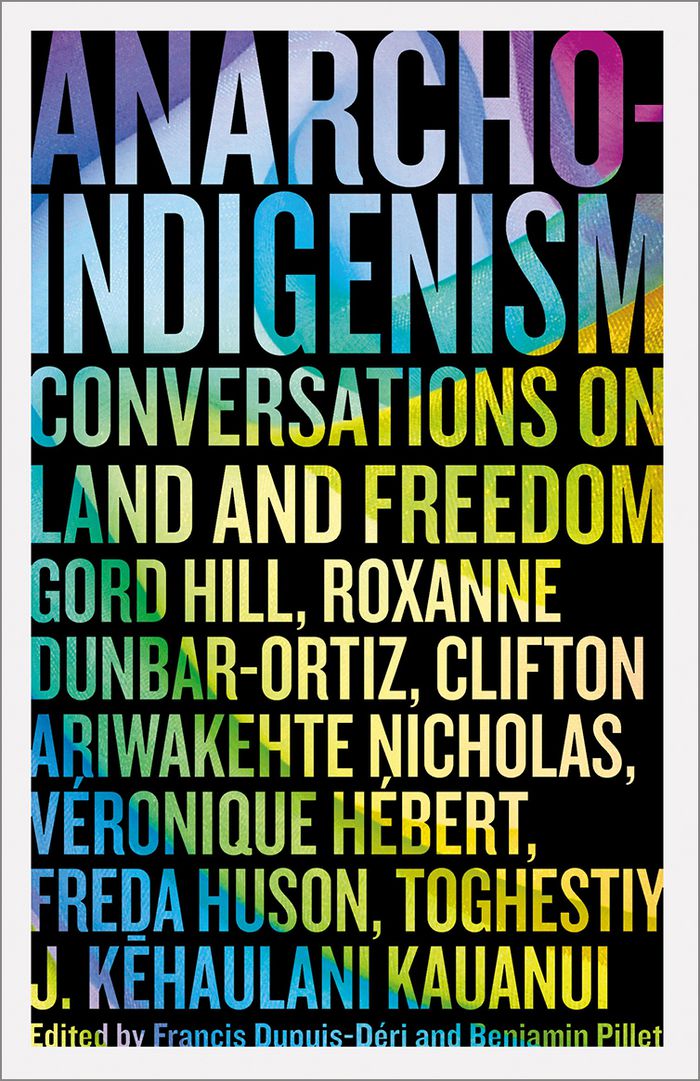
Anarcho-Indigenism: Conversations on land and freedom
Actions:
Prix:
$27.95
(disponible sur commande)
Résumé:
As early as the end of the 19th century, anarchists such as Peter Kropotkin and Élisée Reclus became interested in indigenous peoples, many of whom they saw as societies without a state or private property, living a form of communism. Thinkers such as David Graeber and John Holloway have continued this tradition of engagement with the practices of indigenous societies and their politics. There has also been a long history of (often imperfect) collaboration between anarchists and indigenous activists, over land rights and environmental issues, including recent high-profile anti-pipeline campaigns. ''Anarcho-Indigenism'' is a dialogue between anarchism and indigenous politics, featuring interviews from indigenous contributors Véronique Hébert, Gord Hill, Freda Huson, J. Kehaulani Kauanui, Clifton Ariwakehte Nicholas and Toghestiy, as well as the Marxist scholar specialist in indigenous people’s history and politics, Roxanne Dunbar-Ortiz. The contributors reveal what indigenous thought and traditions and anarchism have in common, without denying the scars left by colonialism even within this anti-authoritarian movement. They ultimately offer a vision of the world that combines anti-colonialism, feminism, ecology, anti-capitalism and anti-statism.
Anarcho-Indigenism: Conversations on land and freedom
Actions:
Prix:
$27.95
(disponible sur commande)
Résumé:
As early as the end of the 19th century, anarchists such as Peter Kropotkin and Élisée Reclus became interested in indigenous peoples, many of whom they saw as societies without a state or private property, living a form of communism. Thinkers such as David Graeber and John Holloway have continued this tradition of engagement with the practices of indigenous societies and their politics. There has also been a long history of (often imperfect) collaboration between anarchists and indigenous activists, over land rights and environmental issues, including recent high-profile anti-pipeline campaigns. ''Anarcho-Indigenism'' is a dialogue between anarchism and indigenous politics, featuring interviews from indigenous contributors Véronique Hébert, Gord Hill, Freda Huson, J. Kehaulani Kauanui, Clifton Ariwakehte Nicholas and Toghestiy, as well as the Marxist scholar specialist in indigenous people’s history and politics, Roxanne Dunbar-Ortiz. The contributors reveal what indigenous thought and traditions and anarchism have in common, without denying the scars left by colonialism even within this anti-authoritarian movement. They ultimately offer a vision of the world that combines anti-colonialism, feminism, ecology, anti-capitalism and anti-statism.
Classification:
livres
livres
Publication:
septembre 2023
septembre 2023
Sujet:
Autochtone
Autochtone
Classification:
livres
livres

Prix:
$37.95
(disponible sur commande)
Résumé:
In ''Beyond the World's End,'' T. J. Demos explores cultural practices that provide radical propositions for living in a world beset by environmental and political crises. Rethinking relationships between aesthetics and an expanded political ecology that foregrounds just futurity, Demos examines how contemporary artists are diversely addressing urgent themes, including(...)
$37.95
(disponible sur commande)
Résumé:
In ''Beyond the World's End,'' T. J. Demos explores cultural practices that provide radical propositions for living in a world beset by environmental and political crises. Rethinking relationships between aesthetics and an expanded political ecology that foregrounds just futurity, Demos examines how contemporary artists are diversely addressing urgent themes, including(...)
Titre:
Beyond the world's end: arts of living at the crossing
Actions:
Prix:
$37.95
(disponible sur commande)
Résumé:
In ''Beyond the World's End,'' T. J. Demos explores cultural practices that provide radical propositions for living in a world beset by environmental and political crises. Rethinking relationships between aesthetics and an expanded political ecology that foregrounds just futurity, Demos examines how contemporary artists are diversely addressing urgent themes, including John Akomfrah's cinematic entanglements of racial capitalism with current environmental threats, the visual politics of climate refugees in work by Forensic Architecture and Teddy Cruz and Fonna Forman, and moving images of Afrofuturist climate justice in projects by Arthur Jafa and Martine Syms. Demos considers video and mixed-media art that responds to resource extraction in works by Angela Melitopoulos, Allora & Calzadilla, and Ursula Biemann, as well as the multispecies ecologies of Terike Haapoja and Public Studio. Throughout Demos contends that contemporary intersections of aesthetics and politics, as exemplified in the Standing Rock #NoDAPL campaign and the Zad's autonomous zone in France, are creating the imaginaries that will be crucial to building a socially just and flourishing future.
Beyond the world's end: arts of living at the crossing
Actions:
Prix:
$37.95
(disponible sur commande)
Résumé:
In ''Beyond the World's End,'' T. J. Demos explores cultural practices that provide radical propositions for living in a world beset by environmental and political crises. Rethinking relationships between aesthetics and an expanded political ecology that foregrounds just futurity, Demos examines how contemporary artists are diversely addressing urgent themes, including John Akomfrah's cinematic entanglements of racial capitalism with current environmental threats, the visual politics of climate refugees in work by Forensic Architecture and Teddy Cruz and Fonna Forman, and moving images of Afrofuturist climate justice in projects by Arthur Jafa and Martine Syms. Demos considers video and mixed-media art that responds to resource extraction in works by Angela Melitopoulos, Allora & Calzadilla, and Ursula Biemann, as well as the multispecies ecologies of Terike Haapoja and Public Studio. Throughout Demos contends that contemporary intersections of aesthetics and politics, as exemplified in the Standing Rock #NoDAPL campaign and the Zad's autonomous zone in France, are creating the imaginaries that will be crucial to building a socially just and flourishing future.
Classification:
livres
livres
Publication:
septembre 2020
septembre 2020


