


35831 Résultats
Classification:
dessins
dessins
Numéro de référence:
ARCH274217
Description:
Includes a presentation book and unbound presentation drawings, including elevations, plans, sections, schemas and renderings. Contains as well a few maps. The book presented a few propositions and some of them are based on previous projects, like the public library in Usera, the general services building for the Universidad de Extremadura in Mérida and the administrative building for the Ministry of the Interior, in Madrid, Spain.
ARCH274217
Description:
Includes a presentation book and unbound presentation drawings, including elevations, plans, sections, schemas and renderings. Contains as well a few maps. The book presented a few propositions and some of them are based on previous projects, like the public library in Usera, the general services building for the Universidad de Extremadura in Mérida and the administrative building for the Ministry of the Interior, in Madrid, Spain.
Personnes et institutions:
Date:
between 2003 and 2006
between 2003 and 2006
Titre:
Portfolio containing presentation drawings for the project Laboratorios de ciencias moleculares para la Universidad de Puerto Rico, San Juan, Puerto Rico
Actions:
ARCH274217
Description:
Includes a presentation book and unbound presentation drawings, including elevations, plans, sections, schemas and renderings. Contains as well a few maps. The book presented a few propositions and some of them are based on previous projects, like the public library in Usera, the general services building for the Universidad de Extremadura in Mérida and the administrative building for the Ministry of the Interior, in Madrid, Spain.
Portfolio containing presentation drawings for the project Laboratorios de ciencias moleculares para la Universidad de Puerto Rico, San Juan, Puerto Rico
Actions:
ARCH274217
Description:
Includes a presentation book and unbound presentation drawings, including elevations, plans, sections, schemas and renderings. Contains as well a few maps. The book presented a few propositions and some of them are based on previous projects, like the public library in Usera, the general services building for the Universidad de Extremadura in Mérida and the administrative building for the Ministry of the Interior, in Madrid, Spain.
Classification:
dessins
dessins
Date:
between 2003 and 2006
between 2003 and 2006
Personnes et institutions:
Niveau de description archivistique:
Projet
Projet
Actions:
Numéro de référence:
CI005.S1.1925.PR1
Description:
The Rotterdam building inspectorate, Bouwpolite & Woningdienst, rejected the original plans for the design of the Café de Unie by a private developer, and instead commissioned Oud, as municipal architect, to design the building on Calandplein. This design marked a departure for Oud from public and private buildings to the design of a commercial building. Oud's design incorporated advertisement from its conception as he designed a facade of boards, cement, and glass with an illuminated sign – this was in keeping with the contemporary aesthetic of De Stijl, which explored creative uses of advertisement. Oud designed the signs to be turned inward, to draw attention away from the surrounding buildings, and incorporated bright colours (Taverne et al. 2001, 342). Project series includes drawings of plans as well as photographs of exterior views and of the principal facade of the Café de Unie.
CI005.S1.1925.PR1
Description:
The Rotterdam building inspectorate, Bouwpolite & Woningdienst, rejected the original plans for the design of the Café de Unie by a private developer, and instead commissioned Oud, as municipal architect, to design the building on Calandplein. This design marked a departure for Oud from public and private buildings to the design of a commercial building. Oud's design incorporated advertisement from its conception as he designed a facade of boards, cement, and glass with an illuminated sign – this was in keeping with the contemporary aesthetic of De Stijl, which explored creative uses of advertisement. Oud designed the signs to be turned inward, to draw attention away from the surrounding buildings, and incorporated bright colours (Taverne et al. 2001, 342). Project series includes drawings of plans as well as photographs of exterior views and of the principal facade of the Café de Unie.
Personnes et institutions:
Date:
1925
1925
Titre:
Café de Unie, Rotterdam, Netherlands (1925)
Actions:
CI005.S1.1925.PR1
Description:
The Rotterdam building inspectorate, Bouwpolite & Woningdienst, rejected the original plans for the design of the Café de Unie by a private developer, and instead commissioned Oud, as municipal architect, to design the building on Calandplein. This design marked a departure for Oud from public and private buildings to the design of a commercial building. Oud's design incorporated advertisement from its conception as he designed a facade of boards, cement, and glass with an illuminated sign – this was in keeping with the contemporary aesthetic of De Stijl, which explored creative uses of advertisement. Oud designed the signs to be turned inward, to draw attention away from the surrounding buildings, and incorporated bright colours (Taverne et al. 2001, 342). Project series includes drawings of plans as well as photographs of exterior views and of the principal facade of the Café de Unie.
Café de Unie, Rotterdam, Netherlands (1925)
Actions:
CI005.S1.1925.PR1
Description:
The Rotterdam building inspectorate, Bouwpolite & Woningdienst, rejected the original plans for the design of the Café de Unie by a private developer, and instead commissioned Oud, as municipal architect, to design the building on Calandplein. This design marked a departure for Oud from public and private buildings to the design of a commercial building. Oud's design incorporated advertisement from its conception as he designed a facade of boards, cement, and glass with an illuminated sign – this was in keeping with the contemporary aesthetic of De Stijl, which explored creative uses of advertisement. Oud designed the signs to be turned inward, to draw attention away from the surrounding buildings, and incorporated bright colours (Taverne et al. 2001, 342). Project series includes drawings of plans as well as photographs of exterior views and of the principal facade of the Café de Unie.
Niveau de description archivistique:
project
project
Date:
1925
1925
Personnes et institutions:
Niveau de description archivistique:
Projet
Projet
Numéro de référence:
CI005.S1.1925.PR3
Description:
Because of the shortage of social housing for low income families in Rotterdam, the city commissioned the Kiefhoek housing scheme and invited Oud to assist with designing the dwellings. The plans underwent several revisions: it was reduced from the planned construction of 300 buildings in 1925, to 291 dwellings in 1928. The revised complex consisted of two units of shops and dwellings and one dwelling with a hotwater boiler, as well as two warehouses. Oud revised the plans to accommodate 300 dwellings on the chosen site, incorporating existing features, such as the church and public garden, into the site. The site features two symmetric and curved shops facing the central estate street (Taverne et al. 2001, 274-277). Project series includes drawings of plans for site and units as well as photographs of exterior and interior views of Kiefhoek Workers' housing.
CI005.S1.1925.PR3
Description:
Because of the shortage of social housing for low income families in Rotterdam, the city commissioned the Kiefhoek housing scheme and invited Oud to assist with designing the dwellings. The plans underwent several revisions: it was reduced from the planned construction of 300 buildings in 1925, to 291 dwellings in 1928. The revised complex consisted of two units of shops and dwellings and one dwelling with a hotwater boiler, as well as two warehouses. Oud revised the plans to accommodate 300 dwellings on the chosen site, incorporating existing features, such as the church and public garden, into the site. The site features two symmetric and curved shops facing the central estate street (Taverne et al. 2001, 274-277). Project series includes drawings of plans for site and units as well as photographs of exterior and interior views of Kiefhoek Workers' housing.
Personnes et institutions:
Date:
1925-1930
1925-1930
Titre:
Kiefhoek Workers' Housing, Rotterdam, Netherlands (1925-1930)
Actions:
CI005.S1.1925.PR3
Description:
Because of the shortage of social housing for low income families in Rotterdam, the city commissioned the Kiefhoek housing scheme and invited Oud to assist with designing the dwellings. The plans underwent several revisions: it was reduced from the planned construction of 300 buildings in 1925, to 291 dwellings in 1928. The revised complex consisted of two units of shops and dwellings and one dwelling with a hotwater boiler, as well as two warehouses. Oud revised the plans to accommodate 300 dwellings on the chosen site, incorporating existing features, such as the church and public garden, into the site. The site features two symmetric and curved shops facing the central estate street (Taverne et al. 2001, 274-277). Project series includes drawings of plans for site and units as well as photographs of exterior and interior views of Kiefhoek Workers' housing.
Kiefhoek Workers' Housing, Rotterdam, Netherlands (1925-1930)
Actions:
CI005.S1.1925.PR3
Description:
Because of the shortage of social housing for low income families in Rotterdam, the city commissioned the Kiefhoek housing scheme and invited Oud to assist with designing the dwellings. The plans underwent several revisions: it was reduced from the planned construction of 300 buildings in 1925, to 291 dwellings in 1928. The revised complex consisted of two units of shops and dwellings and one dwelling with a hotwater boiler, as well as two warehouses. Oud revised the plans to accommodate 300 dwellings on the chosen site, incorporating existing features, such as the church and public garden, into the site. The site features two symmetric and curved shops facing the central estate street (Taverne et al. 2001, 274-277). Project series includes drawings of plans for site and units as well as photographs of exterior and interior views of Kiefhoek Workers' housing.
Niveau de description archivistique:
project
project
Date:
1925-1930
1925-1930
Personnes et institutions:
Niveau de description archivistique:
Série(s)
Série(s)
Numéro de référence:
AP179.S3
Description:
Series 3, Tongxian Art Center, Beijing, 2000 – 2007, documents the development of a multiphase project for a public arts complex thirty miles from Beijing. Phases are distinguished when possible. Phase I of the project is the gatehouse (realized), which consists of housing and studio space for artists-in-residence. It is conceived as a brick monolith that has been shrink-wrapped or vacuumed into its shape – a metaphor for the optimization of the building’s limited space. Regional materials are incorporated through the use of local brick and native chudumu wood on the exterior. The gatehouse was completed in 2003. Phase II of the project is the art center (unrealized), which consists of public spaces, sculpture courts, administrative spaces and infrastructural needs of the institution, connected through a series of alleyways. The layout is organized to maximize interaction between inhabitants while maintaining a level of privacy. In addition to phases I and II, records in the series document a design referred to as Tongxian Gatekeeper (unrealized). Drawings, circa 2006, illustrate a building to house animals and agriculture in the southwest corner of the Tongxian Art complex grounds. The series contains sketches, drawings and reprographic copies from pre-design to construction stages of the project, two models including a wood model of the art center and a cardboard model of the gatekeeper wall, and photographic materials. The series also contains textual documents including correspondence with on-site project coordinator Timothy Clark, as well as meeting agendas, project schedules, agreements and proposals, and other project documentation. Digital material includes photographs of construction, CAD drawings, renderings, e-mail, and a video featuring the project team. The majority of material in the series relates to phase I of the project, the gatehouse. Some files include documentation about the involvement of contemporary artist Ai Wei Wei in a supervisory role for the project.
AP179.S3
Description:
Series 3, Tongxian Art Center, Beijing, 2000 – 2007, documents the development of a multiphase project for a public arts complex thirty miles from Beijing. Phases are distinguished when possible. Phase I of the project is the gatehouse (realized), which consists of housing and studio space for artists-in-residence. It is conceived as a brick monolith that has been shrink-wrapped or vacuumed into its shape – a metaphor for the optimization of the building’s limited space. Regional materials are incorporated through the use of local brick and native chudumu wood on the exterior. The gatehouse was completed in 2003. Phase II of the project is the art center (unrealized), which consists of public spaces, sculpture courts, administrative spaces and infrastructural needs of the institution, connected through a series of alleyways. The layout is organized to maximize interaction between inhabitants while maintaining a level of privacy. In addition to phases I and II, records in the series document a design referred to as Tongxian Gatekeeper (unrealized). Drawings, circa 2006, illustrate a building to house animals and agriculture in the southwest corner of the Tongxian Art complex grounds. The series contains sketches, drawings and reprographic copies from pre-design to construction stages of the project, two models including a wood model of the art center and a cardboard model of the gatekeeper wall, and photographic materials. The series also contains textual documents including correspondence with on-site project coordinator Timothy Clark, as well as meeting agendas, project schedules, agreements and proposals, and other project documentation. Digital material includes photographs of construction, CAD drawings, renderings, e-mail, and a video featuring the project team. The majority of material in the series relates to phase I of the project, the gatehouse. Some files include documentation about the involvement of contemporary artist Ai Wei Wei in a supervisory role for the project.
Personnes et institutions:
Date:
2000 - 2007
2000 - 2007
Titre:
Tongxian Art Center, Beijing, China (2000 - 2007)
Actions:
AP179.S3
Description:
Series 3, Tongxian Art Center, Beijing, 2000 – 2007, documents the development of a multiphase project for a public arts complex thirty miles from Beijing. Phases are distinguished when possible. Phase I of the project is the gatehouse (realized), which consists of housing and studio space for artists-in-residence. It is conceived as a brick monolith that has been shrink-wrapped or vacuumed into its shape – a metaphor for the optimization of the building’s limited space. Regional materials are incorporated through the use of local brick and native chudumu wood on the exterior. The gatehouse was completed in 2003. Phase II of the project is the art center (unrealized), which consists of public spaces, sculpture courts, administrative spaces and infrastructural needs of the institution, connected through a series of alleyways. The layout is organized to maximize interaction between inhabitants while maintaining a level of privacy. In addition to phases I and II, records in the series document a design referred to as Tongxian Gatekeeper (unrealized). Drawings, circa 2006, illustrate a building to house animals and agriculture in the southwest corner of the Tongxian Art complex grounds. The series contains sketches, drawings and reprographic copies from pre-design to construction stages of the project, two models including a wood model of the art center and a cardboard model of the gatekeeper wall, and photographic materials. The series also contains textual documents including correspondence with on-site project coordinator Timothy Clark, as well as meeting agendas, project schedules, agreements and proposals, and other project documentation. Digital material includes photographs of construction, CAD drawings, renderings, e-mail, and a video featuring the project team. The majority of material in the series relates to phase I of the project, the gatehouse. Some files include documentation about the involvement of contemporary artist Ai Wei Wei in a supervisory role for the project.
Tongxian Art Center, Beijing, China (2000 - 2007)
Actions:
AP179.S3
Description:
Series 3, Tongxian Art Center, Beijing, 2000 – 2007, documents the development of a multiphase project for a public arts complex thirty miles from Beijing. Phases are distinguished when possible. Phase I of the project is the gatehouse (realized), which consists of housing and studio space for artists-in-residence. It is conceived as a brick monolith that has been shrink-wrapped or vacuumed into its shape – a metaphor for the optimization of the building’s limited space. Regional materials are incorporated through the use of local brick and native chudumu wood on the exterior. The gatehouse was completed in 2003. Phase II of the project is the art center (unrealized), which consists of public spaces, sculpture courts, administrative spaces and infrastructural needs of the institution, connected through a series of alleyways. The layout is organized to maximize interaction between inhabitants while maintaining a level of privacy. In addition to phases I and II, records in the series document a design referred to as Tongxian Gatekeeper (unrealized). Drawings, circa 2006, illustrate a building to house animals and agriculture in the southwest corner of the Tongxian Art complex grounds. The series contains sketches, drawings and reprographic copies from pre-design to construction stages of the project, two models including a wood model of the art center and a cardboard model of the gatekeeper wall, and photographic materials. The series also contains textual documents including correspondence with on-site project coordinator Timothy Clark, as well as meeting agendas, project schedules, agreements and proposals, and other project documentation. Digital material includes photographs of construction, CAD drawings, renderings, e-mail, and a video featuring the project team. The majority of material in the series relates to phase I of the project, the gatehouse. Some files include documentation about the involvement of contemporary artist Ai Wei Wei in a supervisory role for the project.
Niveau de description archivistique:
Series
Series
Date:
2000 - 2007
2000 - 2007
Personnes et institutions:
Classification:
documents textuels
documents textuels
Numéro de référence:
ARCH153562
Description:
Blackboard Outline, October 2 1970, with handwritten notes on Susan's and Stan's outlines Duarte Cabral de Mello, September 23 1970 Peter Wolf, September 2, 1970 Czarnowski, October 1 1970 S. Anderson, October 2 1970 G.A. Gale, October 2 1970 Meeting, September 18 1970 October 6 : a) Uses of street; b) Street as symbol; c) Public-Private; d) Stress; e) Physical properties
ARCH153562
Description:
Blackboard Outline, October 2 1970, with handwritten notes on Susan's and Stan's outlines Duarte Cabral de Mello, September 23 1970 Peter Wolf, September 2, 1970 Czarnowski, October 1 1970 S. Anderson, October 2 1970 G.A. Gale, October 2 1970 Meeting, September 18 1970 October 6 : a) Uses of street; b) Street as symbol; c) Public-Private; d) Stress; e) Physical properties
Personnes et institutions:
Date:
1970
1970
Titre:
HUD team reports (IAUS “Street” project), 1970
Actions:
ARCH153562
Description:
Blackboard Outline, October 2 1970, with handwritten notes on Susan's and Stan's outlines Duarte Cabral de Mello, September 23 1970 Peter Wolf, September 2, 1970 Czarnowski, October 1 1970 S. Anderson, October 2 1970 G.A. Gale, October 2 1970 Meeting, September 18 1970 October 6 : a) Uses of street; b) Street as symbol; c) Public-Private; d) Stress; e) Physical properties
HUD team reports (IAUS “Street” project), 1970
Actions:
ARCH153562
Description:
Blackboard Outline, October 2 1970, with handwritten notes on Susan's and Stan's outlines Duarte Cabral de Mello, September 23 1970 Peter Wolf, September 2, 1970 Czarnowski, October 1 1970 S. Anderson, October 2 1970 G.A. Gale, October 2 1970 Meeting, September 18 1970 October 6 : a) Uses of street; b) Street as symbol; c) Public-Private; d) Stress; e) Physical properties
Classification:
documents textuels
documents textuels
Date:
1970
1970
Personnes et institutions:
Classification:
événements
événements
Titre:
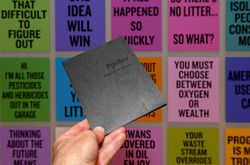
Seconde Nature
Seconde Nature
Actions:
Description:
Dans le cadre de l’exposition Le temps presse, un atelier de création et réflexion est offert aux groupes du cégep et de l’université afin d’explorer les relations complexes et contradictoires que le Canada entretient avec l’environnement. En prenant la parole au nom d’entités aux intérêts multiples – écosystèmes, architecture, éthique, systèmes économiques, population(...)
Dans le cadre de l’exposition Le temps presse, un atelier de création et réflexion est offert aux groupes du cégep et de l’université afin d’explorer les relations complexes et contradictoires que le Canada entretient avec l’environnement. En prenant la parole au nom d’entités aux intérêts multiples – écosystèmes, architecture, éthique, systèmes économiques, population(...)
Date:
26 janvier 2017 au 7 avril 2017
26 janvier 2017 au 7 avril 2017
Titre:
Seconde Nature
Actions:
Description:
Dans le cadre de l’exposition Le temps presse, un atelier de création et réflexion est offert aux groupes du cégep et de l’université afin d’explorer les relations complexes et contradictoires que le Canada entretient avec l’environnement. En prenant la parole au nom d’entités aux intérêts multiples – écosystèmes, architecture, éthique, systèmes économiques, population(...)
Seconde Nature
Actions:
Description:
Dans le cadre de l’exposition Le temps presse, un atelier de création et réflexion est offert aux groupes du cégep et de l’université afin d’explorer les relations complexes et contradictoires que le Canada entretient avec l’environnement. En prenant la parole au nom d’entités aux intérêts multiples – écosystèmes, architecture, éthique, systèmes économiques, population(...)
Classification:
événements
événements
Date:
26 janvier 2017 au
7 avril 2017
26 janvier 2017 au
7 avril 2017
Niveau de description archivistique:
Projet
Projet
Numéro de référence:
AP178.S1.1998.PR05
Description:
This project series documents the Nova Sede do Banco Nacional de Cabo Verde in Cabo Verde. While the records were held in the office’s archives this project was assigned the number 100/90. The office assigned the date 1998 to this project. The bank headquarter is divided into three volumes. Due to the high humidity level of the area, special efforts were put into the design of the air conditioning system. There are four different entrances, one for the public to access the main meeting rooms, one for the employees that is linked to the basement parking, one for the treasury, and one for visitors to the museum, auditorium, or the bar. To this day, the headquarter is still in construction. Documenting this project are plans, details, technical drawings, and mechanical drawings. Textual material includes correspondence, project documentation, technical and mechanical specifications. Photographic material documents the project site.
AP178.S1.1998.PR05
Description:
This project series documents the Nova Sede do Banco Nacional de Cabo Verde in Cabo Verde. While the records were held in the office’s archives this project was assigned the number 100/90. The office assigned the date 1998 to this project. The bank headquarter is divided into three volumes. Due to the high humidity level of the area, special efforts were put into the design of the air conditioning system. There are four different entrances, one for the public to access the main meeting rooms, one for the employees that is linked to the basement parking, one for the treasury, and one for visitors to the museum, auditorium, or the bar. To this day, the headquarter is still in construction. Documenting this project are plans, details, technical drawings, and mechanical drawings. Textual material includes correspondence, project documentation, technical and mechanical specifications. Photographic material documents the project site.
Personnes et institutions:
Date:
1998-2001
1998-2001
Titre:
Nova Sede do Banco Nacional de Cabo Verde [Headquarters, National Bank of Cape Verde], Cape Verde (1998)
Actions:
AP178.S1.1998.PR05
Description:
This project series documents the Nova Sede do Banco Nacional de Cabo Verde in Cabo Verde. While the records were held in the office’s archives this project was assigned the number 100/90. The office assigned the date 1998 to this project. The bank headquarter is divided into three volumes. Due to the high humidity level of the area, special efforts were put into the design of the air conditioning system. There are four different entrances, one for the public to access the main meeting rooms, one for the employees that is linked to the basement parking, one for the treasury, and one for visitors to the museum, auditorium, or the bar. To this day, the headquarter is still in construction. Documenting this project are plans, details, technical drawings, and mechanical drawings. Textual material includes correspondence, project documentation, technical and mechanical specifications. Photographic material documents the project site.
Nova Sede do Banco Nacional de Cabo Verde [Headquarters, National Bank of Cape Verde], Cape Verde (1998)
Actions:
AP178.S1.1998.PR05
Description:
This project series documents the Nova Sede do Banco Nacional de Cabo Verde in Cabo Verde. While the records were held in the office’s archives this project was assigned the number 100/90. The office assigned the date 1998 to this project. The bank headquarter is divided into three volumes. Due to the high humidity level of the area, special efforts were put into the design of the air conditioning system. There are four different entrances, one for the public to access the main meeting rooms, one for the employees that is linked to the basement parking, one for the treasury, and one for visitors to the museum, auditorium, or the bar. To this day, the headquarter is still in construction. Documenting this project are plans, details, technical drawings, and mechanical drawings. Textual material includes correspondence, project documentation, technical and mechanical specifications. Photographic material documents the project site.
Niveau de description archivistique:
Project
Project
Date:
1998-2001
1998-2001
Personnes et institutions:
Niveau de description archivistique:
Projet
Projet
Numéro de référence:
AP178.S1.1982.PR01
Description:
This project series documents the Plano Urbanístico e Central de Camionagem in Guimarães, Portugal. While the records were held in the office’s archives this project was assigned the numbe 12/80. The office assigned the date 1982 to this project. The project was part of an urban plan for Guimarães designed by Fernando Távora. Siza's project consisted of a study for a bus station that was linked to the EN 206 road. The program included parking for short and long term use, a system for the arrival and departure of buses, and a covered pathway. The program also included a building with spaces for the public and for administrative activities, as well as a circuit for the maintenance of the buses without creating traffic. Documenting this project are studies and site plans. Textual materials include project documentation and correspondence. Photographs and negatives document the project site.
AP178.S1.1982.PR01
Description:
This project series documents the Plano Urbanístico e Central de Camionagem in Guimarães, Portugal. While the records were held in the office’s archives this project was assigned the numbe 12/80. The office assigned the date 1982 to this project. The project was part of an urban plan for Guimarães designed by Fernando Távora. Siza's project consisted of a study for a bus station that was linked to the EN 206 road. The program included parking for short and long term use, a system for the arrival and departure of buses, and a covered pathway. The program also included a building with spaces for the public and for administrative activities, as well as a circuit for the maintenance of the buses without creating traffic. Documenting this project are studies and site plans. Textual materials include project documentation and correspondence. Photographs and negatives document the project site.
Personnes et institutions:
Date:
1981-1985
1981-1985
Titre:
Plano Urbanístico e Central de Camionagem [Urban plan and bus station], Guimarães, Portugal (1982)
Actions:
AP178.S1.1982.PR01
Description:
This project series documents the Plano Urbanístico e Central de Camionagem in Guimarães, Portugal. While the records were held in the office’s archives this project was assigned the numbe 12/80. The office assigned the date 1982 to this project. The project was part of an urban plan for Guimarães designed by Fernando Távora. Siza's project consisted of a study for a bus station that was linked to the EN 206 road. The program included parking for short and long term use, a system for the arrival and departure of buses, and a covered pathway. The program also included a building with spaces for the public and for administrative activities, as well as a circuit for the maintenance of the buses without creating traffic. Documenting this project are studies and site plans. Textual materials include project documentation and correspondence. Photographs and negatives document the project site.
Plano Urbanístico e Central de Camionagem [Urban plan and bus station], Guimarães, Portugal (1982)
Actions:
AP178.S1.1982.PR01
Description:
This project series documents the Plano Urbanístico e Central de Camionagem in Guimarães, Portugal. While the records were held in the office’s archives this project was assigned the numbe 12/80. The office assigned the date 1982 to this project. The project was part of an urban plan for Guimarães designed by Fernando Távora. Siza's project consisted of a study for a bus station that was linked to the EN 206 road. The program included parking for short and long term use, a system for the arrival and departure of buses, and a covered pathway. The program also included a building with spaces for the public and for administrative activities, as well as a circuit for the maintenance of the buses without creating traffic. Documenting this project are studies and site plans. Textual materials include project documentation and correspondence. Photographs and negatives document the project site.
Niveau de description archivistique:
Project
Project
Date:
1981-1985
1981-1985
Personnes et institutions:
Classification:
dessins, documents textuels
dessins, documents textuels
Numéro de référence:
AP178.S1.1991.PR05.SS1.042.1
Description:
Original file title: Montreuil espaces publics
AP178.S1.1991.PR05.SS1.042.1
Description:
Original file title: Montreuil espaces publics
Personnes et institutions:
Date:
1999-2000
1999-2000
Titre:
Studies, reports, and drawings of the exterior spaces, Plano Centre Ville de Montreuil, Montreuil (folder 1 of 2)
Actions:
AP178.S1.1991.PR05.SS1.042.1
Description:
Original file title: Montreuil espaces publics
Studies, reports, and drawings of the exterior spaces, Plano Centre Ville de Montreuil, Montreuil (folder 1 of 2)
Actions:
AP178.S1.1991.PR05.SS1.042.1
Description:
Original file title: Montreuil espaces publics
Classification:
dessins, documents textuels
dessins, documents textuels
Date:
1999-2000
1999-2000
Personnes et institutions:
Classification:
dessins, photographies
dessins, photographies
Numéro de référence:
AP178.S1.1991.PR05.SS1.042.2
Description:
Original file title: Montreuil espaces publics
AP178.S1.1991.PR05.SS1.042.2
Description:
Original file title: Montreuil espaces publics
Personnes et institutions:
Date:
1999-2000
1999-2000
Titre:
Studies, reports, and drawings of the exterior spaces, Plano Centre Ville de Montreuil, Montreuil (folder 2 of 2)
Actions:
AP178.S1.1991.PR05.SS1.042.2
Description:
Original file title: Montreuil espaces publics
Studies, reports, and drawings of the exterior spaces, Plano Centre Ville de Montreuil, Montreuil (folder 2 of 2)
Actions:
AP178.S1.1991.PR05.SS1.042.2
Description:
Original file title: Montreuil espaces publics
Classification:
dessins, photographies
dessins, photographies
Date:
1999-2000
1999-2000
Personnes et institutions:


