


12071 Résultats
Classification:
livres
livres

Prix:
$28.00
(disponible sur commande)
Résumé:
More than 400 years after his death, Andrea Palladio (1508–80) remains one of the most influential architects of all time. This catalogue explores how the design principles of Palladio have been interpreted, copied and re-imagined across time and continents in very different ways since his death, and how they continue to inspire architects today. It includes previously(...)
Titre:
Palladian design: the good, the bad and the unexpected
Actions:
Prix:
$28.00
(disponible sur commande)
Résumé:
More than 400 years after his death, Andrea Palladio (1508–80) remains one of the most influential architects of all time. This catalogue explores how the design principles of Palladio have been interpreted, copied and re-imagined across time and continents in very different ways since his death, and how they continue to inspire architects today. It includes previously unexplored works that put Palladio in a new social context and brings out unexpected stories about the impact of his legacy on functionality and style. It also questions how a style and an approach to architecture that Palladio intended to be democratic is now associated with wealth.
Classification:
livres
livres
Publication:
novembre 2015
novembre 2015
Sujet:
Architecture, monographies
Architecture, monographies
Classification:
livres
livres
Actions:
Prix:
$50.00
(disponible sur commande)
Résumé:
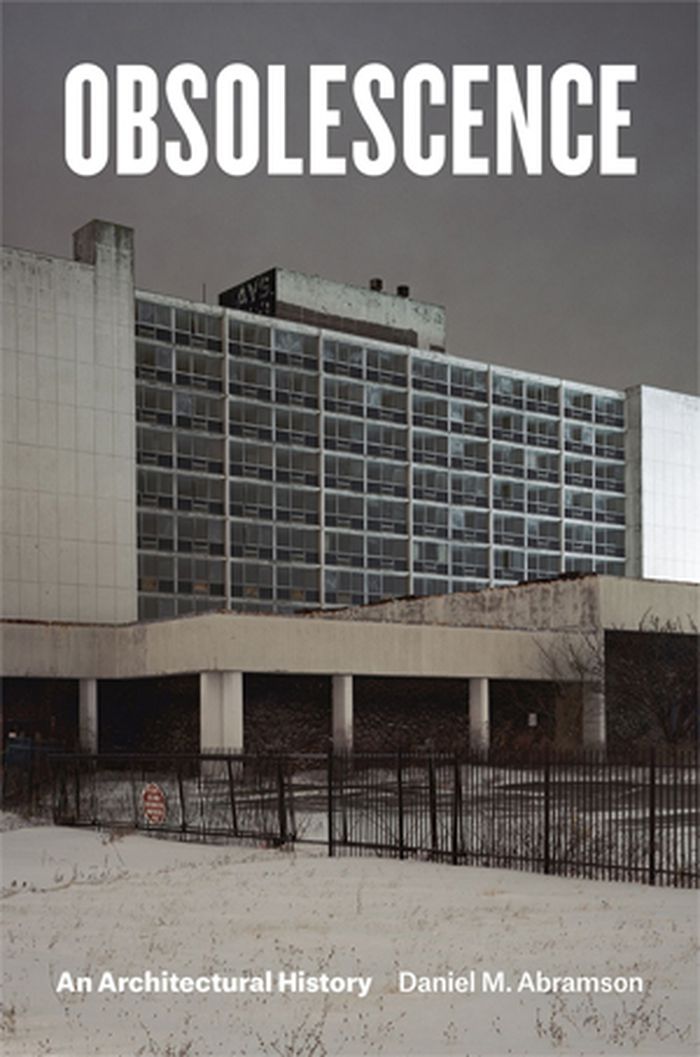
In our architectural pursuits, we often seem to be in search of something newer, grander, or more efficient—and this phenomenon is not novel. In the spring of 1910 hundreds of workers labored day and night to demolish the Gillender Building in New York, once the loftiest office tower in the world, in order to make way for a taller skyscraper. The New York Times puzzled(...)
Titre:
Obsolescence: an architectural history
Actions:
Prix:
$50.00
(disponible sur commande)
Résumé:
In our architectural pursuits, we often seem to be in search of something newer, grander, or more efficient—and this phenomenon is not novel. In the spring of 1910 hundreds of workers labored day and night to demolish the Gillender Building in New York, once the loftiest office tower in the world, in order to make way for a taller skyscraper. The New York Times puzzled over those who would sacrifice the thirteen-year-old structure, “as ruthlessly as though it were some ancient shack.” In New York alone, the Gillender joined the original Grand Central Terminal, the Plaza Hotel, the Western Union Building, and the Tower Building on the list of just one generation’s razed metropolitan monuments.
Classification:
livres
livres
Publication:
mars 2016
mars 2016
Sujet:
Théorie de l’architecture
Théorie de l’architecture
Classification:
livres
livres
Titre:
Cultural cues
Cultural cues
Actions:
Prix:
$48.95
(disponible sur commande)
Résumé:
Cutural Cues is the sixth book featured the work of the Louis I. Kahn Visiting Assistant Professorship, which brings young innovators in architectural design to the Yale School of Architecture. This book includes the studio research and projects of Joe Day of Deegan Day Design in “NOWplex” a cinema in L.A., Tom Wiscombe of Tom Wiscombe Architecture in “The Broad Redux,”(...)
Sujet:
Architecture contemporaine
Architecture contemporaine
Publication:
septembre 2015
septembre 2015
Titre:
Cultural cues
Actions:
Prix:
$48.95
(disponible sur commande)
Résumé:
Cutural Cues is the sixth book featured the work of the Louis I. Kahn Visiting Assistant Professorship, which brings young innovators in architectural design to the Yale School of Architecture. This book includes the studio research and projects of Joe Day of Deegan Day Design in “NOWplex” a cinema in L.A., Tom Wiscombe of Tom Wiscombe Architecture in “The Broad Redux,” for a new interpretation of the Broad Museum in L.A., and Adib Cure & Carie Penabad of Cure Penabade in the studio “Havana: Housing in the Historic Center.” The studios explore contemporary interpretations of the implications of cinema, the museum, and housing, taking cues from their complex cultural and urban contexts. Along with student work, interviews with the architects about the work of their professional offices and essays framing the themes of the work are combined with insight into the pedagogical approach of these practitioner-educators.
Classification:
livres
livres
Publication:
septembre 2015
septembre 2015
Sujet:
Architecture contemporaine
Architecture contemporaine
Classification:
livres
livres

Actions:
Prix:
$44.95
(disponible sur commande)
Résumé:
Italian cities have been points of reference for much of architect Peter Wilson’s professional life and the many reasons for visiting the country have long presented themselves as not just the easy list – holidays, food, architecture and culture. The grand tour is the most obvious of tropes for framing these things, but it can also serve as a useful vehicle for a more(...)
Titre:
Some reasons for travelling to Italy
Actions:
Prix:
$44.95
(disponible sur commande)
Résumé:
Italian cities have been points of reference for much of architect Peter Wilson’s professional life and the many reasons for visiting the country have long presented themselves as not just the easy list – holidays, food, architecture and culture. The grand tour is the most obvious of tropes for framing these things, but it can also serve as a useful vehicle for a more ingrained understanding into Italy’s wider architectural habitat and cultural mythology. This book, which accompanies an exhibition of the same title at the AA School in 2016, appears in the form of a latter-day Baedeker
Classification:
livres
livres
Publication:
mars 2016
mars 2016
Sujet:
Théorie de l’architecture
Théorie de l’architecture
Classification:
livres
livres

Actions:
Prix:
$50.95
(disponible sur commande)
Résumé:
In "Picturing Space, Displacing Bodies", Lyle Massey argues that we can only learn how and why certain kinds of spatial representation prevailed over others by carefully considering how Renaissance artists and theorists interpreted perspective. Combining detailed historical studies with broad theoretical and philosophical investigations, this book challenges basic(...)
Titre:
Picturing space, displacing bodies: anamorphosis in early modern theories of perspective
Actions:
Prix:
$50.95
(disponible sur commande)
Résumé:
In "Picturing Space, Displacing Bodies", Lyle Massey argues that we can only learn how and why certain kinds of spatial representation prevailed over others by carefully considering how Renaissance artists and theorists interpreted perspective. Combining detailed historical studies with broad theoretical and philosophical investigations, this book challenges basic assumptions about the way early modern artists and theorists represented their relationship to the visible world and how they understood these representations. By analyzing technical feats such as anamorphosis (the perspectival distortion of an object to make it viewable only from a certain angle), drawing machines, and printed diagrams, each chapter highlights the moments when perspective theorists failed to unite a singular, ideal viewpoint with the artist’s or viewer’s viewpoint or were unsuccessful at conjoining fictive and lived space. Showing how these “failures” were subsequently incorporated rather than rejected by perspective theorists, the book presents an important reassessment of the standard view of Renaissance perspective.
Classification:
livres
livres
Publication:
janvier 2016
janvier 2016
Sujet:
Théorie de l’architecture
Théorie de l’architecture
Classification:
livres
livres
Titre:
The dissolution of buildings
The dissolution of buildings
Actions:
Prix:
$27.95
(disponible sur commande)
Résumé:
Advocating an architecture that is "the opposite of global action," architect Angelo Bucci's work responds to the topography of the city and to its urban environment. In a lecture delivered at Columbia University's Graduate School of Architecture, Planning and Preservation, Bucci discusses work designed with his firm SPBR, projects that span from the scale of the house to(...)
Titre:
The dissolution of buildings
Actions:
Prix:
$27.95
(disponible sur commande)
Résumé:
Advocating an architecture that is "the opposite of global action," architect Angelo Bucci's work responds to the topography of the city and to its urban environment. In a lecture delivered at Columbia University's Graduate School of Architecture, Planning and Preservation, Bucci discusses work designed with his firm SPBR, projects that span from the scale of the house to the city. His built work is here accompanied by an excerpt from his doctoral dissertation, which explores how the devices available to architecture—and the sectional manipulation of groundplanes in particular—can mitigate some of the inequities and exclusions built in to the fabric of the contemporary city. An essay by Kenneth Frampton frames these projects within the rich lineage of Brazilian house design and members of the Paulista school such as Paulo Mendes da Rocha and João Batista Vilanova Artigas.
Classification:
livres
livres
Publication:
janvier 2016
janvier 2016
Sujet:
Théorie de l’architecture
Théorie de l’architecture
Classification:
livres
livres
Actions:
Prix:
$31.00
(disponible sur commande)
Résumé:
As with the compass needle, so people have always been most powerfully attracted northwards; everyone carries within them their own concept of north. The Idea of North is a study, ranging widely in time and place, of some of the ways in which these ideas have found expression. Peter Davidson explores the topography of north as represented in images and literature, taking(...)
Titre:
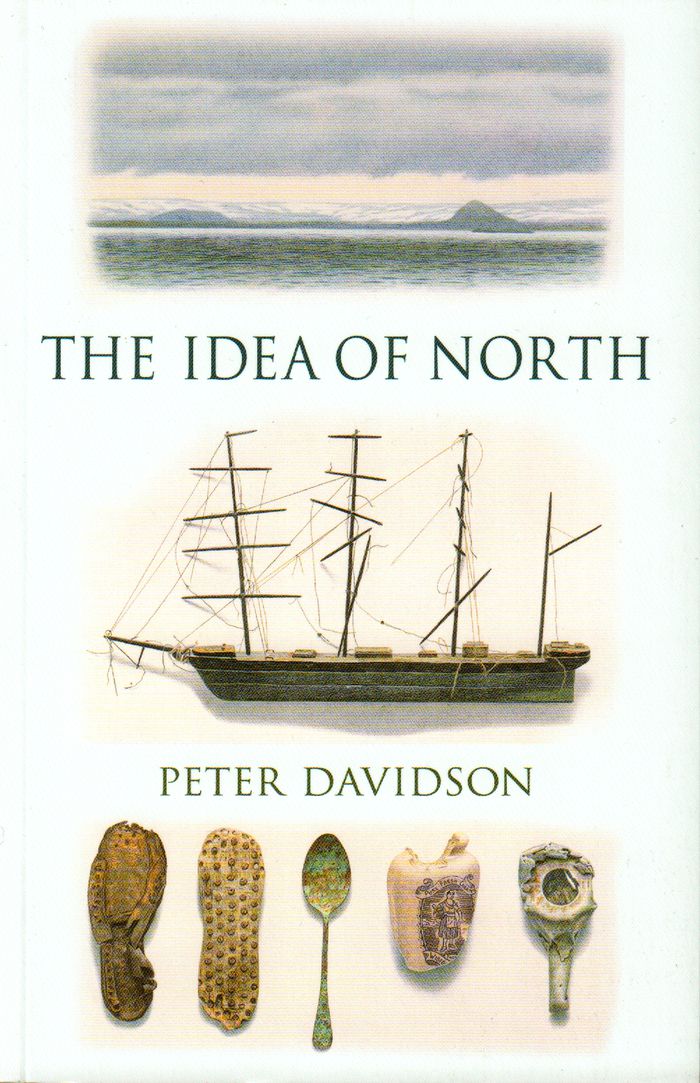
The idea of north, 2nd edition
Actions:
Prix:
$31.00
(disponible sur commande)
Résumé:
As with the compass needle, so people have always been most powerfully attracted northwards; everyone carries within them their own concept of north. The Idea of North is a study, ranging widely in time and place, of some of the ways in which these ideas have found expression. Peter Davidson explores the topography of north as represented in images and literature, taking in Netherlandic winter paintings of the Renaissance, German Romantic landscapes, Scandinavian Biedermeyer and twentieth-century topographical painting and printmaking. He examines a bewildering diversity of mythologies and imaginings of north, including The Snow Queen; Scandinavian Sagas; ghost-stories; Moomintrolls, Arctic exploration; the fictitious snowy kingdoms of Zembla and Naboland; Nabokov's nostalgias; Baltic midsummer; rooms in winter light; compasses and star-stones; hoar-frost; ice; and glass. The book also traces a northward journey, describing northern rural England, industrial sites, and the long emptiness of the borders, Scotland and the Highlands. He looks at the region far north of Scotland, then moves to the Northern Netherlands and Scandinavia to explore their identifiable northernness.The last visited place is Iceland, identified by W. H. Auden and Louis McNeice in 1936 as 'furthest, most remote, most distant, most northerly'. An engaging meditation on solitude, absence and stillness, The Idea of North shows north to be a goal rather than a destination, a place of revelation that is always somewhere ultimate and austere.
Classification:
livres
livres
Publication:
juin 2016
juin 2016
Sujet:
Théorie de l’architecture
Théorie de l’architecture
Classification:
livres
livres

Actions:
Prix:
$44.00
(disponible sur commande)
Résumé:
Juan José Lahuerta’s Columns of Smoke series offers bold new readings of modernity and its key figures while redefining the connections between architecture, ornamentation, and the portrayal of both in print media. The third volume focuses on the Spanish architect Antoni Gaudí (1852–1926), whose spectacular fin-de-siècle bohemian modernism stood in revolutionary contrast(...)
Titre:
Antoni Gaudi: ornament, fire, and ashes
Actions:
Prix:
$44.00
(disponible sur commande)
Résumé:
Juan José Lahuerta’s Columns of Smoke series offers bold new readings of modernity and its key figures while redefining the connections between architecture, ornamentation, and the portrayal of both in print media. The third volume focuses on the Spanish architect Antoni Gaudí (1852–1926), whose spectacular fin-de-siècle bohemian modernism stood in revolutionary contrast to the leading approaches of the day.
Classification:
livres
livres
Publication:
mars 2016
mars 2016
Sujet:
Théorie de l’architecture
Théorie de l’architecture
Classification:
livres
livres

Actions:
Prix:
$38.90
(disponible sur commande)
Résumé:
The catalogue offers an opportunity to acquire a deeper understanding of Jefferson's architecture and, at the same time, leads to a clearer understanding of Palladio himself
$38.90
(disponible sur commande)
Résumé:
The catalogue offers an opportunity to acquire a deeper understanding of Jefferson's architecture and, at the same time, leads to a clearer understanding of Palladio himself
Titre:
Jefferson and Palladio: Constructing a new world
Actions:
Prix:
$38.90
(disponible sur commande)
Résumé:
The catalogue offers an opportunity to acquire a deeper understanding of Jefferson's architecture and, at the same time, leads to a clearer understanding of Palladio himself
Jefferson and Palladio: Constructing a new world
Actions:
Prix:
$38.90
(disponible sur commande)
Résumé:
The catalogue offers an opportunity to acquire a deeper understanding of Jefferson's architecture and, at the same time, leads to a clearer understanding of Palladio himself
Classification:
livres
livres
Publication:
mai 2016
mai 2016
Sujet:
Architecture, monographies
Architecture, monographies
Classification:
livres
livres

Titre:
The measure of darkness
The measure of darkness
Actions:
Prix:
$23.95
(disponible sur commande)
Résumé:
Martin, an acclaimed architect, emerges from a coma after a roadside accident to find his world transformed: not only has the commission of a lifetime been taken from him, but his injury has left him with neglect syndrome, a loss of spatial awareness that has rendered him unfit to practice and unable to recognize the extent of his illness. Despite support from his(...)
Titre:
The measure of darkness
Actions:
Prix:
$23.95
(disponible sur commande)
Résumé:
Martin, an acclaimed architect, emerges from a coma after a roadside accident to find his world transformed: not only has the commission of a lifetime been taken from him, but his injury has left him with neglect syndrome, a loss of spatial awareness that has rendered him unfit to practice and unable to recognize the extent of his illness. Despite support from his formerly estranged brother and two grown daughters, his paranoia builds, alienating those closest to him. His only solace is found in the parallels he draws between himself and gifted Soviet-era architect Konstantin Melnikov, who survived Stalin’s disfavor by retreating into obscurity. As Martin retraces Melnikov’s life and his own fateful decisions, he becomes increasingly unsettled, until the discovery of the harrowing truth about the night of his accident hurtles him toward a deadly confrontation.
Classification:
livres
livres
Publication:
avril 2016
avril 2016
Sujet:
Architecture de Montréal
Architecture de Montréal


