


1018 Résultats
Classification:
livres
livres
Titre:
Matisse's garden
Matisse's garden
Actions:
Prix:
$21.95
(disponible sur commande)
Résumé:
One day, the French artist Henri Matisse cut a small bird out of a piece of paper. It looked lonely all by itself, so he cut out more shapes to join it. Before he knew it, Matisse had transformed his walls into larger-than-life gardens, filled with brightly colored plants, animals, and shapes of all sizes! Featuring cut-paper illustrations and interactive foldout pages,(...)
$21.95
(disponible sur commande)
Résumé:
One day, the French artist Henri Matisse cut a small bird out of a piece of paper. It looked lonely all by itself, so he cut out more shapes to join it. Before he knew it, Matisse had transformed his walls into larger-than-life gardens, filled with brightly colored plants, animals, and shapes of all sizes! Featuring cut-paper illustrations and interactive foldout pages,(...)
Titre:
Matisse's garden
Actions:
Prix:
$21.95
(disponible sur commande)
Résumé:
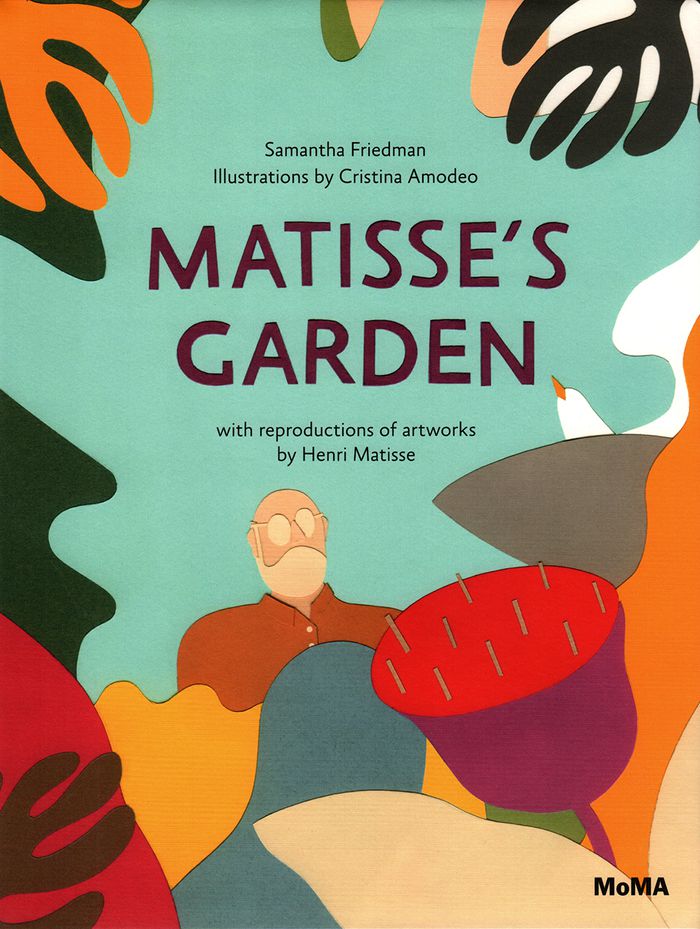
One day, the French artist Henri Matisse cut a small bird out of a piece of paper. It looked lonely all by itself, so he cut out more shapes to join it. Before he knew it, Matisse had transformed his walls into larger-than-life gardens, filled with brightly colored plants, animals, and shapes of all sizes! Featuring cut-paper illustrations and interactive foldout pages, Matisse’s Garden is the story of how the artist’s never-ending curiosity helped turn a small experiment into a radical new form of art.
Matisse's garden
Actions:
Prix:
$21.95
(disponible sur commande)
Résumé:
One day, the French artist Henri Matisse cut a small bird out of a piece of paper. It looked lonely all by itself, so he cut out more shapes to join it. Before he knew it, Matisse had transformed his walls into larger-than-life gardens, filled with brightly colored plants, animals, and shapes of all sizes! Featuring cut-paper illustrations and interactive foldout pages, Matisse’s Garden is the story of how the artist’s never-ending curiosity helped turn a small experiment into a radical new form of art.
Classification:
livres
livres
Publication:
octobre 2014
octobre 2014
Sujet:
Littérature jeunesse
Littérature jeunesse
Classification:
vidéo
vidéo
Actions:
Exemplaires:
Description:
1 online resource (1 video file (1 min., 10 sec.)) : sound, color
Description:
1 online resource (1 video file (1 min., 10 sec.)) : sound, color
Auteur:
Sujet:
Publication:
[Montréal] : CCA, [2017]
[Montréal] : CCA, [2017]
Titre:
311 1/2. Episode 98, Léanne répond à Laura, qui a un problème de rats depuis qui le système d'égouts sur sa rue est en chantier = Léanne responds to Laura, who has a rat problem since the sewer system on her street is under repair.
Actions:
Exemplaires:
Description:
1 online resource (1 video file (1 min., 10 sec.)) : sound, color
311 1/2. Episode 98, Léanne répond à Laura, qui a un problème de rats depuis qui le système d'égouts sur sa rue est en chantier = Léanne responds to Laura, who has a rat problem since the sewer system on her street is under repair.
Actions:
Exemplaires:
Description:
1 online resource (1 video file (1 min., 10 sec.)) : sound, color
Classification:
vidéo
vidéo
Publication:
[Montréal] : CCA, [2017]
[Montréal] : CCA, [2017]
Auteur:
Sujet:
Classification:
livres
livres
Actions:
Prix:
$49.95
(disponible sur commande)
Résumé:
Les animaux de zoo sont aujourd'hui tous nés en captivité. Vestiges vivants d'un monde sauvage perdu, archives génétiques ou ambassadeurs de leur espèce, ils sont gérés en collections et exposés comme au musée. De quels patrimoines sont-ils les restes ? Par son approche ethnographique, l'auteure invite à une réflexion en forme de promenade au zoo. Des allées aux enclos,(...)
$49.95
(disponible sur commande)
Résumé:
Les animaux de zoo sont aujourd'hui tous nés en captivité. Vestiges vivants d'un monde sauvage perdu, archives génétiques ou ambassadeurs de leur espèce, ils sont gérés en collections et exposés comme au musée. De quels patrimoines sont-ils les restes ? Par son approche ethnographique, l'auteure invite à une réflexion en forme de promenade au zoo. Des allées aux enclos,(...)
Titre:
L'animal captif et la nature sauvage : Une ethnographie du Parc zoologique de Paris
Actions:
Prix:
$49.95
(disponible sur commande)
Résumé:
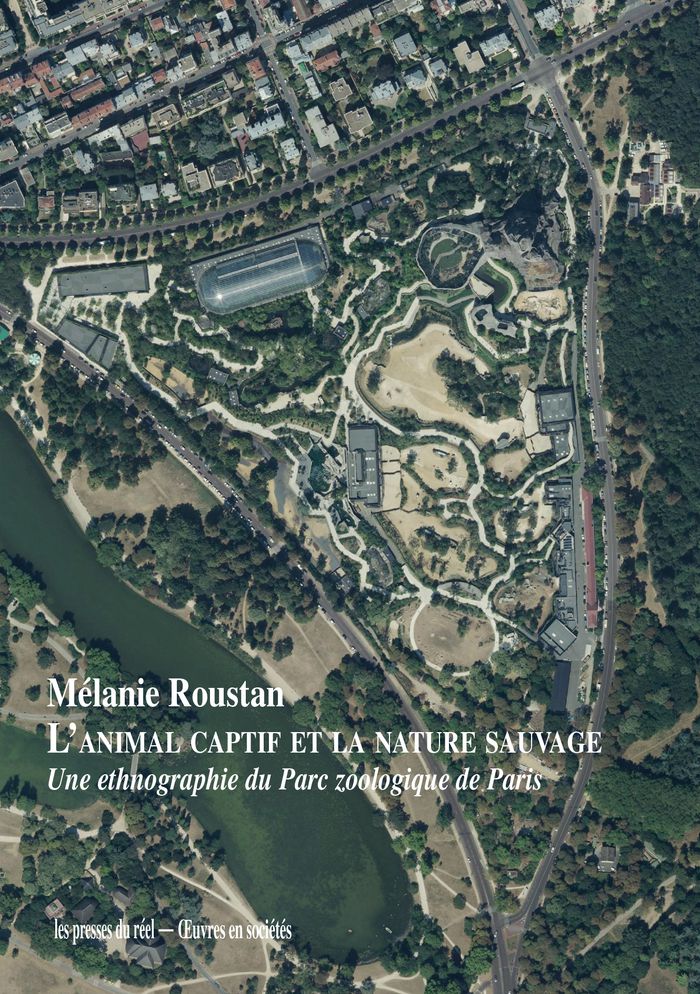
Les animaux de zoo sont aujourd'hui tous nés en captivité. Vestiges vivants d'un monde sauvage perdu, archives génétiques ou ambassadeurs de leur espèce, ils sont gérés en collections et exposés comme au musée. De quels patrimoines sont-ils les restes ? Par son approche ethnographique, l'auteure invite à une réflexion en forme de promenade au zoo. Des allées aux enclos, des bureaux à la clinique, l'anthropologue observe, interroge, cherche à comprendre les logiques à l'œuvre, les plaisirs à voir, les dilemmes à lever. Car pour conserver la biodiversité avec des collections vivantes, pour maintenir captifs des animaux en assurant leur bien-être, pour divertir les publics tout en les sensibilisant, des choix doivent être faits : comme au musée, de sélection, d'inventaire et de mise en scène ; comme dans un élevage, de gestion des corps et des espaces, de sécurité sanitaire et de reproduction.
L'animal captif et la nature sauvage : Une ethnographie du Parc zoologique de Paris
Actions:
Prix:
$49.95
(disponible sur commande)
Résumé:
Les animaux de zoo sont aujourd'hui tous nés en captivité. Vestiges vivants d'un monde sauvage perdu, archives génétiques ou ambassadeurs de leur espèce, ils sont gérés en collections et exposés comme au musée. De quels patrimoines sont-ils les restes ? Par son approche ethnographique, l'auteure invite à une réflexion en forme de promenade au zoo. Des allées aux enclos, des bureaux à la clinique, l'anthropologue observe, interroge, cherche à comprendre les logiques à l'œuvre, les plaisirs à voir, les dilemmes à lever. Car pour conserver la biodiversité avec des collections vivantes, pour maintenir captifs des animaux en assurant leur bien-être, pour divertir les publics tout en les sensibilisant, des choix doivent être faits : comme au musée, de sélection, d'inventaire et de mise en scène ; comme dans un élevage, de gestion des corps et des espaces, de sécurité sanitaire et de reproduction.
Classification:
livres
livres
Publication:
avril 2025
avril 2025
Sujet:
Muséologie
Muséologie
Classification:
audio
audio
Titre:
Plaster Cramp.
Plaster Cramp.
Actions:
Description:
1 online resource.
Auteur:
Sujet:
Publication:
[Place of publication not identified] : Bureau, 2019.
[Place of publication not identified] : Bureau, 2019.
Classification:
audio
audio
Publication:
[Place of publication not identified] : Bureau, 2019.
[Place of publication not identified] : Bureau, 2019.
Auteur:
Sujet:
Classification:
livres
livres
Actions:
Prix:
$37.95
(disponible sur commande)
Résumé:
While the publisher has billed this book as "the first "to document the changing nature of zoos in Europe and North America and to access the factors contributing to these changes," it has been preceded by several other similar works: Jake Page's Zoo: The Modern Ark, Vicki Croke's The Modern Ark: A Story of Zoos Past, Present and Future, and the four-volume Encyclopedia(...)
$37.95
(disponible sur commande)
Résumé:
While the publisher has billed this book as "the first "to document the changing nature of zoos in Europe and North America and to access the factors contributing to these changes," it has been preceded by several other similar works: Jake Page's Zoo: The Modern Ark, Vicki Croke's The Modern Ark: A Story of Zoos Past, Present and Future, and the four-volume Encyclopedia(...)
Titre:
Zoo : A history of zoological gardens in the West
Actions:
Prix:
$37.95
(disponible sur commande)
Résumé:
While the publisher has billed this book as "the first "to document the changing nature of zoos in Europe and North America and to access the factors contributing to these changes," it has been preceded by several other similar works: Jake Page's Zoo: The Modern Ark, Vicki Croke's The Modern Ark: A Story of Zoos Past, Present and Future, and the four-volume Encyclopedia of the World's Zoos. So, why would anyone be interested in this new volume? The answer lies in the scope and depth of scholarly research and presentation and in the 400 illustrations (150 of which are in color) that aren't likely to be found elsewhere. While other books look at the architecture of zoos and the care of animals in captivity, the authors, who are French professors of history and art history, respectively, take a social history focus, examining how people view wild animals and how that has changed over time. Their book has five main sections, with the first three forming the core of the text "The Passion for Collecting (1500s to 1700s)," "The Need for Control (1800s)," and "The Yearning for Nature (1900s)." The final two sections "Zoos Through the Ages," and "Artists and the Zoo" consist entirely of illustrations. One can read the text or spend hours simply enjoying the images.
Zoo : A history of zoological gardens in the West
Actions:
Prix:
$37.95
(disponible sur commande)
Résumé:
While the publisher has billed this book as "the first "to document the changing nature of zoos in Europe and North America and to access the factors contributing to these changes," it has been preceded by several other similar works: Jake Page's Zoo: The Modern Ark, Vicki Croke's The Modern Ark: A Story of Zoos Past, Present and Future, and the four-volume Encyclopedia of the World's Zoos. So, why would anyone be interested in this new volume? The answer lies in the scope and depth of scholarly research and presentation and in the 400 illustrations (150 of which are in color) that aren't likely to be found elsewhere. While other books look at the architecture of zoos and the care of animals in captivity, the authors, who are French professors of history and art history, respectively, take a social history focus, examining how people view wild animals and how that has changed over time. Their book has five main sections, with the first three forming the core of the text "The Passion for Collecting (1500s to 1700s)," "The Need for Control (1800s)," and "The Yearning for Nature (1900s)." The final two sections "Zoos Through the Ages," and "Artists and the Zoo" consist entirely of illustrations. One can read the text or spend hours simply enjoying the images.
Classification:
livres
livres
Publication:
mai 2004, London
mai 2004, London
Sujet:
Jardins
Jardins
Classification:
livres
livres

Titre:
Stable vices
Stable vices
Actions:
Prix:
$75.00
(disponible sur commande)
Résumé:
The themes of protection, freedom and oppression appear consistently throughout Polish artist Joanna Piotrowska’s oeuvre. Through three photographic series, Stable Vices focuses on these notions to crystallise a spectrum of concerns that drive her work. One series is inspired by illustrated self-defence manuals and Psychology and Resistance by the feminist psychologist(...)
$75.00
(disponible sur commande)
Résumé:
The themes of protection, freedom and oppression appear consistently throughout Polish artist Joanna Piotrowska’s oeuvre. Through three photographic series, Stable Vices focuses on these notions to crystallise a spectrum of concerns that drive her work. One series is inspired by illustrated self-defence manuals and Psychology and Resistance by the feminist psychologist(...)
Titre:
Stable vices
Actions:
Prix:
$75.00
(disponible sur commande)
Résumé:
The themes of protection, freedom and oppression appear consistently throughout Polish artist Joanna Piotrowska’s oeuvre. Through three photographic series, Stable Vices focuses on these notions to crystallise a spectrum of concerns that drive her work. One series is inspired by illustrated self-defence manuals and Psychology and Resistance by the feminist psychologist Carol Gilligan. A second series reveals precarious shelters made out of furniture and blankets, situated in domestic spaces. In a third series, Piotrowska focuses on cages and comparable spaces created for humans, drawing parallels between the lives of certain communities and animals, and the environments in which they live.
Stable vices
Actions:
Prix:
$75.00
(disponible sur commande)
Résumé:
The themes of protection, freedom and oppression appear consistently throughout Polish artist Joanna Piotrowska’s oeuvre. Through three photographic series, Stable Vices focuses on these notions to crystallise a spectrum of concerns that drive her work. One series is inspired by illustrated self-defence manuals and Psychology and Resistance by the feminist psychologist Carol Gilligan. A second series reveals precarious shelters made out of furniture and blankets, situated in domestic spaces. In a third series, Piotrowska focuses on cages and comparable spaces created for humans, drawing parallels between the lives of certain communities and animals, and the environments in which they live.
Classification:
livres
livres
Publication:
janvier 2021
janvier 2021
Sujet:
Monographies photo
Monographies photo
Classification:
livres
livres
Titre:
Remarks on color
Remarks on color
Actions:
Prix:
$45.95
(disponible en magasin)
Résumé:
Artist, critic and poet Eve Wood has a ribald sense of humor and for decades has had a distinctive presence in the Southern California art world. This is her first monograph, featuring a collection of off-beat, imaginative color studies populated with birds, animals and irreverent, sometimes naughty personae. Short, laugh-out-loud prose accompanies each of the portraits(...)
$45.95
(disponible en magasin)
Résumé:
Artist, critic and poet Eve Wood has a ribald sense of humor and for decades has had a distinctive presence in the Southern California art world. This is her first monograph, featuring a collection of off-beat, imaginative color studies populated with birds, animals and irreverent, sometimes naughty personae. Short, laugh-out-loud prose accompanies each of the portraits(...)
Titre:
Remarks on color
Actions:
Prix:
$45.95
(disponible en magasin)
Résumé:
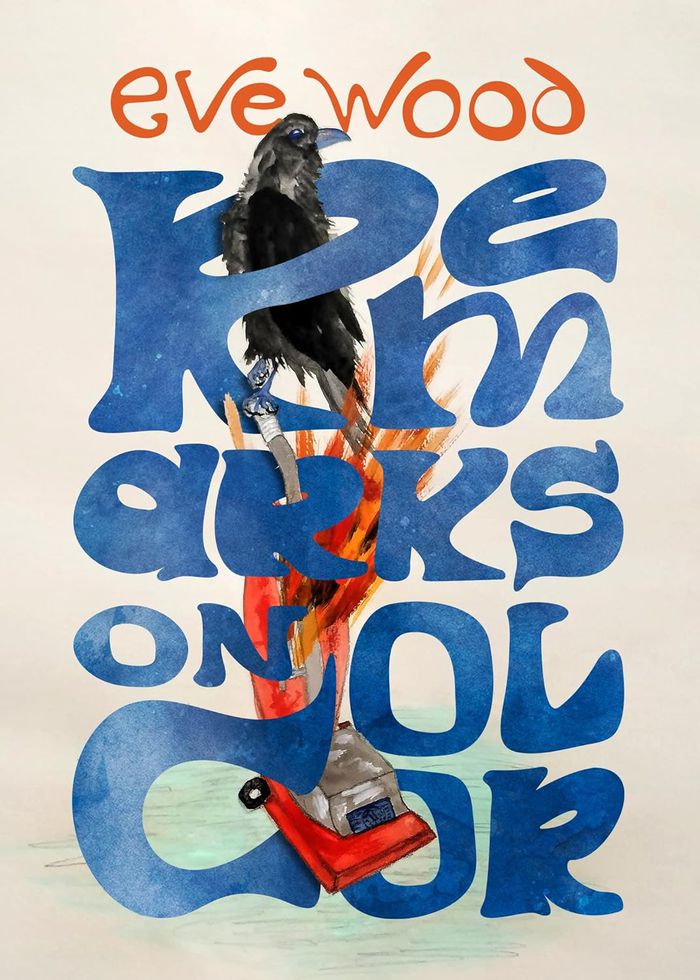
Artist, critic and poet Eve Wood has a ribald sense of humor and for decades has had a distinctive presence in the Southern California art world. This is her first monograph, featuring a collection of off-beat, imaginative color studies populated with birds, animals and irreverent, sometimes naughty personae. Short, laugh-out-loud prose accompanies each of the portraits and vivid scenes. Her dog sleeps on a Ukranian-gold and blue rug; her raven vacuums the house; absurd characters from movies and art stand in for obnoxious or dreamy colors; and the birds – so many birds – sing of freedom.
Remarks on color
Actions:
Prix:
$45.95
(disponible en magasin)
Résumé:
Artist, critic and poet Eve Wood has a ribald sense of humor and for decades has had a distinctive presence in the Southern California art world. This is her first monograph, featuring a collection of off-beat, imaginative color studies populated with birds, animals and irreverent, sometimes naughty personae. Short, laugh-out-loud prose accompanies each of the portraits and vivid scenes. Her dog sleeps on a Ukranian-gold and blue rug; her raven vacuums the house; absurd characters from movies and art stand in for obnoxious or dreamy colors; and the birds – so many birds – sing of freedom.
Classification:
livres
livres
Publication:
novembre 2023
novembre 2023
Classification:
livres
livres
Titre:
Sapiens
Sapiens
Actions:
Prix:
$23.00
(disponible sur commande)
Résumé:
In Sapiens, Dr. Yuval Noah Harari spans the whole of human history, from the very first humans to walk the earth to the radical - and sometimes devastating - breakthroughs of the Cognitive, Agricultural, and Scientific Revolutions. Drawing on insights from biology, anthropology, palaeontology, and economics, he explores how the currents of history have shaped our human(...)
$23.00
(disponible sur commande)
Résumé:
In Sapiens, Dr. Yuval Noah Harari spans the whole of human history, from the very first humans to walk the earth to the radical - and sometimes devastating - breakthroughs of the Cognitive, Agricultural, and Scientific Revolutions. Drawing on insights from biology, anthropology, palaeontology, and economics, he explores how the currents of history have shaped our human(...)
Titre:
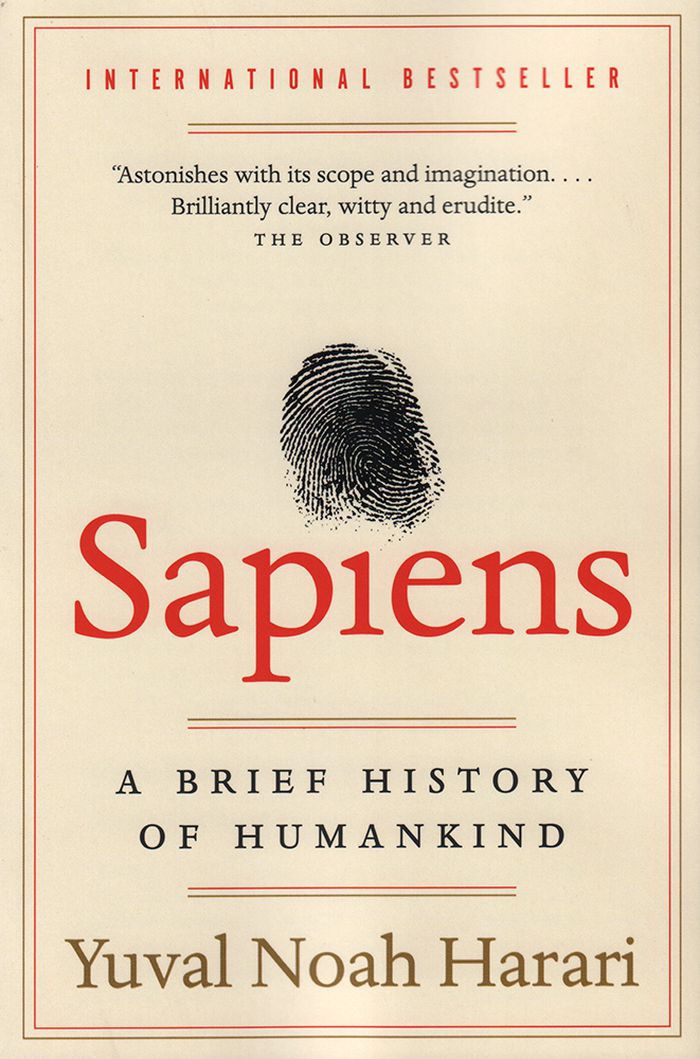
Sapiens
Actions:
Prix:
$23.00
(disponible sur commande)
Résumé:
In Sapiens, Dr. Yuval Noah Harari spans the whole of human history, from the very first humans to walk the earth to the radical - and sometimes devastating - breakthroughs of the Cognitive, Agricultural, and Scientific Revolutions. Drawing on insights from biology, anthropology, palaeontology, and economics, he explores how the currents of history have shaped our human societies, the animals and plants around us, and even our personalities. Have we become happier as history has unfolded? Can we ever free our behaviour from the heritage of our ancestors? And what, if anything, can we do to influence the course of the centuries to come?
Sapiens
Actions:
Prix:
$23.00
(disponible sur commande)
Résumé:
In Sapiens, Dr. Yuval Noah Harari spans the whole of human history, from the very first humans to walk the earth to the radical - and sometimes devastating - breakthroughs of the Cognitive, Agricultural, and Scientific Revolutions. Drawing on insights from biology, anthropology, palaeontology, and economics, he explores how the currents of history have shaped our human societies, the animals and plants around us, and even our personalities. Have we become happier as history has unfolded? Can we ever free our behaviour from the heritage of our ancestors? And what, if anything, can we do to influence the course of the centuries to come?
Classification:
livres
livres
Publication:
mai 2016
mai 2016
Sujet:
Théorie/ philosophie
Théorie/ philosophie
Classification:
livres
livres
Actions:
Prix:
$41.95
(disponible sur commande)
Résumé:
Marcel Dzama is a prolific artist who works in multiple disciplines, including sculpture, watercolour, ink, collage, and film. His art depicts anachronistic, fanciful, and subversive worlds that contain human figures, animals, and mythical hybrid creatures. Using a visual language strongly influenced by fables and masquerades, his complex narratives transport the viewer(...)
$41.95
(disponible sur commande)
Résumé:
Marcel Dzama is a prolific artist who works in multiple disciplines, including sculpture, watercolour, ink, collage, and film. His art depicts anachronistic, fanciful, and subversive worlds that contain human figures, animals, and mythical hybrid creatures. Using a visual language strongly influenced by fables and masquerades, his complex narratives transport the viewer(...)
Titre:
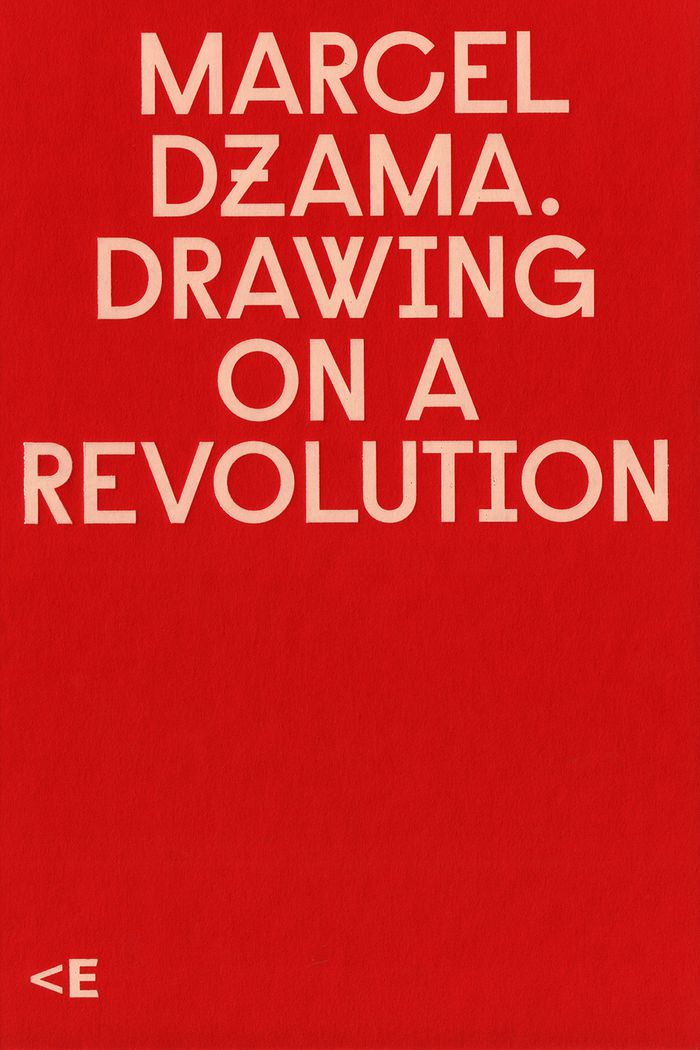
Marcel Dzama: drawing on a revolution
Actions:
Prix:
$41.95
(disponible sur commande)
Résumé:
Marcel Dzama is a prolific artist who works in multiple disciplines, including sculpture, watercolour, ink, collage, and film. His art depicts anachronistic, fanciful, and subversive worlds that contain human figures, animals, and mythical hybrid creatures. Using a visual language strongly influenced by fables and masquerades, his complex narratives transport the viewer into an enigmatic world of life and death, calm and violence, where irony, ridicule, and sexual themes disguise allusions to contemporary social and political issues. This catalogue of drawings, dioramas, and other works is published on the occasion of an exhibition of Dzamas work at La Casa Encendida in Madrid.
Marcel Dzama: drawing on a revolution
Actions:
Prix:
$41.95
(disponible sur commande)
Résumé:
Marcel Dzama is a prolific artist who works in multiple disciplines, including sculpture, watercolour, ink, collage, and film. His art depicts anachronistic, fanciful, and subversive worlds that contain human figures, animals, and mythical hybrid creatures. Using a visual language strongly influenced by fables and masquerades, his complex narratives transport the viewer into an enigmatic world of life and death, calm and violence, where irony, ridicule, and sexual themes disguise allusions to contemporary social and political issues. This catalogue of drawings, dioramas, and other works is published on the occasion of an exhibition of Dzamas work at La Casa Encendida in Madrid.
Classification:
livres
livres
Publication:
décembre 2017
décembre 2017
Classification:
livres
livres

Titre:
Lee Friedlander: pickup
Lee Friedlander: pickup
Actions:
Prix:
$87.00
(disponible sur commande)
Résumé:
In this compendium, Lee Friedlander examines the ordinary pickup truck, a quintessentially American mode of transportation. Unadorned in form as well as function, pickups have long been the vehicle of choice for farmers and tradespeople. Their well-worn beds—usually open to the elements, laid bare for all to see—have held and hauled all manner of things, from spare tires(...)
$87.00
(disponible sur commande)
Résumé:
In this compendium, Lee Friedlander examines the ordinary pickup truck, a quintessentially American mode of transportation. Unadorned in form as well as function, pickups have long been the vehicle of choice for farmers and tradespeople. Their well-worn beds—usually open to the elements, laid bare for all to see—have held and hauled all manner of things, from spare tires(...)
Titre:
Lee Friedlander: pickup
Actions:
Prix:
$87.00
(disponible sur commande)
Résumé:
In this compendium, Lee Friedlander examines the ordinary pickup truck, a quintessentially American mode of transportation. Unadorned in form as well as function, pickups have long been the vehicle of choice for farmers and tradespeople. Their well-worn beds—usually open to the elements, laid bare for all to see—have held and hauled all manner of things, from spare tires and jumbles of wires to animals and the occasional person. Friedlander, in his witty and encompassing, clear-eyed idiom, has observed this most utilitarian and unapologetically personal object in its native setting: the cacophonous bricolage that is American social landscape.
Lee Friedlander: pickup
Actions:
Prix:
$87.00
(disponible sur commande)
Résumé:
In this compendium, Lee Friedlander examines the ordinary pickup truck, a quintessentially American mode of transportation. Unadorned in form as well as function, pickups have long been the vehicle of choice for farmers and tradespeople. Their well-worn beds—usually open to the elements, laid bare for all to see—have held and hauled all manner of things, from spare tires and jumbles of wires to animals and the occasional person. Friedlander, in his witty and encompassing, clear-eyed idiom, has observed this most utilitarian and unapologetically personal object in its native setting: the cacophonous bricolage that is American social landscape.
Classification:
livres
livres
Publication:
janvier 2021
janvier 2021
Sujet:
Monographies photo
Monographies photo


