


13794 Résultats
Classification:
livres
livres
Prix:
$27.95
(disponible sur commande)
Résumé:
Gardens contain time, culture, and nature. They are powerful symbolic spaces onto which a society can project its ideals, either to conjure or contrive cultural change, rooting them in the flow of natural processes. Five authors explore the variety of relationships between garden making and cultural change in Argentina, the Caribbean, Mexico, and the United States. They(...)
$27.95
(disponible sur commande)
Résumé:
Gardens contain time, culture, and nature. They are powerful symbolic spaces onto which a society can project its ideals, either to conjure or contrive cultural change, rooting them in the flow of natural processes. Five authors explore the variety of relationships between garden making and cultural change in Argentina, the Caribbean, Mexico, and the United States. They(...)
Titre:
Gardens and Cultural Change: a Pan-American Perspective
Actions:
Prix:
$27.95
(disponible sur commande)
Résumé:
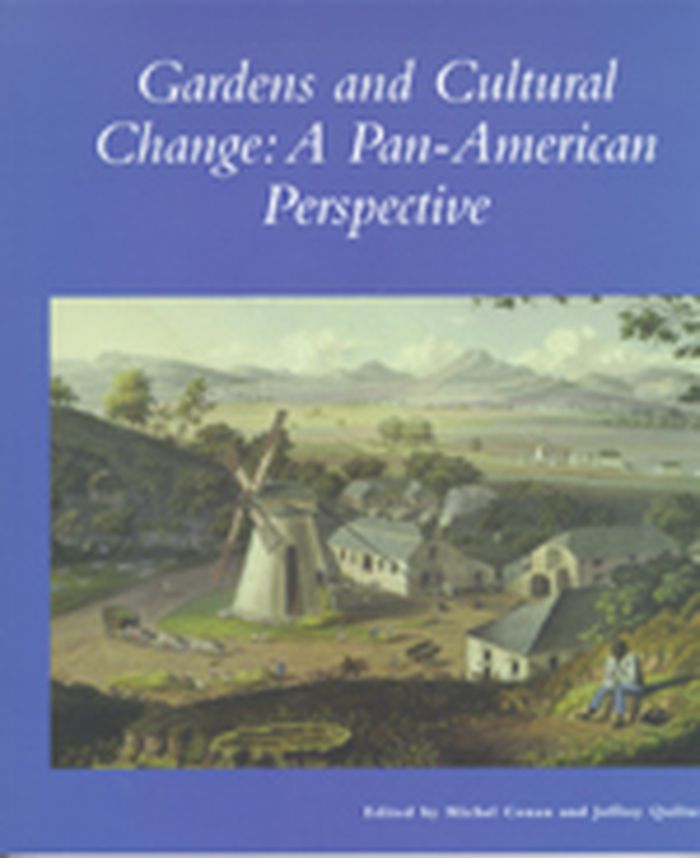
Gardens contain time, culture, and nature. They are powerful symbolic spaces onto which a society can project its ideals, either to conjure or contrive cultural change, rooting them in the flow of natural processes. Five authors explore the variety of relationships between garden making and cultural change in Argentina, the Caribbean, Mexico, and the United States. They show how gardens express popular cultural invention and attempts at political manipulation, as well as provide places of cultural resistance by subjugated people. Issues of identity and ideology; political coercion and resistance apply equally throughout the continent, inviting a renewed attention to gardens as places where cultural identities are forged and contested.
Gardens and Cultural Change: a Pan-American Perspective
Actions:
Prix:
$27.95
(disponible sur commande)
Résumé:
Gardens contain time, culture, and nature. They are powerful symbolic spaces onto which a society can project its ideals, either to conjure or contrive cultural change, rooting them in the flow of natural processes. Five authors explore the variety of relationships between garden making and cultural change in Argentina, the Caribbean, Mexico, and the United States. They show how gardens express popular cultural invention and attempts at political manipulation, as well as provide places of cultural resistance by subjugated people. Issues of identity and ideology; political coercion and resistance apply equally throughout the continent, inviting a renewed attention to gardens as places where cultural identities are forged and contested.
Classification:
livres
livres
Publication:
janvier 2008, Boston
janvier 2008, Boston
Sujet:
Théorie du paysage
Théorie du paysage
Classification:
livres
livres
Titre:
All we need
All we need
Actions:
Prix:
$39.95
(disponible sur commande)
Résumé:
On the occasion of Luxemburg European Capital of Culture 2007, the exhibition All We Need is being mounted on the subject of needs, resources, and fairness. The exhibition’s point of departure is the ten needs of every person as formulated by the economist Manfred Max-Neef: subsistence, protection, affection, participation, recreation, creativity, understanding, identity,(...)
$39.95
(disponible sur commande)
Résumé:
On the occasion of Luxemburg European Capital of Culture 2007, the exhibition All We Need is being mounted on the subject of needs, resources, and fairness. The exhibition’s point of departure is the ten needs of every person as formulated by the economist Manfred Max-Neef: subsistence, protection, affection, participation, recreation, creativity, understanding, identity,(...)
Titre:
All we need
Actions:
Prix:
$39.95
(disponible sur commande)
Résumé:
On the occasion of Luxemburg European Capital of Culture 2007, the exhibition All We Need is being mounted on the subject of needs, resources, and fairness. The exhibition’s point of departure is the ten needs of every person as formulated by the economist Manfred Max-Neef: subsistence, protection, affection, participation, recreation, creativity, understanding, identity, freedom, and transcendence. Each of these needs has a single area of the exhibition devoted to it: Survive, Protect, Love, Stand Up, Relax, Create, Understand, Choose, Dream. The book mirrors the exhibition with photographs and texts and provides additional windows on the complex subject with introductory texts on the exhibition, resources, and fairness. An extensive collage of texts and images illustrates the needs, supplemented by journalistic and art-historical images and philosophical quotations that do not appear in the exhibition itself. The catalogue is designed by the well-known graphic designer Emanuel Tschumi.
All we need
Actions:
Prix:
$39.95
(disponible sur commande)
Résumé:
On the occasion of Luxemburg European Capital of Culture 2007, the exhibition All We Need is being mounted on the subject of needs, resources, and fairness. The exhibition’s point of departure is the ten needs of every person as formulated by the economist Manfred Max-Neef: subsistence, protection, affection, participation, recreation, creativity, understanding, identity, freedom, and transcendence. Each of these needs has a single area of the exhibition devoted to it: Survive, Protect, Love, Stand Up, Relax, Create, Understand, Choose, Dream. The book mirrors the exhibition with photographs and texts and provides additional windows on the complex subject with introductory texts on the exhibition, resources, and fairness. An extensive collage of texts and images illustrates the needs, supplemented by journalistic and art-historical images and philosophical quotations that do not appear in the exhibition itself. The catalogue is designed by the well-known graphic designer Emanuel Tschumi.
Classification:
livres
livres
Publication:
juin 2007, Luxembourg
juin 2007, Luxembourg
Sujet:
Théorie de l’architecture
Théorie de l’architecture
Classification:
livres
livres
Actions:
Prix:
$54.90
(disponible sur commande)
Résumé:
Life is a building site : not just since the German film of that name was released, the building site has been a popular metaphor for the patchwork plans of contemporary life. The phenomenon of the building site runs through our everyday lives, but it largely remains behind construction site fences. This volume looks behind the barriers and focuses on the building site as(...)
$54.90
(disponible sur commande)
Résumé:
Life is a building site : not just since the German film of that name was released, the building site has been a popular metaphor for the patchwork plans of contemporary life. The phenomenon of the building site runs through our everyday lives, but it largely remains behind construction site fences. This volume looks behind the barriers and focuses on the building site as(...)
Titre:
Construction site : metamorphoses in the city
Actions:
Prix:
$54.90
(disponible sur commande)
Résumé:
Life is a building site : not just since the German film of that name was released, the building site has been a popular metaphor for the patchwork plans of contemporary life. The phenomenon of the building site runs through our everyday lives, but it largely remains behind construction site fences. This volume looks behind the barriers and focuses on the building site as such for the first time. With authoritative information and reflection from a variety of perspectives, some quite surprising, the building site is presented as an extraordinary place in the city and as a microcosm that operates under heavy pressures of time and costs. With essays on specific building sites such as the megaproject Sihlcity in Zurich or the La Défense building site in Paris, interviews with architects and construction managers, and impressive illustrations, the book leaps into a gap in the urban landscape. The publication is rounded out by artistic, photographic interventions like those of Miklos Gaals, who is known for his photographs that turn urban scenes into toys.
Construction site : metamorphoses in the city
Actions:
Prix:
$54.90
(disponible sur commande)
Résumé:
Life is a building site : not just since the German film of that name was released, the building site has been a popular metaphor for the patchwork plans of contemporary life. The phenomenon of the building site runs through our everyday lives, but it largely remains behind construction site fences. This volume looks behind the barriers and focuses on the building site as such for the first time. With authoritative information and reflection from a variety of perspectives, some quite surprising, the building site is presented as an extraordinary place in the city and as a microcosm that operates under heavy pressures of time and costs. With essays on specific building sites such as the megaproject Sihlcity in Zurich or the La Défense building site in Paris, interviews with architects and construction managers, and impressive illustrations, the book leaps into a gap in the urban landscape. The publication is rounded out by artistic, photographic interventions like those of Miklos Gaals, who is known for his photographs that turn urban scenes into toys.
Classification:
livres
livres
Publication:
mai 2008, Zürich
mai 2008, Zürich
Sujet:
Théorie de l’urbanisme
Théorie de l’urbanisme
Classification:
livres
livres
Titre:
Rudy Ricciotti : HQE
Rudy Ricciotti : HQE
Actions:
Prix:
$11.95
(disponible sur commande)
Résumé:
Un texte rebelle face au diktat inacceptable théorisé par les technocrates à l'heure de l'environnement prétexte. Un cri de colère et de révolte. Un pamphlet brûlant et dérangeant. Une remise à plat, sans faux plis, de l'expertise environnementale et de ses génuflexions serviles. Grand Prix National d'architecture 2006, Rudy Ricciotti part en guerre contre le pervers et(...)
$11.95
(disponible sur commande)
Résumé:
Un texte rebelle face au diktat inacceptable théorisé par les technocrates à l'heure de l'environnement prétexte. Un cri de colère et de révolte. Un pamphlet brûlant et dérangeant. Une remise à plat, sans faux plis, de l'expertise environnementale et de ses génuflexions serviles. Grand Prix National d'architecture 2006, Rudy Ricciotti part en guerre contre le pervers et(...)
Titre:
Rudy Ricciotti : HQE
Actions:
Prix:
$11.95
(disponible sur commande)
Résumé:
Un texte rebelle face au diktat inacceptable théorisé par les technocrates à l'heure de l'environnement prétexte. Un cri de colère et de révolte. Un pamphlet brûlant et dérangeant. Une remise à plat, sans faux plis, de l'expertise environnementale et de ses génuflexions serviles. Grand Prix National d'architecture 2006, Rudy Ricciotti part en guerre contre le pervers et périlleux syndrome HQE. Trois lettres glacées pour signifier aux élus et aux maîtres d'œuvre le label «Haute Qualité Environnementale». «Avant fermeture définitive de la raison», comme il l'écrit avec rage, Rudy Ricciotti apporte sa réponse à un maire confronté aux héritiers d'Ubu et de Kafka. Sans se préoccuper des appréciations oiseuses des sempiternels petits marquis de la culture - ce qui peut aller du banal «trublion sudiste» au troublant «social traître» -, Rudy Ricciotti engage la polémique avec la terrifiante radicalité qui lui est coutumière. Et naturellement, il défend le béton et le rude, face aux maniéristes et aux idéologues abscons de la norme environnementale. En filigrane lumineux à son argumentation belliqueuse et rigoureuse, Ricciotti dénonce la prise en otage de la légitimité démocratique par la technocratie. Et il désigne du regard les ridicules et leurs thuriféraires niais.
Rudy Ricciotti : HQE
Actions:
Prix:
$11.95
(disponible sur commande)
Résumé:
Un texte rebelle face au diktat inacceptable théorisé par les technocrates à l'heure de l'environnement prétexte. Un cri de colère et de révolte. Un pamphlet brûlant et dérangeant. Une remise à plat, sans faux plis, de l'expertise environnementale et de ses génuflexions serviles. Grand Prix National d'architecture 2006, Rudy Ricciotti part en guerre contre le pervers et périlleux syndrome HQE. Trois lettres glacées pour signifier aux élus et aux maîtres d'œuvre le label «Haute Qualité Environnementale». «Avant fermeture définitive de la raison», comme il l'écrit avec rage, Rudy Ricciotti apporte sa réponse à un maire confronté aux héritiers d'Ubu et de Kafka. Sans se préoccuper des appréciations oiseuses des sempiternels petits marquis de la culture - ce qui peut aller du banal «trublion sudiste» au troublant «social traître» -, Rudy Ricciotti engage la polémique avec la terrifiante radicalité qui lui est coutumière. Et naturellement, il défend le béton et le rude, face aux maniéristes et aux idéologues abscons de la norme environnementale. En filigrane lumineux à son argumentation belliqueuse et rigoureuse, Ricciotti dénonce la prise en otage de la légitimité démocratique par la technocratie. Et il désigne du regard les ridicules et leurs thuriféraires niais.
Classification:
livres
livres
Publication:
mars 2007, Marseille
mars 2007, Marseille
Sujet:
Théorie de l’architecture
Théorie de l’architecture
Classification:
livres
livres
Actions:
Prix:
$37.95
(disponible sur commande)
Résumé:
Cergy-Pontoise était dans les années 1970 une porte de frontière, une terre vierge où toutes les conquêtes étaient possibles. «Ville nouvelle»... Or, ce n'est pas une ville mais une agglomération. Vilain mot pour qualifier ce qui est depuis plus de trente ans une communauté de destins unissant douze communes. Nouvelle ? Cergy-Pontoise est une trentenaire un peu adulte, un(...)
$37.95
(disponible sur commande)
Résumé:
Cergy-Pontoise était dans les années 1970 une porte de frontière, une terre vierge où toutes les conquêtes étaient possibles. «Ville nouvelle»... Or, ce n'est pas une ville mais une agglomération. Vilain mot pour qualifier ce qui est depuis plus de trente ans une communauté de destins unissant douze communes. Nouvelle ? Cergy-Pontoise est une trentenaire un peu adulte, un(...)
Titre:
Cergy-Pontoise : terre des possibles
Actions:
Prix:
$37.95
(disponible sur commande)
Résumé:
Cergy-Pontoise était dans les années 1970 une porte de frontière, une terre vierge où toutes les conquêtes étaient possibles. «Ville nouvelle»... Or, ce n'est pas une ville mais une agglomération. Vilain mot pour qualifier ce qui est depuis plus de trente ans une communauté de destins unissant douze communes. Nouvelle ? Cergy-Pontoise est une trentenaire un peu adulte, un peu ado, qui, émancipée de la tutelle de l'État, revendique aujourd'hui une place de choix. Mais pour découvrir toutes les pépites que recèle cette terre des possibles, il faut repousser les limites de sa curiosité, quitter l'autoroute qui file vers Paris et prendre les chemins de traverse. Pourquoi la couronne parisienne ne pourrait-elle pas receler d'autres joyaux que la Ville Lumière? Lutter contre les idées reçues, ôter cette étiquette qui colle au béton de ce qui reste la plus grande aventure urbaine du XXe siècle, c'est le défi que cet ouvrage entend relever en donnant la parole à vingt-quatre acteurs majeurs de sa vie culturelle et sociale : de l'inventeur à la militante, de la plasticienne à l'urbaniste, de l'agriculteur à l'avocate.
Cergy-Pontoise : terre des possibles
Actions:
Prix:
$37.95
(disponible sur commande)
Résumé:
Cergy-Pontoise était dans les années 1970 une porte de frontière, une terre vierge où toutes les conquêtes étaient possibles. «Ville nouvelle»... Or, ce n'est pas une ville mais une agglomération. Vilain mot pour qualifier ce qui est depuis plus de trente ans une communauté de destins unissant douze communes. Nouvelle ? Cergy-Pontoise est une trentenaire un peu adulte, un peu ado, qui, émancipée de la tutelle de l'État, revendique aujourd'hui une place de choix. Mais pour découvrir toutes les pépites que recèle cette terre des possibles, il faut repousser les limites de sa curiosité, quitter l'autoroute qui file vers Paris et prendre les chemins de traverse. Pourquoi la couronne parisienne ne pourrait-elle pas receler d'autres joyaux que la Ville Lumière? Lutter contre les idées reçues, ôter cette étiquette qui colle au béton de ce qui reste la plus grande aventure urbaine du XXe siècle, c'est le défi que cet ouvrage entend relever en donnant la parole à vingt-quatre acteurs majeurs de sa vie culturelle et sociale : de l'inventeur à la militante, de la plasticienne à l'urbaniste, de l'agriculteur à l'avocate.
Classification:
livres
livres
Publication:
mai 2007, Paris
mai 2007, Paris
Sujet:
Théorie de l’urbanisme
Théorie de l’urbanisme
Classification:
livres
livres
Actions:
Prix:
$16.95
(disponible sur commande)
Résumé:
In "Municipal mind", Toronto’s Poet Laureate offers a blueprint for building sustainable cities in a global era, predicated on city soul. By weaving bold and savvy strategies for urban creativity and civic prosperity, together with a reasoned appeal for mutual respect, understanding and interaction among citizens, he persuades us that – in the delicate balancing of(...)
$16.95
(disponible sur commande)
Résumé:
In "Municipal mind", Toronto’s Poet Laureate offers a blueprint for building sustainable cities in a global era, predicated on city soul. By weaving bold and savvy strategies for urban creativity and civic prosperity, together with a reasoned appeal for mutual respect, understanding and interaction among citizens, he persuades us that – in the delicate balancing of(...)
Titre:
Municipal mind : manifestoes for the creative city
Actions:
Prix:
$16.95
(disponible sur commande)
Résumé:
In "Municipal mind", Toronto’s Poet Laureate offers a blueprint for building sustainable cities in a global era, predicated on city soul. By weaving bold and savvy strategies for urban creativity and civic prosperity, together with a reasoned appeal for mutual respect, understanding and interaction among citizens, he persuades us that – in the delicate balancing of universal values and individual needs – cities can do far, far better. "Municipal mind" offers up a whole new way of civic being and thinking that puts wonder before commerce and nothing before human encounter.
Municipal mind : manifestoes for the creative city
Actions:
Prix:
$16.95
(disponible sur commande)
Résumé:
In "Municipal mind", Toronto’s Poet Laureate offers a blueprint for building sustainable cities in a global era, predicated on city soul. By weaving bold and savvy strategies for urban creativity and civic prosperity, together with a reasoned appeal for mutual respect, understanding and interaction among citizens, he persuades us that – in the delicate balancing of universal values and individual needs – cities can do far, far better. "Municipal mind" offers up a whole new way of civic being and thinking that puts wonder before commerce and nothing before human encounter.
Classification:
livres
livres
Publication:
avril 2007, Toronto
avril 2007, Toronto
Sujet:
Théorie de l’urbanisme
Théorie de l’urbanisme
Classification:
livres
livres
Actions:
Prix:
$32.00
(disponible sur commande)
Résumé:
Michel de Certeau considers the uses to which social representation and modes of social behavior are put by individuals and groups, describing the tactics available to the common man for reclaiming his own autonomy from the all-pervasive forces of commerce, politics, and culture. In exploring the public meaning of ingeniously defended private meanings, de Certeau draws(...)
$32.00
(disponible sur commande)
Résumé:
Michel de Certeau considers the uses to which social representation and modes of social behavior are put by individuals and groups, describing the tactics available to the common man for reclaiming his own autonomy from the all-pervasive forces of commerce, politics, and culture. In exploring the public meaning of ingeniously defended private meanings, de Certeau draws(...)
Sujet:
Théorie/ philosophie
Théorie/ philosophie
Publication:
décembre 2002, Berkeley, Los Angeles, London
décembre 2002, Berkeley, Los Angeles, London
Titre:
The practice of everyday life
Actions:
Prix:
$32.00
(disponible sur commande)
Résumé:
Michel de Certeau considers the uses to which social representation and modes of social behavior are put by individuals and groups, describing the tactics available to the common man for reclaiming his own autonomy from the all-pervasive forces of commerce, politics, and culture. In exploring the public meaning of ingeniously defended private meanings, de Certeau draws brilliantly on an immense theoretical literature in analytic philosophy, linguistics, sociology, semiology, and anthropology - to speak of an apposite use of imaginative literature.
The practice of everyday life
Actions:
Prix:
$32.00
(disponible sur commande)
Résumé:
Michel de Certeau considers the uses to which social representation and modes of social behavior are put by individuals and groups, describing the tactics available to the common man for reclaiming his own autonomy from the all-pervasive forces of commerce, politics, and culture. In exploring the public meaning of ingeniously defended private meanings, de Certeau draws brilliantly on an immense theoretical literature in analytic philosophy, linguistics, sociology, semiology, and anthropology - to speak of an apposite use of imaginative literature.
Classification:
livres
livres
Publication:
décembre 2002, Berkeley, Los Angeles, London
décembre 2002, Berkeley, Los Angeles, London
Sujet:
Théorie/ philosophie
Théorie/ philosophie
Classification:
livres
livres
Titre:
Planet of slums
Planet of slums
Actions:
Prix:
$25.00
(disponible sur commande)
Résumé:
Urban theorist Davis takes a global approach to documenting the astonishing depth of squalid poverty that dominates the lives of the planet's increasingly urban population, detailing poor urban communities from Cape Town and Caracas to Casablanca and Khartoum. Davis argues health, justice and social issues associated with gargantuan slums (the largest, in Mexico City, has(...)
$25.00
(disponible sur commande)
Résumé:
Urban theorist Davis takes a global approach to documenting the astonishing depth of squalid poverty that dominates the lives of the planet's increasingly urban population, detailing poor urban communities from Cape Town and Caracas to Casablanca and Khartoum. Davis argues health, justice and social issues associated with gargantuan slums (the largest, in Mexico City, has(...)
Titre:
Planet of slums
Actions:
Prix:
$25.00
(disponible sur commande)
Résumé:
Urban theorist Davis takes a global approach to documenting the astonishing depth of squalid poverty that dominates the lives of the planet's increasingly urban population, detailing poor urban communities from Cape Town and Caracas to Casablanca and Khartoum. Davis argues health, justice and social issues associated with gargantuan slums (the largest, in Mexico City, has an estimated population of 4 million) get overlooked in world politics: "The demonizing rhetorics of the various international 'wars' on terrorism, drugs, and crime are so much semantic apartheid: they construct epistemological walls around gecekondus, favelas, and chawls that disable any honest debate about the daily violence of economic exclusion." Though Davis focuses on individual communities, he presents statistics showing the skyrocketing population and number of "megaslums" (informally, "stinking mountains of shit" or, formally, "when shanty-towns and squatter communities merge in continuous belts of informal housing and poverty, usually on the urban periphery") since the 1960s. Layered over the hard numbers are a fascinating grid of specific area studies and sub-topics ranging from how the Olympics has spurred the forceful relocation of thousands (and, sometimes, hundreds of thousands) of the urban poor, to the conversion of formerly second world countries to third world status. Davis paints a bleak picture of the upward trend in urbanization and maintains a stark outlook for slum-dwellers' futures
Planet of slums
Actions:
Prix:
$25.00
(disponible sur commande)
Résumé:
Urban theorist Davis takes a global approach to documenting the astonishing depth of squalid poverty that dominates the lives of the planet's increasingly urban population, detailing poor urban communities from Cape Town and Caracas to Casablanca and Khartoum. Davis argues health, justice and social issues associated with gargantuan slums (the largest, in Mexico City, has an estimated population of 4 million) get overlooked in world politics: "The demonizing rhetorics of the various international 'wars' on terrorism, drugs, and crime are so much semantic apartheid: they construct epistemological walls around gecekondus, favelas, and chawls that disable any honest debate about the daily violence of economic exclusion." Though Davis focuses on individual communities, he presents statistics showing the skyrocketing population and number of "megaslums" (informally, "stinking mountains of shit" or, formally, "when shanty-towns and squatter communities merge in continuous belts of informal housing and poverty, usually on the urban periphery") since the 1960s. Layered over the hard numbers are a fascinating grid of specific area studies and sub-topics ranging from how the Olympics has spurred the forceful relocation of thousands (and, sometimes, hundreds of thousands) of the urban poor, to the conversion of formerly second world countries to third world status. Davis paints a bleak picture of the upward trend in urbanization and maintains a stark outlook for slum-dwellers' futures
Classification:
livres
livres
Publication:
août 2007, London New York
août 2007, London New York
Sujet:
Théorie de l’urbanisme
Théorie de l’urbanisme
Classification:
livres
livres
Actions:
Prix:
$56.95
(disponible sur commande)
Résumé:
Games like America’s Army, World of Warcraft and Grand Theft Auto and the music of Snoop 'Doggy' Dogg, Dizzee Rascal and Juan Atkins are fuelling the engines of globalization. As a result, popular culture is taking an ever firmer grip on our living environment and on our lives. In Mediapolis the authors sound out an urban environment pulsing to the rhythm of the popular(...)
$56.95
(disponible sur commande)
Résumé:
Games like America’s Army, World of Warcraft and Grand Theft Auto and the music of Snoop 'Doggy' Dogg, Dizzee Rascal and Juan Atkins are fuelling the engines of globalization. As a result, popular culture is taking an ever firmer grip on our living environment and on our lives. In Mediapolis the authors sound out an urban environment pulsing to the rhythm of the popular(...)
Sujet:
Théorie de l’urbanisme
Théorie de l’urbanisme
Publication:
juin 2006, Rotterdam
juin 2006, Rotterdam
Titre:
Mediapolis : popular culture and the city
Actions:
Prix:
$56.95
(disponible sur commande)
Résumé:
Games like America’s Army, World of Warcraft and Grand Theft Auto and the music of Snoop 'Doggy' Dogg, Dizzee Rascal and Juan Atkins are fuelling the engines of globalization. As a result, popular culture is taking an ever firmer grip on our living environment and on our lives. In Mediapolis the authors sound out an urban environment pulsing to the rhythm of the popular media. They introduce a pop philosophy whose concepts include the Urban Container, 'scenius', sonic communities and nodal urbanity. Here technological, political, cultural, economic and even military developments meet head-on. Mediapolis makes clear what urban pop culture is and how it has influenced our notion of city. The words of the Italian Futurist Antonio Sant’Elia are as true today as in 1914 : "Every generation must build its own city".
Mediapolis : popular culture and the city
Actions:
Prix:
$56.95
(disponible sur commande)
Résumé:
Games like America’s Army, World of Warcraft and Grand Theft Auto and the music of Snoop 'Doggy' Dogg, Dizzee Rascal and Juan Atkins are fuelling the engines of globalization. As a result, popular culture is taking an ever firmer grip on our living environment and on our lives. In Mediapolis the authors sound out an urban environment pulsing to the rhythm of the popular media. They introduce a pop philosophy whose concepts include the Urban Container, 'scenius', sonic communities and nodal urbanity. Here technological, political, cultural, economic and even military developments meet head-on. Mediapolis makes clear what urban pop culture is and how it has influenced our notion of city. The words of the Italian Futurist Antonio Sant’Elia are as true today as in 1914 : "Every generation must build its own city".
Classification:
livres
livres
Publication:
juin 2006, Rotterdam
juin 2006, Rotterdam
Sujet:
Théorie de l’urbanisme
Théorie de l’urbanisme
Classification:
livres
livres
Actions:
Prix:
$59.95
(disponible sur commande)
Résumé:
This absorbing book looks closely at a series of American art and architectural projects that respond to the memory of the Holocaust. Mark Godfrey investigates how abstract artists and architects—whose work by its very nature rejects conventional figuration or symbolism—have negotiated Holocaust memory without ever representing the Holocaust directly. His(...)
$59.95
(disponible sur commande)
Résumé:
This absorbing book looks closely at a series of American art and architectural projects that respond to the memory of the Holocaust. Mark Godfrey investigates how abstract artists and architects—whose work by its very nature rejects conventional figuration or symbolism—have negotiated Holocaust memory without ever representing the Holocaust directly. His(...)
Titre:
Abstraction and the holocaust
Actions:
Prix:
$59.95
(disponible sur commande)
Résumé:
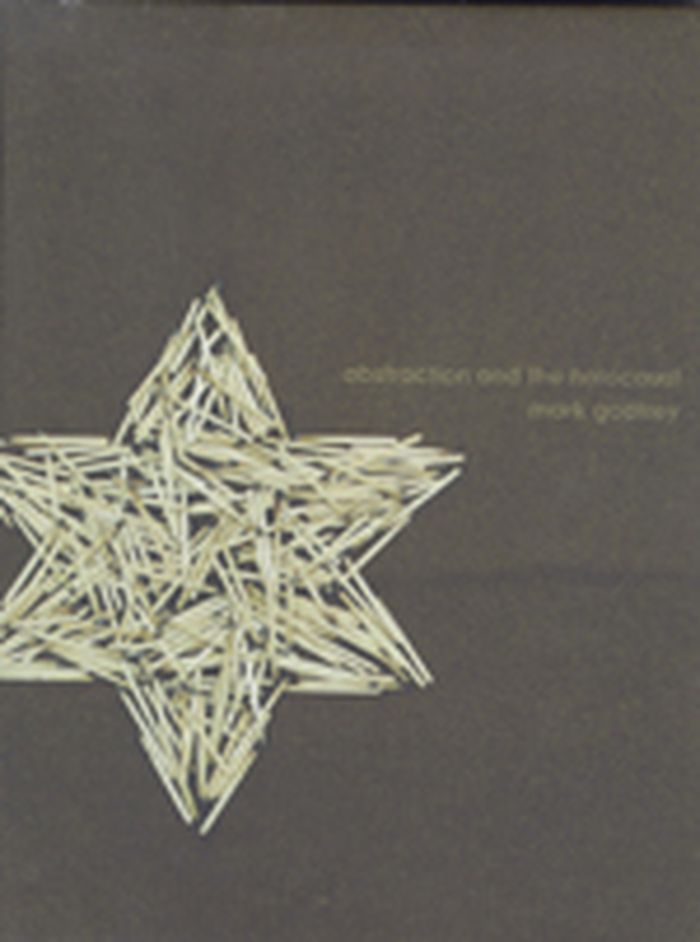
This absorbing book looks closely at a series of American art and architectural projects that respond to the memory of the Holocaust. Mark Godfrey investigates how abstract artists and architects—whose work by its very nature rejects conventional figuration or symbolism—have negotiated Holocaust memory without ever representing the Holocaust directly. His thought-provoking conclusions will alter the way we understand abstraction, the place of abstract artists in art history, and “Holocaust art.” The book considers works from 1951 to the present and includes, among others, paintings by Morris Louis, Frank Stella, and Barnett Newman; Louis Kahn’s proposal for New York City’s first Holocaust memorial; and United States Holocaust Memorial Museum commissions by Richard Serra, Joel Shapiro, Sol Lewitt, and Ellsworth Kelly. The book concludes with a thoughtful discussion of Peter Eisenman’s Berlin Holocaust memorial and Susan Hiller’s photographic and video work, The J. Street Project, and shows how these works extend the possibilities of abstraction as a form of Holocaust representation.
Abstraction and the holocaust
Actions:
Prix:
$59.95
(disponible sur commande)
Résumé:
This absorbing book looks closely at a series of American art and architectural projects that respond to the memory of the Holocaust. Mark Godfrey investigates how abstract artists and architects—whose work by its very nature rejects conventional figuration or symbolism—have negotiated Holocaust memory without ever representing the Holocaust directly. His thought-provoking conclusions will alter the way we understand abstraction, the place of abstract artists in art history, and “Holocaust art.” The book considers works from 1951 to the present and includes, among others, paintings by Morris Louis, Frank Stella, and Barnett Newman; Louis Kahn’s proposal for New York City’s first Holocaust memorial; and United States Holocaust Memorial Museum commissions by Richard Serra, Joel Shapiro, Sol Lewitt, and Ellsworth Kelly. The book concludes with a thoughtful discussion of Peter Eisenman’s Berlin Holocaust memorial and Susan Hiller’s photographic and video work, The J. Street Project, and shows how these works extend the possibilities of abstraction as a form of Holocaust representation.
Classification:
livres
livres
Publication:
octobre 2007, New Haven London
octobre 2007, New Haven London
Sujet:
Théorie de l’art
Théorie de l’art


