


972 Résultats
Classification:
livres
livres
Actions:
Prix:
$30.95
(disponible sur commande)
Résumé:
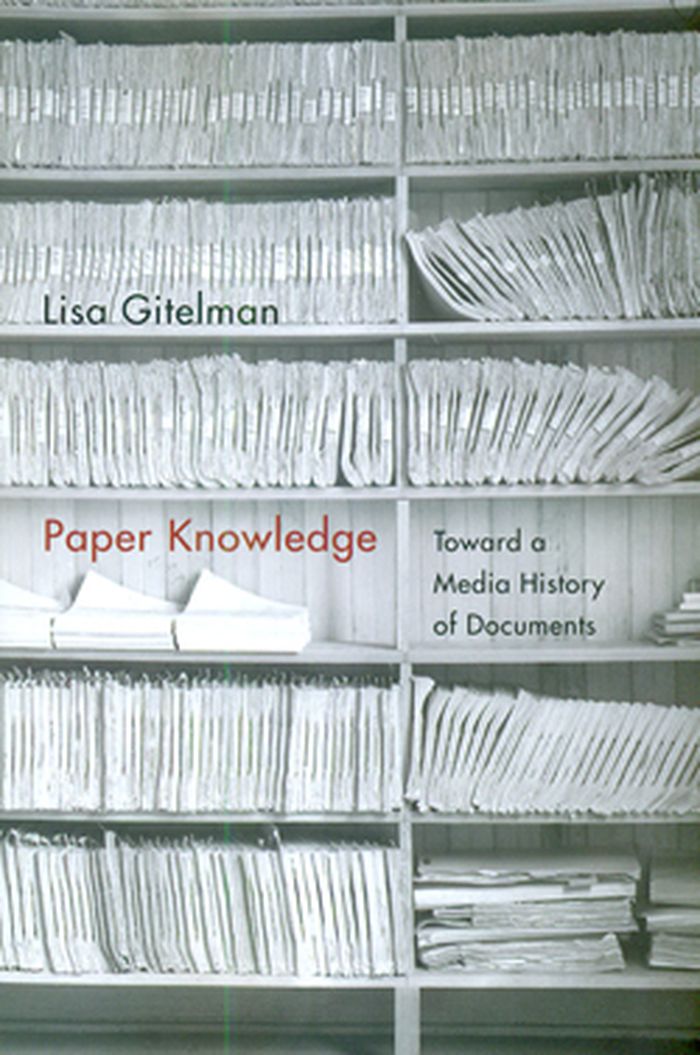
Paper Knowledge is a remarkable book about the mundane: the library card, the promissory note, the movie ticket, the PDF (Portable Document Format). It is a media history of the document. Drawing examples from the 1870s, the 1930s, the 1960s, and today, Lisa Gitelman thinks across the media that the document form has come to inhabit over the last 150 years, including(...)
Titre:
Paper knowledge: toward a media history of documents
Actions:
Prix:
$30.95
(disponible sur commande)
Résumé:
Paper Knowledge is a remarkable book about the mundane: the library card, the promissory note, the movie ticket, the PDF (Portable Document Format). It is a media history of the document. Drawing examples from the 1870s, the 1930s, the 1960s, and today, Lisa Gitelman thinks across the media that the document form has come to inhabit over the last 150 years, including letterpress printing, typing and carbon paper, mimeograph, microfilm, offset printing, photocopying, and scanning.
Classification:
livres
livres
Publication:
mars 2014
mars 2014
Classification:
livres
livres

Actions:
Prix:
$27.50
(disponible sur commande)
Résumé:
Todd Presner, David Shepard, and Yoh Kawano put digital humanities theory into practice to chart the proliferating cultural records of places around the world. A digital platform transmogrified into a book, it explains the ambitious online project of the same name that maps the historical layers of city spaces in an interactive, hypermedia environment. The authors examine(...)
Publication:
juin 2014
juin 2014
Titre:
Hypercities: thick mapping in the digital humanities
Actions:
Prix:
$27.50
(disponible sur commande)
Résumé:
Todd Presner, David Shepard, and Yoh Kawano put digital humanities theory into practice to chart the proliferating cultural records of places around the world. A digital platform transmogrified into a book, it explains the ambitious online project of the same name that maps the historical layers of city spaces in an interactive, hypermedia environment. The authors examine the media archaeology of Google Earth and the cultural–historical meaning of map projections, and explore recent events—the “Arab Spring” and the Fukushima nuclear power plant disaster—through social media mapping that incorporates data visualizations, photographic documents, and Twitter streams.
Classification:
livres
livres
Publication:
juin 2014
juin 2014
Classification:
livres
livres

Titre:
The library beyond the book
The library beyond the book
Actions:
Prix:
$26.50
(disponible en magasin)
Résumé:
With textbook readers and digital downloads proliferating, it is easy to imagine a time when printed books will vanish. Such forecasts miss the mark, argue Jeffrey Schnapp and Matthew Battles. Future bookshelves will not be wholly virtual, and libraries will thrive—although in a variety of new social, cultural, and architectural forms. Schnapp and Battles combine deep(...)
Publication:
juin 2014
juin 2014
Titre:
The library beyond the book
Actions:
Prix:
$26.50
(disponible en magasin)
Résumé:
With textbook readers and digital downloads proliferating, it is easy to imagine a time when printed books will vanish. Such forecasts miss the mark, argue Jeffrey Schnapp and Matthew Battles. Future bookshelves will not be wholly virtual, and libraries will thrive—although in a variety of new social, cultural, and architectural forms. Schnapp and Battles combine deep study of the library’s history with a record of institutional and technical innovation at metaLAB, a research group at the forefront of the digital humanities.
Classification:
livres
livres
Publication:
juin 2014
juin 2014
Classification:
livres
livres
Actions:
Prix:
$34.00
(disponible sur commande)
Résumé:
Graphesis provides a descriptive critical language for the analysis of graphical knowledge. In an interdisciplinary study fusing digital humanities with media studies and graphic design history, Drucker outlines the principles by which visual formats organize meaningful content. Among the most significant of these formats is the graphical user interface (GUI)—the dominant(...)
Titre:
Graphesis: visual forms of knowledge production
Actions:
Prix:
$34.00
(disponible sur commande)
Résumé:
Graphesis provides a descriptive critical language for the analysis of graphical knowledge. In an interdisciplinary study fusing digital humanities with media studies and graphic design history, Drucker outlines the principles by which visual formats organize meaningful content. Among the most significant of these formats is the graphical user interface (GUI)—the dominant feature of the screens of nearly all consumer electronic devices. Because so much of our personal and professional lives is mediated through visual interfaces, it is important to start thinking critically about how they shape knowledge, our behavior, and even our identity.
Classification:
livres
livres
Publication:
juin 2014
juin 2014
Classification:
périodiques
périodiques
Prix:
$43.95
(disponible sur commande)
Résumé:
In the next decade or so, the widespread adoption of robotics is set to transform the construction industry: building techniques will become increasingly automated both on- and off-site, dispensing with manual labour and enabling greater cost and operational efficiencies. What unique opportunities, however, does robotics afford beyond operational effectiveness explicitly(...)
Titre:
AD 84:3 Made by robots: challenging architecture at a larger scale
Actions:
Prix:
$43.95
(disponible sur commande)
Résumé:
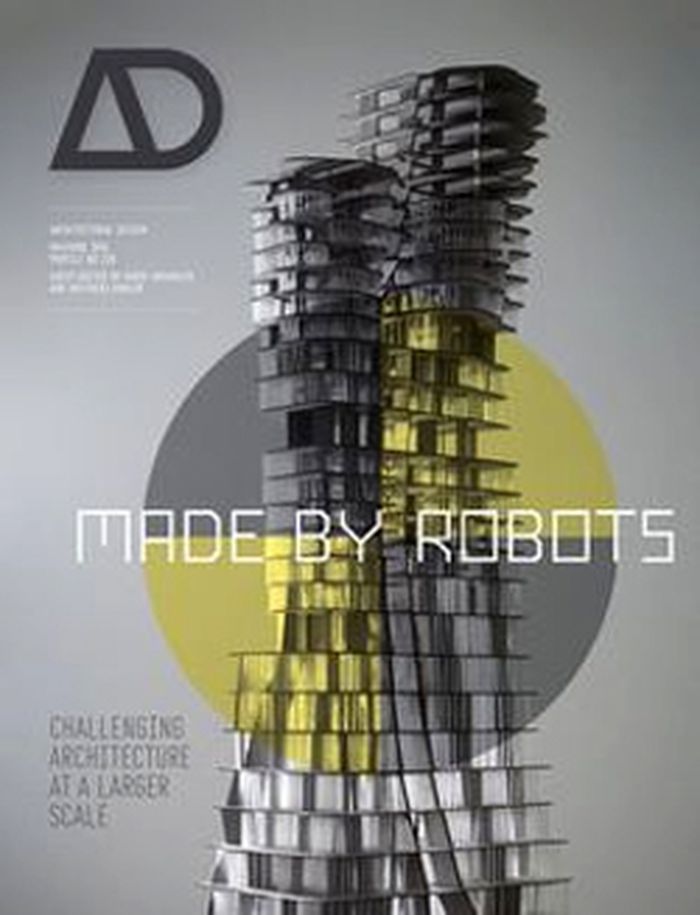
In the next decade or so, the widespread adoption of robotics is set to transform the construction industry: building techniques will become increasingly automated both on- and off-site, dispensing with manual labour and enabling greater cost and operational efficiencies. What unique opportunities, however, does robotics afford beyond operational effectiveness explicitly for the practice of architecture? What is the potential for the serial production of non-standard elements as well as for varied construction processes? In order to scale up and advance the application of robotics, for both prefabrication and on-site construction, there needs to be an understanding of the different capabilities, and these should be considered right from the start of the design and planning process. This issue of "AD" showcases the findings of the Architecture and Digital Fabrication research module at the ETH Zurich Future Cities Laboratory in Singapore, directed by Fabio Gramazio and Matthias Kohler, which explores the possibilities of robotic construction processes for architecture and their large-scale application to the design and construction of high-rise buildings.
Classification:
périodiques
périodiques
Publication:
mai 2014
mai 2014
Classification:
livres
livres
Titre:
A prehistory of the cloud
A prehistory of the cloud
Actions:
Prix:
$34.95
(disponible sur commande)
Résumé:
We may imagine the digital cloud as placeless, mute, ethereal, and unmediated. Yet the reality of the cloud is embodied in thousands of massive data centers, any one of which can use as much electricity as a midsized town. Even all these data centers are only one small part of the cloud. Behind that cloud-shaped icon on our screens is a whole universe of technologies and(...)
Titre:
A prehistory of the cloud
Actions:
Prix:
$34.95
(disponible sur commande)
Résumé:
We may imagine the digital cloud as placeless, mute, ethereal, and unmediated. Yet the reality of the cloud is embodied in thousands of massive data centers, any one of which can use as much electricity as a midsized town. Even all these data centers are only one small part of the cloud. Behind that cloud-shaped icon on our screens is a whole universe of technologies and cultural norms, all working to keep us from noticing their existence. In this book, Tung-Hui Hu examines the gap between the real and the virtual in our understanding of the cloud.
Classification:
livres
livres
Publication:
août 2015
août 2015
Classification:
livres
livres
Actions:
Prix:
$48.00
(disponible sur commande)
Résumé:
Is there a cultural logic of what we have come to call the information age? Have the technologies and techniques centered on the computer provided not only tools but also the metaphors through which we now understand the social and economic formation of our world? In Control, Seb Franklin addresses the conditions of knowledge that make the concept of the "information(...)
Titre:
Control: digitality as cultural logic
Actions:
Prix:
$48.00
(disponible sur commande)
Résumé:
Is there a cultural logic of what we have come to call the information age? Have the technologies and techniques centered on the computer provided not only tools but also the metaphors through which we now understand the social and economic formation of our world? In Control, Seb Franklin addresses the conditions of knowledge that make the concept of the "information economy" possible while at the same time obscuring its effects on material social spaces. In so doing, Franklin traces three intertwined threads: the relationships among information, labor, and social management that emerged in the nineteenth century; the mid-twentieth-century diffusion of computational metaphors; and the appearance of informatic principles in certain contemporary socioeconomic and cultural practices. Drawing on critical theory, media theory, and the history of science, Franklin names control as the episteme grounding late capitalism. Beyond any specific device or set of technically mediated practices, digitality functions within this episteme as the logical basis for reshaped concepts of labor, subjectivity, and collectivity, as well as for the intensification of older modes of exclusion and dispossession. In tracking the pervasiveness of this logical mode into the present, Franklin locates the cultural traces of control across a diverse body of objects and practices, from cybernetics to economic theory and management styles, and from concepts of language and subjectivity to literary texts, films, and video games.
Classification:
livres
livres
Publication:
novembre 2015
novembre 2015
Classification:
périodiques
périodiques
Titre:
Caldasia.
Caldasia.
Actions:
Auteur:
Sujet:
Publication:
Bogotá : Universidad Nacional de Colombia, Instituto de Ciencias Naturales, 1940-
Bogotá : Universidad Nacional de Colombia, Instituto de Ciencias Naturales, 1940-
Classification:
périodiques
périodiques
Publication:
Bogotá : Universidad Nacional de Colombia, Instituto de Ciencias Naturales, 1940-
Bogotá : Universidad Nacional de Colombia, Instituto de Ciencias Naturales, 1940-
Auteur:
Sujet:
Classification:
périodiques
périodiques
Actions:
Auteur:
Sujet:
Publication:
México : Instituto Panamericano de Geografía e Historia, 1941-
México : Instituto Panamericano de Geografía e Historia, 1941-
Classification:
périodiques
périodiques
Publication:
México : Instituto Panamericano de Geografía e Historia, 1941-
México : Instituto Panamericano de Geografía e Historia, 1941-
Auteur:
Sujet:
Classification:
livres
livres
Actions:
Prix:
$46.95
(disponible sur commande)
Résumé:
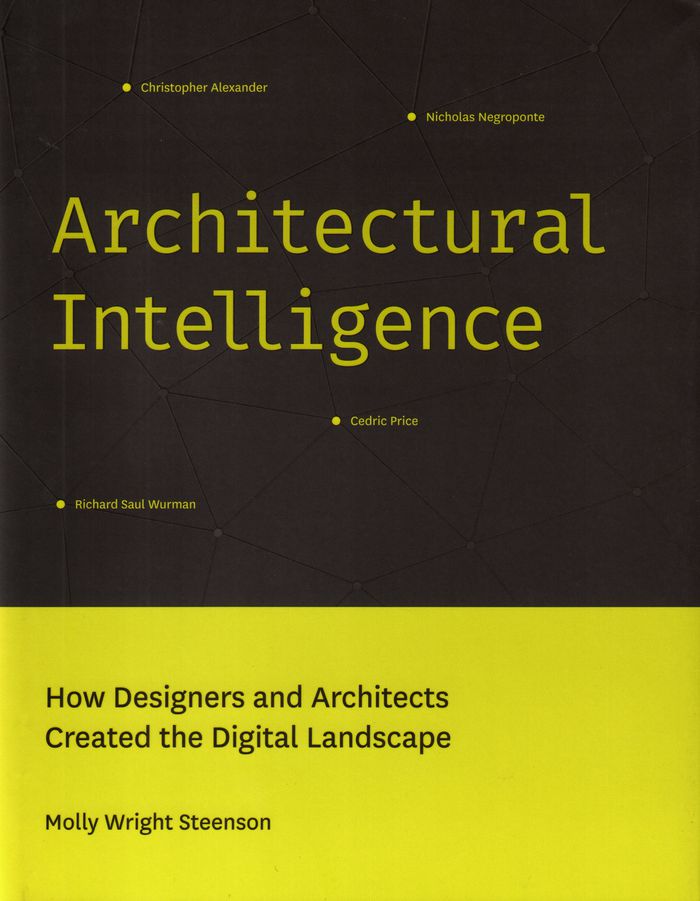
In Architectural Intelligence, Molly Wright Steenson explores the work of four architects in the 1960s and 1970s who incorporated elements of interactivity into their work. Christopher Alexander, Richard Saul Wurman, Cedric Price, and Nicholas Negroponte and the MIT Architecture Machine Group all incorporated technologies—including cybernetics and artificial(...)
Publication:
décembre 2017
décembre 2017
Titre:
Architectural intelligence: how designers and architects created the digital landscape
Actions:
Prix:
$46.95
(disponible sur commande)
Résumé:
In Architectural Intelligence, Molly Wright Steenson explores the work of four architects in the 1960s and 1970s who incorporated elements of interactivity into their work. Christopher Alexander, Richard Saul Wurman, Cedric Price, and Nicholas Negroponte and the MIT Architecture Machine Group all incorporated technologies—including cybernetics and artificial intelligence—into their work and influenced digital design practices from the late 1980s to the present day.
Classification:
livres
livres
Publication:
décembre 2017
décembre 2017


