


10284 Résultats
Classification:
livres
livres
Titre:
Picturing
Picturing
Actions:
Prix:
$36.00
(disponible sur commande)
Résumé:
The first volume in a new series on critical concerns in the history of American art, 'Picturing' brings together essays by scholars who discuss the creation and consumption of images from the early modern period through the end of the twentieth century. Some of the contributions focus on art critical texts, like Gertrude Stein’s portrait of Cézanne, while others have as(...)
$36.00
(disponible sur commande)
Résumé:
The first volume in a new series on critical concerns in the history of American art, 'Picturing' brings together essays by scholars who discuss the creation and consumption of images from the early modern period through the end of the twentieth century. Some of the contributions focus on art critical texts, like Gertrude Stein’s portrait of Cézanne, while others have as(...)
Titre:
Picturing
Actions:
Prix:
$36.00
(disponible sur commande)
Résumé:
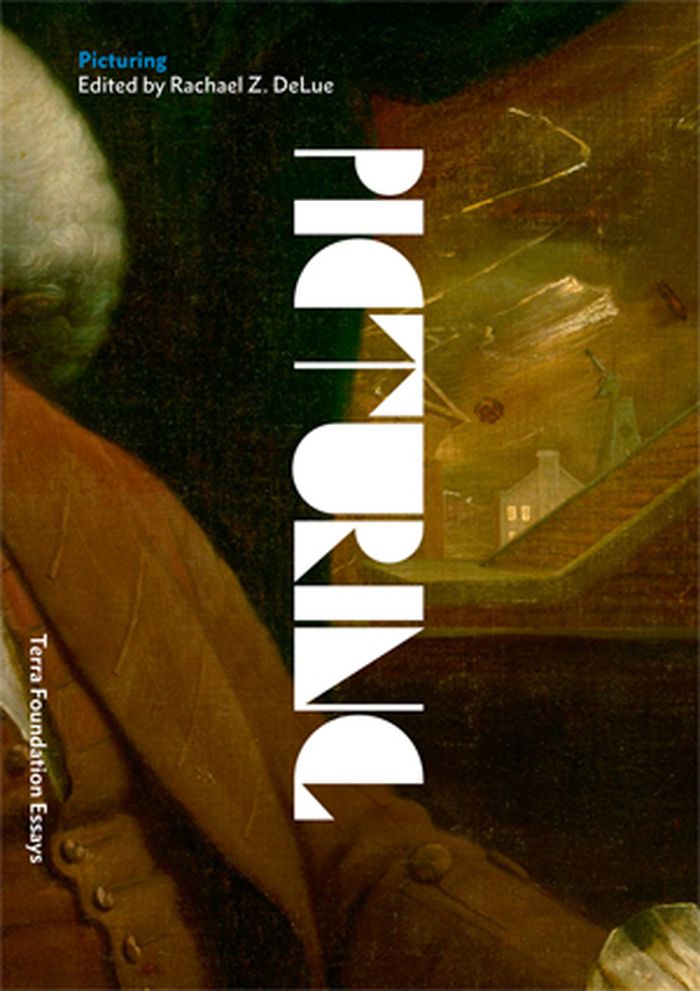
The first volume in a new series on critical concerns in the history of American art, 'Picturing' brings together essays by scholars who discuss the creation and consumption of images from the early modern period through the end of the twentieth century. Some of the contributions focus on art critical texts, like Gertrude Stein’s portrait of Cézanne, while others have as their point of departure particular artworks, from a portrait of Benjamin Franklin to Eadweard Muybridge’s nineteenth-century photographs of the California Coast. Works that addressed images and image making were not confined to the academy; they spilled out into poetry, literature, theater, and philosophy, and the essays’ considerations likewise range freely, from painting to natural history illustrations, travel narratives, and popular fiction. Together, the contributions demonstrate a rich deliberation that thoroughly debunks the notion that American art is merely derivative of a European tradition.
Picturing
Actions:
Prix:
$36.00
(disponible sur commande)
Résumé:
The first volume in a new series on critical concerns in the history of American art, 'Picturing' brings together essays by scholars who discuss the creation and consumption of images from the early modern period through the end of the twentieth century. Some of the contributions focus on art critical texts, like Gertrude Stein’s portrait of Cézanne, while others have as their point of departure particular artworks, from a portrait of Benjamin Franklin to Eadweard Muybridge’s nineteenth-century photographs of the California Coast. Works that addressed images and image making were not confined to the academy; they spilled out into poetry, literature, theater, and philosophy, and the essays’ considerations likewise range freely, from painting to natural history illustrations, travel narratives, and popular fiction. Together, the contributions demonstrate a rich deliberation that thoroughly debunks the notion that American art is merely derivative of a European tradition.
Classification:
livres
livres
Publication:
mai 2016
mai 2016
Sujet:
Théorie de l’art
Théorie de l’art
Classification:
périodiques
périodiques
Actions:
Prix:
$39.95
(disponible en magasin)
Résumé:
Internationally known for his labors as head of the famous magazine Quaderns between 1981 and 1990, Josep Lluís Mateo has never abandoned his professional practice as an architect, building not only in Spain, but in various European countries, an activity he currently combines with teaching at the ETH in Zurich. This monographic issue presents his most recent projects(...)
$39.95
(disponible en magasin)
Résumé:
Internationally known for his labors as head of the famous magazine Quaderns between 1981 and 1990, Josep Lluís Mateo has never abandoned his professional practice as an architect, building not only in Spain, but in various European countries, an activity he currently combines with teaching at the ETH in Zurich. This monographic issue presents his most recent projects(...)
Sujet:
Revues
Revues
Publication:
février 2002, Barcelona
février 2002, Barcelona
Titre:
2G 25 : Josep Lluis Mateo, recent work
Actions:
Prix:
$39.95
(disponible en magasin)
Résumé:
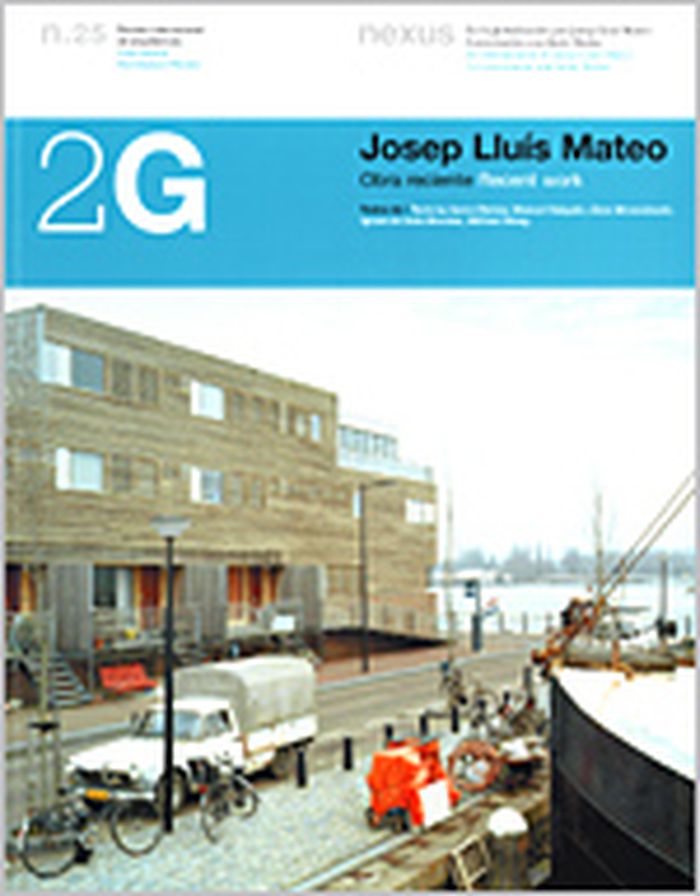
Internationally known for his labors as head of the famous magazine Quaderns between 1981 and 1990, Josep Lluís Mateo has never abandoned his professional practice as an architect, building not only in Spain, but in various European countries, an activity he currently combines with teaching at the ETH in Zurich. This monographic issue presents his most recent projects and buildings. Among his built works are the housing block on Borneo Island (Amsterdam), two groups of apartments in Barcelona, a covered swimming pool in Girona, and the Barcelona International Convention Center, due to be inaugurated in 2004. This number features essays by such prestigious international critics as Wilfried Wang, Ákos Moravánszky, Manuel Delgado, Aaron Betsky and Ignasi de Solà-Morales, and is complemented by a conversation with Iñaki Ábalos, a text by Mateo himself, "In Globalization", and photos taken especially for this issue by Xavier Ribas.
2G 25 : Josep Lluis Mateo, recent work
Actions:
Prix:
$39.95
(disponible en magasin)
Résumé:
Internationally known for his labors as head of the famous magazine Quaderns between 1981 and 1990, Josep Lluís Mateo has never abandoned his professional practice as an architect, building not only in Spain, but in various European countries, an activity he currently combines with teaching at the ETH in Zurich. This monographic issue presents his most recent projects and buildings. Among his built works are the housing block on Borneo Island (Amsterdam), two groups of apartments in Barcelona, a covered swimming pool in Girona, and the Barcelona International Convention Center, due to be inaugurated in 2004. This number features essays by such prestigious international critics as Wilfried Wang, Ákos Moravánszky, Manuel Delgado, Aaron Betsky and Ignasi de Solà-Morales, and is complemented by a conversation with Iñaki Ábalos, a text by Mateo himself, "In Globalization", and photos taken especially for this issue by Xavier Ribas.
Classification:
périodiques
périodiques
Publication:
février 2002, Barcelona
février 2002, Barcelona
Sujet:
Revues
Revues
Classification:
livres
livres
Actions:
Prix:
$79.95
(disponible sur commande)
Résumé:
In this revelatory study of one of the great architects in British history, Vaughan Hart considers Christopher Wren’s (1632–1723) interest in Eastern antiquity and Ottoman architecture, an interest that would animate much of his theory and practice. As the early modern understanding of antiquity broadened to include new discoveries at Palmyra and Persepolis, Wren disputed(...)
$79.95
(disponible sur commande)
Résumé:
In this revelatory study of one of the great architects in British history, Vaughan Hart considers Christopher Wren’s (1632–1723) interest in Eastern antiquity and Ottoman architecture, an interest that would animate much of his theory and practice. As the early modern understanding of antiquity broadened to include new discoveries at Palmyra and Persepolis, Wren disputed(...)
Titre:
Christopher Wren: in search of eastern antiquity
Actions:
Prix:
$79.95
(disponible sur commande)
Résumé:
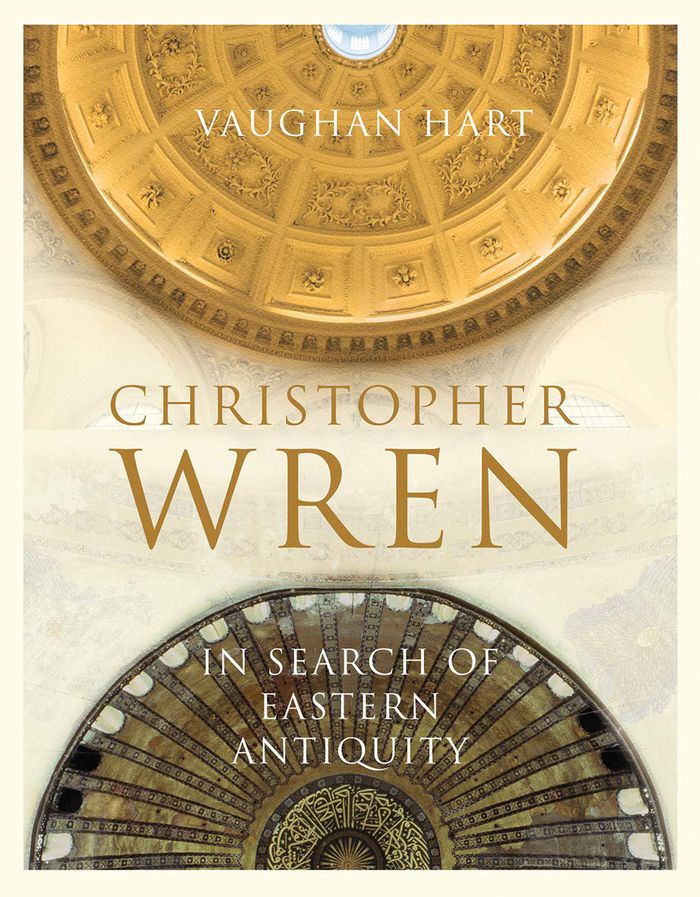
In this revelatory study of one of the great architects in British history, Vaughan Hart considers Christopher Wren’s (1632–1723) interest in Eastern antiquity and Ottoman architecture, an interest that would animate much of his theory and practice. As the early modern understanding of antiquity broadened to include new discoveries at Palmyra and Persepolis, Wren disputed common assumptions about the European origins of Classical and Gothic architecture, tracing these building traditions not to the Greeks or Germans but to the stonemasons of the biblical East. In a deft analysis, Hart contextualizes Wren’s use of classical elements—columns, domes, and cross plans—within his enthusiasm for the East and the broader Anglican interest in the Eastern church. A careful study of diary records reappraises Wren’s working relationship with Robert Hooke (1635–1703), who shared in many of Wren’s theoretical commitments. The result is a new, deepened understanding of Wren’s work.
Christopher Wren: in search of eastern antiquity
Actions:
Prix:
$79.95
(disponible sur commande)
Résumé:
In this revelatory study of one of the great architects in British history, Vaughan Hart considers Christopher Wren’s (1632–1723) interest in Eastern antiquity and Ottoman architecture, an interest that would animate much of his theory and practice. As the early modern understanding of antiquity broadened to include new discoveries at Palmyra and Persepolis, Wren disputed common assumptions about the European origins of Classical and Gothic architecture, tracing these building traditions not to the Greeks or Germans but to the stonemasons of the biblical East. In a deft analysis, Hart contextualizes Wren’s use of classical elements—columns, domes, and cross plans—within his enthusiasm for the East and the broader Anglican interest in the Eastern church. A careful study of diary records reappraises Wren’s working relationship with Robert Hooke (1635–1703), who shared in many of Wren’s theoretical commitments. The result is a new, deepened understanding of Wren’s work.
Classification:
livres
livres
Publication:
avril 2020
avril 2020
Sujet:
Architecture, monographies
Architecture, monographies
Classification:
livres
livres
Prix:
$24.00
(disponible sur commande)
Résumé:
In the last decade, public discussions of transgender issues have increased exponentially. However, with this increased visibility has come not just power, but regulation, both in favor of and against trans people. What was once regarded as an unusual or even unfortunate disorder has become an accepted articulation of gendered embodiment as well as a new site for(...)
$24.00
(disponible sur commande)
Résumé:
In the last decade, public discussions of transgender issues have increased exponentially. However, with this increased visibility has come not just power, but regulation, both in favor of and against trans people. What was once regarded as an unusual or even unfortunate disorder has become an accepted articulation of gendered embodiment as well as a new site for(...)
Titre:
Trans*: A quick and quirky account of gender variability
Actions:
Prix:
$24.00
(disponible sur commande)
Résumé:
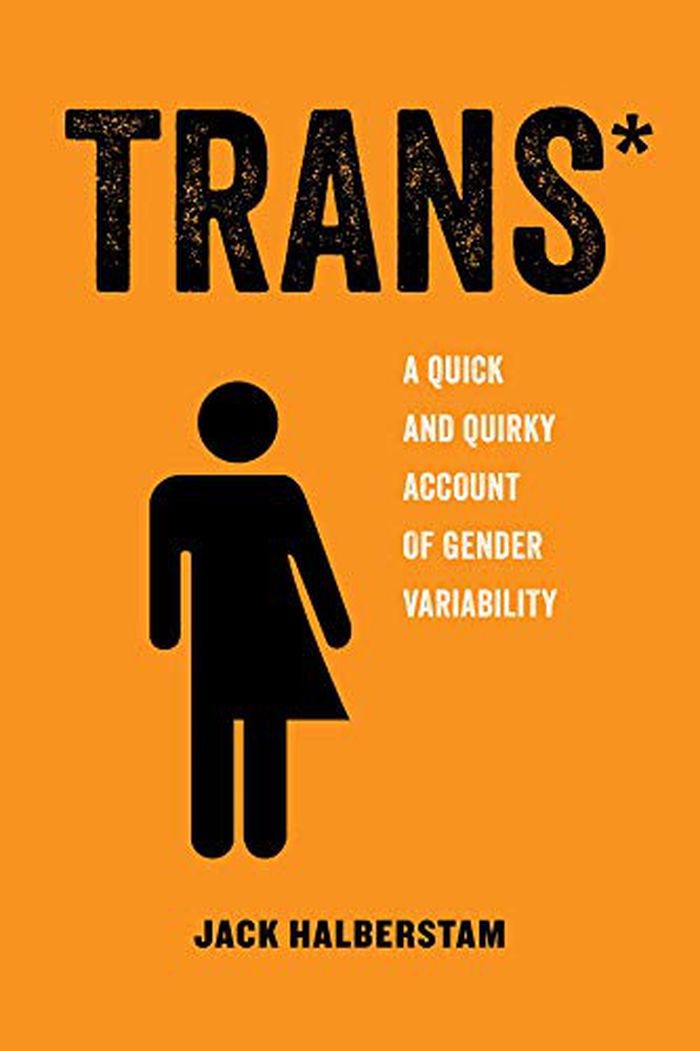
In the last decade, public discussions of transgender issues have increased exponentially. However, with this increased visibility has come not just power, but regulation, both in favor of and against trans people. What was once regarded as an unusual or even unfortunate disorder has become an accepted articulation of gendered embodiment as well as a new site for political activism and political recognition. What happened in the last few decades to prompt such an extensive rethinking of our understanding of gendered embodiment? How did a stigmatized identity become so central to U.S. and European articulations of self? And how have people responded to the new definitions and understanding of sex and the gendered body? In ''Trans*,'' Jack Halberstam explores these recent shifts in the meaning of the gendered body and representation, and explores the possibilities of a nongendered, gender-optional, or gender-queer future.
Trans*: A quick and quirky account of gender variability
Actions:
Prix:
$24.00
(disponible sur commande)
Résumé:
In the last decade, public discussions of transgender issues have increased exponentially. However, with this increased visibility has come not just power, but regulation, both in favor of and against trans people. What was once regarded as an unusual or even unfortunate disorder has become an accepted articulation of gendered embodiment as well as a new site for political activism and political recognition. What happened in the last few decades to prompt such an extensive rethinking of our understanding of gendered embodiment? How did a stigmatized identity become so central to U.S. and European articulations of self? And how have people responded to the new definitions and understanding of sex and the gendered body? In ''Trans*,'' Jack Halberstam explores these recent shifts in the meaning of the gendered body and representation, and explores the possibilities of a nongendered, gender-optional, or gender-queer future.
Classification:
livres
livres
Publication:
janvier 2018
janvier 2018
Sujet:
Social
Social
Classification:
livres
livres
Actions:
Prix:
$75.95
(disponible sur commande)
Résumé:
Founded by Swiss settlers in 1845, New Glarus in Wisconsin evolved from being a dairy farming and cheese production village to a popular tourist destination. Following a grave economic downturn in the 1960s and 1970s, the community discovered embracing the image of its cultural heritage, particularly traditional architectural details, as a way of survival. Consequently,(...)
$75.95
(disponible sur commande)
Résumé:
Founded by Swiss settlers in 1845, New Glarus in Wisconsin evolved from being a dairy farming and cheese production village to a popular tourist destination. Following a grave economic downturn in the 1960s and 1970s, the community discovered embracing the image of its cultural heritage, particularly traditional architectural details, as a way of survival. Consequently,(...)
Titre:
Swissness applied: Learning from New Glarus
Actions:
Prix:
$75.95
(disponible sur commande)
Résumé:
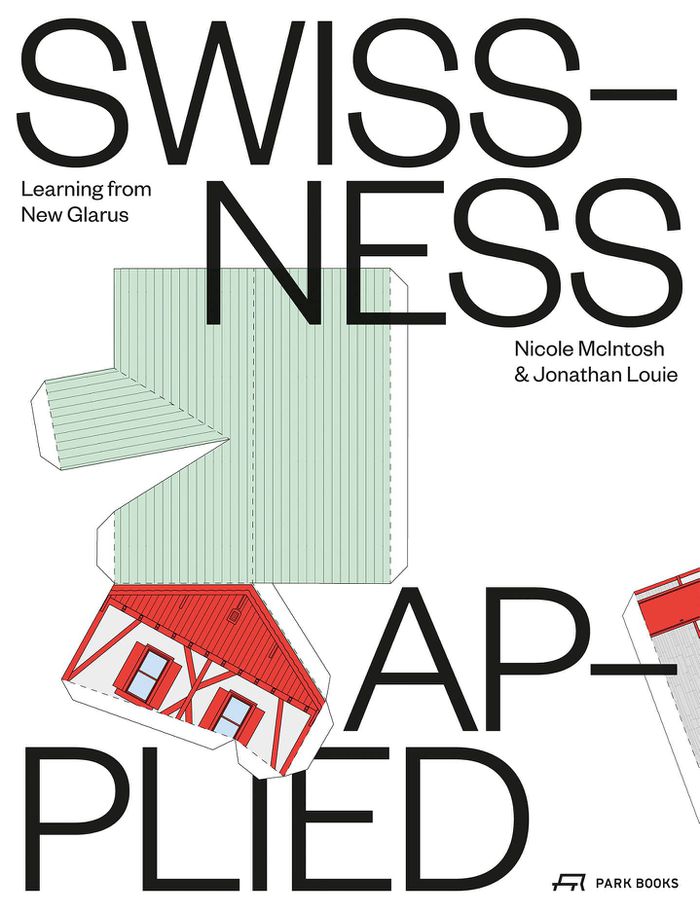
Founded by Swiss settlers in 1845, New Glarus in Wisconsin evolved from being a dairy farming and cheese production village to a popular tourist destination. Following a grave economic downturn in the 1960s and 1970s, the community discovered embracing the image of its cultural heritage, particularly traditional architectural details, as a way of survival. Consequently, they began to change their commercial building façades to appear even more Swiss. Since 1999, the town has even regulated the production of new buildings via its building codes to preserve this particular aesthetic evoking the familiar traditional Swiss chalet style. This volume investigates the transformation of European immigrant towns in the United States, exemplified by New Glarus. It features the results of extensive fieldwork on buildings in the village as well as design projections based on the local building code and evaluates the outcomes through different representation techniques.
Swissness applied: Learning from New Glarus
Actions:
Prix:
$75.95
(disponible sur commande)
Résumé:
Founded by Swiss settlers in 1845, New Glarus in Wisconsin evolved from being a dairy farming and cheese production village to a popular tourist destination. Following a grave economic downturn in the 1960s and 1970s, the community discovered embracing the image of its cultural heritage, particularly traditional architectural details, as a way of survival. Consequently, they began to change their commercial building façades to appear even more Swiss. Since 1999, the town has even regulated the production of new buildings via its building codes to preserve this particular aesthetic evoking the familiar traditional Swiss chalet style. This volume investigates the transformation of European immigrant towns in the United States, exemplified by New Glarus. It features the results of extensive fieldwork on buildings in the village as well as design projections based on the local building code and evaluates the outcomes through different representation techniques.
Classification:
livres
livres
Publication:
décembre 2021
décembre 2021
Sujet:
Architecture contemporaine
Architecture contemporaine
Classification:
livres
livres
Actions:
Prix:
$144.95
(disponible sur commande)
Résumé:
This volume, originally published in 1962 and long out of print, was the first book on the architect to feature Kahn’s own images and words—and it was Kahn’s favorite book on his work. It includes his early sketches, reproduced at full size, from his European travels in the 1950s as well as renderings of the designs for several of his notable buildings, along with(...)
$144.95
(disponible sur commande)
Résumé:
This volume, originally published in 1962 and long out of print, was the first book on the architect to feature Kahn’s own images and words—and it was Kahn’s favorite book on his work. It includes his early sketches, reproduced at full size, from his European travels in the 1950s as well as renderings of the designs for several of his notable buildings, along with(...)
Sujet:
Architecture, monographies
Architecture, monographies
Publication:
avril 2022
avril 2022
Titre:
The notebooks and drawings of Louis I. Kahn
Actions:
Prix:
$144.95
(disponible sur commande)
Résumé:
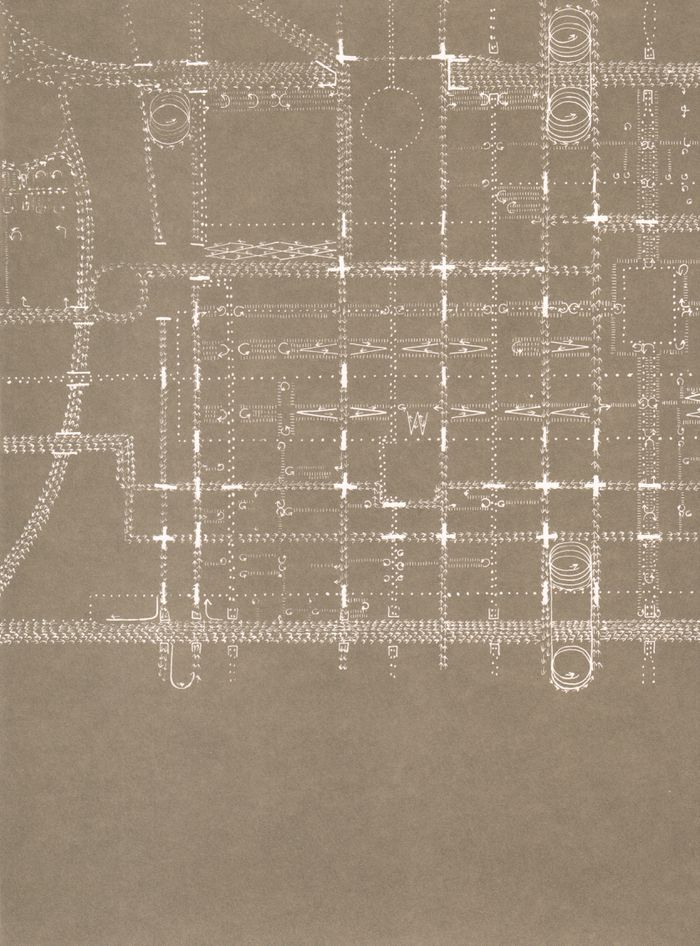
This volume, originally published in 1962 and long out of print, was the first book on the architect to feature Kahn’s own images and words—and it was Kahn’s favorite book on his work. It includes his early sketches, reproduced at full size, from his European travels in the 1950s as well as renderings of the designs for several of his notable buildings, along with unpublished speeches and excerpts from lectures, radio broadcasts, and other sources. In this sleeve-encased two-book set, a facsimile of the original publication is accompanied by an illustrated Reader’s Guide that features essays and commentary by writers such as scholar William Whitaker and Pulitzer Prize–winning critic Paul Goldberger, family members, and fellow architects such as Frank Gehry, Tadao Ando, and Denise Scott Brown that contextualize the enormous impact and continuing legacy of one of the twentieth century’s most influential architects.
The notebooks and drawings of Louis I. Kahn
Actions:
Prix:
$144.95
(disponible sur commande)
Résumé:
This volume, originally published in 1962 and long out of print, was the first book on the architect to feature Kahn’s own images and words—and it was Kahn’s favorite book on his work. It includes his early sketches, reproduced at full size, from his European travels in the 1950s as well as renderings of the designs for several of his notable buildings, along with unpublished speeches and excerpts from lectures, radio broadcasts, and other sources. In this sleeve-encased two-book set, a facsimile of the original publication is accompanied by an illustrated Reader’s Guide that features essays and commentary by writers such as scholar William Whitaker and Pulitzer Prize–winning critic Paul Goldberger, family members, and fellow architects such as Frank Gehry, Tadao Ando, and Denise Scott Brown that contextualize the enormous impact and continuing legacy of one of the twentieth century’s most influential architects.
Classification:
livres
livres
Publication:
avril 2022
avril 2022
Sujet:
Architecture, monographies
Architecture, monographies
Classification:
livres
livres
Actions:
Exemplaires:
Description:
xviii, 249 pages : illustrations, maps ; 24 cm.
Description:
xviii, 249 pages : illustrations, maps ; 24 cm.
Auteur:
Sujet:
Publication:
Baltimore : Johns Hopkins University Press, 2003.
Baltimore : Johns Hopkins University Press, 2003.
Titre:
Capital's utopia : Vandergrift, Pennsylvania, 1855-1916 / Anne E. Mosher.
Actions:
Exemplaires:
Description:
xviii, 249 pages : illustrations, maps ; 24 cm.
Capital's utopia : Vandergrift, Pennsylvania, 1855-1916 / Anne E. Mosher.
Actions:
Exemplaires:
Description:
xviii, 249 pages : illustrations, maps ; 24 cm.
Classification:
livres
livres
Publication:
Baltimore : Johns Hopkins University Press, 2003.
Baltimore : Johns Hopkins University Press, 2003.
Auteur:
Sujet:
Classification:
livres
livres
Actions:
Exemplaires:
Description:
191 pages : illustrations (chiefly color) ; 28 cm
Description:
191 pages : illustrations (chiefly color) ; 28 cm
Auteur:
Sujet:
Publication:
Cinisello Balsamo, Milano : Silvana Editoriale, ©2011.
Cinisello Balsamo, Milano : Silvana Editoriale, ©2011.
Titre:
Die letzte Freiheit : von den Pionieren der Land-Art der 1960er Jahre bis zur Natur im Cyberspace / herausgegeben von Beate Reifenscheid ; [Übersetzungen, Katy Hannan [and others]] = The last freedom : from the pioneers of Land Art in the 1960s to nature in cyberspace / edited by Beate Reifenscheid ; [translations, Katy Hannan [and others]].
Actions:
Exemplaires:
Description:
191 pages : illustrations (chiefly color) ; 28 cm
Die letzte Freiheit : von den Pionieren der Land-Art der 1960er Jahre bis zur Natur im Cyberspace / herausgegeben von Beate Reifenscheid ; [Übersetzungen, Katy Hannan [and others]] = The last freedom : from the pioneers of Land Art in the 1960s to nature in cyberspace / edited by Beate Reifenscheid ; [translations, Katy Hannan [and others]].
Actions:
Exemplaires:
Description:
191 pages : illustrations (chiefly color) ; 28 cm
Classification:
livres
livres
Publication:
Cinisello Balsamo, Milano : Silvana Editoriale, ©2011.
Cinisello Balsamo, Milano : Silvana Editoriale, ©2011.
Auteur:
Sujet:
Classification:
livres
livres
Actions:
Exemplaires:
Description:
xvi, 328 pages : illustrations ; 24 cm.
Description:
xvi, 328 pages : illustrations ; 24 cm.
Auteur:
Sujet:
Publication:
New York : Columbia University Press, [1996], ©1996
New York : Columbia University Press, [1996], ©1996
Titre:
Cities of the dead : circum-Atlantic performance / Joseph Roach.
Actions:
Exemplaires:
Description:
xvi, 328 pages : illustrations ; 24 cm.
Cities of the dead : circum-Atlantic performance / Joseph Roach.
Actions:
Exemplaires:
Description:
xvi, 328 pages : illustrations ; 24 cm.
Classification:
livres
livres
Publication:
New York : Columbia University Press, [1996], ©1996
New York : Columbia University Press, [1996], ©1996
Auteur:
Sujet:
Classification:
livres
livres
Prix:
$85.95
(disponible en magasin)
Résumé:
The fact that there is Gypsy architecture may surprise quite a few people, for Gypsies are regarded as nomads who roam through the world and settle now here, now there, never stay long in one place, and consider everything that normal citizens find important to be an unreasonable restriction of their freedom. Nevertheless, in southeastern Europe, there exists a(...)
$85.95
(disponible en magasin)
Résumé:
The fact that there is Gypsy architecture may surprise quite a few people, for Gypsies are regarded as nomads who roam through the world and settle now here, now there, never stay long in one place, and consider everything that normal citizens find important to be an unreasonable restriction of their freedom. Nevertheless, in southeastern Europe, there exists a(...)
Publication:
juillet 2007, Stuttgart, London
juillet 2007, Stuttgart, London
Titre:
Gypsy architecture : house of the Roma in Eastern Europe
Actions:
Prix:
$85.95
(disponible en magasin)
Résumé:
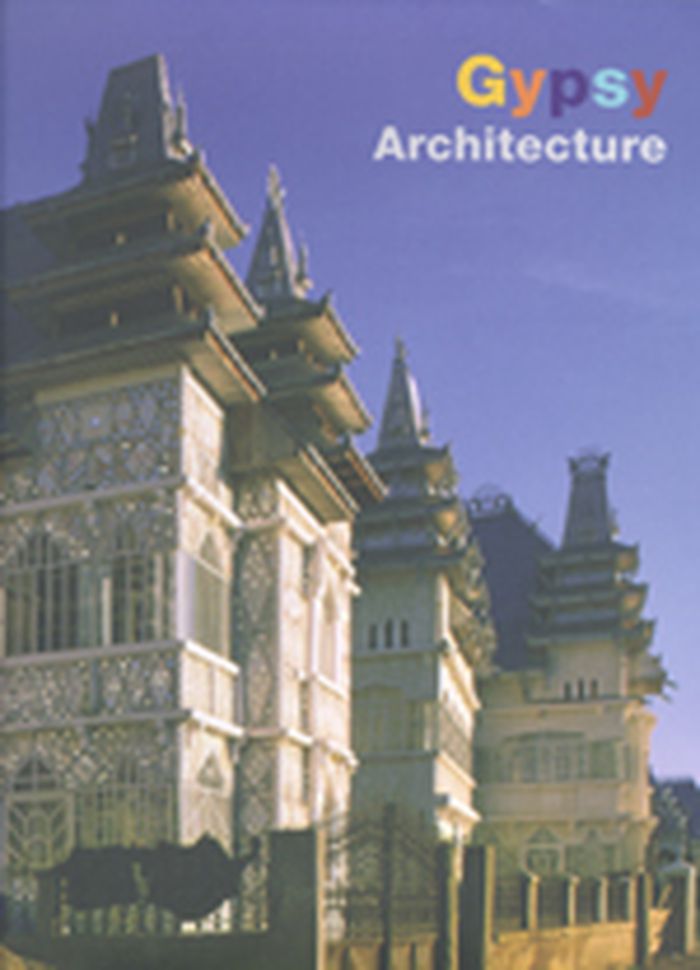
The fact that there is Gypsy architecture may surprise quite a few people, for Gypsies are regarded as nomads who roam through the world and settle now here, now there, never stay long in one place, and consider everything that normal citizens find important to be an unreasonable restriction of their freedom. Nevertheless, in southeastern Europe, there exists a remarkable architecture created by Gypsies. It seems to have been created from a dream : unreal, abstruse, and colourful, it is a composition of all the architectural styles of this world. Uninfluenced by any deeper knowledge of architectural culture, each family head chose the style, size and finishings on the basis of his own personal tastes or memories of travels, houses and things seen in other countries. The result has been the creation of bizarre and fantastic jumbles of buildings that it is hard to classify in terms of western stylistic features. Very often the houses are the result of enormous jigsaw puzzles created from an assembly of images or photographs of various different buildings, and their execution precisely follows these crazy guidelines, perhaps because they are incomprehensible to those carrying out the project. Otherwise, how could one possibly explain Indian-style roofs crowning neoclassical buildings, mansard roofs on structures of improbable style, Frenchified Chinese pagodas, heterogeneous assemblies of diverse and contrasting elements. The structures, the villas gradually soften their bizarre and fantastic imagery the closer they are built to European countries. Undoubtedly, the cultural influence of neighbouring countries already immersed in the culture and lifestyle of Europe has helped to "contaminate" the owners and bring their dwellings, the expression of their wishes, more into line with the ruling culture. What, however, remains staggering is the quality of the execution of the complex decorations, of the architectural elements and buildings that are very often contrasting, of widely differing façades surmounted by steepling roofs of no practical use whose only function is to represent, through their lack of proportion and absolute needlessness, the financial and social power of the family. Besides pieces of sculpture that are undoubtedly ritual and symbolic and originating from Indian culture, suns with spiny rays, various forms of pinnacle, geometrical moons, zoomorphic decorations,the tops of the roofs bear metalwork inscriptions giving the date of building and the name of the family or that of the wife, symbolizing a desire for display and the proclamation of ownership.
Gypsy architecture : house of the Roma in Eastern Europe
Actions:
Prix:
$85.95
(disponible en magasin)
Résumé:
The fact that there is Gypsy architecture may surprise quite a few people, for Gypsies are regarded as nomads who roam through the world and settle now here, now there, never stay long in one place, and consider everything that normal citizens find important to be an unreasonable restriction of their freedom. Nevertheless, in southeastern Europe, there exists a remarkable architecture created by Gypsies. It seems to have been created from a dream : unreal, abstruse, and colourful, it is a composition of all the architectural styles of this world. Uninfluenced by any deeper knowledge of architectural culture, each family head chose the style, size and finishings on the basis of his own personal tastes or memories of travels, houses and things seen in other countries. The result has been the creation of bizarre and fantastic jumbles of buildings that it is hard to classify in terms of western stylistic features. Very often the houses are the result of enormous jigsaw puzzles created from an assembly of images or photographs of various different buildings, and their execution precisely follows these crazy guidelines, perhaps because they are incomprehensible to those carrying out the project. Otherwise, how could one possibly explain Indian-style roofs crowning neoclassical buildings, mansard roofs on structures of improbable style, Frenchified Chinese pagodas, heterogeneous assemblies of diverse and contrasting elements. The structures, the villas gradually soften their bizarre and fantastic imagery the closer they are built to European countries. Undoubtedly, the cultural influence of neighbouring countries already immersed in the culture and lifestyle of Europe has helped to "contaminate" the owners and bring their dwellings, the expression of their wishes, more into line with the ruling culture. What, however, remains staggering is the quality of the execution of the complex decorations, of the architectural elements and buildings that are very often contrasting, of widely differing façades surmounted by steepling roofs of no practical use whose only function is to represent, through their lack of proportion and absolute needlessness, the financial and social power of the family. Besides pieces of sculpture that are undoubtedly ritual and symbolic and originating from Indian culture, suns with spiny rays, various forms of pinnacle, geometrical moons, zoomorphic decorations,the tops of the roofs bear metalwork inscriptions giving the date of building and the name of the family or that of the wife, symbolizing a desire for display and the proclamation of ownership.
Classification:
livres
livres
Publication:
juillet 2007, Stuttgart, London
juillet 2007, Stuttgart, London


