


13794 Résultats
Classification:
livres
livres

Prix:
$52.50
(disponible en magasin)
Résumé:
"Breathing Space" is a compelling and wide-ranging analysis of pneumatic phenomena in modern culture. Architect and historian Tim Altenhof brilliantly explores the physiology of breathing and its reciprocal relationship to bodies and buildings, both of which share a common atmosphere. Because breathing is controlled by the autonomic nervous system and cannot be willfully(...)
$52.50
(disponible en magasin)
Résumé:
"Breathing Space" is a compelling and wide-ranging analysis of pneumatic phenomena in modern culture. Architect and historian Tim Altenhof brilliantly explores the physiology of breathing and its reciprocal relationship to bodies and buildings, both of which share a common atmosphere. Because breathing is controlled by the autonomic nervous system and cannot be willfully(...)
Titre:
Breathing space: The architecture of pneumatic beings
Actions:
Prix:
$52.50
(disponible en magasin)
Résumé:
"Breathing Space" is a compelling and wide-ranging analysis of pneumatic phenomena in modern culture. Architect and historian Tim Altenhof brilliantly explores the physiology of breathing and its reciprocal relationship to bodies and buildings, both of which share a common atmosphere. Because breathing is controlled by the autonomic nervous system and cannot be willfully overridden, it takes place unconsciously and involuntarily—most of the time. However, beginning in the mid-nineteenth century, attitudes toward breathing changed significantly. Breathing became a widely investigated cultural and physiological phenomenon and was the basis for techniques and bodily practices that heightened pulmonary awareness. New understandings of air pollution and disease stimulated a widespread preoccupation with ventilation, impacting architecture in countless ways. Altenhof’s close readings of built structures show how the science of breathing was incorporated into architecture, whether in the design of factories, residences, or medical facilities. The lungs form a major part of the respiratory system and like no other organ tie the living body directly to its surroundings. Yet the role of lungs also poses a topological problem: engaging in atmospheric transfer, they dissolve the division between inside and outside, and despite being an internal organ, they sustain a permanent and living connection to the external world. This ambiguity and permeability constitute the spatial dimension of breathing.
Breathing space: The architecture of pneumatic beings
Actions:
Prix:
$52.50
(disponible en magasin)
Résumé:
"Breathing Space" is a compelling and wide-ranging analysis of pneumatic phenomena in modern culture. Architect and historian Tim Altenhof brilliantly explores the physiology of breathing and its reciprocal relationship to bodies and buildings, both of which share a common atmosphere. Because breathing is controlled by the autonomic nervous system and cannot be willfully overridden, it takes place unconsciously and involuntarily—most of the time. However, beginning in the mid-nineteenth century, attitudes toward breathing changed significantly. Breathing became a widely investigated cultural and physiological phenomenon and was the basis for techniques and bodily practices that heightened pulmonary awareness. New understandings of air pollution and disease stimulated a widespread preoccupation with ventilation, impacting architecture in countless ways. Altenhof’s close readings of built structures show how the science of breathing was incorporated into architecture, whether in the design of factories, residences, or medical facilities. The lungs form a major part of the respiratory system and like no other organ tie the living body directly to its surroundings. Yet the role of lungs also poses a topological problem: engaging in atmospheric transfer, they dissolve the division between inside and outside, and despite being an internal organ, they sustain a permanent and living connection to the external world. This ambiguity and permeability constitute the spatial dimension of breathing.
Classification:
livres
livres
Publication:
mars 2026
mars 2026
Sujet:
Théorie de l’architecture
Théorie de l’architecture
Classification:
livres
livres
Prix:
$26.95
(disponible en magasin)
Résumé:
Most people associate Britain and Ireland with the English language, a vast, sprawling linguistic tree with roots in Latin, French, and German. But the inhabitants of these islands originally spoke another tongue. Look closely enough and English contains traces of the Celtic soil from which it sprung, found in words like bog, loch, cairn, and crag. Today, this heritage(...)
$26.95
(disponible en magasin)
Résumé:
Most people associate Britain and Ireland with the English language, a vast, sprawling linguistic tree with roots in Latin, French, and German. But the inhabitants of these islands originally spoke another tongue. Look closely enough and English contains traces of the Celtic soil from which it sprung, found in words like bog, loch, cairn, and crag. Today, this heritage(...)
Titre:
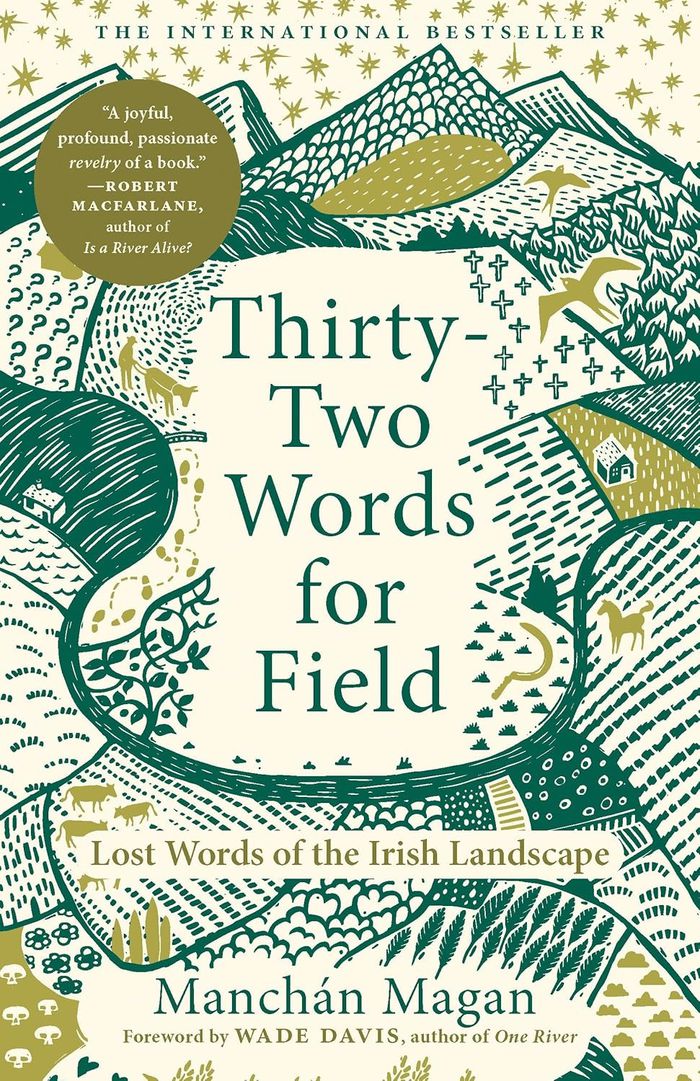
Thirty-two words for field: Lost words of the Irish Landscape
Actions:
Prix:
$26.95
(disponible en magasin)
Résumé:
Most people associate Britain and Ireland with the English language, a vast, sprawling linguistic tree with roots in Latin, French, and German. But the inhabitants of these islands originally spoke another tongue. Look closely enough and English contains traces of the Celtic soil from which it sprung, found in words like bog, loch, cairn, and crag. Today, this heritage can be found nowhere more powerfully than in modern-day Gaelic.? In ''Thirty-Two Words for Field'', Manchán explores how Gaelic, a three-thousand-year-old lexicon, has imbued the natural world with meaning and magic, evoking a time-honored way of life, from its thirty-two separate words for a field to terms like bróis (whiskey for a horseman at a wedding), iarmhaireacht (the loneliness you feel when you are the only person awake at dawn), and bladhmann (steam rising from a fermented haystack or idle boasting).? Manchán urges readers to consider the sublime beauty and profound oddness of this ancient tongue that has been spoken in close connection to the land for thousands of years. Told through stories collected from his own life and travels, ''Thirty-Two Words for Field'' is an enthralling celebration of Irish words and a testament to the indelible relationship between landscape, culture, and language.
Thirty-two words for field: Lost words of the Irish Landscape
Actions:
Prix:
$26.95
(disponible en magasin)
Résumé:
Most people associate Britain and Ireland with the English language, a vast, sprawling linguistic tree with roots in Latin, French, and German. But the inhabitants of these islands originally spoke another tongue. Look closely enough and English contains traces of the Celtic soil from which it sprung, found in words like bog, loch, cairn, and crag. Today, this heritage can be found nowhere more powerfully than in modern-day Gaelic.? In ''Thirty-Two Words for Field'', Manchán explores how Gaelic, a three-thousand-year-old lexicon, has imbued the natural world with meaning and magic, evoking a time-honored way of life, from its thirty-two separate words for a field to terms like bróis (whiskey for a horseman at a wedding), iarmhaireacht (the loneliness you feel when you are the only person awake at dawn), and bladhmann (steam rising from a fermented haystack or idle boasting).? Manchán urges readers to consider the sublime beauty and profound oddness of this ancient tongue that has been spoken in close connection to the land for thousands of years. Told through stories collected from his own life and travels, ''Thirty-Two Words for Field'' is an enthralling celebration of Irish words and a testament to the indelible relationship between landscape, culture, and language.
Classification:
livres
livres
Publication:
mars 2026
mars 2026
Sujet:
Théorie du paysage
Théorie du paysage
Classification:
livres
livres

Actions:
Prix:
$25.95
(disponible en magasin)
Résumé:
''Landscapes'' showcases the development and practice of John Berger’s unique way of seeing. Here he surveys the aesthetic landscapes that have informed, challenged and nourished his understanding of the world. Berger pays homage to the writers and thinkers who influenced him, such as Walter Benjamin, Rosa Luxemburg and Bertolt Brecht. His expansive perspective(...)
$25.95
(disponible en magasin)
Résumé:
''Landscapes'' showcases the development and practice of John Berger’s unique way of seeing. Here he surveys the aesthetic landscapes that have informed, challenged and nourished his understanding of the world. Berger pays homage to the writers and thinkers who influenced him, such as Walter Benjamin, Rosa Luxemburg and Bertolt Brecht. His expansive perspective(...)
Titre:
Landscapes: John Berger on art
Actions:
Prix:
$25.95
(disponible en magasin)
Résumé:
''Landscapes'' showcases the development and practice of John Berger’s unique way of seeing. Here he surveys the aesthetic landscapes that have informed, challenged and nourished his understanding of the world. Berger pays homage to the writers and thinkers who influenced him, such as Walter Benjamin, Rosa Luxemburg and Bertolt Brecht. His expansive perspective embraces artistic movements and individual artists – from the Renaissance to the present – while never neglecting the social and political context of their creation.
Landscapes: John Berger on art
Actions:
Prix:
$25.95
(disponible en magasin)
Résumé:
''Landscapes'' showcases the development and practice of John Berger’s unique way of seeing. Here he surveys the aesthetic landscapes that have informed, challenged and nourished his understanding of the world. Berger pays homage to the writers and thinkers who influenced him, such as Walter Benjamin, Rosa Luxemburg and Bertolt Brecht. His expansive perspective embraces artistic movements and individual artists – from the Renaissance to the present – while never neglecting the social and political context of their creation.
Classification:
livres
livres
Publication:
avril 2026
avril 2026
Sujet:
Théorie de l’art
Théorie de l’art
Classification:
livres
livres
Prix:
$24.95
(disponible en magasin)
Résumé:
“Of course, we all want to be happy.” So wrote the Roman statesman, orator, and philosopher Marcus Tullius Cicero. He and his fellow Greek and Roman philosophers agreed that the secret to happiness—or what they called the “good life”—is pursuing the “greatest good.” The only problem is that they couldn’t agree on what the greatest good is. Cicero addressed this dilemma by(...)
$24.95
(disponible en magasin)
Résumé:
“Of course, we all want to be happy.” So wrote the Roman statesman, orator, and philosopher Marcus Tullius Cicero. He and his fellow Greek and Roman philosophers agreed that the secret to happiness—or what they called the “good life”—is pursuing the “greatest good.” The only problem is that they couldn’t agree on what the greatest good is. Cicero addressed this dilemma by(...)
Titre:
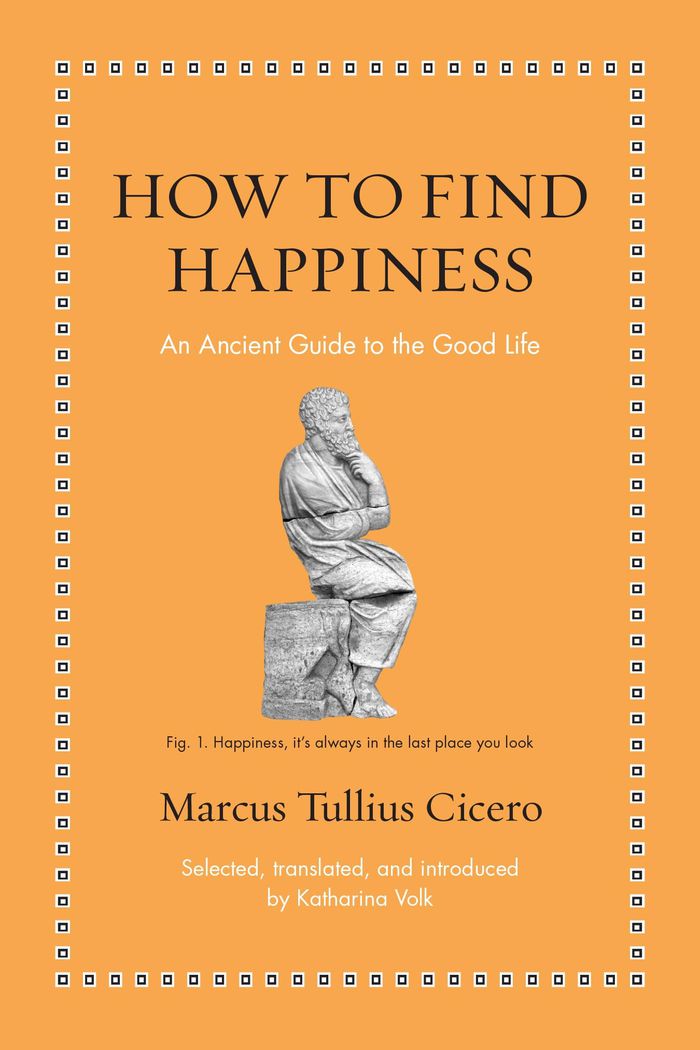
How to find happiness: An ancient guide to the good life
Actions:
Prix:
$24.95
(disponible en magasin)
Résumé:
“Of course, we all want to be happy.” So wrote the Roman statesman, orator, and philosopher Marcus Tullius Cicero. He and his fellow Greek and Roman philosophers agreed that the secret to happiness—or what they called the “good life”—is pursuing the “greatest good.” The only problem is that they couldn’t agree on what the greatest good is. Cicero addressed this dilemma by composing a set of dialogues, ''On the Greatest Good and Evil'' (''De finibus bonorum et malorum''), in which he pitted advocates of different philosophical approaches to happiness against one another. Notably, these include the Epicureans (who believe that the greatest good is pleasure) and the Stoics (according to whom it is moral virtue). Rather than choosing sides, Cicero considers the pros and cons of the different philosophies, ultimately leaving it to his readers to make up their own minds. In ''How to Find Happiness'', Katharina Volk offers a vivid new translation of selections from Cicero’s work, complete with an introduction and the original Latin text on facing pages. The result is a lively and engaging debate that invites each of us to discover our own path to happiness.
How to find happiness: An ancient guide to the good life
Actions:
Prix:
$24.95
(disponible en magasin)
Résumé:
“Of course, we all want to be happy.” So wrote the Roman statesman, orator, and philosopher Marcus Tullius Cicero. He and his fellow Greek and Roman philosophers agreed that the secret to happiness—or what they called the “good life”—is pursuing the “greatest good.” The only problem is that they couldn’t agree on what the greatest good is. Cicero addressed this dilemma by composing a set of dialogues, ''On the Greatest Good and Evil'' (''De finibus bonorum et malorum''), in which he pitted advocates of different philosophical approaches to happiness against one another. Notably, these include the Epicureans (who believe that the greatest good is pleasure) and the Stoics (according to whom it is moral virtue). Rather than choosing sides, Cicero considers the pros and cons of the different philosophies, ultimately leaving it to his readers to make up their own minds. In ''How to Find Happiness'', Katharina Volk offers a vivid new translation of selections from Cicero’s work, complete with an introduction and the original Latin text on facing pages. The result is a lively and engaging debate that invites each of us to discover our own path to happiness.
Classification:
livres
livres
Publication:
mars 2026
mars 2026
Sujet:
Théorie/ philosophie
Théorie/ philosophie
Classification:
livres
livres
Prix:
$24.95
(disponible en magasin)
Résumé:
Listening is a skill—even an art—and it’s essential to learning and to life. Indeed, as Plutarch writes in ''How to Listen'' : “listening well is the foundation for living well.” In this volume, Jeffrey Beneker presents a vivid and accessible new translation of Plutarch’s classic essay about how to become a skilled listener, complete with an inviting introduction and the(...)
$24.95
(disponible en magasin)
Résumé:
Listening is a skill—even an art—and it’s essential to learning and to life. Indeed, as Plutarch writes in ''How to Listen'' : “listening well is the foundation for living well.” In this volume, Jeffrey Beneker presents a vivid and accessible new translation of Plutarch’s classic essay about how to become a skilled listener, complete with an inviting introduction and the(...)
Titre:
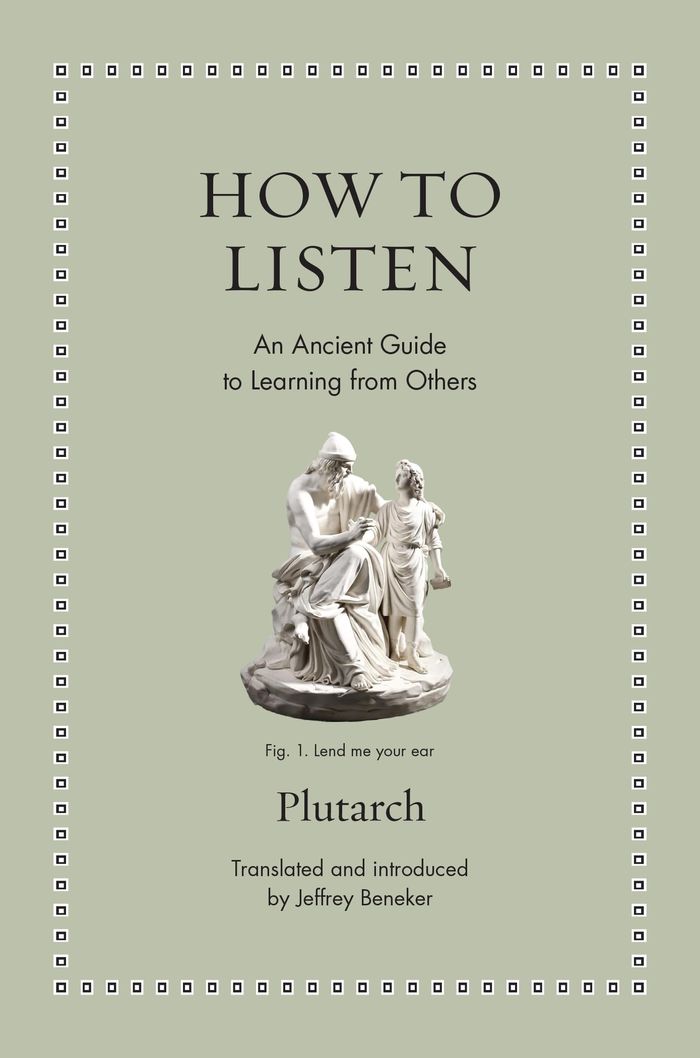
How to listen: An ancient guide to learning from others
Actions:
Prix:
$24.95
(disponible en magasin)
Résumé:
Listening is a skill—even an art—and it’s essential to learning and to life. Indeed, as Plutarch writes in ''How to Listen'' : “listening well is the foundation for living well.” In this volume, Jeffrey Beneker presents a vivid and accessible new translation of Plutarch’s classic essay about how to become a skilled listener, complete with an inviting introduction and the original Greek on facing pages. Plutarch is most famous as the author of ''Parallel Lives'', a series of biographies of Greek and Roman statesmen. But he was also an expert on teaching and learning and How to Listen is arguably one of his best pedagogical works. A proponent of active listening well before its time, Plutarch explains the skills we need—and the obstacles and distractions we must overcome—to become effective listeners. Good listening requires, above all, an acknowledgement of our own ignorance in certain subjects and a commitment to gaining knowledge. We must set aside pride and envy so we can respect the expertise of others. We must also train ourselves to see through style and focus on substance, to discriminate between weak and strong arguments, and to criticize ideas fairly and accurately.
How to listen: An ancient guide to learning from others
Actions:
Prix:
$24.95
(disponible en magasin)
Résumé:
Listening is a skill—even an art—and it’s essential to learning and to life. Indeed, as Plutarch writes in ''How to Listen'' : “listening well is the foundation for living well.” In this volume, Jeffrey Beneker presents a vivid and accessible new translation of Plutarch’s classic essay about how to become a skilled listener, complete with an inviting introduction and the original Greek on facing pages. Plutarch is most famous as the author of ''Parallel Lives'', a series of biographies of Greek and Roman statesmen. But he was also an expert on teaching and learning and How to Listen is arguably one of his best pedagogical works. A proponent of active listening well before its time, Plutarch explains the skills we need—and the obstacles and distractions we must overcome—to become effective listeners. Good listening requires, above all, an acknowledgement of our own ignorance in certain subjects and a commitment to gaining knowledge. We must set aside pride and envy so we can respect the expertise of others. We must also train ourselves to see through style and focus on substance, to discriminate between weak and strong arguments, and to criticize ideas fairly and accurately.
Classification:
livres
livres
Publication:
mars 2026
mars 2026
Sujet:
Théorie/ philosophie
Théorie/ philosophie
Classification:
livres
livres
Actions:
Prix:
$52.50
(disponible en magasin)
Résumé:
Eating and drinking images may seem like an anomalous notion but, since antiquity, in the European and Mediterranean worlds, people have swallowed down frescoes, icons, engravings, eucharistic hosts stamped with images, heraldic wafers, marzipan figures, and other sculpted dishes. Either specifically made for human consumption or diverted from their original purpose so as(...)
$52.50
(disponible en magasin)
Résumé:
Eating and drinking images may seem like an anomalous notion but, since antiquity, in the European and Mediterranean worlds, people have swallowed down frescoes, icons, engravings, eucharistic hosts stamped with images, heraldic wafers, marzipan figures, and other sculpted dishes. Either specifically made for human consumption or diverted from their original purpose so as(...)
Titre:
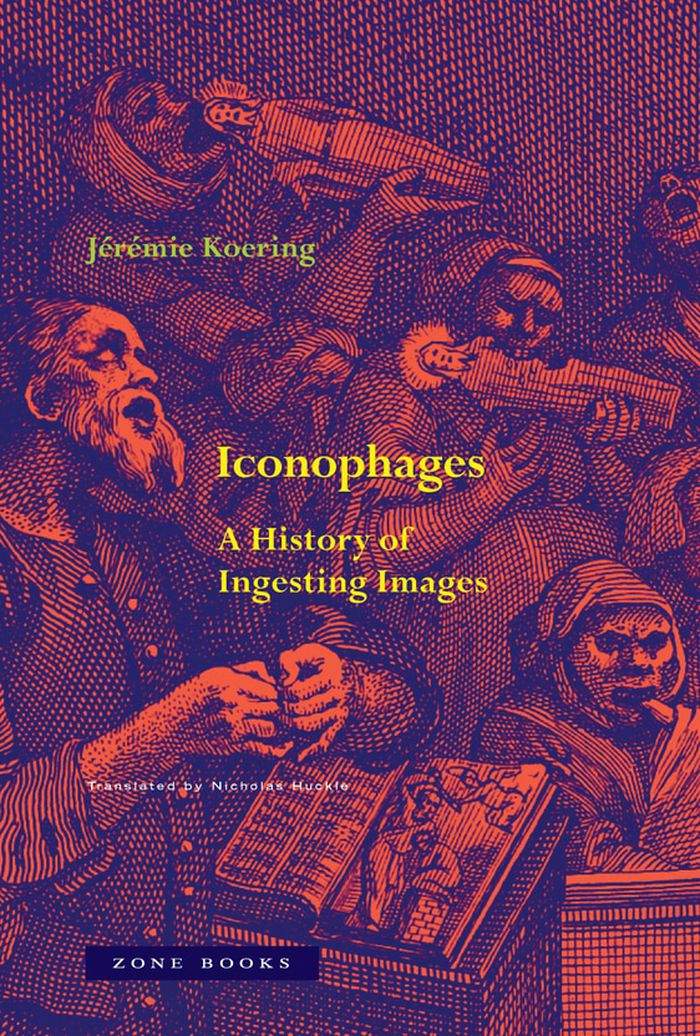
Iconophages: A history of ingesting images
Actions:
Prix:
$52.50
(disponible en magasin)
Résumé:
Eating and drinking images may seem like an anomalous notion but, since antiquity, in the European and Mediterranean worlds, people have swallowed down frescoes, icons, engravings, eucharistic hosts stamped with images, heraldic wafers, marzipan figures, and other sculpted dishes. Either specifically made for human consumption or diverted from their original purpose so as to be ingested, these figured artifacts have been not only gazed upon but also incorporated—taken into the body—as solids or liquids. How can we explain such behavior? Why take an image into one’s own body, devouring it at the risk of destroying it, consuming rather than contemplating it wisely from a distance? What structures of the imagination underlie and justify these desires for incorporation? What are the visual configurations offered up to the mouth, and what are their effects? What therapeutic, religious, symbolic, and social functions can we attribute to these forms of relations with icons? These are a few of the questions raised in this investigation into iconophagy. "Iconophages" aims to retrace, for the first time, the history of iconophagy. Jérémie Koering examines this unexplored facet of the history of images through an interdisciplinary approach that ranges across art history, cultural and material history, anthropology, philosophy, and the history of the body and the senses. He analyzes the human investment, in terms of culture and imagination, at stake in this seemingly paradoxical way of experiencing images. Beyond the hidden knowledge unearthed here, these pages bring to light a new way of understanding images, just as they illuminate the occasionally outlandish relations we maintain with them.
Iconophages: A history of ingesting images
Actions:
Prix:
$52.50
(disponible en magasin)
Résumé:
Eating and drinking images may seem like an anomalous notion but, since antiquity, in the European and Mediterranean worlds, people have swallowed down frescoes, icons, engravings, eucharistic hosts stamped with images, heraldic wafers, marzipan figures, and other sculpted dishes. Either specifically made for human consumption or diverted from their original purpose so as to be ingested, these figured artifacts have been not only gazed upon but also incorporated—taken into the body—as solids or liquids. How can we explain such behavior? Why take an image into one’s own body, devouring it at the risk of destroying it, consuming rather than contemplating it wisely from a distance? What structures of the imagination underlie and justify these desires for incorporation? What are the visual configurations offered up to the mouth, and what are their effects? What therapeutic, religious, symbolic, and social functions can we attribute to these forms of relations with icons? These are a few of the questions raised in this investigation into iconophagy. "Iconophages" aims to retrace, for the first time, the history of iconophagy. Jérémie Koering examines this unexplored facet of the history of images through an interdisciplinary approach that ranges across art history, cultural and material history, anthropology, philosophy, and the history of the body and the senses. He analyzes the human investment, in terms of culture and imagination, at stake in this seemingly paradoxical way of experiencing images. Beyond the hidden knowledge unearthed here, these pages bring to light a new way of understanding images, just as they illuminate the occasionally outlandish relations we maintain with them.
Classification:
livres
livres
Publication:
janvier 2026
janvier 2026
Sujet:
Théorie de l’art
Théorie de l’art
Classification:
livres
livres
Titre:
Obrist-isms
Obrist-isms
Actions:
Prix:
$24.00
(disponible en magasin)
Résumé:
As the primary or lead author of more than forty volumes of interviews with contemporary artists, of numerous exhibition catalogues for museums around the world, and of influential books on curation, Hans Ulrich Obrist has established himself as a pivotal figure in contemporary art and culture. Drawn from Obrist’s writings, interviews, and other sources, ''Obrist-isms''(...)
$24.00
(disponible en magasin)
Résumé:
As the primary or lead author of more than forty volumes of interviews with contemporary artists, of numerous exhibition catalogues for museums around the world, and of influential books on curation, Hans Ulrich Obrist has established himself as a pivotal figure in contemporary art and culture. Drawn from Obrist’s writings, interviews, and other sources, ''Obrist-isms''(...)
Titre:
Obrist-isms
Actions:
Prix:
$24.00
(disponible en magasin)
Résumé:
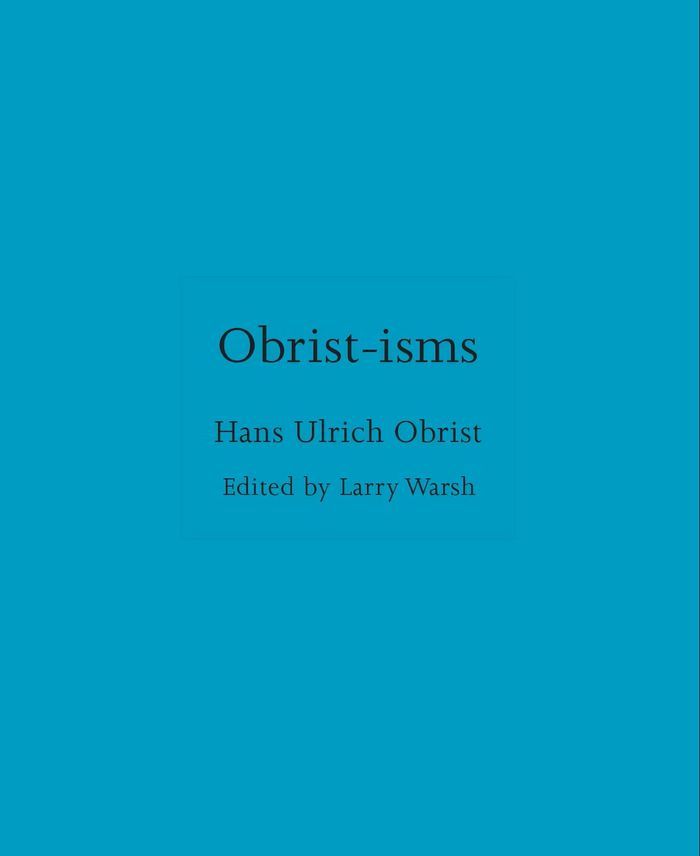
As the primary or lead author of more than forty volumes of interviews with contemporary artists, of numerous exhibition catalogues for museums around the world, and of influential books on curation, Hans Ulrich Obrist has established himself as a pivotal figure in contemporary art and culture. Drawn from Obrist’s writings, interviews, and other sources, ''Obrist-isms'' gathers a wealth of fascinating quotations from across his career, offering insights on everything from his approach to curating and his affinity with philosopher Édouard Glissant to his interest in artists’ unrealized projects.
Obrist-isms
Actions:
Prix:
$24.00
(disponible en magasin)
Résumé:
As the primary or lead author of more than forty volumes of interviews with contemporary artists, of numerous exhibition catalogues for museums around the world, and of influential books on curation, Hans Ulrich Obrist has established himself as a pivotal figure in contemporary art and culture. Drawn from Obrist’s writings, interviews, and other sources, ''Obrist-isms'' gathers a wealth of fascinating quotations from across his career, offering insights on everything from his approach to curating and his affinity with philosopher Édouard Glissant to his interest in artists’ unrealized projects.
Classification:
livres
livres
Publication:
octobre 2025
octobre 2025
Sujet:
Théorie de l’art
Théorie de l’art
Classification:
livres
livres
Actions:
Prix:
$42.95
(disponible en magasin)
Résumé:
Rotterdam-based Spanish artist and scholar David Maroto (born 1976) explores the novel as an art medium. The first volume features interviews with Benjamin Seror, Cally Spooner, Mai-Thu Perret, Goldin+Senneby, Francis McKee, Vivian Ziherl, Natasha Soobramanien, Clive Phillpot and others
$42.95
(disponible en magasin)
Résumé:
Rotterdam-based Spanish artist and scholar David Maroto (born 1976) explores the novel as an art medium. The first volume features interviews with Benjamin Seror, Cally Spooner, Mai-Thu Perret, Goldin+Senneby, Francis McKee, Vivian Ziherl, Natasha Soobramanien, Clive Phillpot and others
Titre:
The artist's novel, part 1: A new medium
Actions:
Prix:
$42.95
(disponible en magasin)
Résumé:
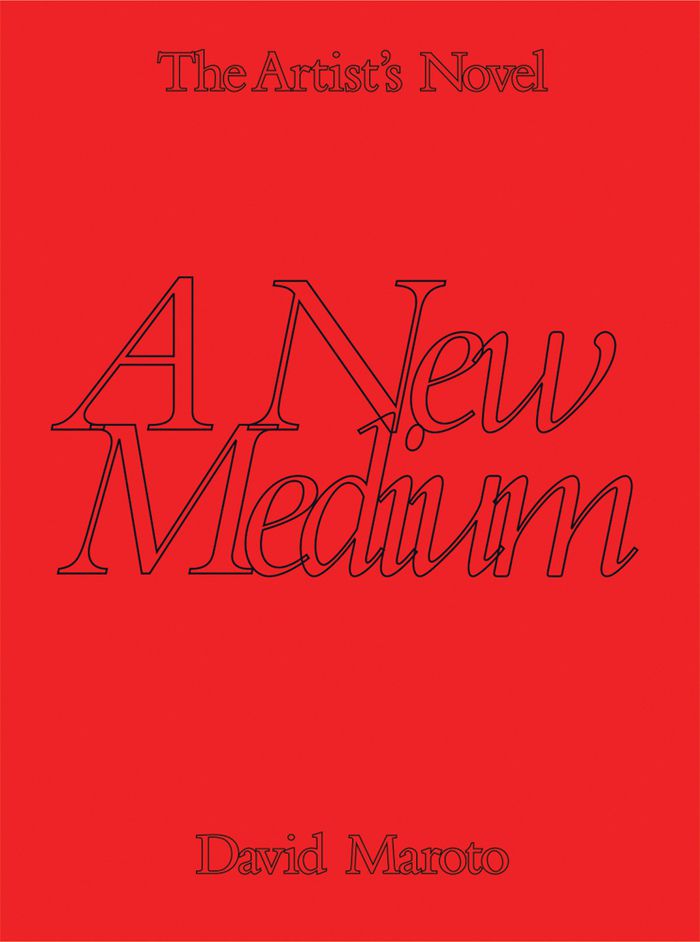
Rotterdam-based Spanish artist and scholar David Maroto (born 1976) explores the novel as an art medium. The first volume features interviews with Benjamin Seror, Cally Spooner, Mai-Thu Perret, Goldin+Senneby, Francis McKee, Vivian Ziherl, Natasha Soobramanien, Clive Phillpot and others
The artist's novel, part 1: A new medium
Actions:
Prix:
$42.95
(disponible en magasin)
Résumé:
Rotterdam-based Spanish artist and scholar David Maroto (born 1976) explores the novel as an art medium. The first volume features interviews with Benjamin Seror, Cally Spooner, Mai-Thu Perret, Goldin+Senneby, Francis McKee, Vivian Ziherl, Natasha Soobramanien, Clive Phillpot and others
Classification:
livres
livres
Publication:
août 2020
août 2020
Sujet:
Théorie de l’art
Théorie de l’art
Classification:
livres
livres
Titre:
Occasions d'extase: lettres
Occasions d'extase: lettres
Actions:
Prix:
$15.95
(disponible en magasin)
Résumé:
Poète, écrivain, décorateur et pionnier du socialisme en Grande-Bretagne, William Morris (1834-1896) eut une vie riche et à multiples facettes. Il est l'auteur, outre ses nombreux romans, poèmes et conférences, d'une abondante correspondance révélant un personnage complexe et attachant, tout à la fois enthousiaste, révolté, mais aussi parfois dépressif, et en toutes(...)
$15.95
(disponible en magasin)
Résumé:
Poète, écrivain, décorateur et pionnier du socialisme en Grande-Bretagne, William Morris (1834-1896) eut une vie riche et à multiples facettes. Il est l'auteur, outre ses nombreux romans, poèmes et conférences, d'une abondante correspondance révélant un personnage complexe et attachant, tout à la fois enthousiaste, révolté, mais aussi parfois dépressif, et en toutes(...)
Titre:
Occasions d'extase: lettres
Actions:
Prix:
$15.95
(disponible en magasin)
Résumé:
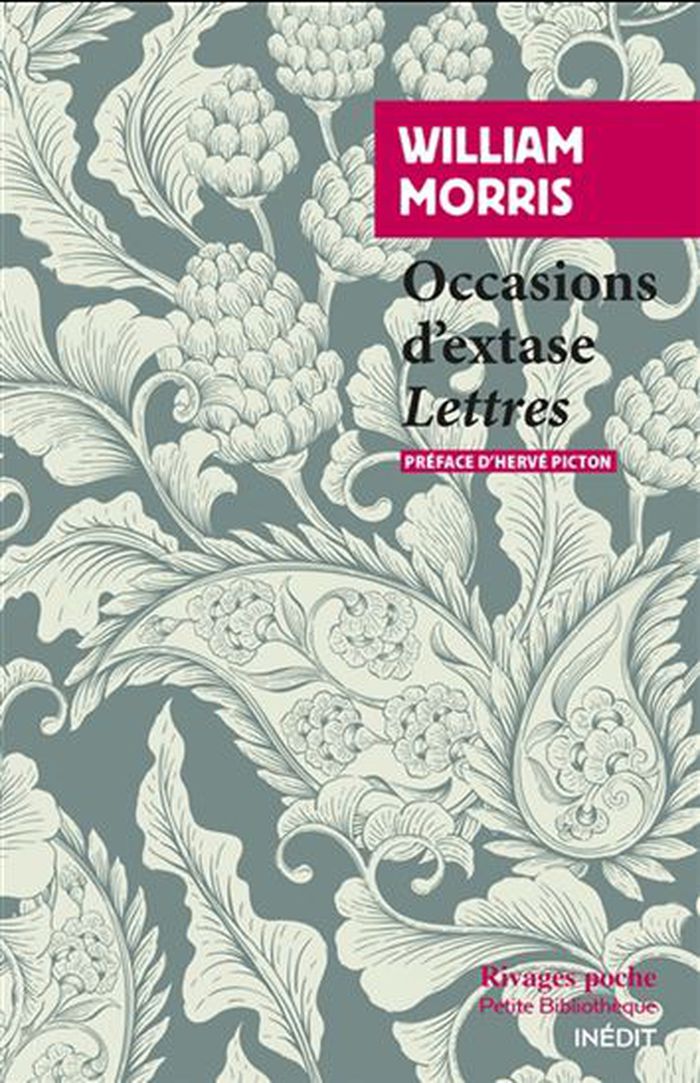
Poète, écrivain, décorateur et pionnier du socialisme en Grande-Bretagne, William Morris (1834-1896) eut une vie riche et à multiples facettes. Il est l'auteur, outre ses nombreux romans, poèmes et conférences, d'une abondante correspondance révélant un personnage complexe et attachant, tout à la fois enthousiaste, révolté, mais aussi parfois dépressif, et en toutes circonstances généreux envers ses proches et les causes qu'il défendait. Ce choix de lettres retrace les différentes étapes de sa vie et de sa carrière, de sa jeunesse romantique en passant par ses nombreuses passions pour les arts, la poésie, l'architecture, la nature et les voyages, jusqu'à son engagement politique sans concessions dans les dernières années de sa vie.
Occasions d'extase: lettres
Actions:
Prix:
$15.95
(disponible en magasin)
Résumé:
Poète, écrivain, décorateur et pionnier du socialisme en Grande-Bretagne, William Morris (1834-1896) eut une vie riche et à multiples facettes. Il est l'auteur, outre ses nombreux romans, poèmes et conférences, d'une abondante correspondance révélant un personnage complexe et attachant, tout à la fois enthousiaste, révolté, mais aussi parfois dépressif, et en toutes circonstances généreux envers ses proches et les causes qu'il défendait. Ce choix de lettres retrace les différentes étapes de sa vie et de sa carrière, de sa jeunesse romantique en passant par ses nombreuses passions pour les arts, la poésie, l'architecture, la nature et les voyages, jusqu'à son engagement politique sans concessions dans les dernières années de sa vie.
Classification:
livres
livres
Publication:
juin 2026
juin 2026
Sujet:
Théorie du design
Théorie du design
Classification:
livres
livres
Titre:
Art, bien-être et richesse
Art, bien-être et richesse
Actions:
Prix:
$15.95
(disponible en magasin)
Résumé:
Poète, écrivain, décorateur et pionnier du socialisme britannique, William Morris (1834-1896) exècre la société de son temps. Il s’insurge contre les effets dévastateurs de la mécanisation et de la recherche du profit sur les conditions de travail et la vie des ouvriers. La richesse produite par le système économique non seulement engendre de la laideur, mais se résume(...)
$15.95
(disponible en magasin)
Résumé:
Poète, écrivain, décorateur et pionnier du socialisme britannique, William Morris (1834-1896) exècre la société de son temps. Il s’insurge contre les effets dévastateurs de la mécanisation et de la recherche du profit sur les conditions de travail et la vie des ouvriers. La richesse produite par le système économique non seulement engendre de la laideur, mais se résume(...)
Titre:
Art, bien-être et richesse
Actions:
Prix:
$15.95
(disponible en magasin)
Résumé:
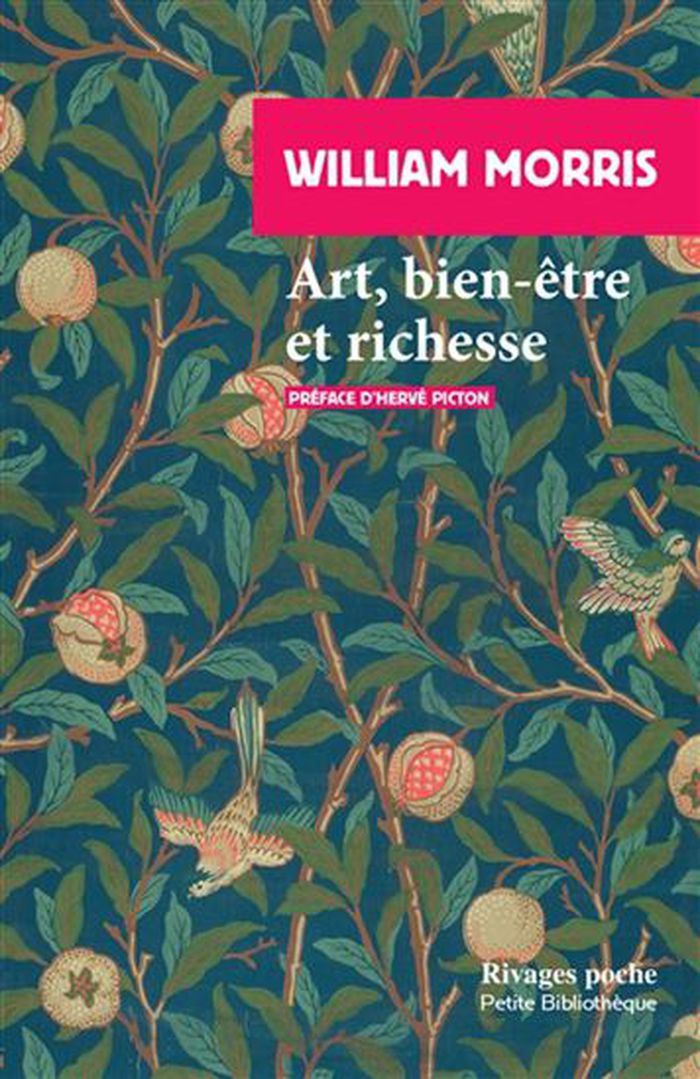
Poète, écrivain, décorateur et pionnier du socialisme britannique, William Morris (1834-1896) exècre la société de son temps. Il s’insurge contre les effets dévastateurs de la mécanisation et de la recherche du profit sur les conditions de travail et la vie des ouvriers. La richesse produite par le système économique non seulement engendre de la laideur, mais se résume aussi à une forme de domination car injustement partagée ; elle s’oppose à la prospérité, ce bien-être matériel et moral de tous les individus auquel contribue l’art.
Art, bien-être et richesse
Actions:
Prix:
$15.95
(disponible en magasin)
Résumé:
Poète, écrivain, décorateur et pionnier du socialisme britannique, William Morris (1834-1896) exècre la société de son temps. Il s’insurge contre les effets dévastateurs de la mécanisation et de la recherche du profit sur les conditions de travail et la vie des ouvriers. La richesse produite par le système économique non seulement engendre de la laideur, mais se résume aussi à une forme de domination car injustement partagée ; elle s’oppose à la prospérité, ce bien-être matériel et moral de tous les individus auquel contribue l’art.
Classification:
livres
livres
Publication:
juillet 2024
juillet 2024
Sujet:
Théorie du design
Théorie du design


