


13794 Résultats
Classification:
livres
livres
Actions:
Prix:
$24.00
(disponible sur commande)
Résumé:
The first edition of this book, published in 1994, reshaped the direction of landscape studies by considering landscape not simply as an object to be seen or a text to be read, but as an instrument of cultural force, a central tool in the creation of national and social identities. This second edition adds not only a new preface, but five new essays--from Edward Said, W.(...)
$24.00
(disponible sur commande)
Résumé:
The first edition of this book, published in 1994, reshaped the direction of landscape studies by considering landscape not simply as an object to be seen or a text to be read, but as an instrument of cultural force, a central tool in the creation of national and social identities. This second edition adds not only a new preface, but five new essays--from Edward Said, W.(...)
Titre:
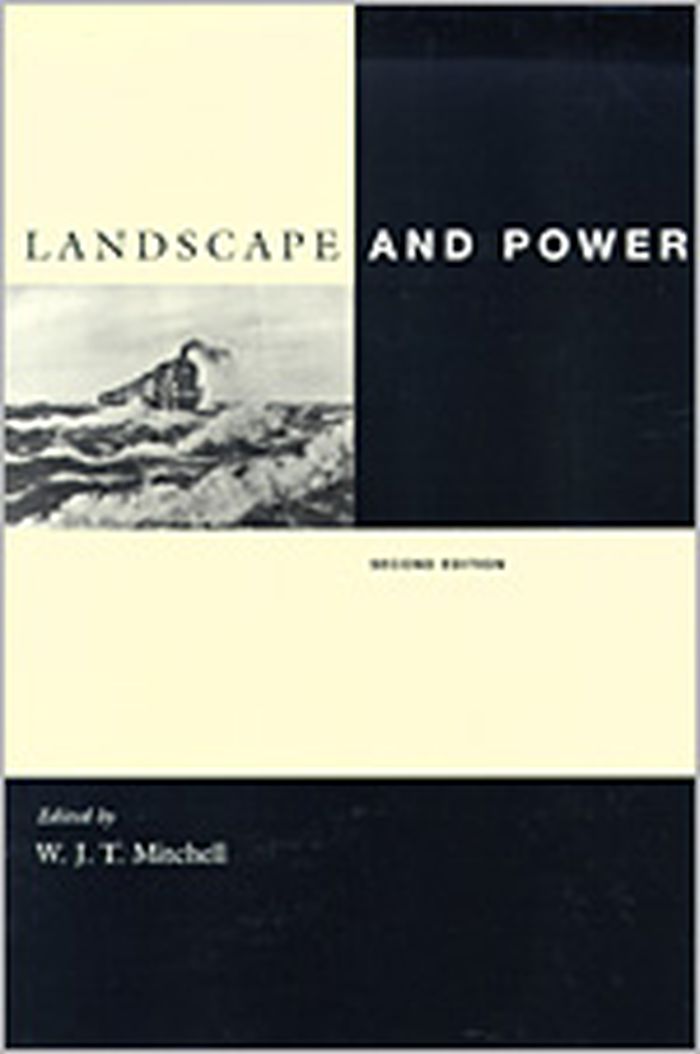
Landscape and power / second edition
Actions:
Prix:
$24.00
(disponible sur commande)
Résumé:
The first edition of this book, published in 1994, reshaped the direction of landscape studies by considering landscape not simply as an object to be seen or a text to be read, but as an instrument of cultural force, a central tool in the creation of national and social identities. This second edition adds not only a new preface, but five new essays--from Edward Said, W. J. T. Mitchell, Jonathan Bordo, Michael Taussig, and Robert Pogue Harrison-extending the scope of the book in remarkable ways.
Landscape and power / second edition
Actions:
Prix:
$24.00
(disponible sur commande)
Résumé:
The first edition of this book, published in 1994, reshaped the direction of landscape studies by considering landscape not simply as an object to be seen or a text to be read, but as an instrument of cultural force, a central tool in the creation of national and social identities. This second edition adds not only a new preface, but five new essays--from Edward Said, W. J. T. Mitchell, Jonathan Bordo, Michael Taussig, and Robert Pogue Harrison-extending the scope of the book in remarkable ways.
Classification:
livres
livres
Publication:
avril 2002, Chicago / London
avril 2002, Chicago / London
Sujet:
Théorie du paysage
Théorie du paysage
Classification:
livres
livres
Actions:
Prix:
$75.00
(disponible sur commande)
Résumé:
This anthology of writings by the architectural critic Kenneth Frampton brings together essays from the last thirty-five years. The essays focus on twentieth-century architecture, dealing with themes and movements, built works and the architects responsible for these buildings.
$75.00
(disponible sur commande)
Résumé:
This anthology of writings by the architectural critic Kenneth Frampton brings together essays from the last thirty-five years. The essays focus on twentieth-century architecture, dealing with themes and movements, built works and the architects responsible for these buildings.
Titre:
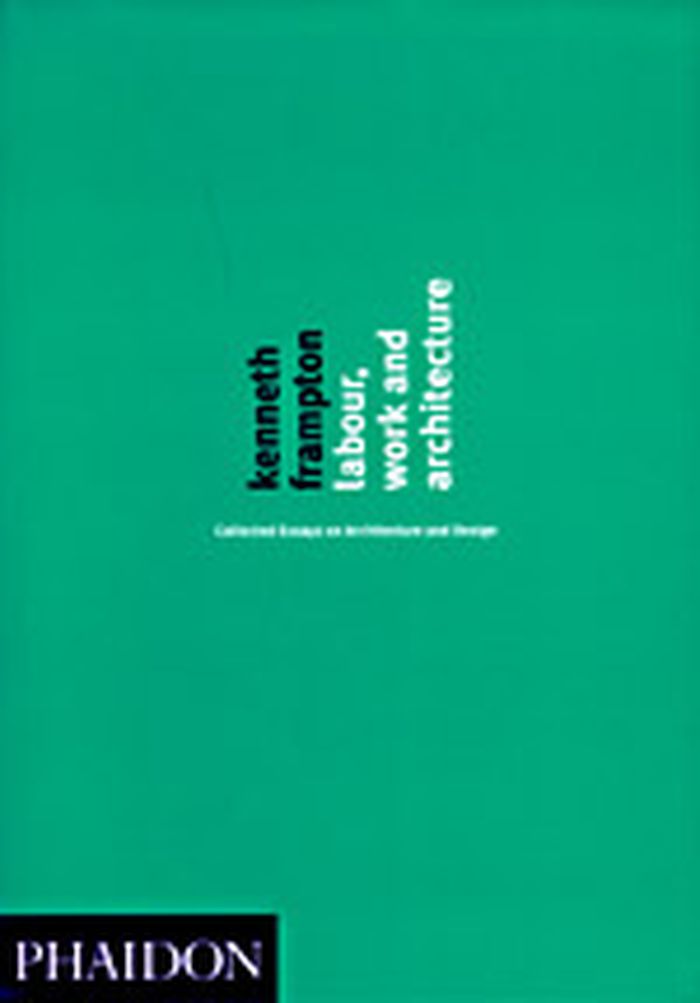
Labour, work and architecture : collected essays on architecture and design
Actions:
Prix:
$75.00
(disponible sur commande)
Résumé:
This anthology of writings by the architectural critic Kenneth Frampton brings together essays from the last thirty-five years. The essays focus on twentieth-century architecture, dealing with themes and movements, built works and the architects responsible for these buildings.
Labour, work and architecture : collected essays on architecture and design
Actions:
Prix:
$75.00
(disponible sur commande)
Résumé:
This anthology of writings by the architectural critic Kenneth Frampton brings together essays from the last thirty-five years. The essays focus on twentieth-century architecture, dealing with themes and movements, built works and the architects responsible for these buildings.
Classification:
livres
livres
Publication:
avril 2002, London
avril 2002, London
Sujet:
Théorie de l’architecture
Théorie de l’architecture
Classification:
livres
livres
Actions:
Prix:
$57.00
(disponible sur commande)
Résumé:
Ce livre présente des données originales et interdisciplinaires relevant de l'architecture, de l'urbanisme, de la géographie, des sciences politiques et de la sociologie, permettant de comprendre et d'expliquer les espaces publics. Un ouvrage fondamental à de très nombreux titres, et une pièce maîtresse dans le domaine de la recherche urbaine.
$57.00
(disponible sur commande)
Résumé:
Ce livre présente des données originales et interdisciplinaires relevant de l'architecture, de l'urbanisme, de la géographie, des sciences politiques et de la sociologie, permettant de comprendre et d'expliquer les espaces publics. Un ouvrage fondamental à de très nombreux titres, et une pièce maîtresse dans le domaine de la recherche urbaine.
Sujet:
Théorie de l’urbanisme
Théorie de l’urbanisme
Publication:
janvier 2002, Lausanne
janvier 2002, Lausanne
Titre:
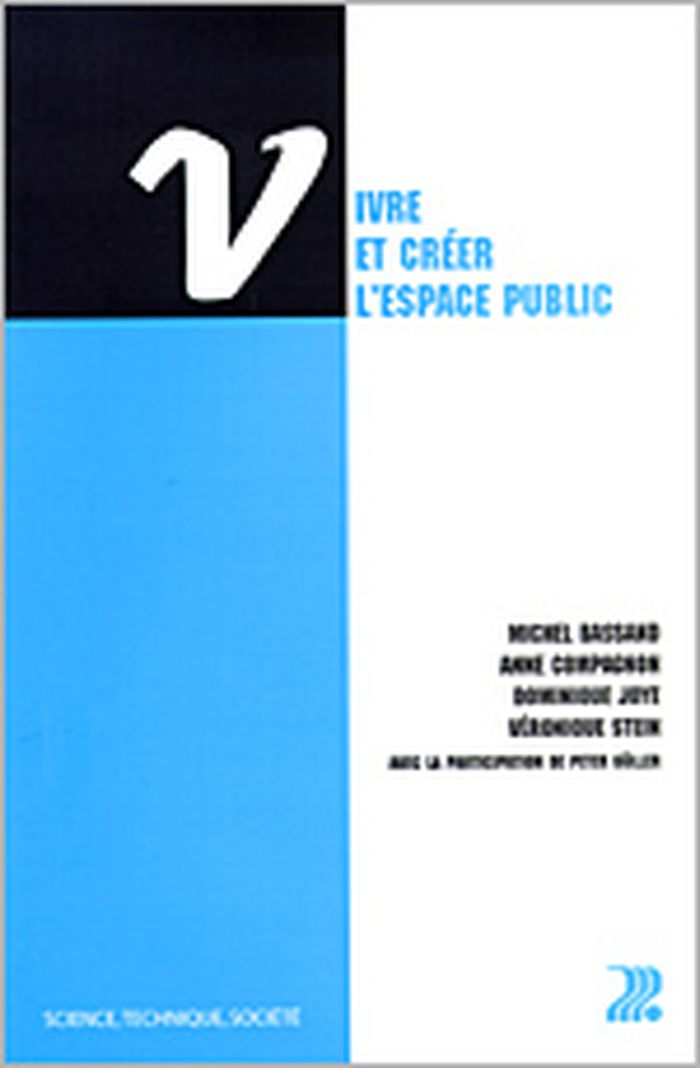
Vivre et créer l'espace public
Actions:
Prix:
$57.00
(disponible sur commande)
Résumé:
Ce livre présente des données originales et interdisciplinaires relevant de l'architecture, de l'urbanisme, de la géographie, des sciences politiques et de la sociologie, permettant de comprendre et d'expliquer les espaces publics. Un ouvrage fondamental à de très nombreux titres, et une pièce maîtresse dans le domaine de la recherche urbaine.
Vivre et créer l'espace public
Actions:
Prix:
$57.00
(disponible sur commande)
Résumé:
Ce livre présente des données originales et interdisciplinaires relevant de l'architecture, de l'urbanisme, de la géographie, des sciences politiques et de la sociologie, permettant de comprendre et d'expliquer les espaces publics. Un ouvrage fondamental à de très nombreux titres, et une pièce maîtresse dans le domaine de la recherche urbaine.
Classification:
livres
livres
Publication:
janvier 2002, Lausanne
janvier 2002, Lausanne
Sujet:
Théorie de l’urbanisme
Théorie de l’urbanisme
Classification:
livres
livres
Prix:
$23.95
(disponible sur commande)
Résumé:
This book explores the linked issues of livelihood and ecological sustainability in major cities of the developing and transitional world. It identifies important strategies for collective solutions by showing how political alliances among local communities, nongovernmental organizations, and public agencies can help ordinary citizens live better lives.
$23.95
(disponible sur commande)
Résumé:
This book explores the linked issues of livelihood and ecological sustainability in major cities of the developing and transitional world. It identifies important strategies for collective solutions by showing how political alliances among local communities, nongovernmental organizations, and public agencies can help ordinary citizens live better lives.
Titre:
Livable cities? Urban struggles for livelihood and sustainability
Actions:
Prix:
$23.95
(disponible sur commande)
Résumé:
This book explores the linked issues of livelihood and ecological sustainability in major cities of the developing and transitional world. It identifies important strategies for collective solutions by showing how political alliances among local communities, nongovernmental organizations, and public agencies can help ordinary citizens live better lives.
Livable cities? Urban struggles for livelihood and sustainability
Actions:
Prix:
$23.95
(disponible sur commande)
Résumé:
This book explores the linked issues of livelihood and ecological sustainability in major cities of the developing and transitional world. It identifies important strategies for collective solutions by showing how political alliances among local communities, nongovernmental organizations, and public agencies can help ordinary citizens live better lives.
Classification:
livres
livres
Publication:
février 2002, Berkely
février 2002, Berkely
Sujet:
Théorie de l’urbanisme
Théorie de l’urbanisme
Classification:
livres
livres
Titre:
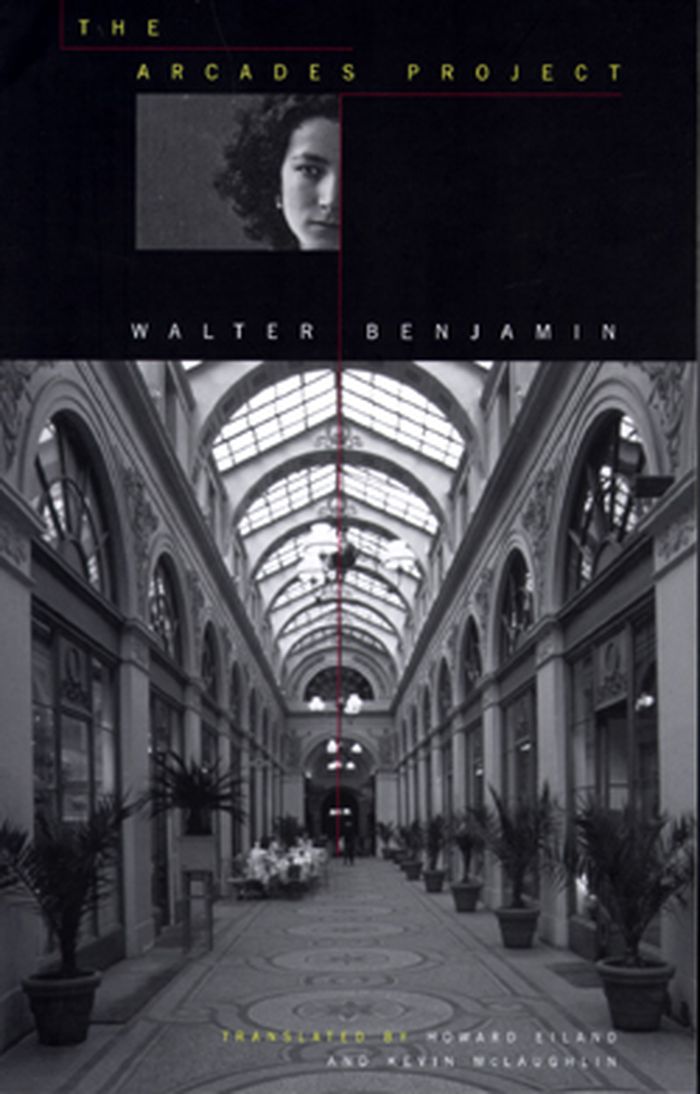
The arcades project
The arcades project
Actions:
Prix:
$54.95
(disponible sur commande)
Résumé:
The Arcades Project is Walter Benjamin's effort to represent and to critique the bourgeois experience of nineteenth-century history and, in so doing, to liberate the supressed 'true history' that underlay the ideological mask. Conceived in Paris in 1927 and still in progress when Benjamin fled the Occupation in 1940, 'The Arcades Project' (in German: 'Das Passagen-Werk`)(...)
$54.95
(disponible sur commande)
Résumé:
The Arcades Project is Walter Benjamin's effort to represent and to critique the bourgeois experience of nineteenth-century history and, in so doing, to liberate the supressed 'true history' that underlay the ideological mask. Conceived in Paris in 1927 and still in progress when Benjamin fled the Occupation in 1940, 'The Arcades Project' (in German: 'Das Passagen-Werk`)(...)
Titre:
The arcades project
Actions:
Prix:
$54.95
(disponible sur commande)
Résumé:
The Arcades Project is Walter Benjamin's effort to represent and to critique the bourgeois experience of nineteenth-century history and, in so doing, to liberate the supressed 'true history' that underlay the ideological mask. Conceived in Paris in 1927 and still in progress when Benjamin fled the Occupation in 1940, 'The Arcades Project' (in German: 'Das Passagen-Werk`) was constructed over the course of thirteen years - 'the theater', as Benjamin called it, 'of all my struggles and all my ideas.'
The arcades project
Actions:
Prix:
$54.95
(disponible sur commande)
Résumé:
The Arcades Project is Walter Benjamin's effort to represent and to critique the bourgeois experience of nineteenth-century history and, in so doing, to liberate the supressed 'true history' that underlay the ideological mask. Conceived in Paris in 1927 and still in progress when Benjamin fled the Occupation in 1940, 'The Arcades Project' (in German: 'Das Passagen-Werk`) was constructed over the course of thirteen years - 'the theater', as Benjamin called it, 'of all my struggles and all my ideas.'
Classification:
livres
livres
Publication:
mars 2002, London
mars 2002, London
Sujet:
Théorie/ philosophie
Théorie/ philosophie
Classification:
livres
livres
Actions:
Prix:
$28.50
(disponible sur commande)
Résumé:
How should Germany commemorate the mass murder of Jews once committed in its name? James E. Young--the only foreigner and the only Jew to serve on the German commission to select a design for a national Holocaust memorial--tells the inside story of this enormously controversial project. Young also inquires deeply into the moral and aesthetic questions surrounding(...)
$28.50
(disponible sur commande)
Résumé:
How should Germany commemorate the mass murder of Jews once committed in its name? James E. Young--the only foreigner and the only Jew to serve on the German commission to select a design for a national Holocaust memorial--tells the inside story of this enormously controversial project. Young also inquires deeply into the moral and aesthetic questions surrounding(...)
Titre:
At memory's edge : after-images of the Holocaust in contemporary art and architecture
Actions:
Prix:
$28.50
(disponible sur commande)
Résumé:
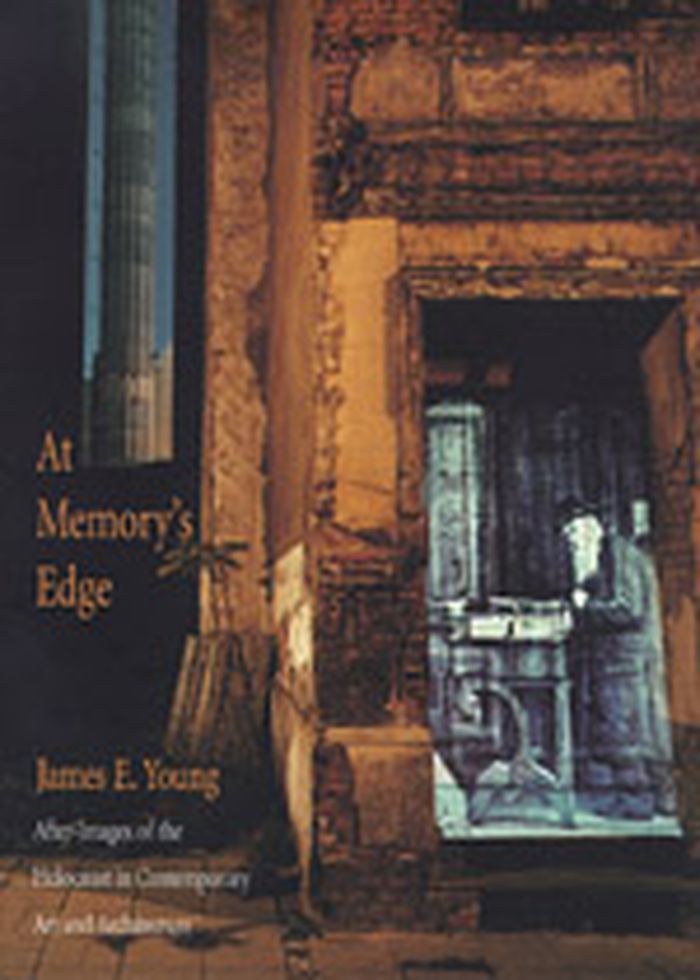
How should Germany commemorate the mass murder of Jews once committed in its name? James E. Young--the only foreigner and the only Jew to serve on the German commission to select a design for a national Holocaust memorial--tells the inside story of this enormously controversial project. Young also inquires deeply into the moral and aesthetic questions surrounding artistic representations of the Holocaust produced by young artists who themselves did not experience it.
At memory's edge : after-images of the Holocaust in contemporary art and architecture
Actions:
Prix:
$28.50
(disponible sur commande)
Résumé:
How should Germany commemorate the mass murder of Jews once committed in its name? James E. Young--the only foreigner and the only Jew to serve on the German commission to select a design for a national Holocaust memorial--tells the inside story of this enormously controversial project. Young also inquires deeply into the moral and aesthetic questions surrounding artistic representations of the Holocaust produced by young artists who themselves did not experience it.
Classification:
livres
livres
Publication:
avril 2002, New Haven
avril 2002, New Haven
Sujet:
Théorie de l’architecture
Théorie de l’architecture
Classification:
livres
livres
Prix:
$39.95
(disponible sur commande)
Résumé:
Beginning with agoraphobia and claustrophobia in the late nineteenth century, followed by shell shock and panic fear after World War I, phobias and anxiety came to be seen as the mental condition of modern life. They became incorporated into the media and arts, in particular the (...)
$39.95
(disponible sur commande)
Résumé:
Beginning with agoraphobia and claustrophobia in the late nineteenth century, followed by shell shock and panic fear after World War I, phobias and anxiety came to be seen as the mental condition of modern life. They became incorporated into the media and arts, in particular the (...)
Titre:
Warped space : art, architecture, and anxiety in modern culture
Actions:
Prix:
$39.95
(disponible sur commande)
Résumé:
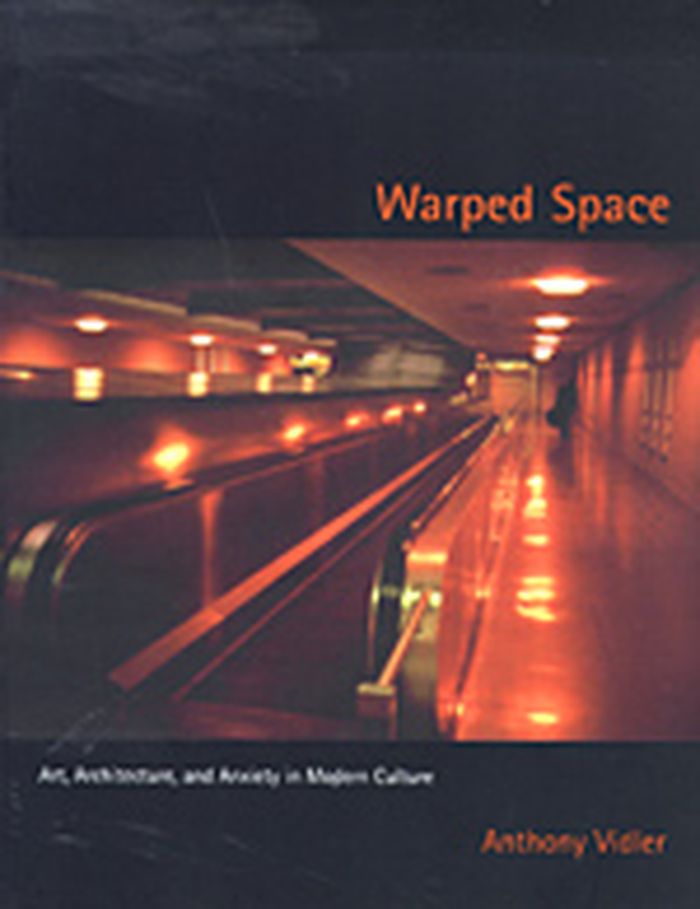
Beginning with agoraphobia and claustrophobia in the late nineteenth century, followed by shell shock and panic fear after World War I, phobias and anxiety came to be seen as the mental condition of modern life. They became incorporated into the media and arts, in particular the spatial arts of architecture, urbanism, and film. This "spatial warping" is now being reshaped by digitalization and virtual reality. Anthony Vidler is concerned with two forms of warped space. The first, a psychological space, is the repository of neuroses and phobias. This space is not empty but full of disturbing forms, including those of architecture and the city. The second kind of warping is produced when artists break the boundaries of genre to depict space in new ways. Vidler traces the emergence of a psychological idea of space from Pascal and Freud to the identification of agoraphobia and claustrophobia in the nineteenth century to twentieth-century theories of spatial alienation and estrangement in the writings of Georg Simmel, Siegfried Kracauer, and Walter Benjamin. Focusing on current conditions of displacement and placelessness, he examines ways in which contemporary artists and architects have produced new forms of spatial warping. The discussion ranges from theorists such as Jacques Lacan and Gilles Deleuze to artists such as Vito Acconci, Mike Kelley, Martha Rosler, and Rachel Whiteread. Finally, Vidler looks at the architectural experiments of Frank Gehry, Coop Himmelblau, Daniel Libeskind, Greg Lynn, Morphosis, and Eric Owen Moss in the light of new digital techniques that, while relying on traditional perspective, have radically transformed the composition, production, and experience of architecture.
Warped space : art, architecture, and anxiety in modern culture
Actions:
Prix:
$39.95
(disponible sur commande)
Résumé:
Beginning with agoraphobia and claustrophobia in the late nineteenth century, followed by shell shock and panic fear after World War I, phobias and anxiety came to be seen as the mental condition of modern life. They became incorporated into the media and arts, in particular the spatial arts of architecture, urbanism, and film. This "spatial warping" is now being reshaped by digitalization and virtual reality. Anthony Vidler is concerned with two forms of warped space. The first, a psychological space, is the repository of neuroses and phobias. This space is not empty but full of disturbing forms, including those of architecture and the city. The second kind of warping is produced when artists break the boundaries of genre to depict space in new ways. Vidler traces the emergence of a psychological idea of space from Pascal and Freud to the identification of agoraphobia and claustrophobia in the nineteenth century to twentieth-century theories of spatial alienation and estrangement in the writings of Georg Simmel, Siegfried Kracauer, and Walter Benjamin. Focusing on current conditions of displacement and placelessness, he examines ways in which contemporary artists and architects have produced new forms of spatial warping. The discussion ranges from theorists such as Jacques Lacan and Gilles Deleuze to artists such as Vito Acconci, Mike Kelley, Martha Rosler, and Rachel Whiteread. Finally, Vidler looks at the architectural experiments of Frank Gehry, Coop Himmelblau, Daniel Libeskind, Greg Lynn, Morphosis, and Eric Owen Moss in the light of new digital techniques that, while relying on traditional perspective, have radically transformed the composition, production, and experience of architecture.
Classification:
livres
livres
Publication:
avril 2002, Cambridge, Mass.
avril 2002, Cambridge, Mass.
Sujet:
Théorie de l’architecture
Théorie de l’architecture
Classification:
livres
livres
Titre:
The minimum dwelling
The minimum dwelling
Actions:
Prix:
$96.00
(disponible en magasin)
Résumé:
Karel Teige (1900–1951), one of the most important figures of avant-garde modernism of the 1920s and 1930s, influenced virtually every area of art, design, and urban thinking in his native Czechoslovakia. His "Minimum dwelling", originally published in Czech in 1932, and appearing now for the first time in English, is one of the landmark architectural books of the(...)
$96.00
(disponible en magasin)
Résumé:
Karel Teige (1900–1951), one of the most important figures of avant-garde modernism of the 1920s and 1930s, influenced virtually every area of art, design, and urban thinking in his native Czechoslovakia. His "Minimum dwelling", originally published in Czech in 1932, and appearing now for the first time in English, is one of the landmark architectural books of the(...)
Titre:
The minimum dwelling
Actions:
Prix:
$96.00
(disponible en magasin)
Résumé:
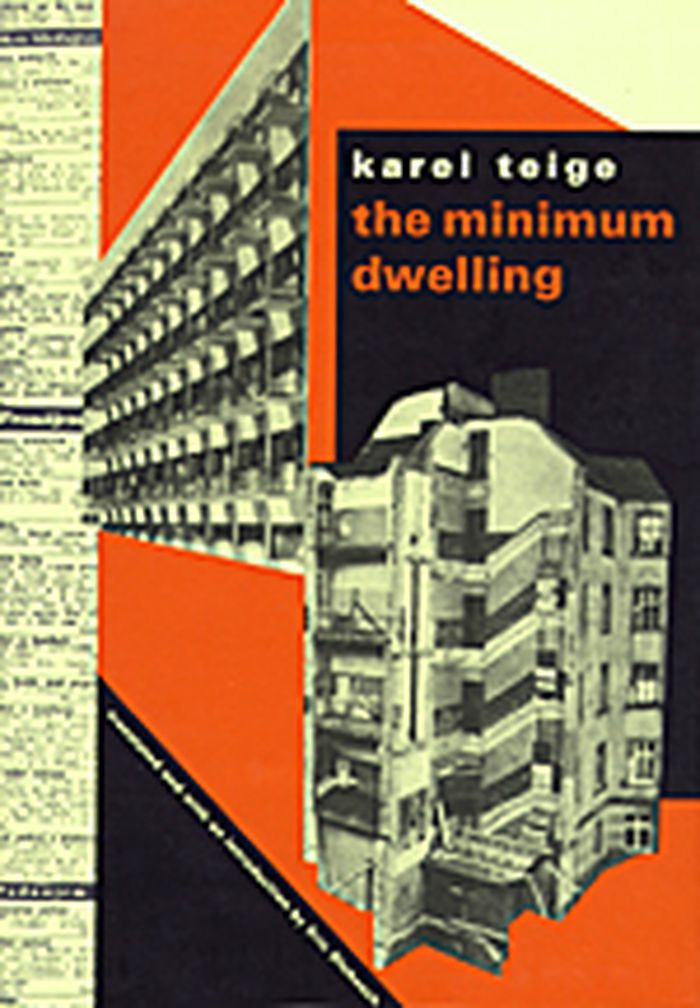
Karel Teige (1900–1951), one of the most important figures of avant-garde modernism of the 1920s and 1930s, influenced virtually every area of art, design, and urban thinking in his native Czechoslovakia. His "Minimum dwelling", originally published in Czech in 1932, and appearing now for the first time in English, is one of the landmark architectural books of the twentieth century. "The minimum dwelling" is not just a book on architecture, but also a blueprint for a new way of living. It calls for a radical rethinking of domestic space and of the role of modern architecture in the planning, design, and construction of new dwelling types for the proletariat. Teige shows how Gropius, Le Corbusier, Mies van der Rohe, and others designed little more than new versions of baroque palaces, mainly for the new financial aristocracy. Teige envisioned the minimum dwelling not as a reduced version of a bourgeois apartment or rural cottage, but as a wholly new dwelling type built on the cooperation of architects, sociologists, economists, health officials, physicians, social workers, politicians, and trade unionists. The book covers many subjects that are still of great relevance. Of particular interest are Teige’s rejection of traditional notions of the kitchen as the core of family-centered plans and of marriage as the foundation of modern cohabitation. He describes alternative lifestyles and new ways of cohabitation of sexes, generations, and classes. The detailed programmatic chapters on collective housing remain far ahead of current thinking, and his comments on collective dwelling presage communal living experiments of the 1960s and 1970s, as well as the communal facilities in contemporary condominium buildings and retirement communities. Translated and introduced by Eric Dluhosch.
The minimum dwelling
Actions:
Prix:
$96.00
(disponible en magasin)
Résumé:
Karel Teige (1900–1951), one of the most important figures of avant-garde modernism of the 1920s and 1930s, influenced virtually every area of art, design, and urban thinking in his native Czechoslovakia. His "Minimum dwelling", originally published in Czech in 1932, and appearing now for the first time in English, is one of the landmark architectural books of the twentieth century. "The minimum dwelling" is not just a book on architecture, but also a blueprint for a new way of living. It calls for a radical rethinking of domestic space and of the role of modern architecture in the planning, design, and construction of new dwelling types for the proletariat. Teige shows how Gropius, Le Corbusier, Mies van der Rohe, and others designed little more than new versions of baroque palaces, mainly for the new financial aristocracy. Teige envisioned the minimum dwelling not as a reduced version of a bourgeois apartment or rural cottage, but as a wholly new dwelling type built on the cooperation of architects, sociologists, economists, health officials, physicians, social workers, politicians, and trade unionists. The book covers many subjects that are still of great relevance. Of particular interest are Teige’s rejection of traditional notions of the kitchen as the core of family-centered plans and of marriage as the foundation of modern cohabitation. He describes alternative lifestyles and new ways of cohabitation of sexes, generations, and classes. The detailed programmatic chapters on collective housing remain far ahead of current thinking, and his comments on collective dwelling presage communal living experiments of the 1960s and 1970s, as well as the communal facilities in contemporary condominium buildings and retirement communities. Translated and introduced by Eric Dluhosch.
Classification:
livres
livres
Publication:
mai 2002, Cambridge, Mass.
mai 2002, Cambridge, Mass.
Sujet:
Théorie de l’architecture
Théorie de l’architecture
Classification:
livres
livres
Actions:
Prix:
$79.95
(disponible sur commande)
Résumé:
"The Portfolio and the Diagram" is about the changing ways architects see, read, and use the words and images of architectural publications. It begins with an outline of the academic discipline and the mimetic practice of the portfolio, established in America during the late nineteenth century. World War I triggered a historical process that resulted in the demise of the(...)
$79.95
(disponible sur commande)
Résumé:
"The Portfolio and the Diagram" is about the changing ways architects see, read, and use the words and images of architectural publications. It begins with an outline of the academic discipline and the mimetic practice of the portfolio, established in America during the late nineteenth century. World War I triggered a historical process that resulted in the demise of the(...)
Sujet:
Théorie de l’architecture
Théorie de l’architecture
Publication:
avril 2002, Cambridge, Massachusetts
avril 2002, Cambridge, Massachusetts
Titre:
The portfolio and the diagram : architecture, discourse, and modernity in America
Actions:
Prix:
$79.95
(disponible sur commande)
Résumé:
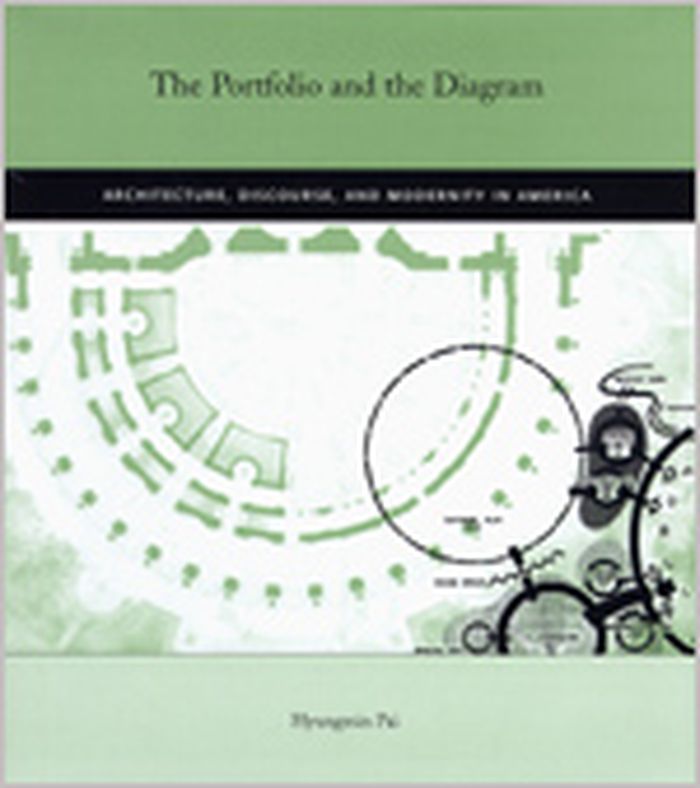
"The Portfolio and the Diagram" is about the changing ways architects see, read, and use the words and images of architectural publications. It begins with an outline of the academic discipline and the mimetic practice of the portfolio, established in America during the late nineteenth century. World War I triggered a historical process that resulted in the demise of the portfolio and the emergence of the discourse of the diagram. The Beaux Arts-trained architects had fashioned their discipline through the meticulous object-centered images of the portfolio. The discourse of the diagram provided a new range of possibility in the architect’s relation to words, images, and buildings. More than the diagram itself, more than the province of narrow-minded functionalists, the discourse of the diagram is a complex formation of texts, concepts, and modes of representation. Concerned less with constructing a new kind of modernism than with understanding the boundaries and structures of modernity, the book is a history of modern architecture as a discursive practice and its striving to become a viable discipline.
The portfolio and the diagram : architecture, discourse, and modernity in America
Actions:
Prix:
$79.95
(disponible sur commande)
Résumé:
"The Portfolio and the Diagram" is about the changing ways architects see, read, and use the words and images of architectural publications. It begins with an outline of the academic discipline and the mimetic practice of the portfolio, established in America during the late nineteenth century. World War I triggered a historical process that resulted in the demise of the portfolio and the emergence of the discourse of the diagram. The Beaux Arts-trained architects had fashioned their discipline through the meticulous object-centered images of the portfolio. The discourse of the diagram provided a new range of possibility in the architect’s relation to words, images, and buildings. More than the diagram itself, more than the province of narrow-minded functionalists, the discourse of the diagram is a complex formation of texts, concepts, and modes of representation. Concerned less with constructing a new kind of modernism than with understanding the boundaries and structures of modernity, the book is a history of modern architecture as a discursive practice and its striving to become a viable discipline.
Classification:
livres
livres
Publication:
avril 2002, Cambridge, Massachusetts
avril 2002, Cambridge, Massachusetts
Sujet:
Théorie de l’architecture
Théorie de l’architecture
Classification:
livres
livres
Actions:
Prix:
$40.50
(disponible sur commande)
Résumé:
ROAM is an unconventional academic reader, looking at 'the Aesthetics of Mobility'. Under five themes - narrative, representation, glocalisation, telematics, velocity - ideas around what it is to 'roam' are explored, from theoritical texts to magazine style snippets of information. Against an architectural understanding of urban spaces and mobility. ROAM also engages with(...)
$40.50
(disponible sur commande)
Résumé:
ROAM is an unconventional academic reader, looking at 'the Aesthetics of Mobility'. Under five themes - narrative, representation, glocalisation, telematics, velocity - ideas around what it is to 'roam' are explored, from theoritical texts to magazine style snippets of information. Against an architectural understanding of urban spaces and mobility. ROAM also engages with(...)
Titre:
Reader on the aesthetics of mobility
Actions:
Prix:
$40.50
(disponible sur commande)
Résumé:
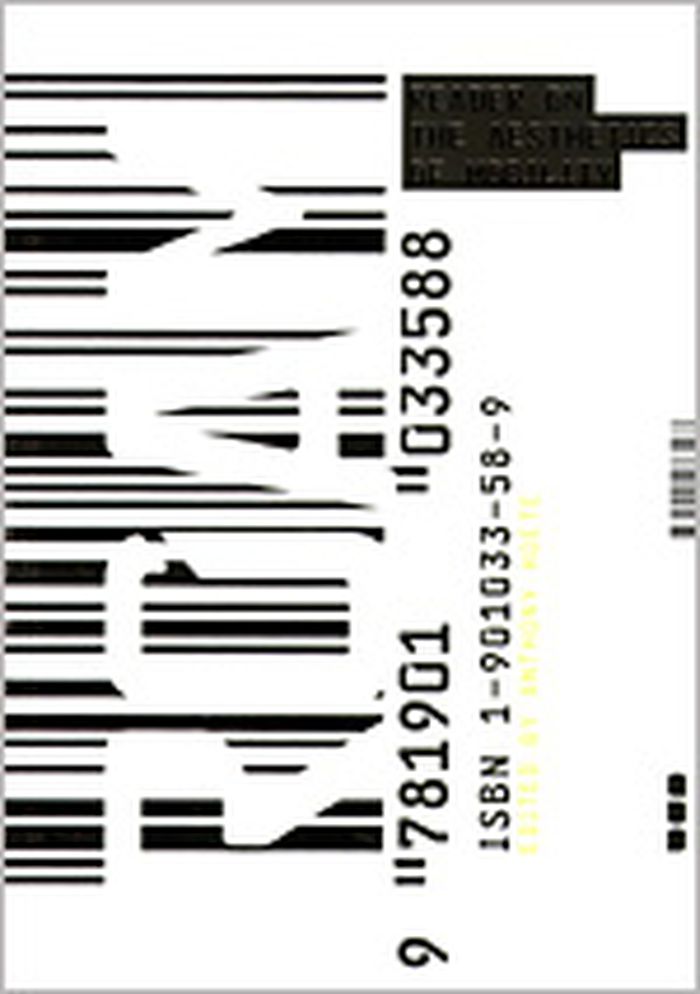
ROAM is an unconventional academic reader, looking at 'the Aesthetics of Mobility'. Under five themes - narrative, representation, glocalisation, telematics, velocity - ideas around what it is to 'roam' are explored, from theoritical texts to magazine style snippets of information. Against an architectural understanding of urban spaces and mobility. ROAM also engages with discourses from art, cultural studies, design and politics. In line with its unconventional approach, the texts in ROAM are designed to be read at different speeds, so that design projects are interspliced amongst essays and soundbites, provoking the reader with new views about our increasingly mobilised society.
Reader on the aesthetics of mobility
Actions:
Prix:
$40.50
(disponible sur commande)
Résumé:
ROAM is an unconventional academic reader, looking at 'the Aesthetics of Mobility'. Under five themes - narrative, representation, glocalisation, telematics, velocity - ideas around what it is to 'roam' are explored, from theoritical texts to magazine style snippets of information. Against an architectural understanding of urban spaces and mobility. ROAM also engages with discourses from art, cultural studies, design and politics. In line with its unconventional approach, the texts in ROAM are designed to be read at different speeds, so that design projects are interspliced amongst essays and soundbites, provoking the reader with new views about our increasingly mobilised society.
Classification:
livres
livres
Publication:
janvier 1900, London
janvier 1900, London
Sujet:
Théorie de l’architecture
Théorie de l’architecture


